New Jersey Right of Way Easement
What is this form?
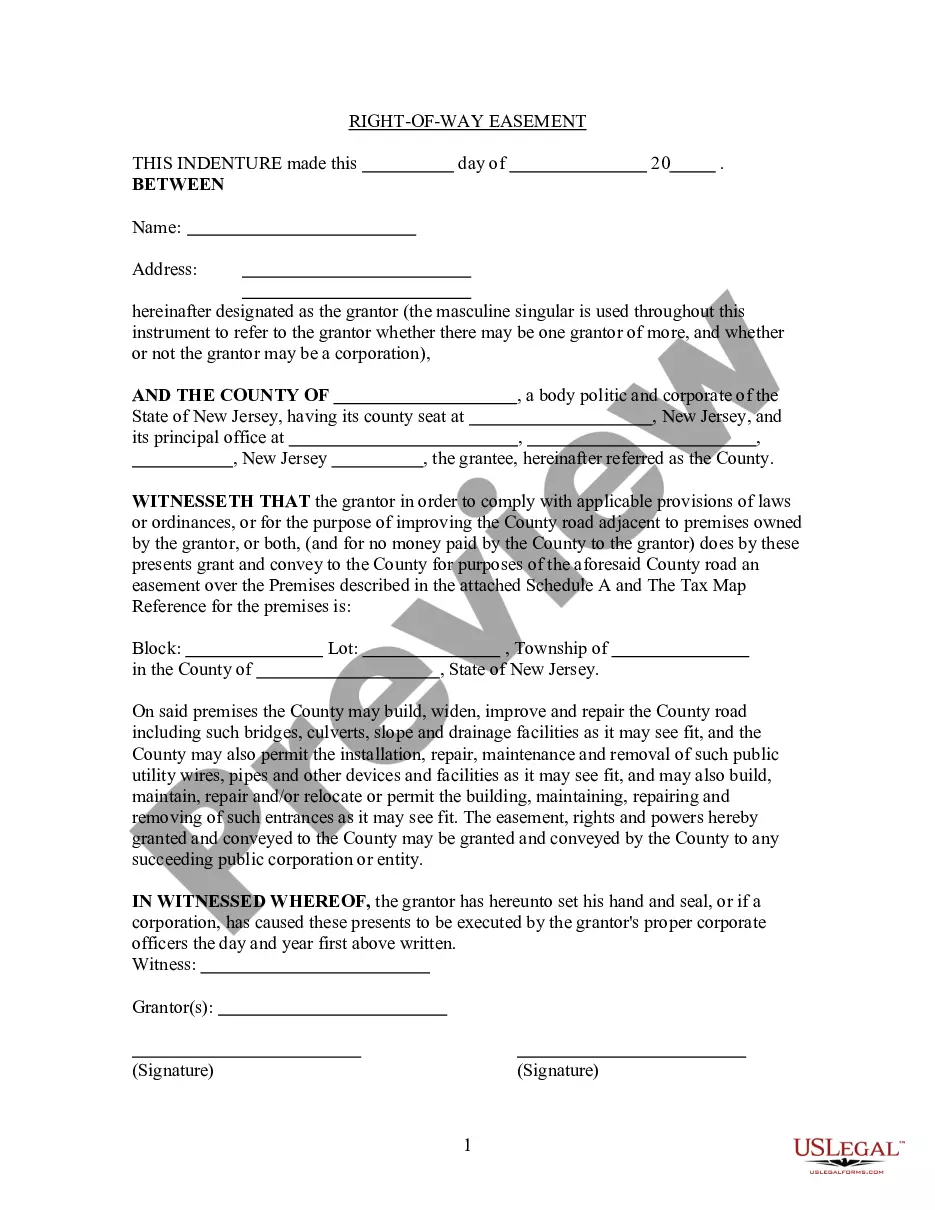
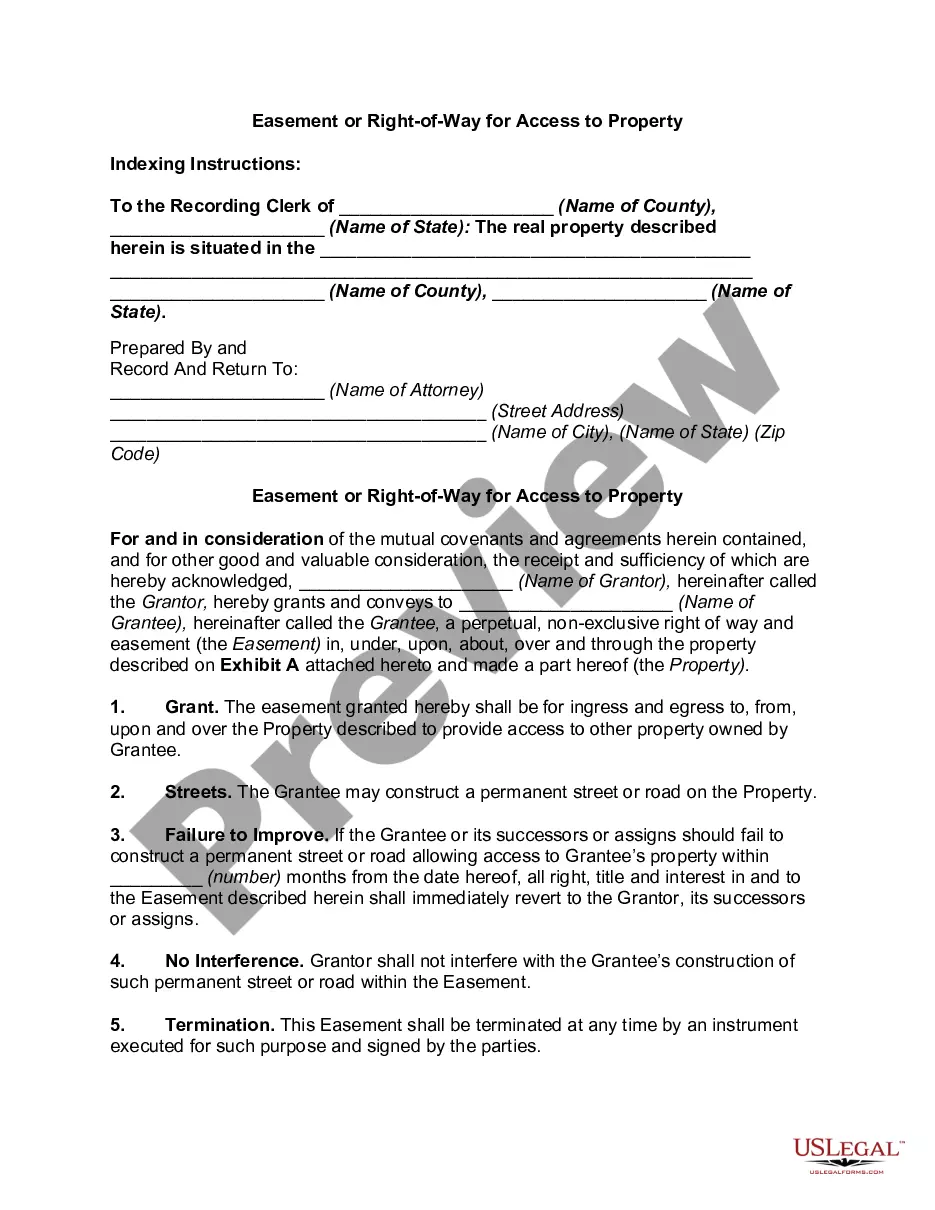
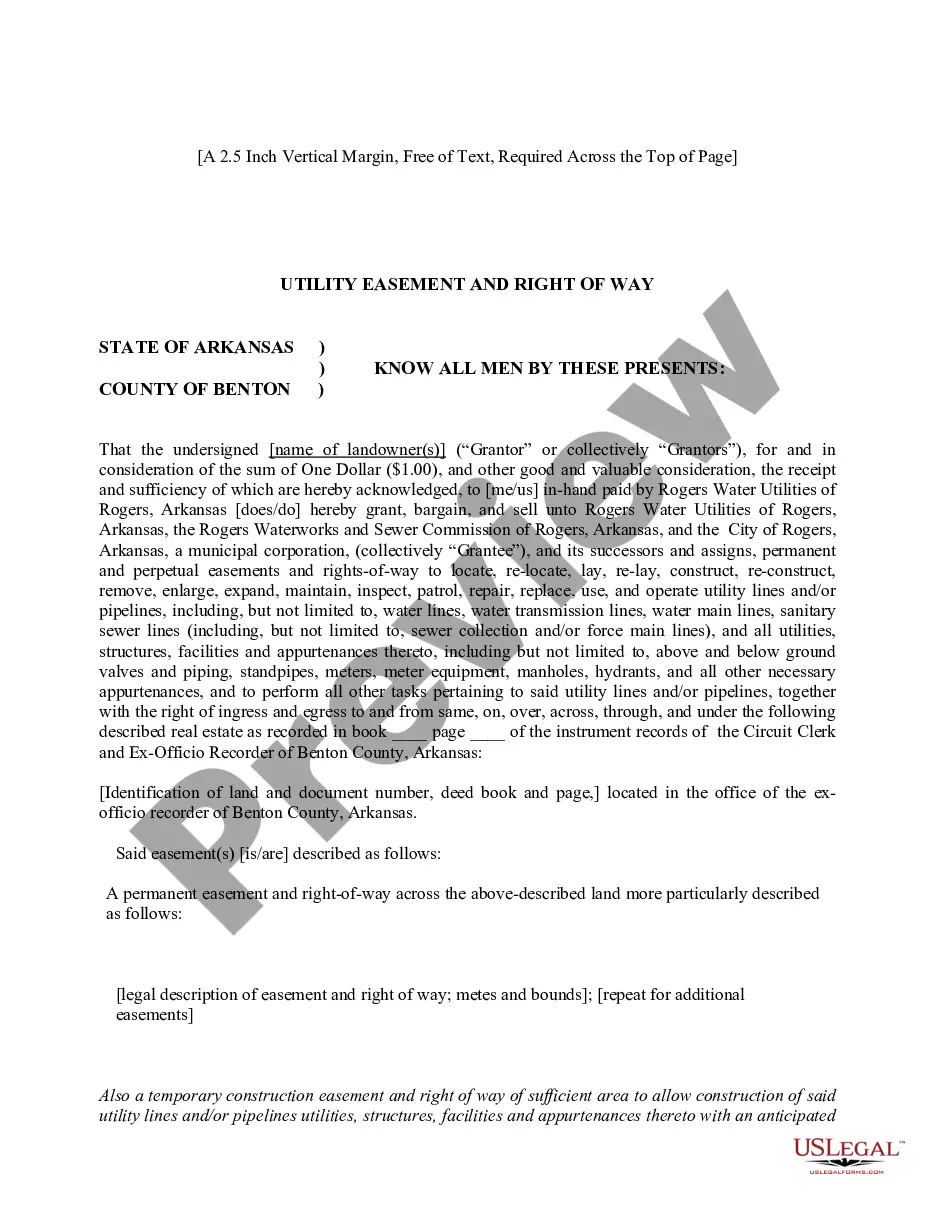
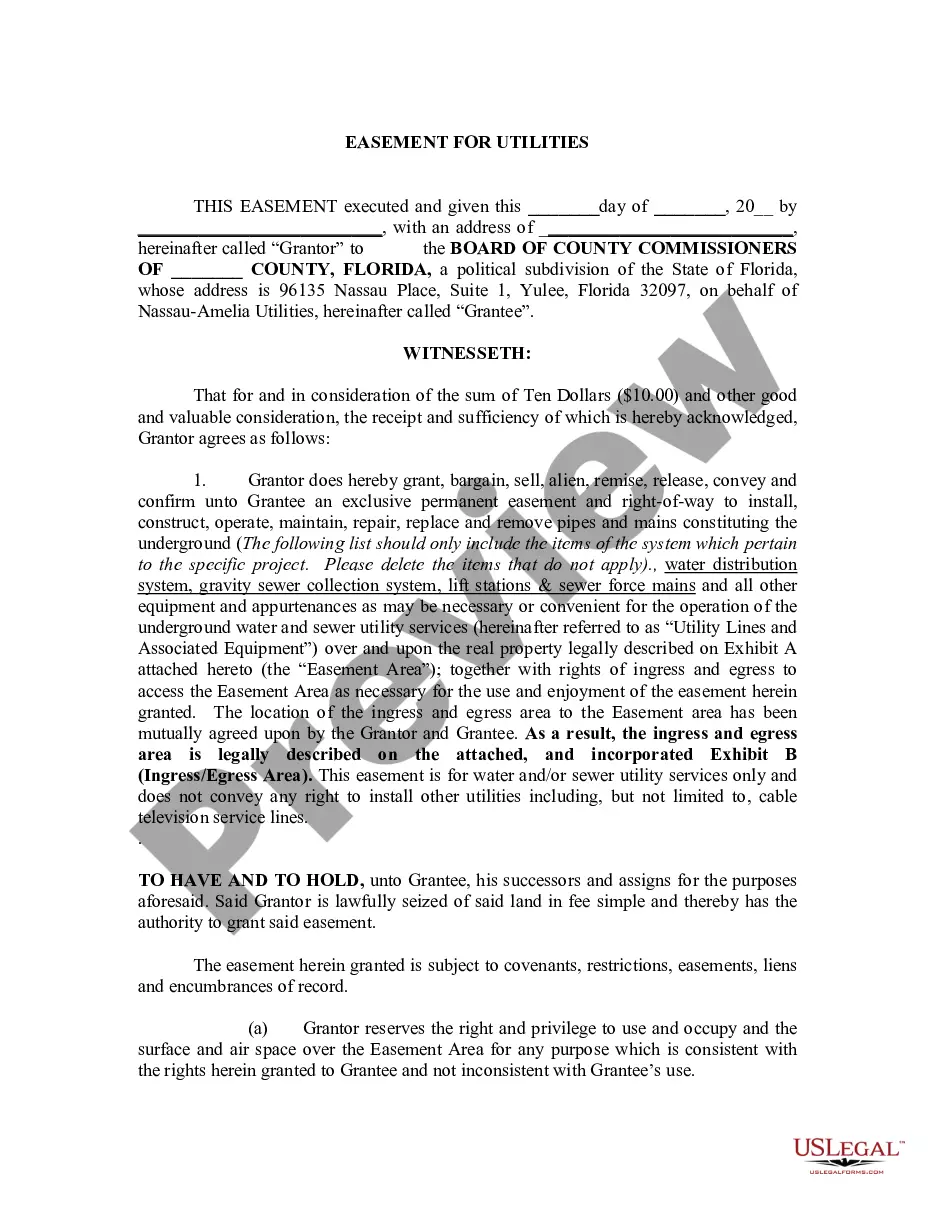
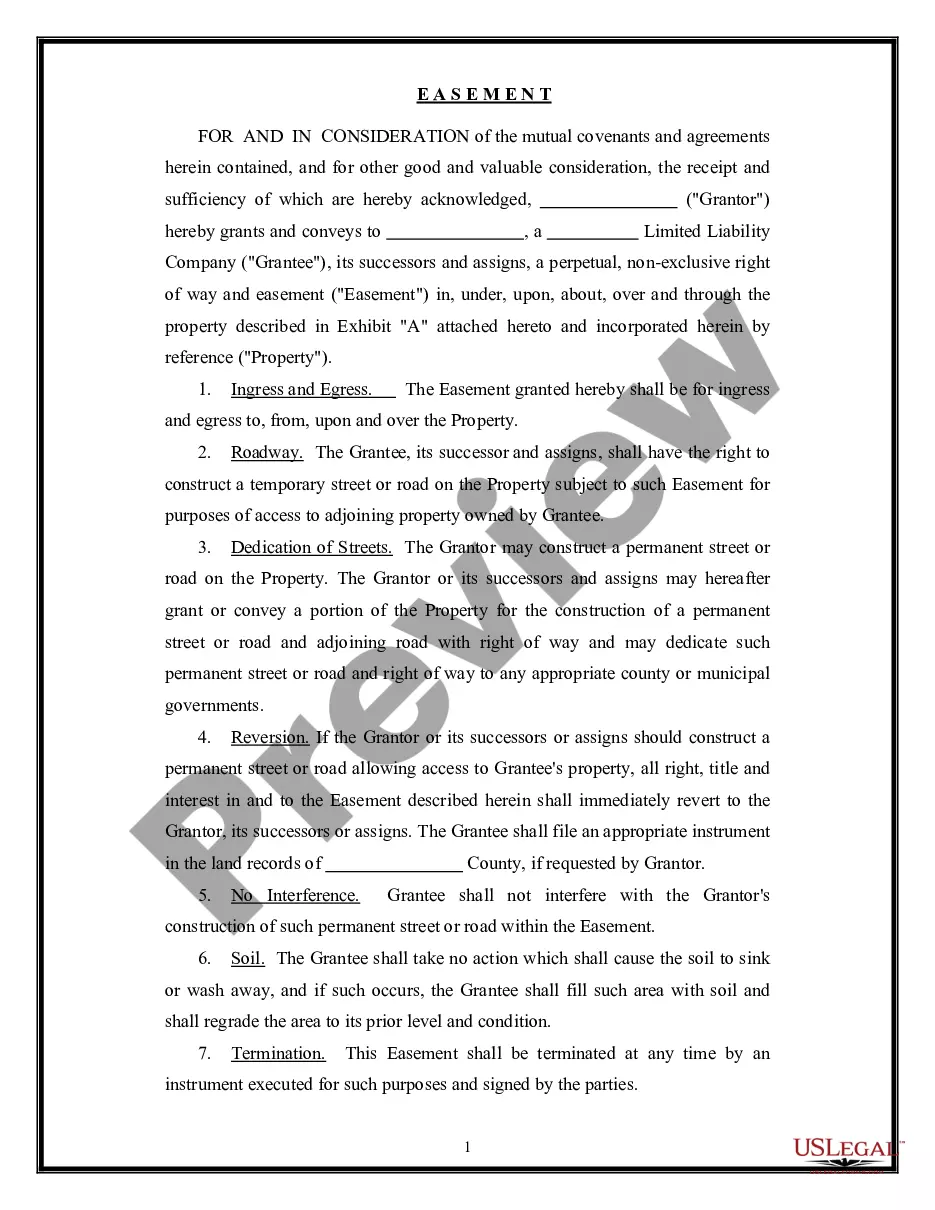
The Right of Way Easement form is a legal document that grants one party the right to access a portion of another party's property for specific purposes, such as improving an adjacent county road. This form specifically outlines the rights and responsibilities associated with the easement, distinguishing it from other similar property agreements. It serves to protect the interests of both the grantor and the easement holder, while formalizing access to the specified property area.
What’s included in this form
- Identification of the grantor and easement holder.
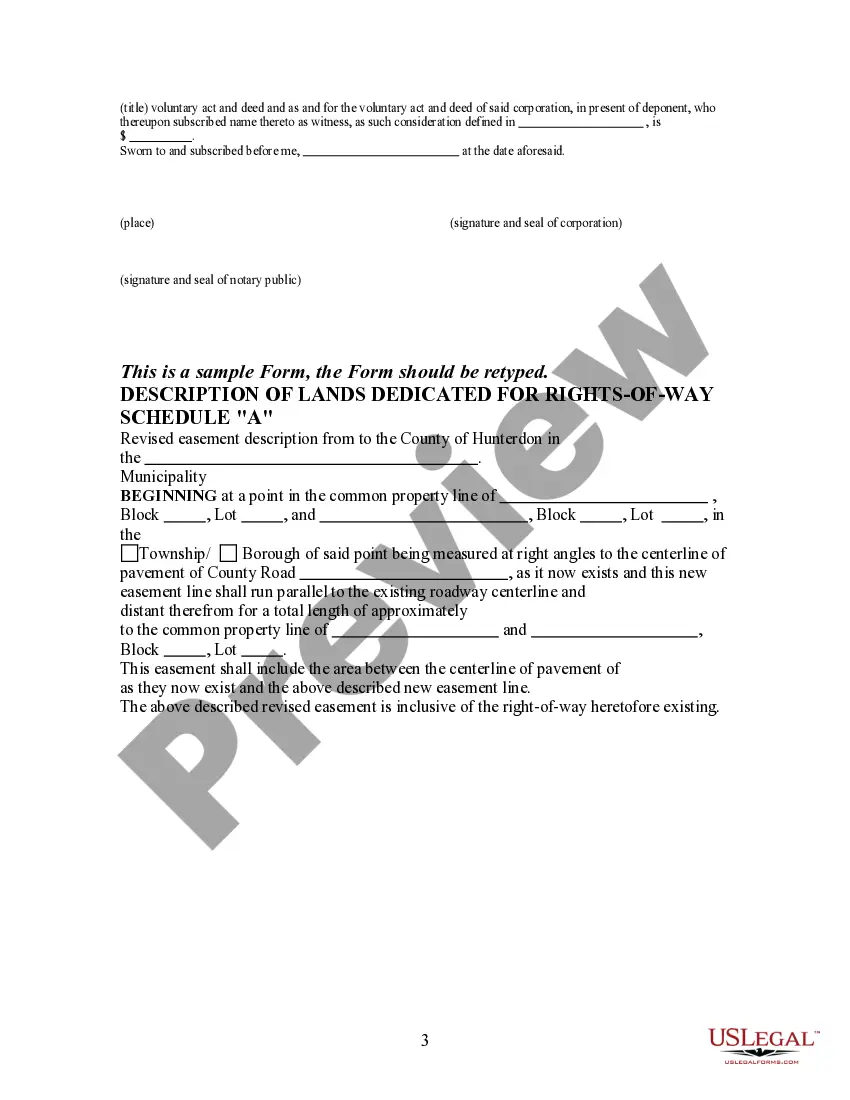
- Description of the easement area and its purpose.
- Terms regarding the maintenance and use of the easement.
- Provisions for resolving disputes over the easement rights.
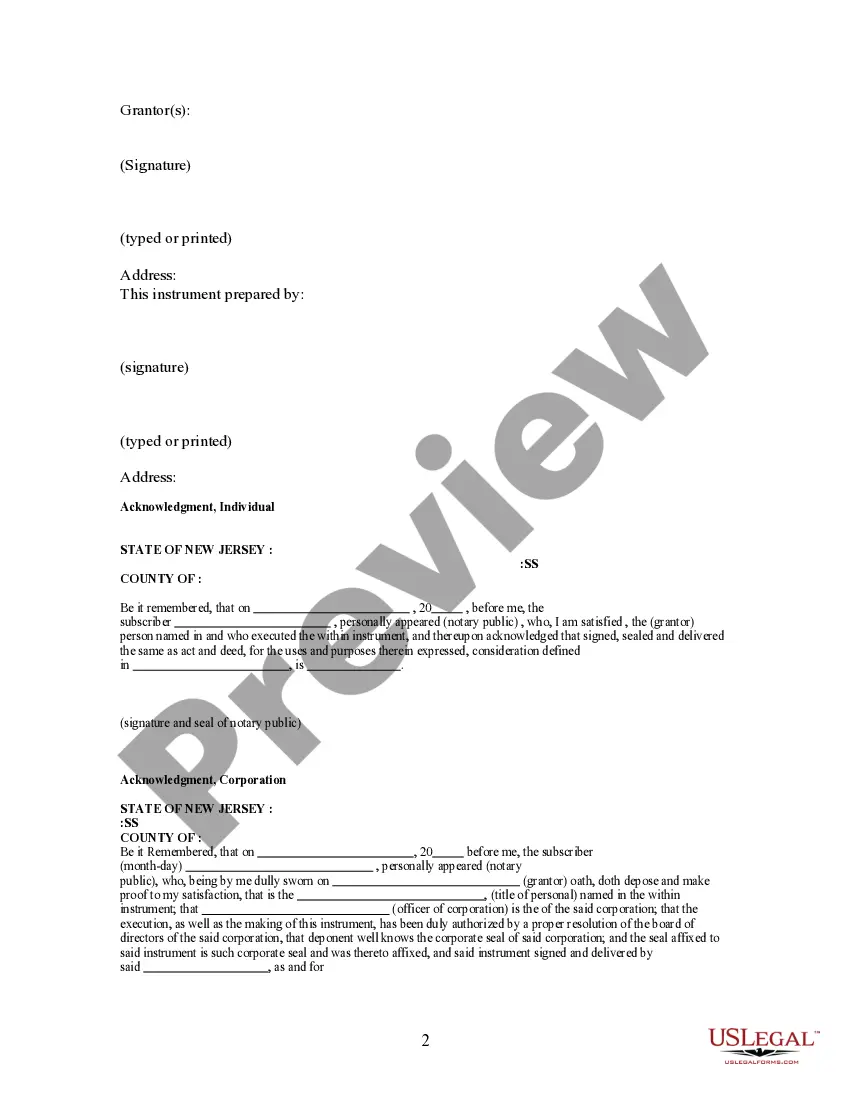
- Signatures of the involved parties to validate the agreement.

Situations where this form applies
This form is necessary when a property owner wishes to grant another party permission to cross their land for a defined purpose, such as road improvements or utilities installation. It is commonly used when a county or municipality requires access to private property to carry out public work or when utility companies need to install lines or pipes beneath the land.
Who can use this document
- Property owners (grantors) who wish to allow access to their land.
- Municipalities or counties seeking to improve infrastructure.
- Utility companies needing to install or maintain lines on private property.
- Individuals or entities needing to cross someone else's property for specific purposes.
Steps to complete this form
- Identify the parties involved: the grantor and the easement holder.
- Clearly describe the specific area of property being granted for the easement.
- State the purpose of the easement, such as road improvement or utility access.
- Include any maintenance responsibilities and limitations on the easement use.
- Ensure all parties sign the document to make it legally binding.
Does this document require notarization?
This document requires notarization to meet legal standards. US Legal Forms provides secure online notarization powered by Notarize, allowing you to complete the process through a verified video call, available 24/7.
Get your form ready online
Our built-in tools help you complete, sign, share, and store your documents in one place.
Make edits, fill in missing information, and update formatting in US Legal Forms—just like you would in MS Word.
Download a copy, print it, send it by email, or mail it via USPS—whatever works best for your next step.
Sign and collect signatures with our SignNow integration. Send to multiple recipients, set reminders, and more. Go Premium to unlock E-Sign.
If this form requires notarization, complete it online through a secure video call—no need to meet a notary in person or wait for an appointment.
We protect your documents and personal data by following strict security and privacy standards.

Make edits, fill in missing information, and update formatting in US Legal Forms—just like you would in MS Word.

Download a copy, print it, send it by email, or mail it via USPS—whatever works best for your next step.

Sign and collect signatures with our SignNow integration. Send to multiple recipients, set reminders, and more. Go Premium to unlock E-Sign.

If this form requires notarization, complete it online through a secure video call—no need to meet a notary in person or wait for an appointment.

We protect your documents and personal data by following strict security and privacy standards.
Common mistakes to avoid
- Failing to clearly define the easement area, leading to future disputes.
- Not specifying the purpose of the easement accurately.
- Omitting necessary signatures, which can invalidate the document.
- Ignoring local regulations that may affect the easement's enforceability.
Benefits of using this form online
- Convenience of downloading and completing the form at your own pace.
- Editability that allows you to customize the form for your specific circumstances.
- Access to templates drafted by licensed attorneys, ensuring legal soundness.
- Time-saving by avoiding in-person consultations.
Looking for another form?
Form popularity
FAQ
Public rights of way can come into existence through creation (either by legal order or by an agreement made with the landowner) or dedication by the landowner (either expressly or by presumption or by deemed dedication following 20 years' public use).
An easement is extinguished when the dominant owner releases it, expressly or impliedly, to the servient owner. Such release can be made only in the circumstances and to the extent in and to which the dominant owner can alienate the dominant heritage.A, without the consent of B and C, release the easement.
What are Easements and Rights-of-Way? Easements are nonpossessory interests in real property. More simply, an easement is the right to use another's property for a specific purpose. Rights-of-way are easements that specifically grant the holder the right to travel over another's property.
Courts generally assume easements are created to last forever unless otherwise indicated in the document creating the easement. Despite this, an individual granting an easement should avoid any potential problems by expressly providing that the easement is permanent.
The party gaining the benefit of the easement is the dominant estate (or dominant tenement), while the party granting the benefit or suffering the burden is the servient estate (or servient tenement). For example, the owner of parcel A holds an easement to use a driveway on parcel B to gain access to A's house.
Rights of way (similar to the driveway example, but also including walkways or pathways); Public utilities, such as gas, electricity or water and sewer mains; Parking areas; Access to light and air; and. Shared walls.
You can terminate an easement by release. A release is a surrender of a right or interest, such as an easement. Only the person holding the right can release it, such as the owner of the dominant estate in an easement appurtenant or the holder of an easement in gross.
Quiet the Title. Allow the Purpose for the Easement to Expire. Abandon the Easement. Stop Using a Prescriptive Easement. Destroy the Reason for the Easement. Merge the Dominant and Servient Properties. Execute a Release Agreement.