New Jersey Living Trust for Individual Who is Single, Divorced or Widow (or Widower) with No Children
About this form
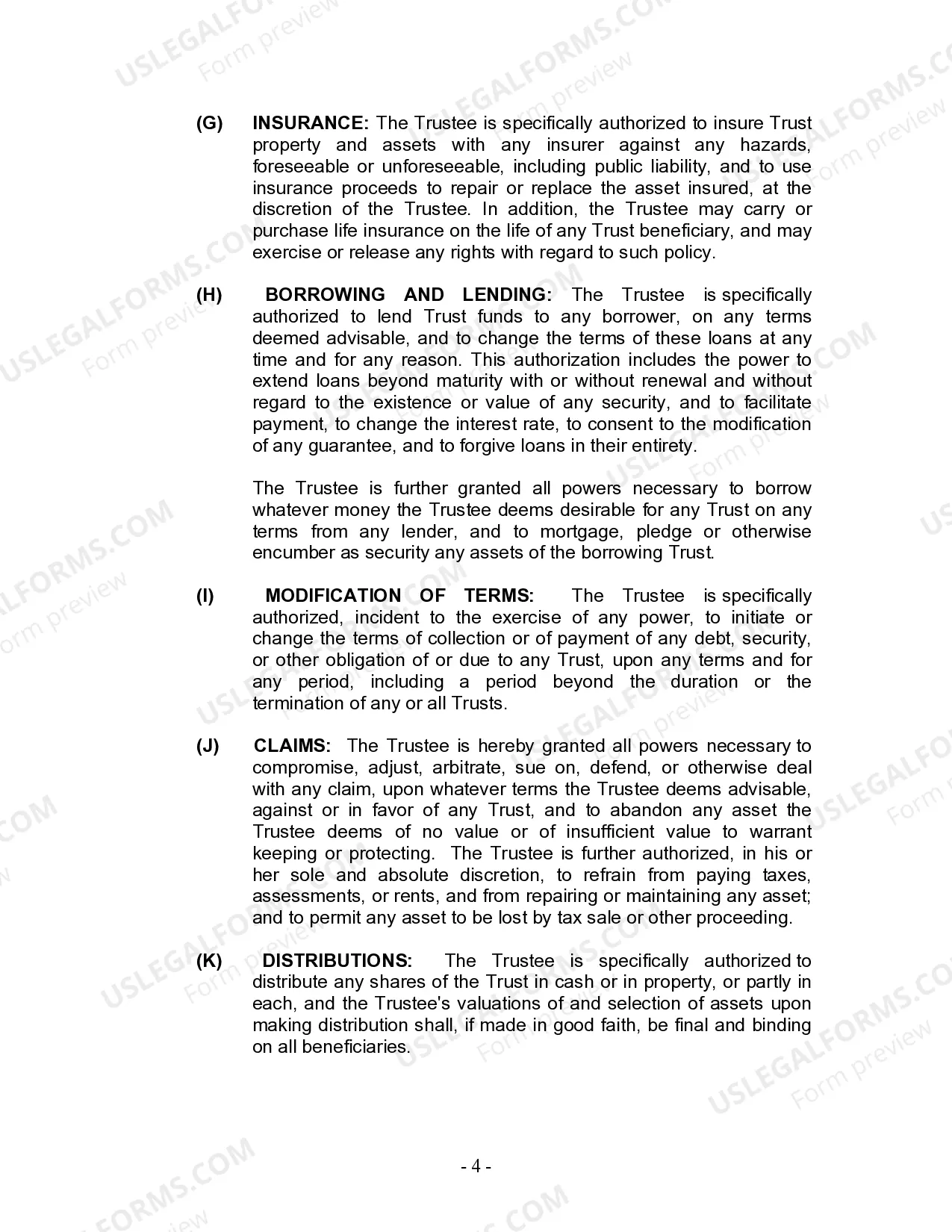
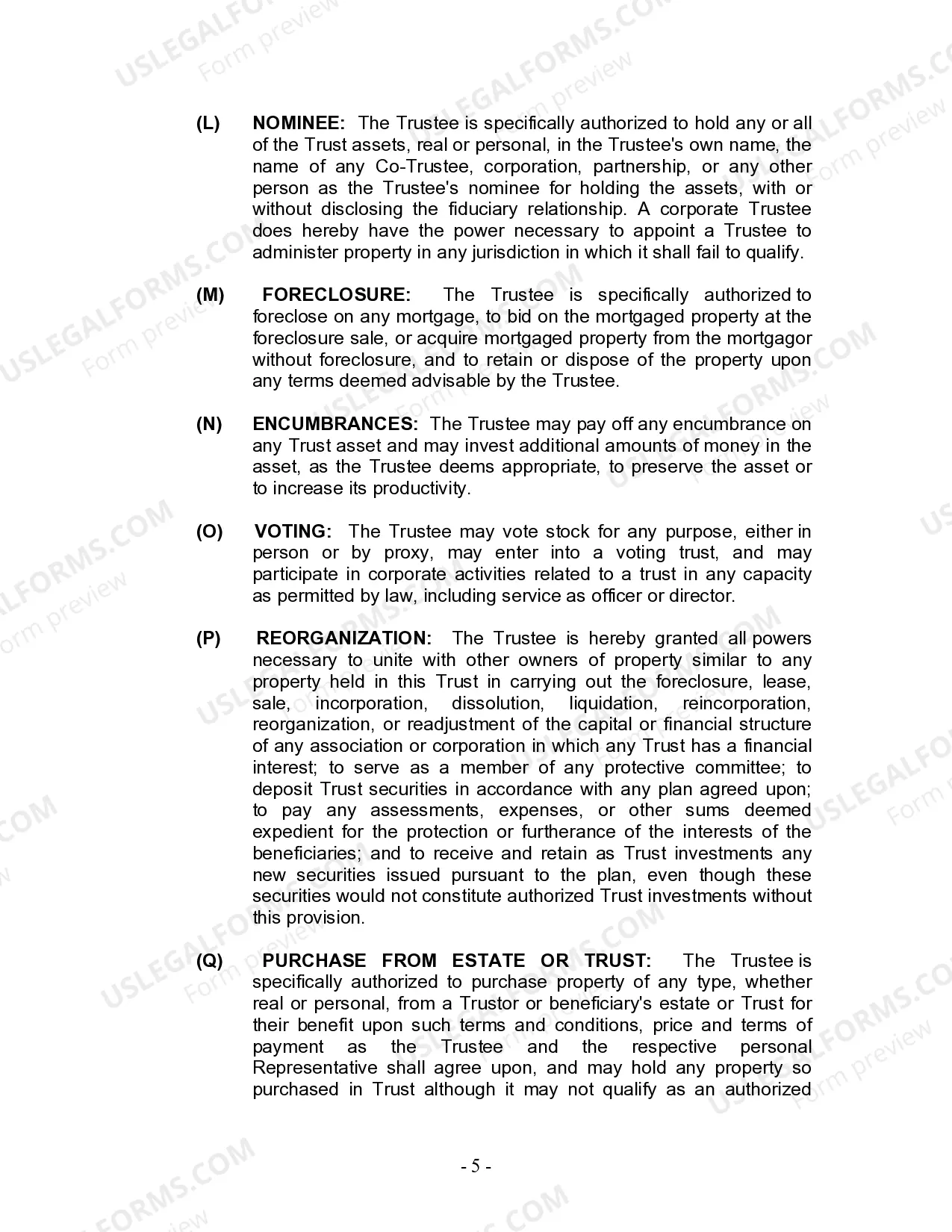
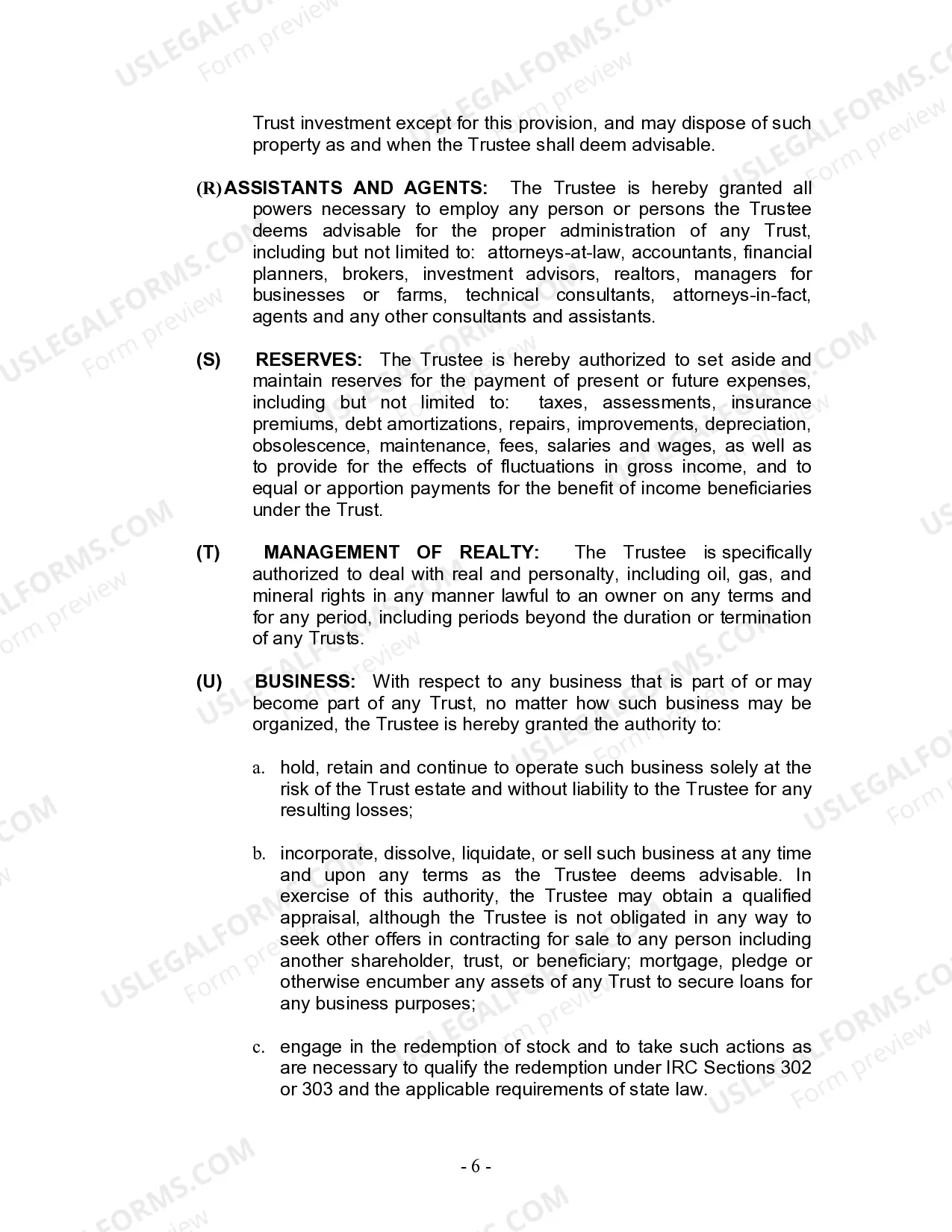
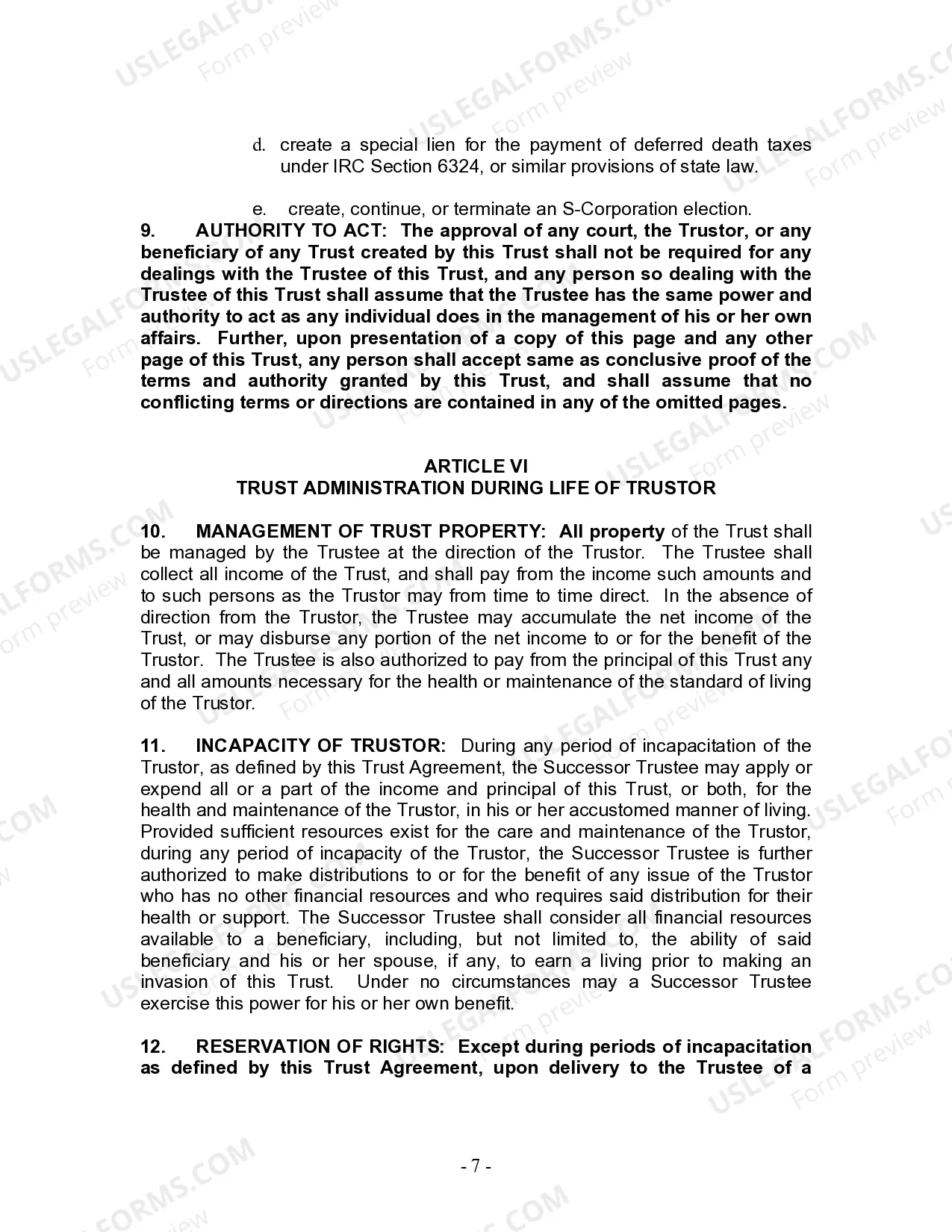
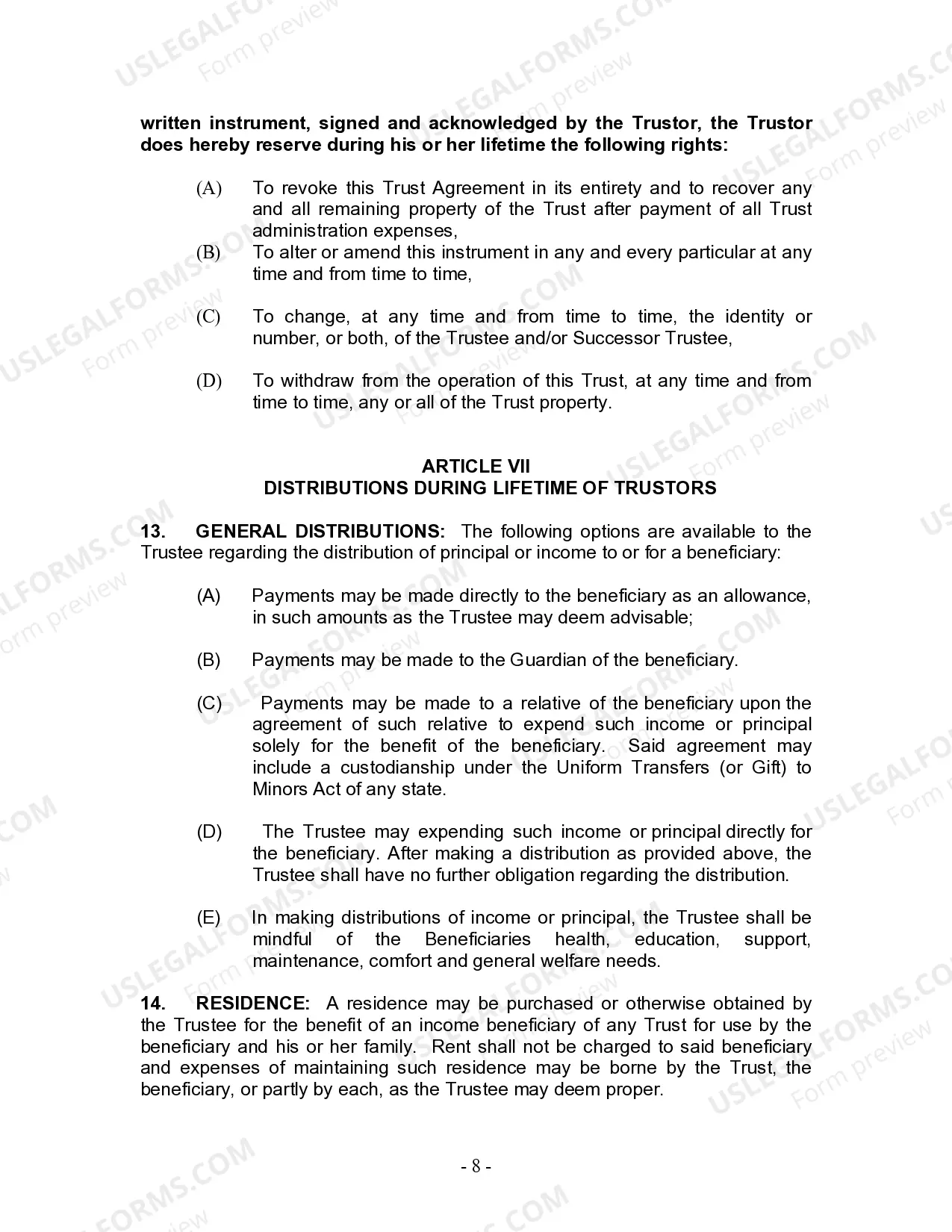
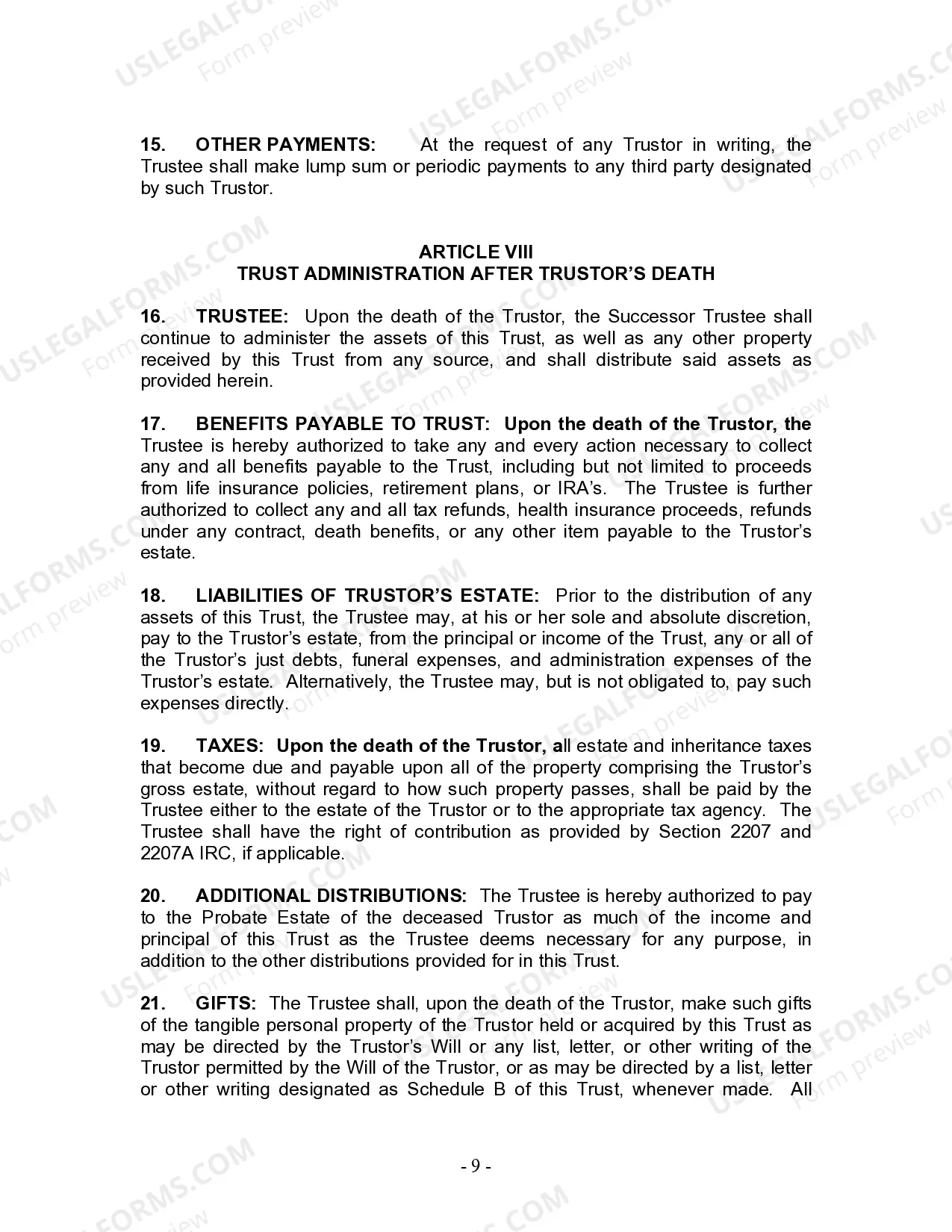
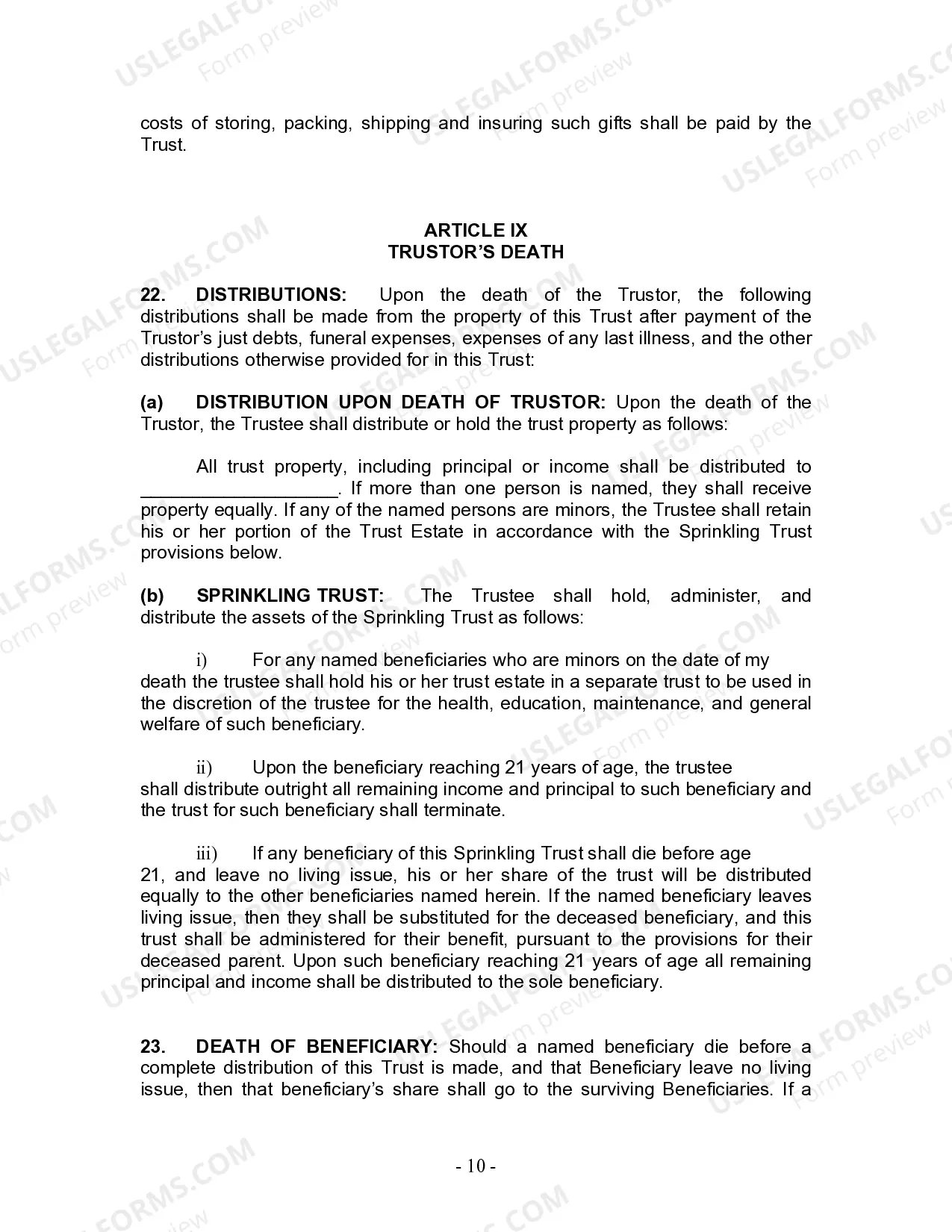
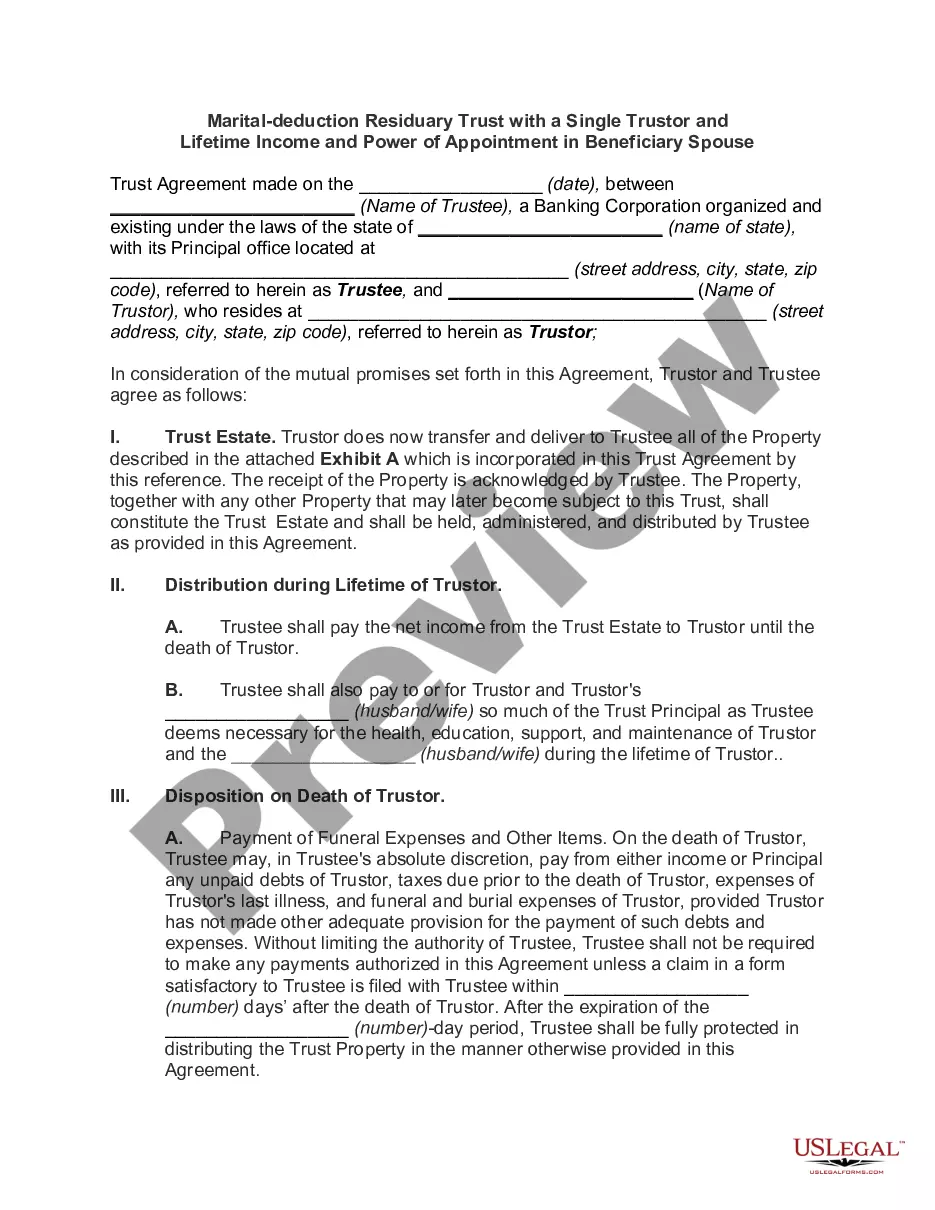
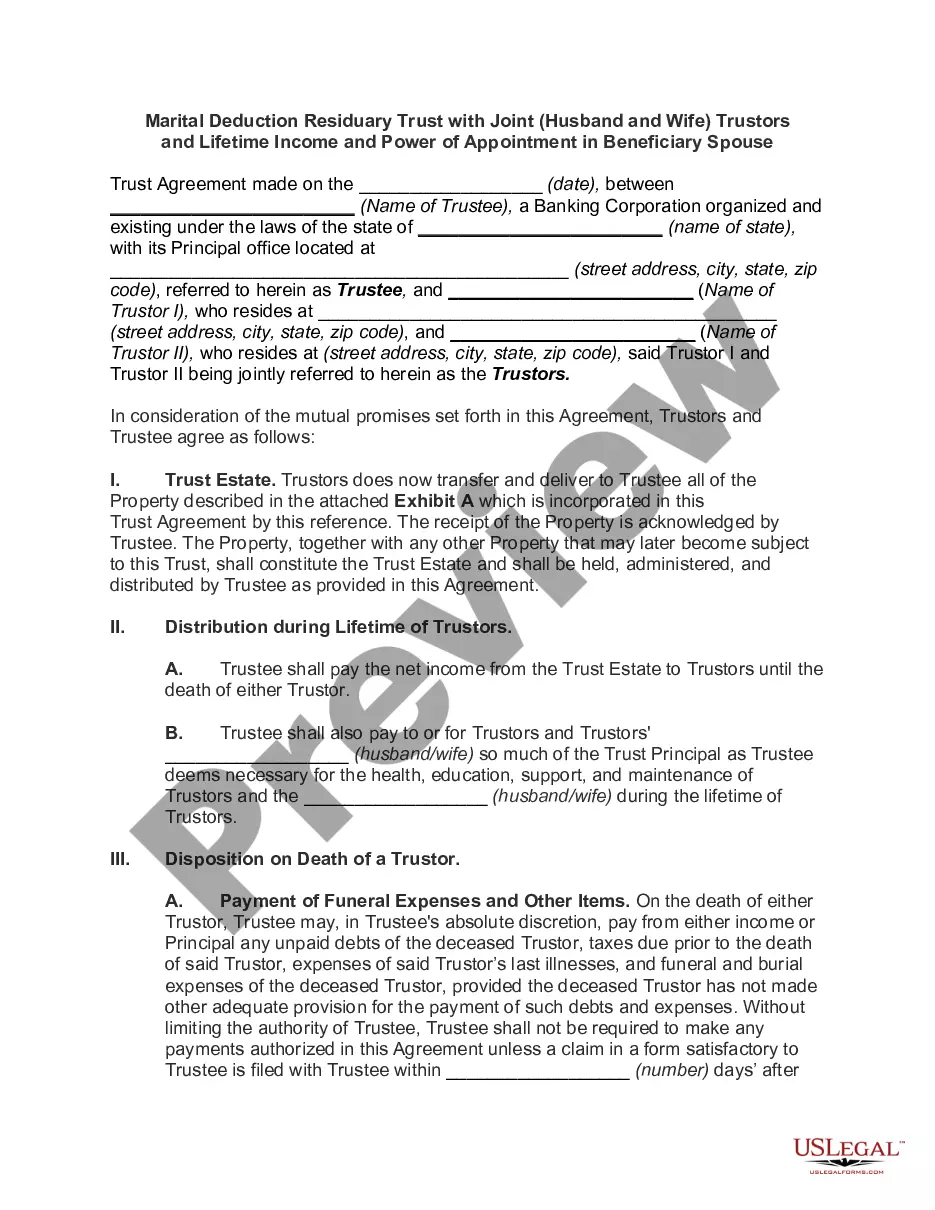
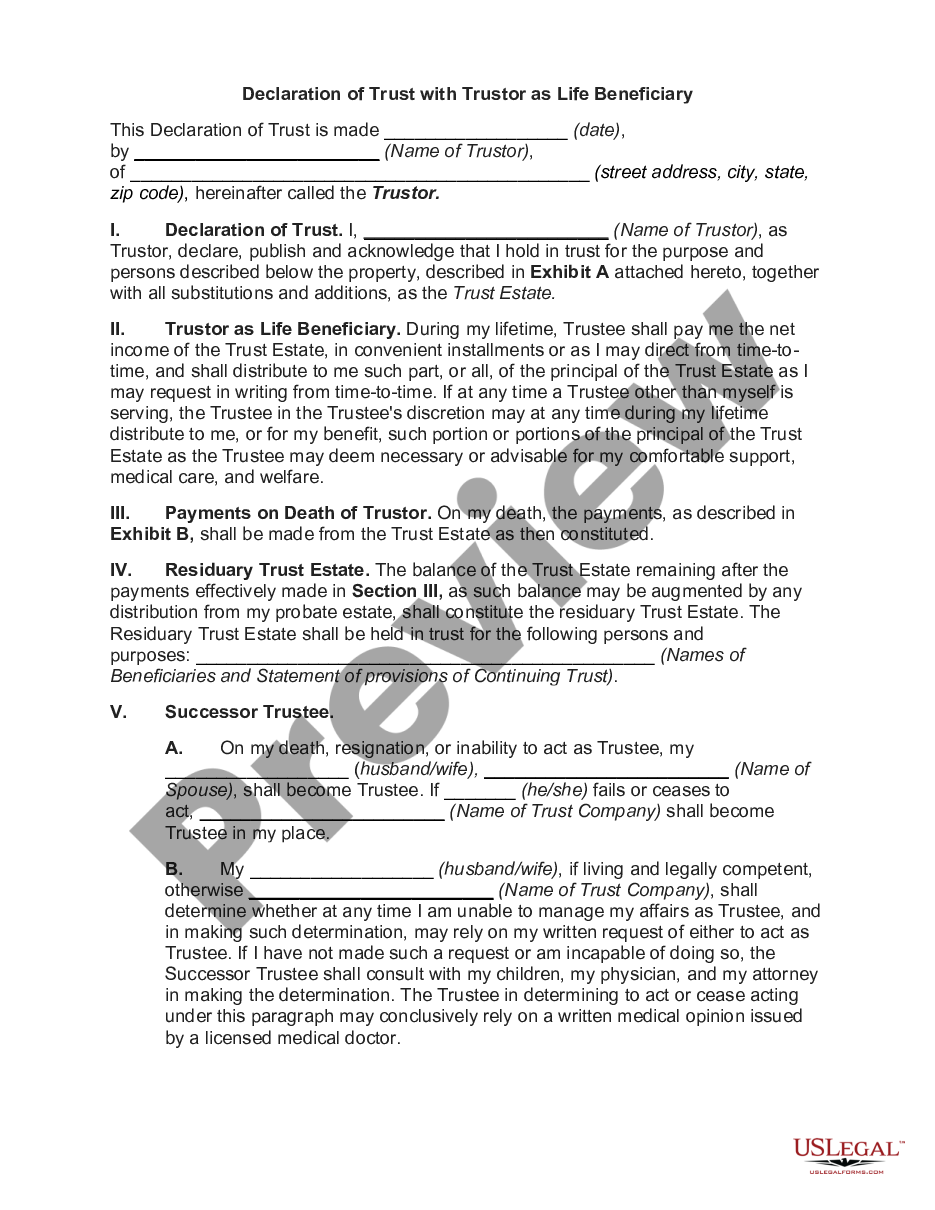
This Living Trust for Individual Who is Single, Divorced or Widow (or Widower) with No Children is a legal document that allows individuals without children to manage and protect their assets during their lifetime and specify distribution upon their death. A living trust is distinct from a will as it does not go through probate, making the transfer of assets smoother and often quicker for the beneficiaries. This form is specifically tailored for individuals who are single, divorced, or widowed and wish to control their estate while alive and provide for its management after death.
Form components explained
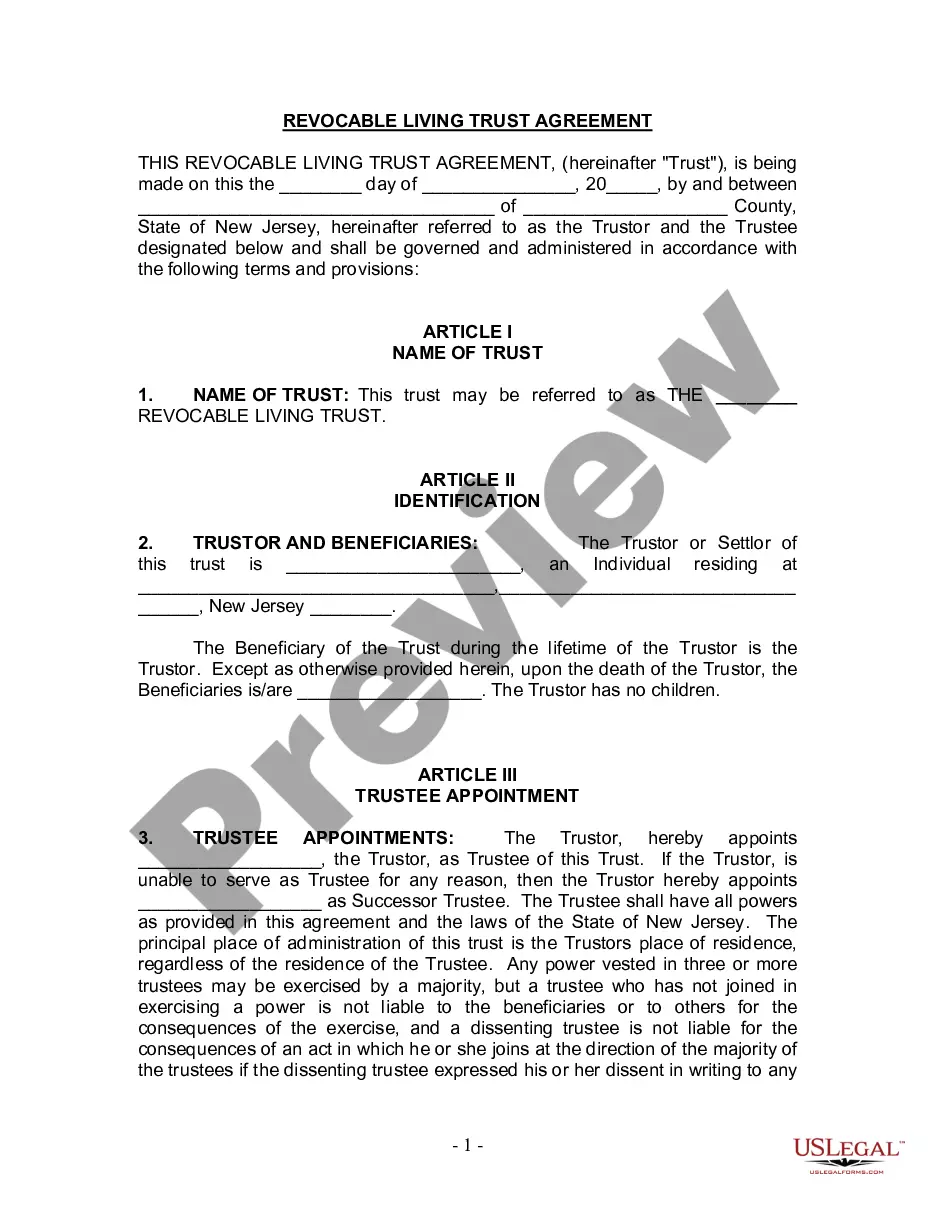
- Name of Trust: Designates the name of the trust created by the individual.
- Trustor and Beneficiaries: Identifies the creator of the trust and specifies the beneficiaries, typically the Trustor.
- Trustee Appointment: Details the appointment of the Trustor as the trustee, along with successor provisions.
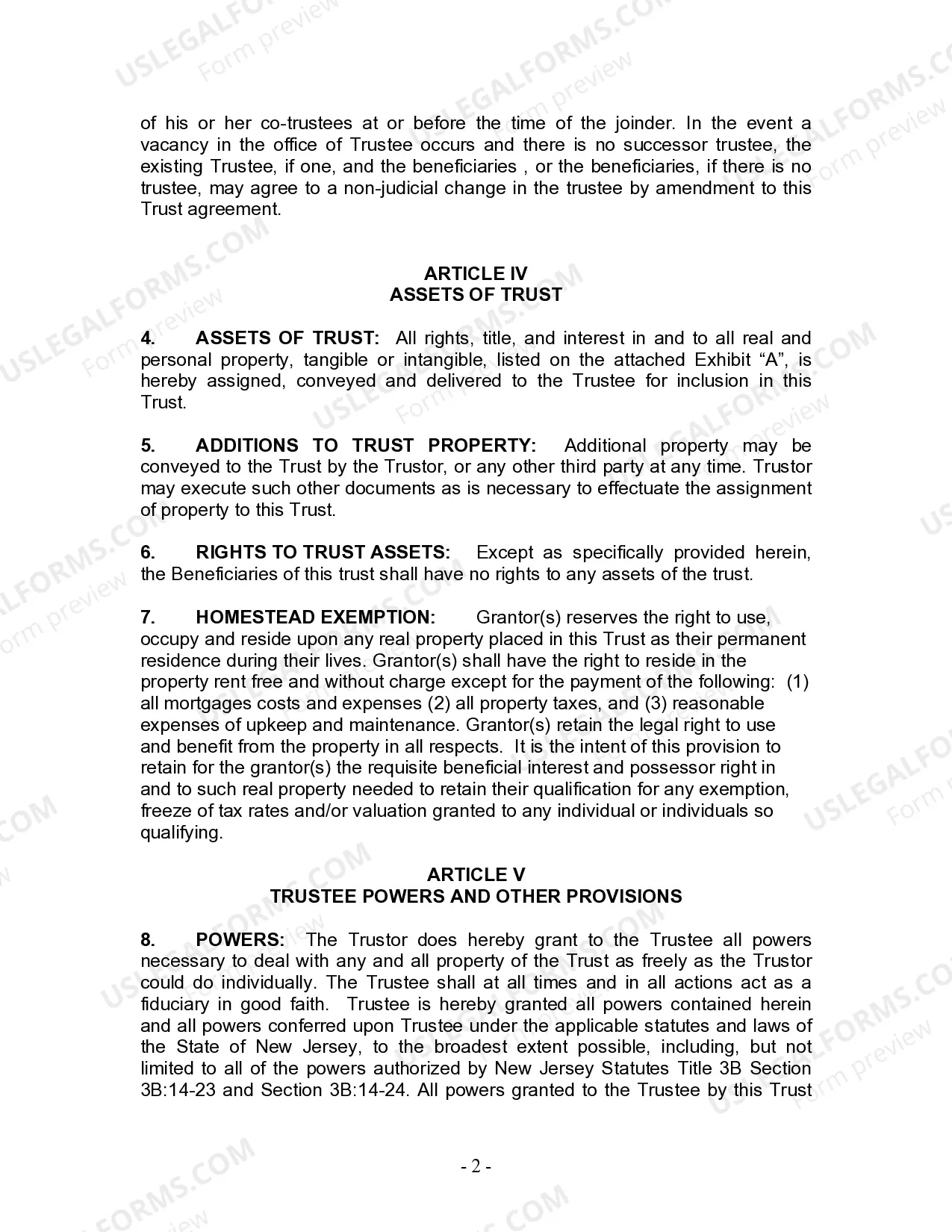
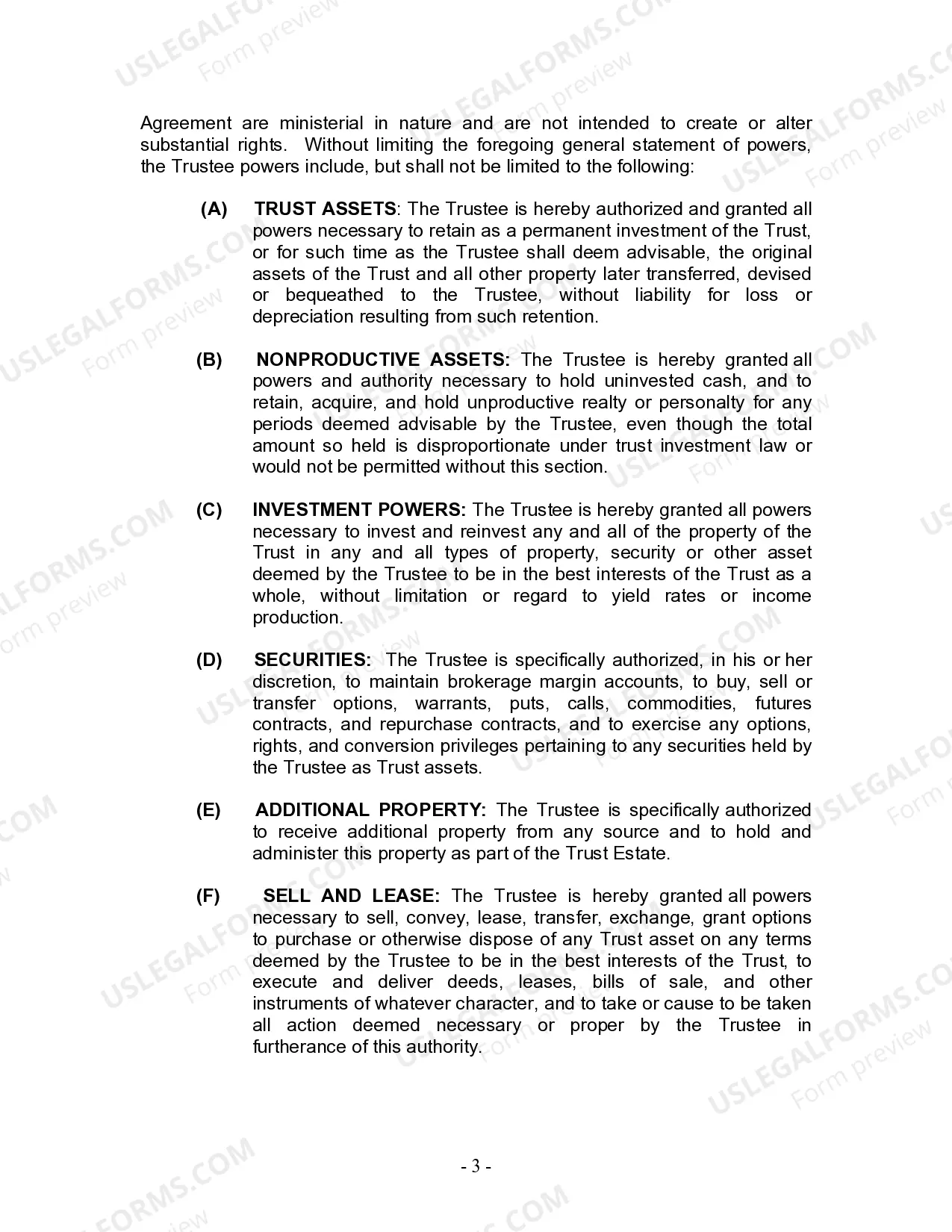
- Assets of Trust: Specifies the assets placed into the trust and any rights concerning those assets.
- Distribution Upon Death: Outlines how assets will be distributed after the Trustorâs death.


When to use this form
This form should be used when an individual who is single, divorced, or widowed with no children seeks to establish a living trust to manage their assets during their lifetime and determine how those assets should be distributed after their death. It is particularly beneficial for ensuring that assets avoid probate, thereby simplifying the transfer process for heirs or beneficiaries.
Who can use this document
- Single individuals who want to manage their assets and specify distribution upon death.
- Divorced or widowed individuals without children who want to ensure their estate is handled according to their wishes.
- Anyone looking to avoid probate and streamline the transfer of their assets after death.
How to complete this form
- Identify the parties involved: Enter the name of the Trustor and the selected Trustee.
- Designate the name of the trust: Complete the name you wish to give the trust.
- List the assets: Clearly specify all assets that will be included in the trust.
- Enter beneficiaries: Define who will inherit the trust assets upon your death.
- Sign and date the trust document: Ensure that the Trustor and Trustee sign in the appropriate places and date the document.
Notarization requirements for this form
This form does not typically require notarization unless specified by local law. However, it is advisable to consult legal professionals to ensure compliance with local requirements.
Get your form ready online
Our built-in tools help you complete, sign, share, and store your documents in one place.
Make edits, fill in missing information, and update formatting in US Legal Forms—just like you would in MS Word.
Download a copy, print it, send it by email, or mail it via USPS—whatever works best for your next step.
Sign and collect signatures with our SignNow integration. Send to multiple recipients, set reminders, and more. Go Premium to unlock E-Sign.
If this form requires notarization, complete it online through a secure video call—no need to meet a notary in person or wait for an appointment.
We protect your documents and personal data by following strict security and privacy standards.

Make edits, fill in missing information, and update formatting in US Legal Forms—just like you would in MS Word.

Download a copy, print it, send it by email, or mail it via USPS—whatever works best for your next step.

Sign and collect signatures with our SignNow integration. Send to multiple recipients, set reminders, and more. Go Premium to unlock E-Sign.

If this form requires notarization, complete it online through a secure video call—no need to meet a notary in person or wait for an appointment.

We protect your documents and personal data by following strict security and privacy standards.
Common mistakes
- Failing to properly identify all assets intended for the trust.
- Not updating the trust after significant life events, such as divorce or remarriage.
- Overlooking the appointment of successor trustees.
- Not signing and dating the document properly, which may invalidate the trust.
Why complete this form online
- Convenient access: Download the form directly and fill it out at your own pace.
- Editable format: Easily modify the document to suit your personal needs without the hassle of traditional paperwork.
- Cost-effective: Save on legal fees by using a professionally drafted form that can be customized by you.
- Quick turnaround: Avoid lengthy waiting times by completing the form online.
Main things to remember
- A living trust enables individuals to manage and distribute their assets seamlessly.
- This specific trust is tailored for individuals without children, addressing unique estate planning needs.
- Avoiding probate can streamline the distribution process and reduce potential legal fees.
Looking for another form?

Form popularity
FAQ
Like a will, a living trust can be altered whenever you wish.After one spouse dies, the surviving spouse is free to amend the terms of the trust document that deal with his or her property, but can't change the parts that determine what happens to the deceased spouse's trust property.
If you die in New Jersey without having a will, then you have died intestate. This is a legal term that means that you have no will to probate once you are dead. Therefore, since you don't have a will, your estate is distributed according to New Jersey's law of intestacy.
Joint trusts are easier to fund and maintain.In a joint trust, after the death of the first spouse, the surviving spouse has complete control of the assets. When separate trusts are used, the deceased spouses' trust becomes irrevocable and the surviving spouse has limited control over assets.
When one spouse dies, the joint trust will continue to operate for the benefit of the surviving spouse as a Survivor's Trust. Any specific gifts of tangible property from the first spouse to beneficiaries (other than the surviving spouse) will be given to those people.
Like a will, a living trust can be altered whenever you wish.After one spouse dies, the surviving spouse is free to amend the terms of the trust document that deal with his or her property, but can't change the parts that determine what happens to the deceased spouse's trust property.
For the latest information on novel coronavirus, please visit www.nj.gov/health or call 1-800-222-1222 or 1-800-962-1253 (if using out-of-state phone line).
Face coverings are required in indoor public spaces and in outdoor public spaces when social distancing is difficult to maintain.
COVID-19 testing and treatment is available to everyone in New Jersey regardless of their insurance or immigration status.
Food or beverage establishments may open, including restaurants, bars, cafeterias, and food courts, as well as all holders of a liquor license with retail consumption privileges.