New Jersey Relative Caretaker Legal Documents Package
What is this form package?
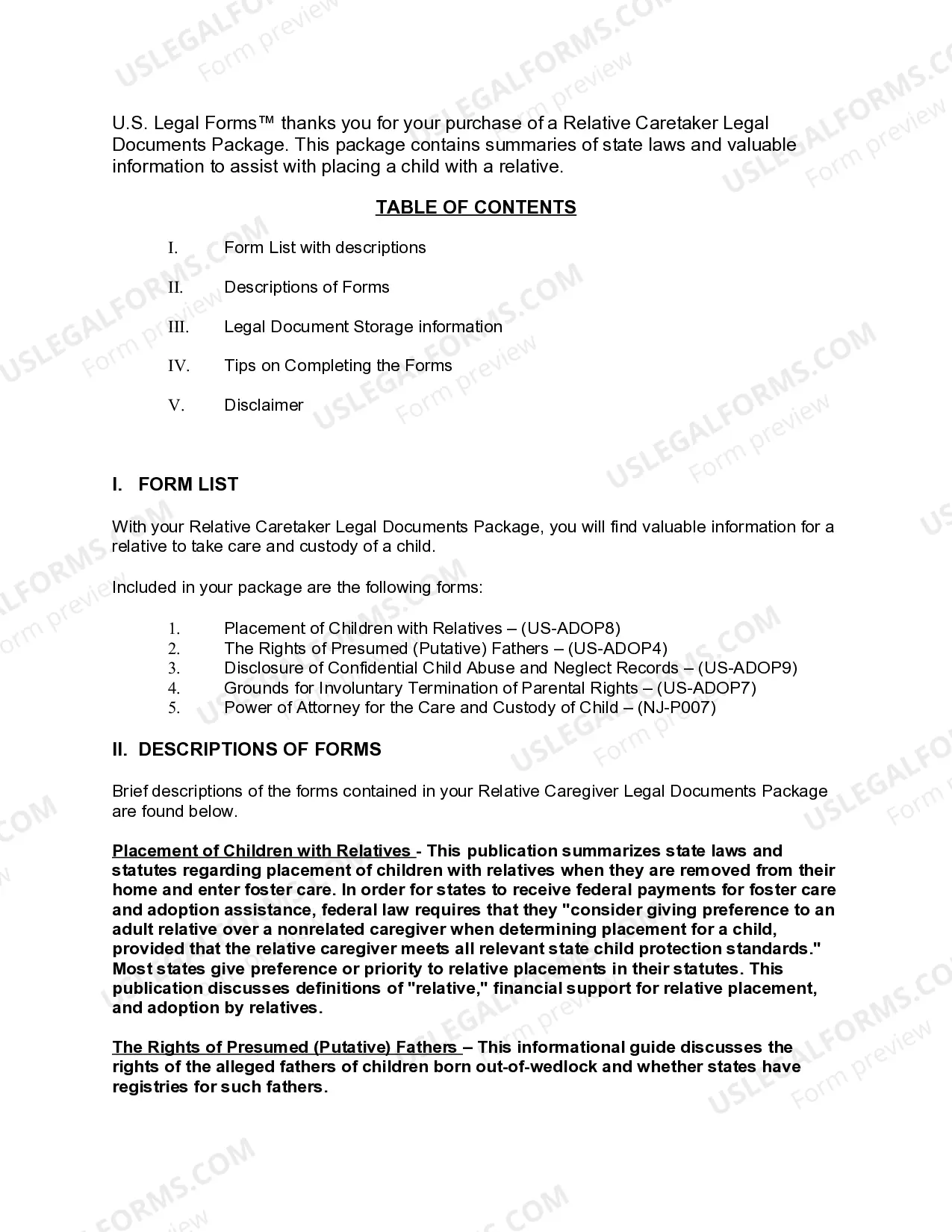
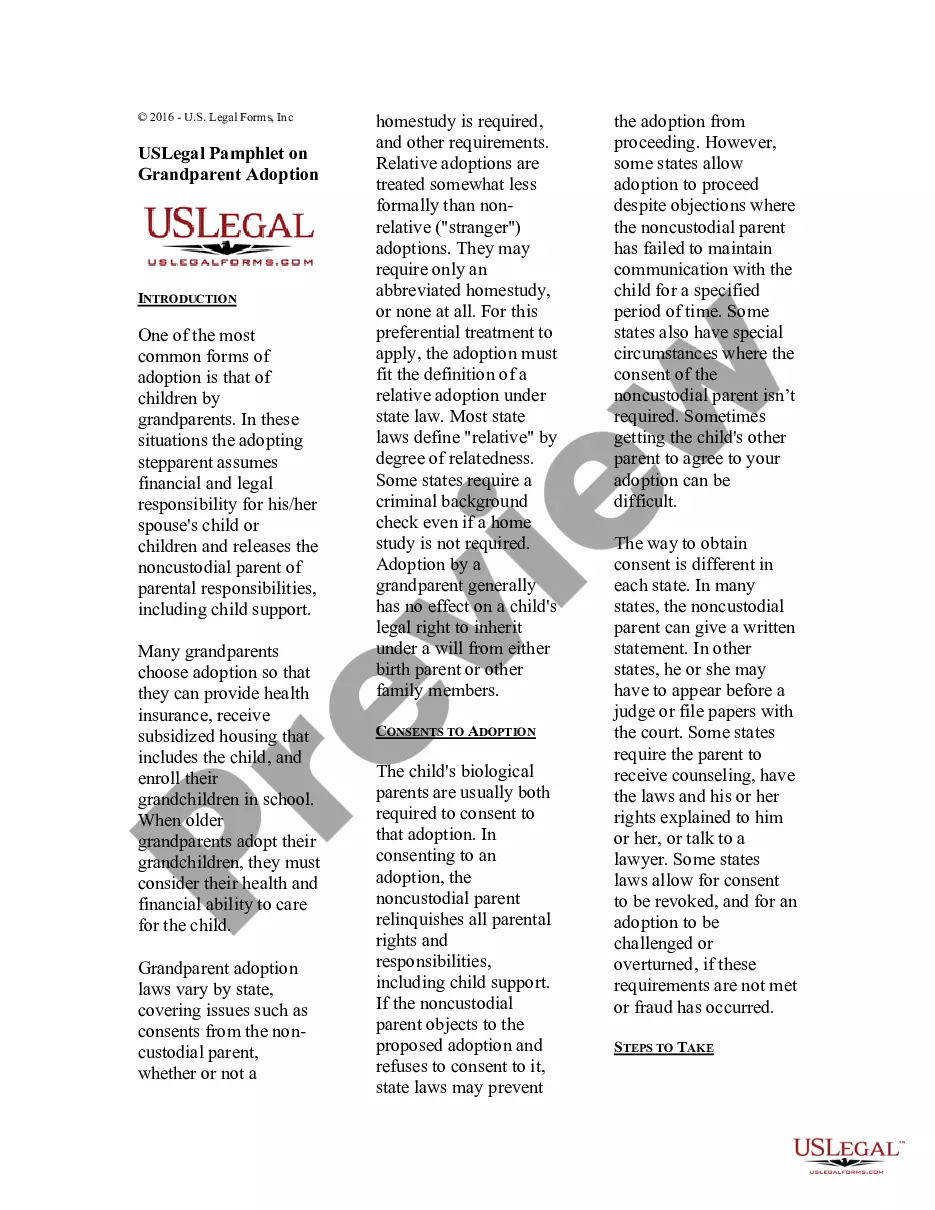
The New Jersey Relative Caretaker Legal Documents Package is designed to assist relatives who are seeking to take care of a child in their family. This package provides essential forms and legal information, ensuring that relatives understand the process of child placement under New Jersey law. It stands out from similar packages by offering a comprehensive overview of the relevant state laws and necessary actions to facilitate relative placements, all at a savings of more than 50% compared to purchasing the forms individually.
Forms included in this package

Common use cases
This package is useful in several scenarios, including:
- When a child needs to be placed with a relative due to removal from their home or foster care.
- When relatives are interested in adopting a child within their family.
- When relatives need to understand their rights and responsibilities regarding a child placed in their care.
- When a presumed father seeks to understand his legal rights and potential role in the child's life.
Who should use this form package
- Relatives of children who are involved in court proceedings for custody or placement.
- Presumed fathers seeking to establish their rights as a parent.
- Guardians or caretakers requiring legal documentation to care for a child.
- Individuals interested in adopting relatives' children and needing guidance through the process.
Instructions for completing these forms
- Review the included forms and guides to understand the legal requirements for relative care in New Jersey.
- Identify the appropriate forms that apply to your situation, such as the Power of Attorney or information on parental rights.
- Fill out the necessary forms, providing accurate information as required.
- Have the Power of Attorney notarized, if applicable, to ensure its legal validity.
- Store completed documents in a secure location and inform relevant family members about their whereabouts.
Notarization guidance for this package
Notarization is required for one or more forms in this package. US Legal Forms provides secure online notarization powered by Notarize, allowing you to complete the process through a verified video call.
Get your form ready online
Our built-in tools help you complete, sign, share, and store your documents in one place.
Make edits, fill in missing information, and update formatting in US Legal Forms—just like you would in MS Word.
Download a copy, print it, send it by email, or mail it via USPS—whatever works best for your next step.
Sign and collect signatures with our SignNow integration. Send to multiple recipients, set reminders, and more. Go Premium to unlock E-Sign.
If this form requires notarization, complete it online through a secure video call—no need to meet a notary in person or wait for an appointment.
We protect your documents and personal data by following strict security and privacy standards.

Make edits, fill in missing information, and update formatting in US Legal Forms—just like you would in MS Word.

Download a copy, print it, send it by email, or mail it via USPS—whatever works best for your next step.

Sign and collect signatures with our SignNow integration. Send to multiple recipients, set reminders, and more. Go Premium to unlock E-Sign.

If this form requires notarization, complete it online through a secure video call—no need to meet a notary in person or wait for an appointment.

We protect your documents and personal data by following strict security and privacy standards.
Common mistakes
- Failing to understand the legal implications of the Power of Attorney.
- Not having forms notarized when required.
- Inaccurate or incomplete information on legal documents.
- Overlooking the importance of understanding the rights of presumed fathers before filling out forms.
Why use this package online
- Convenience of downloading documents from anywhere at any time.
- Editable forms that allow you to easily input information without starting over.
- Access to legal guidance on New Jersey law concerning child custody and relative placements.
- Cost savings by bundling forms compared to purchasing individually.
Looking for another form?


Form popularity
FAQ
Unlike fostering, kinship is a type of out-of-home care where the child or young person is with a caregiver with whom they have had a previous relationship.informal, when the caregiver is providing home care as a private arrangement with the family, unrecognised by both the court and jurisdiction.
The New Jersey Legislature's solution to this problem is Kinship Legal Guardianship (KLG). KLG is a permanent and self- sustaining placement for a child that allows kinship caregivers to have legal rights over the child without terminating the rights of the birth parents.
The process to become an approved foster carer usually takes around 3 to 6 months. This varies depending on your individual circumstances and the type of care you want to provide.
Guide covers how to use the information your team has collected. By this point, your KPM team will have created detailed documentation of your current kinship care practices, which will position you to proceed with improvements to your child welfare system. All three phases of KPM take approximately eight weeks.
A relative or NREFM who is caring for a dependent child is eligible to receive a monthly foster care maintenance payment whether the child is federally eligible or ineligible. This payment is currently about $688 to $859 per month, depending on the age of the child.
Regarding your niece and nephew....get in touch with your local authority and explain the situation and explain you are willing to foster them. The only downside is that it will take a while for you to become foster carers as they will do police checks and alot more checks to see if you are suitable for this job.
The answer is yes. Whether they plan on giving a baby up for adoption to a friend, family member, or someone they've met through their own networking efforts, these arrangements are known as independent, or identified, adoptions.
Guardianship, as opposed to foster care, is a more permanent solution and is typically used for cases involving relative caregivers.? Kinship care is usually preferred over foster care so that a child is able to maintain relationships with extended family in a safe and familiar environment.
If you're a foster/kinship foster carer, you can get help, training and financial support. This includes an allowance to cover costs, tax relief and help getting a State Pension. Social workers also visit to support you and the foster child.