New Jersey Landlord Agreement to allow Tenant Alterations to Premises
What this document covers
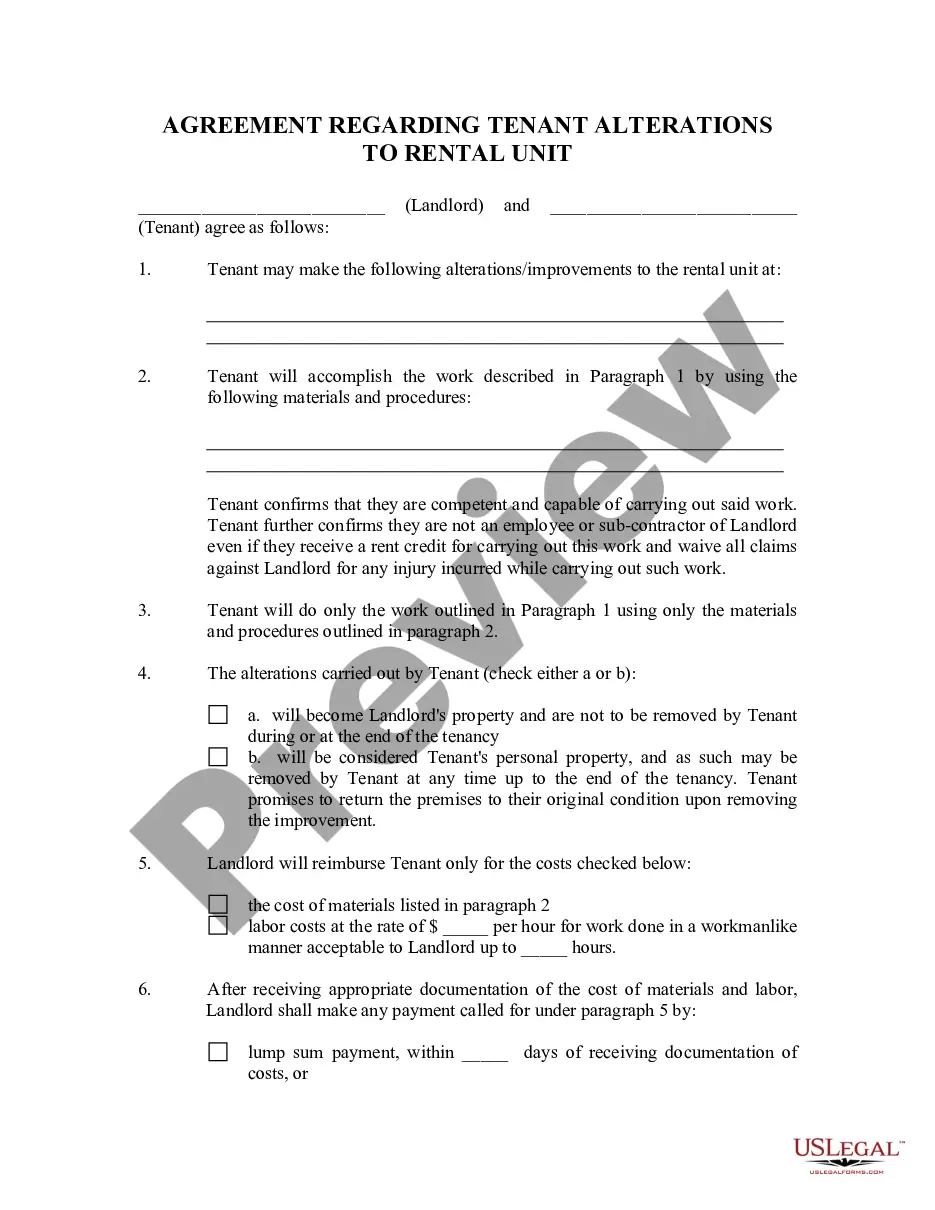
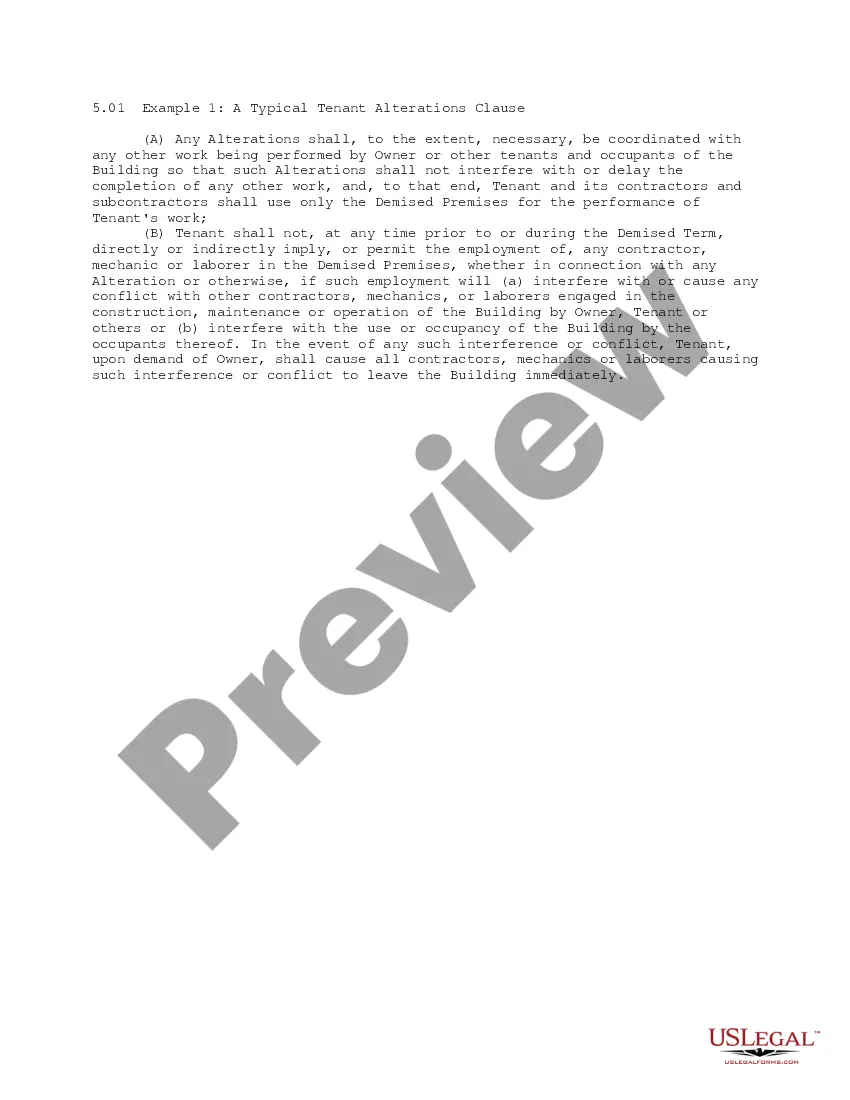
The Landlord Agreement to allow Tenant Alterations to Premises is a legal document that formalizes the permission a landlord gives to a tenant for making changes to the rented premises. This agreement helps prevent misunderstandings by clearly outlining which alterations are allowed, who is responsible for costs, and the ownership of improvements made by the tenant. Unlike a standard lease agreement, this form specifically focuses on modifications to the property during the rental period.
Form components explained
- Identification of the landlord and tenant
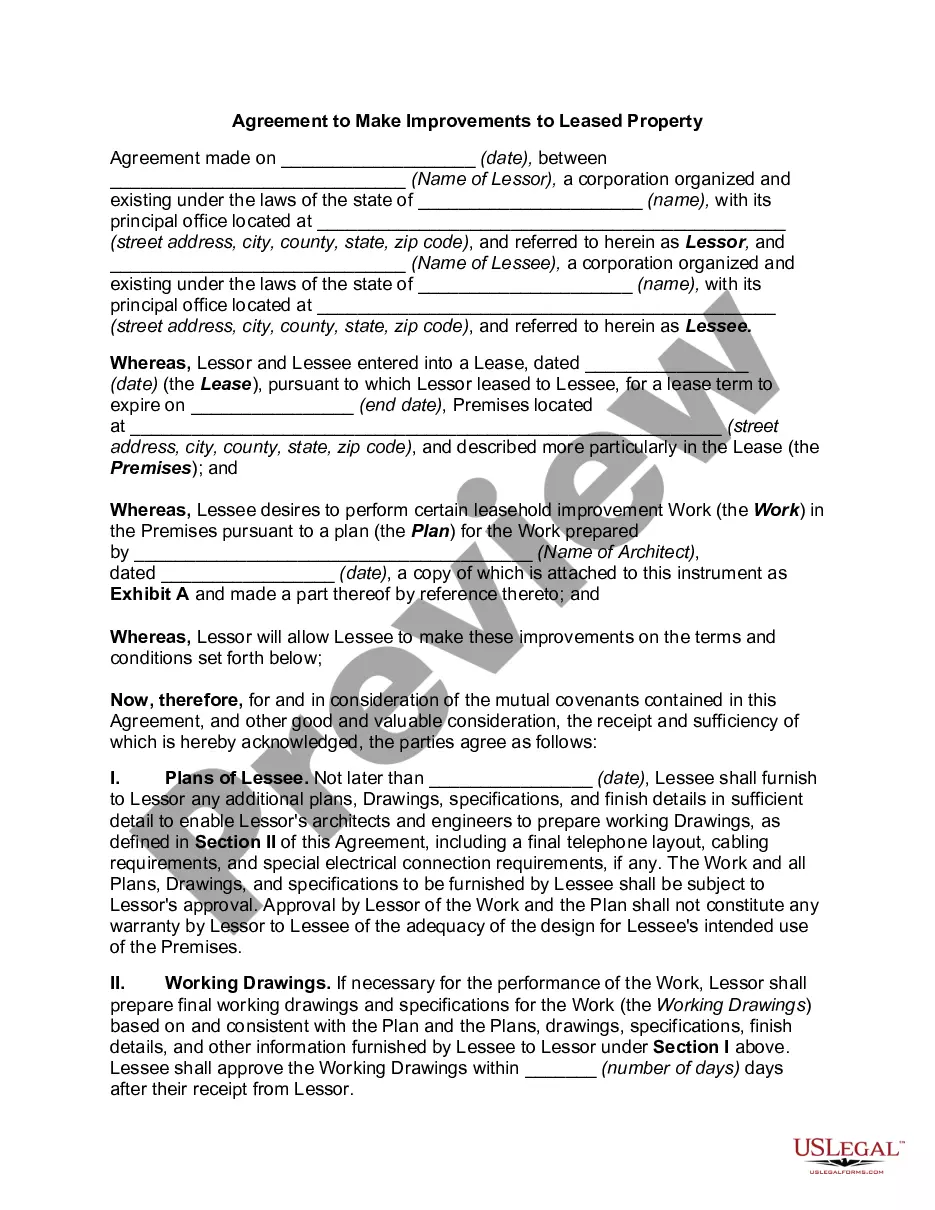
- Description of the specific alterations or improvements permitted
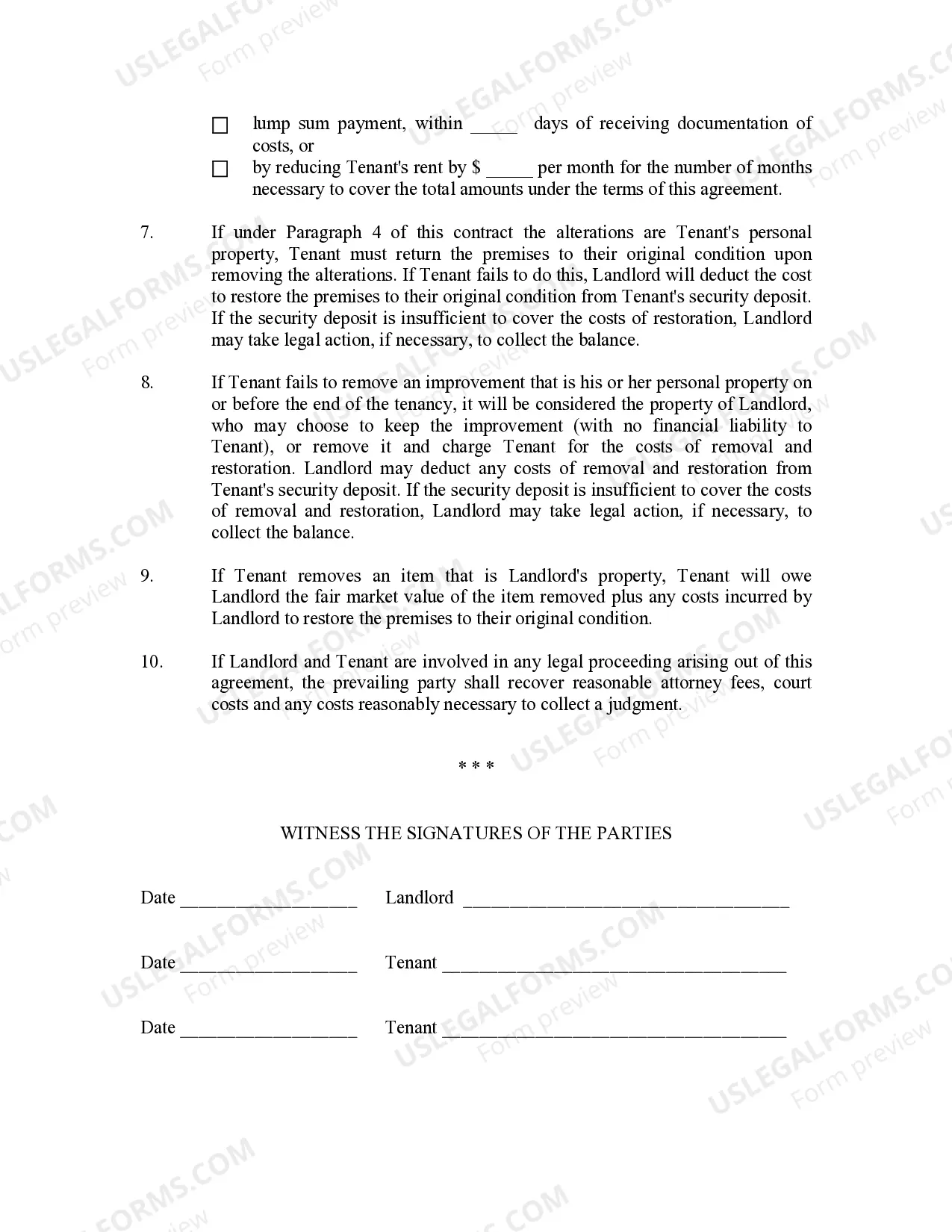
- Terms regarding ownership of improvements (tenant vs. landlord property)
- Cost reimbursement details, including material and labor expenses
- Requirements for restoring the premises to original condition upon removal of alterations
- Legal rights and obligations if alterations are not properly addressed
When to use this form
This form should be used when a tenant wishes to modify or improve their rental unit, which may include renovations, painting, or other alterations. It is essential to have an agreement in place to ensure that both parties are clear on what modifications are permitted, how costs will be shared, and what happens to these alterations at the end of the tenancy.
Who should use this form
- Landlords who want to allow tenants to make improvements to their property
- Tenants who wish to make alterations to their rented premises
- Real estate professionals managing rental agreements
Completing this form step by step
- Identify the parties involved: include names of the landlord and tenant.
- Specify the property where alterations will take place.
- Detail the specific alterations or improvements being made.
- Outline the financial arrangements for materials and labor.
- Include conditions regarding the ownership of the alterations and restoration requirements.
- Ensure both parties sign and date the agreement.
Does this document require notarization?
This form does not typically require notarization unless specified by local law. However, having the agreement notarized can provide additional legal protection for both parties.
Get your form ready online
Our built-in tools help you complete, sign, share, and store your documents in one place.
Make edits, fill in missing information, and update formatting in US Legal Forms—just like you would in MS Word.
Download a copy, print it, send it by email, or mail it via USPS—whatever works best for your next step.
Sign and collect signatures with our SignNow integration. Send to multiple recipients, set reminders, and more. Go Premium to unlock E-Sign.
If this form requires notarization, complete it online through a secure video call—no need to meet a notary in person or wait for an appointment.
We protect your documents and personal data by following strict security and privacy standards.
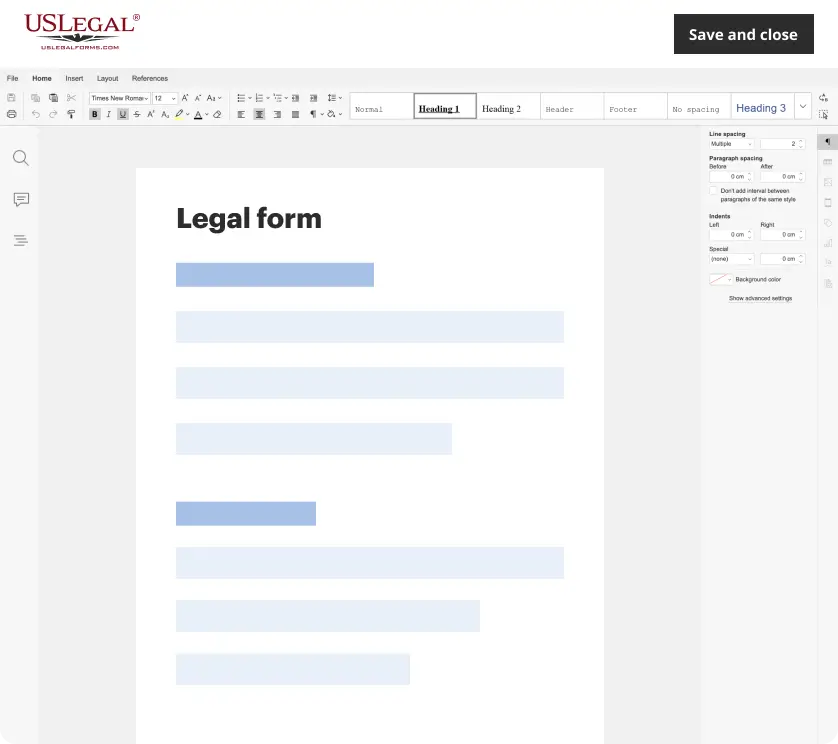
Make edits, fill in missing information, and update formatting in US Legal Forms—just like you would in MS Word.
Download a copy, print it, send it by email, or mail it via USPS—whatever works best for your next step.
Sign and collect signatures with our SignNow integration. Send to multiple recipients, set reminders, and more. Go Premium to unlock E-Sign.
If this form requires notarization, complete it online through a secure video call—no need to meet a notary in person or wait for an appointment.
We protect your documents and personal data by following strict security and privacy standards.
Common mistakes
- Failing to specify all alterations clearly, leading to disputes.
- Not including financial responsibilities for materials or labor.
- Ignoring to specify the return condition of the premises post-alterations.
Why complete this form online
- Convenience of completing the form at any time from any location.
- Editability allows users to tailor the agreement to specific needs.
- Access to professionally drafted templates ensures legal reliability.
Legal use & context
- This agreement is enforceable under most state laws, provided it is completed accurately and signed by both parties.
- Modifications made without proper agreement can lead to disputes, including claims for damages to the property.
- Failure to return the property to its original condition may result in deductions from the tenant's security deposit or other legal repercussions.
Looking for another form?
Form popularity
FAQ
Notice to Terminate the Lease A month-to-month tenant must give written notice of lease termination at least one full month prior to moving. Most yearly leases require a 60 to 90 day notice from the tenants in order to terminate the lease.
Generally, in California, tenants may remove improvements they have made to the property, if they do so before they return possession of the property to the landlord. When removing a fixture, the tenant must repair or compensate the landlord to return the premises to its pre-improvement condition.
Often, landlords will provide a 'leasehold improvement allowance' for their tenants which is merely a set amount they agree to pay for. If the improvements you want cost more than the allowance, you will be responsible for those extra costs.
Most leases and rental agreements contain a provision that prevents a tenant from making improvements or alterations to a rental unit without getting the written consent of the landlord. If you make an improvement or alteration without consent, it generally becomes the property of the landlord if you leave.
In cases like this, landlords are entitled to deduct the remaining tax basis in capitalized leasehold improvements made for a particular tenant upon termination of the lease if such improvements are irrevocably disposed of or abandoned and won't be used by a subsequent tenant.
Generally, in California, tenants may remove improvements they have made to the property, if they do so before they return possession of the property to the landlord. When removing a fixture, the tenant must repair or compensate the landlord to return the premises to its pre-improvement condition.
Tenant can claim for: Necessary improvements to protect or preserve the property (costs expended),The claim arises only once the lease is terminated and lessee returned the property. The court has discretion to disallow a claim for useful improvements.