New Jersey Letter from Tenant to Landlord containing Notice of wrongful deductions from security deposit and demand for return
What this document covers
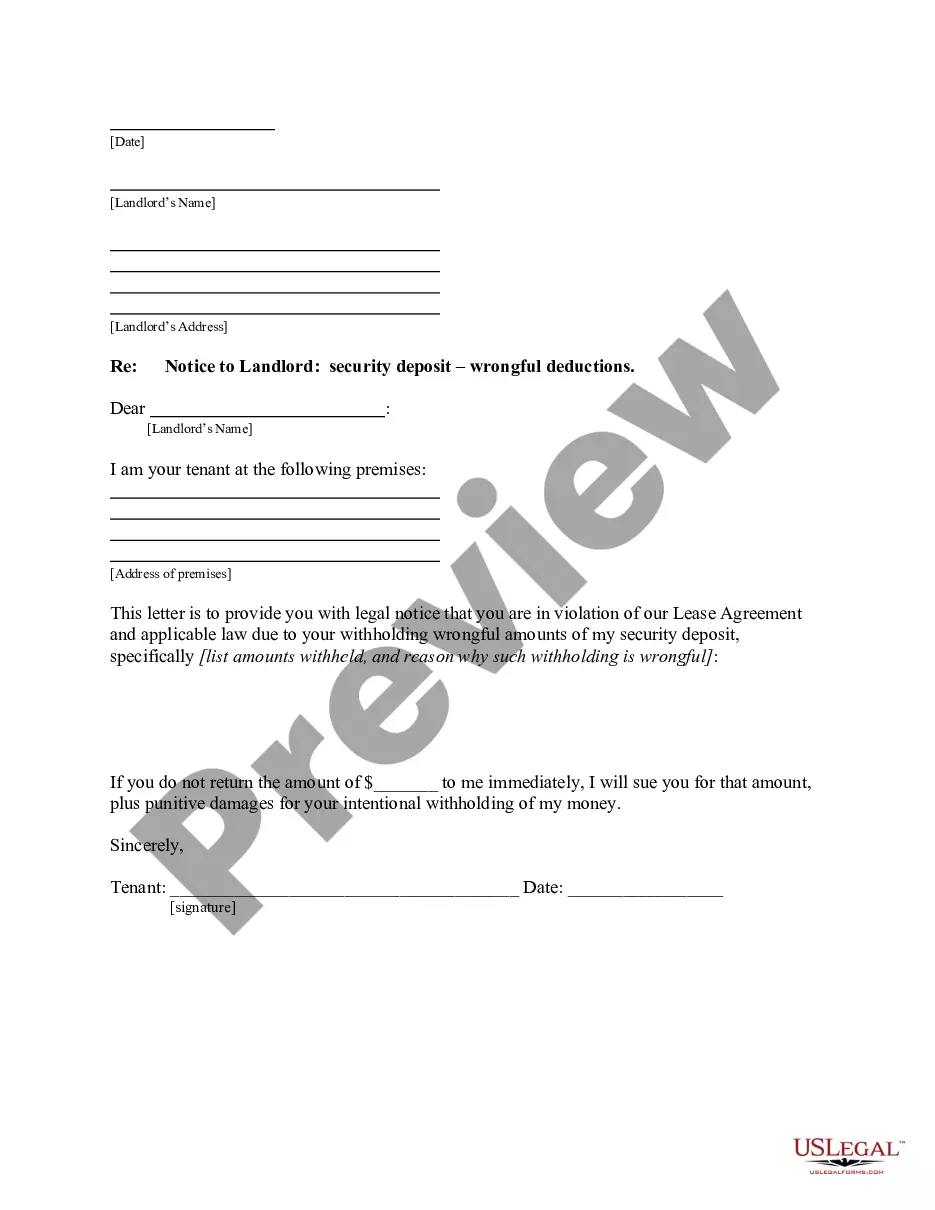
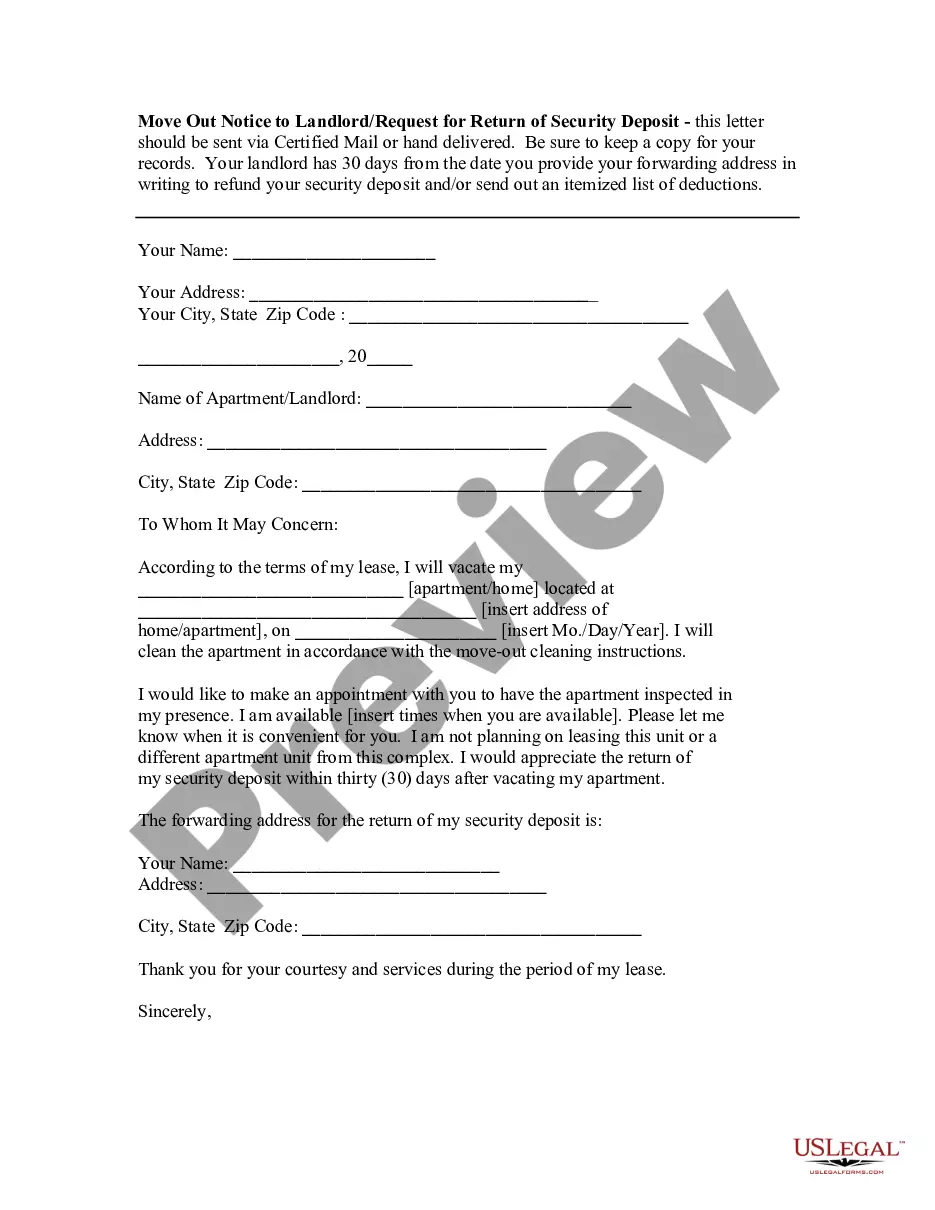
This Letter from Tenant to Landlord containing Notice of wrongful deductions from security deposit and demand for return is a legal document that allows tenants to formally notify their landlords when they believe wrongful deductions have been made from their security deposit. This form is designed to comply with state statutory law, ensuring that tenants can address issues related to their security deposits effectively. It differs from similar forms by specifically focusing on wrongful deductions and the demand for the return of funds.
Form components explained
- Tenant's name and address
- Landlord's name and address
- Date of delivery of the notice
- Description of the wrongful deductions
- Demand for the return of the security deposit
- Signatures for proof of delivery



Common use cases
This form should be used when a tenant is disputing specific deductions made by the landlord from their security deposit after moving out. It is essential when the tenant believes these deductions are unjustified and wants to formally request the return of the deducted amount. Common scenarios include unjust charges for damages or cleaning fees that the tenant believes are excessive or unfounded.
Who should use this form
- Tenants who have moved out and dispute deductions from their security deposit
- Individuals who want to ensure compliance with state laws regarding security deposits
- Renters seeking to formally request the return of their funds from their landlord
Steps to complete this form
- Identify and enter your name and address at the top of the letter.
- Provide the landlord's information, including their name and address.
- Clearly describe the wrongful deductions and specify the amount to be returned.
- Date the letter to confirm when it was delivered.
- Sign the letter to authenticate your demand.
- Choose a method of delivery to send the notice to your landlord.
Notarization requirements for this form
This form usually doesn’t need to be notarized. However, local laws or specific transactions may require it. Our online notarization service, powered by Notarize, lets you complete it remotely through a secure video session, available 24/7.
Get your form ready online
Our built-in tools help you complete, sign, share, and store your documents in one place.
Make edits, fill in missing information, and update formatting in US Legal Forms—just like you would in MS Word.
Download a copy, print it, send it by email, or mail it via USPS—whatever works best for your next step.
Sign and collect signatures with our SignNow integration. Send to multiple recipients, set reminders, and more. Go Premium to unlock E-Sign.
If this form requires notarization, complete it online through a secure video call—no need to meet a notary in person or wait for an appointment.
We protect your documents and personal data by following strict security and privacy standards.

Make edits, fill in missing information, and update formatting in US Legal Forms—just like you would in MS Word.

Download a copy, print it, send it by email, or mail it via USPS—whatever works best for your next step.

Sign and collect signatures with our SignNow integration. Send to multiple recipients, set reminders, and more. Go Premium to unlock E-Sign.

If this form requires notarization, complete it online through a secure video call—no need to meet a notary in person or wait for an appointment.

We protect your documents and personal data by following strict security and privacy standards.
Avoid these common issues
- Failing to specify the exact deductions being disputed.
- Not including proof of when and how the notice was delivered.
- Neglecting to sign the letter before sending it to the landlord.
Why use this form online
- Convenient access: Download and complete the form from anywhere.
- Editability: Easily modify the content to suit your specific situation.
- Reliability: Utilize a form drafted by licensed attorneys, ensuring compliance with state laws.
Looking for another form?
Form popularity
FAQ
Start by simply saying the date and the tenants name and address. Make sure all the data is accurate, as this can serve as a written notice should you go to court. The letter should inform the tenant that they are late on the rent and by how many days.
The date of the letter and the landlord's full name and address. The address of the residence you rented and the date you moved in. A statement that you've been paying your rent timely and that you are current with your payments.
According to our database of legal fees, an attorney practicing on their own will charge anywhere between $750 and $1,200 to write and send a demand letter. A smaller law firm will charge anywhere from $1,000 to $1,500 for their services.
Before you go to court, a number of states require you to send a demand letter to your opposing party. An attorney is usually not necessary at this point and you can write a demand letter on your own. To write one, gather necessary documents, draft your letter, and send the letter to your opposing party.
Type your letter. Concisely review the main facts. Be polite. Write with your goal in mind. Ask for exactly what you want. Set a deadline. End the letter by stating you will promptly pursue legal remedies if the other party does not meet your demand. Make and keep copies.
Type your letter. Concisely review the main facts. Be polite. Write with your goal in mind. Ask for exactly what you want. Set a deadline. End the letter by stating you will promptly pursue legal remedies if the other party does not meet your demand. Make and keep copies.
Type your letter. Concisely review the main facts. Be polite. Write with your goal in mind. Ask for exactly what you want. Set a deadline. End the letter by stating you will promptly pursue legal remedies if the other party does not meet your demand. Make and keep copies.
Although an attorney often writes the demand letter, you can also do it yourself in several cases:If you have a fairly simple legal issue and you want to go through the process yourself, without an attorney.
Security Deposit Deductions in New Jersey A landlord may be able to keep all or a part of a tenant's security deposit for the following reasons: Unpaid rent. Damage to the property more than normal wear and tear.