New Hampshire Last Will and Testament with All Property to Trust called a Pour Over Will
Overview of this form
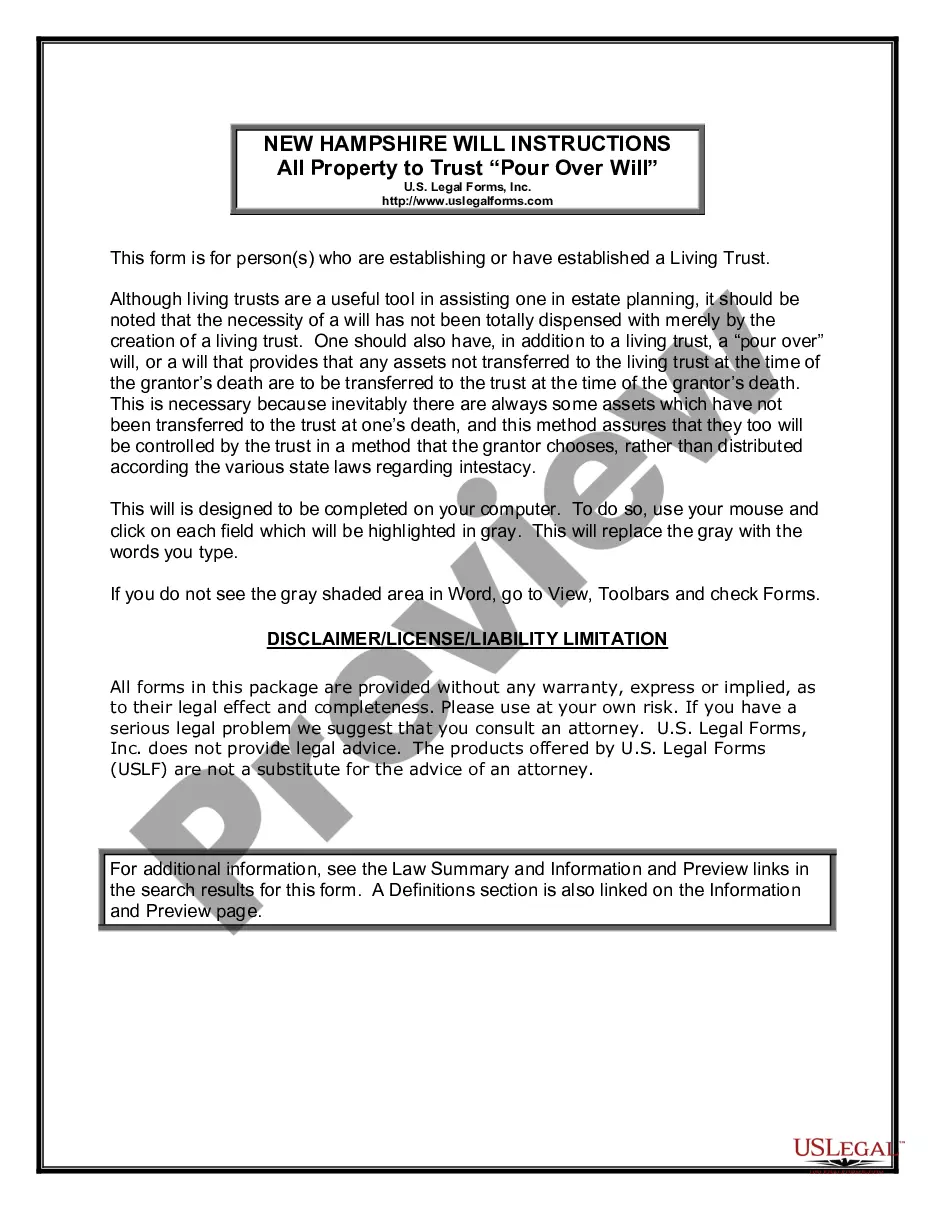
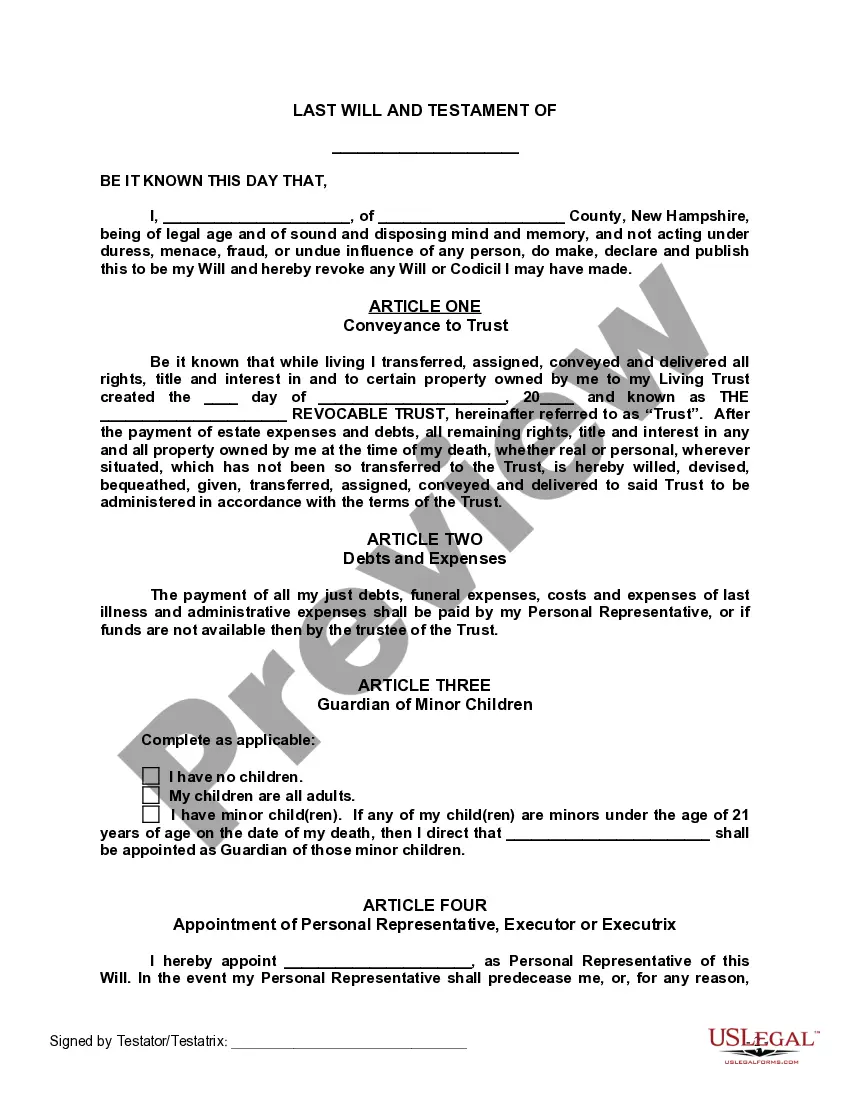
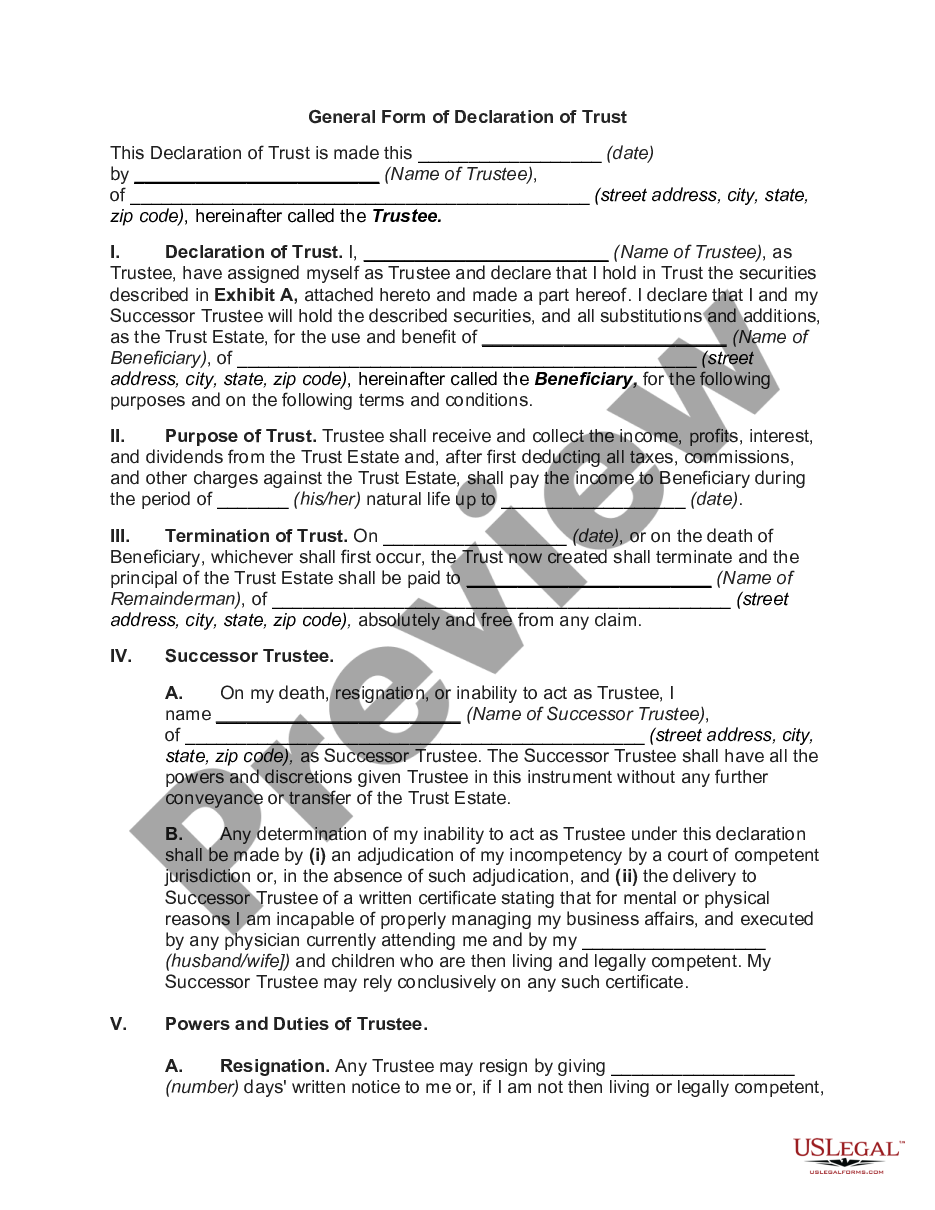
The Last Will and Testament, specifically designed as a Pour Over Will, is a legal document that designates a person's wishes regarding the distribution of their estate upon their death. It ensures that any property not already transferred into a living trust is directed to that trust, simplifying the estate planning process. Unlike a standard will, this form is intended for individuals who have established or plan to establish a living trust, allowing for a seamless transition of assets posthumously.
Key parts of this document
- Conveyance to Trust: Specifies that all property not transferred to the trust during the grantor's lifetime will be transferred to the trust upon death.
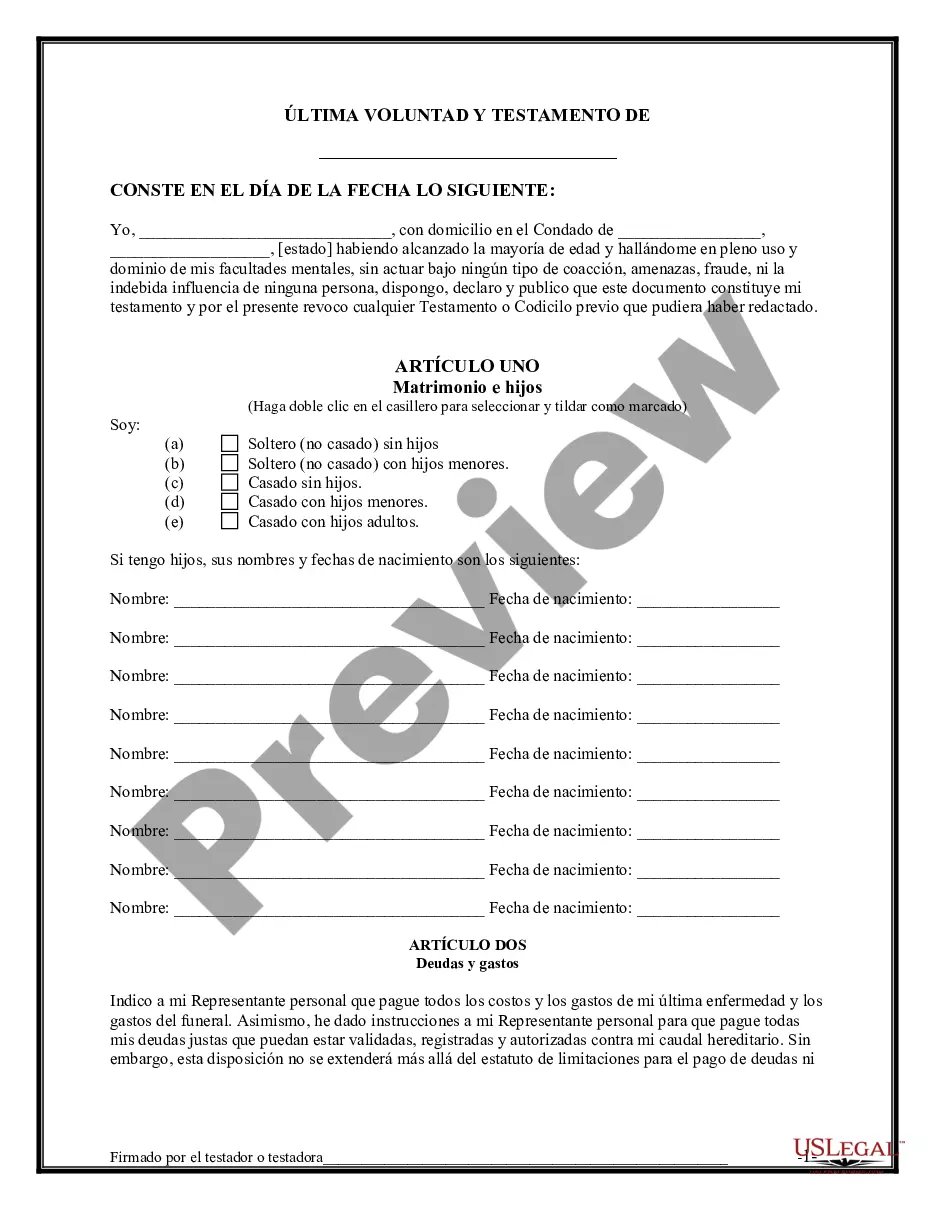
- Payment of Debts and Expenses: Outlines how debts, funeral costs, and other expenses will be handled after the testator's death.
- Guardian of Minor Children: Provides a section for appointing a guardian if there are minor children.
- Appointment of Personal Representative: Designates an individual to oversee the execution of the will.
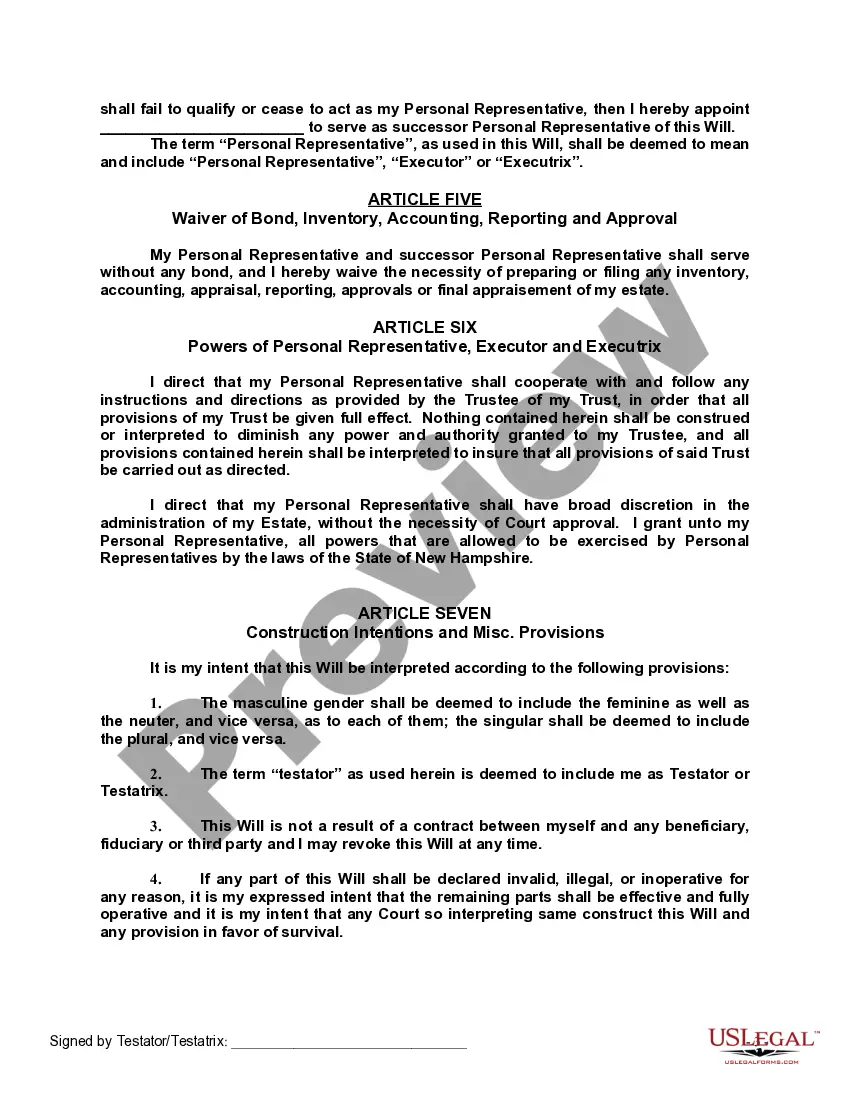
- Waiver of Bond: States that the personal representative may serve without posting a bond.
- Powers of Personal Representative: Details the authority granted to the personal representative for estate administration.




Common use cases
This form is necessary when you wish to ensure that any assets not placed in your living trust during your lifetime are automatically included in the trust after your death. It is particularly useful for individuals establishing an estate plan to avoid the complex intestacy laws that can govern asset distribution if no valid will is in place.
Who should use this form
- Individuals establishing a new living trust.
- Those who already have a trust but have not transferred all assets into it.
- People concerned about the management of their estate after their passing.
- Anyone with minor children who wish to designate a guardian.
Instructions for completing this form
- Enter your name and address at the top of the document.
- Fill out the section regarding the conveyance of property to your living trust.
- Specify any debts and expenses that should be settled from your estate.
- Decide and indicate the guardian for any minor children, if applicable.
- Appoint a personal representative who will execute your will.
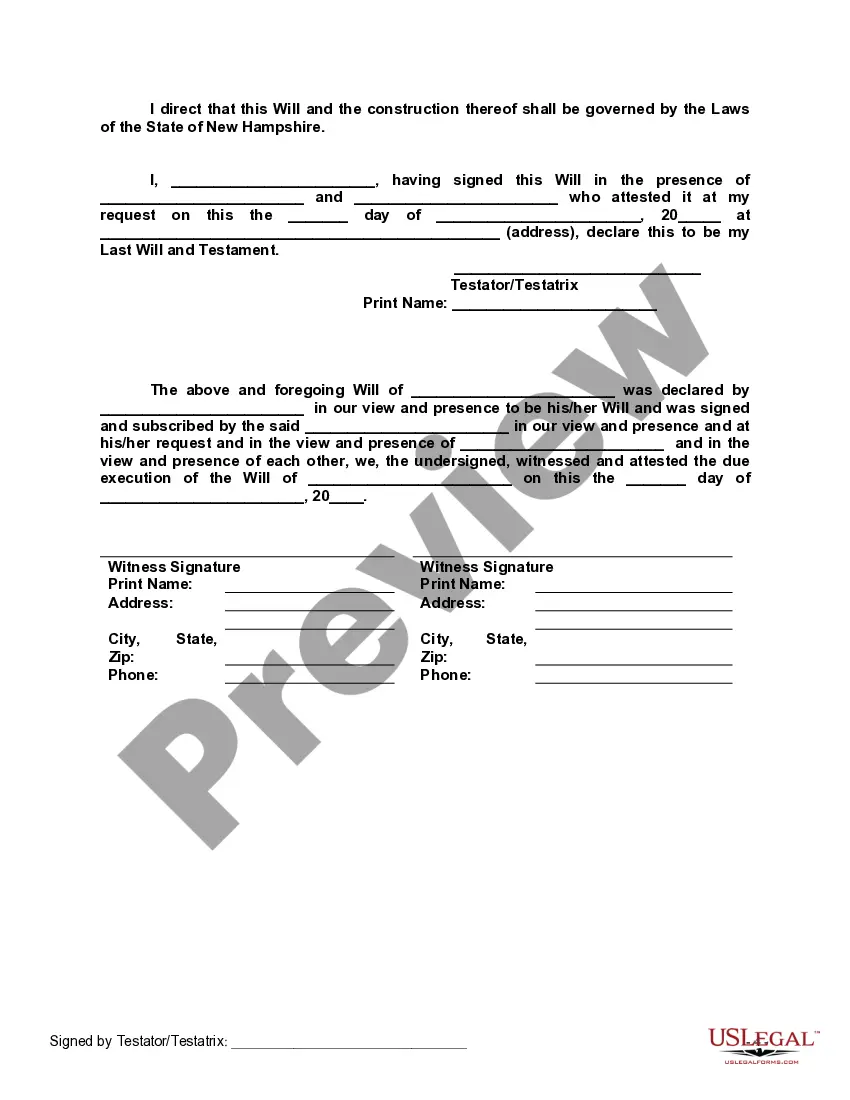
- Ensure all required signatures from witnesses and a notary are included at the end of the document.
Does this document require notarization?
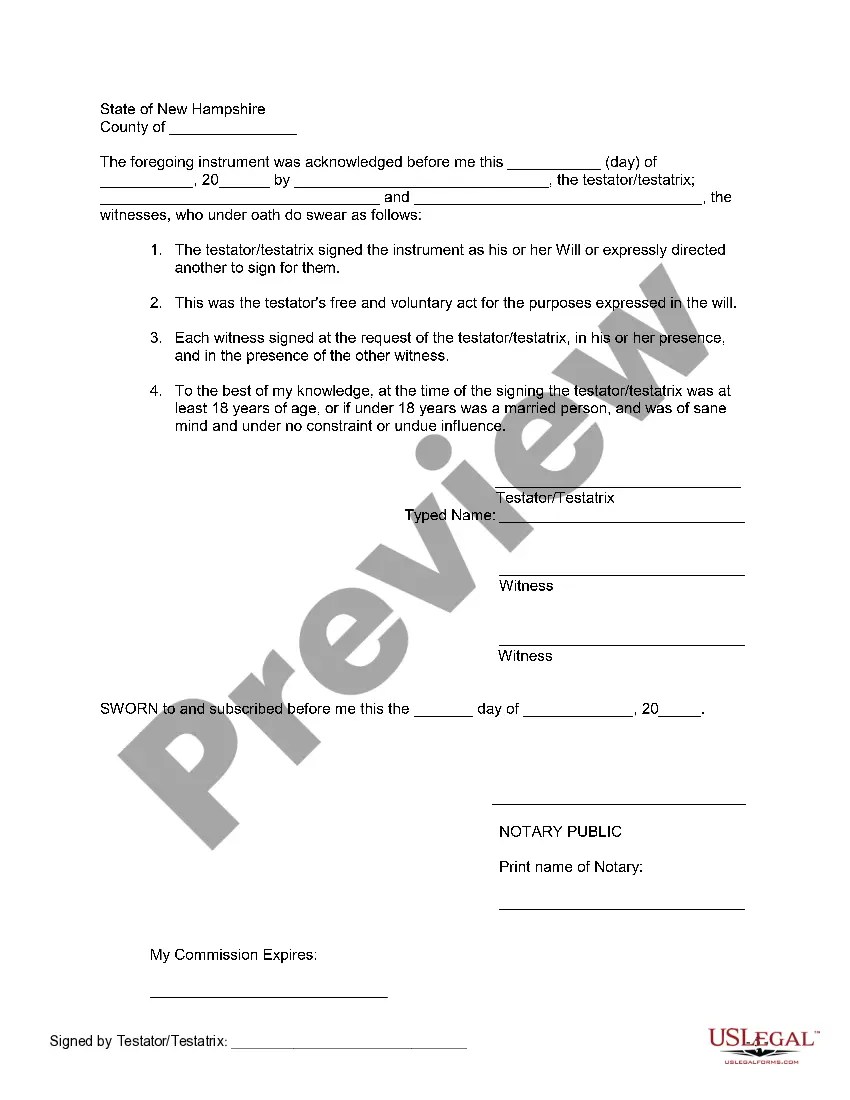
This form needs to be notarized to ensure legal validity. US Legal Forms provides secure online notarization powered by Notarize, allowing you to complete the process through a verified video call, available anytime.
Get your form ready online
Our built-in tools help you complete, sign, share, and store your documents in one place.
Make edits, fill in missing information, and update formatting in US Legal Forms—just like you would in MS Word.
Download a copy, print it, send it by email, or mail it via USPS—whatever works best for your next step.
Sign and collect signatures with our SignNow integration. Send to multiple recipients, set reminders, and more. Go Premium to unlock E-Sign.
If this form requires notarization, complete it online through a secure video call—no need to meet a notary in person or wait for an appointment.
We protect your documents and personal data by following strict security and privacy standards.
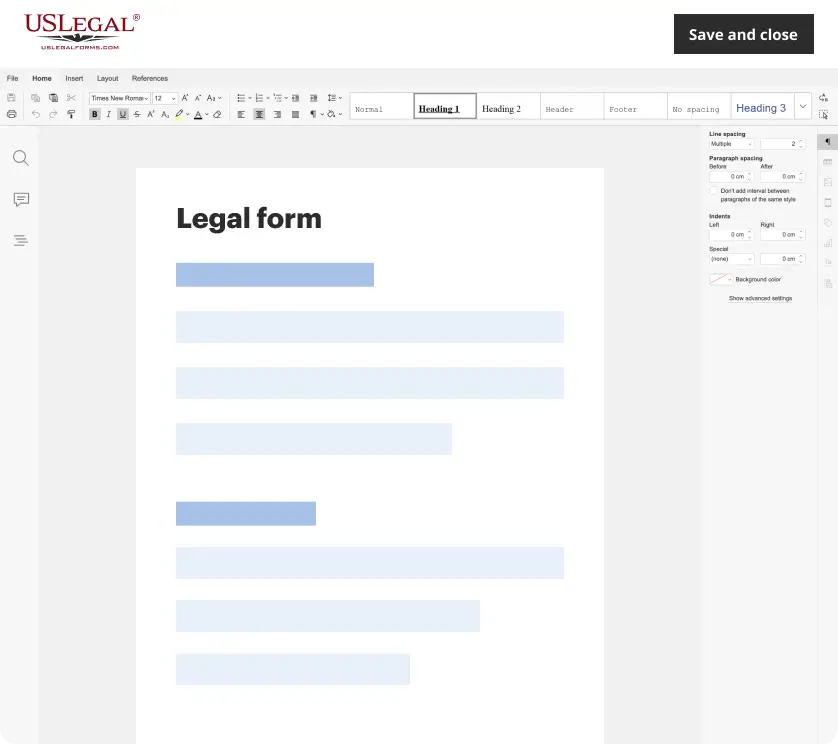
Make edits, fill in missing information, and update formatting in US Legal Forms—just like you would in MS Word.
Download a copy, print it, send it by email, or mail it via USPS—whatever works best for your next step.
Sign and collect signatures with our SignNow integration. Send to multiple recipients, set reminders, and more. Go Premium to unlock E-Sign.

If this form requires notarization, complete it online through a secure video call—no need to meet a notary in person or wait for an appointment.
We protect your documents and personal data by following strict security and privacy standards.
Common mistakes to avoid
- Failing to update the will after significant life changes, like marriage or having children.
- Not specifying all assets, leading to potential complications during the estate settlement process.
- Overlooking the witness and notary requirements, which can invalidate the will.
- Failing to revoke previous wills or codicils, leading to confusion about which document is valid.
Benefits of using this form online
- Easy to complete on your computer, saving time and minimizing errors.
- Convenient access to legal documents anytime, without the need for physical appointments.
- Editable format allows for personalized adjustments as your circumstances change.
- Reliability, as forms are prepared by licensed attorneys familiar with state laws.
Looking for another form?
Form popularity
FAQ
In most situations, a will template is an easy and inexpensive way to make sure your wishes are known and carried out. Most people can get everything they need by using a will template, with little cost or hassle.
A pour-over will is a testamentary device wherein the writer of a will creates a trust, and decrees in the will that the property in his or her estate at the time of his or her death shall be distributed to the Trustee of the trust.
Bank accounts. Brokerage or investment accounts. Retirement accounts and pension plans. A life insurance policy.
In New Hampshire, you can make a living trust to avoid probate for virtually any asset you ownreal estate, bank accounts, vehicles, and so on. You need to create a trust document (it's similar to a will), naming someone to take over as trustee after your death (called a successor trustee).
The Free Last Will and Testament Template for Word is compatible with Word 2003 or later versions.
After reading about the benefits of a revocable living trust, you may wonder, Why do I need a pour-over will if I have a living trust? A pour-over will is necessary in the event that you do not fully or properly fund your trust.Your trust agreement can only control the assets that the trust owns.
A handwritten or typed will can be created at no cost. Many online services set a price at less than $100 for a will. Most estate planners charge more than your average do-it-yourself service, Farrell says. For help with a will, an attorney will likely charge several hundred dollars or more.
Pour-over wills are subject to probate since the assets have not yet been transferred into the trust. Some states also require your assets to go through the probate process any time your assets or property are over a certain value.Even though pour-over wills don't avoid probate, there is still a measure of privacy.
A TOD account skips the probate process and takes precedence over a will. If you will all of your money and property to your children, but have a TOD account naming your brother the beneficiary, he will receive what's in the account and your children will get everything else.