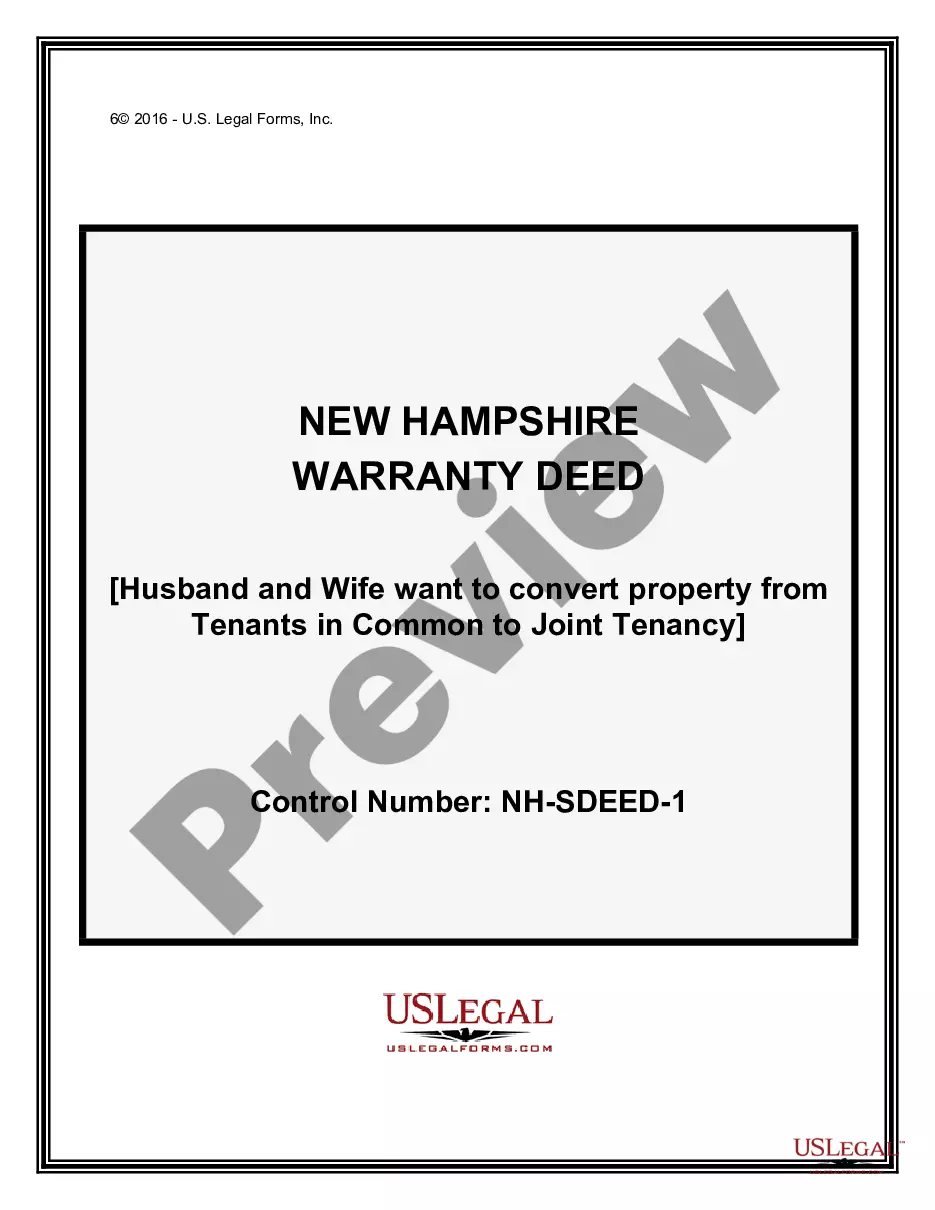
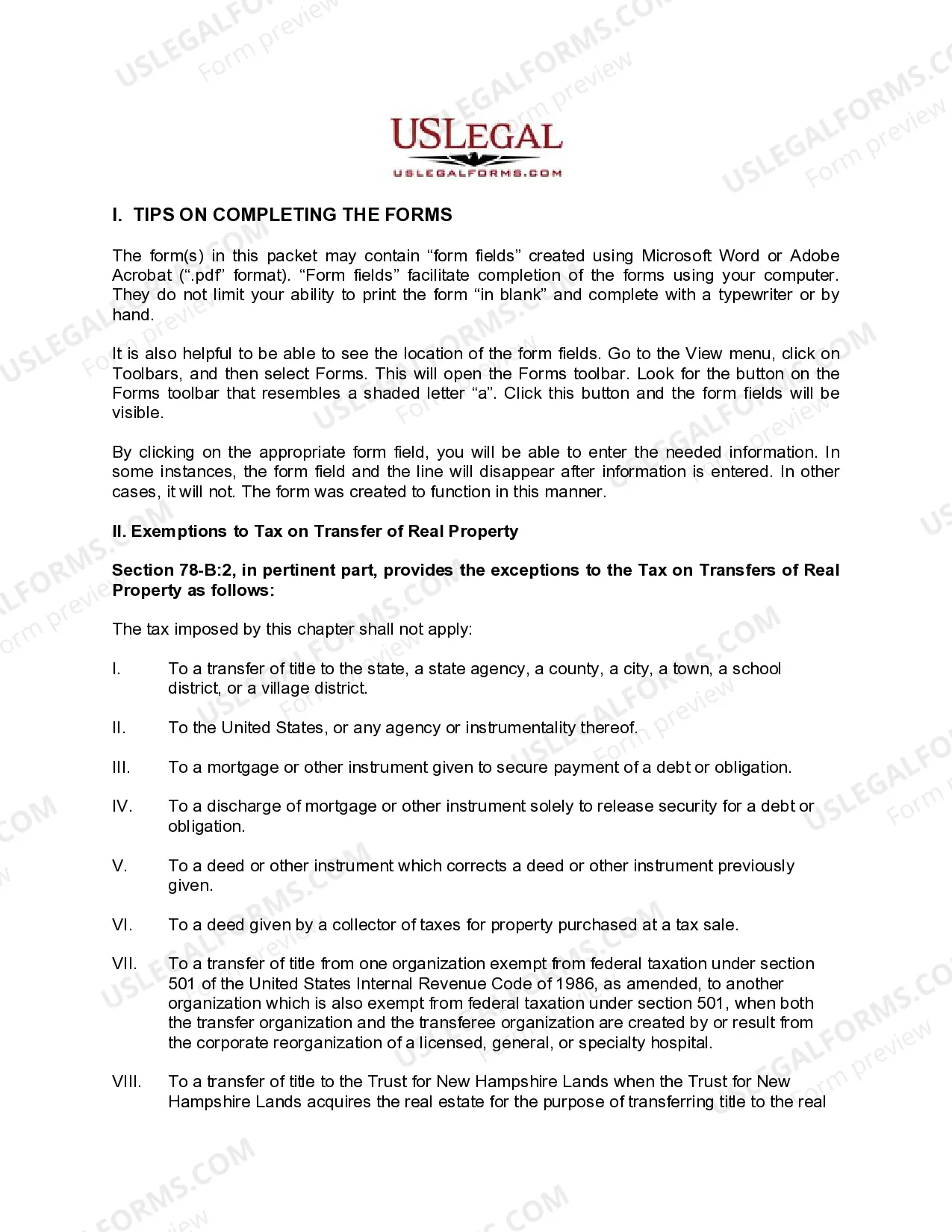
New Hampshire Warranty Deed for Husband and Wife Converting Property from Tenants in Common to Joint Tenancy
Understanding this form
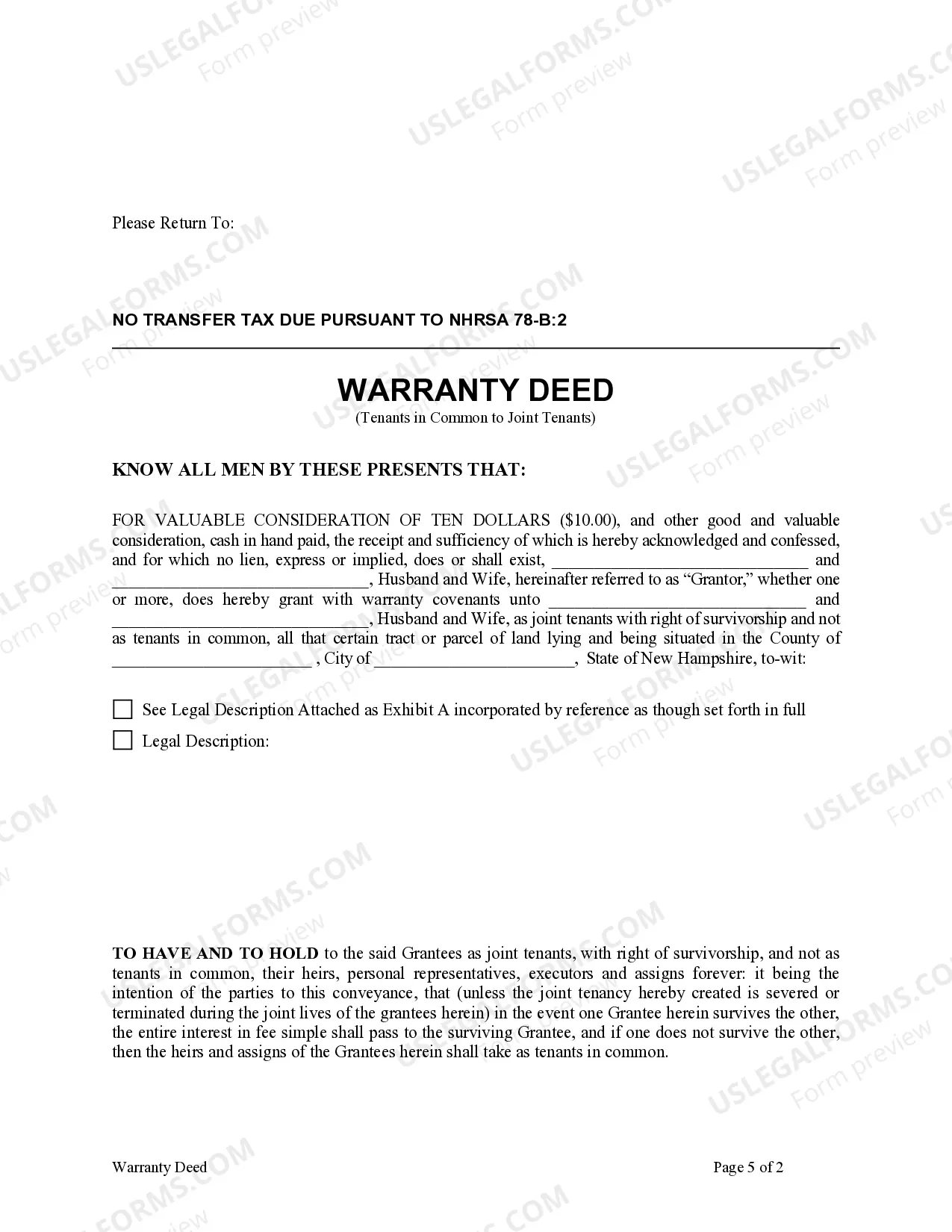
This Warranty Deed for Husband and Wife is a legal document used to convert property ownership from tenants in common to joint tenants. This form is specifically designed for couples who currently hold the title to a property as tenants in common and wish to change their ownership structure to joint tenancy. This differs from other types of deeds as it addresses the unique legal needs of married couples transitioning their property rights.
What’s included in this form
- Identification of grantors (husband and wife) and their shared ownership type.
- Details of the property being conveyed, including legal description.
- Statement of the conversion from tenants in common to joint tenants.
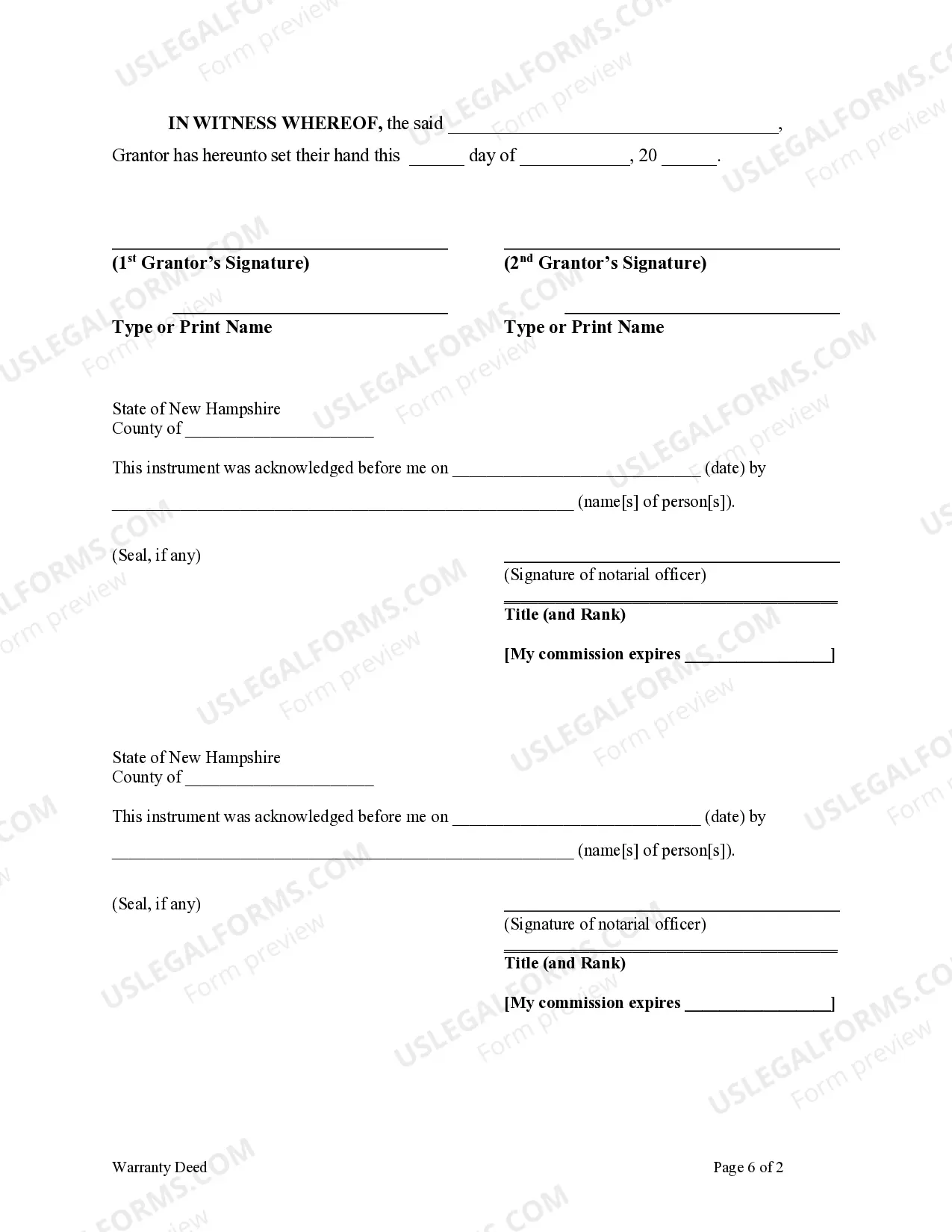
- Signatures of both grantors indicating their agreement.
- Notarization section for verifying the identities of the signing parties.






When to use this document
This form is needed when a husband and wife, who currently own property as tenants in common, want to convert their ownership to joint tenancy. This change provides automatic survivorship benefits, meaning if one spouse passes away, the other automatically inherits the property without going through probate. It is often used when couples wish to consolidate their property rights and simplify inheritance matters.
Who should use this form
- Married couples who own property as tenants in common.
- Couples seeking to simplify their estate planning through joint tenancy.
- Individuals who want to ensure their spouse inherits their share of property automatically.
Instructions for completing this form
- Identify the husband and wife as the grantors.
- Specify the property details, including the legal description.
- Indicate the current ownership type and the desired change to joint tenancy.
- Both grantors should sign the document in the designated areas.
- Have the document notarized by a qualified notary public.
Notarization requirements for this form
This document requires notarization to meet legal standards. US Legal Forms provides secure online notarization powered by Notarize, allowing you to complete the process through a verified video call, available 24/7.
Get your form ready online
Our built-in tools help you complete, sign, share, and store your documents in one place.
Make edits, fill in missing information, and update formatting in US Legal Forms—just like you would in MS Word.
Download a copy, print it, send it by email, or mail it via USPS—whatever works best for your next step.
Sign and collect signatures with our SignNow integration. Send to multiple recipients, set reminders, and more. Go Premium to unlock E-Sign.
If this form requires notarization, complete it online through a secure video call—no need to meet a notary in person or wait for an appointment.
We protect your documents and personal data by following strict security and privacy standards.

Make edits, fill in missing information, and update formatting in US Legal Forms—just like you would in MS Word.

Download a copy, print it, send it by email, or mail it via USPS—whatever works best for your next step.

Sign and collect signatures with our SignNow integration. Send to multiple recipients, set reminders, and more. Go Premium to unlock E-Sign.

If this form requires notarization, complete it online through a secure video call—no need to meet a notary in person or wait for an appointment.

We protect your documents and personal data by following strict security and privacy standards.
Common mistakes
- Failing to accurately describe the property, which can lead to validity issues.
- Not signing the document in front of a notary, which is often required.
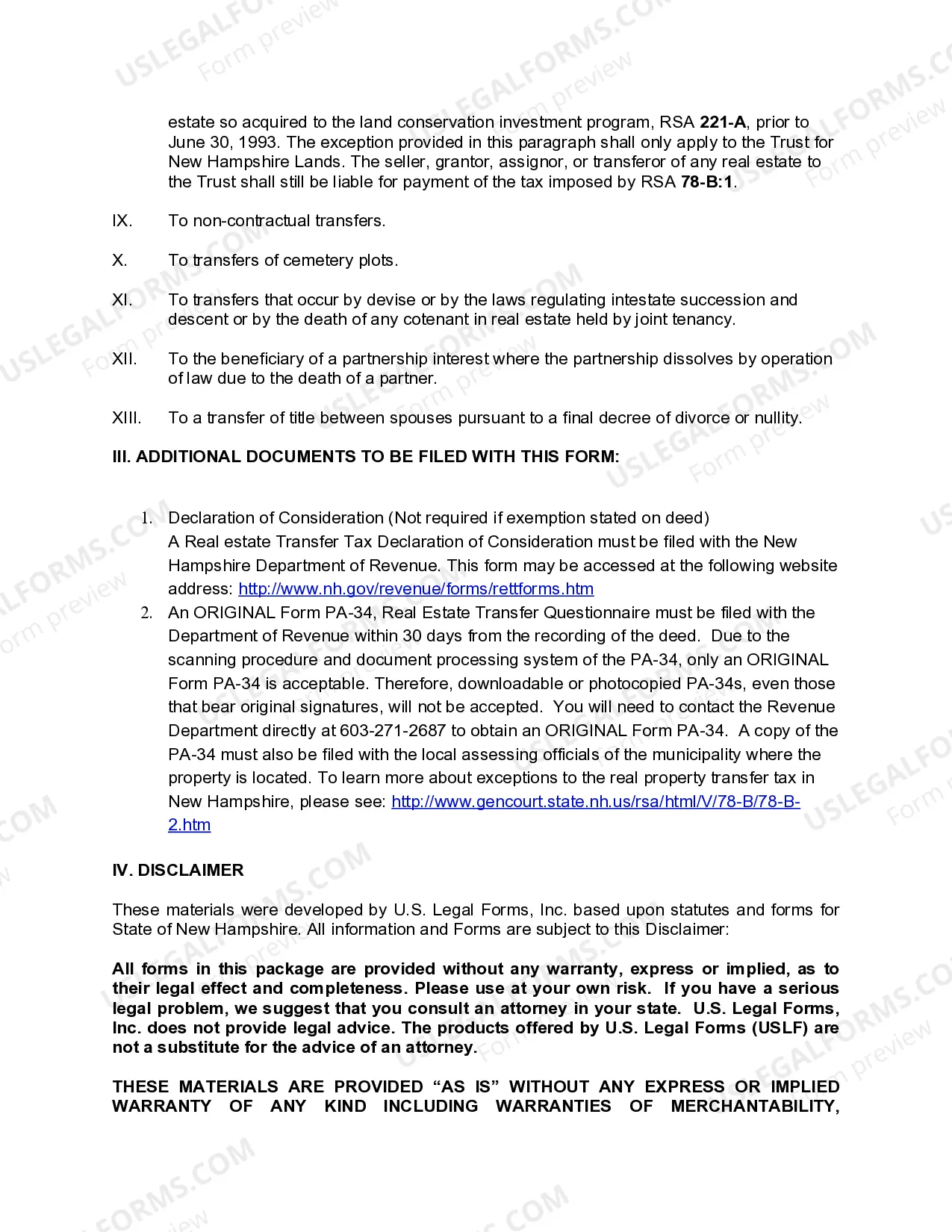
- Overlooking local tax filing requirements associated with the property transfer.
Advantages of online completion
- Convenience of completing and downloading the form from home.
- Editability allows for quick updates and corrections before finalizing.
- Access to attorney-drafted templates, ensuring legal compliance.
Looking for another form?


Form popularity
FAQ
Change from tenants in common to joint tenantsYou need the agreement of all the other joint owners to change from being tenants in common to joint tenants. A solicitor, conveyancer or legal executive can also make the application for you.
If the property sells for a profit, each tenant in common walks away with a share of the money equal to his ownership share in the property.Each co-owner theoretically becomes responsible for his or her share of the debt. Mortgage companies may not see things that way, however.
Most married couples tend to hold their property as joint tenants.Should this happen, the property is then automatically held as Tenants in Common which means the co-owner is free to leave their share of the property to whoever they wish. As Tenants in Common, each co-owner owns a specific share of the property.
Change from tenants in common to joint tenantsYou need the agreement of all the other joint owners to change from being tenants in common to joint tenants. A solicitor, conveyancer or legal executive can also make the application for you.
You can change from being either: joint tenants to tenants in common, for example if you divorce or separate and want to leave your share of the property to someone else. tenants in common to joint tenants, for example if you get married and want to have equal rights to the whole property.
In California, most married couples hold real property (such as land and buildings) as joint tenants with right of survivorship.For instance, many married couples share real property as joint tenants. This way, upon the death of a spouse, the surviving spouse will own 100% share of the property.
You can assign your tenancy to your husband, wife or civil partner if they live with you. If you don't live with a married or civil partner, you can assign to any of the following family members, but only if the person has lived with you for at least 1 year: an unmarried partner. an adult child or grandchild.
Serve a written notice of the change (a 'notice of severance') on the other owners - a conveyancer can help you do this. Download and fill in form SEV to register a restriction without the other owners' agreement. Prepare any supporting documents you need to include.