New Hampshire Essential Legal Life Documents for New Parents
Understanding this form package
The New Hampshire Essential Legal Life Documents for New Parents package provides key legal documents tailored for new parents. This unique package addresses the changes in your legal life that come with the addition of a child. Unlike general legal form packages, this one is specifically designed to meet the needs of parents in New Hampshire, ensuring that you are well-prepared to handle crucial matters concerning your child's welfare and your estate planning.
Forms provided in this package
- General Durable Power of Attorney for Property and Finances or Financial Effective Immediately
- Power of Attorney for Care and Custody of Child or Children
- Durable Power of Attorney for Health Care and Living Will - Statutory
- Financial Statement Form - Husband and Wife Joint
- Parental Permission and Medical Consent Form
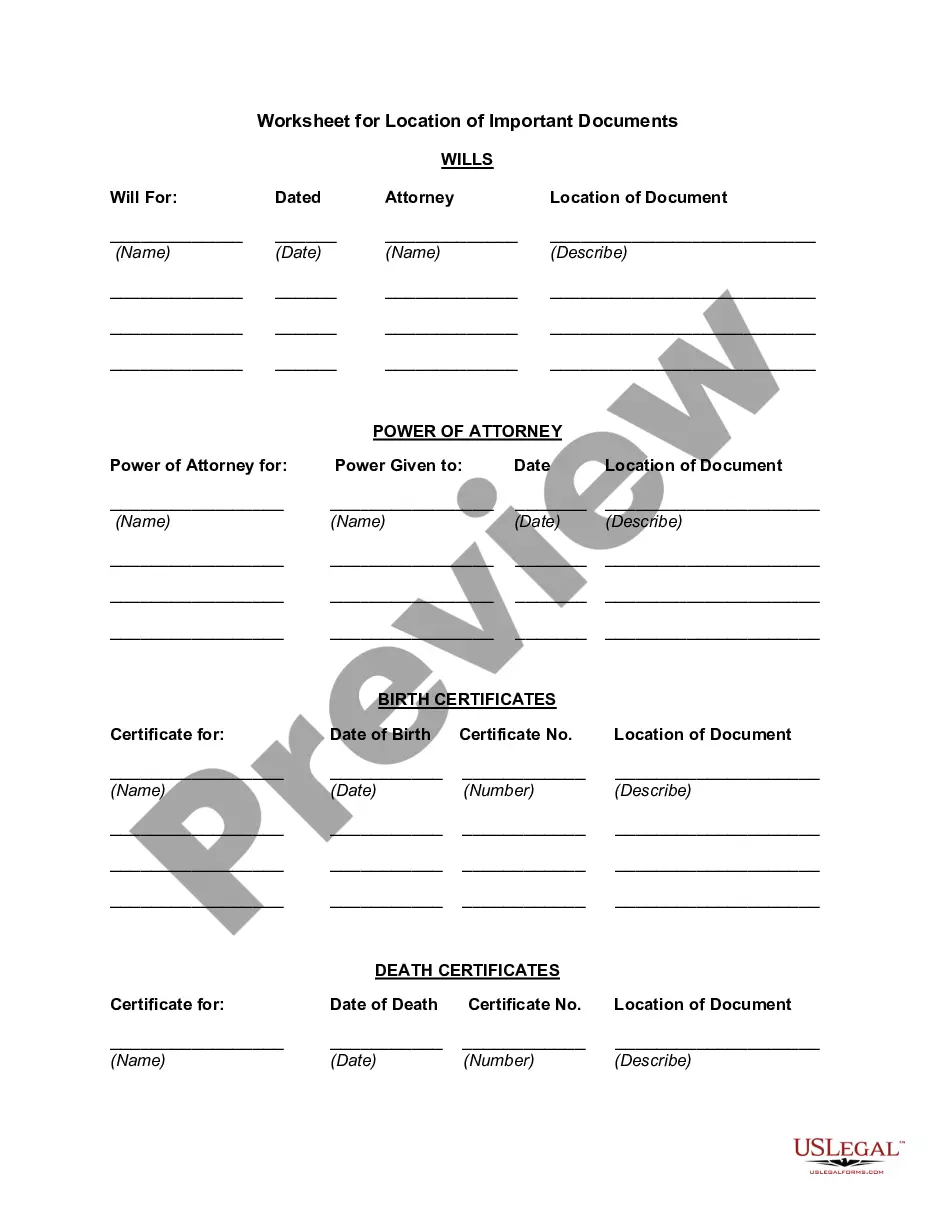
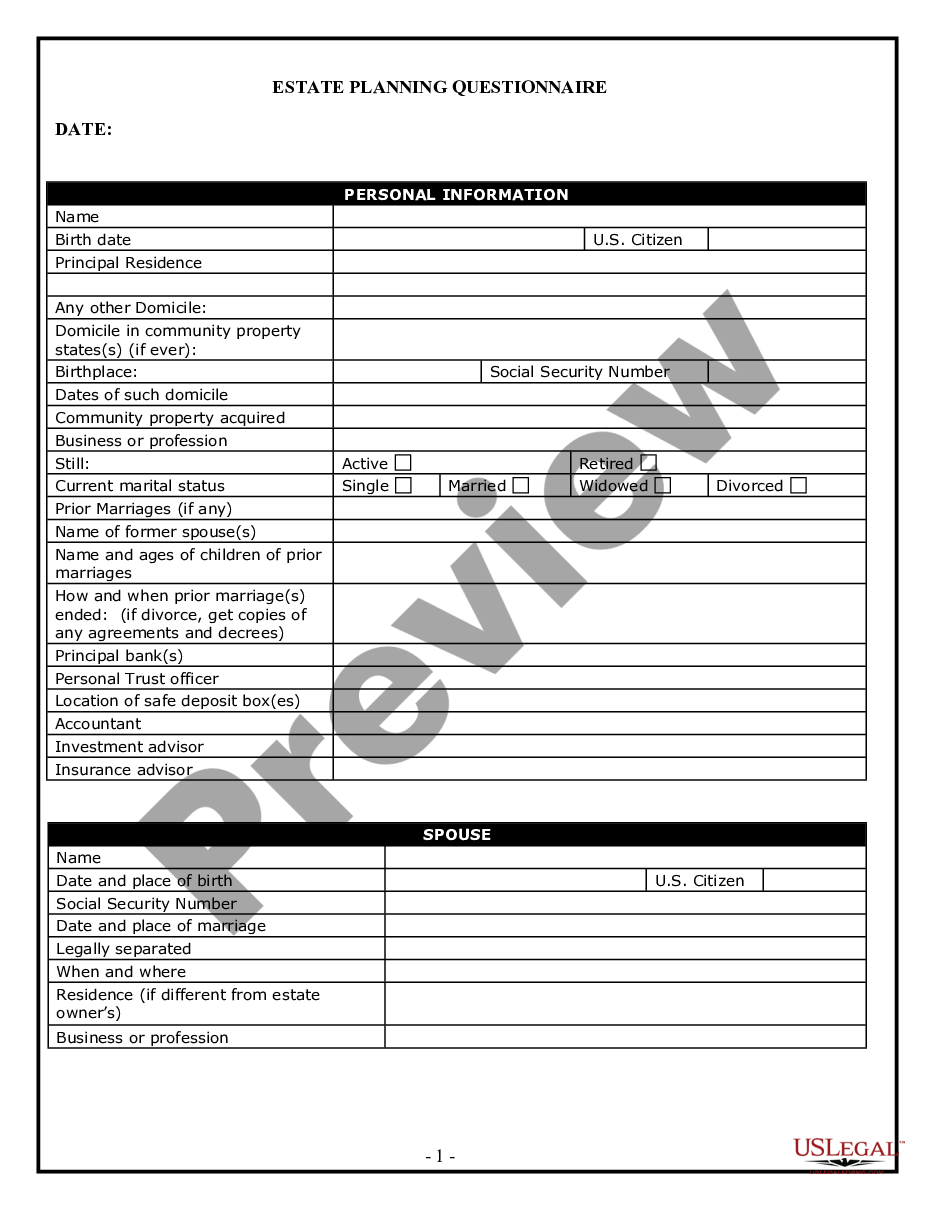
- Personal Planning Information and Document Inventory Worksheets - A Legal Life Document




Situations where these forms applies
This form package is essential when:
- You have recently welcomed a child into your family and want to ensure their legal protection.
- You need to establish guardianship and decision-making authority for your child.
- You wish to outline your healthcare wishes in case of incapacitation.
- You want to manage your financial affairs effectively as a new parent.
- You seek to organize important personal and financial information for future reference.
Who needs this form package
- New parents who have recently had a child.
- Expectant parents planning for their child's future.
- Parents looking to establish legal documents to protect their family.
- Individuals seeking clear, comprehensive estate planning.
- Anyone who wants to ensure their healthcare and financial wishes are documented.
Completing these forms step by step
- Review all included forms to understand what each one requires.
- Complete the Last Will and Testament according to your personal wishes.
- Fill out the Living Will, ensuring you clearly state your healthcare preferences.
- Designate an agent and complete both General Power of Attorney forms as necessary.
- Compile your financial details in the Financial Statement form.
- Complete the Personal Planning Information and Document Inventory Worksheets to organize essential information.
Do documents in this package require notarization?
Notarization is required for one or more forms in this package. US Legal Forms provides secure online notarization powered by Notarize, allowing you to complete the process through a verified video call.
Get your form ready online
Our built-in tools help you complete, sign, share, and store your documents in one place.
Make edits, fill in missing information, and update formatting in US Legal Forms—just like you would in MS Word.
Download a copy, print it, send it by email, or mail it via USPS—whatever works best for your next step.
Sign and collect signatures with our SignNow integration. Send to multiple recipients, set reminders, and more. Go Premium to unlock E-Sign.
If this form requires notarization, complete it online through a secure video call—no need to meet a notary in person or wait for an appointment.
We protect your documents and personal data by following strict security and privacy standards.

Make edits, fill in missing information, and update formatting in US Legal Forms—just like you would in MS Word.

Download a copy, print it, send it by email, or mail it via USPS—whatever works best for your next step.

Sign and collect signatures with our SignNow integration. Send to multiple recipients, set reminders, and more. Go Premium to unlock E-Sign.

If this form requires notarization, complete it online through a secure video call—no need to meet a notary in person or wait for an appointment.

We protect your documents and personal data by following strict security and privacy standards.
Avoid these common issues
- Not properly signing or dating the forms, invalidating them.
- Failing to have the General Power of Attorney notarized if required.
- Leaving out critical information in the Living Will or Financial Statement.
- Assuming all forms are filled out correctly without reviewing them.
Why use this package online
- Convenience of downloading documents directly to your device.
- Editability allows you to customize the forms as needed.
- Access to attorney-drafted forms that ensure legal compliance.
- Ability to complete forms at your own pace, in the comfort of your home.
- Secure storage options for keeping your completed documents safe.
What to keep in mind
- This package contains essential documents tailored for new parents in New Hampshire.
- Understand when and how to use these documents to protect your family legally.
- Complete the forms carefully, ensuring all requirements are met for validity.
Looking for another form?
Form popularity
FAQ
The law doesn't specify an age at which the court must take into consideration a child's preference. That's because age doesn't determine maturity level. So it's conceivable that a judge might take into account the wishes of a young, mature child, but not those of an older, less responsible one.
1 attorney answer Although a child's wishes are one factor among many the court must consider in determining the child's best interests, a minor child never gets to "decide" which parent to live with.
13 ANSWERS The child can not dictate who he or she will live with. You will need to have your child's preferences considered through a Guardian ad Litem.
Filing a legal action called a "contempt," which will require the paying parent to go to court and explain to a judge why support hasn't been paid on time. Contempts are very serious. They can result in jail time or entry of a judgment that will damage the paying parent's credit score.
A court order may have been made by a judge, or a judge may have approved an agreement made by you and your child's other parent. In either case, if you want to change that order and the other parent does not agree, you will have to file a court action and ask a judge to change the order.
Although the law specifically permits children at least 14-years-old to express an opinion, there is no specific age when a judge will listen to a child's opinion. California statutes also permit a child younger than 14 years old to testify regarding a custodial preference, unless the court decides it's not in the
New Hampshire's child support guidelines provide a formula for determining how much child support an absent parent is required to pay. Generally the amount is 25% of adjusted gross income for one child; 33% for two children; 40% for three children; and 45% for four or more children.
You are allowed to modify a parenting plan once it is approved in family court as long as you can show that the current plan is no longer meeting your children's needs.
Child's Wishes for Custodial Parent is Currently Up to Judge's Discretion. Currently, there is no specific age where the Court will consider the wishes of a child in deciding custody matters.Currently there is no specific age where the Court will consider the wishes of a child in deciding custody matters.