New Hampshire LCHIP Model Conservation Easement for Scenic and Ecological Preservation and Damage Control
Understanding this form
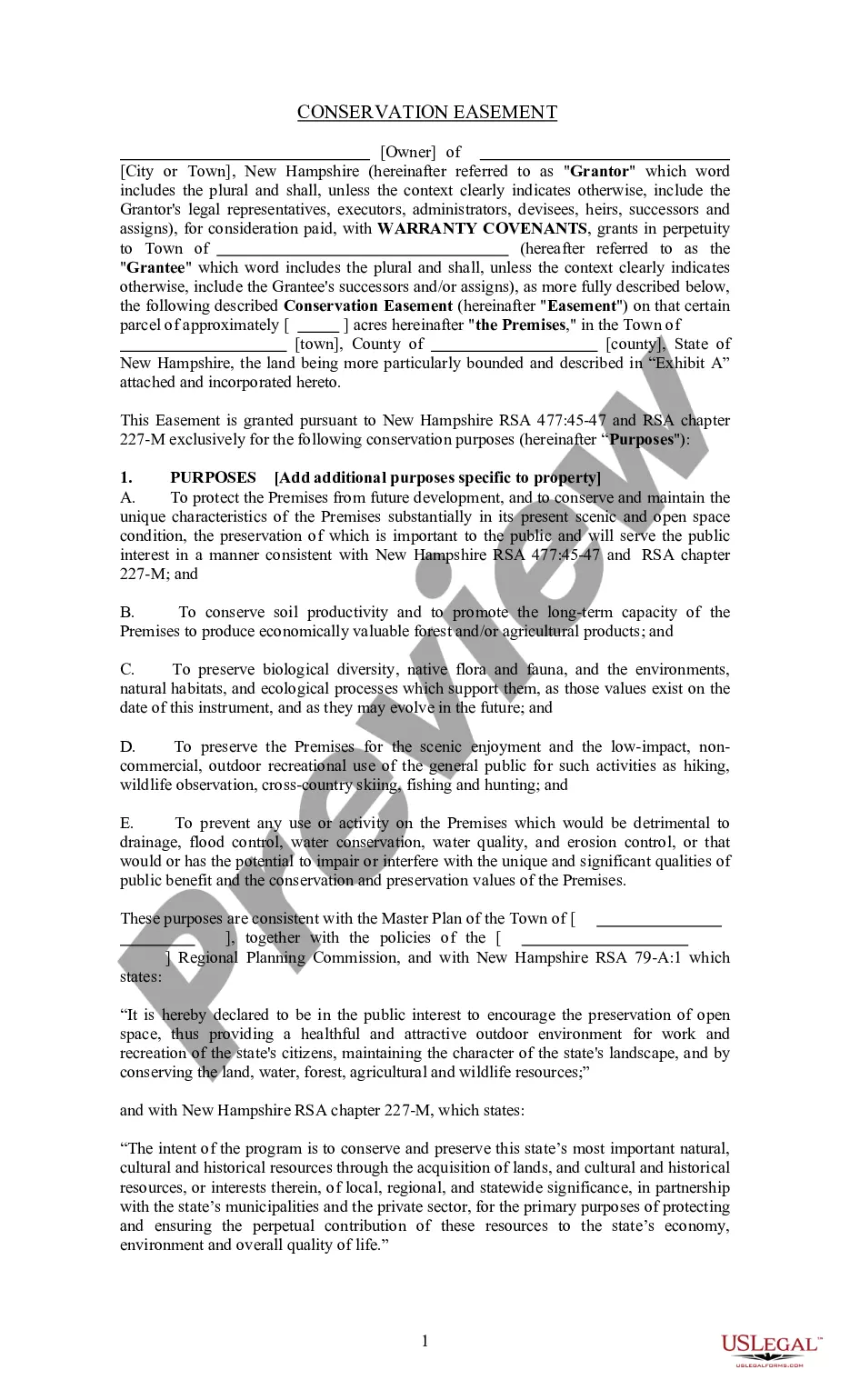
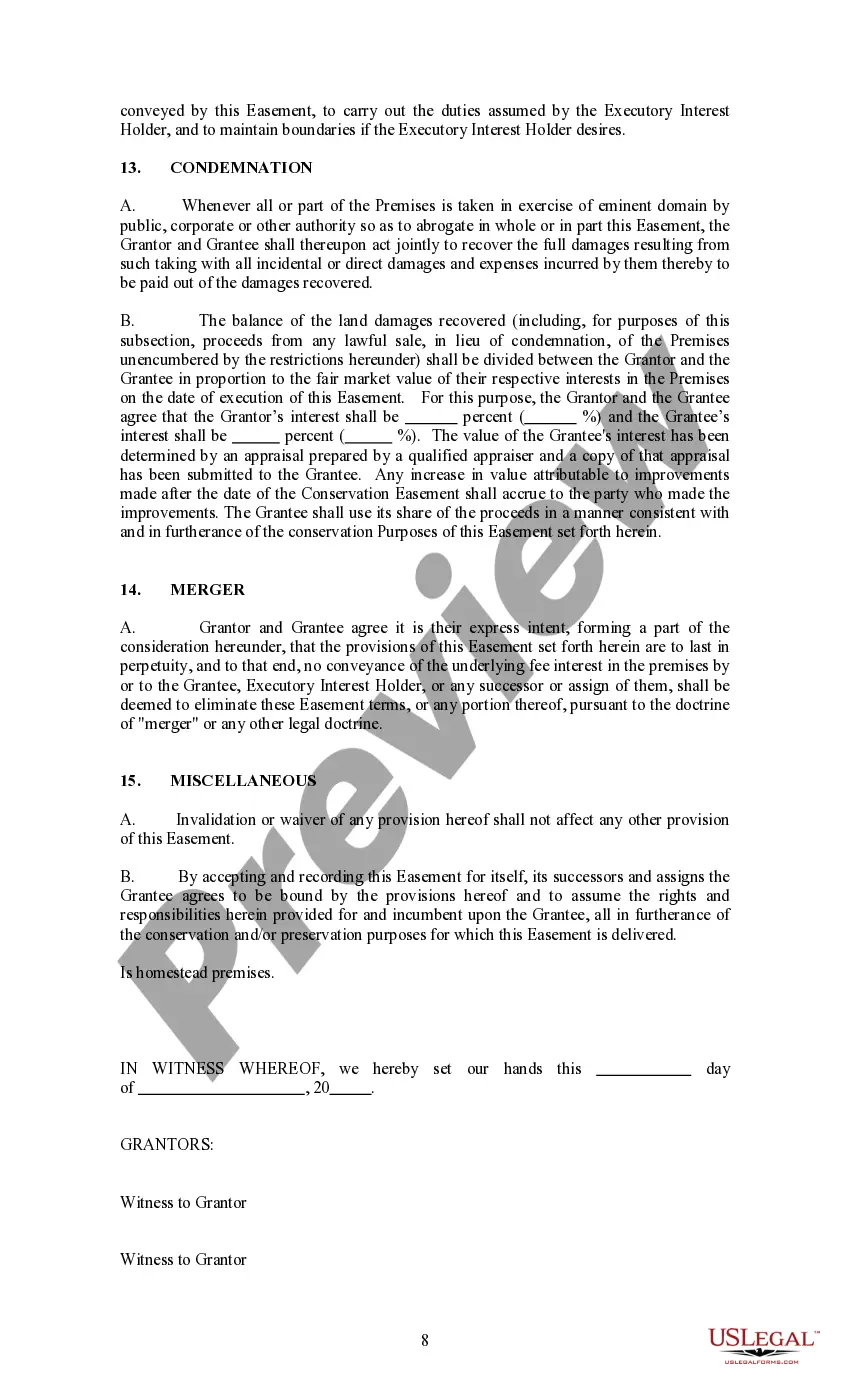
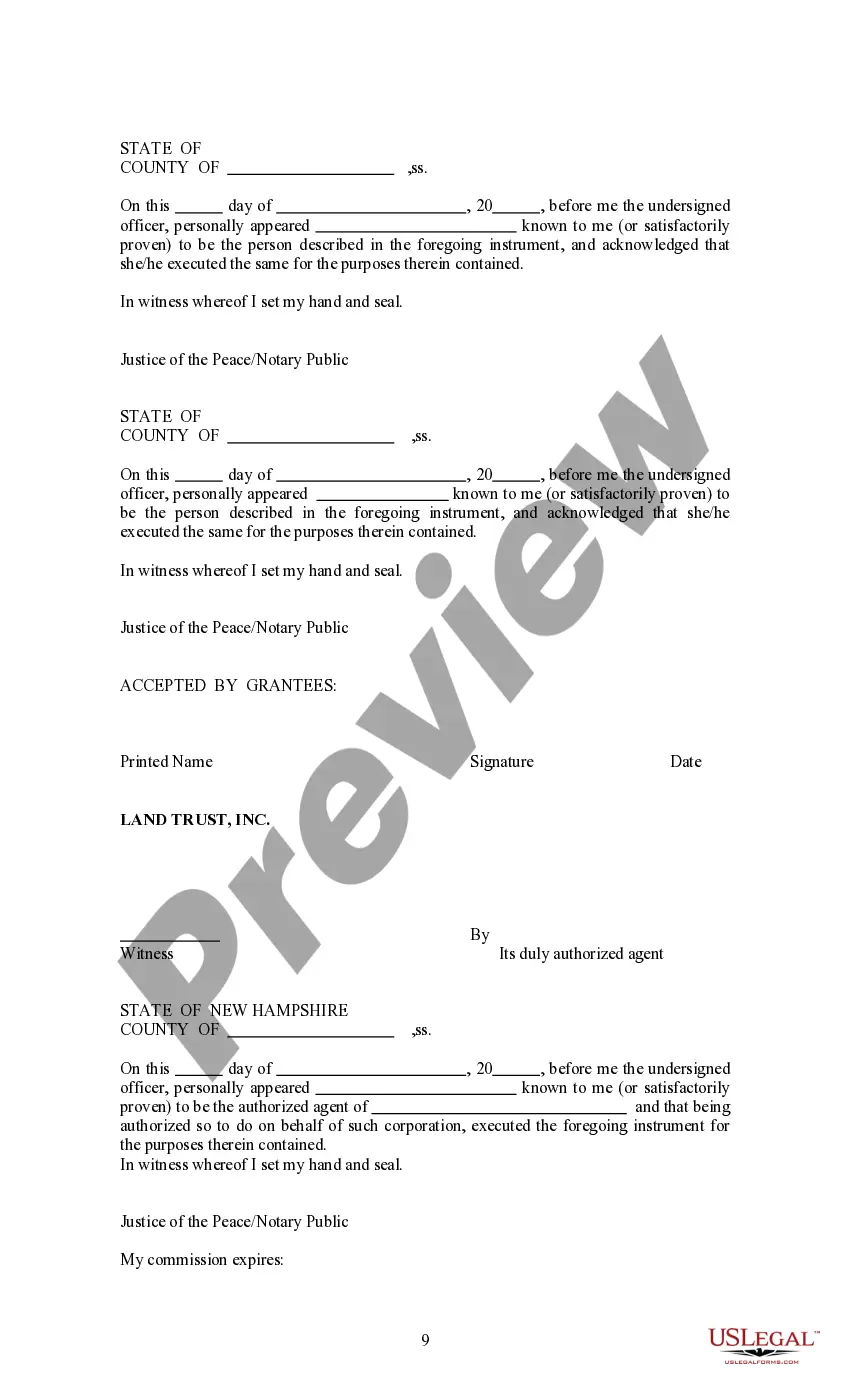
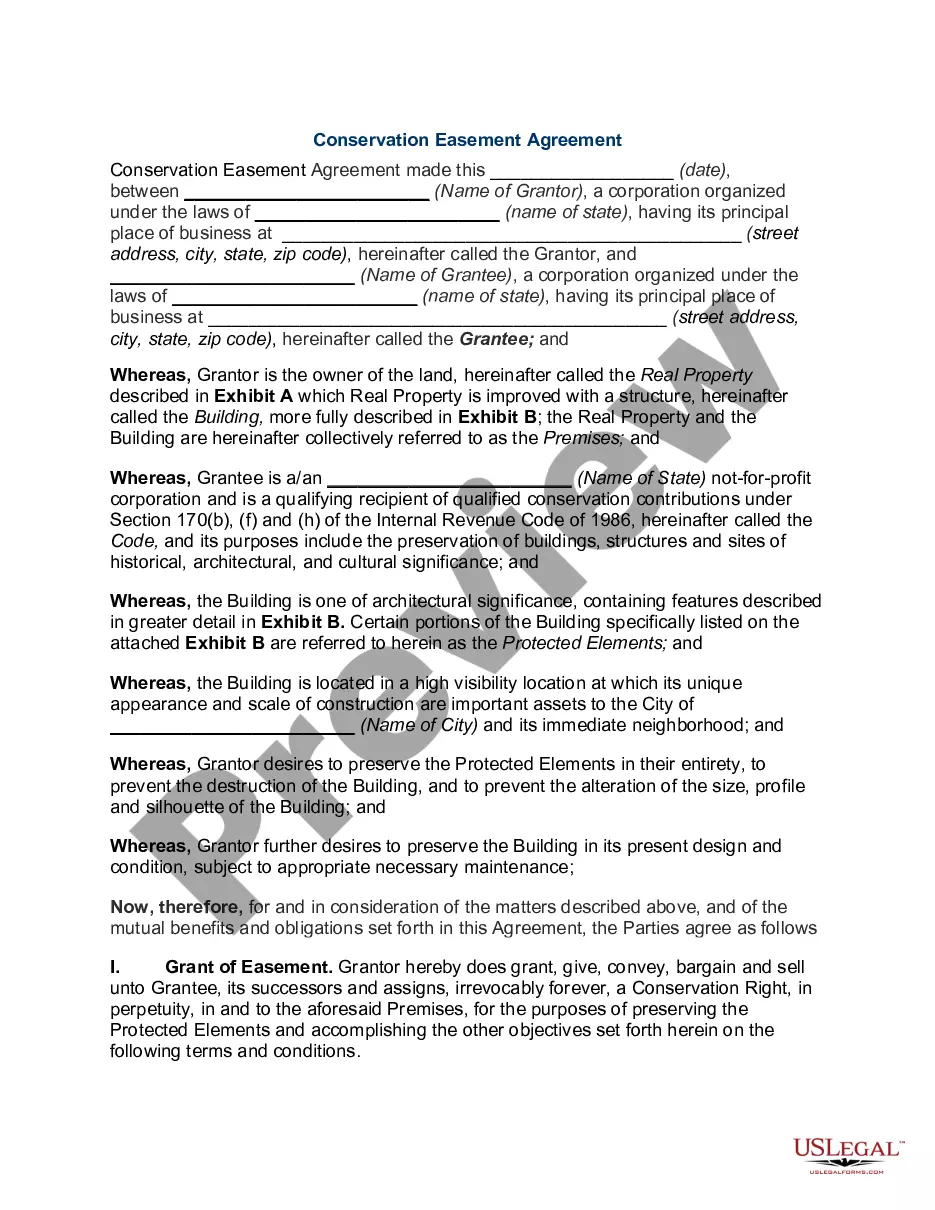
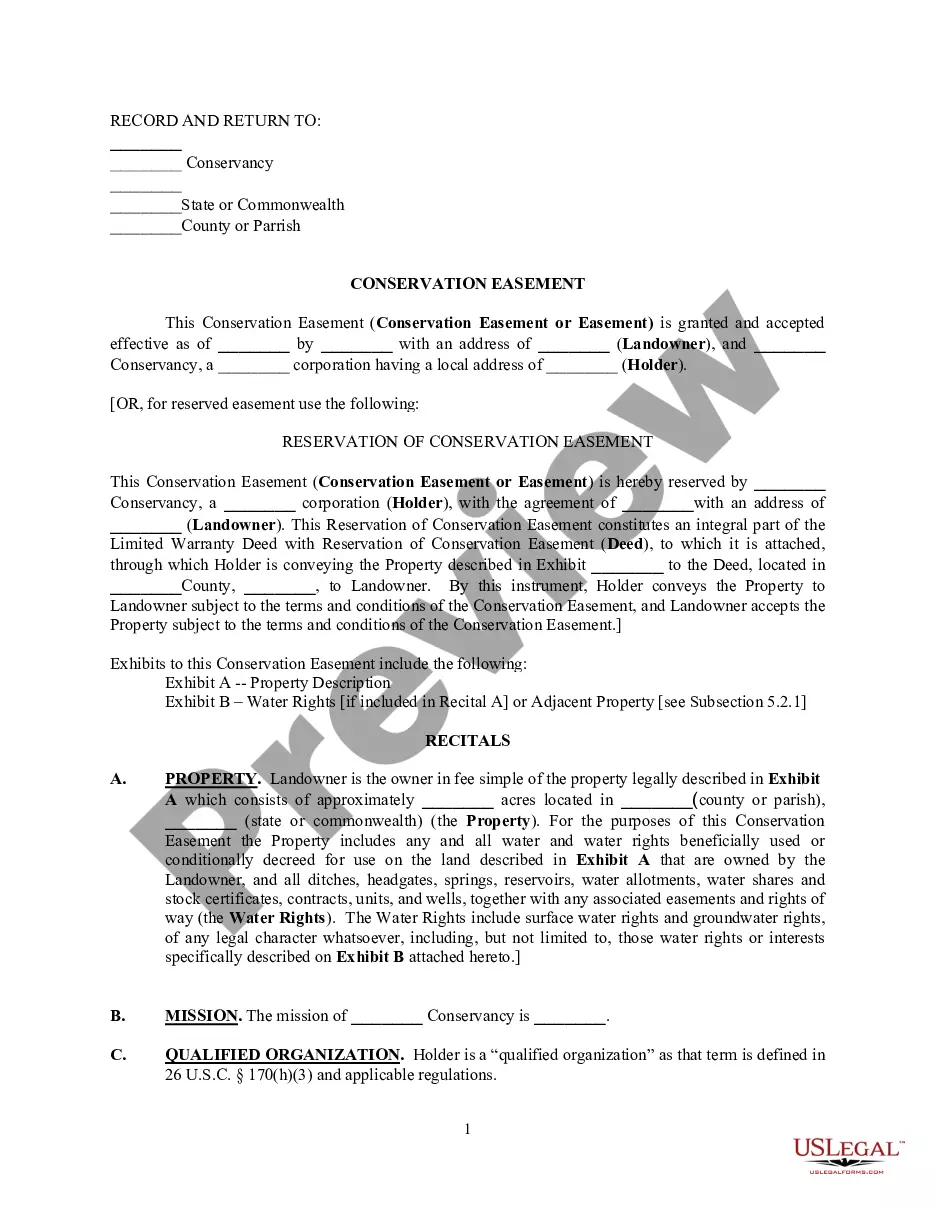
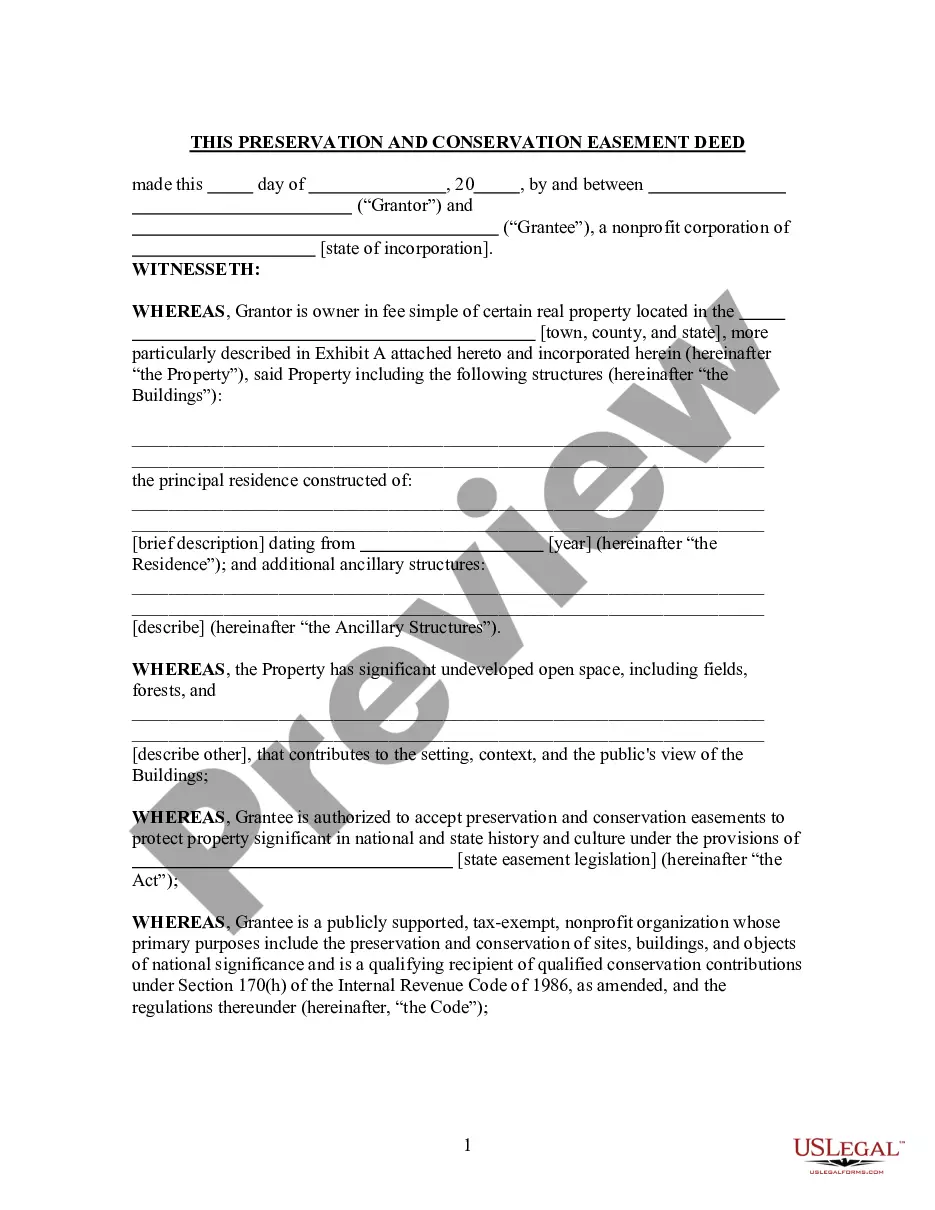
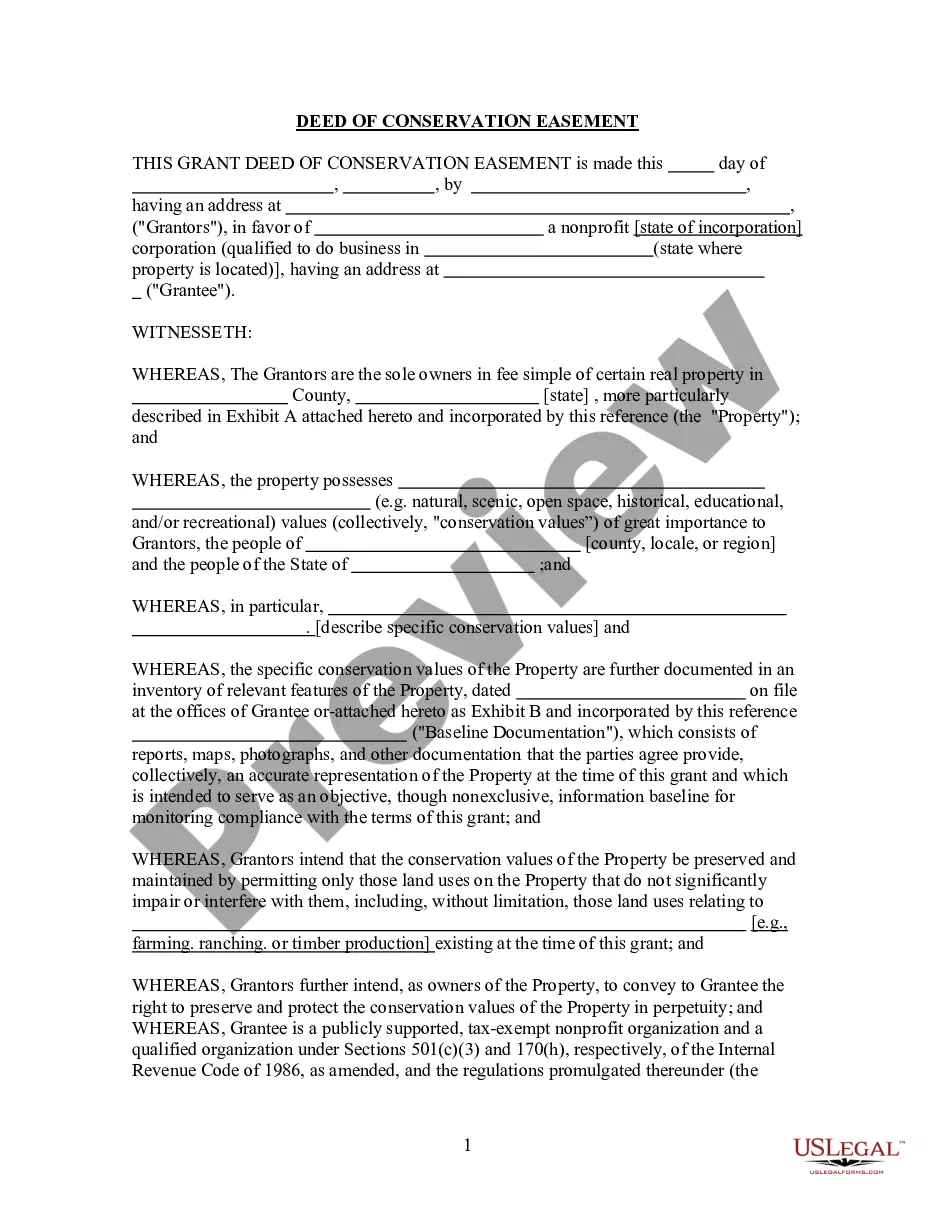
The LCHIP Model Conservation Easement for Scenic and Ecological Preservation and Damage Control is a legal document designed to protect specific property from future development while conserving its scenic and ecological value. It ensures the land is maintained in an undeveloped state, preserving its natural features and biodiversity for public enjoyment and environmental benefits. This easement is a unique instrument that differs from standard property deeds by specifically restricting certain uses of the property to maintain ecological integrity and promote conservation efforts.
Key parts of this document
- Purpose of the easement: Outlines conservation goals, including soil productivity and biological diversity.
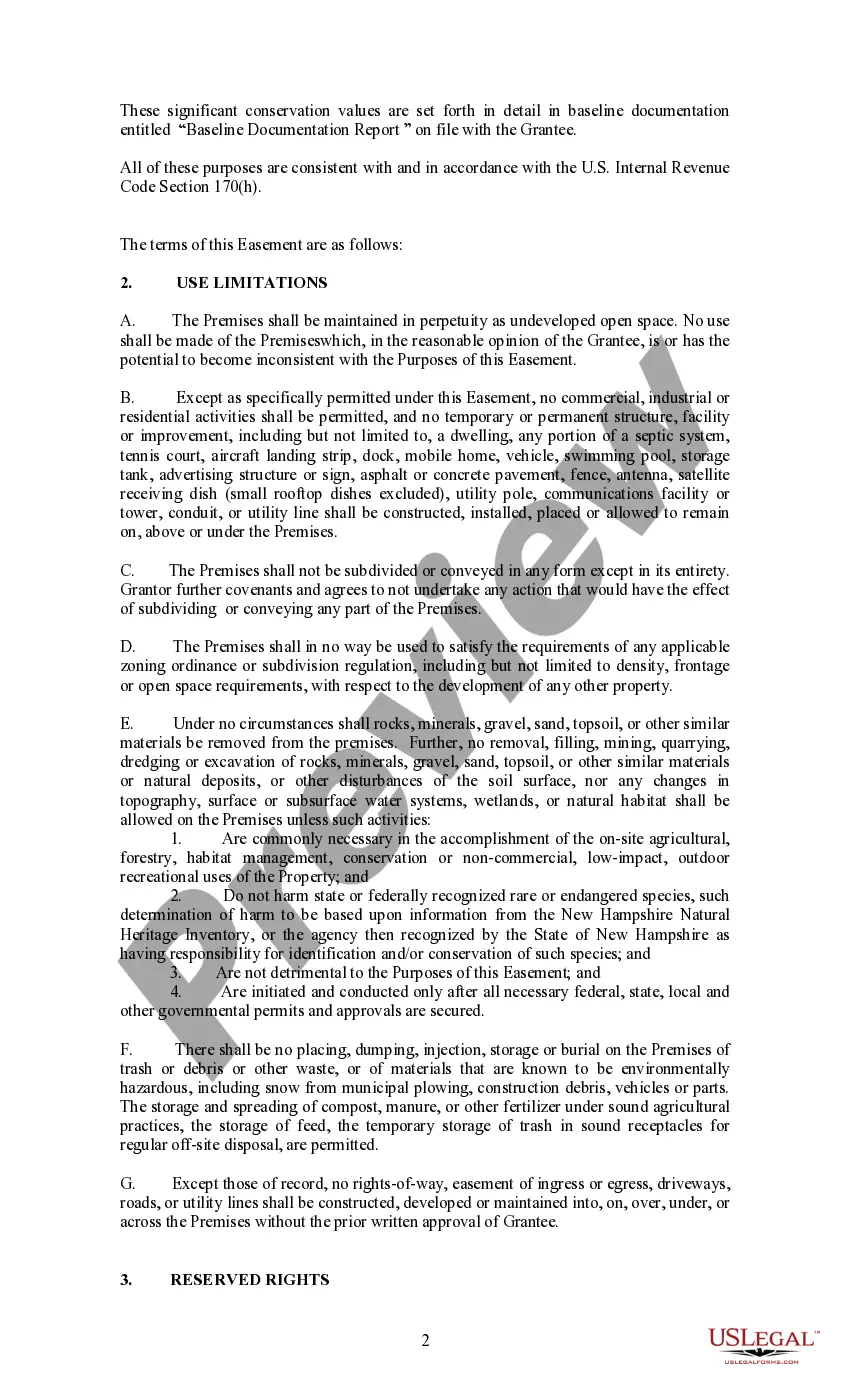
- Use limitations: Specifies prohibited activities, such as construction and commercial uses, to maintain undeveloped open space.
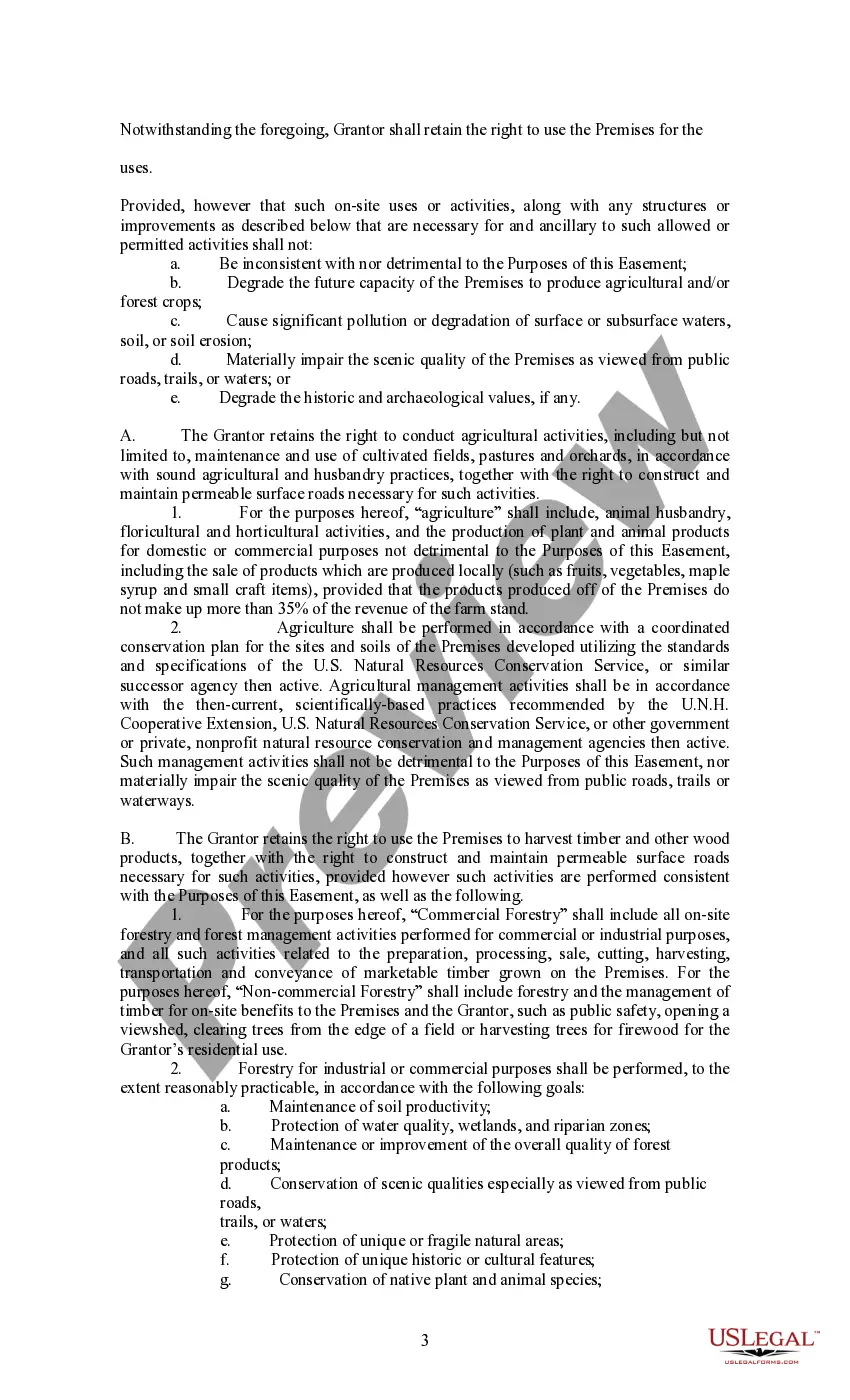
- Reserved rights: Details rights retained by the property owner, including agricultural and forestry practices, as long as they align with conservation goals.
- Public access provisions: Allows for public enjoyment through designated activities like hiking and wildlife observation while prohibiting camping.
- Enforcement: Outlines the responsibilities of the Grantee to monitor compliance and take action in case of breaches.
When to use this document
This form is ideal for property owners who wish to ensure their land is preserved in its natural state and protected from future development. Use this easement when you want to maintain the ecological and aesthetic value of your property, benefit the community through public access, or contribute to broader conservation goals in your region. It is particularly useful in areas with significant natural or scenic features that provide enjoyment to the public and support biodiversity.
Who this form is for
- Landowners looking to restrict development on their property for conservation purposes.
- Environmental organizations aiming to preserve land for public use and enjoyment.
- Local governments interested in maintaining open space within their municipalities.
- Individuals or groups committed to protecting natural habitats and biological diversity.
How to prepare this document
- Identify the parties involved: Include the names and addresses of the property owner (Grantor) and the conservation organization (Grantee).
- Specify the property: Clearly describe the premises subject to the easement, including any relevant survey information.
- Detail conservation purposes: Outline the specific goals the easement aims to achieve, as per the guidelines set forth in the document.
- Establish use limitations: Clearly define the activities that are prohibited on the property to maintain conservation values.
- Sign and date: Ensure all parties sign the easement and include the date to formalize the agreement.
Does this form need to be notarized?
This form does not typically require notarization unless specified by local law. However, parties may choose to have it notarized for added legal security and to ensure proper execution.
Get your form ready online
Our built-in tools help you complete, sign, share, and store your documents in one place.
Make edits, fill in missing information, and update formatting in US Legal Forms—just like you would in MS Word.
Download a copy, print it, send it by email, or mail it via USPS—whatever works best for your next step.
Sign and collect signatures with our SignNow integration. Send to multiple recipients, set reminders, and more. Go Premium to unlock E-Sign.
If this form requires notarization, complete it online through a secure video call—no need to meet a notary in person or wait for an appointment.
We protect your documents and personal data by following strict security and privacy standards.

Make edits, fill in missing information, and update formatting in US Legal Forms—just like you would in MS Word.

Download a copy, print it, send it by email, or mail it via USPS—whatever works best for your next step.

Sign and collect signatures with our SignNow integration. Send to multiple recipients, set reminders, and more. Go Premium to unlock E-Sign.

If this form requires notarization, complete it online through a secure video call—no need to meet a notary in person or wait for an appointment.

We protect your documents and personal data by following strict security and privacy standards.
Avoid these common issues
- Failing to clearly define the property boundaries, leading to potential disputes.
- Not specifying all activities that are restricted under the easement.
- Overlooking the need for proper signatures and dates, which can invalidate the easement.
- Neglecting to consult legal counsel to ensure the easement meets all local and state requirements.
Why complete this form online
- Convenience: Easily download and complete the form from anywhere at any time.
- Editable: Customize the form to meet specific conservation needs without complicated procedures.
- Reliability: Use a professionally drafted document that adheres to legal standards, ensuring compliance and enforceability.
Quick recap
- The LCHIP Model Conservation Easement protects property while promoting ecological integrity and public enjoyment.
- It is crucial for landowners to understand the specific conservation purposes and legal requirements outlined in the form.
- Online access to the form simplifies the process of ensuring compliance with state regulations and retaining control over property use.
Looking for another form?
Form popularity
FAQ
Under IRS rules, a conservation easement must achieve at least one of the following purposes: preservation of land for outdoor recreation or education of the general public; preservation of natural habitat for fish, wildlife, or plants; preservation of open space, including farmland or forest; or preservation of a
Conserve at least 25 percent of open space in each community. Protect sustainably-managed forests to support our forest-based economy. Secure key habitats to preserve the biodiversity of our native plants and animals. Keep our waters clean to ensure we all have enough clean drinking water.
Conservation easements protect land from future exploitation such as surface mining, toxic waste dumping, or subdivision for residential or commercial activities. Under a conservation easement, the landowner retains ownership and use of the land, as well as the right to decide which activities will be allowed.
Decide on your vision. Think about your wishes, needs and objectives for your land. Check out potential partners. Contact land trusts and government agencies that work to assist landowners in your community who are interested in conservation. Get checked out. Take the plunge. Build your partnership.
The most common way to protect land is by conservation easement. A conservation easement (also known as a conservation restriction or conservation agreement) is a voluntary, legal agreement between a landowner and a land trust or government agency that permanently limits uses of the land in order to protect its
The value of the donation of a conservation easement is considered a charitable deduction for income tax purposes. The deduction is up to 50% of the donor's charitable contribution base (adjusted gross income, less net operating loss carryback) for the taxable year.
An agricultural conservation easement is a voluntary, legally recorded deed restriction that is placed on a specific property used for agricultural production.Because the easement is a restriction on the deed of the property, the easement remains in effect even when the land changes ownership.
Conservation easements are a great idea, in theory. Here's the way they work. Basically, if you are willing to donate your property for the public good, and that donation reduces the value of your property, you get to take a tax deduction equal to the reduction in the value of your property.
The easement places limits on land use to help conserve the property's features. With an easement, the landowner still owns the land and can continues to live on and use it, restrict public access to it, and sell, give or pass the property on to whomever they wish.