New Hampshire Revocable Living Trust for Husband and Wife with No Children
What this document covers
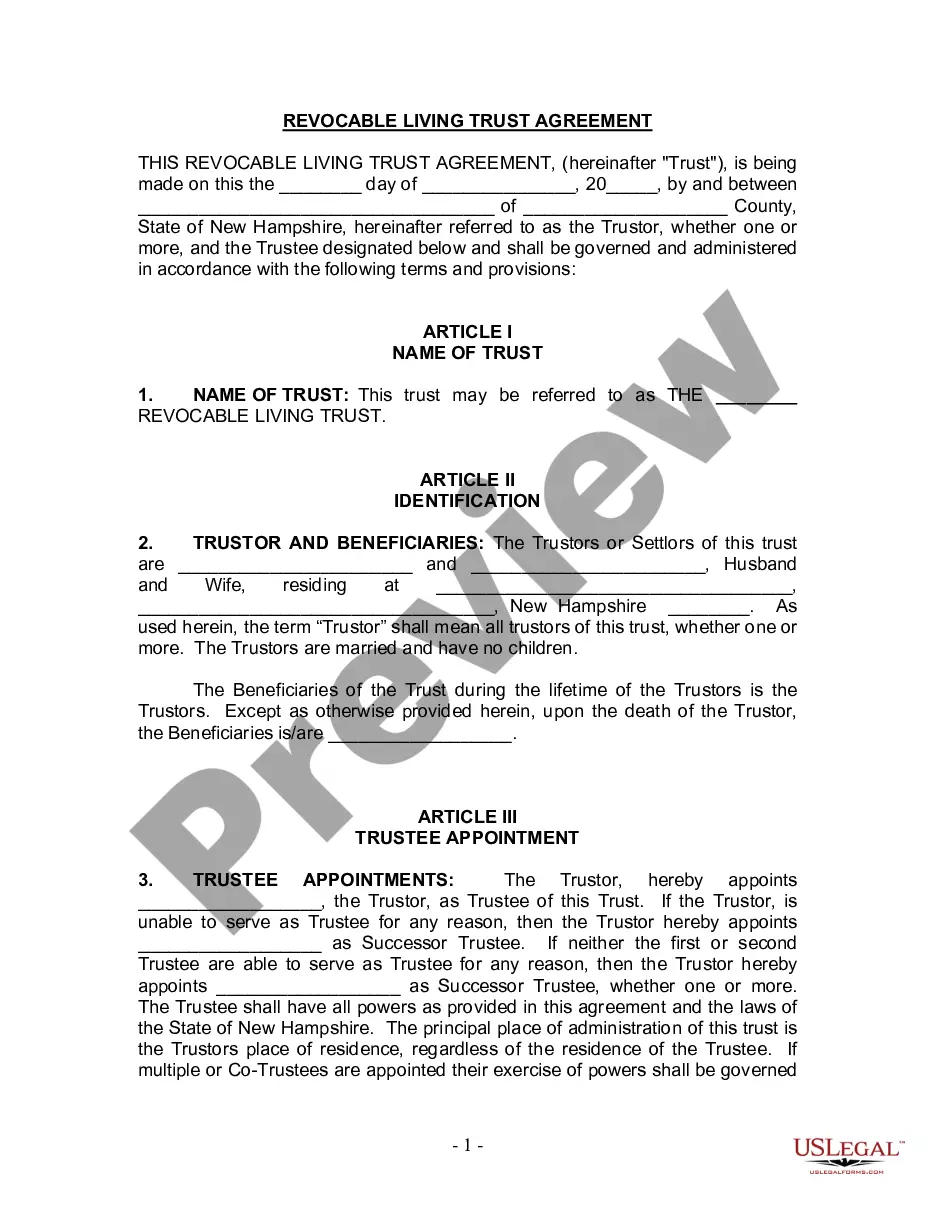
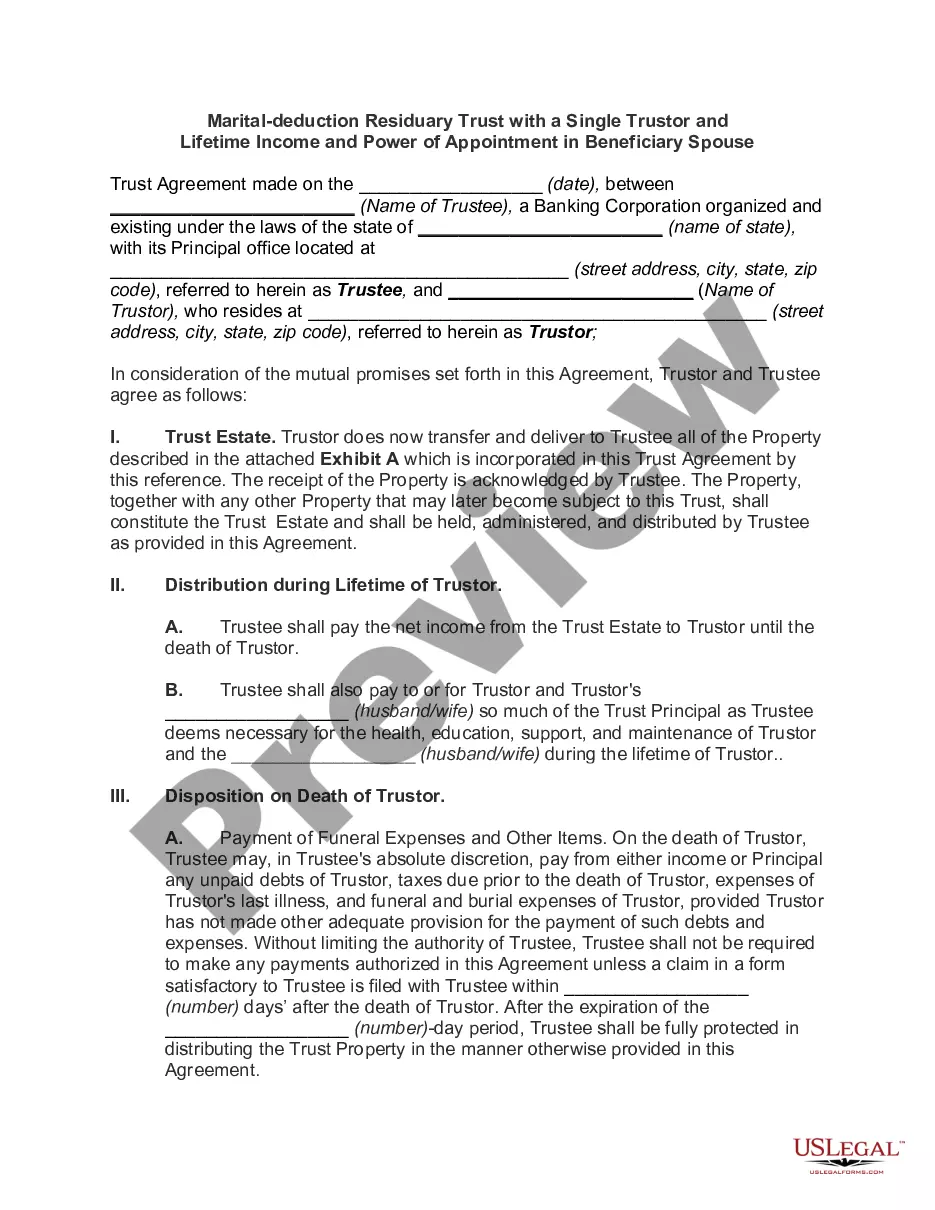
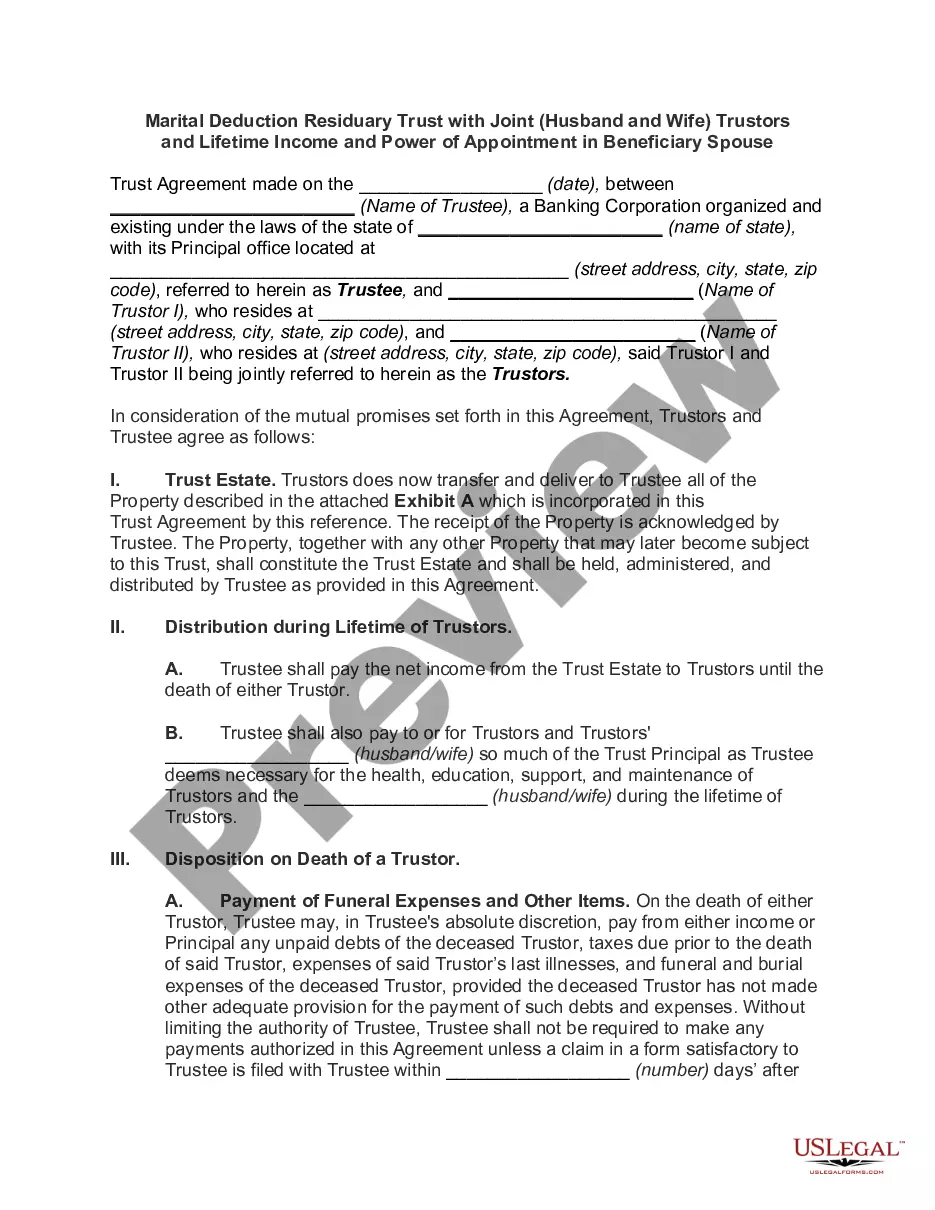
The Revocable Living Trust for Husband and Wife with No Children is a legal document that allows a couple to manage their assets during their lifetime and distribute them according to their wishes upon death. This type of living trust is particularly tailored for a husband and wife without children, distinguishing it from other estate planning documents by allowing parents to plan for their heirs. The trust provides a means to hold property without the need for probate, ensuring a smoother transition of assets after the creators' passing.
Main sections of this form
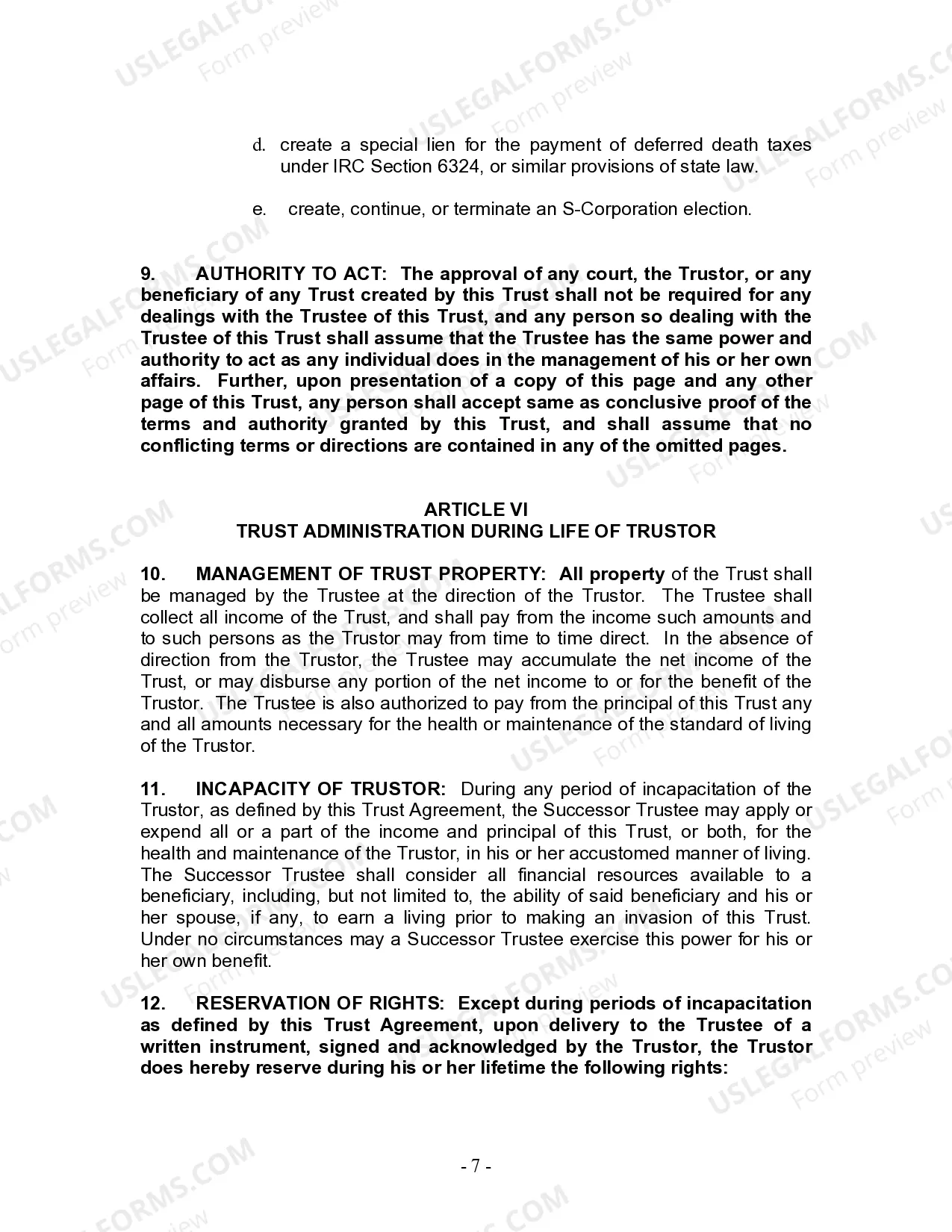
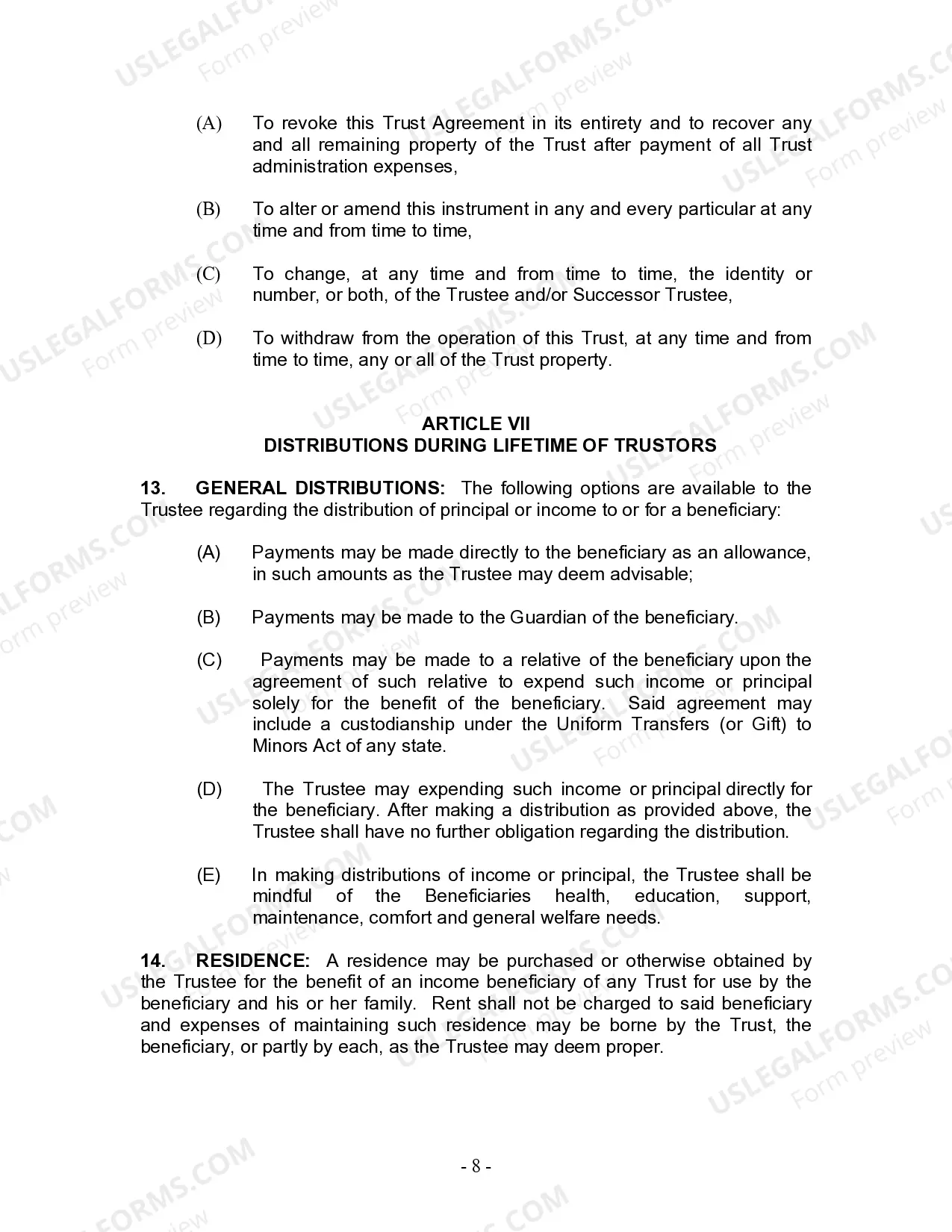
- Identification of Trustors: Names and addresses of the husband and wife establishing the trust.
- Trustee Appointment: Designation of the primary and successor trustee(s) who will manage the trust.
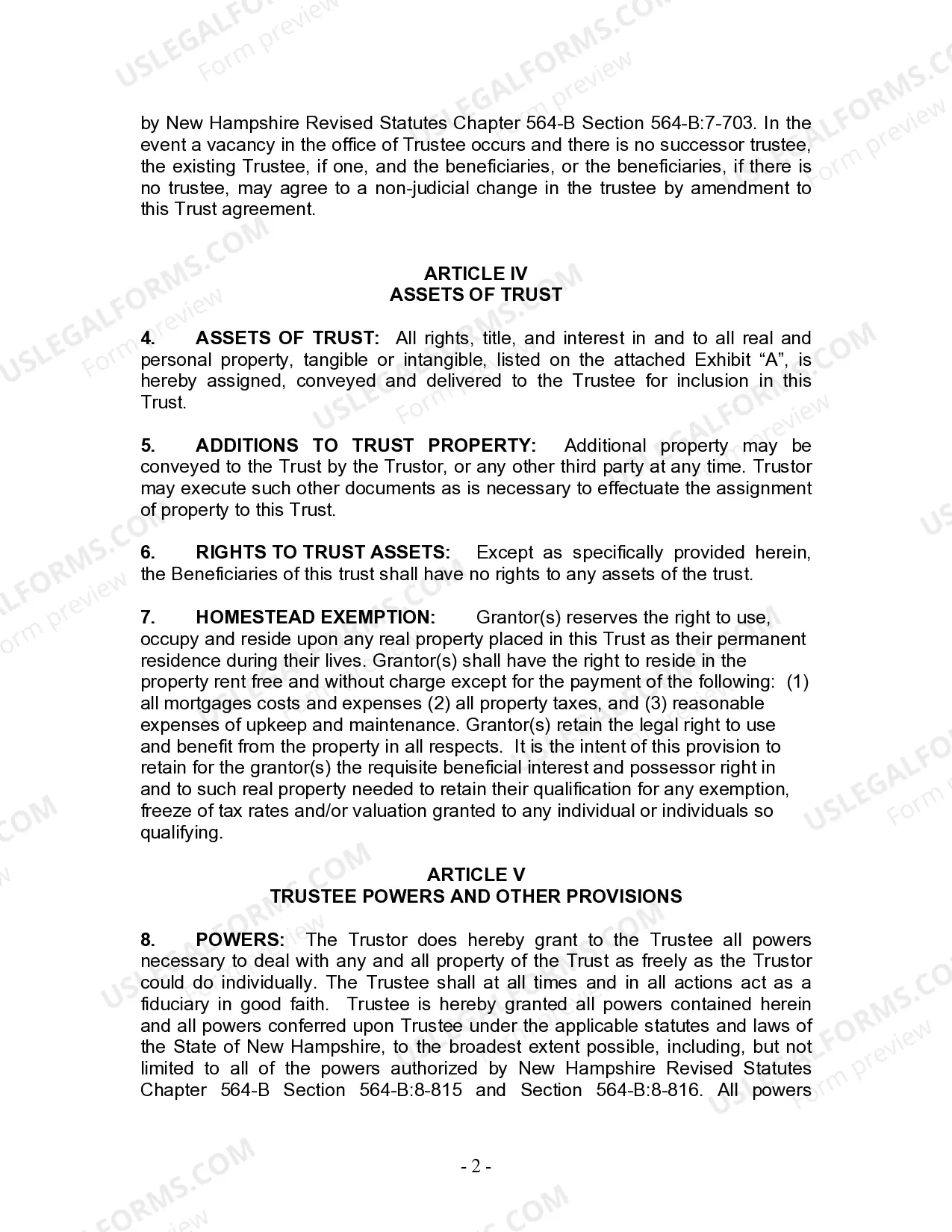
- Changes to Trust Assets: Stipulations on how additional assets can be added to the trust.
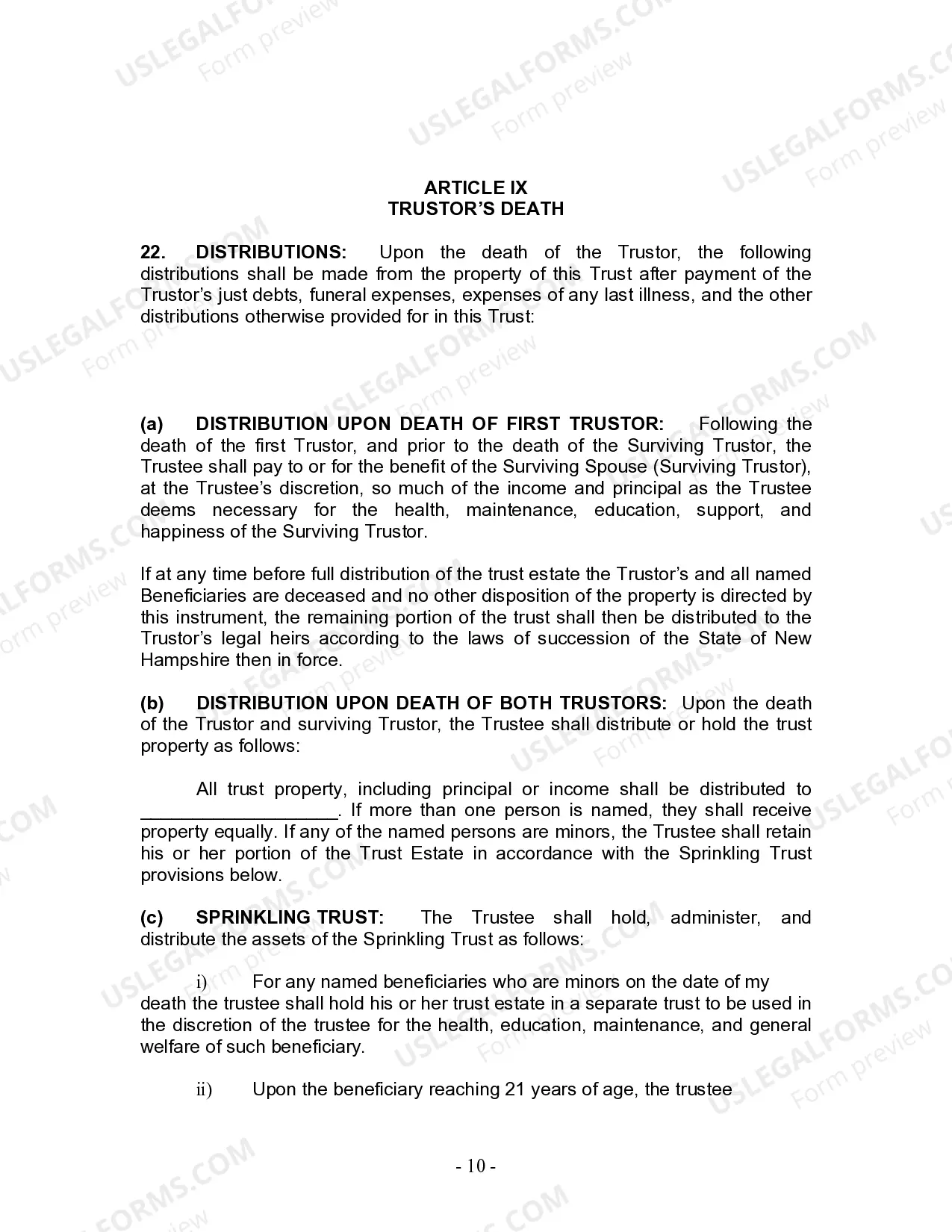
- Distribution of Assets: Instructions on how trust property is distributed upon the death of the trustors.
- Marriage and Survivor Benefits: Provisions on how the remaining spouse benefits from the trust after one has passed away.







When this form is needed
This form is ideal for married couples without children who want to ensure their assets are managed effectively and distributed according to their wishes after death. It is especially beneficial for those looking to avoid probate and maintain privacy regarding their estate. Use this trust to protect your assets, provide for your spouse's needs, and streamline the distribution process.
Who should use this form
- Married couples without children.
- Individuals looking to manage their assets during their lifetime while planning for their partner's future.
- Couples desiring a flexible estate plan that can be revised or revoked during their lifetime.
Steps to complete this form
- Identify the parties involved: Fill in the names and addresses of both Trustors.
- Designate the trustee: Appoint a primary trustee and any successor trustees if needed.
- Specify the property: List all assets that will be included in the trust in the attached Exhibit A.
- Complete the distribution instructions: Detail who will receive the trust property after the death of the Trustors.
- Sign and date the document: Ensure all parties sign in the presence of a notary public if necessary.
Does this document require notarization?
Yes, this form must be notarized to be legally valid. US Legal Forms offers an integrated online notarization service that is available 24/7, providing secure video calls to facilitate the process without the need for travel.
Get your form ready online
Our built-in tools help you complete, sign, share, and store your documents in one place.
Make edits, fill in missing information, and update formatting in US Legal Forms—just like you would in MS Word.
Download a copy, print it, send it by email, or mail it via USPS—whatever works best for your next step.
Sign and collect signatures with our SignNow integration. Send to multiple recipients, set reminders, and more. Go Premium to unlock E-Sign.
If this form requires notarization, complete it online through a secure video call—no need to meet a notary in person or wait for an appointment.
We protect your documents and personal data by following strict security and privacy standards.

Make edits, fill in missing information, and update formatting in US Legal Forms—just like you would in MS Word.

Download a copy, print it, send it by email, or mail it via USPS—whatever works best for your next step.

Sign and collect signatures with our SignNow integration. Send to multiple recipients, set reminders, and more. Go Premium to unlock E-Sign.

If this form requires notarization, complete it online through a secure video call—no need to meet a notary in person or wait for an appointment.

We protect your documents and personal data by following strict security and privacy standards.
Mistakes to watch out for
- Failing to appropriately designate successor trustees, which can lead to administrative issues.
- Not updating the trust after acquiring new assets or changes in personal circumstances.
- Neglecting to ensure that all property intended for the trust is transferred into it.
Benefits of using this form online
- Convenience of downloading and printing the form at any time.
- Editable templates allow customization to meet specific needs.
- Reliability in having attorney-drafted forms that comply with state regulations.
Legal use & context
- A revocable living trust allows the trustors to control their assets during their lifetime.
- This legal document helps avoid probate, ensuring a smoother transfer of assets post-death.
- Only the named beneficiaries will receive the benefits of the trust according to its terms.
What to keep in mind
- A Revocable Living Trust allows married couples to manage assets with flexibility.
- The trust avoids probate, providing an efficient way to handle asset distribution after death.
- Filling out the form accurately and entirely is crucial for valid implementation.
Looking for another form?
Form popularity
FAQ
Children - if there is no surviving married or civil partner If there is no surviving partner, the children of a person who has died without leaving a will inherit the whole estate. This applies however much the estate is worth. If there are two or more children, the estate will be divided equally between them.
Without a living trust, our estate (everything we own) would go to probate. Probate is where the courts oversee having all of your affairs wrapped up after you die. As with all things governmental, probate can take a while, so your assets would be inaccessible for a time.
Who Gets What: The Basic Rules of Intestate Succession.Generally, only spouses, registered domestic partners, and blood relatives inherit under intestate succession laws; unmarried partners, friends, and charities get nothing. If the deceased person was married, the surviving spouse usually gets the largest share.
If you are unmarried and die without a valid will and last testament in New Hampshire, then your estate passes on to your children in equal shares. If you die intestate unmarried and with no children, then by law, your parents inherit your entire estate.
The short answer is yes. Generally, a revocable living trust cannot entirely replace the need for a will. There are some assets you may not wish to place in a trust. For example, it may be impractical to transfer tangible personal property such as automobiles, furniture, and jewelry to a trust.
In New Hampshire, you can make a living trust to avoid probate for virtually any asset you ownreal estate, bank accounts, vehicles, and so on. You need to create a trust document (it's similar to a will), naming someone to take over as trustee after your death (called a successor trustee).
As these family members are the ones who receive the benefit of the assets, they are called the beneficiaries.A will only applies to the assets of an estate. The assets of a family trust do not form part of your estate and, therefore, you cannot pass trust assets under a will.
A will and a trust are separate legal documents that typically share a common goal of facilitating a unified estate plan.Since revocable trusts become operative before the will takes effect at death, the trust takes precedence over the will, when there are discrepancies between the two.
If someone dies without a will, the money in his or her bank account will still pass to the named beneficiary or POD for the account.The executor has to use the funds in the account to pay any of the estate's creditors and then distributes the money according to local inheritance laws.