New Hampshire Notice of Default in Payment of Rent as Warning Prior to Demand to Pay or Terminate for Residential Property
What this document covers
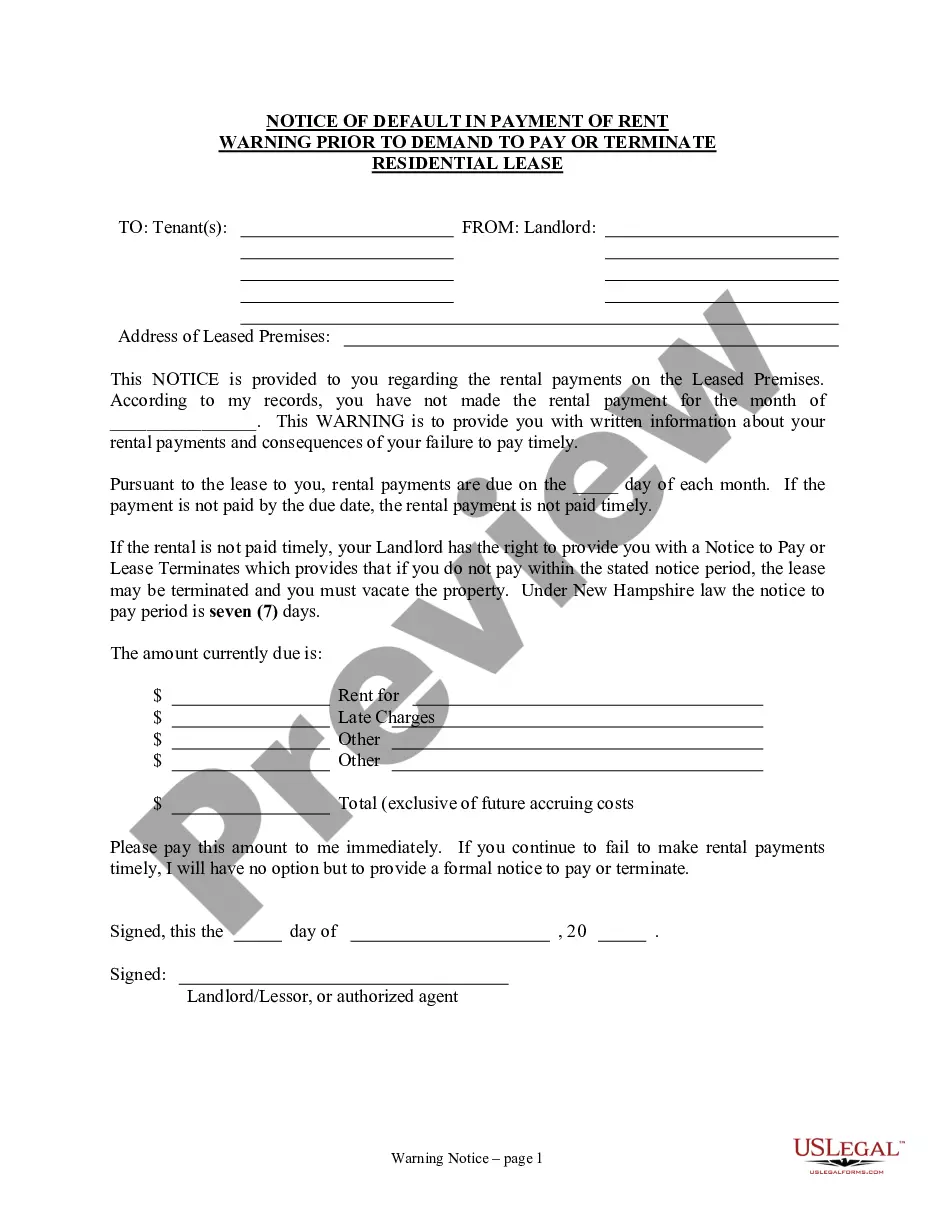
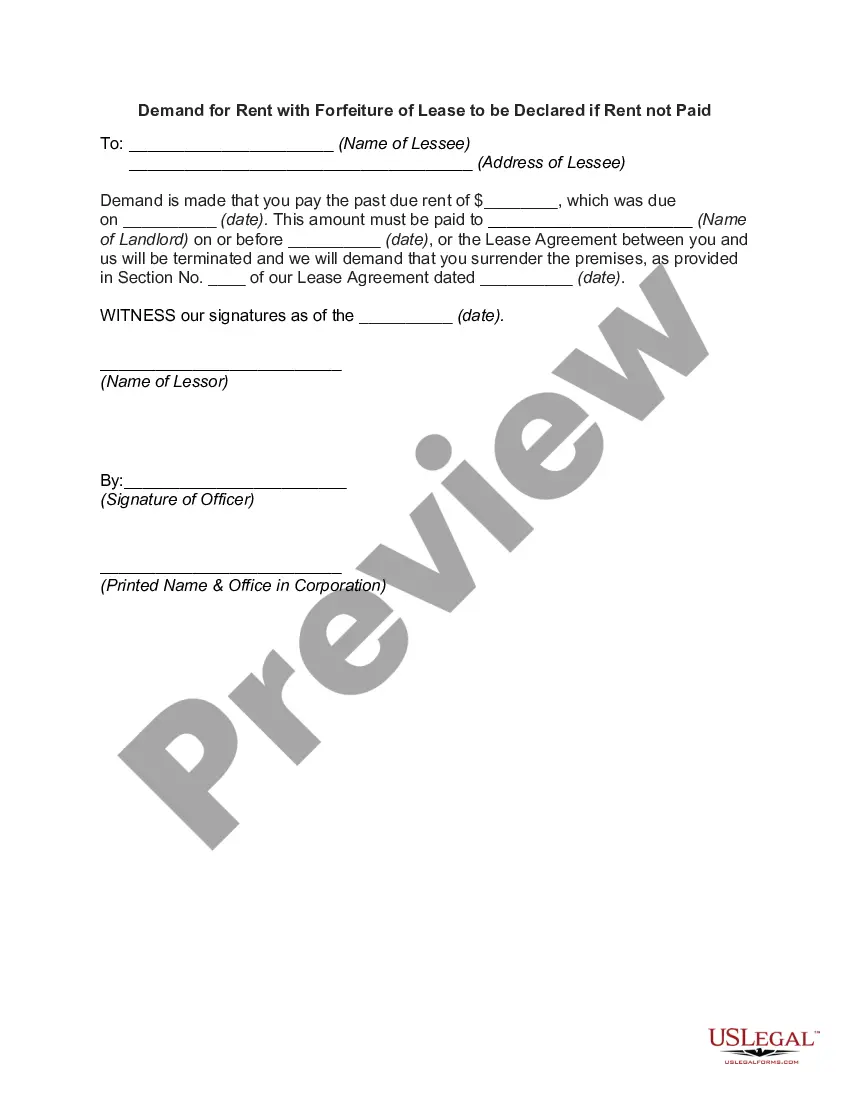
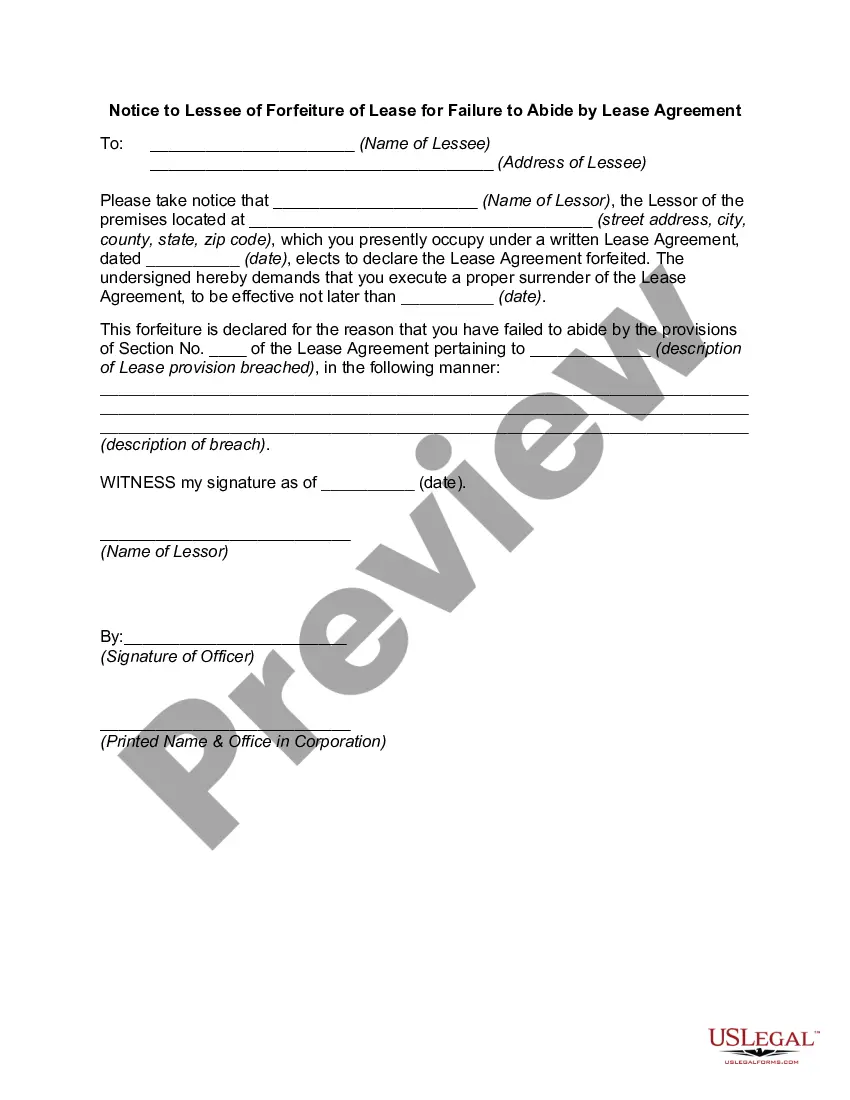
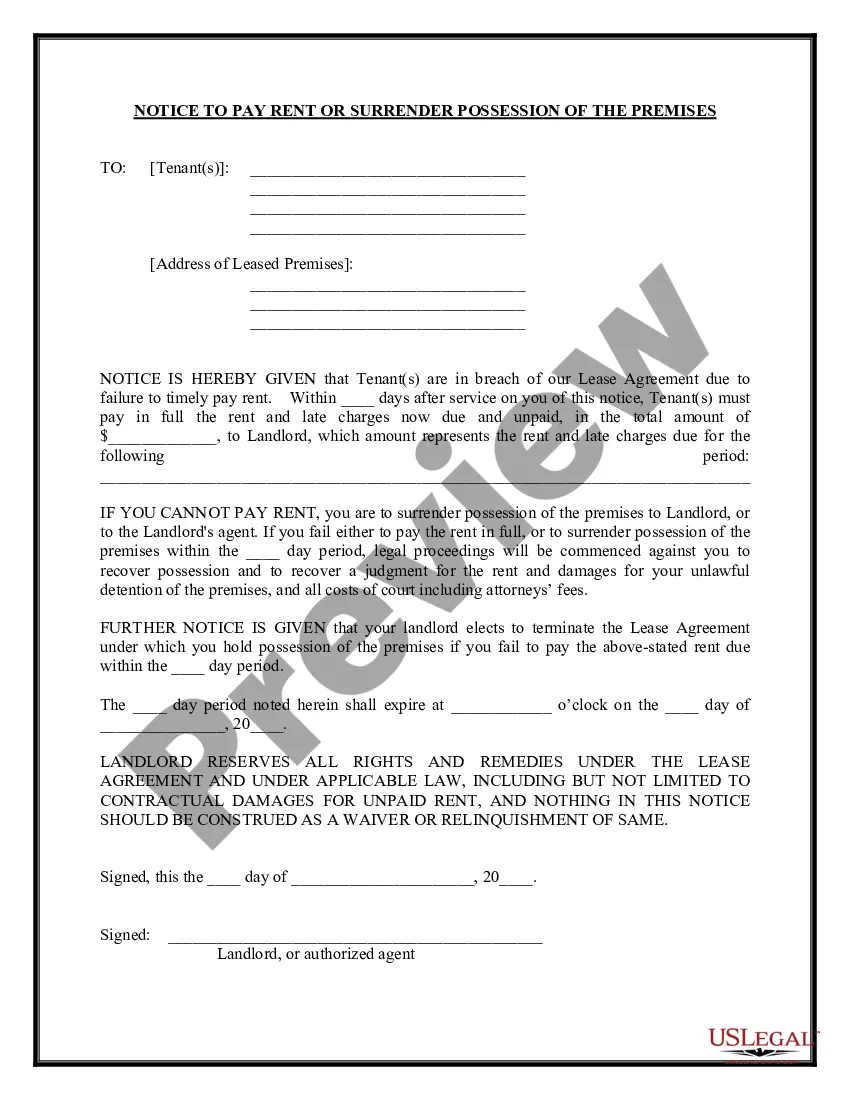
This Notice of Default in Payment of Rent serves as a formal warning from a landlord to a tenant regarding unpaid rent for residential property. It is an essential step before issuing a demand to pay or terminate the lease. This form highlights the tenant's responsibility for timely rental payments and details the potential consequences of continued non-payment, setting it apart from other landlord-tenant notice forms.
Key components of this form
- Date and signature of the landlord or authorized agent.
- Identification of the tenant and the leased premises.
- Specific month for which rent is overdue.
- Due date of rent payments as per the lease agreement.
- Total amount due, including any late charges.
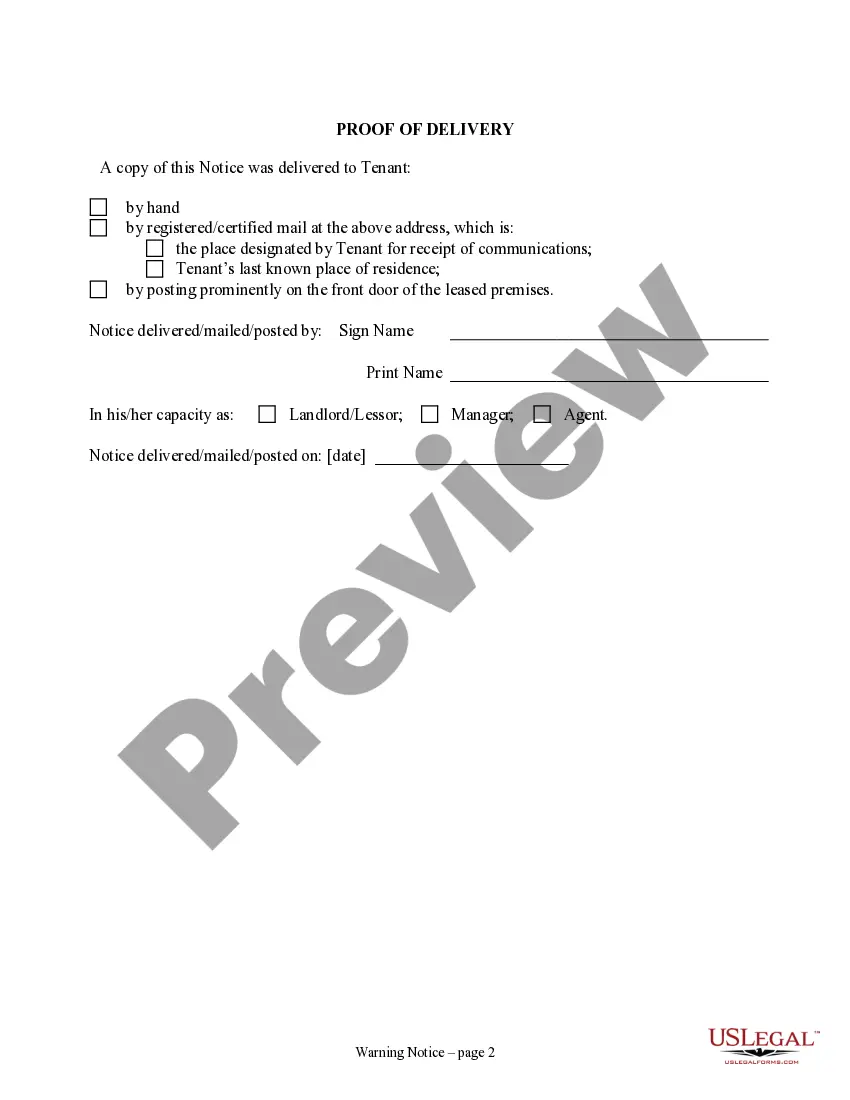
- Proof of delivery method, including options for hand delivery, certified mail, or posting.

Situations where this form applies
This form should be used when a tenant has failed to pay rent by the due date, and the landlord wishes to formally notify the tenant of this default before taking further action. It serves as a reminder of the payment terms and the seriousness of the situation, making it clear that failure to pay could lead to lease termination.
Who should use this form
- Landlords who manage residential rental properties.
- Property managers acting on behalf of landlords.
- Commercial landlords willing to use a similar template for residential documents.
- Tenants who wish to understand their rights following a notice.
Completing this form step by step
- Identify the landlord and tenant, including their addresses.
- Specify the month for which rent has not been paid.
- Enter the due date of the rent payment according to the lease.
- Calculate and include the total amount of rent due and any applicable late charges.
- Sign and date the notice, indicating the landlord's authority.
Is notarization required?
This form does not typically require notarization unless specified by local law. Ensure you check local regulations for any additional requirements.
Get your form ready online
Our built-in tools help you complete, sign, share, and store your documents in one place.
Make edits, fill in missing information, and update formatting in US Legal Forms—just like you would in MS Word.
Download a copy, print it, send it by email, or mail it via USPS—whatever works best for your next step.
Sign and collect signatures with our SignNow integration. Send to multiple recipients, set reminders, and more. Go Premium to unlock E-Sign.
If this form requires notarization, complete it online through a secure video call—no need to meet a notary in person or wait for an appointment.
We protect your documents and personal data by following strict security and privacy standards.
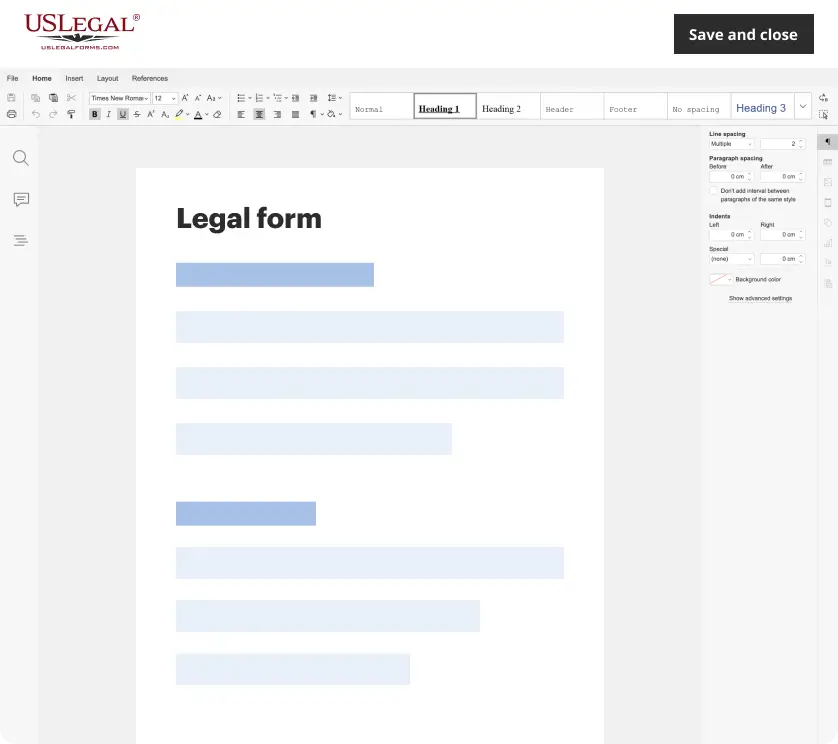
Make edits, fill in missing information, and update formatting in US Legal Forms—just like you would in MS Word.
Download a copy, print it, send it by email, or mail it via USPS—whatever works best for your next step.
Sign and collect signatures with our SignNow integration. Send to multiple recipients, set reminders, and more. Go Premium to unlock E-Sign.

If this form requires notarization, complete it online through a secure video call—no need to meet a notary in person or wait for an appointment.
We protect your documents and personal data by following strict security and privacy standards.
Common mistakes to avoid
- Failing to accurately calculate the total amount due, including late fees.
- Not providing sufficient proof of delivery to the tenant.
- Forgetting to include necessary dates, such as payment due date and delivery date.
- Using incorrect terminology or failing to comply with state-specific laws.
Benefits of using this form online
- Convenient access to customizable templates that reflect legal standards.
- Edit and download the form anytime, saving time and effort.
- Ensures accuracy by using professionally drafted documents guided by legal experts.
Looking for another form?

Form popularity
FAQ
7 days is required for almost all evictions. 30 days is required for month-to-month leases. The notice must state the specific reason for eviction, and can be delivered in person, or left on their door. When the notice is up, issue a writ of summons.
Answer. Tenants have the right to "quiet enjoyment" of their home. Unless there is an emergency, your landlord or their agent must give you at least 24 hours' notice if they intend to visit.Apart from genuine emergencies, landlords cannot enter a tenant's home without their consent unless they have a court order.
A landlord can legally evict a tenant only by sending a written notice to the tenant. This written notice must be in the form of a "written notice to quit or leave" which is a legal document. Eviction for not paying rent, damages to the property or danger to the health or safety of others require seven days' notice.
7 days is required for almost all evictions. 30 days is required for month-to-month leases. The notice must state the specific reason for eviction, and can be delivered in person, or left on their door. When the notice is up, issue a writ of summons.
A. In a month-to-month tenancy, the landlord may raise the rent after giving the tenant 45 days' written notice.
The landlord can enter without consent, however they must provide you with a proper notice to enter that: Gives the required minimum notice for the state you live in;No notice is required for an emergency to do urgent repairs or if the landlord is concerned about your welfare.
Usually, 2 months' notice is required unless the tenancy agreement states otherwise. Your landlord may need to give you more than 2 months' notice if you have a contractual periodic tenancy. You should check your contract to ensure that your landlord has given you the correct amount of notice.
Your landlord only needs to give 'reasonable notice' to quit. Usually this means the length of the rental payment period so if you pay rent monthly, you'll get one month's notice. The notice does not have to be in writing.
They have to give you at least 28 days notice, but this could be longer depending on your agreement. If you don't leave by the time your notice ends, your landlord has to go to court to get a court order to make you leave.