New Hampshire Subcontractor's Agreement
About this form
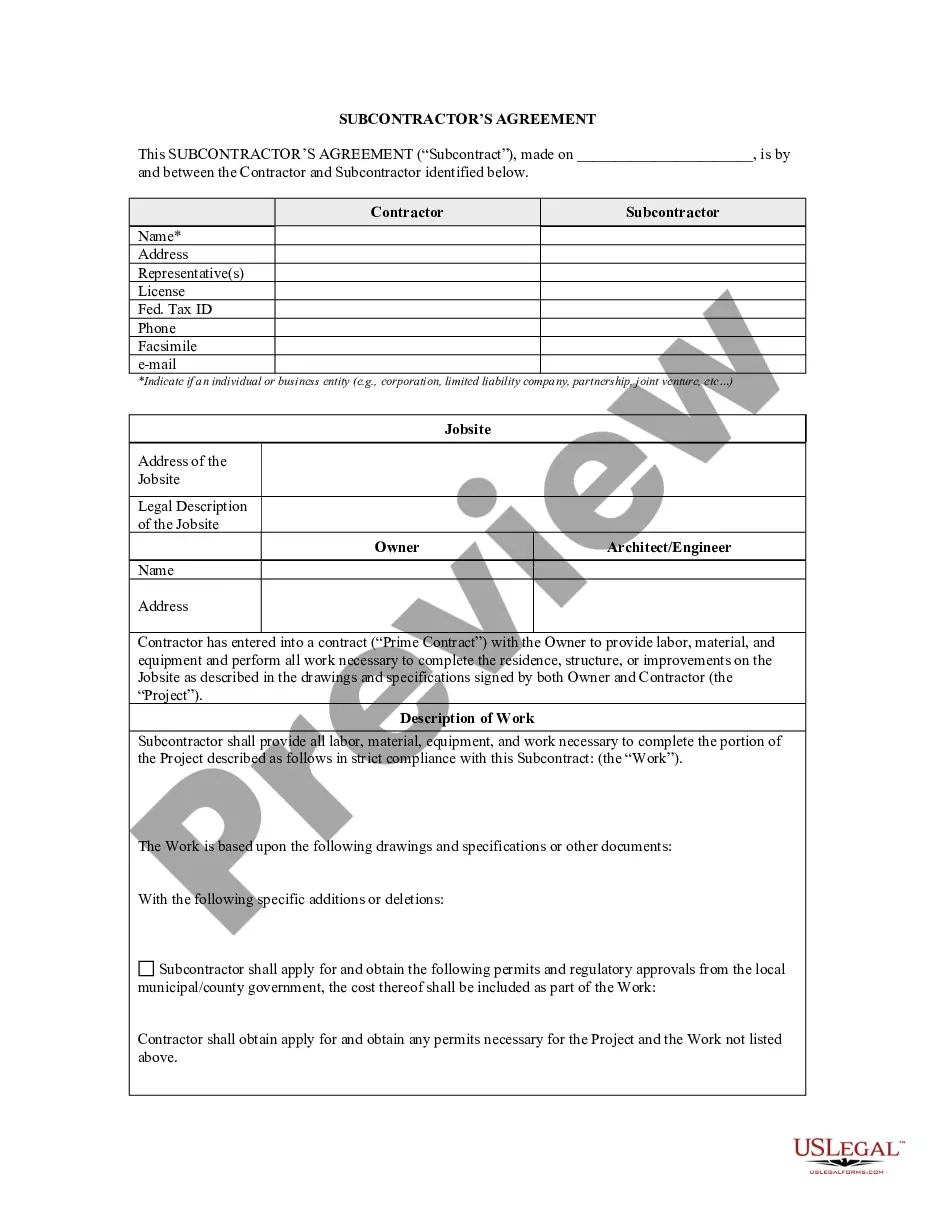
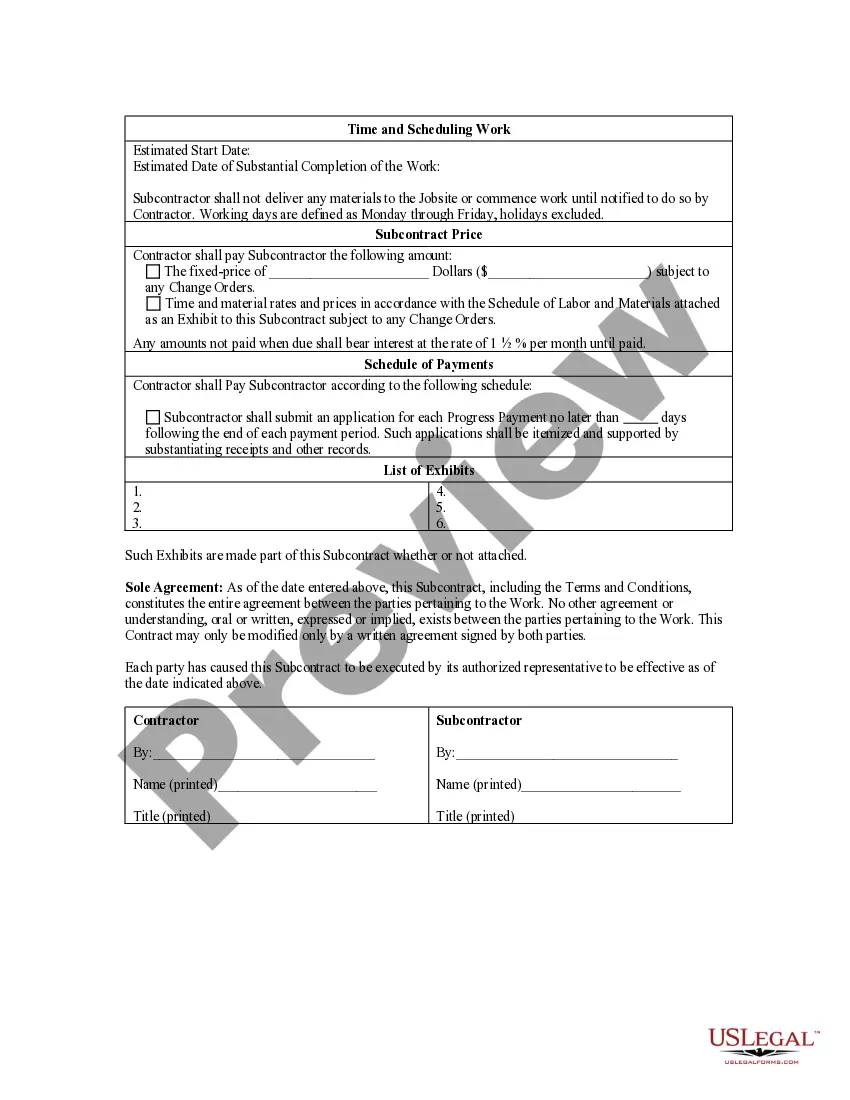
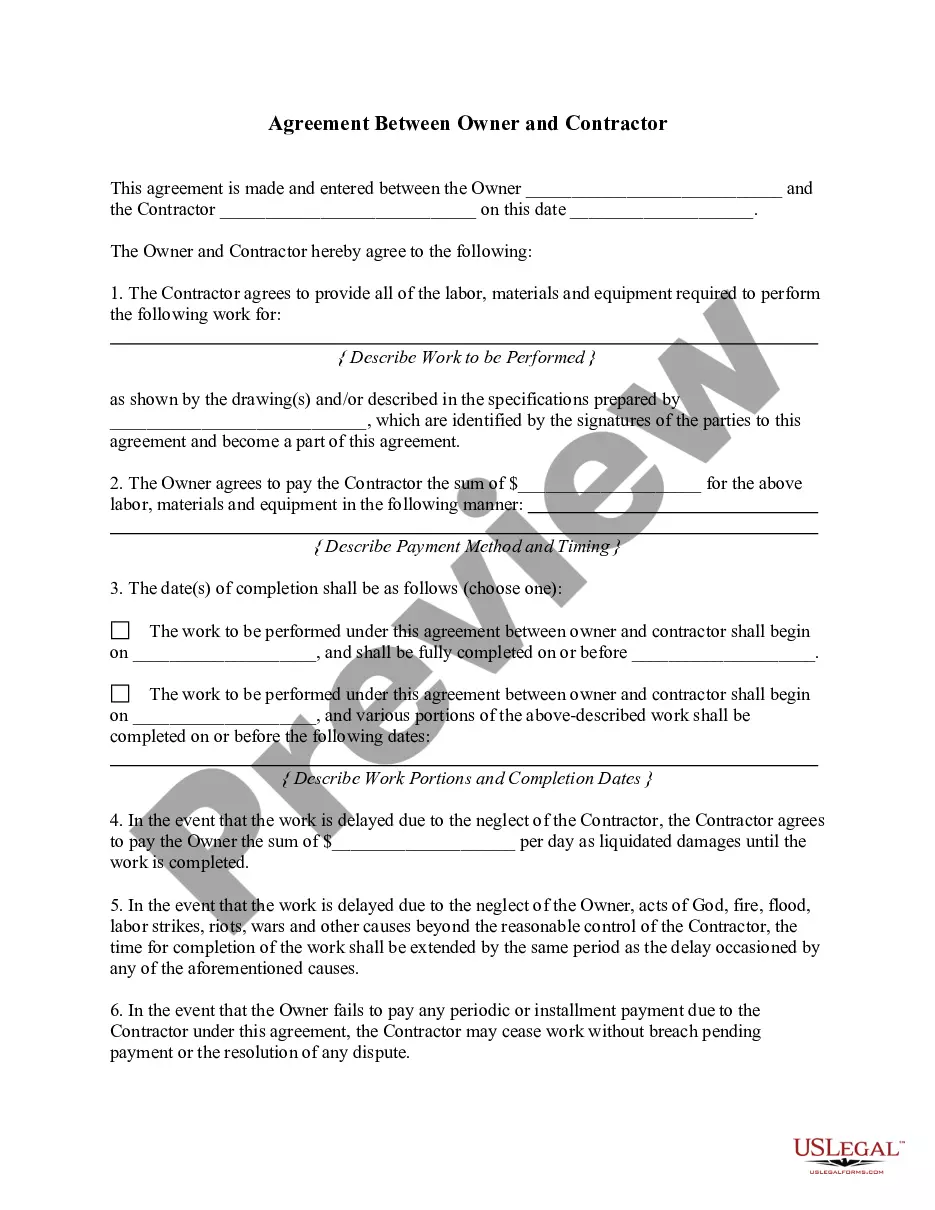
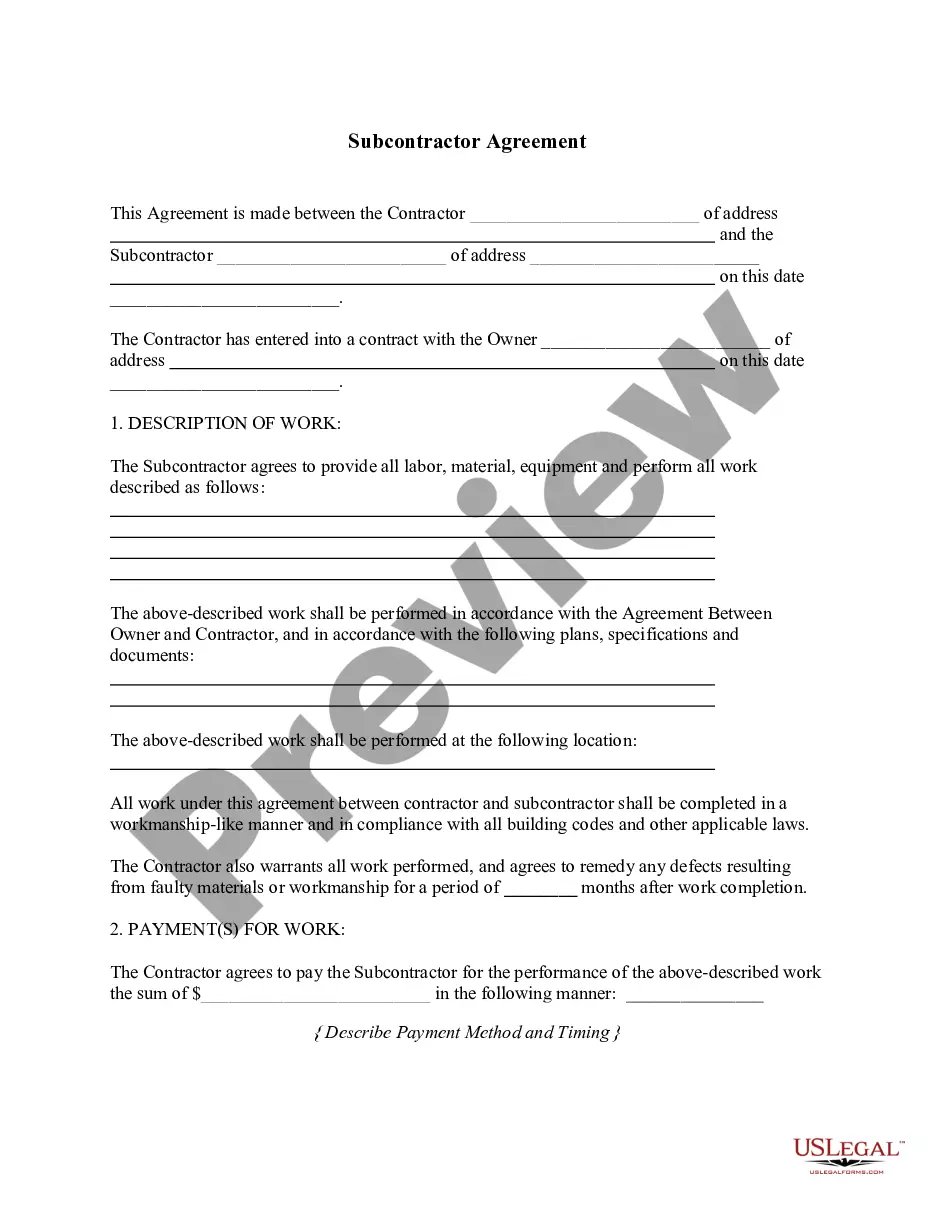
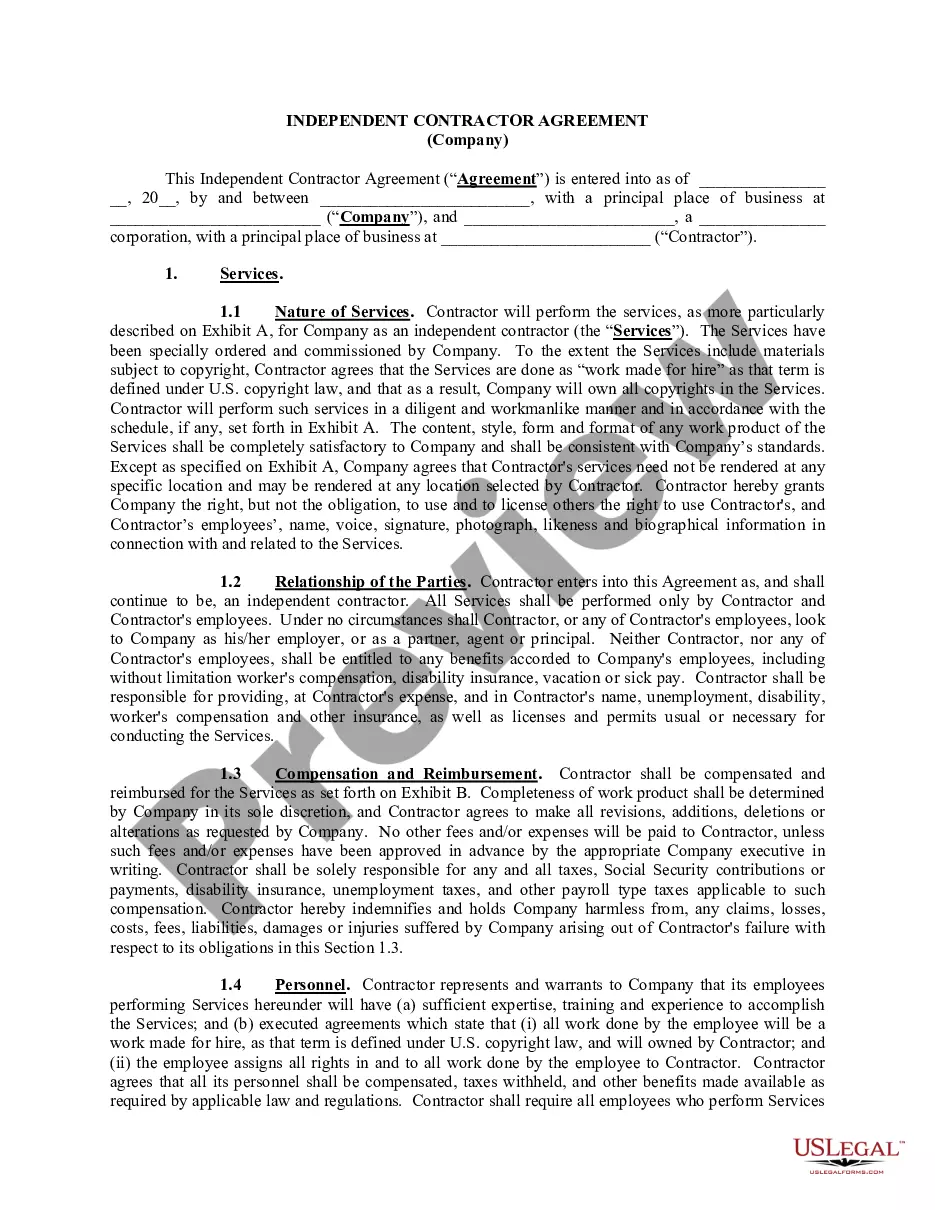
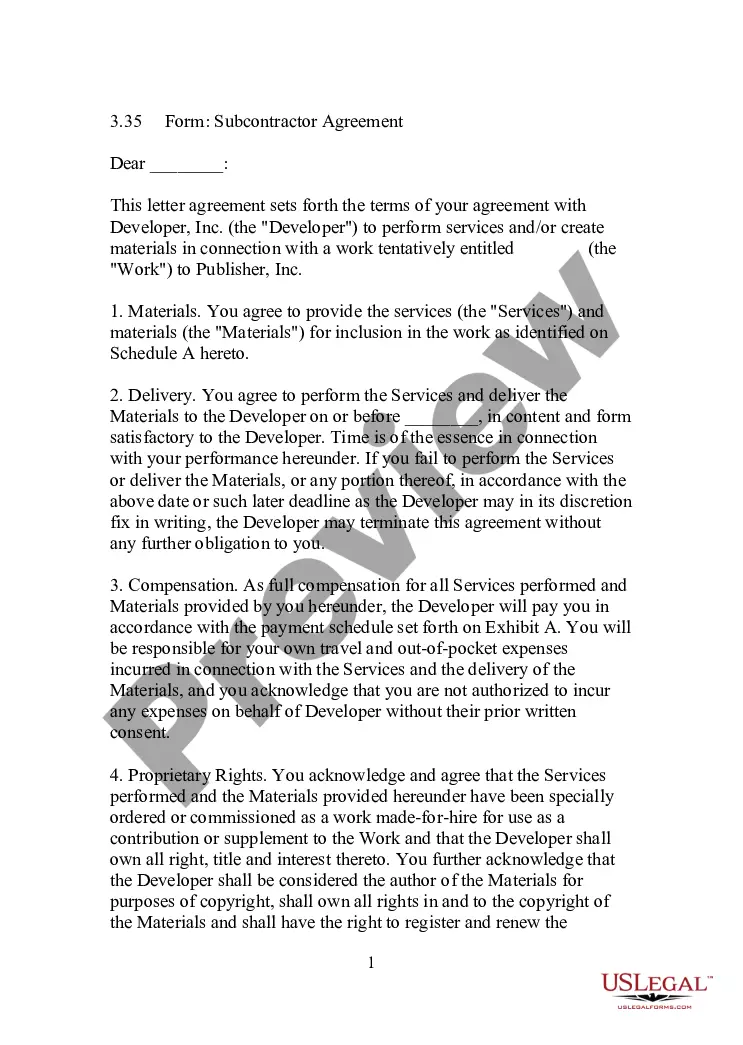
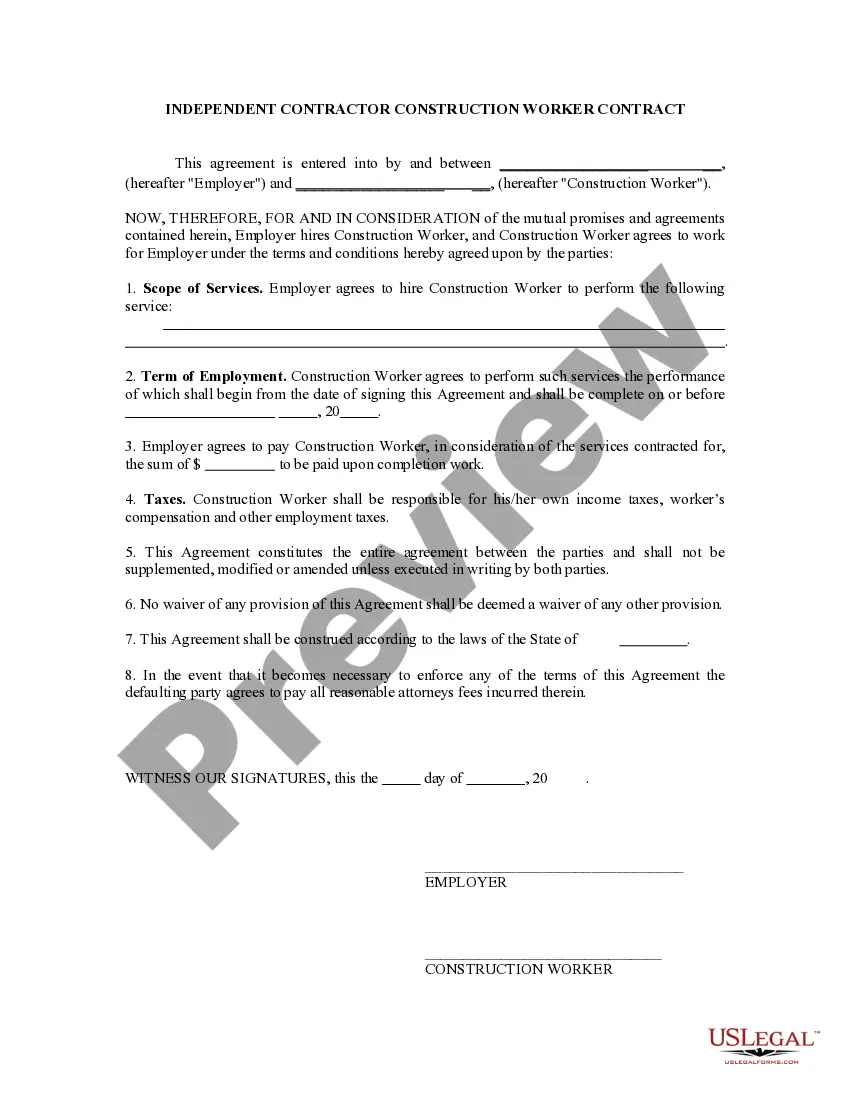
The Subcontractor's Agreement is a legal document that establishes the terms between a contractor and a subcontractor for specific work. This agreement clearly outlines each party's responsibilities, payment details, work schedule, and procedures for managing changes. Unlike general contracts, it focuses specifically on subcontracted work, ensuring clarity and reducing potential disputes between involved parties.
What’s included in this form
- Identification of the parties involved in the contract.
- Description of the job site and the subcontracted work to be performed.
- Payment amount, schedule, and any conditions for change orders.
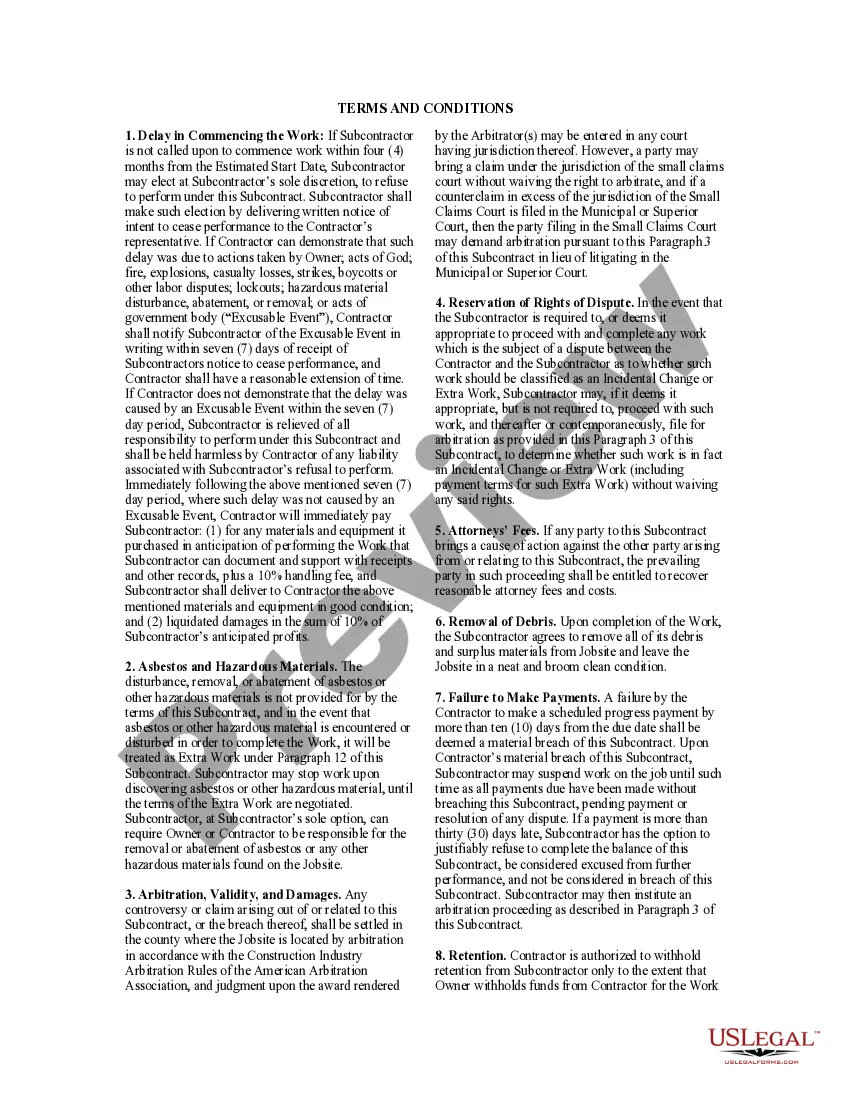
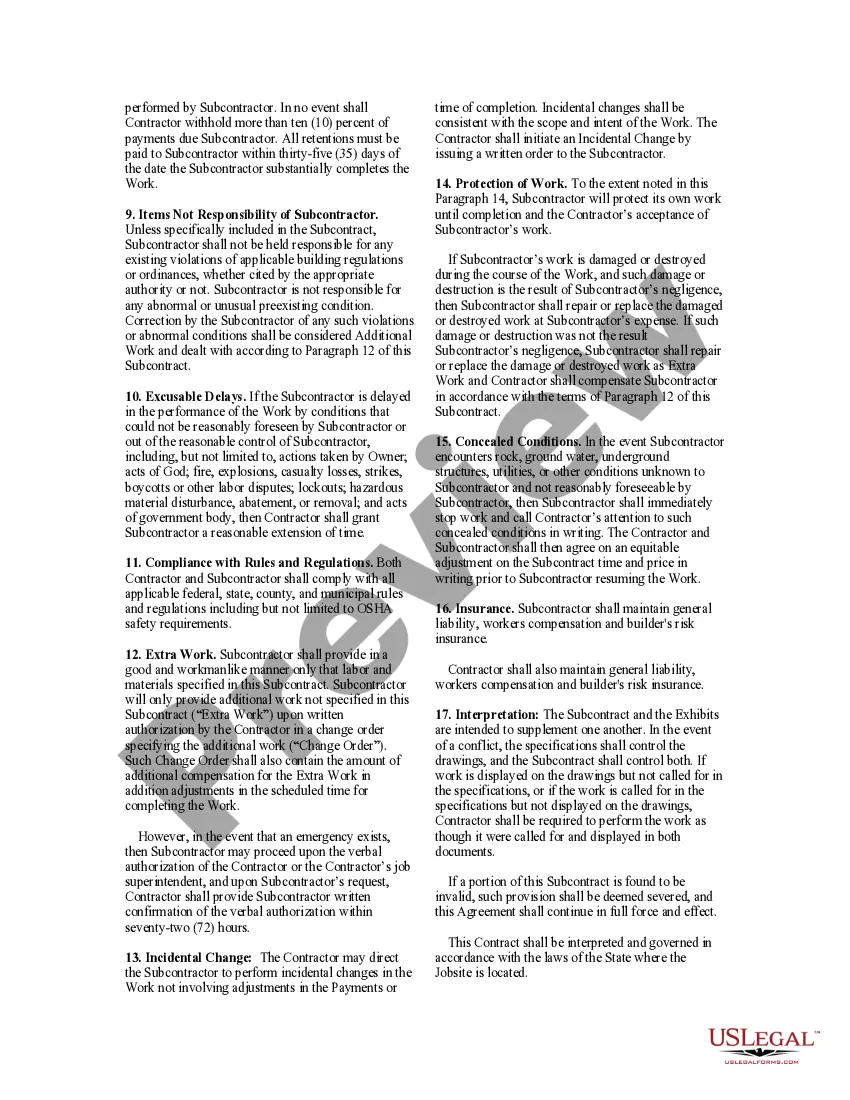
- Clauses regarding delays, late payments, and dispute resolution.
- Requirements for insurance and compliance with regulations.

When to use this form
This form should be utilized when a contractor hires a subcontractor for specific tasks on a construction project. It is essential in ensuring that both parties clearly understand the scope of work, payment schedules, and liabilities. It is typically used in scenarios involving construction, renovation, or repair projects where specialized skills are required.
Who needs this form
- Contractors who are subcontracting portions of their work to others.
- Subcontractors seeking to clarify their rights and responsibilities.
- Both parties who wish to establish a legally binding agreement to minimize disputes.
How to complete this form
- Identify the parties: Enter the names and contact information of both the contractor and the subcontractor.
- Specify the job site: Clearly state the location where the work will be performed.
- Enter a detailed description of the work: Outline the specific tasks to be completed.
- Fill in payment details: Include the total payment amount, payment schedule, and any agreed change orders.
- Sign and date the agreement: Ensure both parties sign in the designated sections to make the agreement enforceable.
Notarization requirements for this form
This form does not typically require notarization unless specified by local law. It is advisable to check your stateâs regulations to ensure compliance.
Get your form ready online
Our built-in tools help you complete, sign, share, and store your documents in one place.
Make edits, fill in missing information, and update formatting in US Legal Forms—just like you would in MS Word.
Download a copy, print it, send it by email, or mail it via USPS—whatever works best for your next step.
Sign and collect signatures with our SignNow integration. Send to multiple recipients, set reminders, and more. Go Premium to unlock E-Sign.
If this form requires notarization, complete it online through a secure video call—no need to meet a notary in person or wait for an appointment.
We protect your documents and personal data by following strict security and privacy standards.

Make edits, fill in missing information, and update formatting in US Legal Forms—just like you would in MS Word.

Download a copy, print it, send it by email, or mail it via USPS—whatever works best for your next step.

Sign and collect signatures with our SignNow integration. Send to multiple recipients, set reminders, and more. Go Premium to unlock E-Sign.

If this form requires notarization, complete it online through a secure video call—no need to meet a notary in person or wait for an appointment.

We protect your documents and personal data by following strict security and privacy standards.
Typical mistakes to avoid
- Failing to clearly define the scope of work, leading to misunderstandings.
- Omitting payment terms or schedules, which can result in payment disputes.
- Not including a change order process, causing issues with modifications to the original agreement.
- Neglecting to sign the contract, making it unenforceable.
Why complete this form online
- Convenience: Easily download, complete, and store the agreement online.
- Editability: Modify templates to fit specific project needs without hassle.
- Reliability: Use forms drafted by licensed attorneys, ensuring compliance with legal standards.
Legal use & context:
- This form helps establish a legally enforceable agreement, protecting both contractor and subcontractor rights.
- It clarifies the responsibilities and liabilities, minimizing potential legal disputes.
- Utilizing this form ensures compliance with construction law and industry standards.
Main things to remember
- The Subcontractor's Agreement clearly outlines responsibilities and expectations for both parties.
- Using this form minimizes risks and potential disputes in contractual relationships.
- Ensure to customize the agreement for state-specific legal requirements.
Looking for another form?
Form popularity
FAQ
Terms. This is the first section of any agreement or contract and states the names and locations of the parties involved. Responsibilities & Deliverables. Payment-Related Details. Confidentiality Clause. Contract Termination. Choice of Law.
Scope of Work. A subcontractor agreement should always specify the scope of work. Supply Chain. Defense & Indemnification. Insurance, Bonds, & Liens. Warranty. Arbitration. Conditional Payment.
The IRS requires contractors to fill out a Form W-9, request for Taxpayer Identification Number and Certification, which you should keep on file for at least four years after the hiring. This form is used to request the correct name and Taxpayer Identification Number, or TIN, of the worker or their entity.
Scope of the Project. Timing for Completion: Duration of Work Clause. Payment and Billing Clause. Independent Contractor Notice. Non-Disclosure Agreement. Non-Complete Clause. Work for Hire Inclusion. Responsibilities for Insurance for Accidental Damages.
For most types of projects you hire an independent contractor (IC) to do, the law does not require you to put anything in writing. You can meet with the IC, agree on the terms of your arrangement, and have an oral contract or agreement that is legally binding. Just because you can doesn't mean you should, however.
A subcontractor agreement is a contract between contractors or project managers and subcontractors. This solidifies any agreement between the two parties and assures work. Subcontractors should read the subcontractor agreement and assure specifics to protect themselves from unfair risk.
A subcontractor has a contract with the contractor for the services provided - an employee of the contractor cannot also be a subcontractor.
Each subcontractor should complete Form W-9 before they begin any work. On the form, the subcontractor identifies their business structure type (sole proprietorship, corporation, etc.). Form W-9 also asks for the subcontractor's name and Taxpayer Identification Number (TIN).
Define the needs of the project. Finalize the provisions of the agreement, such as the due dates. Clarify the terms for payment. Write a draft of the contract and send it to the subcontractor for her review. Decide on a method to handle disputes, should one arise between you and the subcontractor.