New Hampshire Assignment of Contract for Deed by Seller
Overview of this form
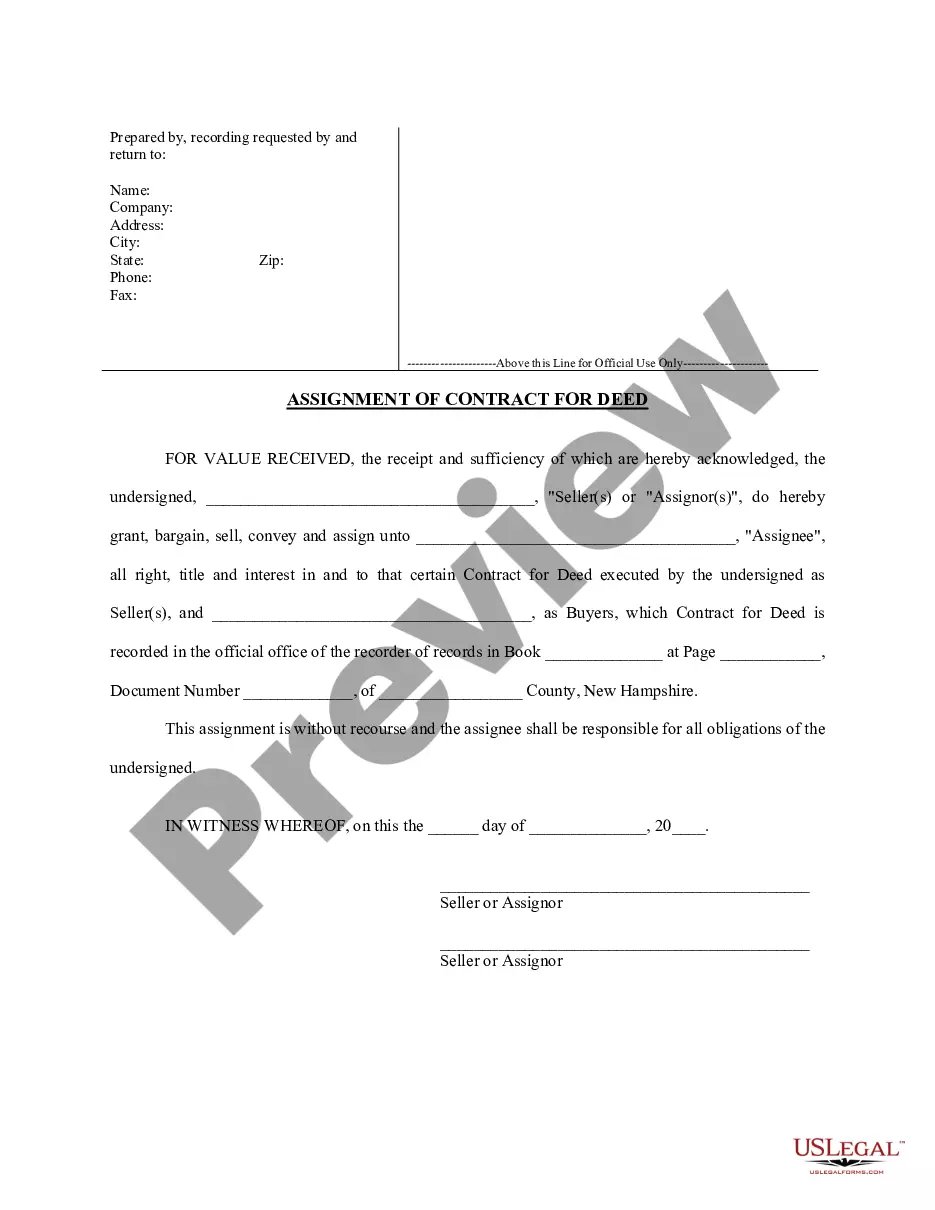
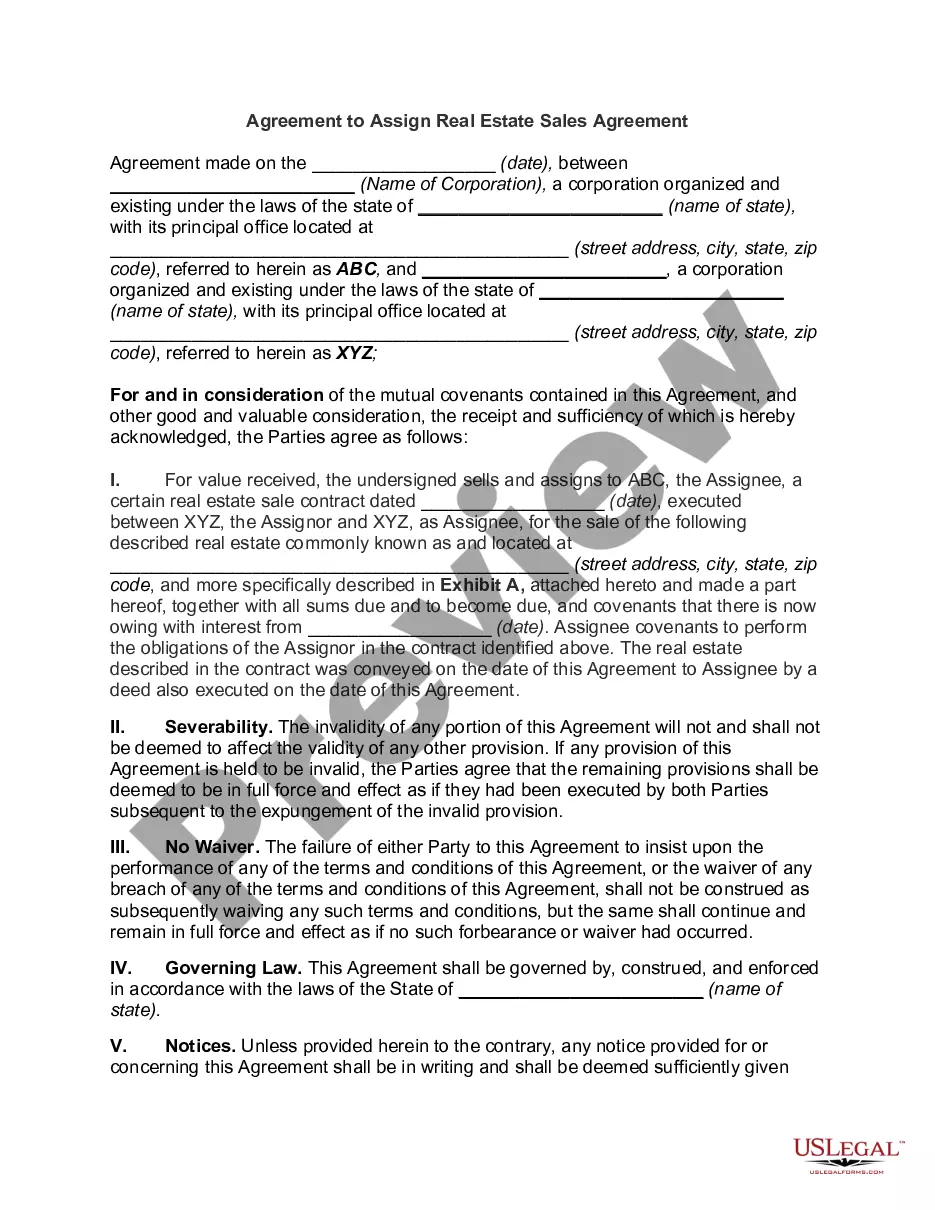
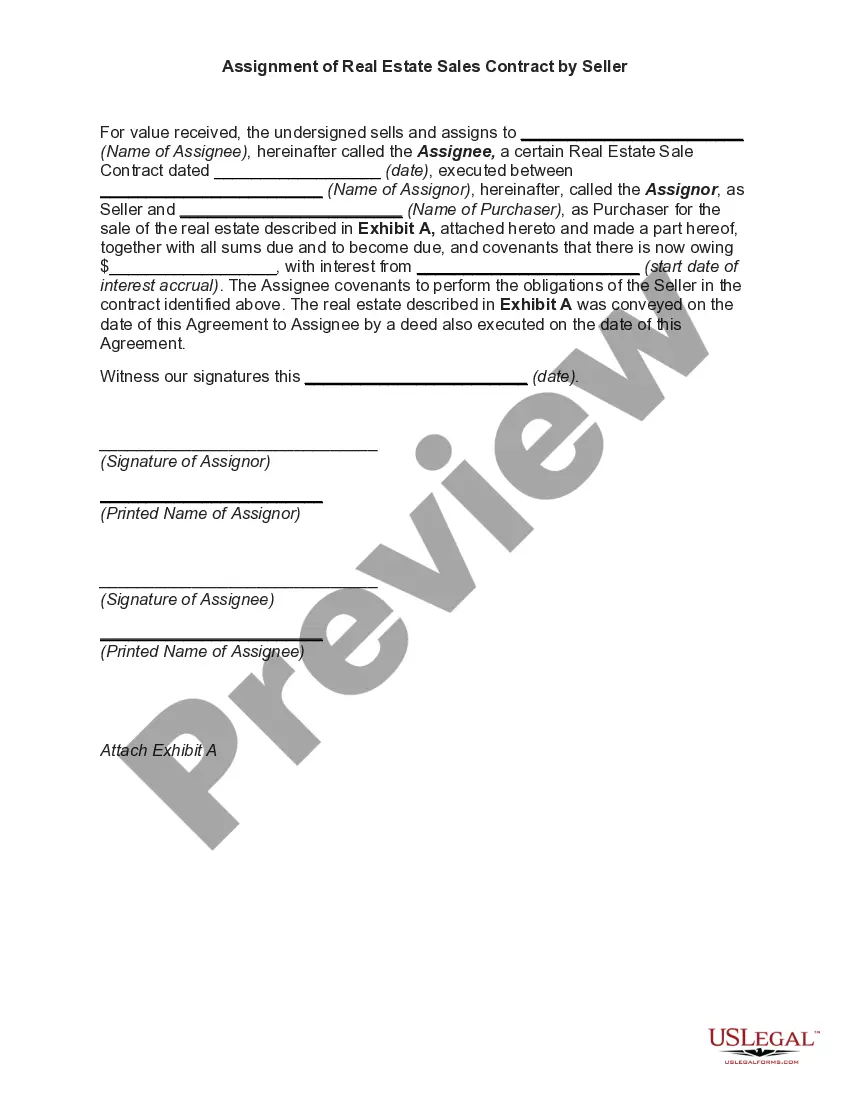
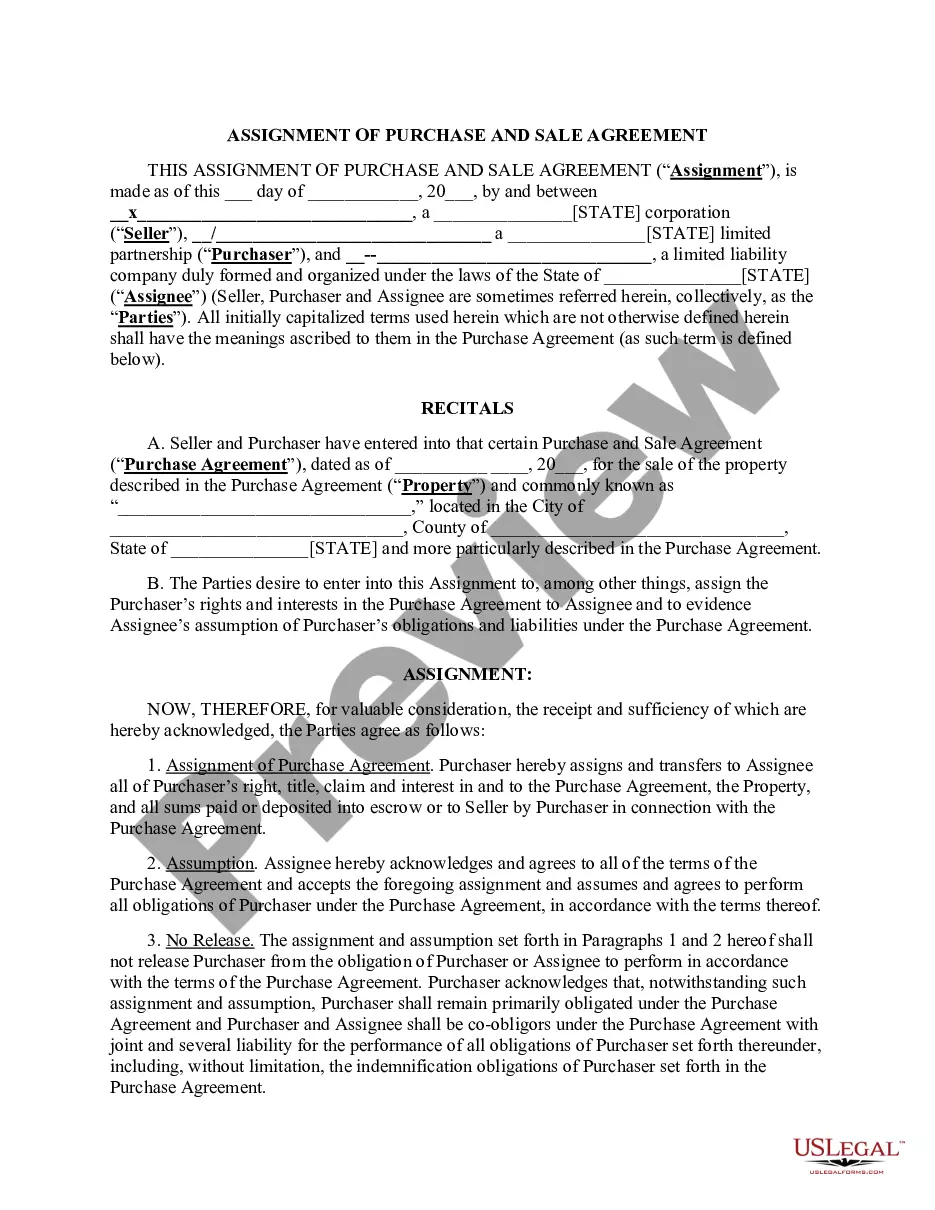
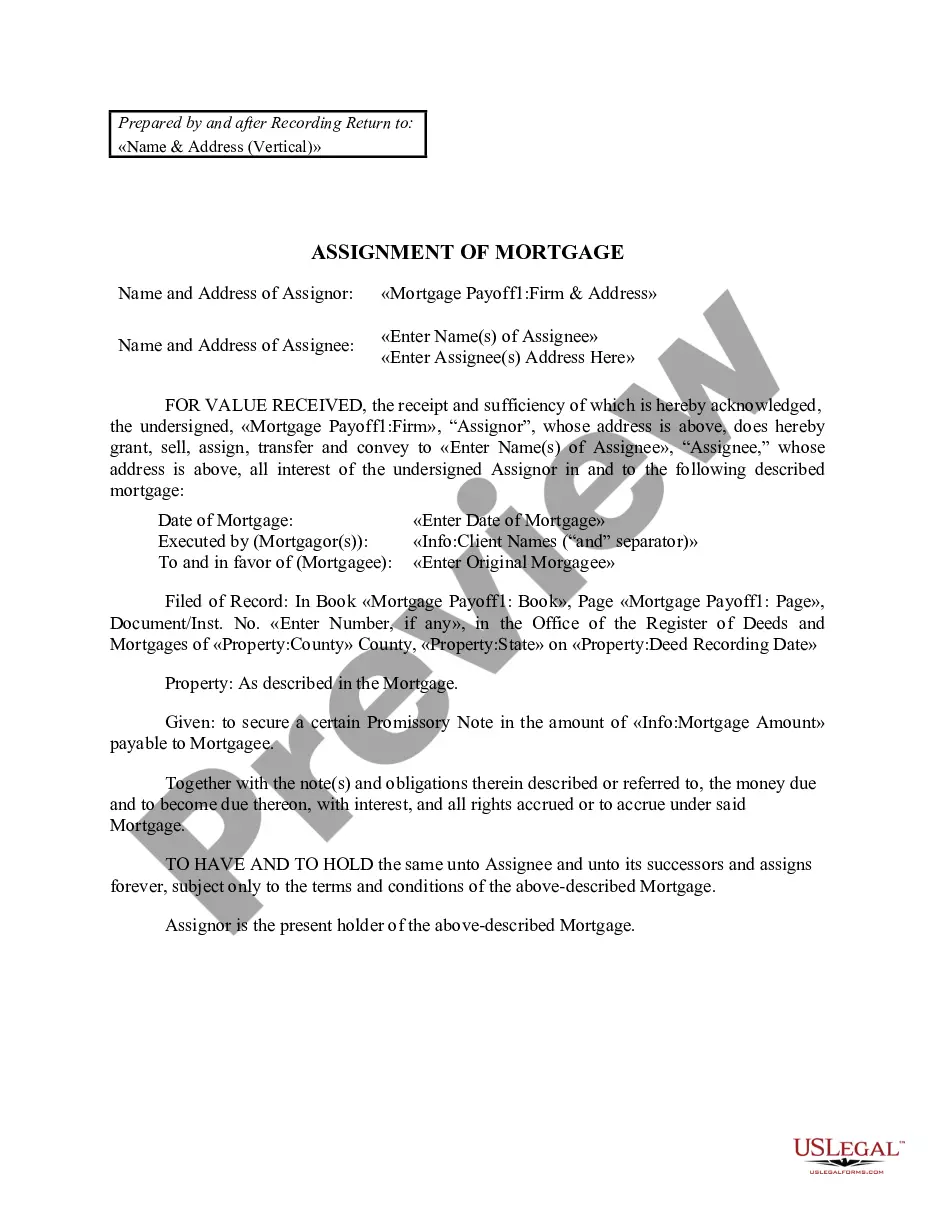
The Assignment of Contract for Deed by Seller form allows a Seller to transfer their rights and obligations under a contract for deed to a third party. This process is often executed in exchange for a discounted cash value, allowing the new assignee to receive future payments from the Purchaser. Unlike a direct sale, the Seller retains some responsibilities unless otherwise specified. This form facilitates the seamless transfer of contractual rights without necessitating a direct transfer of property ownership at the outset.
What’s included in this form
- Assignment declaration â details stating the Seller's intention to assign the contract to a third party.
- Identification of parties â includes the names and contact information of the Seller and the assignee.
- Terms of the assignment â outlines any consideration or compensation related to the assignment.
- Seller's acknowledgment â confirms that the assignment is without recourse, placing obligations on the assignee.
- Signature section â where the Seller signs to formalize the assignment on a specific date.
Common use cases
This form is typically used when a Seller wishes to transfer their rights under a contract for deed due to various reasons, such as financial necessity or personal circumstances. If the Seller wants immediate cash or to relieve themselves of the obligations tied to the property, this assignment allows them to do so. The assignee can then step into the role of the Seller and manage future payments from the Purchaser.
Intended users of this form
- Property Sellers who have entered into a contract for deed and wish to assign it to another party.
- Assignees looking to step into the rights and responsibilities of the Seller under the original contract.
- Real estate investors interested in acquiring contracts for deed at a discounted price.
Completing this form step by step
- Identify the parties involved by entering the names and addresses of the Seller and the assignee.
- State the date of the assignment to ensure a clear record of when the transfer occurs.
- Specify any compensation or details regarding the cash value for the assignment, if applicable.
- Review the declaration that the assignment is without recourse and confirm understanding of obligations.
- Both parties should sign and date the form to finalize the assignment legally.
Notarization guidance
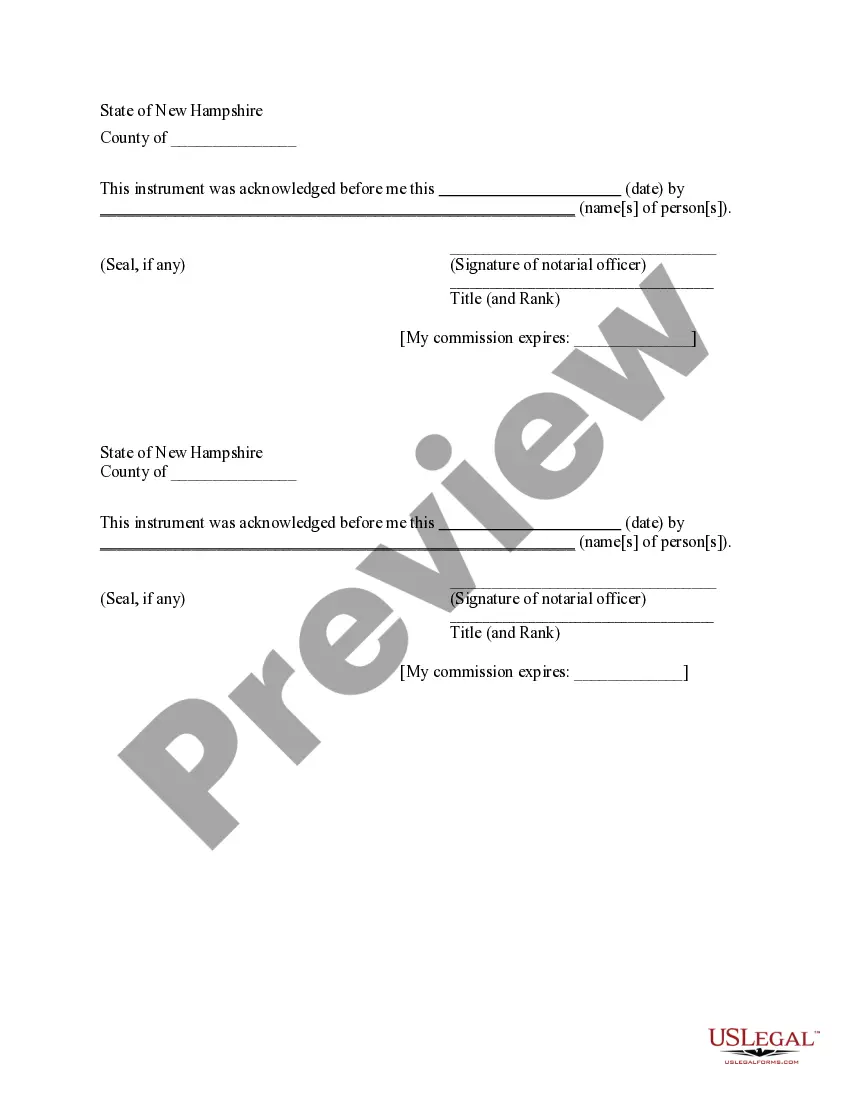
This form does not typically require notarization unless specified by local law. However, having it notarized can provide an extra layer of verification and validity.
Get your form ready online
Our built-in tools help you complete, sign, share, and store your documents in one place.
Make edits, fill in missing information, and update formatting in US Legal Forms—just like you would in MS Word.
Download a copy, print it, send it by email, or mail it via USPS—whatever works best for your next step.
Sign and collect signatures with our SignNow integration. Send to multiple recipients, set reminders, and more. Go Premium to unlock E-Sign.
If this form requires notarization, complete it online through a secure video call—no need to meet a notary in person or wait for an appointment.
We protect your documents and personal data by following strict security and privacy standards.

Make edits, fill in missing information, and update formatting in US Legal Forms—just like you would in MS Word.

Download a copy, print it, send it by email, or mail it via USPS—whatever works best for your next step.

Sign and collect signatures with our SignNow integration. Send to multiple recipients, set reminders, and more. Go Premium to unlock E-Sign.

If this form requires notarization, complete it online through a secure video call—no need to meet a notary in person or wait for an appointment.

We protect your documents and personal data by following strict security and privacy standards.
Common mistakes to avoid
- Failing to include all necessary party information, which can lead to disputes later.
- Omitting or incorrectly stating the terms of compensation, creating confusion on financial obligations.
- Not reviewing the assignment clause, leading to misunderstanding of liability and responsibilities.
Why use this form online
- Convenience of immediate access allows users to fill out the form at their own pace.
- Editability ensures that you can customize details as necessary before finalizing.
- Reliability of professionally drafted forms provides confidence in legal compliance.
Quick recap
- The Assignment of Contract for Deed by Seller allows for the transfer of contractual rights in real estate transactions.
- This form is particularly suited for sellers wishing to exit a contract while enabling another party to step in.
- Proper completion includes accurate details, signatures, and may have state-specific requirements.
Looking for another form?
Form popularity
FAQ
This means that if you default and can?t make your payments, you lose the property and all of the money you have already paid into it (often including repairs and improvements). Unlike a traditional mortgage, a defaulting buyer in a contact for deed may only have 30-60 days to cure the default or move out.
In the first instance, if your deed is not recorded, there is nothing in the public record to stop the seller from conveying the property to another person.The second situation could happen if your seller fails to pay his or her debts and the seller's creditors file liens or judgments against your property.
Purchase price. Down payment. Interest rate. Number of monthly installments. Responsibilities of the buyer and seller. Legal remedies for the seller if the buyer does not make payments.
The buyer must record the contract for deed with the county recorder where the land is located within four months after the contract is signed. Contracts for deed must provide the legal name of the buyer and the buyer's address.
Usually the contract requires the buyer to make payments over time with interest payable on the unpaid balance. Once a buyer pays all of the payments called for under the contract, the owner transfers to the buyer a deed to the property.
Failure to record a deed effectively makes it impossible for the public to know about the transfer of a property. That means the legal owner of the property appears to be someone other than the buyer, a situation that can generate serious ramifications.
Contrary to normal expectations, the Deed DOES NOT have to be recorded to be effective or to show delivery, and because of that, the Deed DOES NOT have to be signed in front of a Notary Public. However, if you plan to record it, then it does have to be notarized as that is a County Recorder requirement.
A contract for deed is a legal agreement for the sale of property in which a buyer takes possession and makes payments directly to the seller, but the seller holds the title until the full payment is made.
The buyer should record the contract for deed with the county recorder where the land is located and does so normally within four months after the contract is signed, though the time may vary depending on state law.