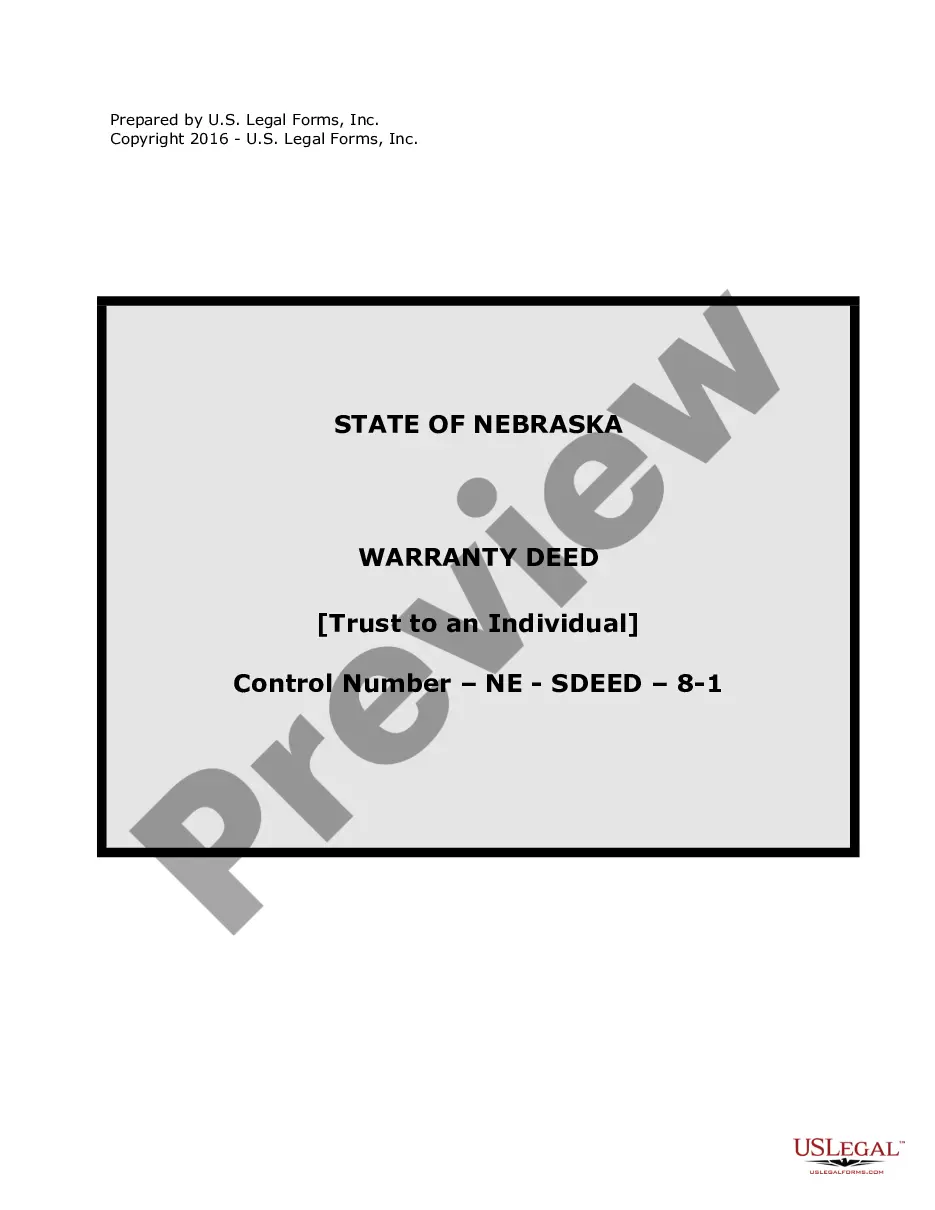
Nebraska Warranty Deed from Trust to an Individual
About this form
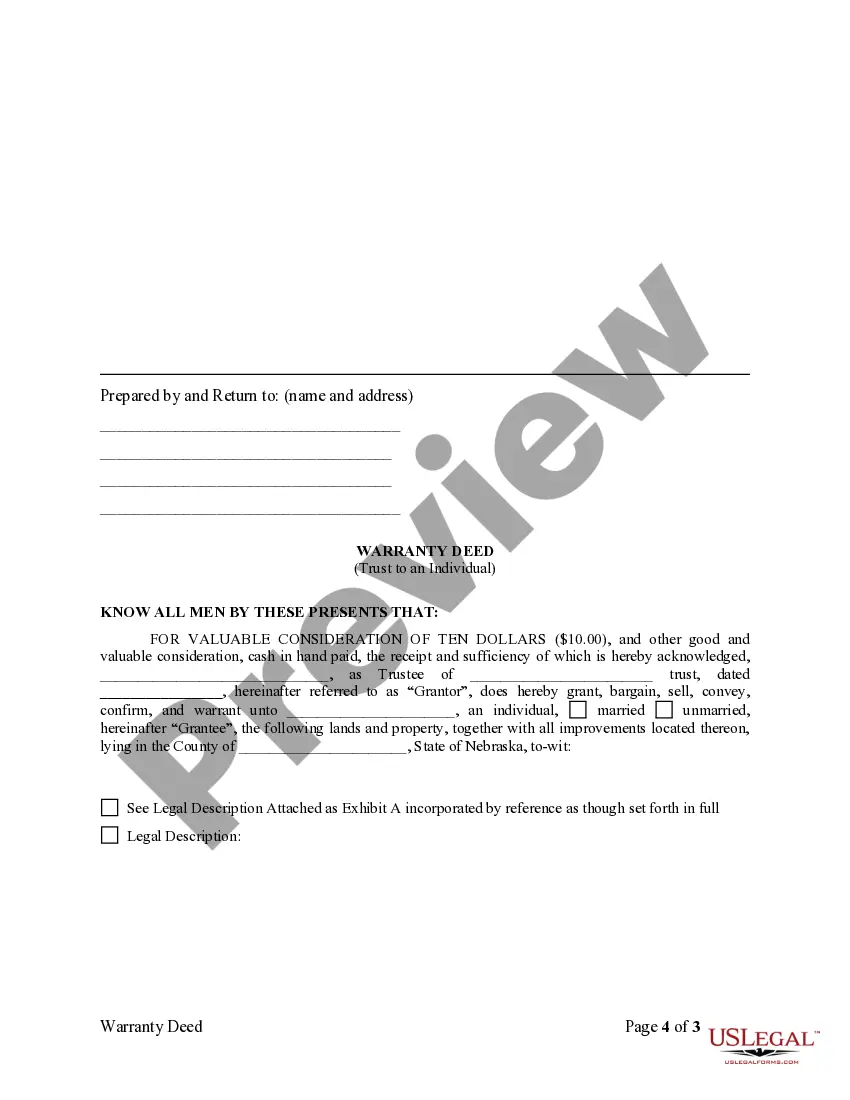
The Warranty Deed from Trust to an Individual is a legal document that transfers ownership of property from a trust to an individual. This form is used to ensure that the transfer is carried out correctly, providing a clear legal record of the transaction. Unlike other forms of deeds, this document specifically involves a trust as the grantor, which is important when dealing with property held in a trust for estate planning purposes.
Form components explained
- Identification of the grantor (trust) and the grantee (individual).
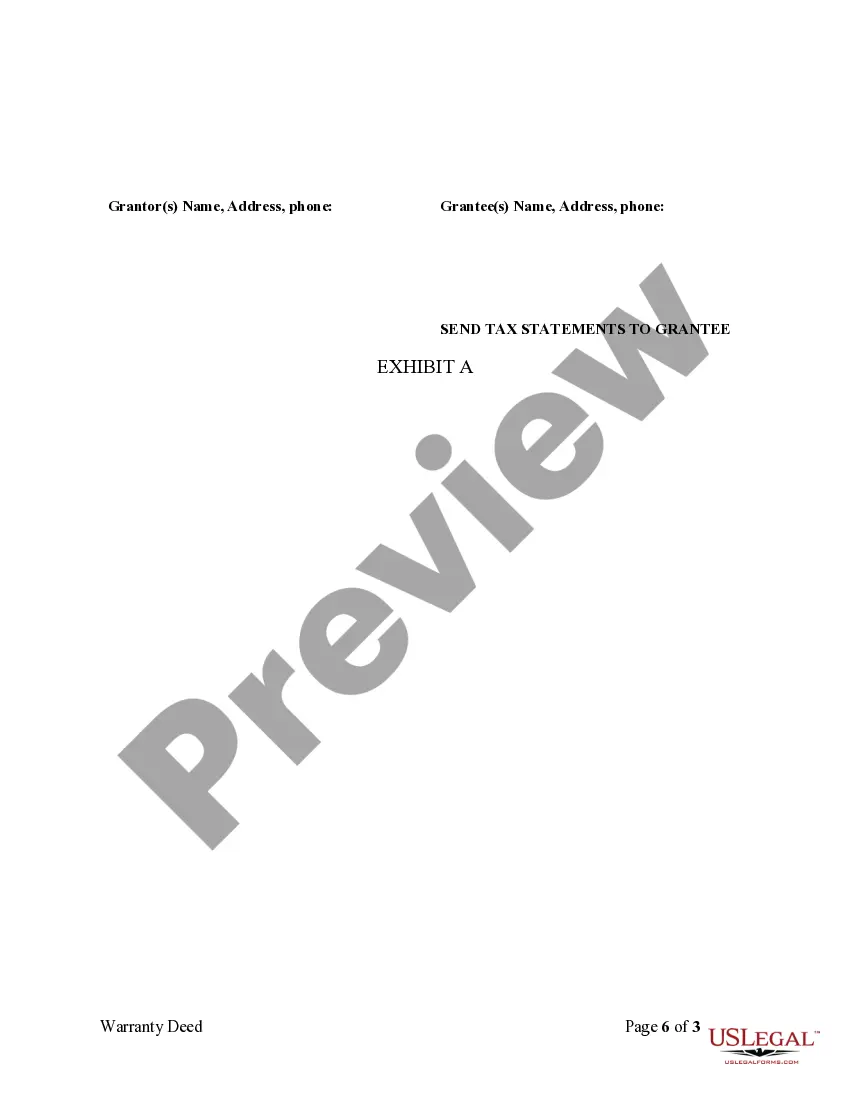
- Description of the property being transferred, including its legal address.
- Statement of consideration, usually a nominal amount like ten dollars.
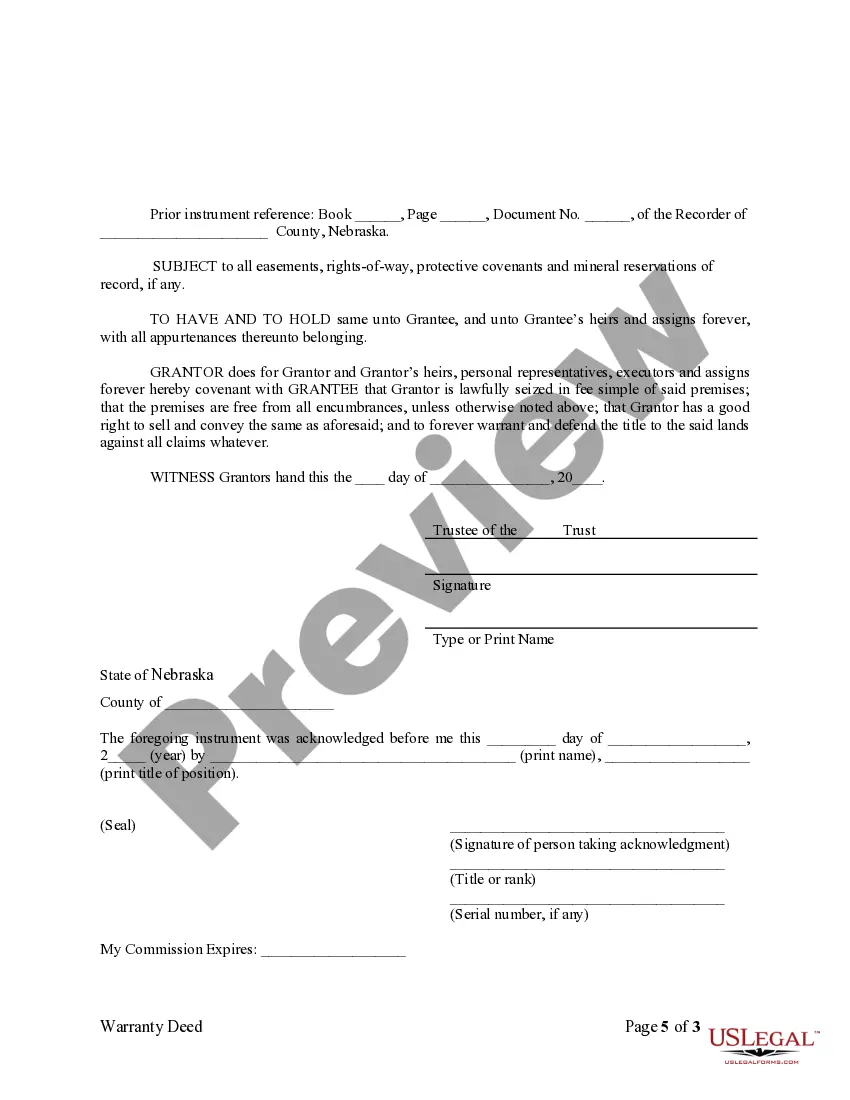
- Warranty of title guaranteeing the grantor's right to convey the property.
- Signatures from the grantor and a notary public to validate the document.
- Any necessary identification of easements or restrictions on the property.



When to use this document
This form is typically used when a property held in a trust is being transferred to an individual beneficiary. It may be needed during estate settlements, when the trustee wishes to transfer property out of the trust to a designated individual, or to clarify ownership once a trust is no longer active. It ensures both parties have a clear understanding of the property rights involved.
Intended users of this form
This form is suitable for:
- Trustees managing a trust who need to transfer property to an individual.
- Individuals who are beneficiaries of a trust and are receiving property.
- Real estate professionals who assist in property transfers involving trusts.
Completing this form step by step
- Identify the parties involved: the trustee (grantor) and the individual (grantee).
- Complete the description of the property including its legal description and address.
- Enter the date of the deed and the exchange of consideration amount.
- Ensure the grantor provides any necessary warranties regarding the title.
- Sign the document in front of a notary public to validate the deed.
Does this document require notarization?
This form needs to be notarized to ensure legal validity. US Legal Forms provides secure online notarization powered by Notarize, allowing you to complete the process through a verified video call, available anytime.
Get your form ready online
Our built-in tools help you complete, sign, share, and store your documents in one place.
Make edits, fill in missing information, and update formatting in US Legal Forms—just like you would in MS Word.
Download a copy, print it, send it by email, or mail it via USPS—whatever works best for your next step.
Sign and collect signatures with our SignNow integration. Send to multiple recipients, set reminders, and more. Go Premium to unlock E-Sign.
If this form requires notarization, complete it online through a secure video call—no need to meet a notary in person or wait for an appointment.
We protect your documents and personal data by following strict security and privacy standards.

Make edits, fill in missing information, and update formatting in US Legal Forms—just like you would in MS Word.

Download a copy, print it, send it by email, or mail it via USPS—whatever works best for your next step.

Sign and collect signatures with our SignNow integration. Send to multiple recipients, set reminders, and more. Go Premium to unlock E-Sign.

If this form requires notarization, complete it online through a secure video call—no need to meet a notary in person or wait for an appointment.

We protect your documents and personal data by following strict security and privacy standards.
Typical mistakes to avoid
- Failing to provide a complete and accurate property description.
- Not having the document notarized, which can lead to legal issues.
- Omitting relevant details about easements or property restrictions.
- Not specifying the relationship between the grantor and grantee clearly.
Benefits of using this form online
- Convenient access to the form at any time, allowing for immediate use.
- Edit the document digitally before printing, ensuring accuracy.
- Saved templates reduce the time spent on paperwork.
- Reliable format that adheres to state-specific legal requirements.
Looking for another form?







Form popularity
FAQ
In the context of a California mortgage transaction, a trust deed also transfer ownership. Only this time, the title is being placed in the hands of a third-party trustee, who holds the property on behalf of the lender and the homeowner-borrower until the mortgage is paid.
A Declaration of Trust (also known as a Deed of Trust) is a legally binding document in which the legal owners of the property declare that they hold the property on trust for the beneficial owners and sets out the shares in which the beneficial interests are held.
Locate the deed that's in trust. Use the proper deed. Check with your title insurance company and lender. Prepare a new deed. Sign in the presence of a notary. Record the deed in the county clerk's office.
A personal representative deed and warranty deed are the same only in that they both convey ownership of land. The types of title assurance that the different deeds provide to the new owner are very different.
A deed of trust is a written instrument with three parties: The trustor, who is the borrower and homeowner. The beneficiary, who is the lender. The trustee, who is a third party such as an insurance company or escrow management agency that holds actual title to the property in trust for the beneficiary.
A warranty deed protects property owners from future claims that someone else actually owns a portion (or all) of their property, while trustee deeds protect lenders when borrowers default on their mortgage loans.
A deed conveys ownership; a deed of trust secures a loan.
If there's a deed of trust on a property, the lender can sell the property and pay off the loan. Whether your loan falls under the mortgage or deed of trust definition, you'll need to get approval from the lender before you sell your home for less than you owe.
A trustee deed offers no such warranties about the title.