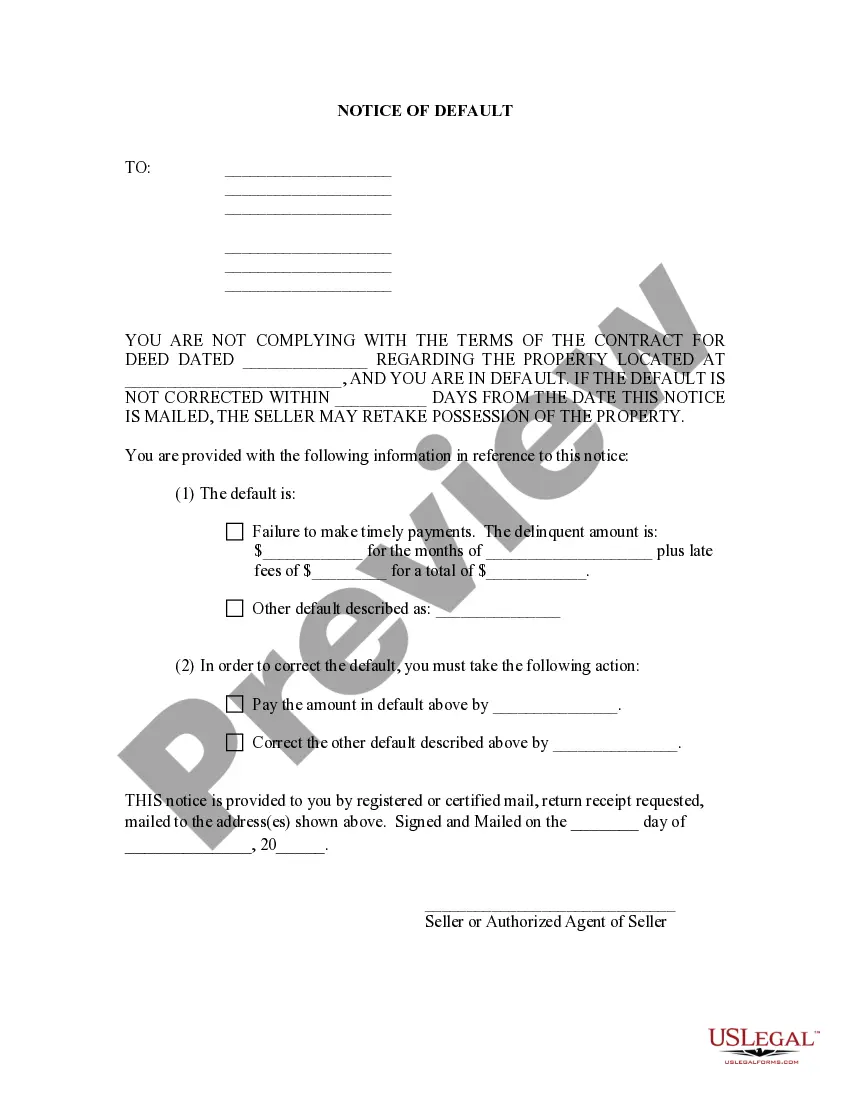
Nebraska General Notice of Default for Contract for Deed
Overview of this form
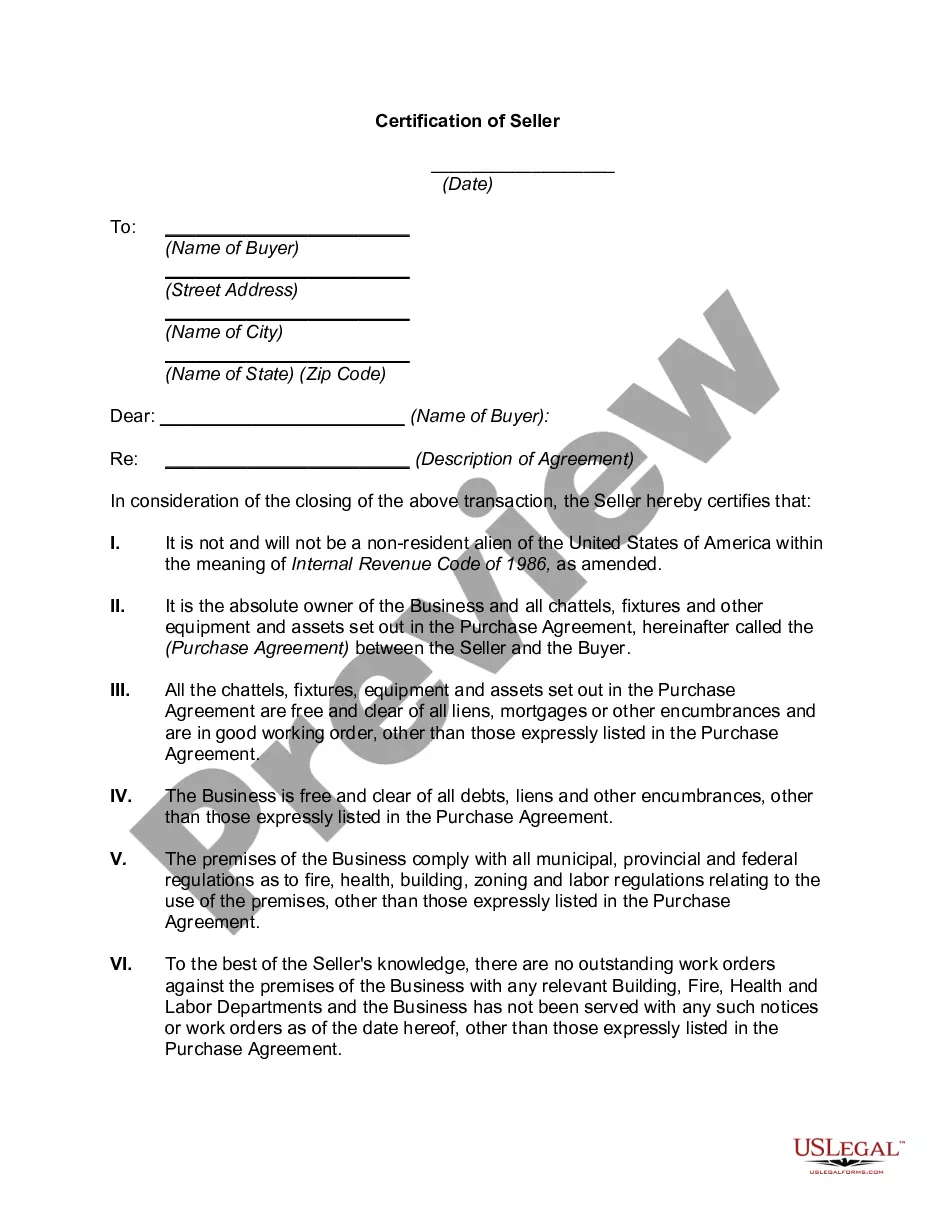
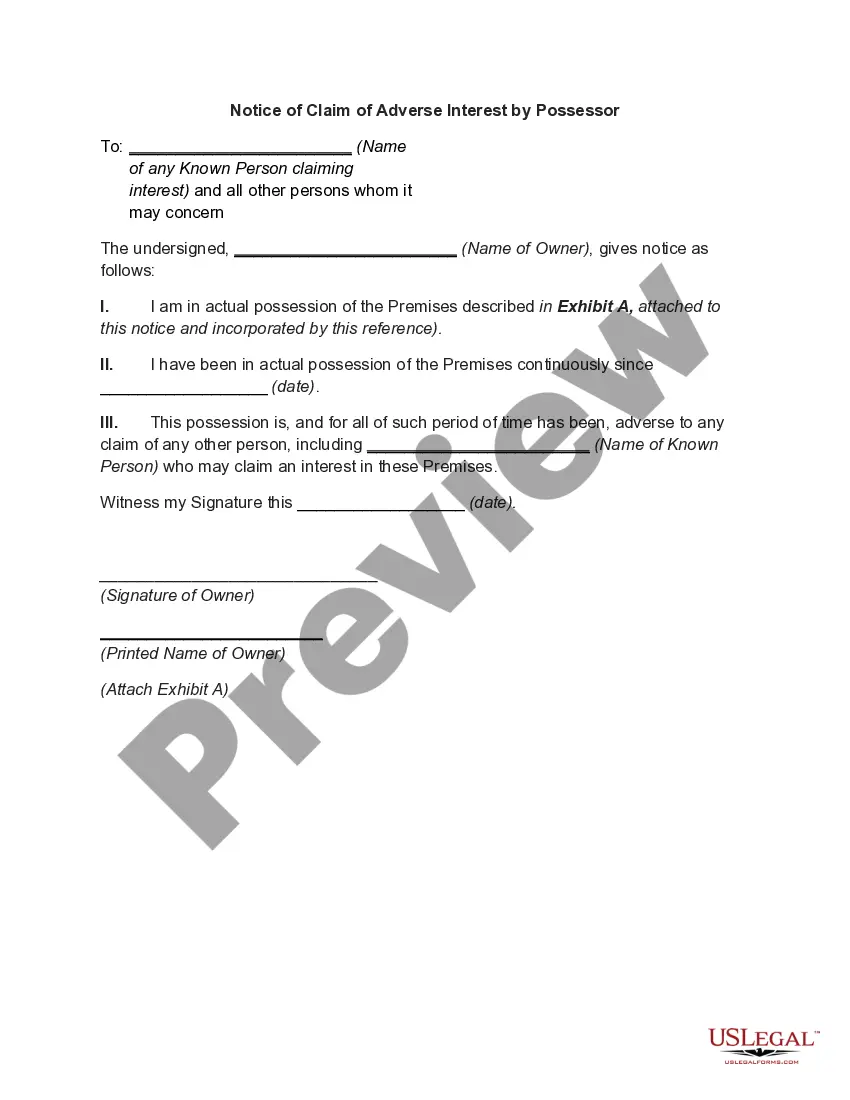
The General Notice of Default for Contract for Deed is a formal document used by the Seller to inform the Purchaser of their default under a contract for deed. This form clearly outlines the reasons for the default, what actions the Purchaser must take to remedy the situation, and the Seller's intended course of action if the Purchaser fails to comply. Unlike other legal notices, this form is specifically tailored for contracts involving the transfer of real estate, making it essential for maintaining clear communication between parties in these transactions.
Main sections of this form
- Identification of the Seller and Purchaser.
- Detailed explanation of the default and its causes.
- Specific actions required by the Purchaser to cure the default.
- Outline of the Seller's remedies if the default is not cured.
- Signatures of parties involved to validate the notice.
When this form is needed
This form should be used when a Purchaser fails to meet the obligations set forth in a contract for deed. Common situations include late payments, failure to maintain the property, or violations of any conditions specified in the contract. Using this notice is essential to legally notify the Purchaser of their default and to outline how they can rectify the situation.
Who needs this form
- Sellers who have entered into a contract for deed.
- Real estate professionals acting on behalf of sellers.
- Purchasers who have received a notice of default and want to understand their obligations.
Steps to complete this form
- Identify and enter the full names and addresses of both the Seller and the Purchaser.
- Clearly state the specific reasons for the default, referencing the relevant sections of the contract.
- Outline the actions the Purchaser must take to remedy the default, including deadlines if applicable.
- Detail the Seller's proposed remedies if the Purchaser does not cure the default.
- Sign and date the notice to finalize it.
Does this form need to be notarized?
To make this form legally binding, it must be notarized. Our online notarization service, powered by Notarize, lets you verify and sign documents remotely through an encrypted video session.
Get your form ready online
Our built-in tools help you complete, sign, share, and store your documents in one place.
Make edits, fill in missing information, and update formatting in US Legal Forms—just like you would in MS Word.
Download a copy, print it, send it by email, or mail it via USPS—whatever works best for your next step.
Sign and collect signatures with our SignNow integration. Send to multiple recipients, set reminders, and more. Go Premium to unlock E-Sign.
If this form requires notarization, complete it online through a secure video call—no need to meet a notary in person or wait for an appointment.
We protect your documents and personal data by following strict security and privacy standards.

Make edits, fill in missing information, and update formatting in US Legal Forms—just like you would in MS Word.

Download a copy, print it, send it by email, or mail it via USPS—whatever works best for your next step.

Sign and collect signatures with our SignNow integration. Send to multiple recipients, set reminders, and more. Go Premium to unlock E-Sign.

If this form requires notarization, complete it online through a secure video call—no need to meet a notary in person or wait for an appointment.

We protect your documents and personal data by following strict security and privacy standards.
Avoid these common issues
- Failing to provide clear reasoning for the default, which can lead to confusion.
- Not including a clear deadline for the Purchaser to remedy the default.
- Omitting the signatures of both parties, which invalidates the notice.
Why use this form online
- Convenience of immediate access to the form without the need for physical visits.
- Editability allows you to customize the form to match specific circumstances.
- Reliability from forms drafted by licensed attorneys, ensuring legal compliance.
Legal use & context
- This notice serves as a formal legal communication required to initiate any potential remedies following a default.
- Failure to properly utilize this notice may impact the enforceability of the Seller's claims.
Main things to remember
- The General Notice of Default is essential for notifying a Purchaser of their default under a contract for deed.
- Ensure all sections of the form are completed accurately to avoid legal issues.
- Consult local laws for specific requirements related to this form.
Looking for another form?
Form popularity
FAQ
Loss of Service Control. A major disadvantage of contract management is that the organization gives up a considerable amount of control over the services that will be provided to customers. Potential Time Delays. Loss of Business Flexibility. Loss of Product Quality. Compliance and Legal Issues.
The interest rate on a contract for deed loan is typically 3% - 6% higher than the rate on regular mortgage. A higher interest rate means a higher monthly mortgage payment plus you are also responsible for property taxes and insurance even though you do not own the property.
A disadvantage to the seller is that a contract for deed is frequently characterized by a low down payment and the purchase price is paid in installments instead of one lump sum.The legal fees and time frame for this process will be more extensive than a standard Power of Sale foreclosure.
A contract for deed is a legal agreement for the sale of property in which a buyer takes possession and makes payments directly to the seller, but the seller holds the title until the full payment is made.
One of the biggest negatives that can occur with a land contract is when a buyer purchases a property on which the seller is still making mortgage payments.
One disadvantage of a contract for deed to the seller is that clearing the title may take time and money if the buyer defaults on the contract, according to Real Town. In addition, the seller can immediately foreclose on the property if the buyer defaults, and the buyer has no recourse against the seller.
In the first instance, if your deed is not recorded, there is nothing in the public record to stop the seller from conveying the property to another person.The second situation could happen if your seller fails to pay his or her debts and the seller's creditors file liens or judgments against your property.
A seller using a contract for deed doesn?t have that option, unless you agree to include that clause in your contract. Other benefits include: no loan qualifying, low or flexible down payment, favorable interest rates and flexible terms, and a quicker settlement.
Contrary to normal expectations, the Deed DOES NOT have to be recorded to be effective or to show delivery, and because of that, the Deed DOES NOT have to be signed in front of a Notary Public. However, if you plan to record it, then it does have to be notarized as that is a County Recorder requirement.