North Dakota Landlord Agreement to allow Tenant Alterations to Premises
Understanding this form
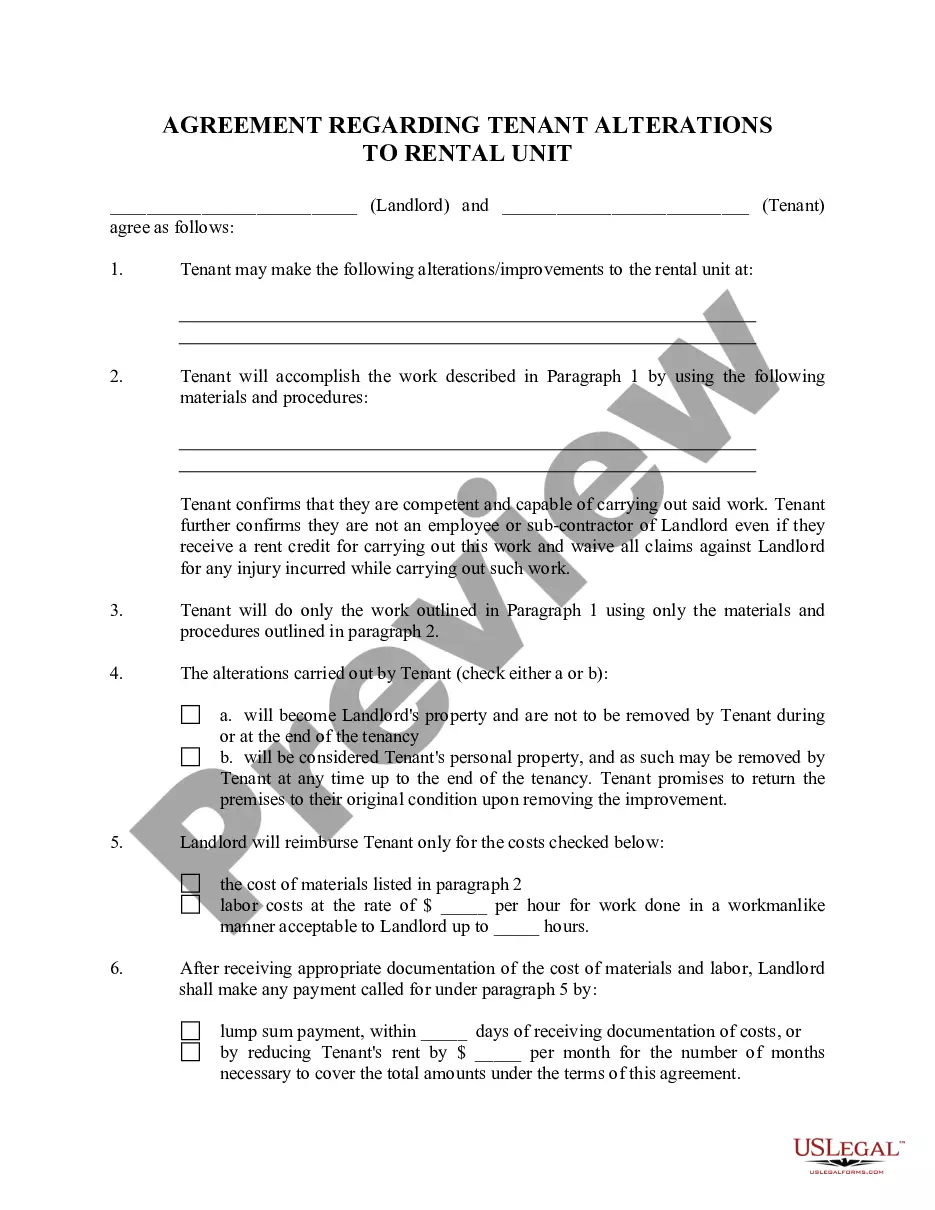
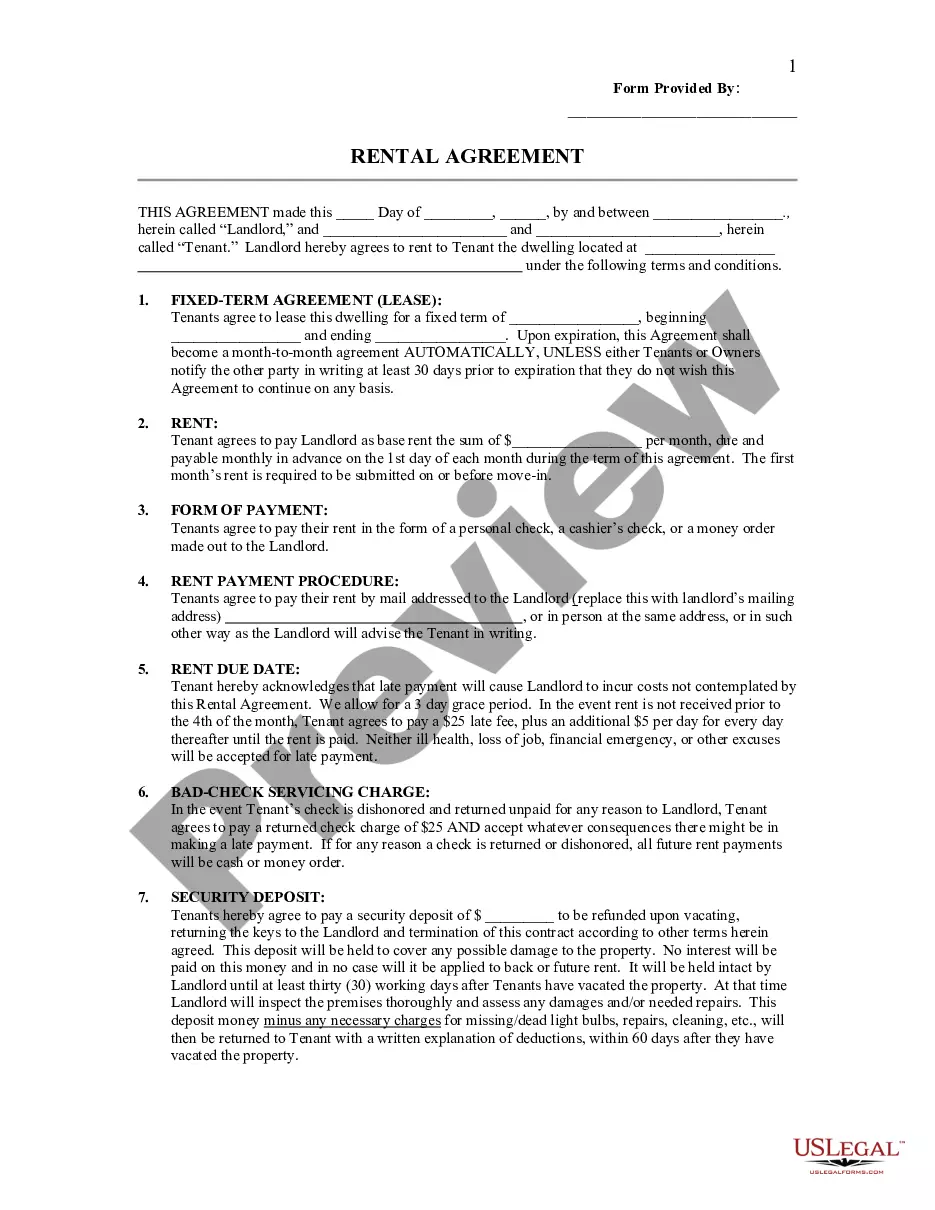
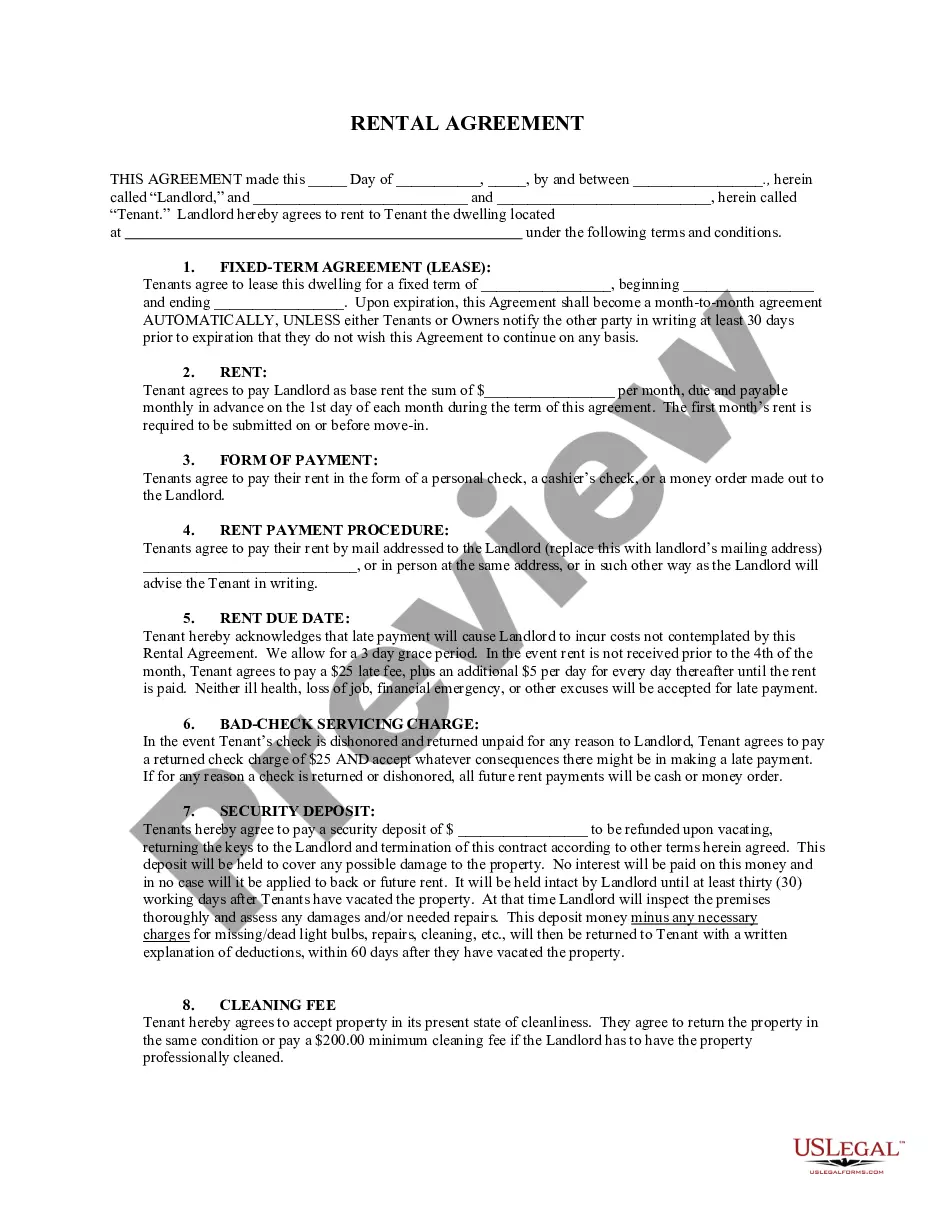
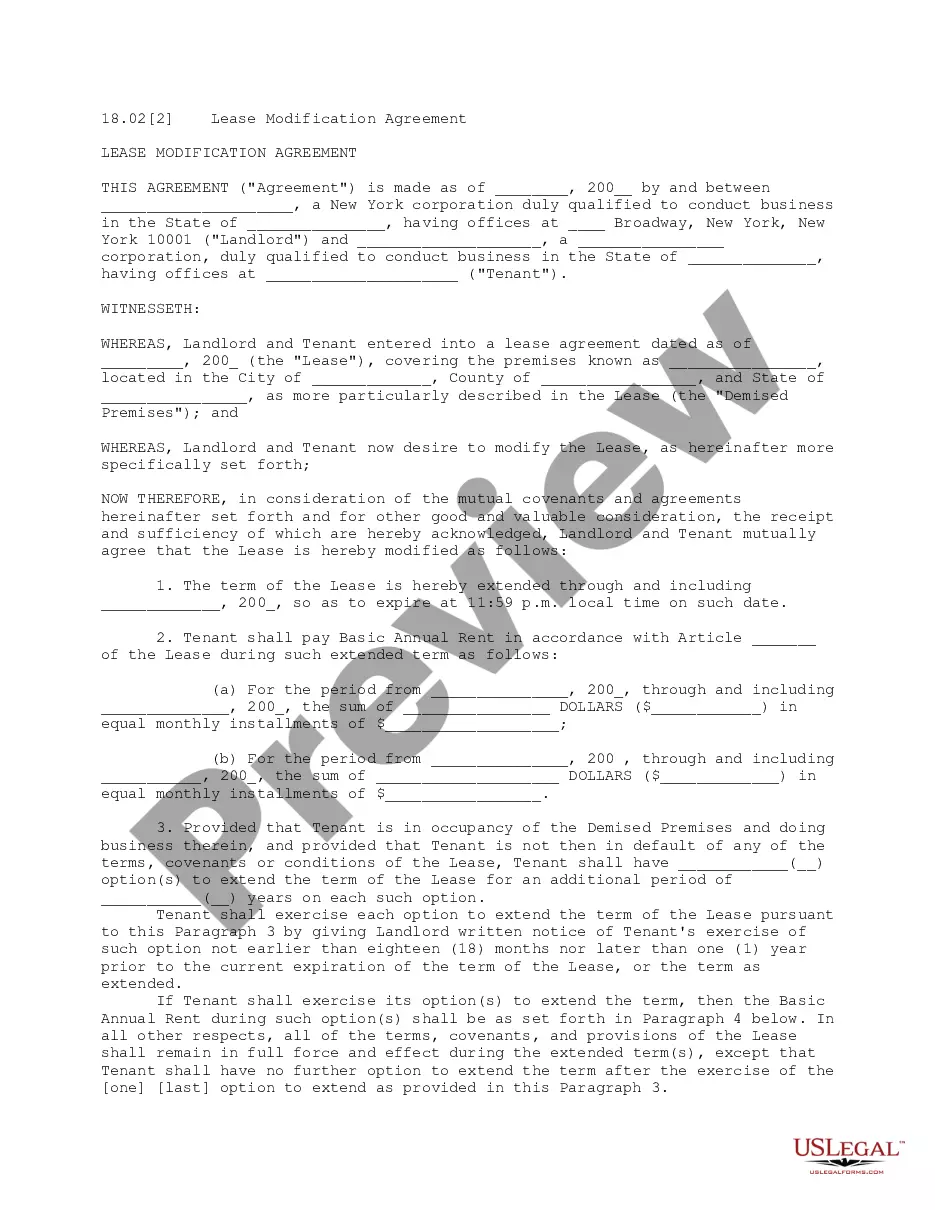
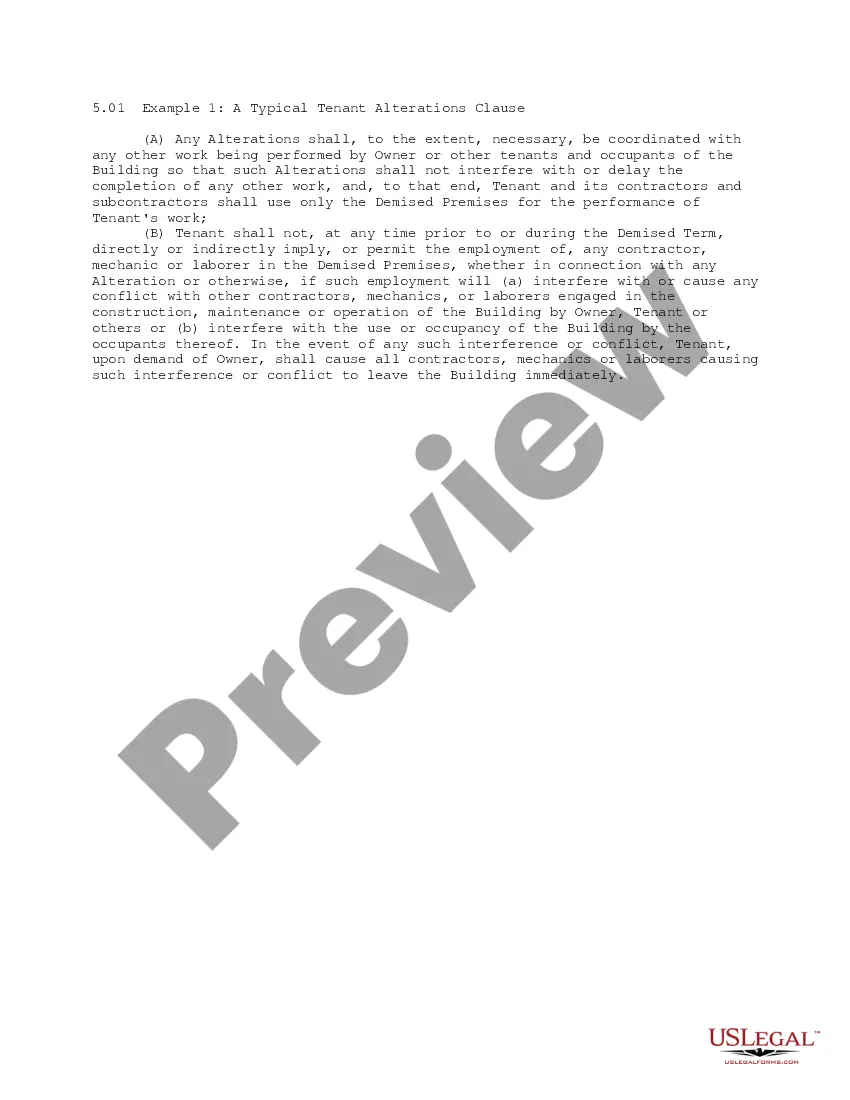
The Landlord Agreement to allow Tenant Alterations to Premises is a legal document that outlines the terms and conditions under which a tenant can make alterations to a rental property. This form establishes a clear understanding between the landlord and tenant, reducing the potential for misunderstandings regarding property modifications. Unlike informal agreements, this formal contract specifies responsibilities for payment, ownership of improvements, and procedures for restoring the property upon termination of the lease.
Key parts of this document
- Identification of the landlord and tenant.
- Description of the specific alterations or improvements the tenant wishes to make.
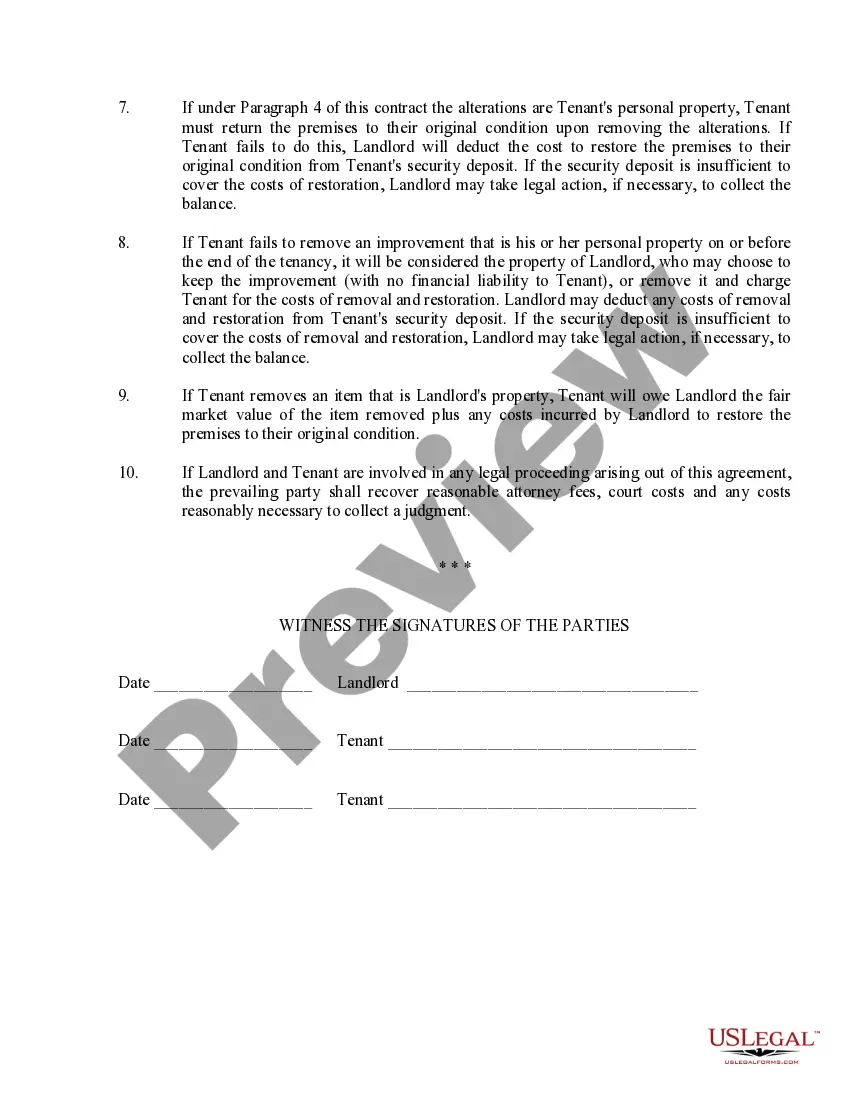
- Terms regarding the ownership of the improvements (whether they become landlordâs property or remain tenantâs personal property).
- Conditions for reimbursement for materials and labor costs associated with the alterations.
- Requirements for restoring the premises to their original condition upon removing improvements.
- Provisions regarding the handling of disputes, including attorney fees and court costs.
When to use this document
This form is essential when a tenant wants to make structural or cosmetic changes to a rented property, such as installing shelves, repainting walls, or replacing fixtures. It is particularly beneficial in long-term rental agreements where the tenant wishes to personalize their living space while ensuring mutual agreement about property modifications. It also helps prevent conflicts by establishing upfront agreements about responsibilities for costs and restoration of the property upon termination of the lease.
Who this form is for
- Landlords who want to permit tenants to make alterations while protecting their property interests.
- Tenants who wish to modify their rental unit and seek formal agreement on the terms of those changes.
- Real estate professionals managing rental properties and ensuring compliance with landlord-tenant laws.
How to prepare this document
- Identify the parties involved by entering the names of the landlord and tenant at the beginning of the form.
- Specify the property address where the alterations will take place.
- Clearly outline the alterations or improvements the tenant wishes to make in the designated section.
- Choose whether the improvements will belong to the landlord or the tenant using the provided options.
- Enter the agreed-upon costs for materials and labor, including any reimbursement terms.
- Ensure signatures are collected from both parties to finalize the agreement.
Notarization requirements for this form
This form does not typically require notarization unless specified by local law. However, having the form notarized can add an extra level of authenticity and can be beneficial in legal disputes.
Get your form ready online
Our built-in tools help you complete, sign, share, and store your documents in one place.
Make edits, fill in missing information, and update formatting in US Legal Forms—just like you would in MS Word.
Download a copy, print it, send it by email, or mail it via USPS—whatever works best for your next step.
Sign and collect signatures with our SignNow integration. Send to multiple recipients, set reminders, and more. Go Premium to unlock E-Sign.
If this form requires notarization, complete it online through a secure video call—no need to meet a notary in person or wait for an appointment.
We protect your documents and personal data by following strict security and privacy standards.

Make edits, fill in missing information, and update formatting in US Legal Forms—just like you would in MS Word.

Download a copy, print it, send it by email, or mail it via USPS—whatever works best for your next step.

Sign and collect signatures with our SignNow integration. Send to multiple recipients, set reminders, and more. Go Premium to unlock E-Sign.

If this form requires notarization, complete it online through a secure video call—no need to meet a notary in person or wait for an appointment.

We protect your documents and personal data by following strict security and privacy standards.
Common mistakes
- Failing to clearly describe the alterations, which can lead to misunderstandings later.
- Not specifying who is responsible for the costs of improvements, causing disputes over reimbursements.
- Ignoring local lease laws that may affect the enforceability of the agreement.
Benefits of using this form online
- Immediate access to a legally vetted form that saves time compared to drafting from scratch.
- Ability to easily customize the document to meet specific needs without legal jargon.
- Secure storage and easy retrieval of documents for future reference or modification.
- This agreement is legally binding once signed by both parties, provided it complies with local laws.
- Alterations defined as the tenant's property may need to be removed at the end of the tenancy.
- The landlord has the right to deduct restoration costs from the security deposit if required.
Summary of main points
- The form formalizes the agreement between landlord and tenant regarding alterations.
- It helps prevent misunderstandings by clearly defining cost responsibilities and property rights.
- Always tailor the form to comply with state-specific regulations and laws.
Looking for another form?
Form popularity
FAQ
North Dakota's poverty rate was estimated to be 11.6 percent of the population according to 2013 U.S. Census Bureau's Small Area Income and Poverty Estimates (SAIPE) data. Nationally, that average was at 15.8 percent. Only eight states had a rate lower than North Dakota's.
North Dakota is an equitable distribution state. This means that property will be split between spouses in a way that is equitable. Equitable division does not have to be equal, but the court must start by presuming that all the property will be split equally between the spouses.
Capital: Bismarck. Population: 755,000. Nickname: The Peace Garden State. Key Cities: Fargo, Bismarck, Grand Forks, Minot. Postal Abbreviation: ND. Major Industries: Agriculture, manufacturing, oil, tourism, coal gasification, renewable energy. Related: North Dakota State History. Size: 71,432 sq. miles.
North Dakota DemographicsWhite: 86.58% Native American: 5.29%