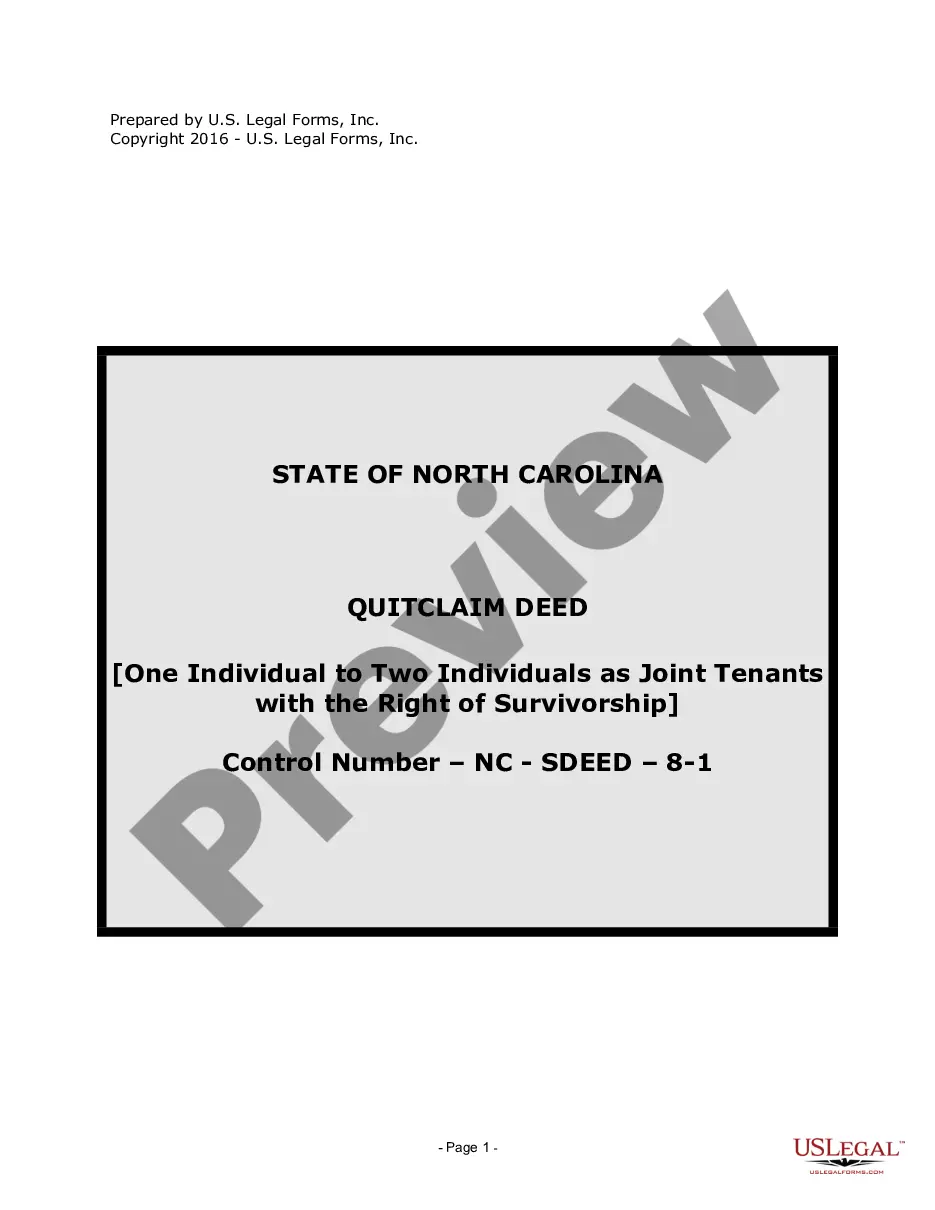
North Carolina Quitclaim Deed from one Individual to Two Individuals as Joint Tenants with the Right of Survivorship
About this form
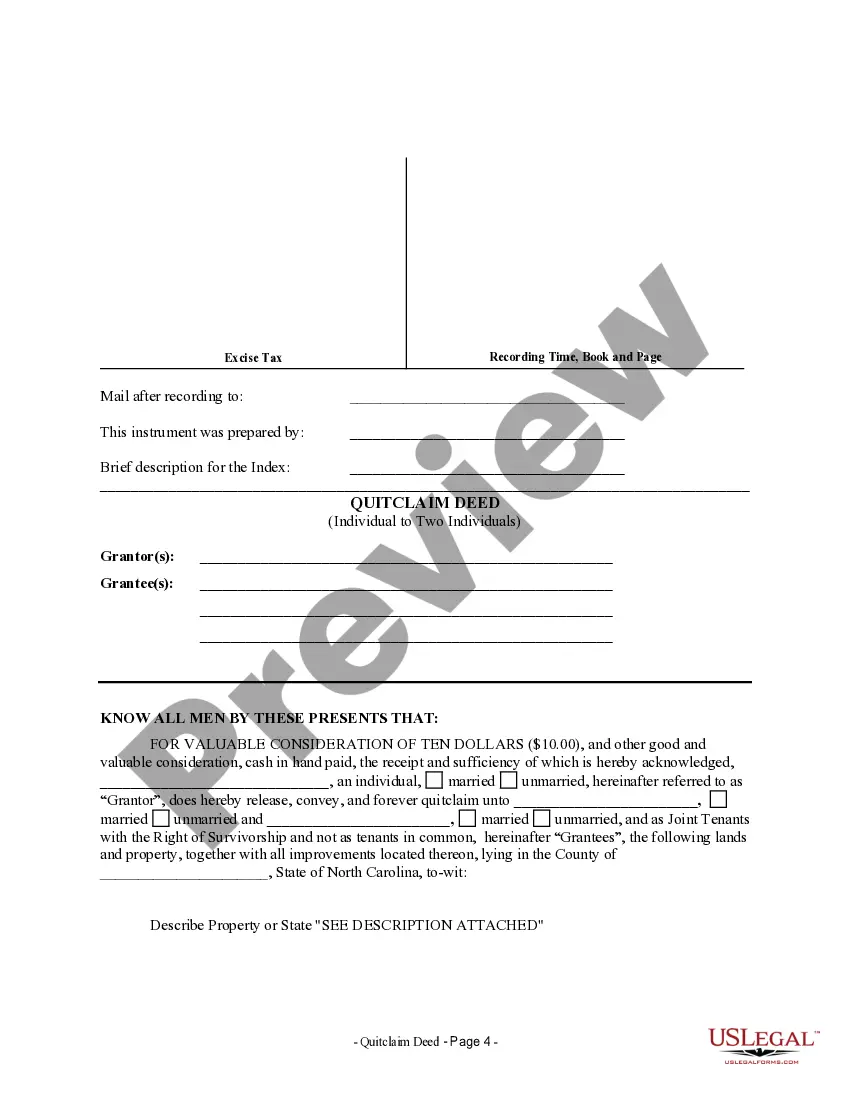
This Quitclaim Deed is a legal document where one individual (the grantor) transfers property ownership to two individuals as joint tenants, allowing them to have equal rights to the property with the right of survivorship. This means if one tenant passes away, the surviving tenant automatically inherits the deceased's share without going through probate. Unlike warranty deeds, a quitclaim deed does not guarantee the grantor's title or any warranties regarding the propertyâs status.
What’s included in this form
- Grantor and Grantee Information: Names and marital statuses of the individuals involved.
- Property Description: A clear description or reference of the property being transferred.
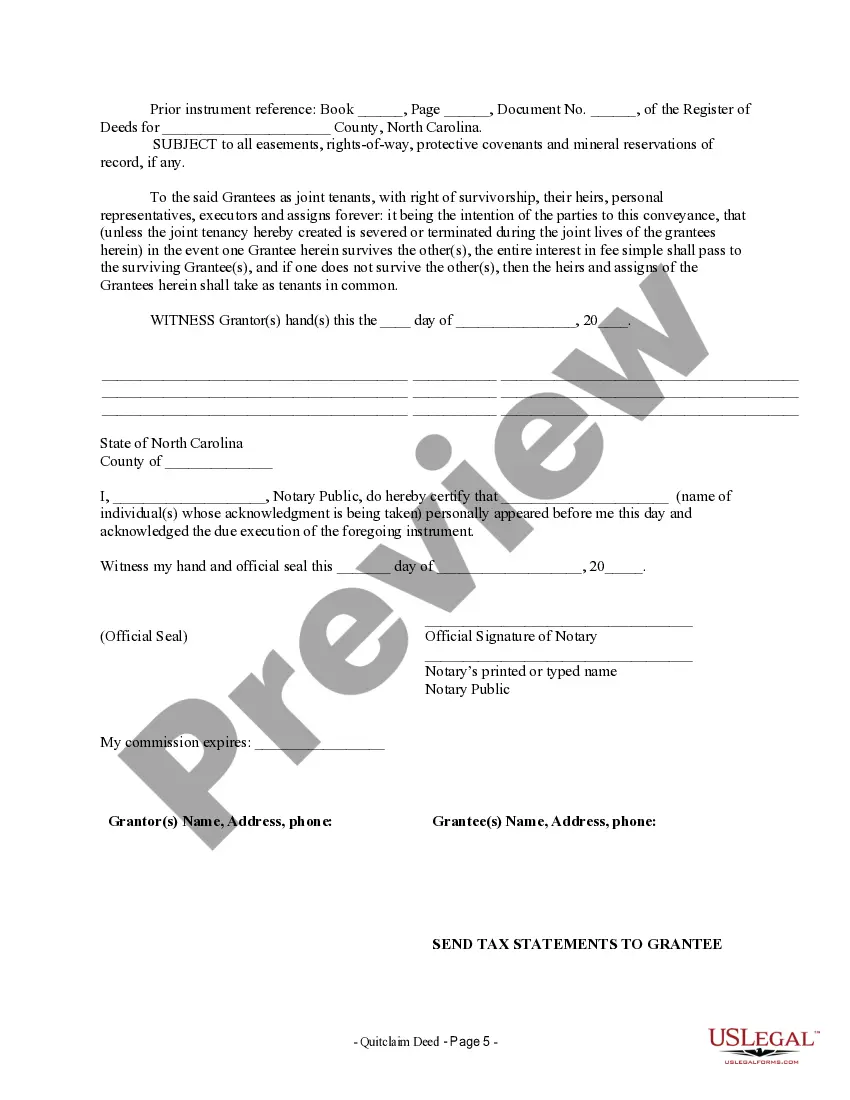
- Joint Tenancy Clause: Specifies that the property is held as joint tenants with rights of survivorship.
- Consideration: States the amount of consideration given for the property, often nominal.
- Notary Section: Area for notarization to verify the authenticity of the signatures.
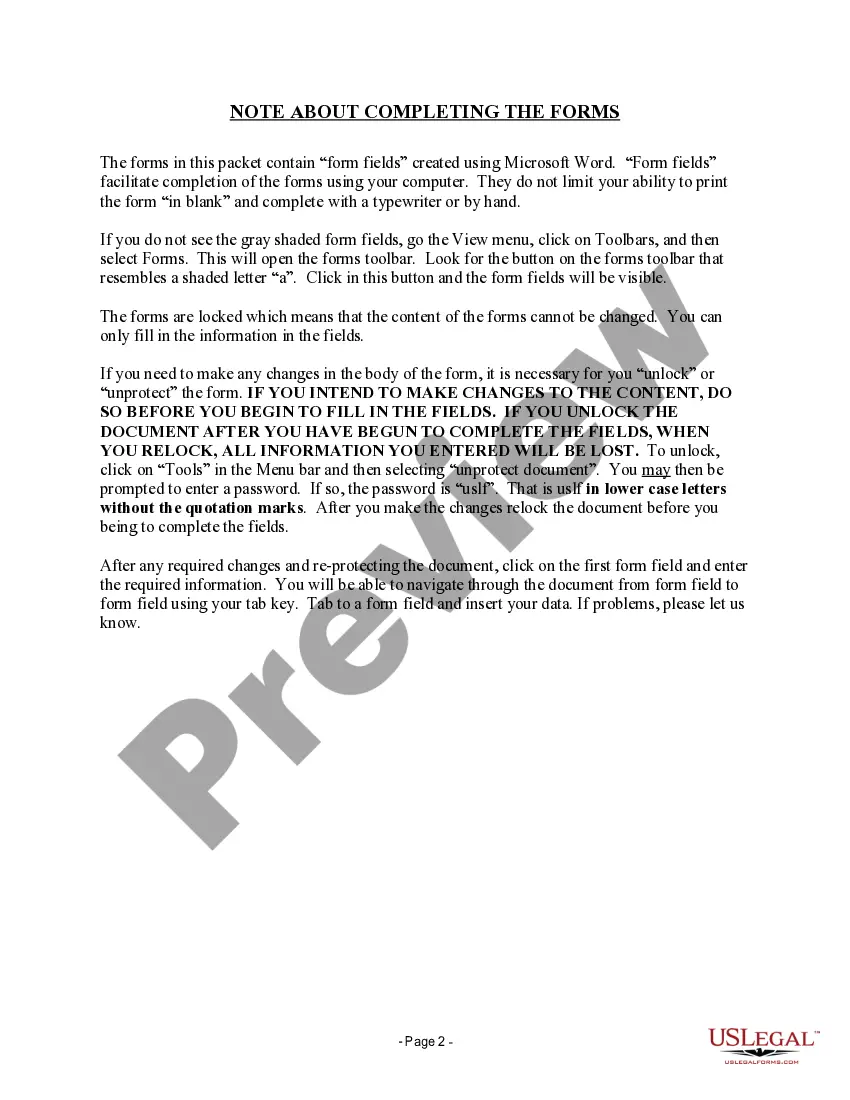



When to use this document
This form is useful in situations such as transferring property ownership among family members or friends, facilitating estate planning, or simplifying property transfers without delving into complex legal proceedings. It is particularly relevant when the goal is to ensure that the surviving tenant retains full ownership upon the other tenantâs death.
Who this form is for
- Individuals transferring property to family or friends.
- Couples who wish to hold property together with rights of survivorship.
- Those involved in estate planning requiring straightforward property transfer solutions.
- Individuals seeking to clarify ownership without the need for a warranty deed.
Instructions for completing this form
- Identify the parties: Fill in the names of the grantor and the two grantees.
- Specify the property: Detail the property description or attach a separate description as needed.
- Enter the consideration amount: Include the nominal amount, typically ten dollars, as consideration.
- Sign the document: The grantor must sign the quitclaim deed in the designated area.
- Have the deed notarized: The signatures must be notarized to validate the transfer.
Notarization guidance
Yes, this form must be notarized to be legally valid. U.S. Legal Forms offers integrated online notarization services, allowing you to complete the notarization process securely via video call, 24/7, without needing to travel.
Get your form ready online
Our built-in tools help you complete, sign, share, and store your documents in one place.
Make edits, fill in missing information, and update formatting in US Legal Forms—just like you would in MS Word.
Download a copy, print it, send it by email, or mail it via USPS—whatever works best for your next step.
Sign and collect signatures with our SignNow integration. Send to multiple recipients, set reminders, and more. Go Premium to unlock E-Sign.
If this form requires notarization, complete it online through a secure video call—no need to meet a notary in person or wait for an appointment.
We protect your documents and personal data by following strict security and privacy standards.

Make edits, fill in missing information, and update formatting in US Legal Forms—just like you would in MS Word.

Download a copy, print it, send it by email, or mail it via USPS—whatever works best for your next step.

Sign and collect signatures with our SignNow integration. Send to multiple recipients, set reminders, and more. Go Premium to unlock E-Sign.

If this form requires notarization, complete it online through a secure video call—no need to meet a notary in person or wait for an appointment.

We protect your documents and personal data by following strict security and privacy standards.
Common mistakes
- Failing to fully describe the property being transferred.
- Not specifying the grantor and grantee details accurately.
- Overlooking the necessity for notarization, which can invalidate the deed.
- Leaving sections blank, which can lead to legal disputes later.
Benefits of using this form online
- Convenience of downloading the form immediately without waiting for delivery.
- Editability: Users can fill in the necessary fields directly on their computers.
- Reliability of using templates drafted by licensed attorneys, ensuring legal compliance.
Looking for another form?






Form popularity
FAQ
While the joint tenant with right of survivorship can't will his share in the property to his heir, he can sell his interest in the property before his death. Once a joint tenant sells his share, this ends the joint tenancy ownership involving the share.
If the son would like to execute a registered gift deed transferring his share in the property in favor of his mother, he can get the gift deed drafted through a document writer, present it for registration before the sub registrar office within the jurisdiction, pay the applicable stamp duty and the registration
Since the joint tenants have equal interest, the property cannot be sold without all parties' consent. Instead of selling, a joint tenant can choose to transfer their interest to another party.Therefore, the property cannot be passed down to the heirs of the joint tenants.
Joint tenancy is a form of property ownership normally associated with real estate. Each party in a joint tenancy has an equal interest in the propertythe financial obligations as well as any benefits.
Step 1: Get a Notice200b200b200b of death f200b200borm. Step 2: Fill in Notice of de200bath form. Step 3: Create an electronic notice of Sale (eNOS) record. Step 4: Get a certified copy200b of the Death Certificate. Step 5: Get the origina200bl Certificate of Title or arrange for it to be produced by the bank.
The deed specifies that the joint tenants own an equal amount of interest in the purchased property and are thus equally liable for it financially.Instead of selling, a joint tenant can choose to transfer their interest to another party.
Property owned in joint tenancy automatically passes, without probate, to the surviving owner(s) when one owner dies. Joint tenancy often works well when couples (married or not) acquire real estate, vehicles, bank accounts, securities, or other valuable property together.
Jointly owned propertyProperty owned as joint tenants does not form part of a deceased person's estate on death. But the value of the deceased person's share of jointly owned property is included when calculating the value of the estate for Inheritance Tax purposes.
Transfer By One Co-Owner- Where one of two or more co-owners of immovable property legally competent in that behalf transfers his share of such property or any interest therein, the transferee acquires, as to such share or interest, so far as is necessary to give effect to the transfer, the transferors right to joint