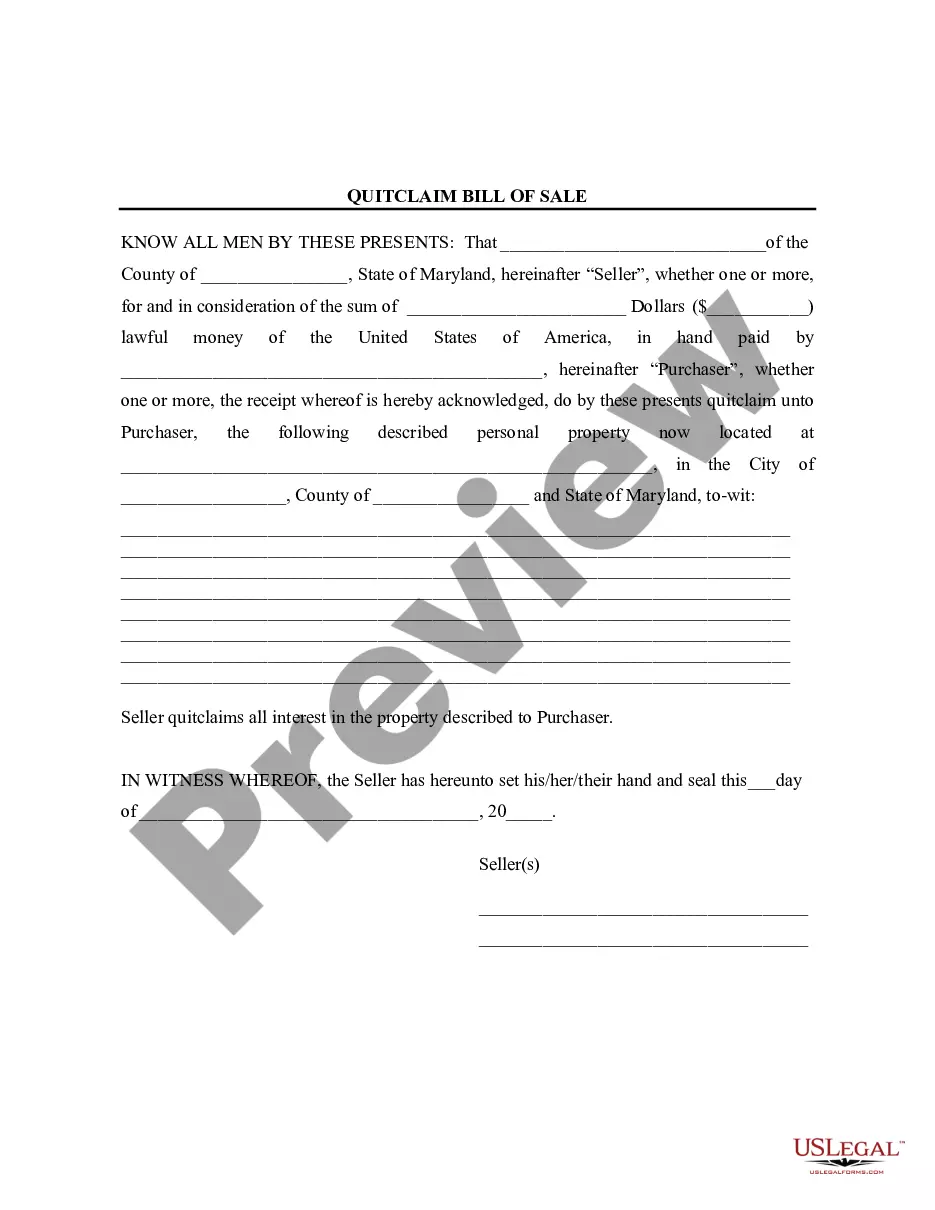
North Carolina Conservation Easement for Habitat and Water Quality and Runoff
Understanding this form
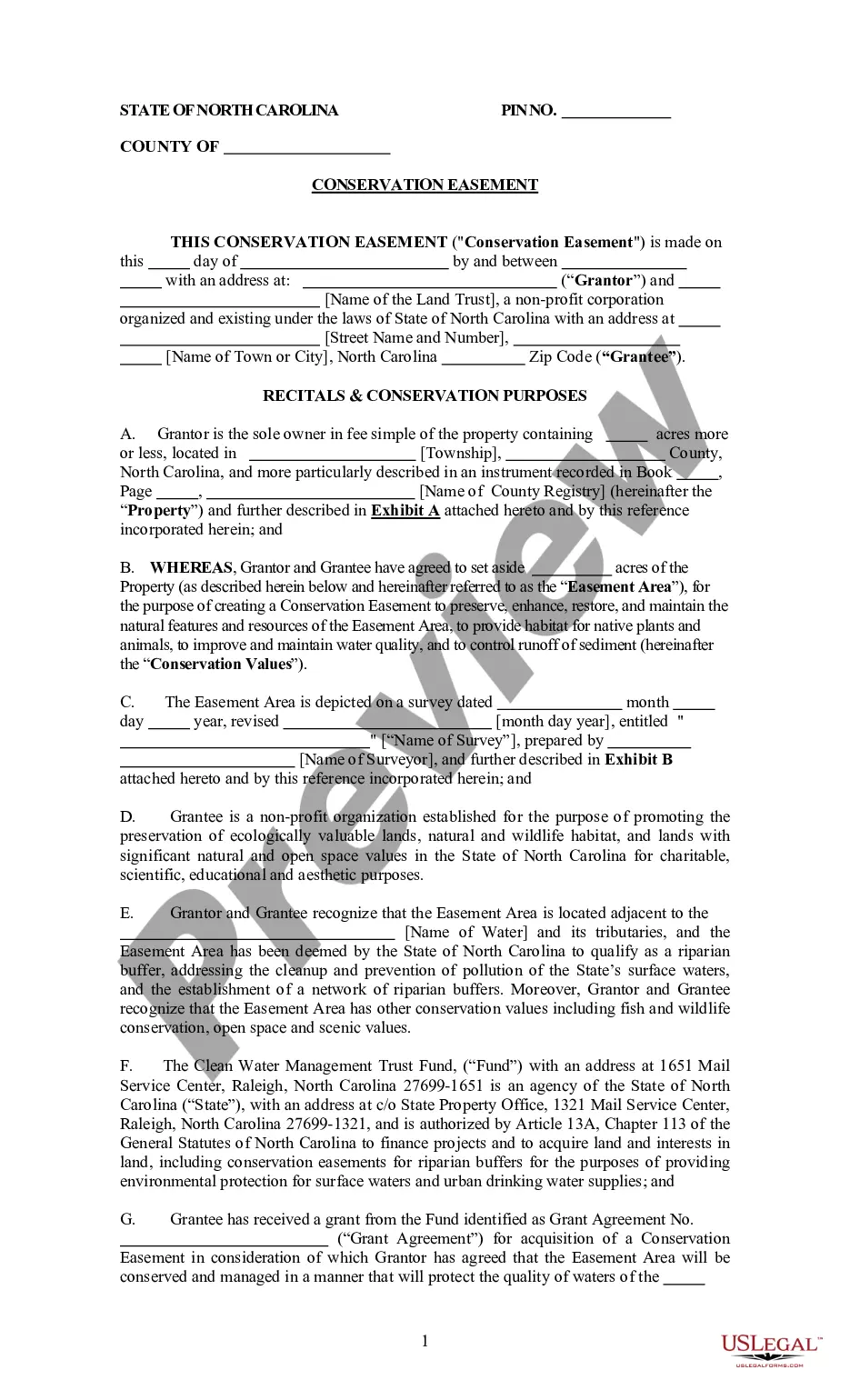
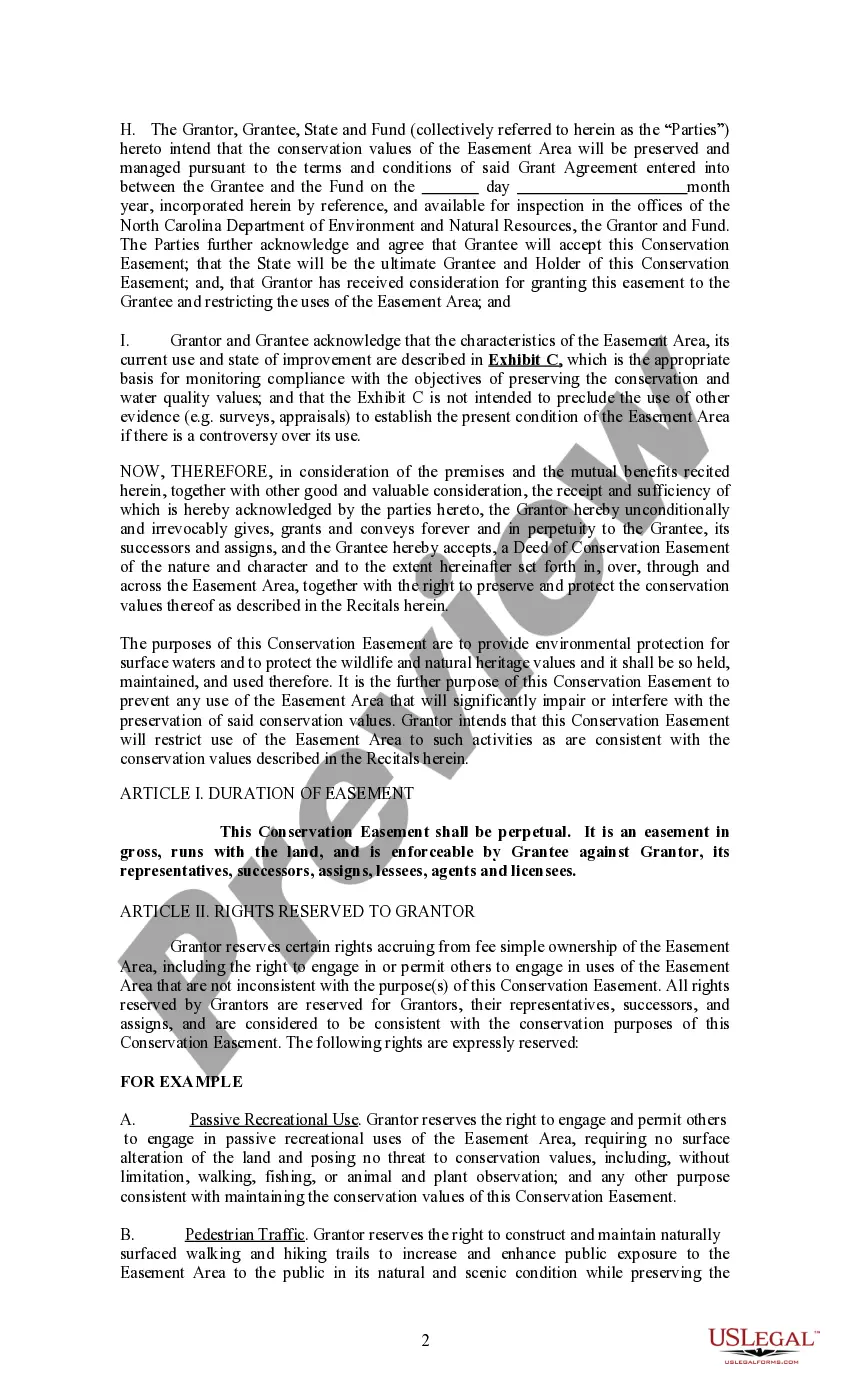
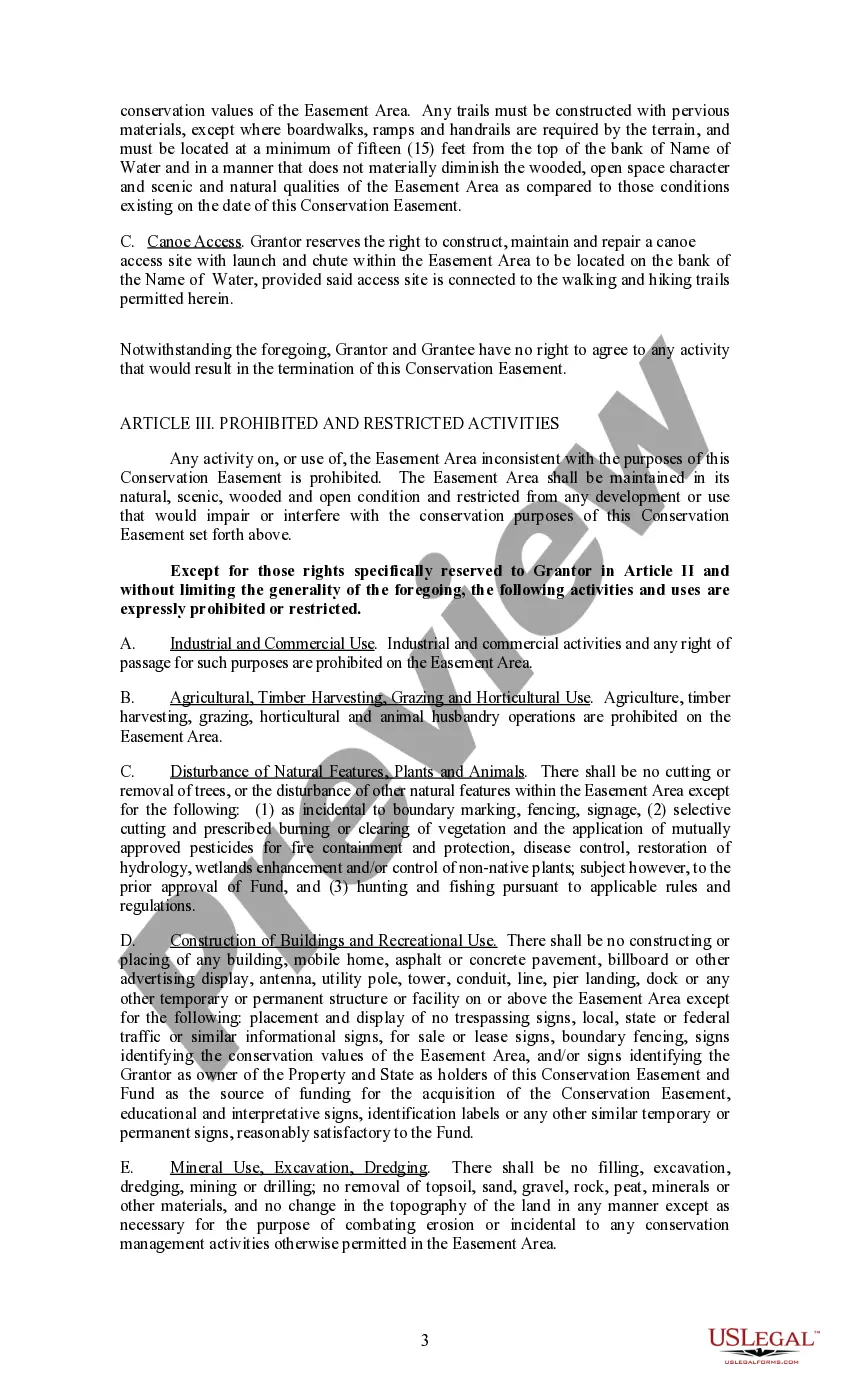
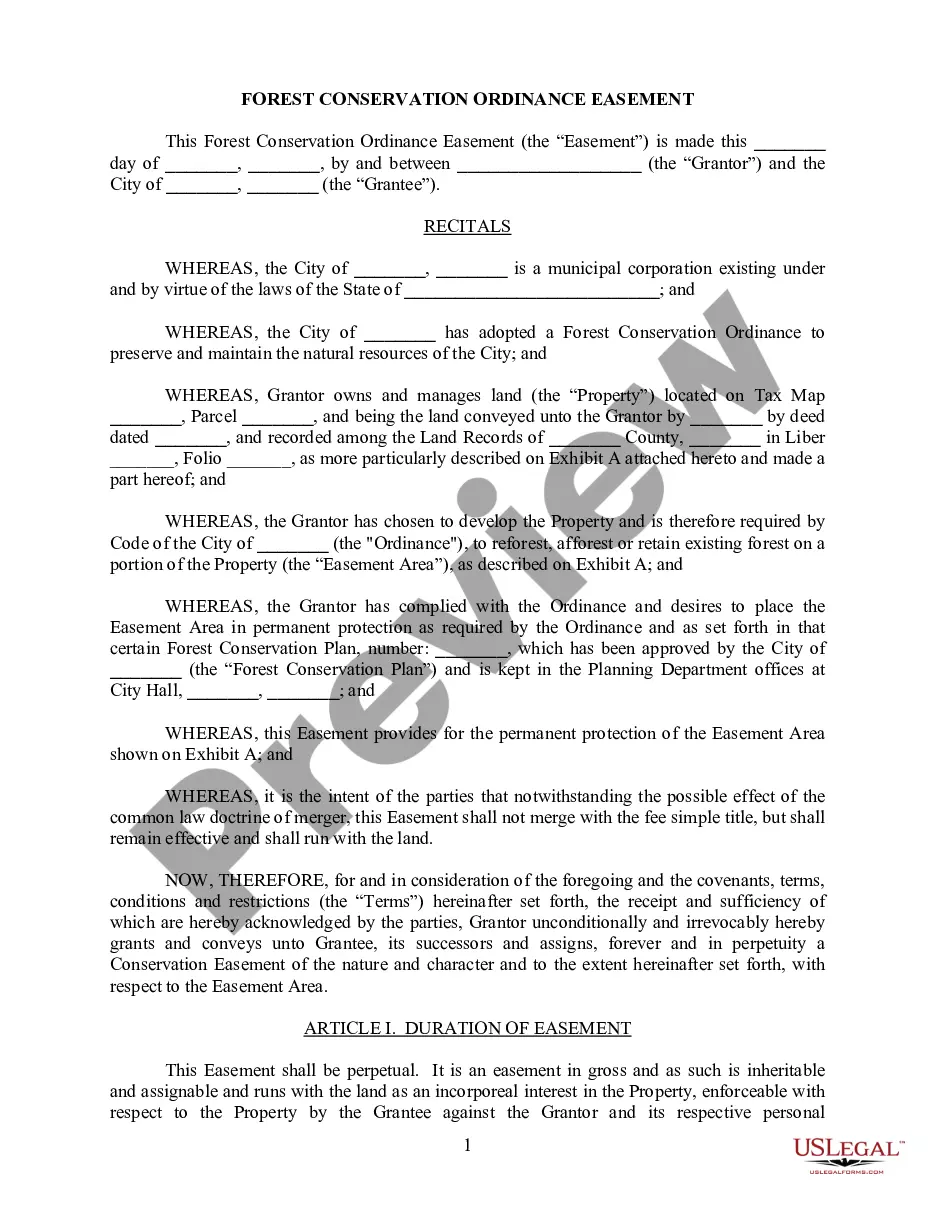
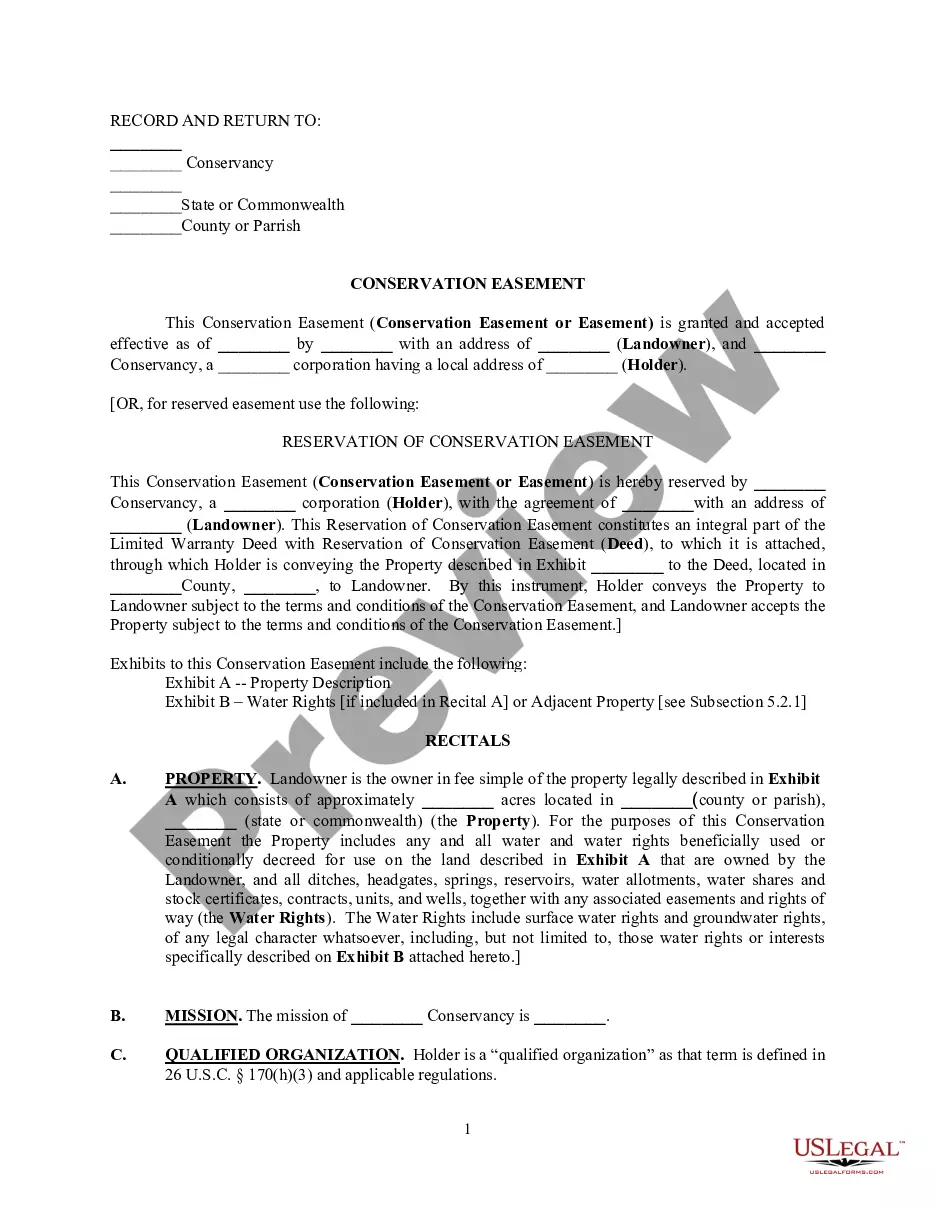
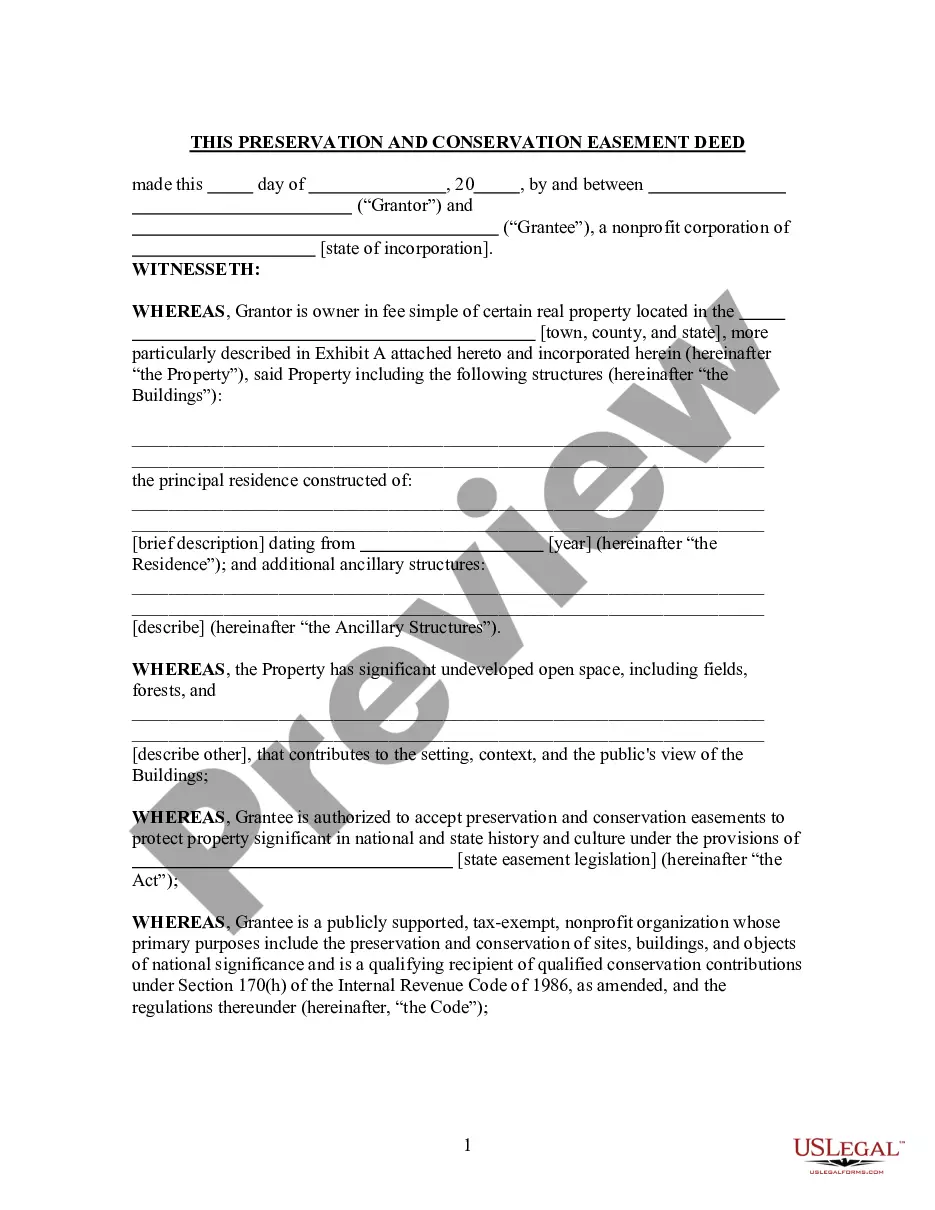
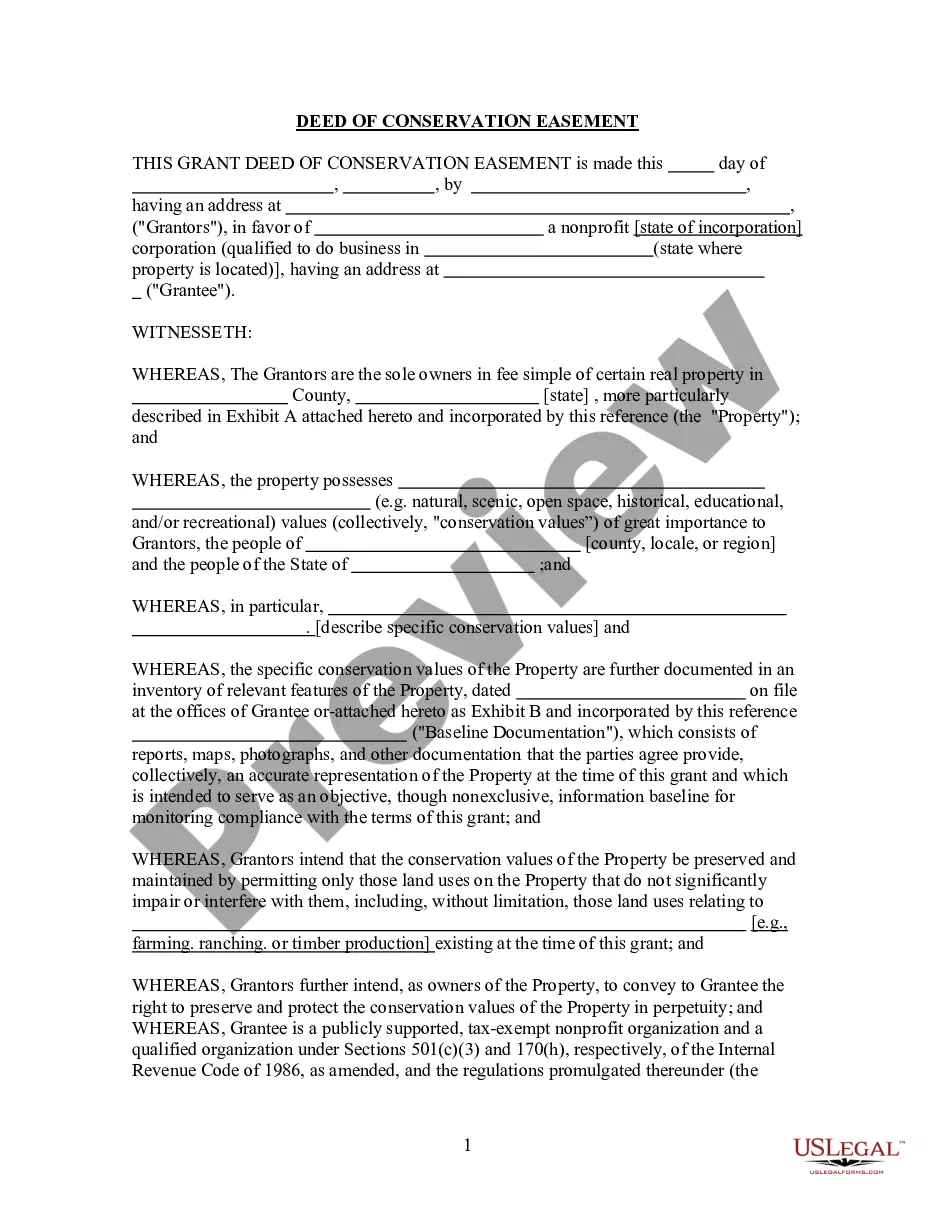
The Conservation Easement for Habitat and Water Quality and Runoff is a legal document designed to protect and enhance the natural features and resources of a specified area. This form establishes a permanent agreement between a grantor and a grantee to ensure the conservation of wildlife habitat, water quality, and to manage runoff within the easement area. Unlike general land agreements, this form specifically restricts activities that could negatively impact the conservation values, ensuring that the designated area remains undeveloped and preserved for future generations.
Form components explained
- Purpose and objectives of the conservation easement
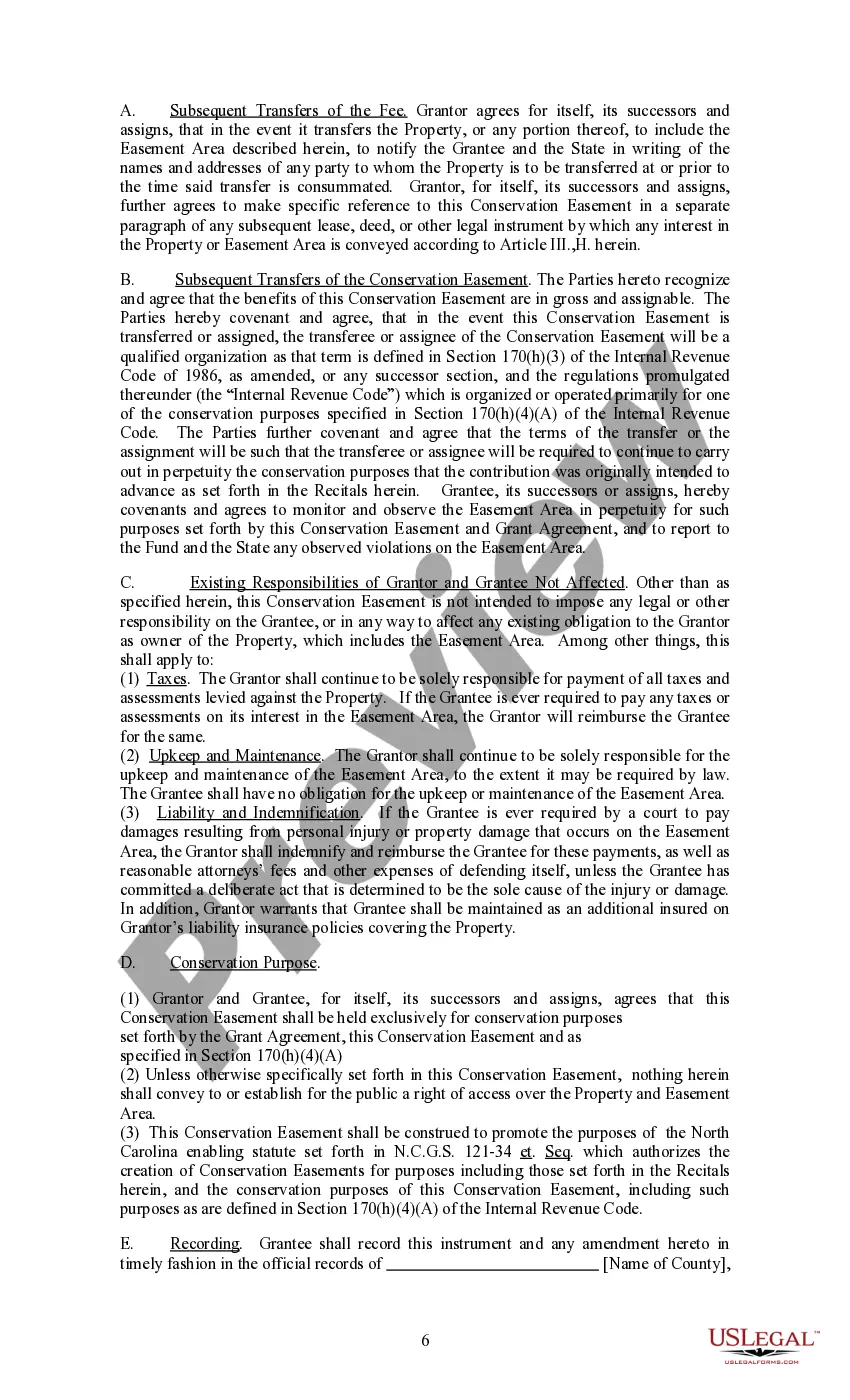
- Duration of the easement, which is perpetual
- Rights reserved to the grantor, including passive recreational use
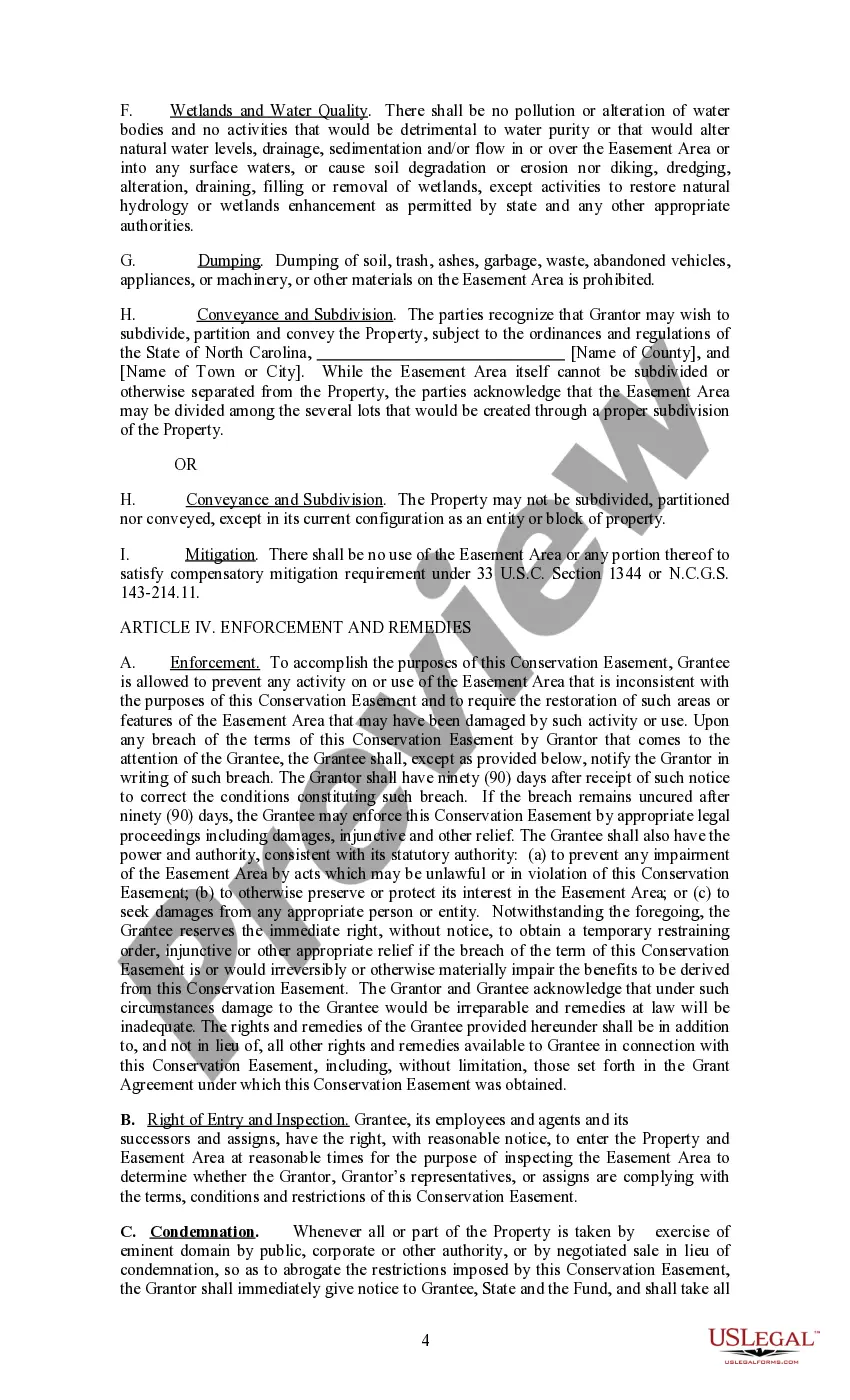
- Prohibited activities that could harm the conservation values
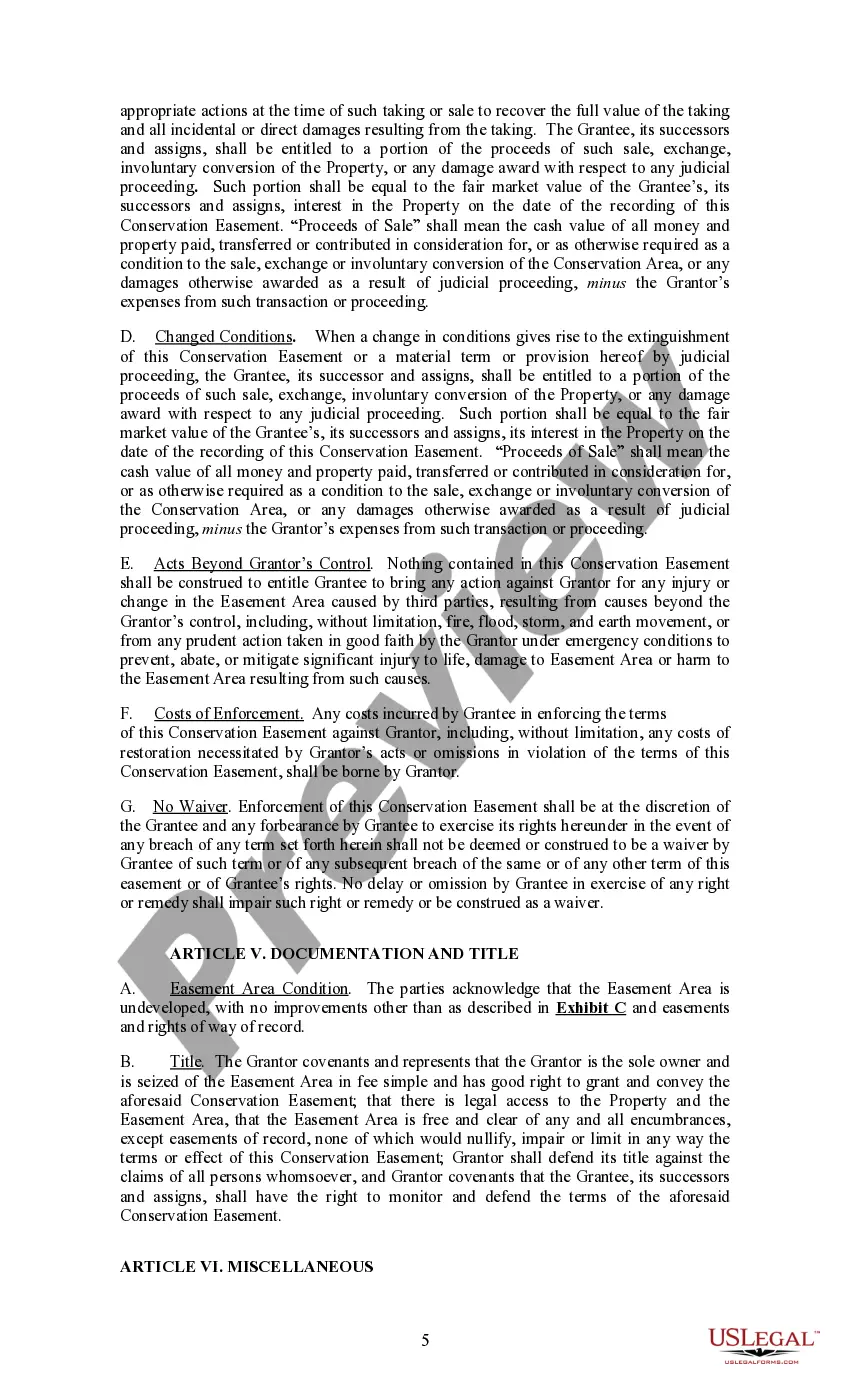
- Enforcement rights of the grantee
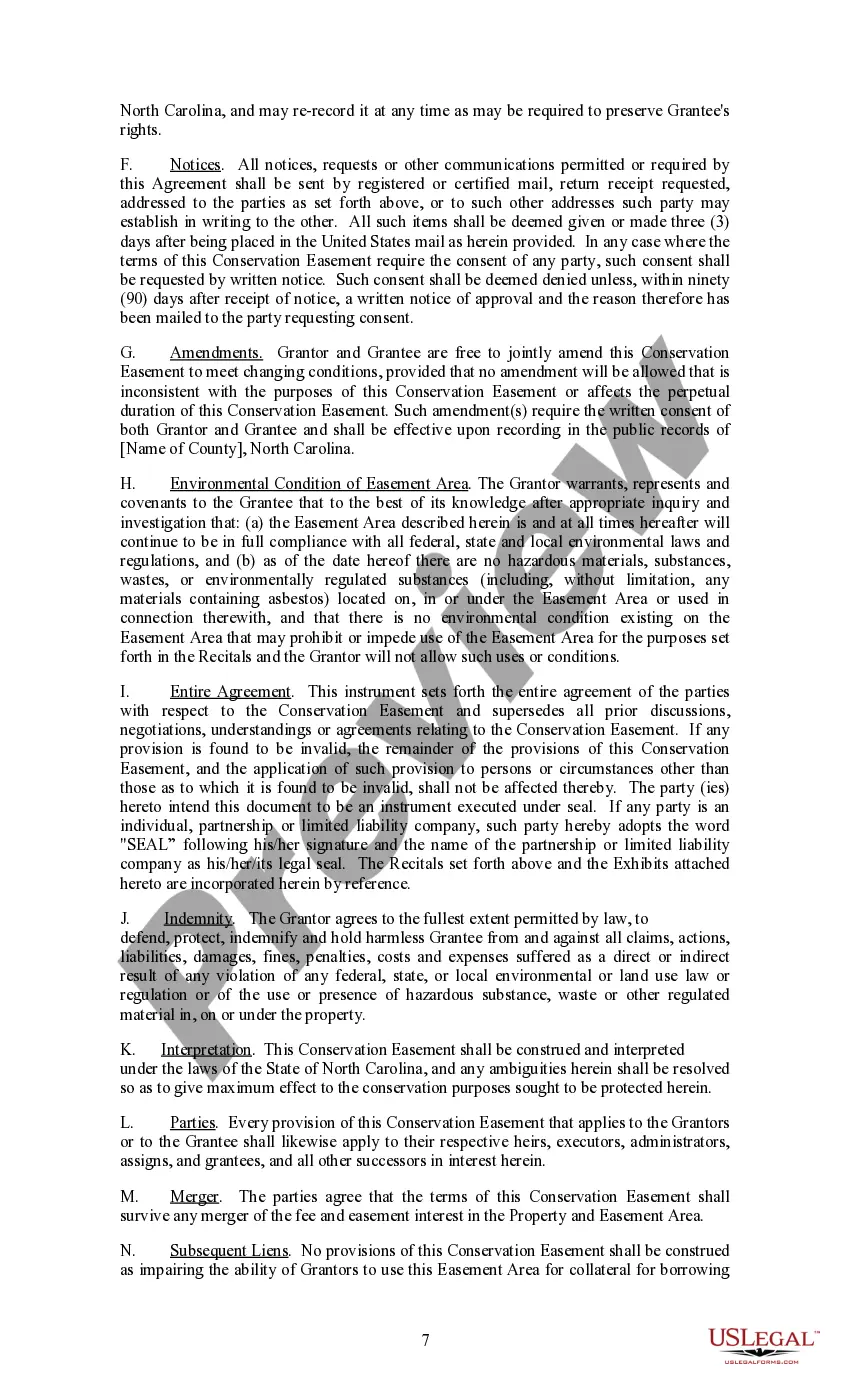
- Documentation and title requirements
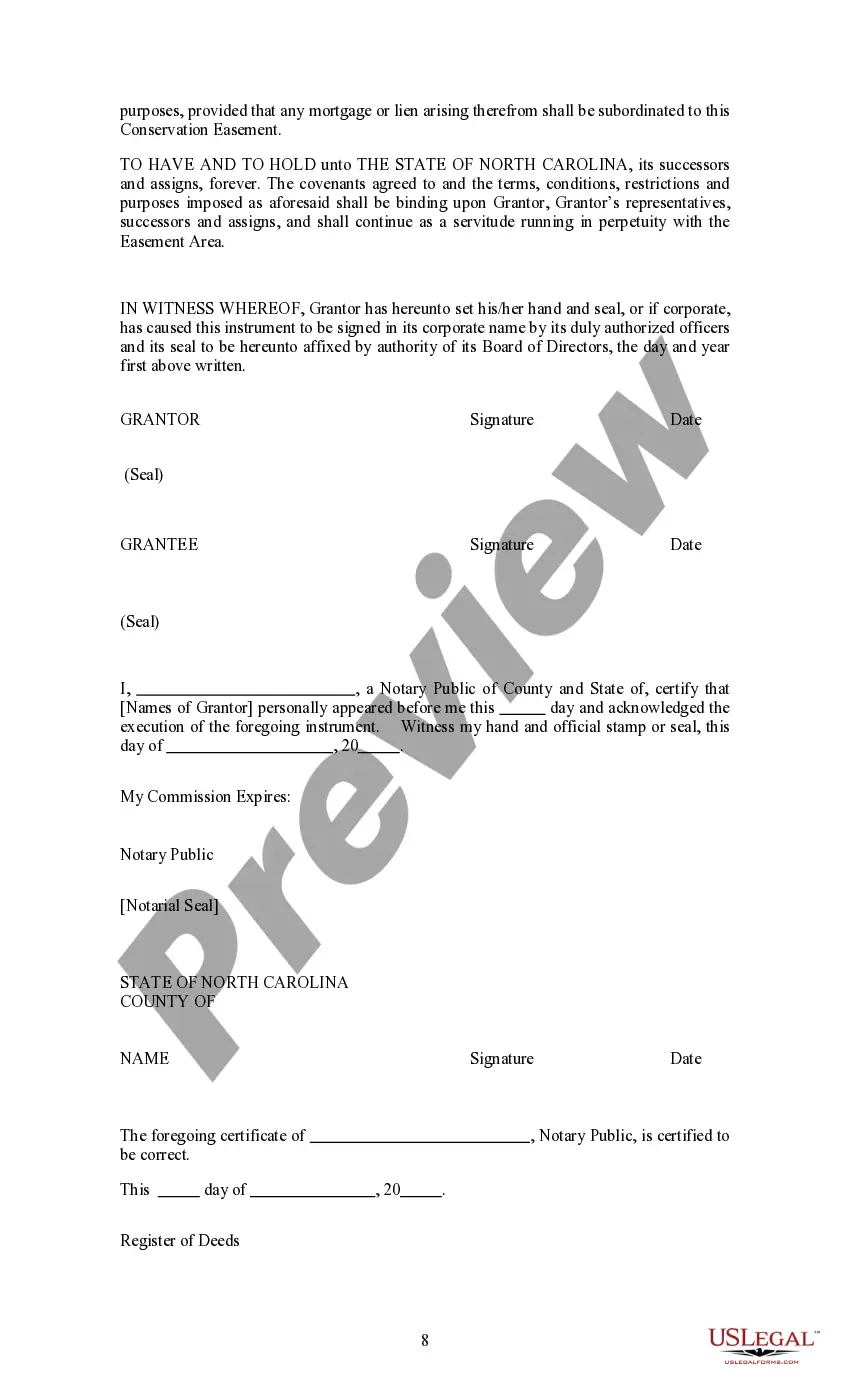
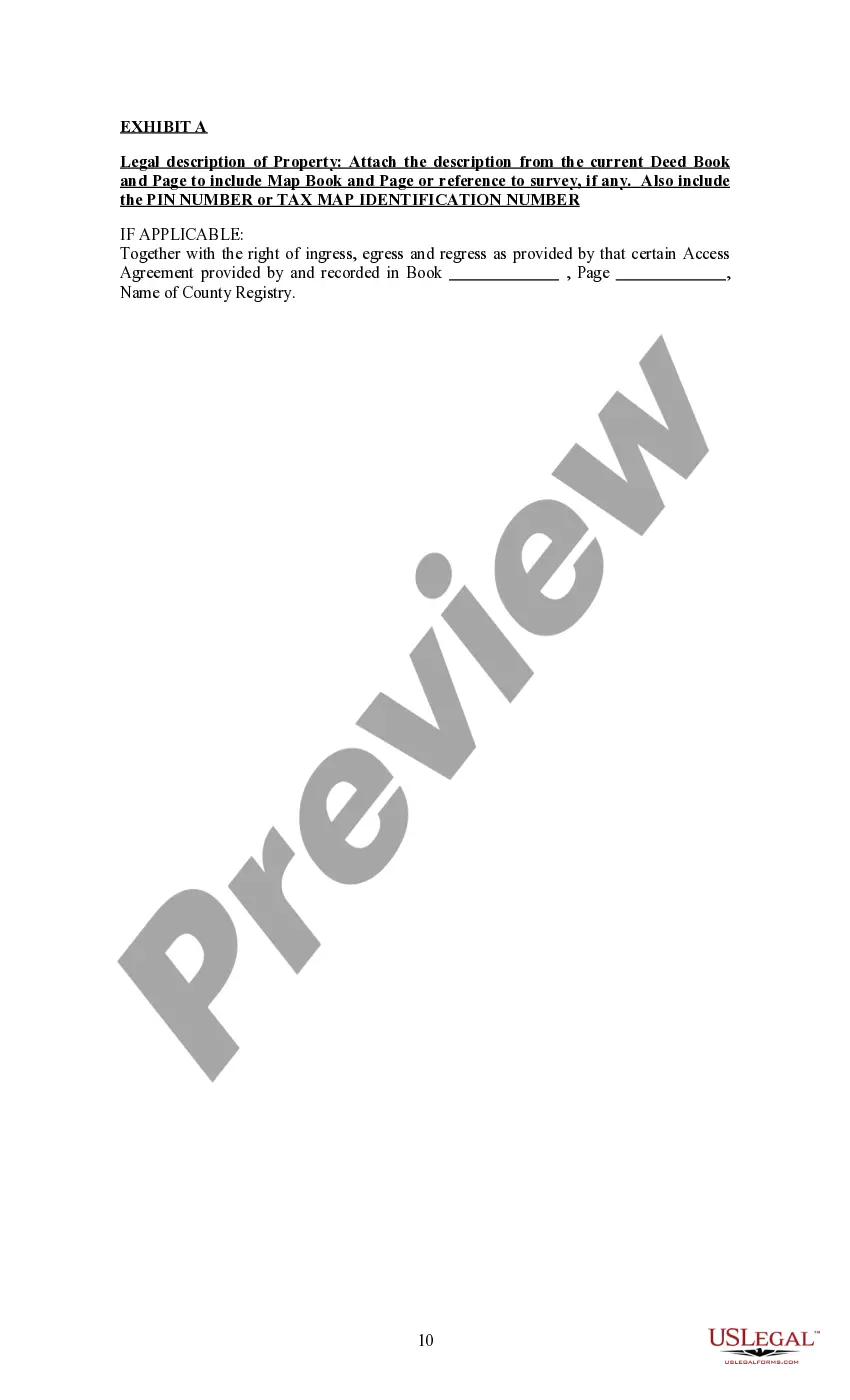

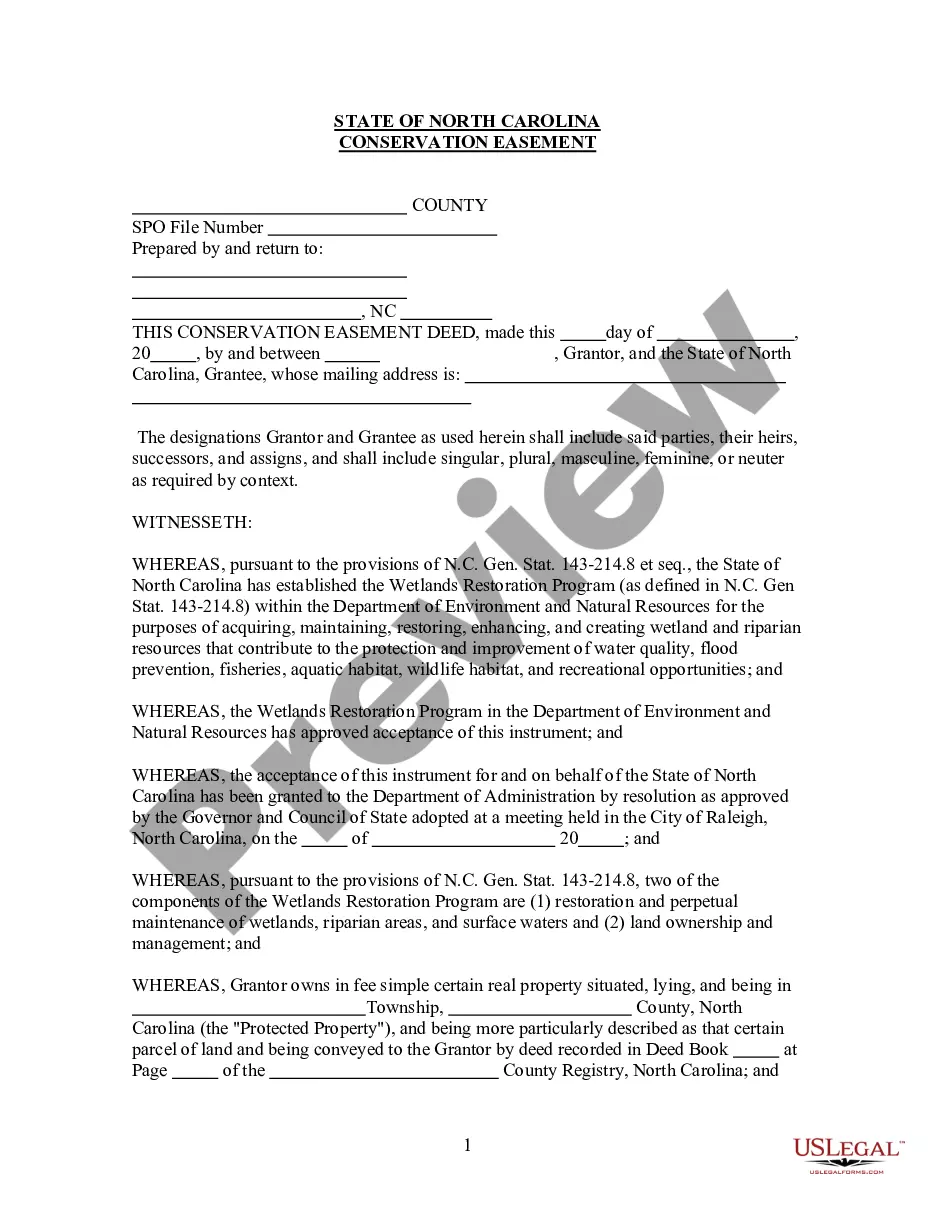
Situations where this form applies
This conservation easement form is used when an individual or entity wishes to preserve a natural area for environmental protection. It is particularly relevant for property owners who want to place restrictions on land use to protect wildlife habitats, improve water quality, and manage runoff. This form is ideal for landowners in regions where conservation of natural resources is prioritized or required by local government entities.
Who this form is for
- Property owners seeking to conserve natural habitats
- Nonprofit organizations dedicated to environmental protection
- Land trusts or conservation groups interested in promoting ecological sustainability
- Government agencies responsible for land management and conservation initiatives
Completing this form step by step
- Identify the parties involved: the grantor (property owner) and grantee (the conservation organization or government agency).
- Specify the easement area being conserved with a clear description.
- Outline the purposes of the conservation easement, detailing the environmental benefits desired.
- Enumerate any reserved rights for the grantor, such as passive recreational use.
- List prohibited activities to ensure compliance with conservation goals.
- Ensure both parties sign and date the document to formalize the easement.
Notarization guidance
This form does not typically require notarization unless specified by local law. However, ensuring that all parties understand their rights and responsibilities through legal verification can strengthen its enforceability.
Get your form ready online
Our built-in tools help you complete, sign, share, and store your documents in one place.
Make edits, fill in missing information, and update formatting in US Legal Forms—just like you would in MS Word.
Download a copy, print it, send it by email, or mail it via USPS—whatever works best for your next step.
Sign and collect signatures with our SignNow integration. Send to multiple recipients, set reminders, and more. Go Premium to unlock E-Sign.
If this form requires notarization, complete it online through a secure video call—no need to meet a notary in person or wait for an appointment.
We protect your documents and personal data by following strict security and privacy standards.
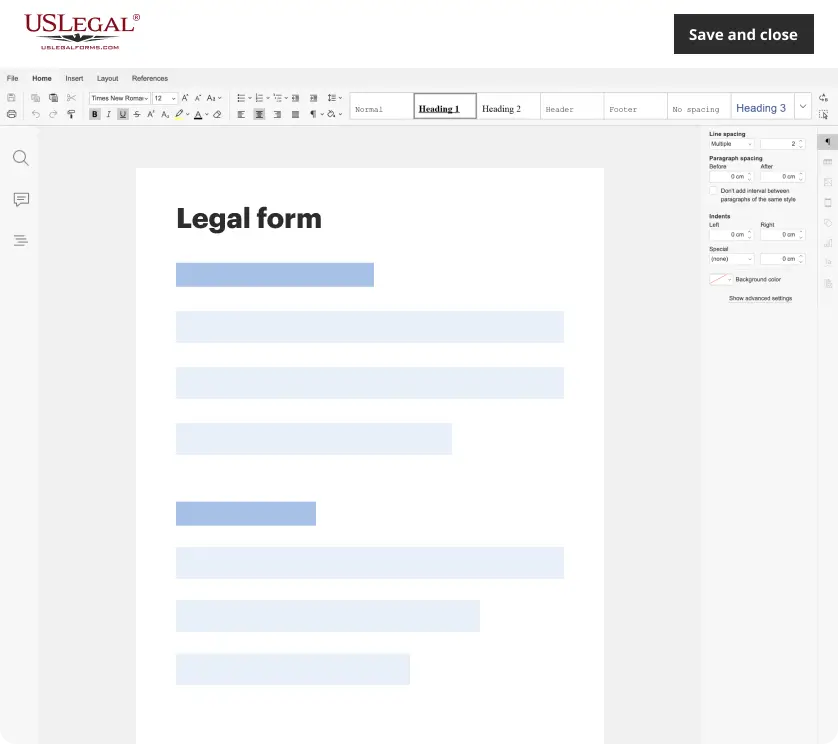
Make edits, fill in missing information, and update formatting in US Legal Forms—just like you would in MS Word.
Download a copy, print it, send it by email, or mail it via USPS—whatever works best for your next step.
Sign and collect signatures with our SignNow integration. Send to multiple recipients, set reminders, and more. Go Premium to unlock E-Sign.

If this form requires notarization, complete it online through a secure video call—no need to meet a notary in person or wait for an appointment.
We protect your documents and personal data by following strict security and privacy standards.
Common mistakes
- Failing to clearly define the easement area, which may lead to disputes.
- Not specifying all prohibited activities, potentially allowing unwanted uses.
- Inadequate signatures or dates, which can affect the enforceability of the easement.
Benefits of completing this form online
- Convenience of downloading the form anytime, reducing paperwork hassles.
- Editability allows customization to fit specific land and legal requirements.
- Reliability of attorney-drafted templates ensures legal compliance and accuracy.
Legal use & context
- This conservation easement is a legally binding contract that imposes restrictions to protect natural resources.
- The easement is enforceable against future landowners, ensuring continued adherence to its terms.
- Legal stipulations within the form align with North Carolina state laws governing conservation and land use.
What to keep in mind
- A Conservation Easement is essential for landowners wanting to protect natural habitats.
- Understanding the rights and prohibitions set forth in the form ensures compliance and protects environmental values.
- It is vital to complete the form carefully to avoid common pitfalls that could invalidate the easement.
Looking for another form?
Form popularity
FAQ
One big advantage of buying a home or land with an easement is that it could result in major savings. Conservation land is restrictive by nature, and that's often a big sticking point for buyers. But if you're willing to deal with those restrictions, it could be a good way to buy land or property on the cheap.
The value of a conservation easement is determined by a qualified appraiser. The appraiser determines the value of the land before the conservation easement and subtracts the value of the land after the conservation easement to determine at the value of the conservation easement.
When a conservation easement is placed on a property, it typically lowers the property's value for federal estate tax purposes and may decrease estate tax liability. Therefore, easements may help heirs avoid being forced to sell off land to pay estate taxes and enable land to stay in the family.
When you create a conservation easement, you may lose access to certain rights. While you'll likely retain certain surface rights like farming and ranching, development is almost always limited.
Affirmative agricultural easements are one of several different legal tools to help farmers balance goals of: 1) generating revenue for farming or retirement; 2) making their land more affordable to future farmers; 3) keeping their farmland in farming; and 4) maintaining a treasured legacy of sustainable farm
Conservation easements are a great idea, in theory. Here's the way they work. Basically, if you are willing to donate your property for the public good, and that donation reduces the value of your property, you get to take a tax deduction equal to the reduction in the value of your property.
Conservation easements are legal agreements designed to ensure the long-term viability and protection of the natural resources within the easement boundary. Activities in, or use of, the easement area that is inconsistent with the stated purposes of the conservation easement are prohibited.