Maryland Commercial Sublease
What this document covers
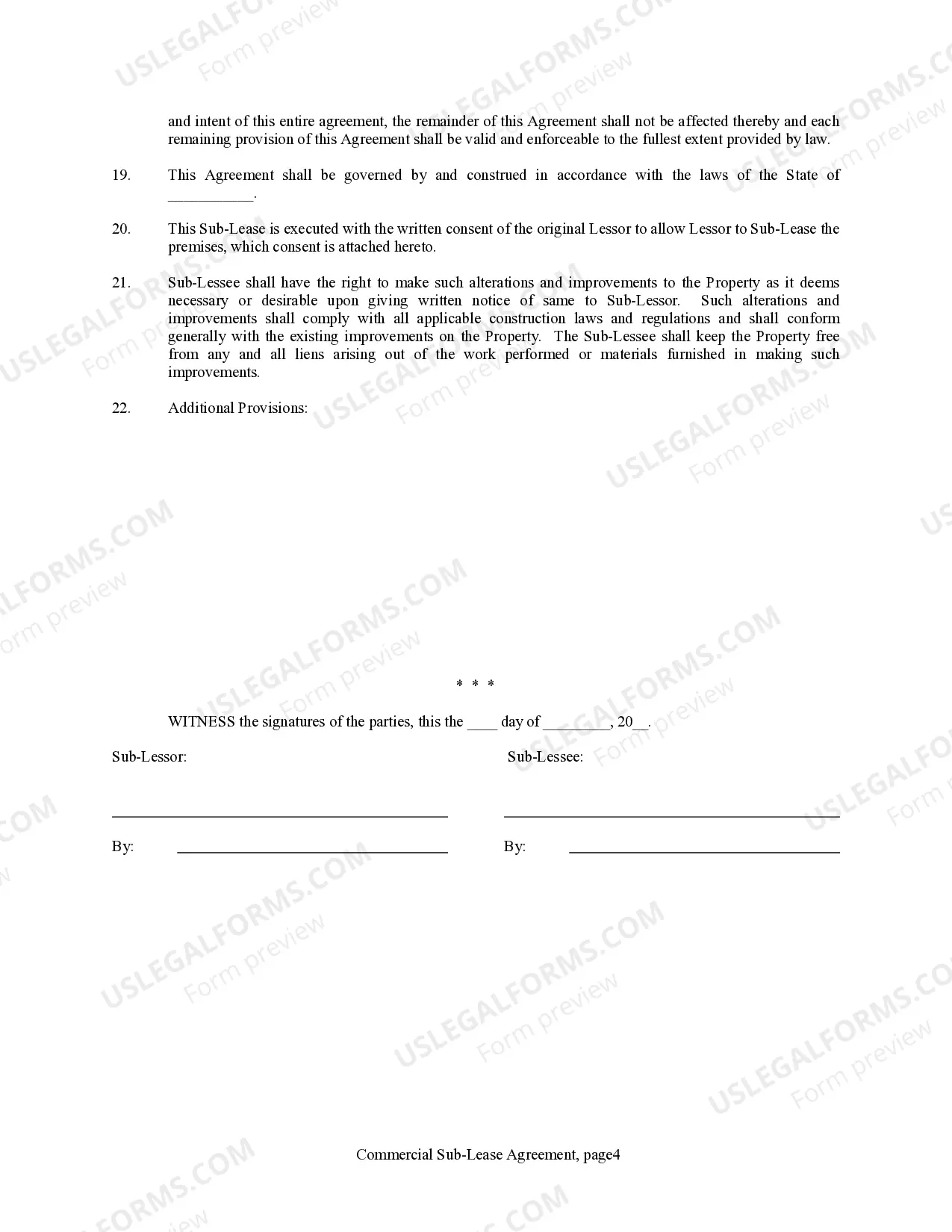
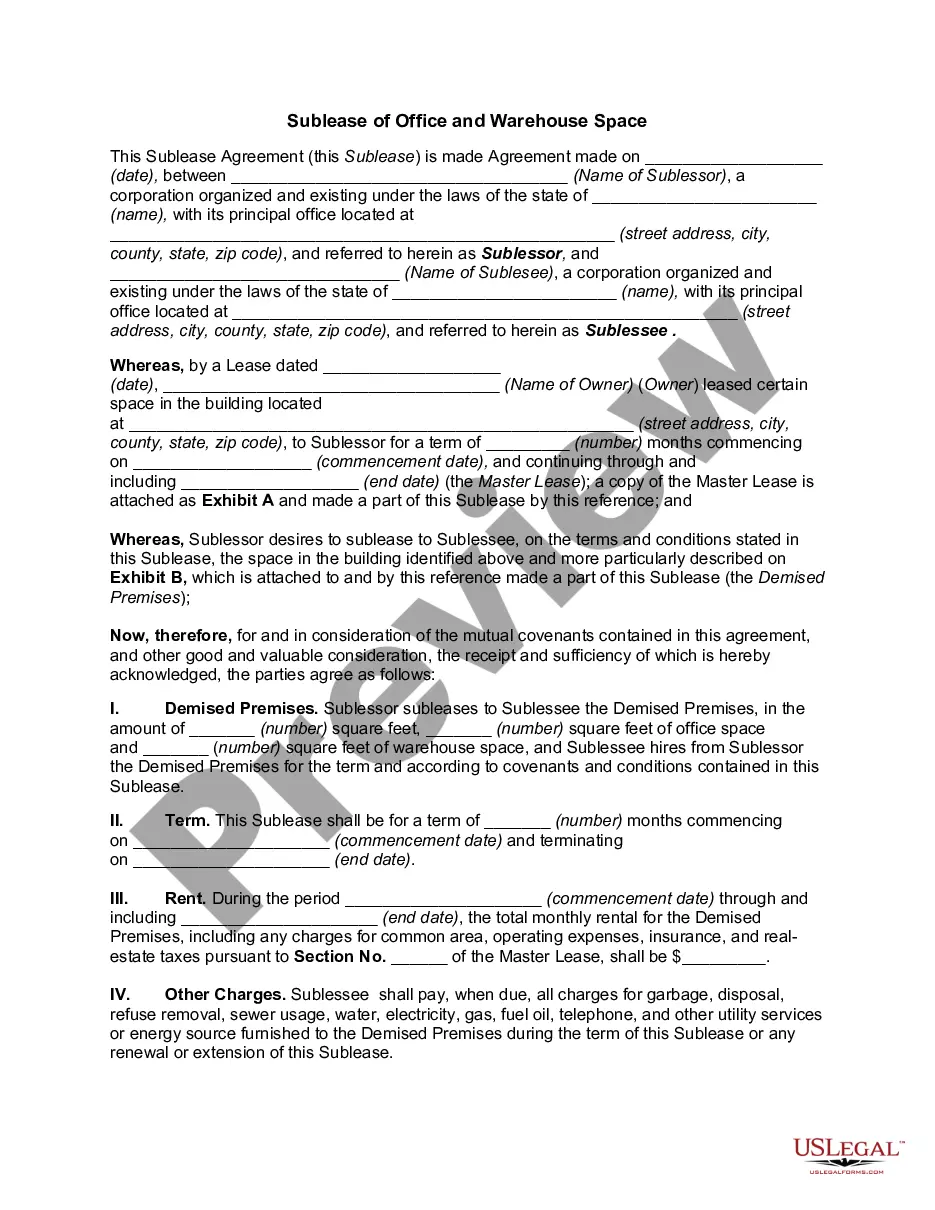
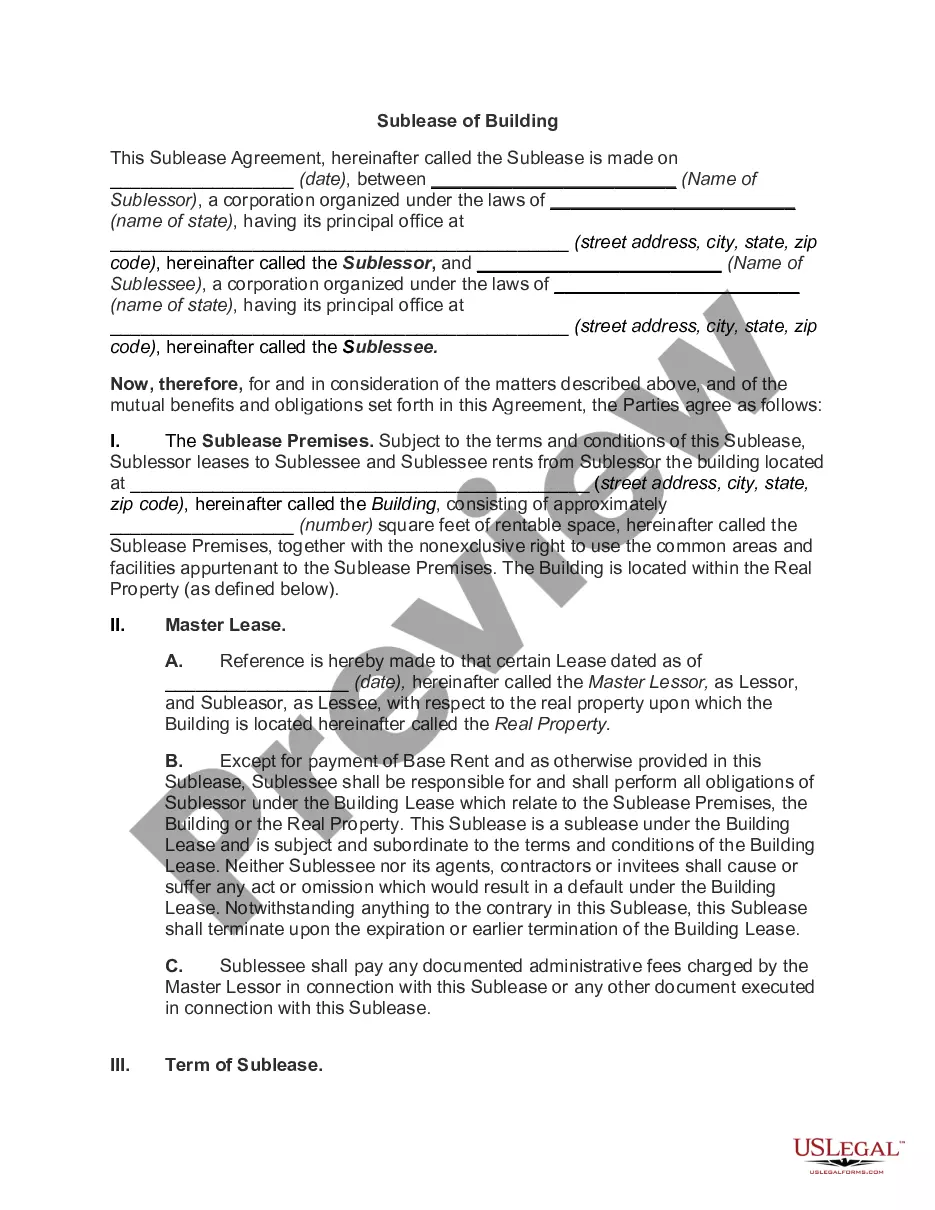
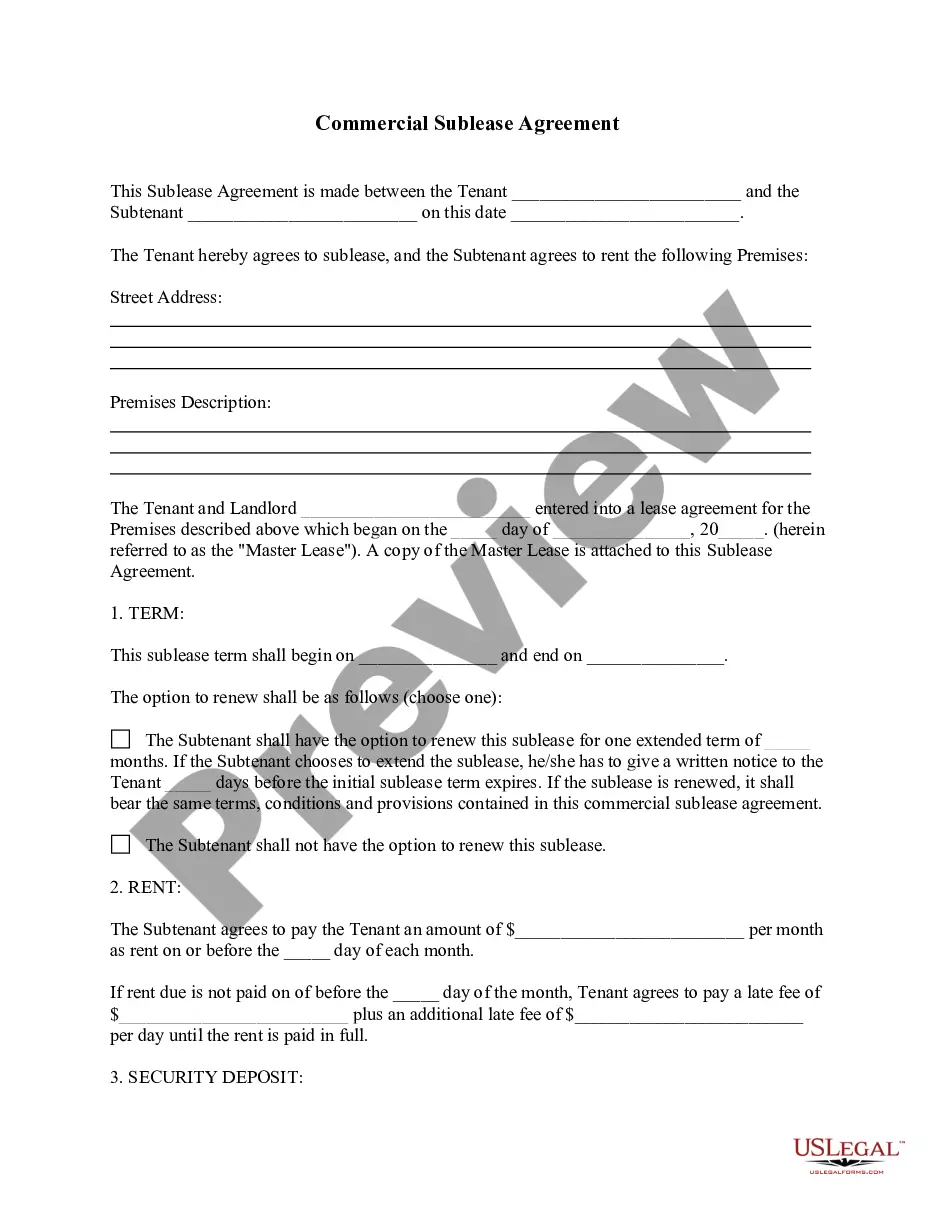
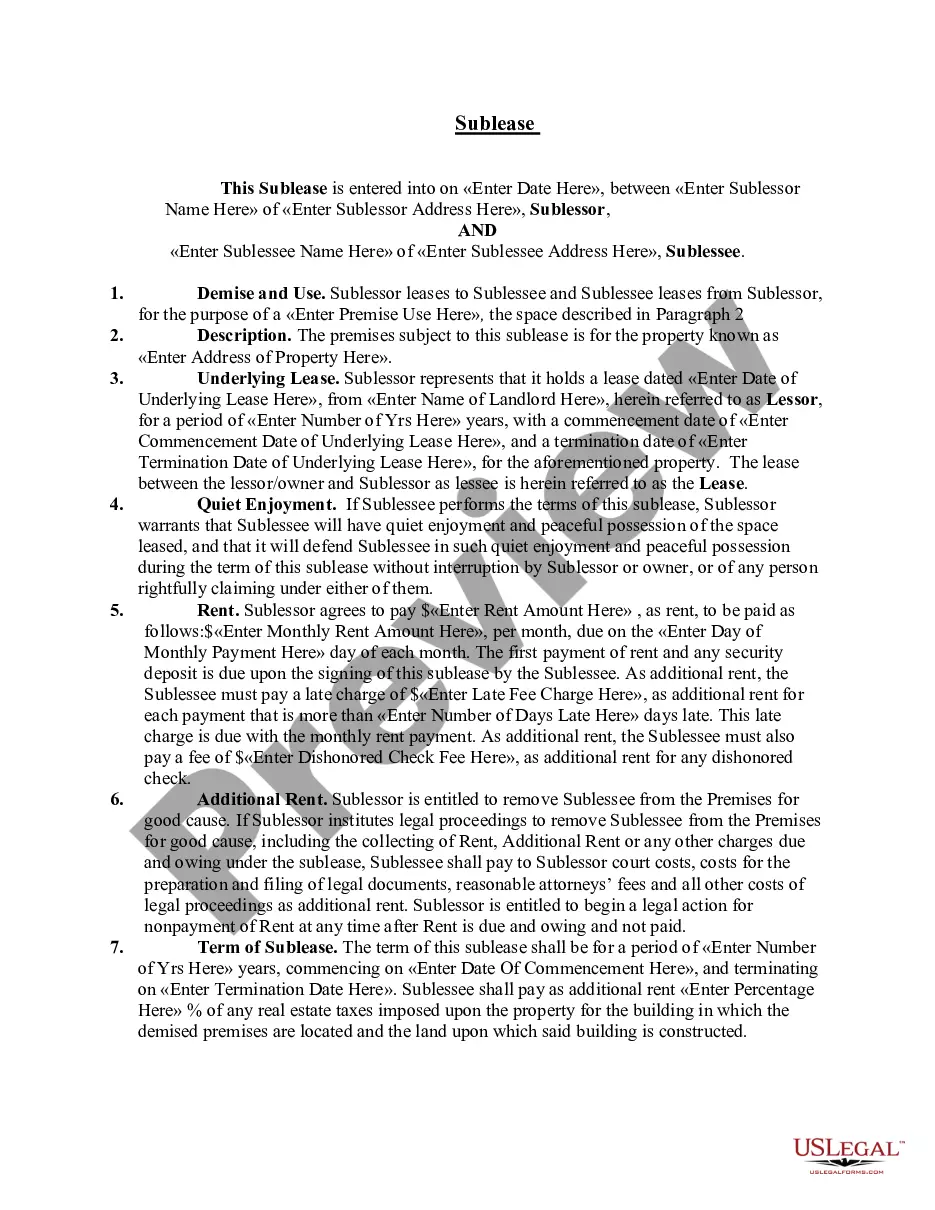
The Commercial Sublease is a legal document that allows a tenant (the Sub-Lessor) to lease their rented commercial property to another tenant (the Sub-Lessee). This agreement details the terms under which the Sub-Lessee will occupy the property and must adhere to the original lease's conditions. It is essential for landlords and tenants who need to transfer their lease rights temporarily while ensuring compliance with the original lease terms.
What’s included in this form
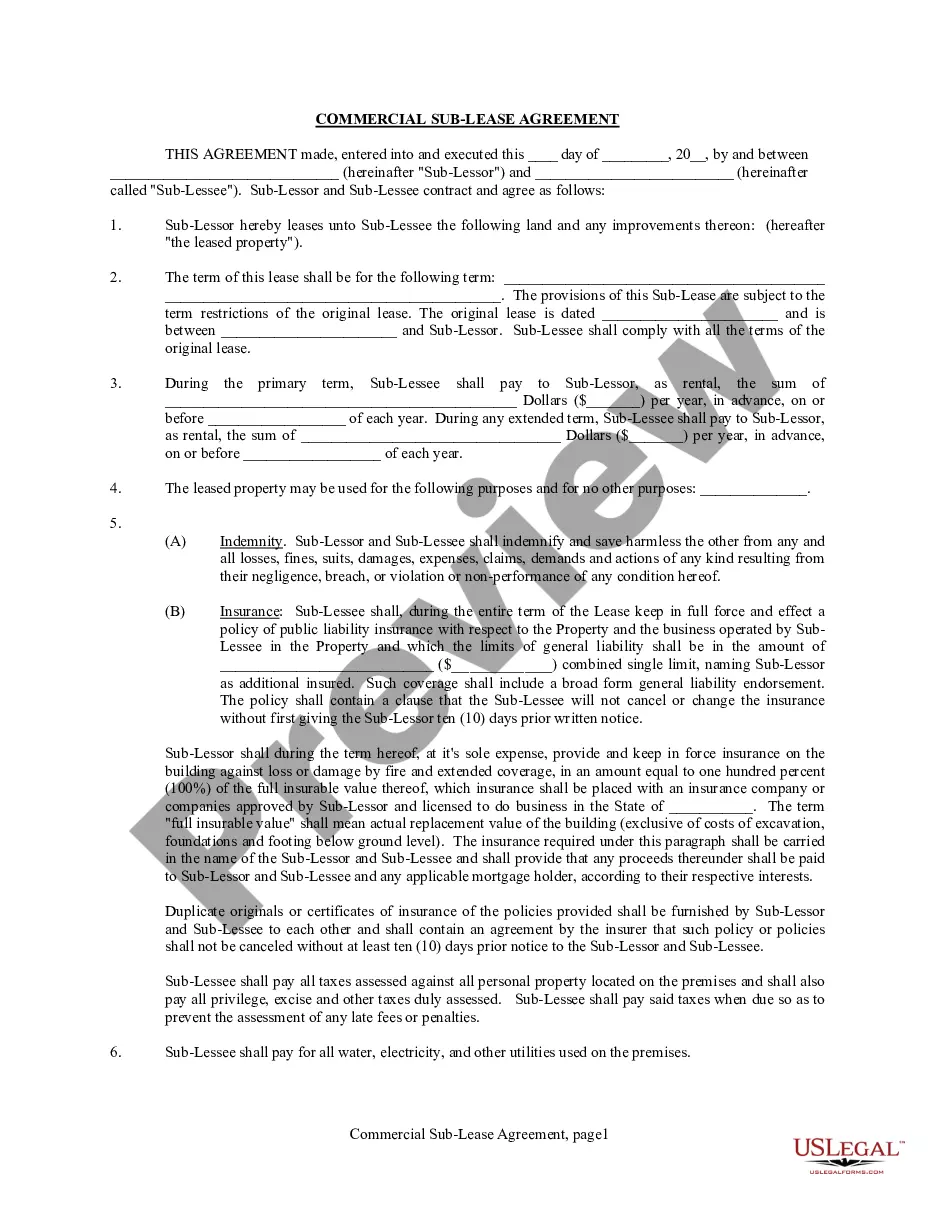
- Identification of Sub-Lessor and Sub-Lessee.
- Description of the leased property.
- Rental amount and payment terms.
- Permitted use of the property.
- Indemnification and insurance obligations.
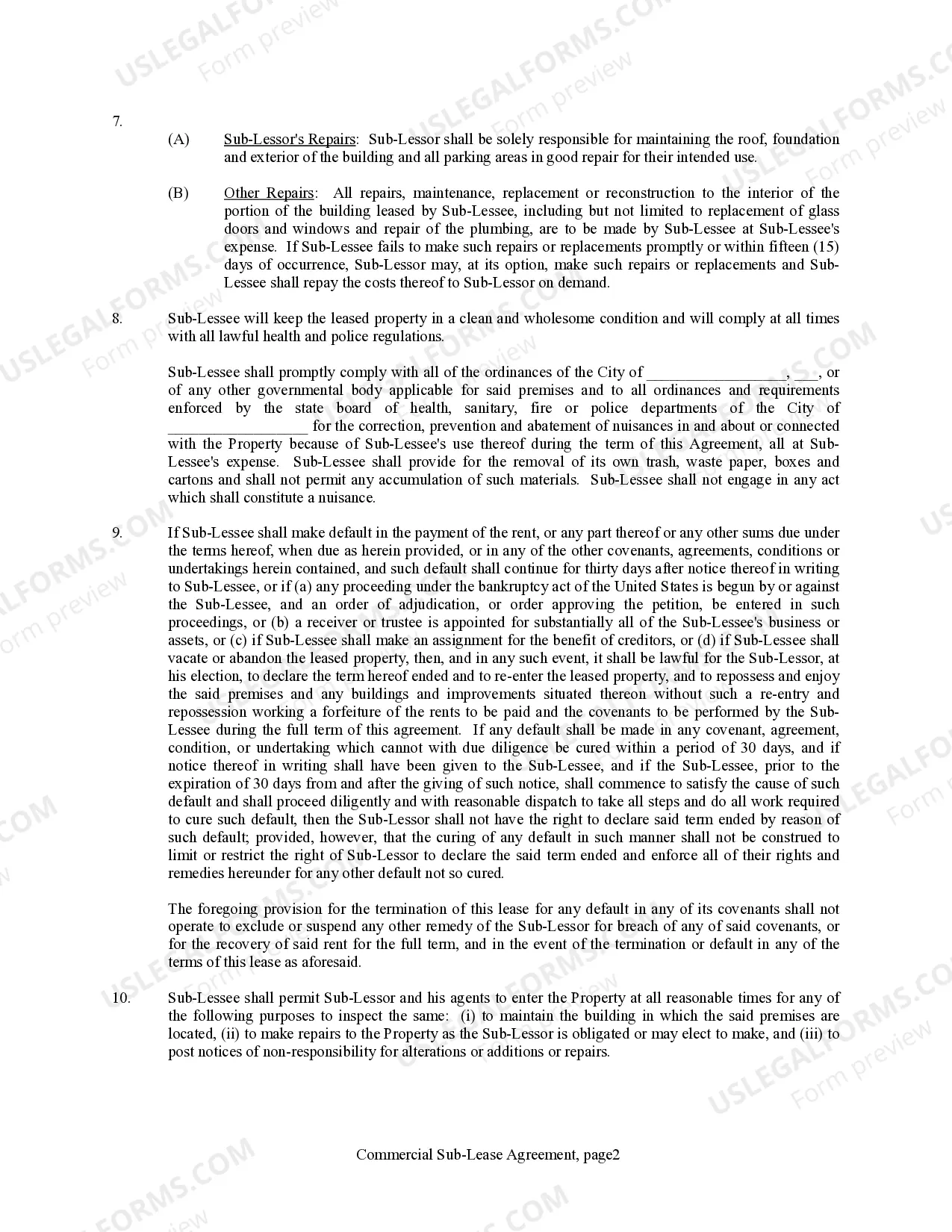
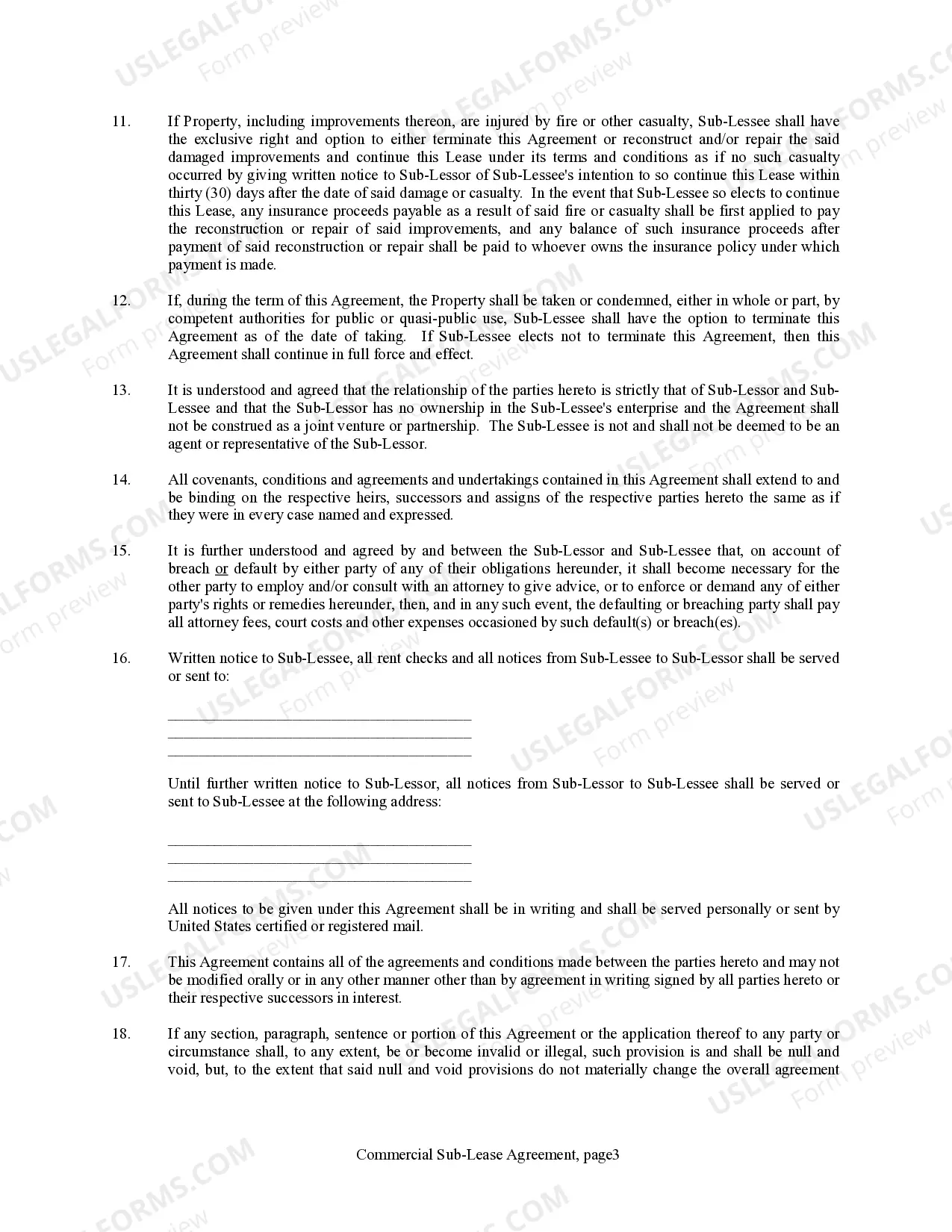
- Conditions for re-entry upon default by Sub-Lessee.
Situations where this form applies
This form is necessary when a commercial tenant wishes to sublease their leased property to another party. It is particularly useful in situations such as business expansion, relocation, or when a tenant needs to temporarily exit the lease while still holding responsibility for the lease agreement.
Who needs this form
- Current commercial tenants who need to sublease their property.
- Businesses looking to occupy a commercial space without entering into a new lease.
- Landlords who wish to regulate subleasing arrangements.
Steps to complete this form
- Identify and enter the names of the Sub-Lessor and Sub-Lessee.
- Provide a detailed description of the leased property.
- Specify the rental amount and payment schedule.
- Define the permitted use of the property.
- Sign the document and ensure both parties keep a copy for their records.
Notarization requirements for this form
This form usually doesn’t need to be notarized. However, local laws or specific transactions may require it. Our online notarization service, powered by Notarize, lets you complete it remotely through a secure video session, available 24/7.
Get your form ready online
Our built-in tools help you complete, sign, share, and store your documents in one place.
Make edits, fill in missing information, and update formatting in US Legal Forms—just like you would in MS Word.
Download a copy, print it, send it by email, or mail it via USPS—whatever works best for your next step.
Sign and collect signatures with our SignNow integration. Send to multiple recipients, set reminders, and more. Go Premium to unlock E-Sign.
If this form requires notarization, complete it online through a secure video call—no need to meet a notary in person or wait for an appointment.
We protect your documents and personal data by following strict security and privacy standards.

Make edits, fill in missing information, and update formatting in US Legal Forms—just like you would in MS Word.

Download a copy, print it, send it by email, or mail it via USPS—whatever works best for your next step.

Sign and collect signatures with our SignNow integration. Send to multiple recipients, set reminders, and more. Go Premium to unlock E-Sign.

If this form requires notarization, complete it online through a secure video call—no need to meet a notary in person or wait for an appointment.

We protect your documents and personal data by following strict security and privacy standards.
Typical mistakes to avoid
- Failing to review and conform to the original lease terms.
- Leaving sections blank or unspecified, such as rental terms or property use.
- Not obtaining the original Lessor's consent before subleasing.
Why use this form online
- Convenience of completing the form from anywhere at any time.
- Editability allows users to personalize the form quickly.
- Reliable templates drafted by licensed attorneys to ensure legal compliance.
Looking for another form?
Form popularity
FAQ
Why Is Subletting Not Allowed At Some Properties? The most common reason for not allowing subletting at a property is the increased risk of financial loss, property damage, or misleading tenants. Adding more tenants or switching tenants through a sublease during a tenancy adds work and risk for the landlord.
Can the landlord refuse consent to an Assignment? Most leases will say that the Landlord cannot unreasonably withhold consent. According to section 19 (1A) of the Landlord and Tenant Act 1927 the landlord can insert conditions in the lease, which need to be met in the case of an assignment.
A subtenant is someone who has the right to use and occupy rental property leased by a tenant from a landlord. A subtenant has responsibilities to both the landlord and the tenant.The tenant still remains responsible for the payment of rent to the landlord and any damages to the property caused by the subtenant.
Recording a lease means that it (or a Notice of Lease) is submitted to the public record, usually at the local Registry of Deeds following the signing of it by both parties. Generally, recording of the lease protects the tenant against subsequent claims to the property.
A commercial sublease is an agreement between a tenant currently leasing a property, a new tenant looking for space, and the property owner. When you sublease your space you are the sublessor (or sublandlord) and your new tenant is the sublessee (or subtenant).
The landlord cannot refuse the assignment or sublet unless there is a good reason, such as the proposed tenant's inability to pay the rent or problematic behavior of this tenant. This is the case no matter what your lease or the building rules say.
A sublease is a legally binding contract made between a tenant and a new tenant (also known as a subtenant or a sublessee).Usually, the first tenant must get consent from the landlord before he/she is allowed to sublease the premises.
Maryland law doesn't address subletting directly, meaning that it's up to each individual lease agreement to lay out the rules.If the lease allows subletting, but only with the landlord's written permission, then a tenant must get consent before subletting their unit.
If a court finds you guilty of the first offence of unlawful subletting, you can be fined in the magistrates' court.At the magistrates' court, you can get up to six months in prison or a fine, or both. At the Crown Court the maximum penalty is imprisonment for two years or a fine, or both.