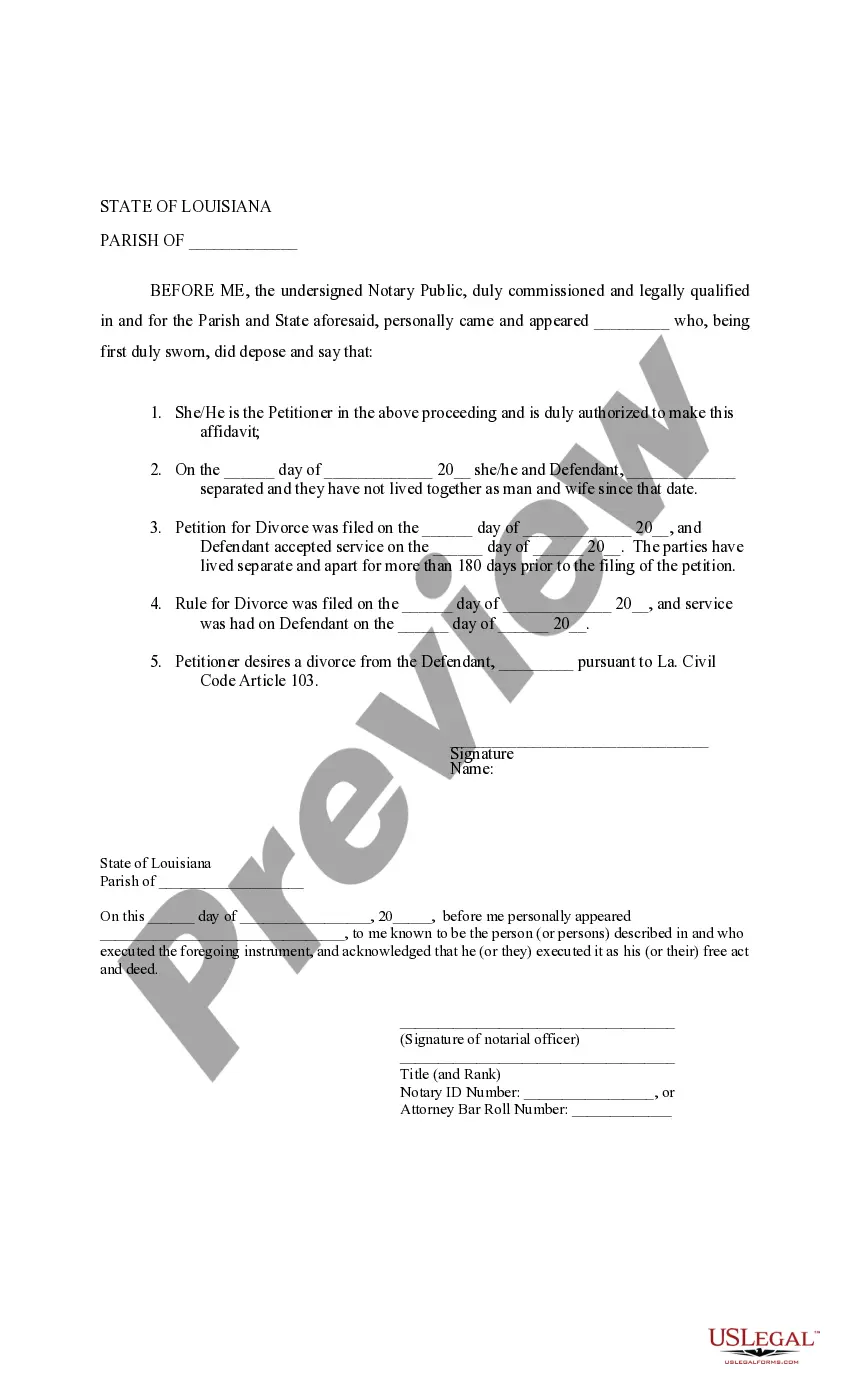
North Carolina Office Lease Agreement
What is this form?
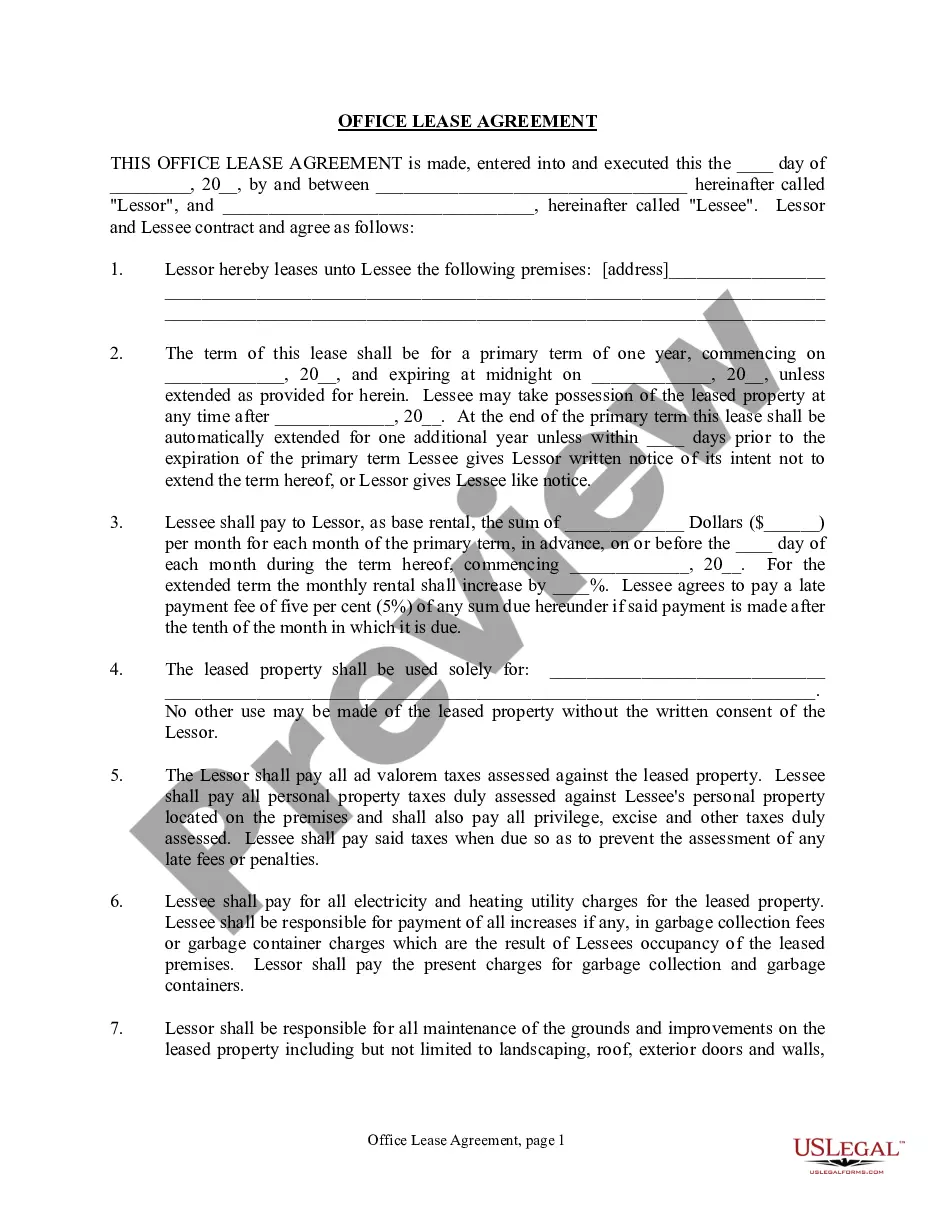
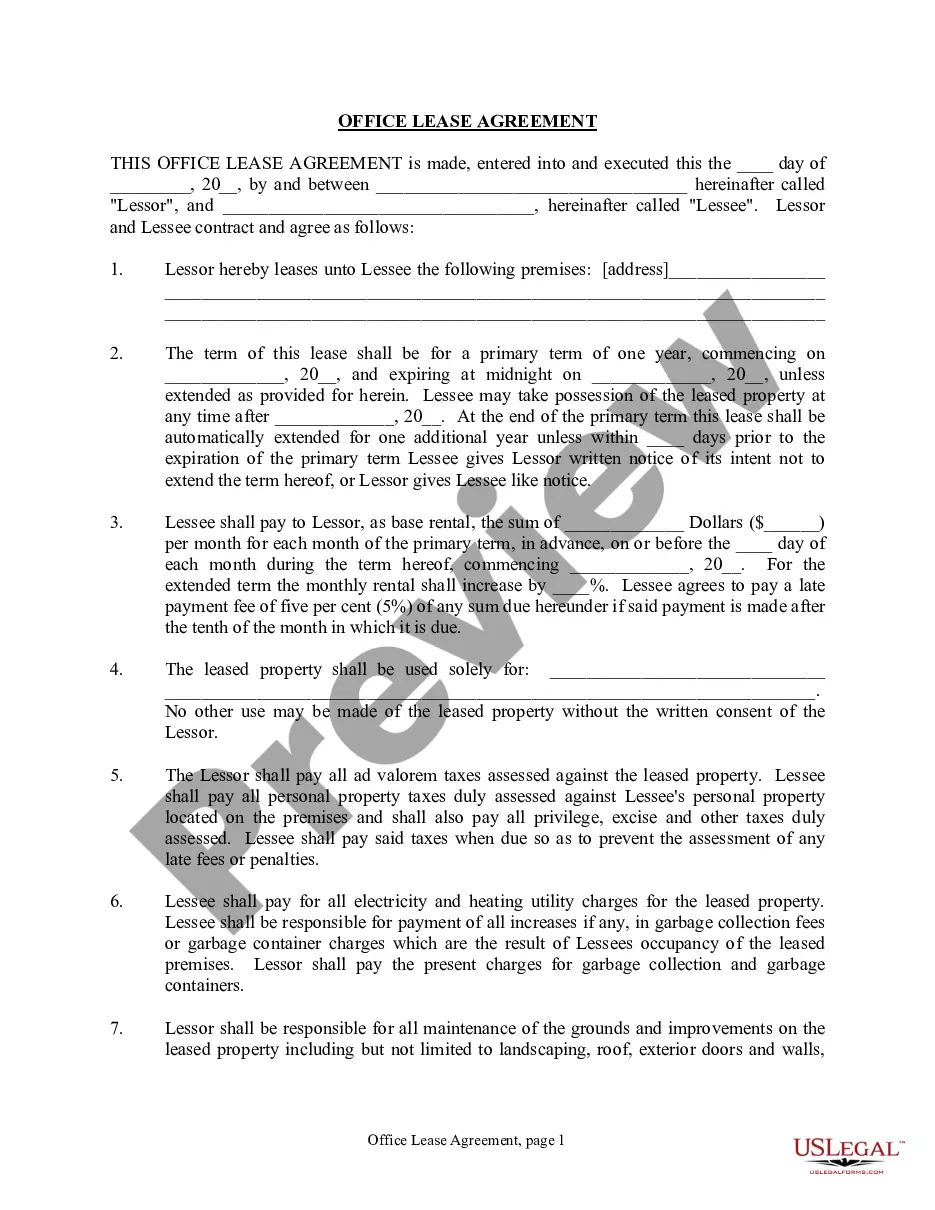
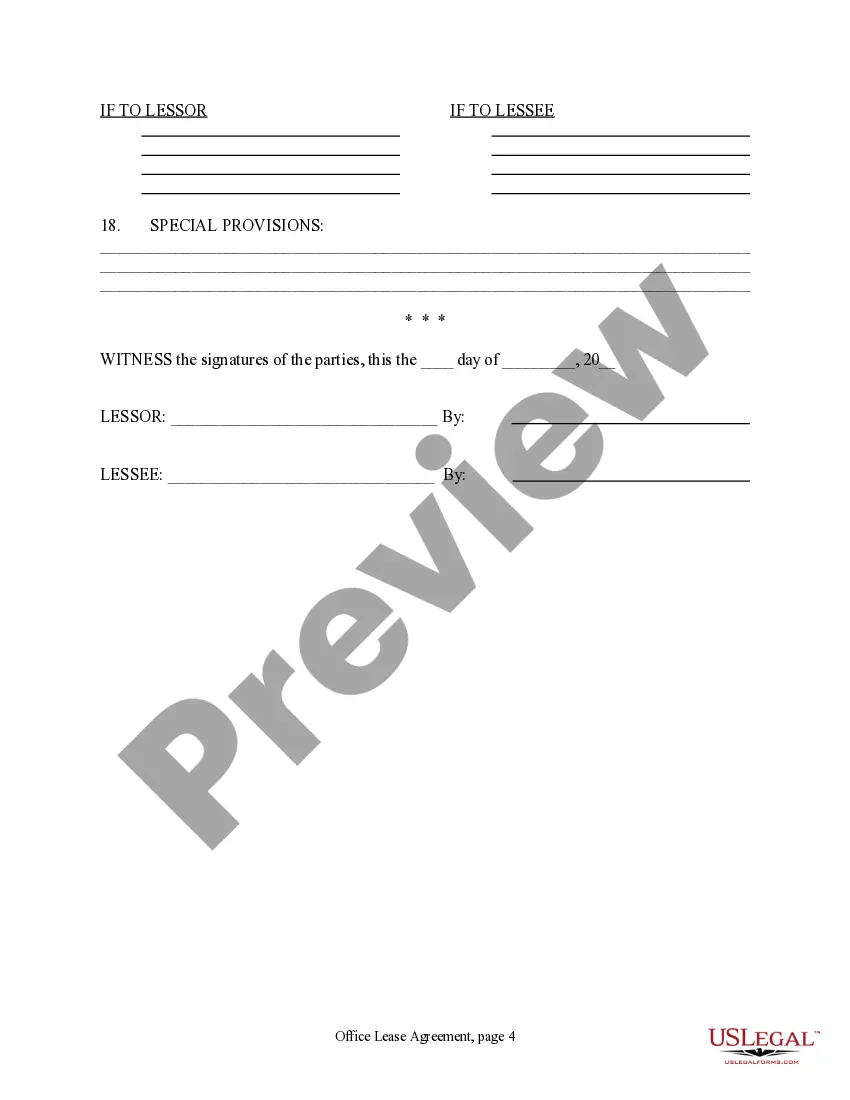
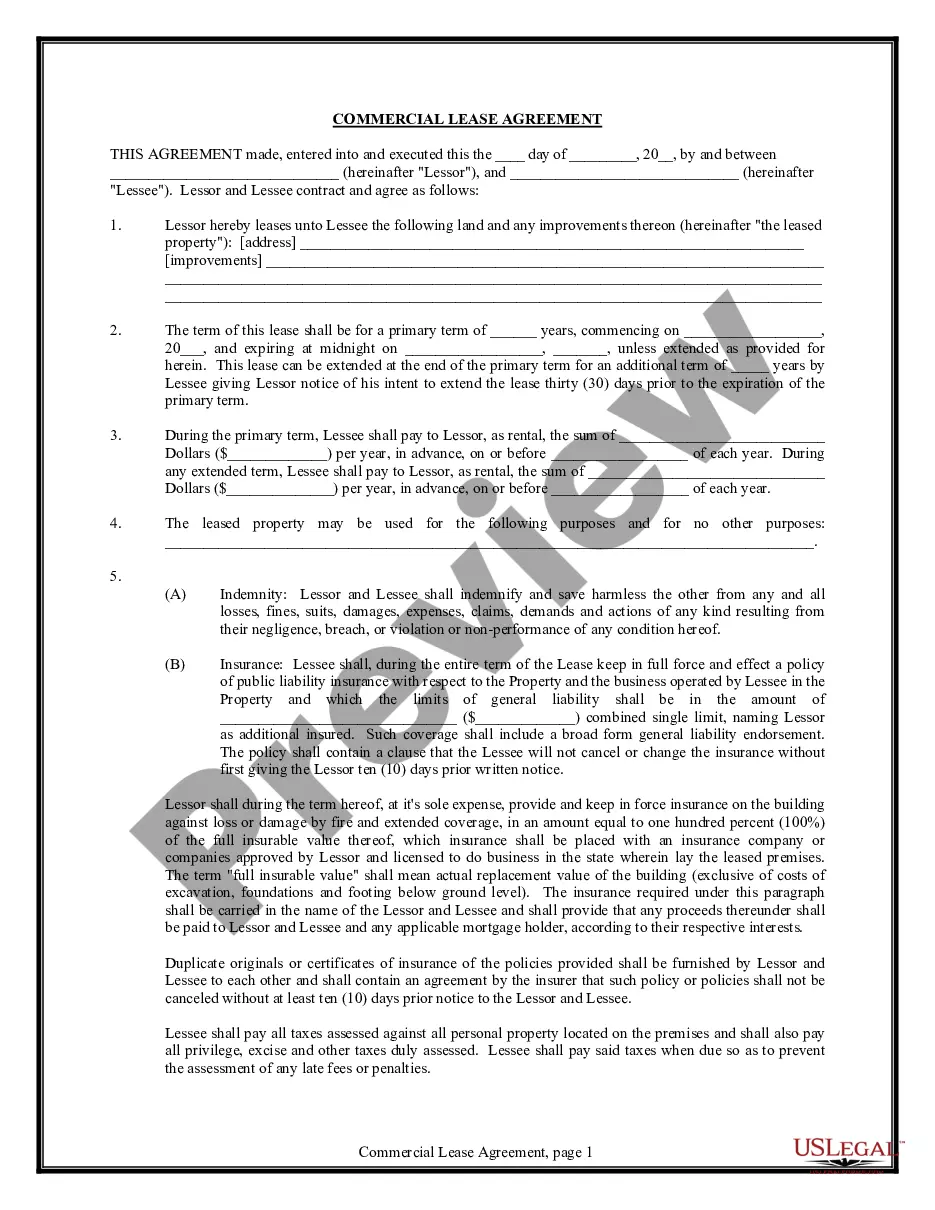
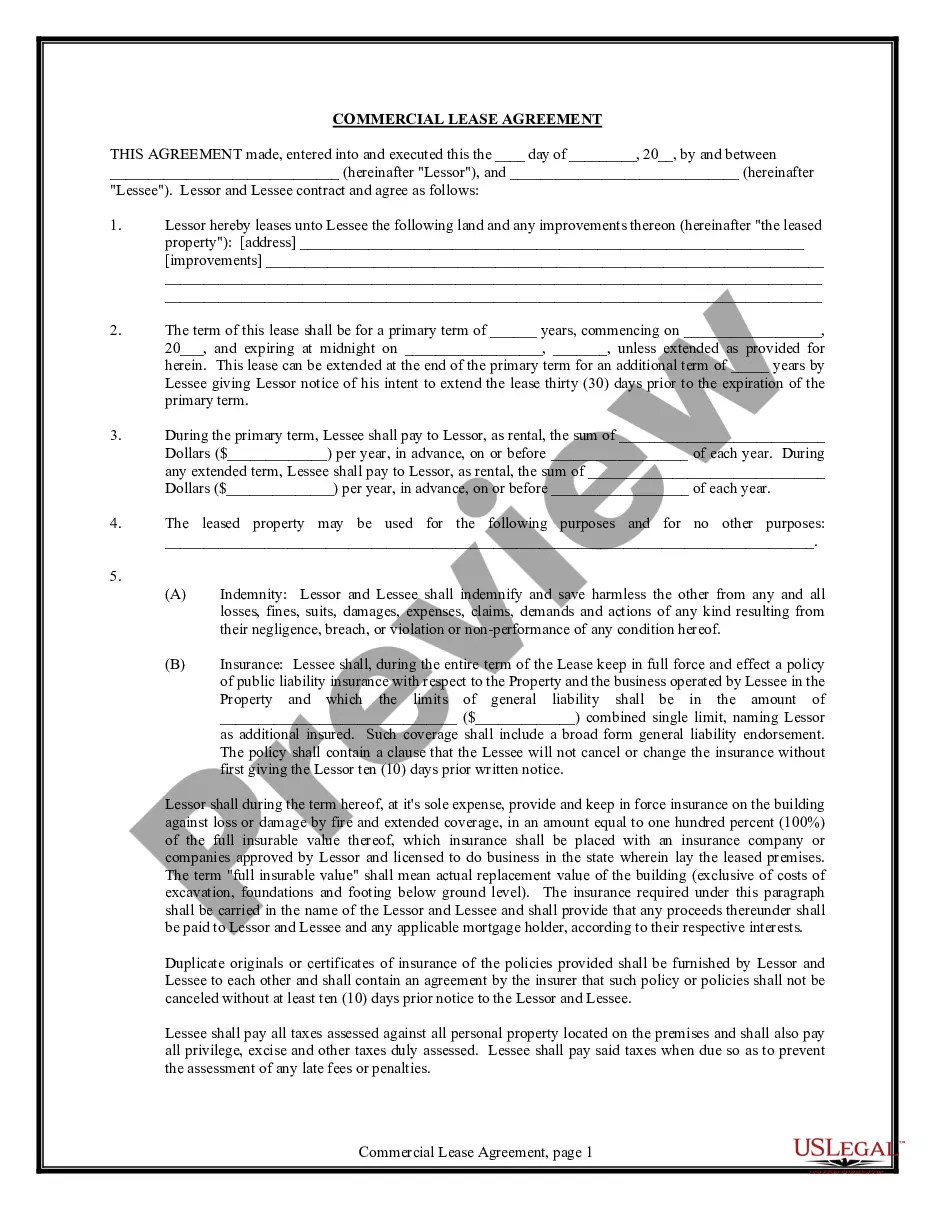
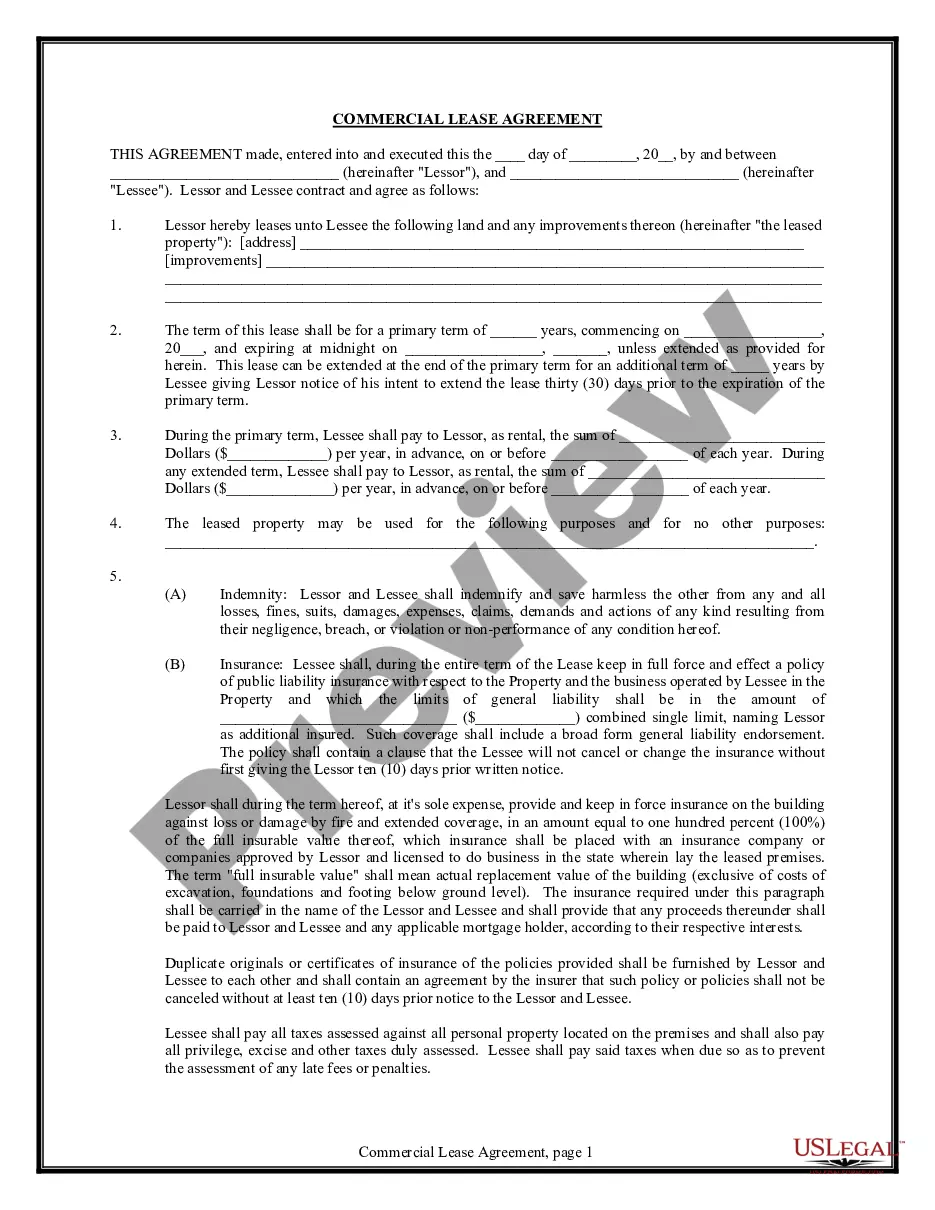
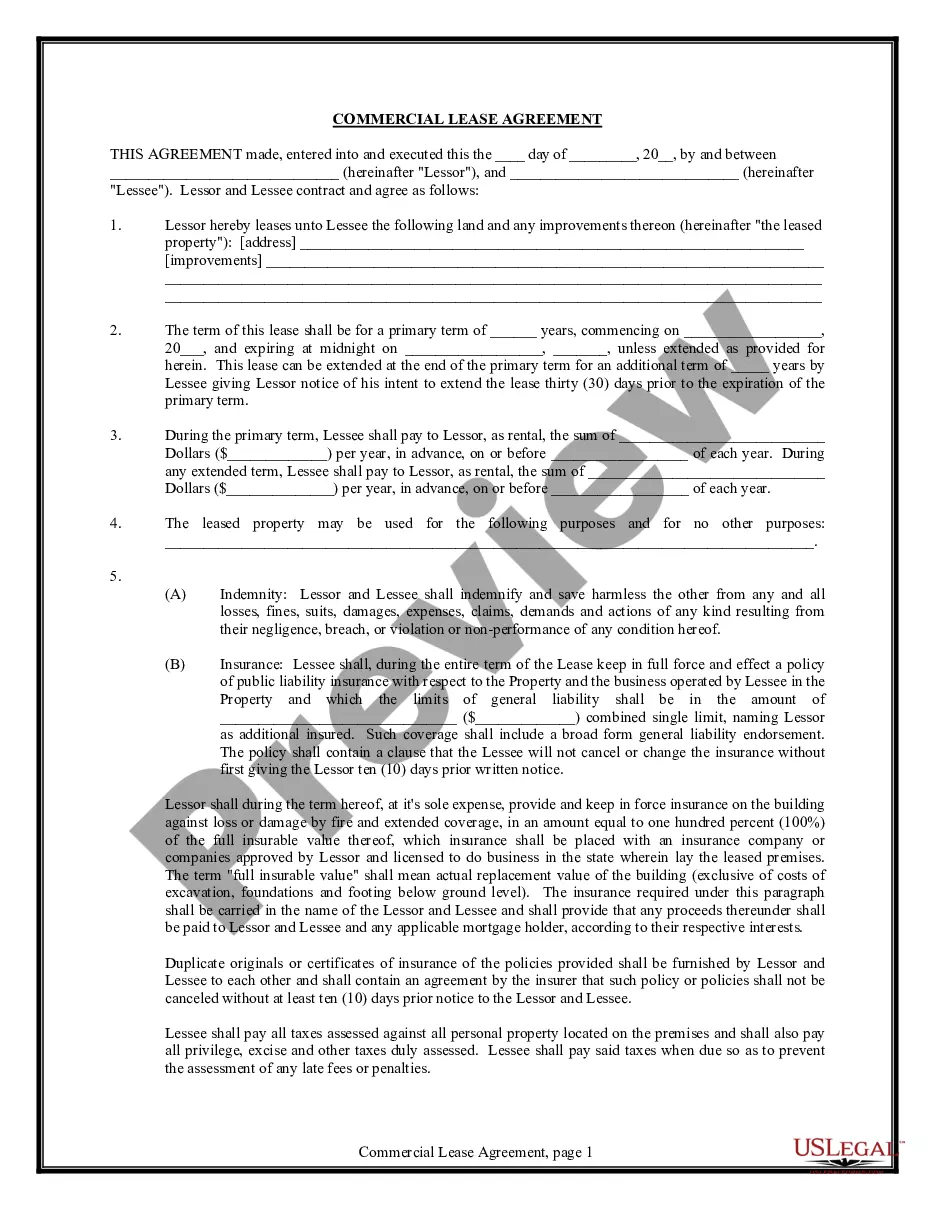
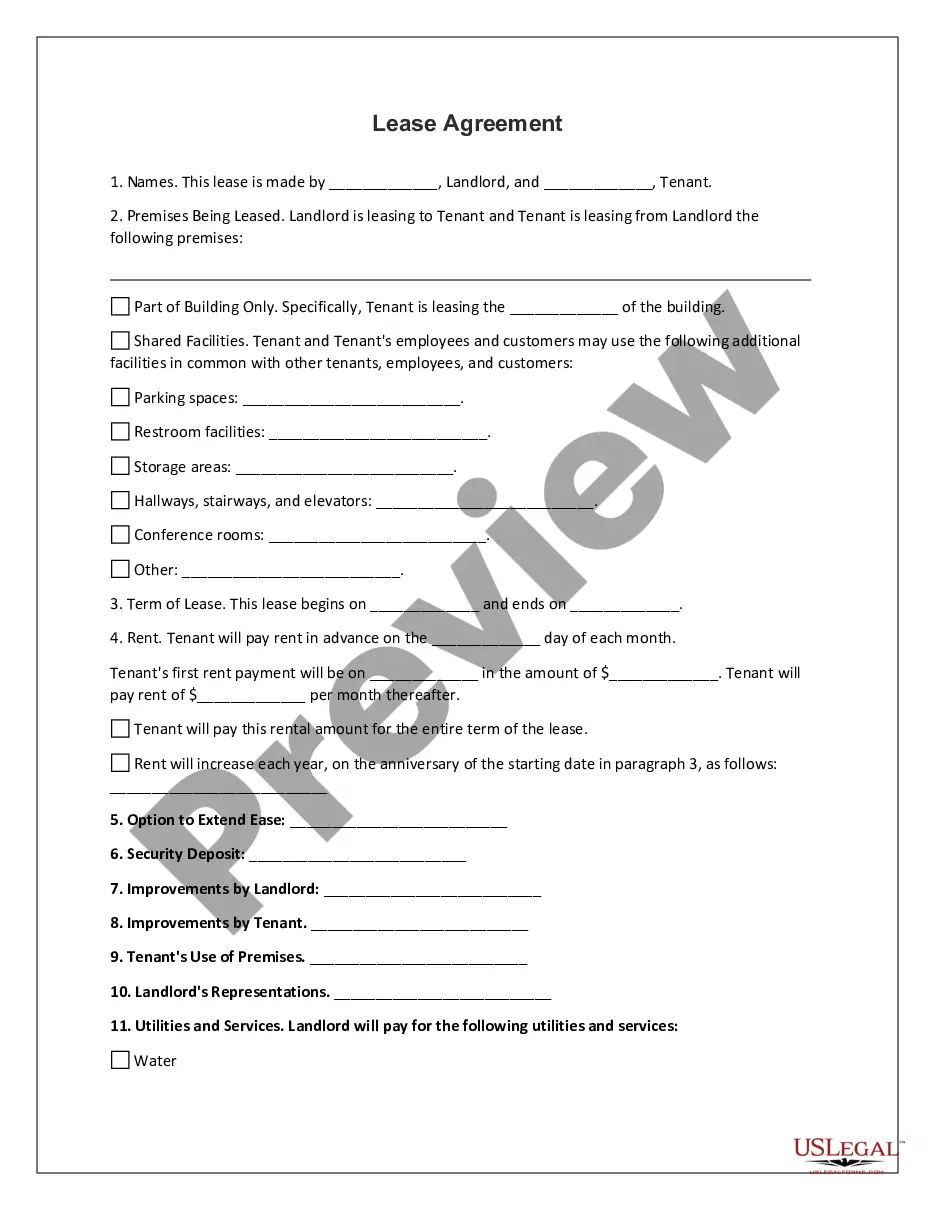
The Office Lease Agreement is a legal contract between a property owner and a tenant for leasing office space. This agreement outlines the terms of the lease, including responsibilities and rights of both parties, and ensures compliance with state laws. Unlike residential leases, this form is specifically tailored for commercial office spaces, addressing unique aspects of such arrangements.
What’s included in this form
- Identification of the lessor (property owner) and lessee (tenant).
- The property address and description of the leased office space.
- The lease term, including start and end dates, and automatic renewal details.
- Monthly rental amount and payment terms, including late fees.
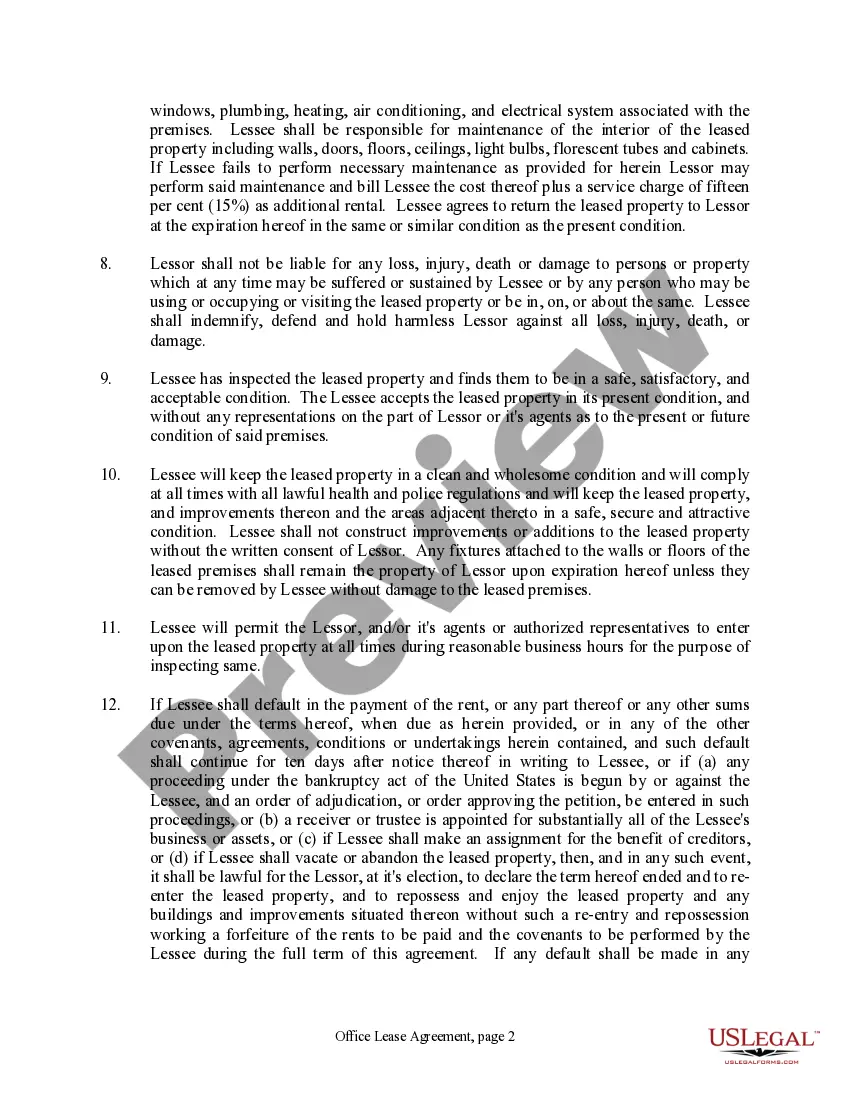
- Maintenance responsibilities for both the lessor and lessee.
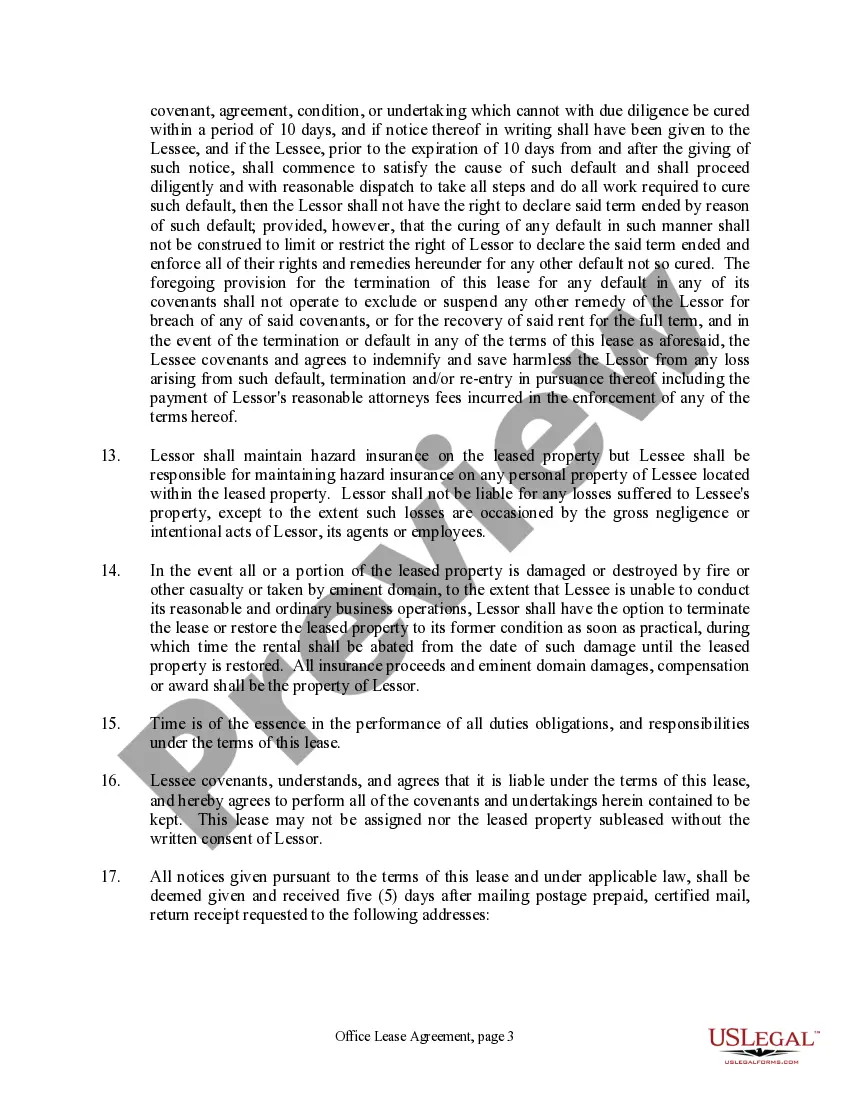
- Indemnification and liability clauses to protect both parties.
When to use this form
This form is necessary when a business or individual wishes to rent office space for commercial use. It provides a clear framework for the lease terms, protects both parties' interests, and clarifies responsibilities. You should consider using this form when entering into an agreement for office space, whether for a startup, a growing business, or even for temporary use of an office facility.
Who needs this form
- Business owners seeking a lease for office space.
- Landlords or property owners looking to rent out commercial properties.
- Commercial real estate agents assisting clients in leasing office spaces.
- Individuals creating a startup and needing a dedicated workspace.
How to complete this form
- Identify the parties involved by entering the names of the lessor and lessee.
- Specify the property address where the office is located.
- Enter the lease term start and end dates along with any renewal conditions.
- Fill in the monthly rental amount and payment details, including late fees.
- Clarify the maintenance responsibilities for both the lessor and lessee.
Notarization guidance
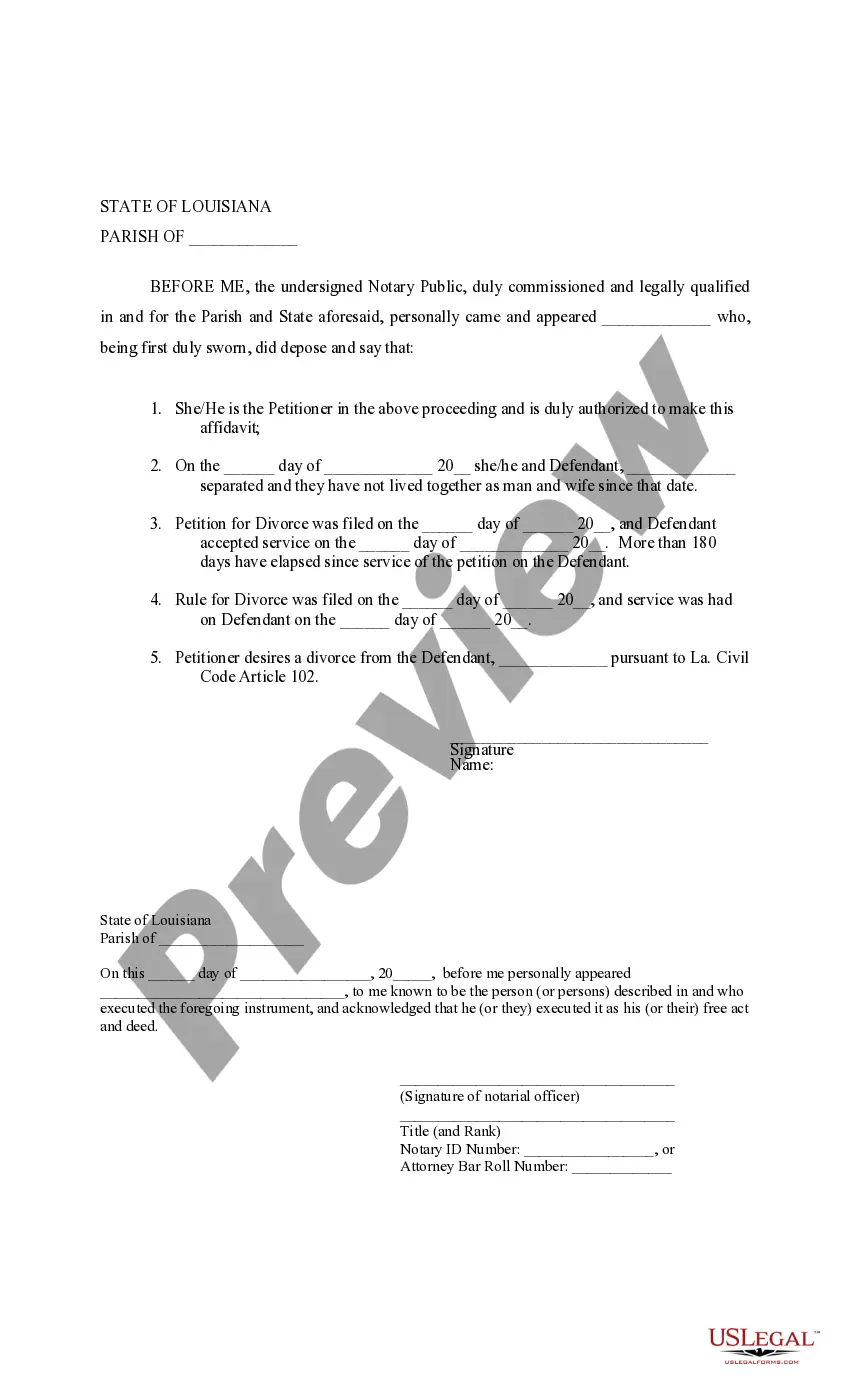
In most cases, this form does not require notarization. However, some jurisdictions or signing circumstances might. US Legal Forms offers online notarization powered by Notarize, accessible 24/7 for a quick, remote process.
Get your form ready online
Our built-in tools help you complete, sign, share, and store your documents in one place.
Make edits, fill in missing information, and update formatting in US Legal Forms—just like you would in MS Word.
Download a copy, print it, send it by email, or mail it via USPS—whatever works best for your next step.
Sign and collect signatures with our SignNow integration. Send to multiple recipients, set reminders, and more. Go Premium to unlock E-Sign.
If this form requires notarization, complete it online through a secure video call—no need to meet a notary in person or wait for an appointment.
We protect your documents and personal data by following strict security and privacy standards.
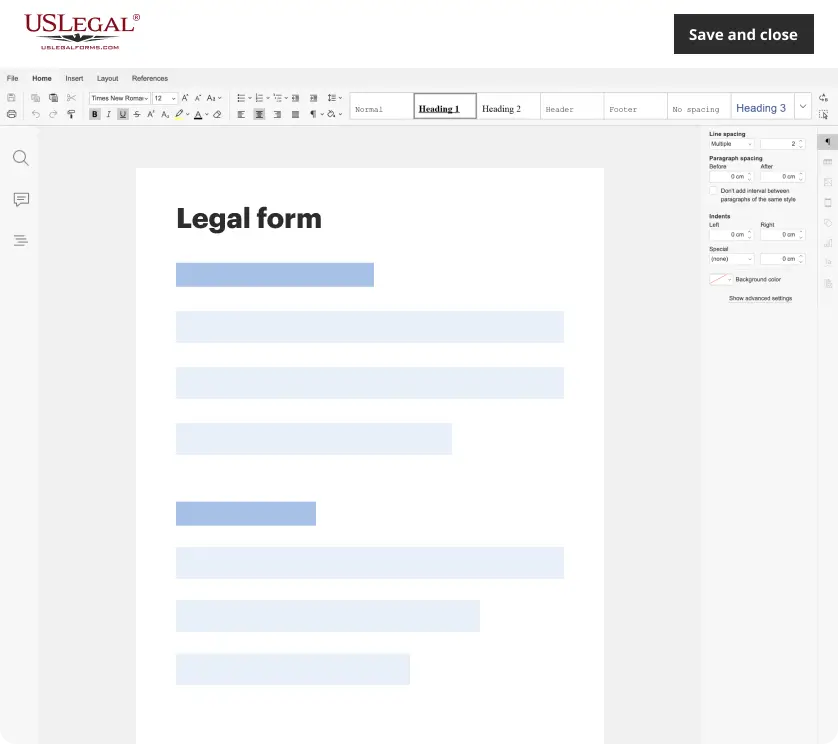
Make edits, fill in missing information, and update formatting in US Legal Forms—just like you would in MS Word.
Download a copy, print it, send it by email, or mail it via USPS—whatever works best for your next step.
Sign and collect signatures with our SignNow integration. Send to multiple recipients, set reminders, and more. Go Premium to unlock E-Sign.
If this form requires notarization, complete it online through a secure video call—no need to meet a notary in person or wait for an appointment.
We protect your documents and personal data by following strict security and privacy standards.
Typical mistakes to avoid
- Failing to specify property use details, which can lead to disputes.
- Not including clear terms regarding maintenance responsibilities.
- Overlooking the importance of renewal terms, leading to unintentional lease expiration.
- Improperly addressing payment deadlines or late fees.
Benefits of completing this form online
- Convenience of accessing and completing the form at any time.
- Editable templates allow for customization to fit specific needs.
- Reliable legal language drafted by licensed attorneys ensures compliance.
- Immediate download for quick use in negotiations or formalities.
Legal use & context
- The Office Lease Agreement is legally binding once signed by both parties.
- Enforcement may vary based on state laws and regulations regarding commercial leases.
- It is advisable for lessees to understand their rights and obligations before signing.
Main things to remember
- The Office Lease Agreement permits the leasing of office space under defined terms.
- Clearly outlines responsibilities and expectations for both the lessor and lessee.
- Helps to prevent misunderstandings through detailed clauses.
Looking for another form?
Form popularity
FAQ
The Lease Must be in Writing It does not matter if the lease is handwritten or typed.
No, residential lease agreements do not need to be notarized in North Carolina. As long as the contract exists and both parties have agreed to it, it is legally binding and it does not have to be notarized.
The lease is mutually beneficial. A tenant can't stop paying rent or vacate the property during the lease term this is a violation of the agreement.A rental agreement, by contrast, is a month-to-month agreement. At the end of each 30-day period, the landlord and tenant are both free to change the terms.
A written agreement can act as a roadmap for the landlord-tenant relationship, especially if a dispute arises. Also, real estate (land) leases for more than one year must be in writing. If a lease for over one year is not in writing, it will generally not be enforceable in court.
The Lease Must be in Writing It does not matter if the lease is handwritten or typed. If the lease is for more than one year, it must be in written form and contain the following terms.
You and your landlord agree to terminate early. Enter into a deed of surrender to explicitly release you from all lease obligations. You have an early termination clause or break clause in the lease. You may be able to transfer or assign the lease with your landlord's agreement.
The difference between lease and rent is that a lease generally lasts for 12 months while a rental agreement generally lasts for 30 days.That means the landlord can't raise the rent without your written consent or evict you without cause, and you can't stop paying rent or break the lease without consequence.
The lease becomes legally binding when all parties have signed: the landlord and all tenants living in the unit who are 18 and older. If you're worried about situations where a lease needs to end early, learn about breaking a lease and grounds for eviction.
Collect each party's information. Include specifics about your property. Consider all of the property's utilities and services. Know the terms of your lease. Set the monthly rent amount and due date. Calculate any additional fees. Determine a payment method. Consider your rights and obligations.