North Carolina Training Contract - Horse Equine Forms
Understanding this form
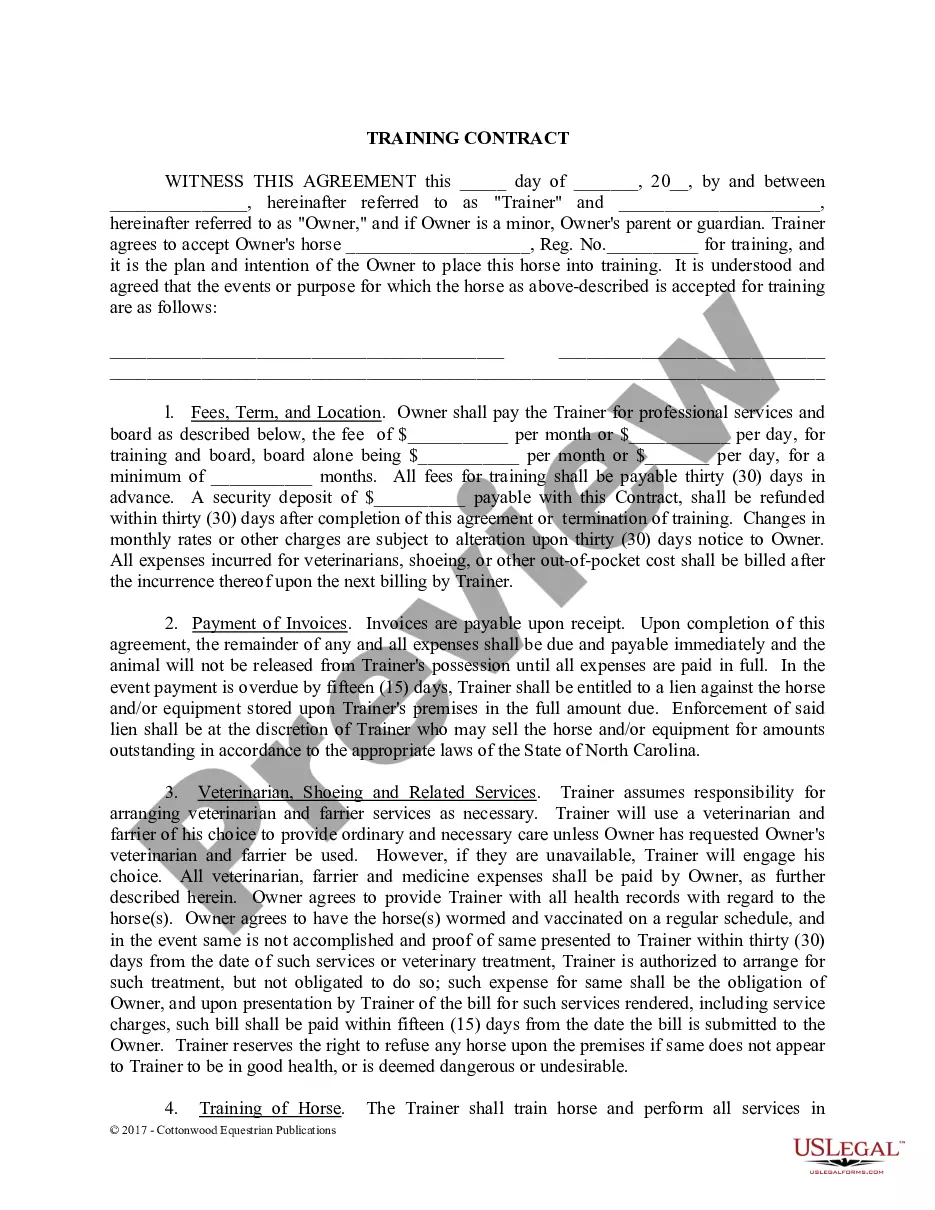
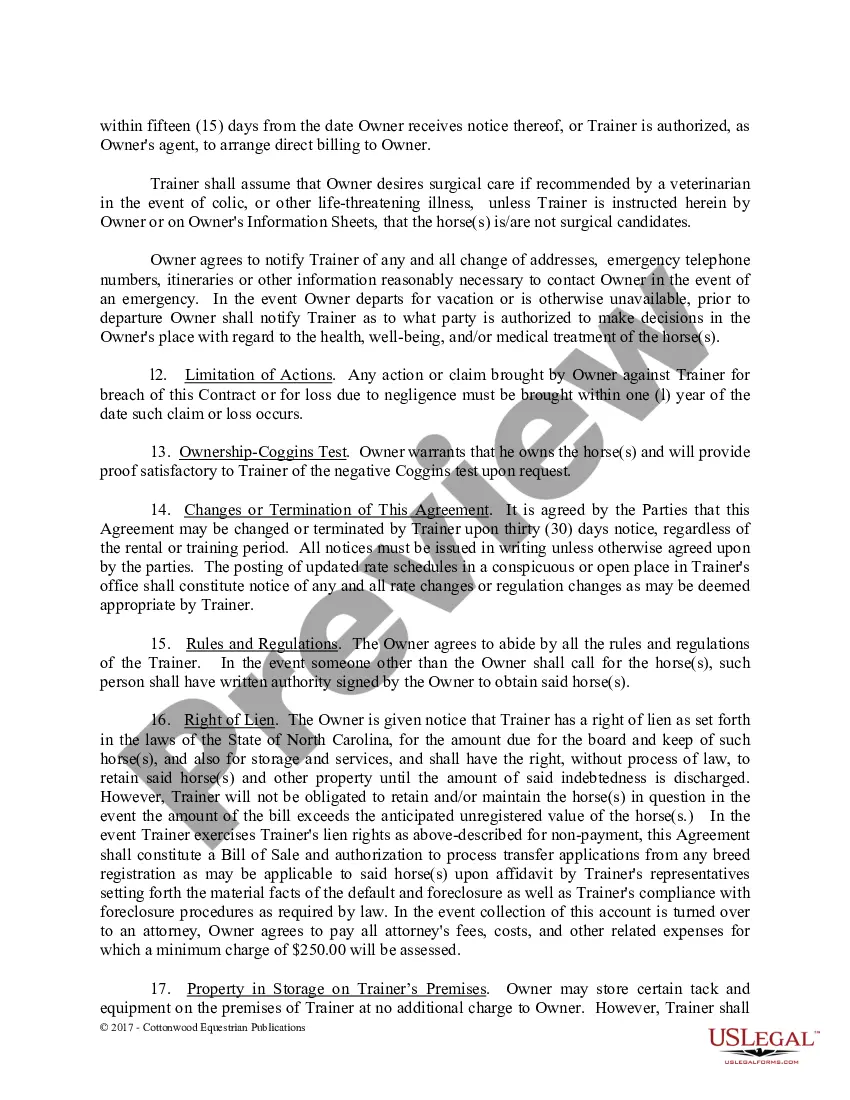
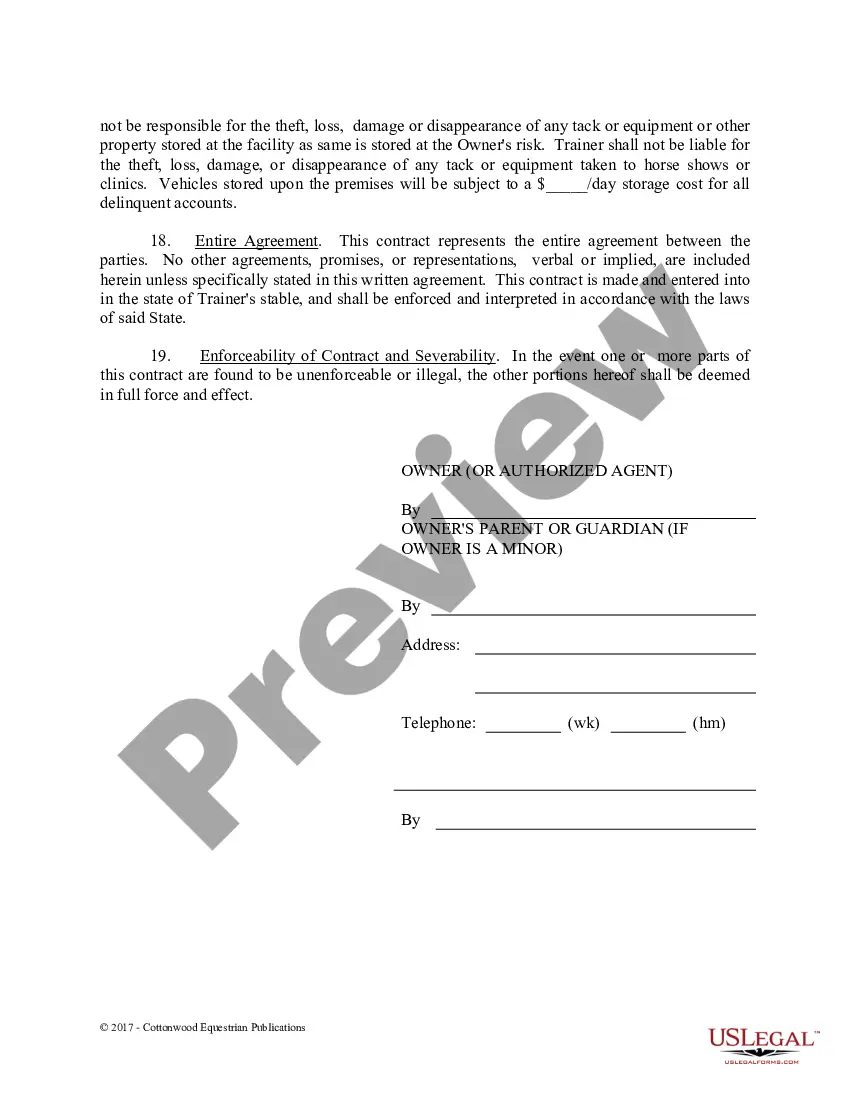
The Training Contract - Horse Equine Form is an agreement between a trainer and a horse owner, outlining the terms of horse training services. This legally binding document specifies the professional services offered, boarding arrangements, veterinary care, training standards, and liability waivers. It serves as a crucial framework that distinguishes these services from other horse-related agreements, ensuring clarity in expectations and responsibilities for both parties.
Key components of this form
- Parties Involved: Identifies the trainer and owner, including parental or guardian consent for minors.
- Fees and Payment Terms: Details the cost of training and board, payment schedule, and conditions for adjustments to fees.
- Veterinarian Responsibilities: Outlines the trainer's obligations to arrange and pay for veterinary care, along with the owner's responsibilities for medical expenses.
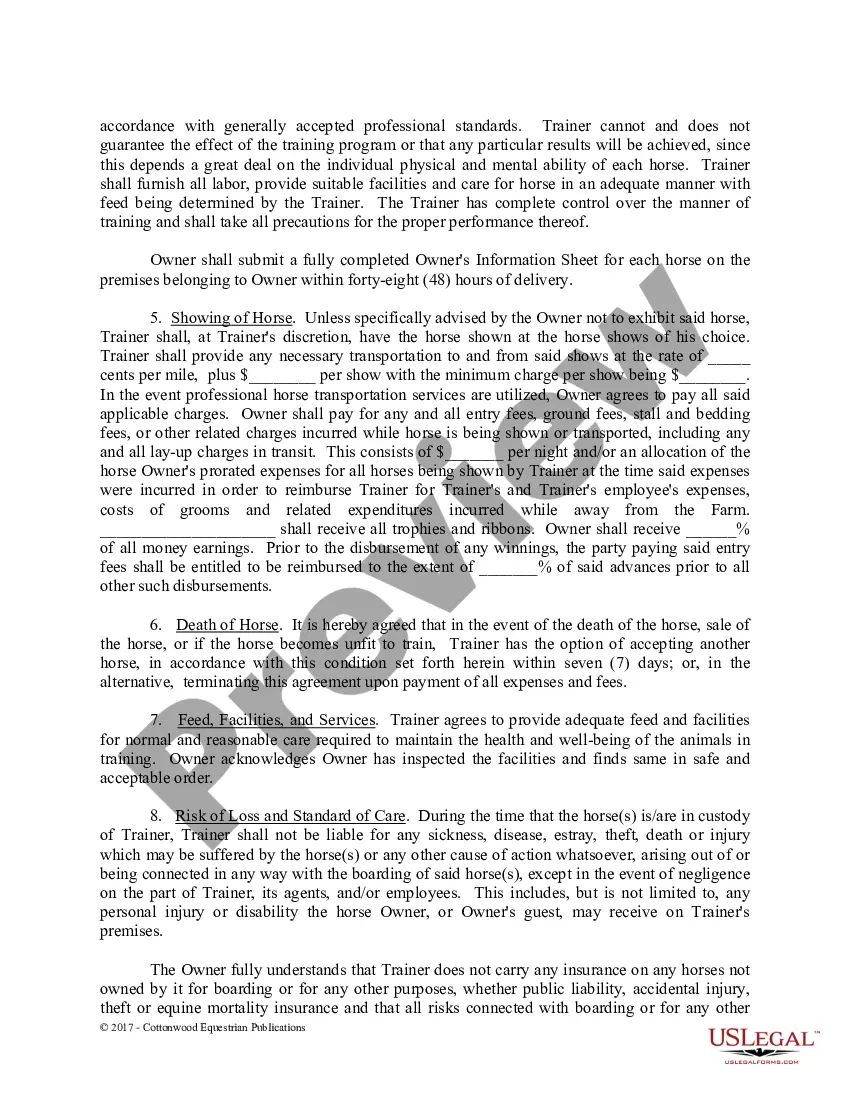
- Training Standards: Describes the trainer's commitment to generally accepted practices while clarifying that training results cannot be guaranteed.
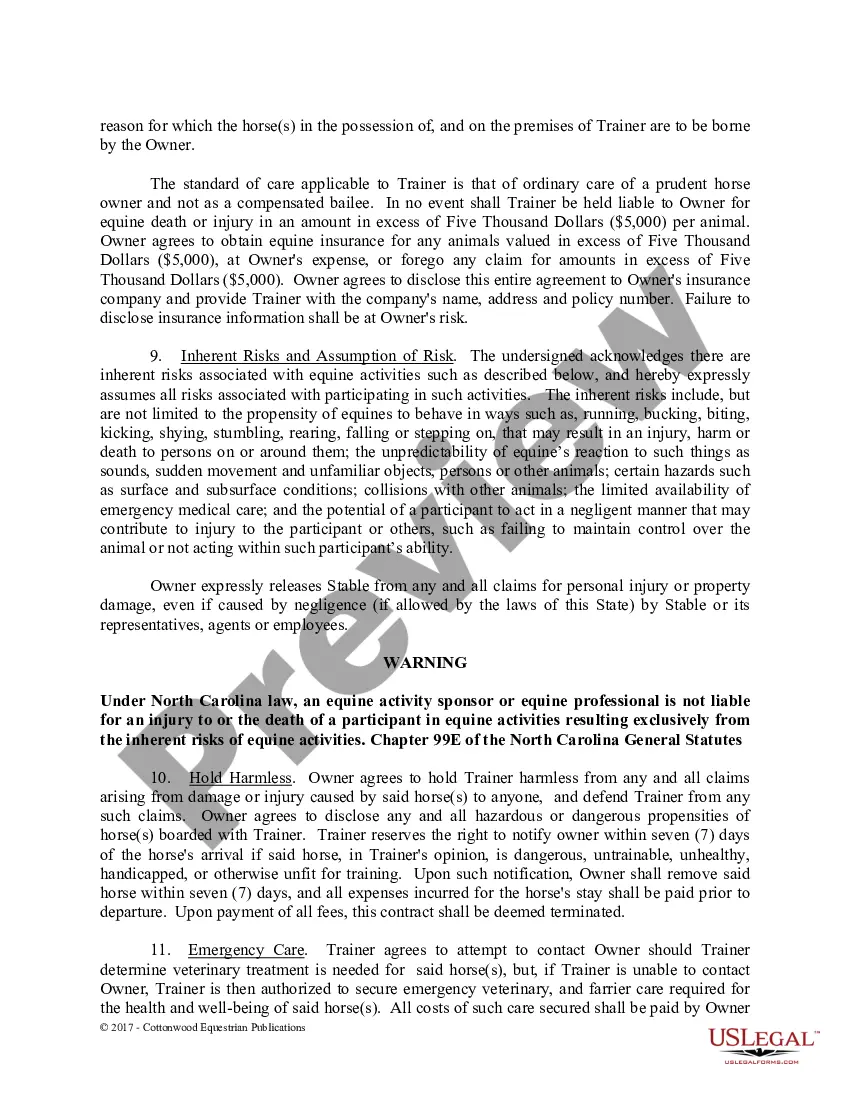
- Liability and Risk Assumption: States the risks involved with horse training and limits the trainer's liability during the contract period.
- Emergency Care Authorization: Gives the trainer authority to seek emergency veterinary care if the owner is unreachable.

Situations where this form applies
This Training Contract should be used when a horse owner plans to engage a professional trainer for specific training needs. It is applicable in circumstances where care, boarding, and training services are offered, particularly when veterinary care is necessary for the horseâs well-being and training outcome. This form establishes the terms of service and protects the interests of both the trainer and the owner.
Intended users of this form
- Horse trainers offering professional training services and care.
- Horse owners looking to obtain training services for their horse.
- Parents or guardians signing on behalf of a minor horse owner.
Completing this form step by step
- Identify the parties involved: enter the names of the trainer and owner, including any parental or guardian information if applicable.
- Specify the horseâs details: indicate the horseâs name and registration number.
- Outline the training agreement: detail the training purpose, fees, and payment schedule.
- Provide veterinary instructions: ensure the horseâs medical history is shared, and any special treatment requests are documented.
- Sign and date the agreement: all parties must provide their signatures and the date to validate the contract.
Is notarization required?
This form does not typically require notarization unless specified by local law. However, it is advisable to check with your stateâs regulations to ensure compliance.
Get your form ready online
Our built-in tools help you complete, sign, share, and store your documents in one place.
Make edits, fill in missing information, and update formatting in US Legal Forms—just like you would in MS Word.
Download a copy, print it, send it by email, or mail it via USPS—whatever works best for your next step.
Sign and collect signatures with our SignNow integration. Send to multiple recipients, set reminders, and more. Go Premium to unlock E-Sign.
If this form requires notarization, complete it online through a secure video call—no need to meet a notary in person or wait for an appointment.
We protect your documents and personal data by following strict security and privacy standards.

Make edits, fill in missing information, and update formatting in US Legal Forms—just like you would in MS Word.

Download a copy, print it, send it by email, or mail it via USPS—whatever works best for your next step.

Sign and collect signatures with our SignNow integration. Send to multiple recipients, set reminders, and more. Go Premium to unlock E-Sign.

If this form requires notarization, complete it online through a secure video call—no need to meet a notary in person or wait for an appointment.

We protect your documents and personal data by following strict security and privacy standards.
Common mistakes
- Failing to provide the horse's complete health records, which can lead to misunderstandings about care needs.
- Not agreeing on the specific training goals, which can cause expectations to diverge.
- Overlooking the security deposit requirements, which can result in payment disputes later.
- Neglecting to clarify emergency contact protocols, which can lead to delays in care if needed.
Advantages of online completion
- Convenience of instant access and the ability to download from anywhere.
- Editability to customize the terms according to individual training agreements.
- Secure storage of an official contract, ensuring peace of mind regarding legal documents.
Legal use & context
- This form is legally binding, provided it is properly completed and signed.
- Clarifies the terms of care and training to avoid disputes between the trainer and the owner.
- Incorporates necessary disclaimers to protect the trainer from liability under certain circumstances.
Main things to remember
- This Training Contract provides a clear framework for horse training agreements between trainers and owners.
- It outlines crucial aspects such as fees, veterinary responsibilities, and the liability limitations of the trainer.
- Always ensure that both parties fully understand their obligations under the agreement to avoid future disputes.
Looking for another form?



Form popularity
FAQ
As a stable owner, you should insist that the horse owners provide proof that their horses are insured for liability, but the horse owner's policy will not extend to the stable owner's liabilities. When boarding horses on your property, you should have the proper equine liability insurance for your business.
Self-care board is also known as rough board and it is basically DIY horse boarding. You are responsible for all your horses care, scheduling and finding horse professionals, getting everything your horse needs. This kind of boarding is often best for more experienced horse owners that have owned horses before.
A horse is assigned a stall and you're given access to trails, a pasture or arena. The cost of boarding averages $400 to $500 per month but can go as high as $1,200 to $2,500 in metropolitan areas. Services such as mucking out stalls, feeding and turning out your horse to pasture may not be included in the price.
Full board will include all the necessities for the horse, plus a stall with full turn out to pasture. Full board does not require owners to visit their horses every day; instead, staff at the barn clean the stall, feed the horse, and bring him in/out of the pasture.
Equine/Stable Liability will be required; Care, Custody, Control to provide coverage for the non-owned boarded horses; General Liability and Property insurance.
If you have the space and facility to keep your equines at home, it's more cost effective and offers a number of advantages that boarding does not.Keeping a horse on full board offers owners virtually hassle-free maintenance. Full board includes, at the very least, feeding, stall cleaning and turnout.
Boarders may want to take out equine liability insurance in case of accidents, such as a horse getting loose and getting hit by a car, or otherwise injuring someone. The average price for $500,000 worth of coverage is $250 annually, and covers up to four horses.
Numbers Game. The reality is that boarding facilities operate on slim profit margins. By the time costs are considered for hay, grain, bedding, labor for feeding, cleaning stalls, doing turnout, etc., the board fees typically do not leave a lot left over, Sherrick-von Schiller said.
Adding boarding services could be a great solution if you lay the groundwork carefully. But boarding horses is a business, whether you have one boarder or 10. And as with any business, there are organizational, legal, and contractual issues that you need to resolve before you throw your doors open.