North Carolina Warranty Deed - Seven Individuals to a Trust
What this document covers
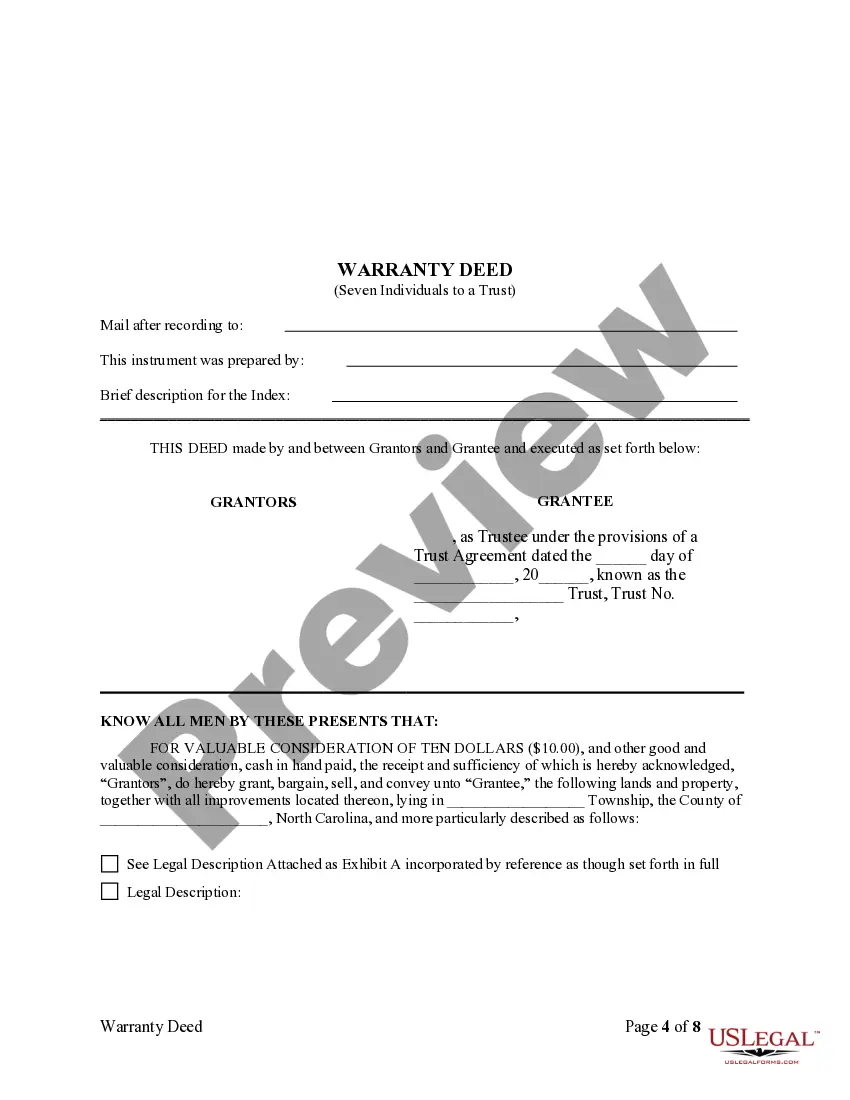
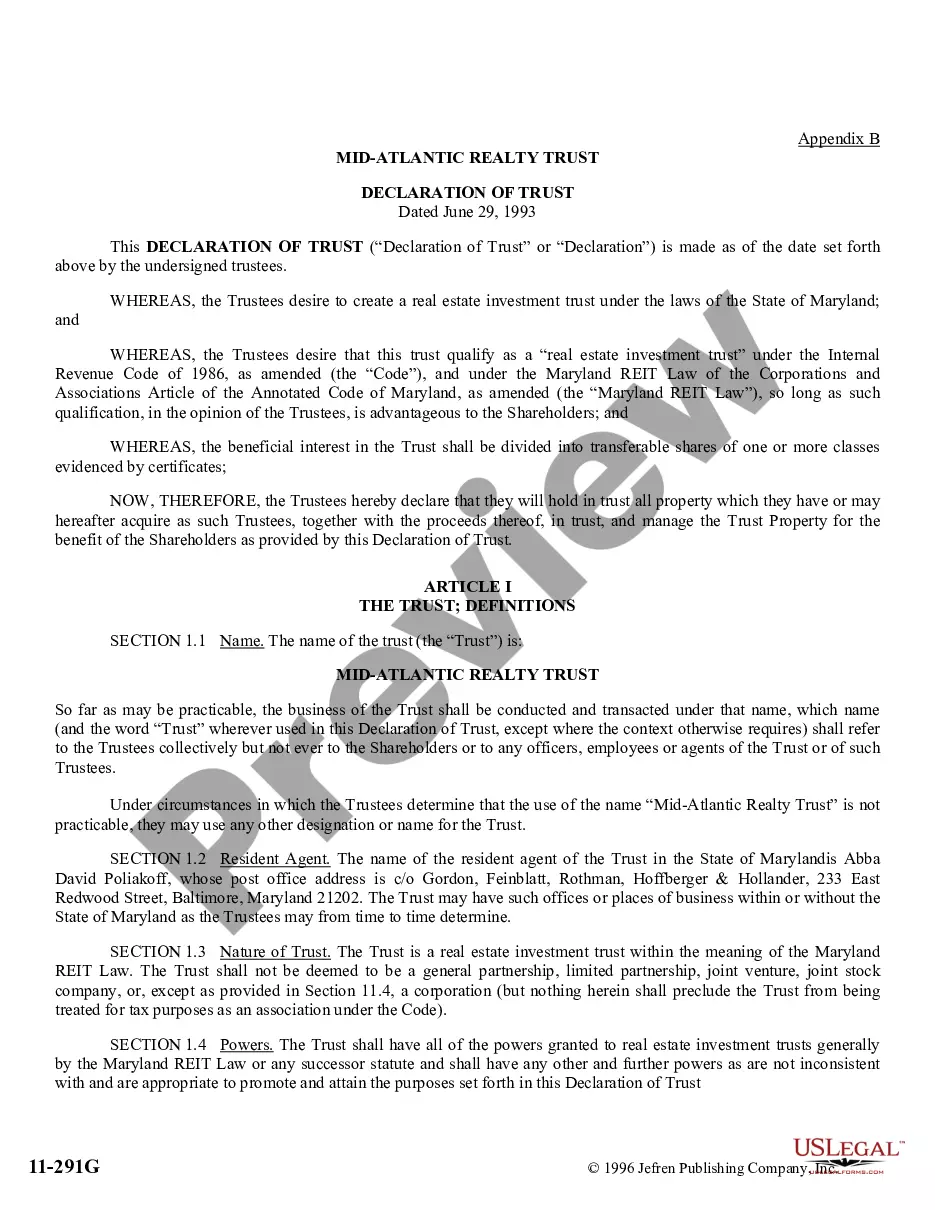
The Warranty Deed - Seven Individuals to a Trust is a legal document used when seven individuals (grantors) transfer property ownership to a trust (grantee). This form ensures that the property is conveyed with full warranty, meaning the grantors guarantee title against any claims. Unlike other deeds, this warranty deed specifically involves multiple grantors and is directed to a trust, emphasizing the collaborative nature of ownership transfer.
Form components explained
- Identifying information for both grantors and the trust
- A legal description of the property being transferred
- Statement of consideration, acknowledging value exchanged
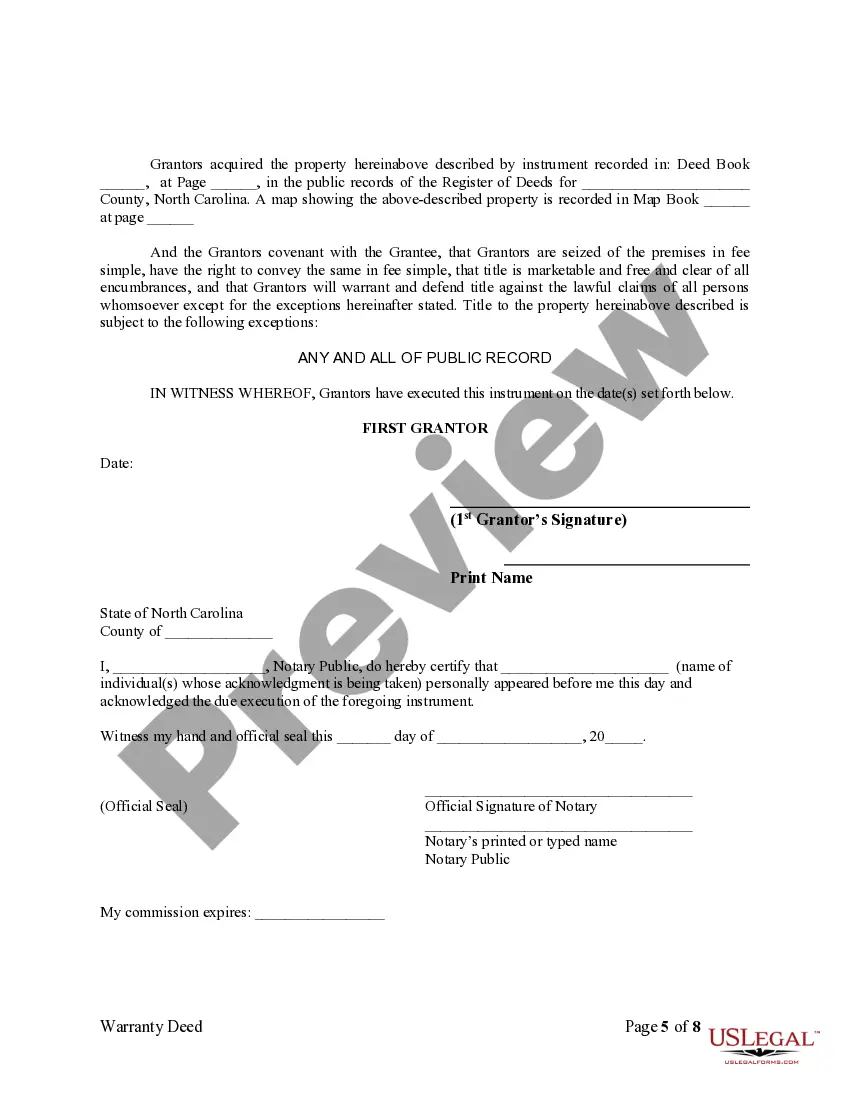
- Warranties and guarantees related to property title
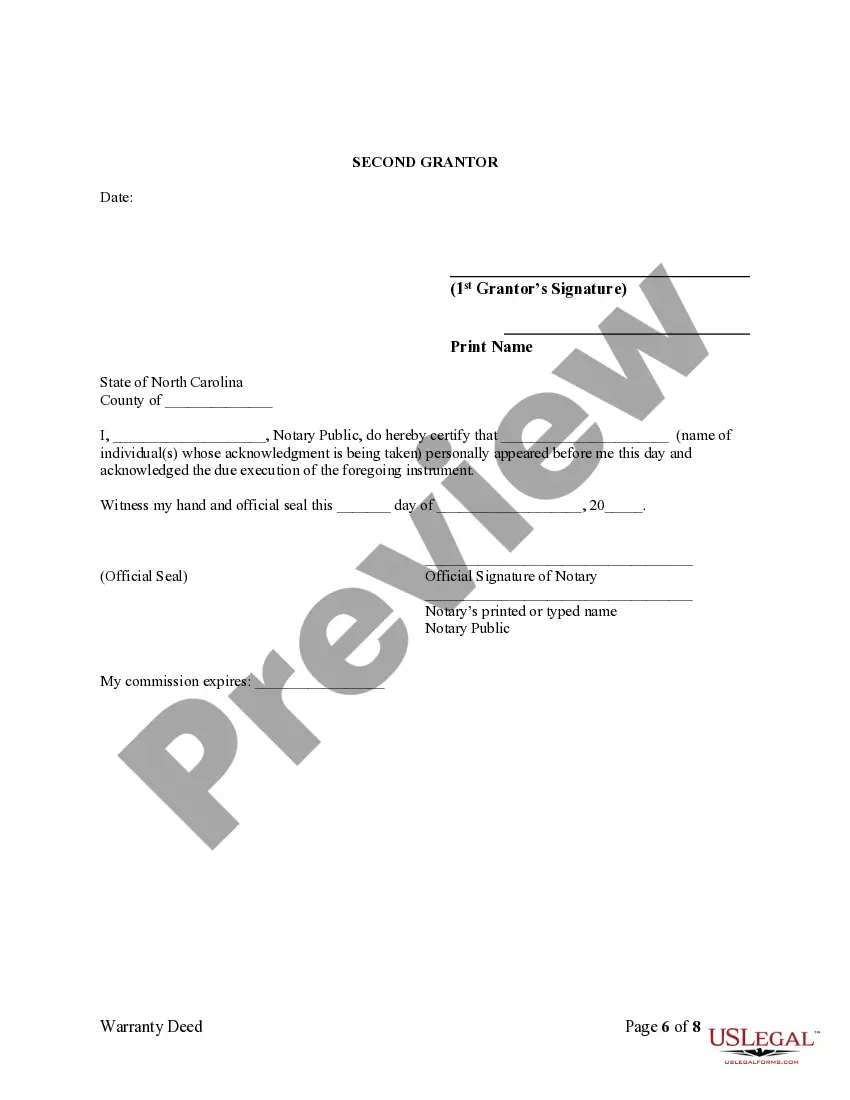
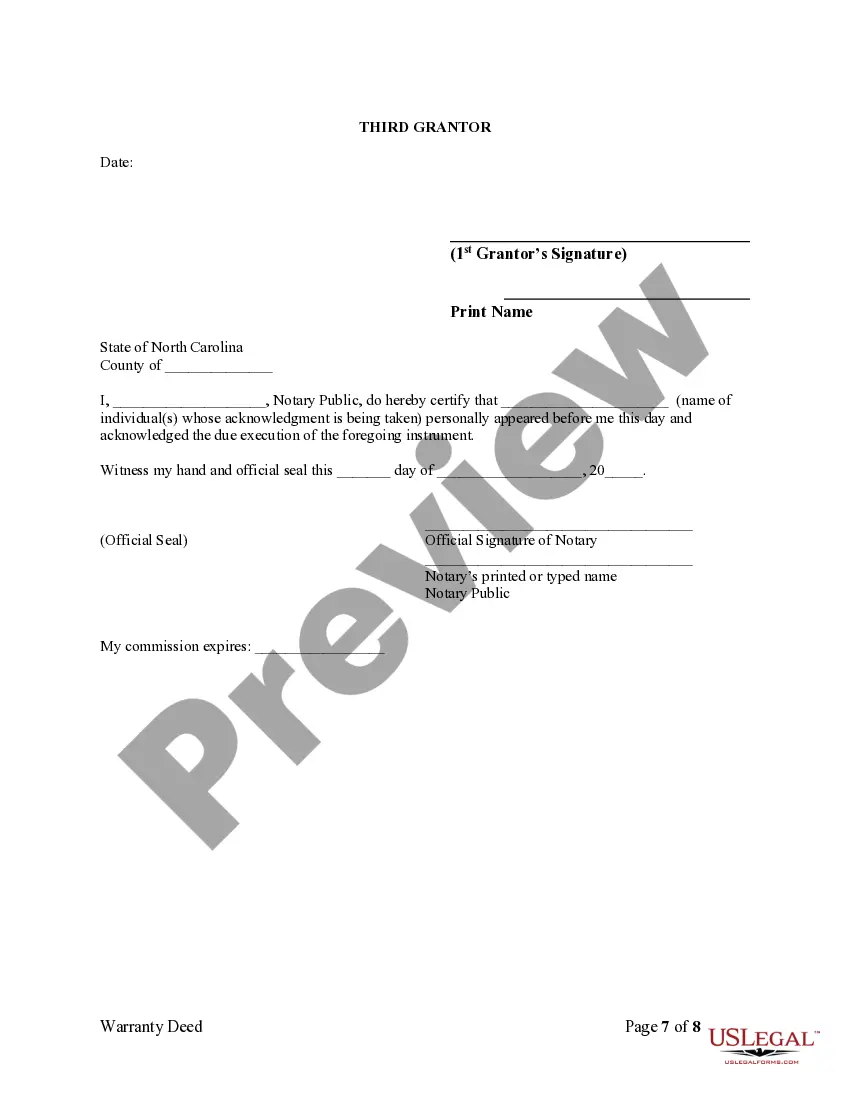
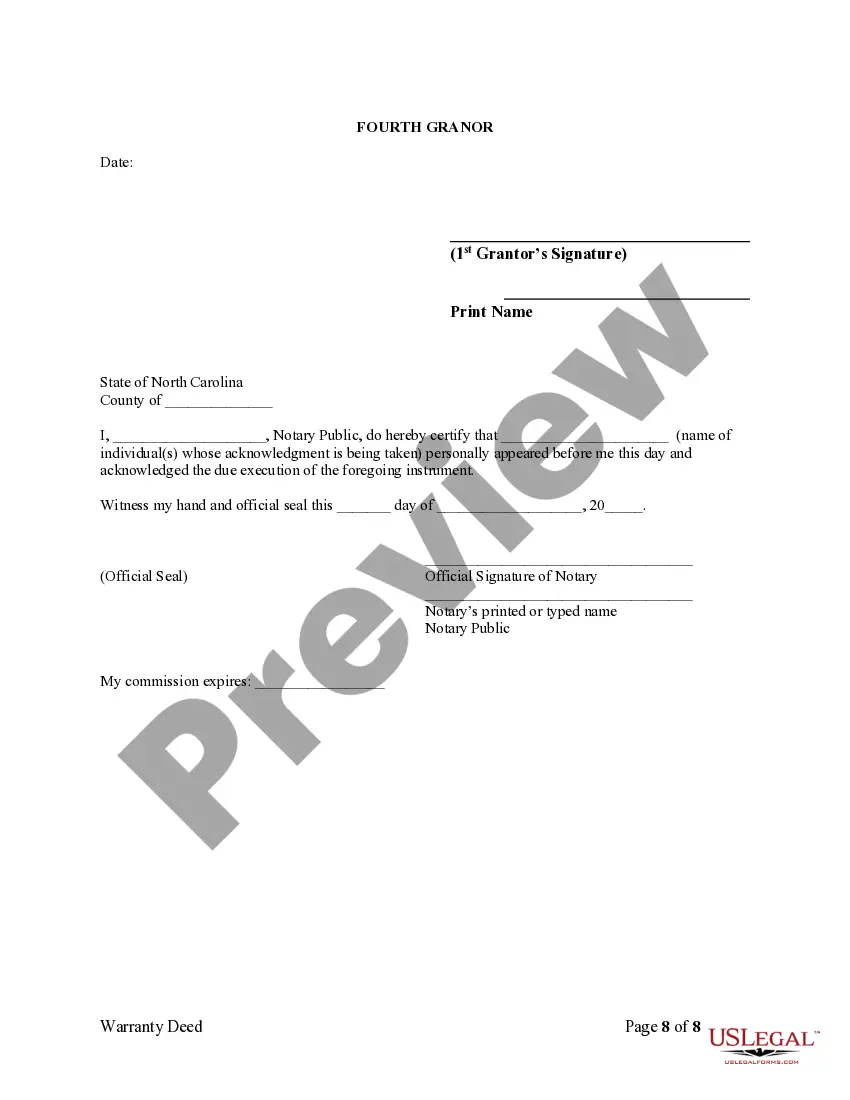
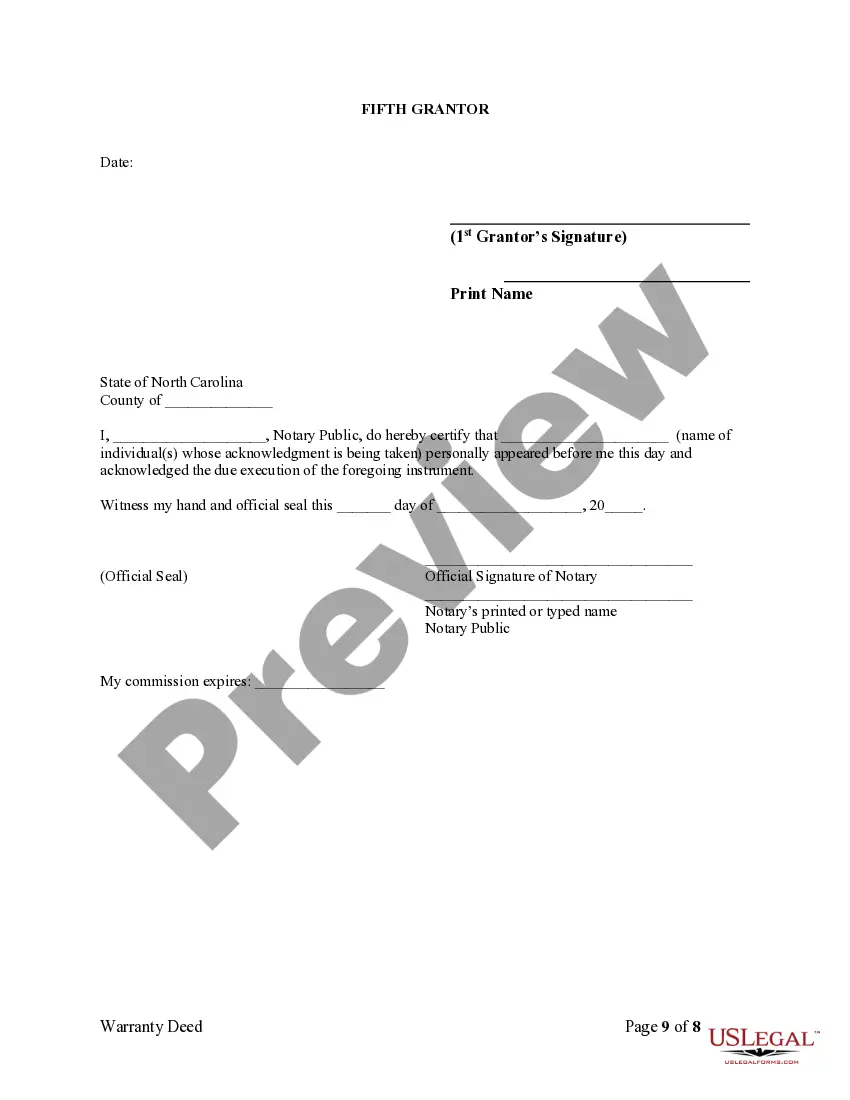
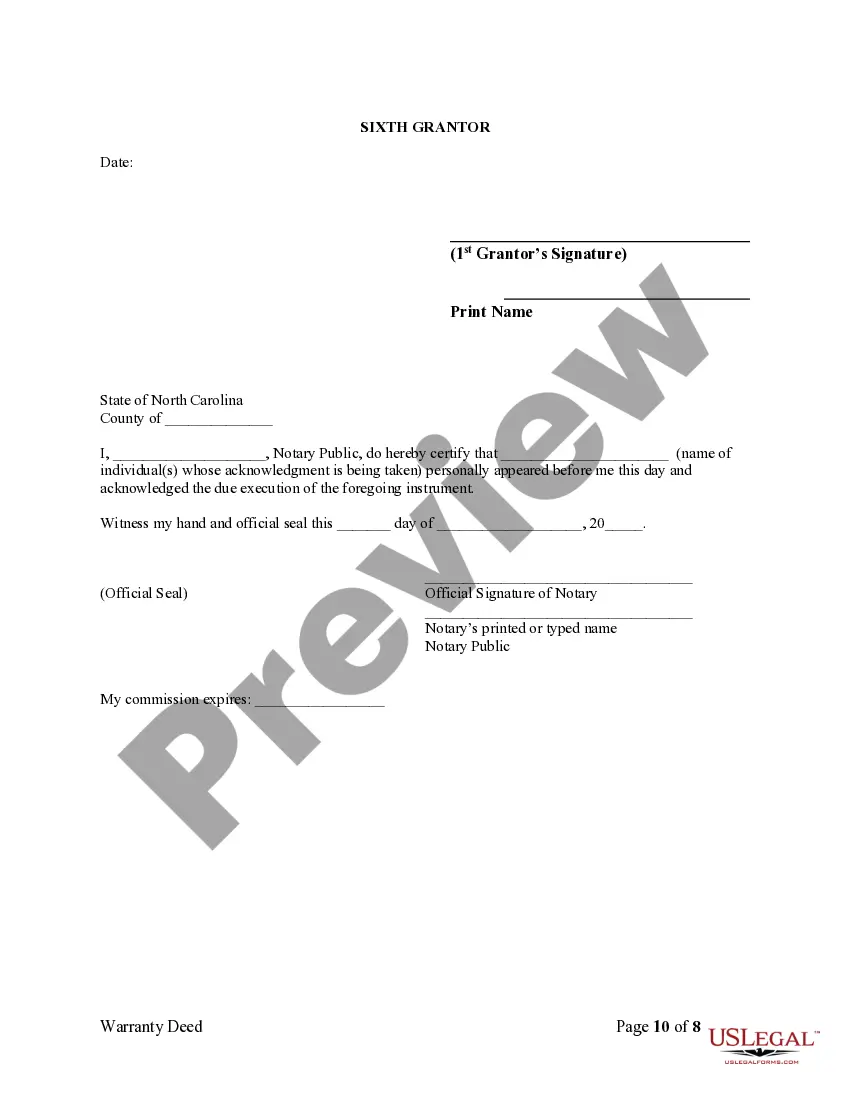
- Signatures of the grantors and any necessary witnesses




When this form is needed
This form is typically used when seven individuals wish to collectively transfer their ownership of real estate to a trust. This can occur in various scenarios, such as estate planning, where property is better managed under a trust for tax benefits, privacy, or according to specific wishes of the property owners. It is also useful when intending to protect the property from probate processes.
Who should use this form
This form is suitable for:
- Seven individuals acting collectively as grantors
- The trustee or legal representative of the trust receiving the property
- Estate planners or individuals preparing for the transfer of property ownership
Instructions for completing this form
- Identify all seven grantors, ensuring correct legal names are used.
- Specify the trustâs name as the grantee and include any relevant trust details.
- Describe the property being conveyed in detail, including location and legal description.
- Indicate the consideration amount, typically a nominal value like ten dollars.
- Have all grantors sign the document and ensure it is witnessed if necessary.
Notarization guidance
This form does not typically require notarization unless specified by local law. However, it is advisable to check the specific recording requirements in your county to ensure the deed is legally recognized.
Get your form ready online
Our built-in tools help you complete, sign, share, and store your documents in one place.
Make edits, fill in missing information, and update formatting in US Legal Forms—just like you would in MS Word.
Download a copy, print it, send it by email, or mail it via USPS—whatever works best for your next step.
Sign and collect signatures with our SignNow integration. Send to multiple recipients, set reminders, and more. Go Premium to unlock E-Sign.
If this form requires notarization, complete it online through a secure video call—no need to meet a notary in person or wait for an appointment.
We protect your documents and personal data by following strict security and privacy standards.

Make edits, fill in missing information, and update formatting in US Legal Forms—just like you would in MS Word.

Download a copy, print it, send it by email, or mail it via USPS—whatever works best for your next step.

Sign and collect signatures with our SignNow integration. Send to multiple recipients, set reminders, and more. Go Premium to unlock E-Sign.

If this form requires notarization, complete it online through a secure video call—no need to meet a notary in person or wait for an appointment.

We protect your documents and personal data by following strict security and privacy standards.
Mistakes to watch out for
- Failing to include all grantorsâ names, which can invalidate the deed.
- Providing an incomplete or vague legal description of the property.
- Neglecting to sign the form where required by all grantors.
Benefits of using this form online
- Convenient access to legal forms from anywhere at any time.
- Editability allows for customization based on specific needs.
- Reliable templates ensure compliance with state laws.
Quick recap
- Use this warranty deed to transfer property from multiple individuals to a trust.
- Ensure all grantors are correctly identified and formally sign the document.
- Check for state-specific recording requirements to avoid delays.
- Understand the warranties offered as part of the transfer process.
Looking for another form?

Form popularity
FAQ
A trustee deed offers no such warranties about the title.
The name and address of the seller (called the grantor) The name and address of the buyer (called the grantee) A legal description of the property (found on the previous deed) A statement that the grantor is transferring the property to the grantee.
Adding someone to your house deed requires the filing of a legal form known as a quitclaim deed. When executed and notarized, the quitclaim deed legally overrides the current deed to your home. By filing the quitclaim deed, you can add someone to the title of your home, in effect transferring a share of ownership.
Under the Grantor section of the deed, write the name of the person transferring title. Under Grantee, write the name of the person receiving title. Describe the parcel of land. Use the street address and include the North Carolina County where the land is located.
In the context of a California mortgage transaction, a trust deed also transfer ownership. Only this time, the title is being placed in the hands of a third-party trustee, who holds the property on behalf of the lender and the homeowner-borrower until the mortgage is paid.
In the case of Deed of Trust, the lender can by pass the judicial process and utilize the power of sale to sell the property if the borrower defaults.The following states use Deed of Trusts: Alaska, Arizona, California, District of Columbia, Georgia, Mississippi, Missouri, Nevada, North Carolina, and Virginia.
As you stated in your question, it is recorded among the land records, and your lender keeps the original. When you pay off the loan, the lender will return the deed of trust with the promissory note. This document is rather lengthy and quite legalistic.
A deed of trust acts as an agreement between youthe homebuyerand your lender. It states not just that you'll repay the loan, but that a third party called the trustee will hold legal title to the property until you do. A deed of trust is the security for your loan, and it's recorded in the public records.
Yes, there are key differences between the two. With a deed, you transfer the ownership of the property to one party. In contrast, a deed of trust does not mean the holder owns the property. In an arrangement involving a deed of trust, the borrower signs a contract with the lender with details regarding the loan.