Montana Last Will and Testament for Married Person with Adult and Minor Children
Understanding this form
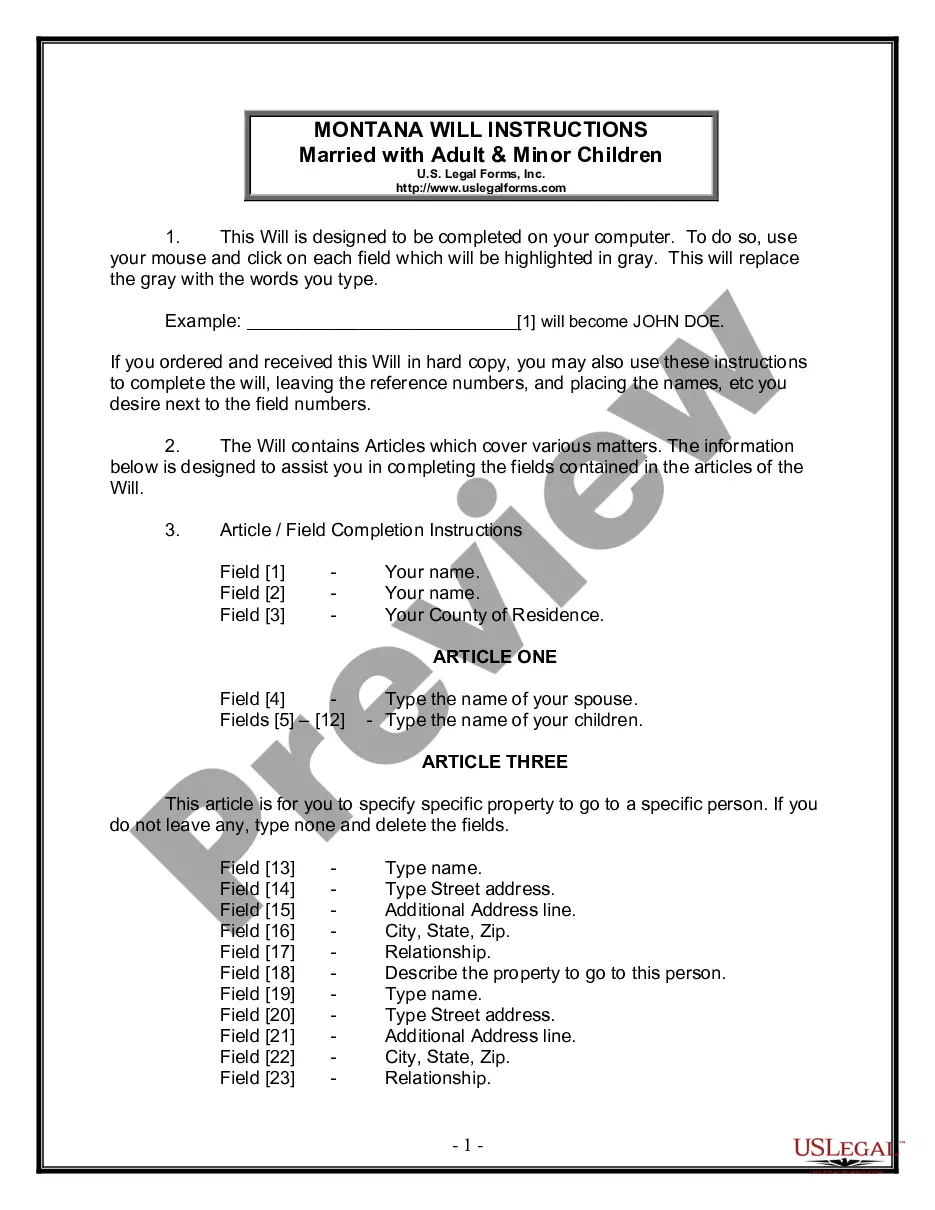
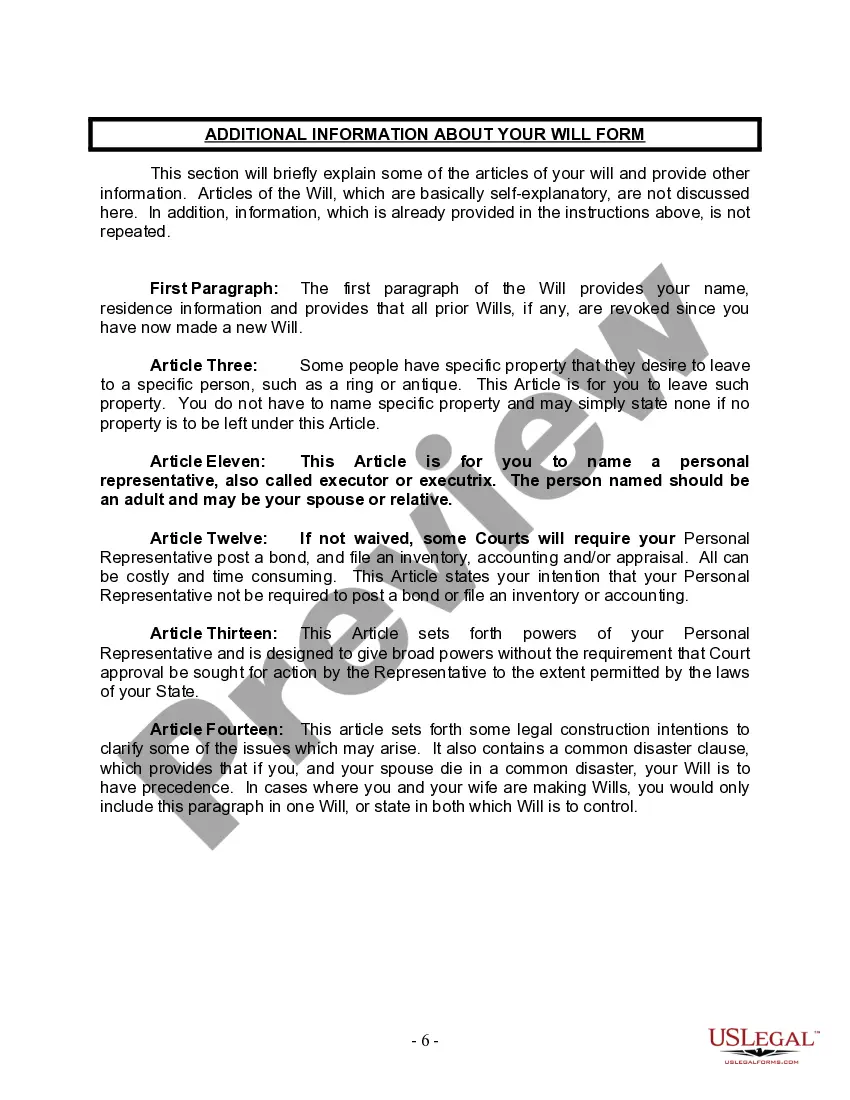
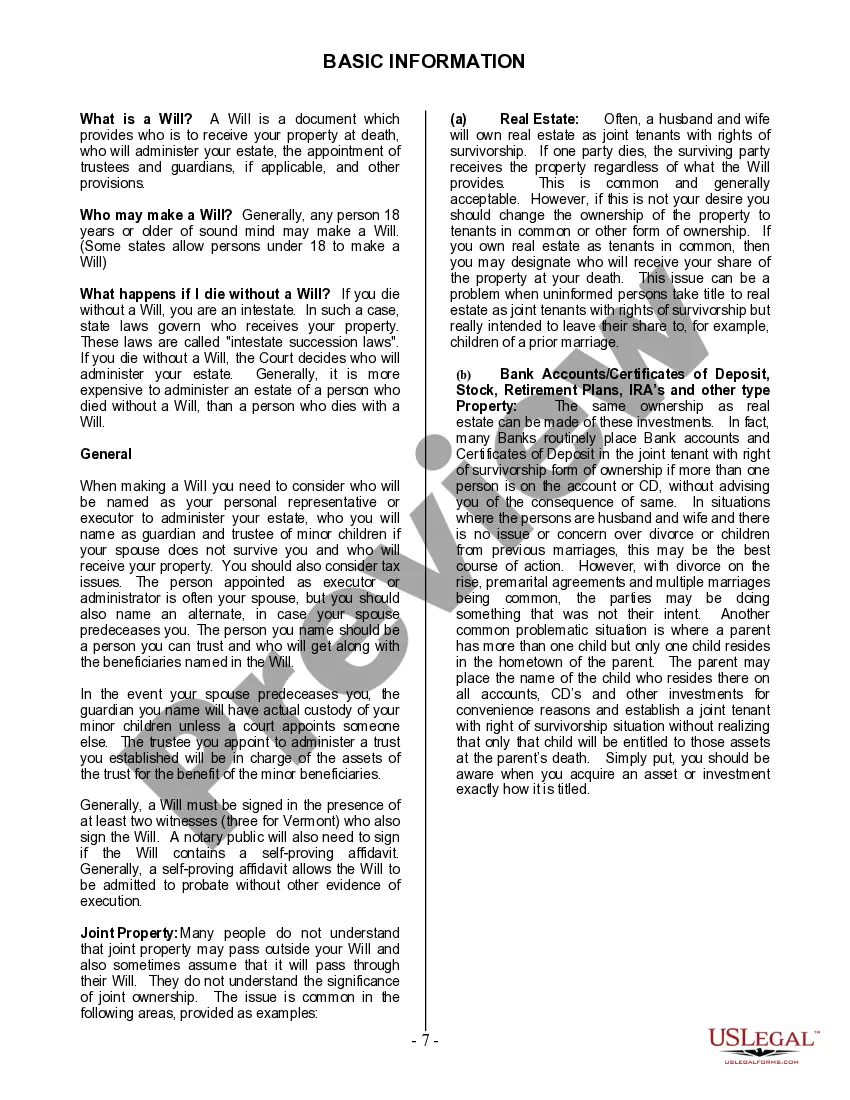
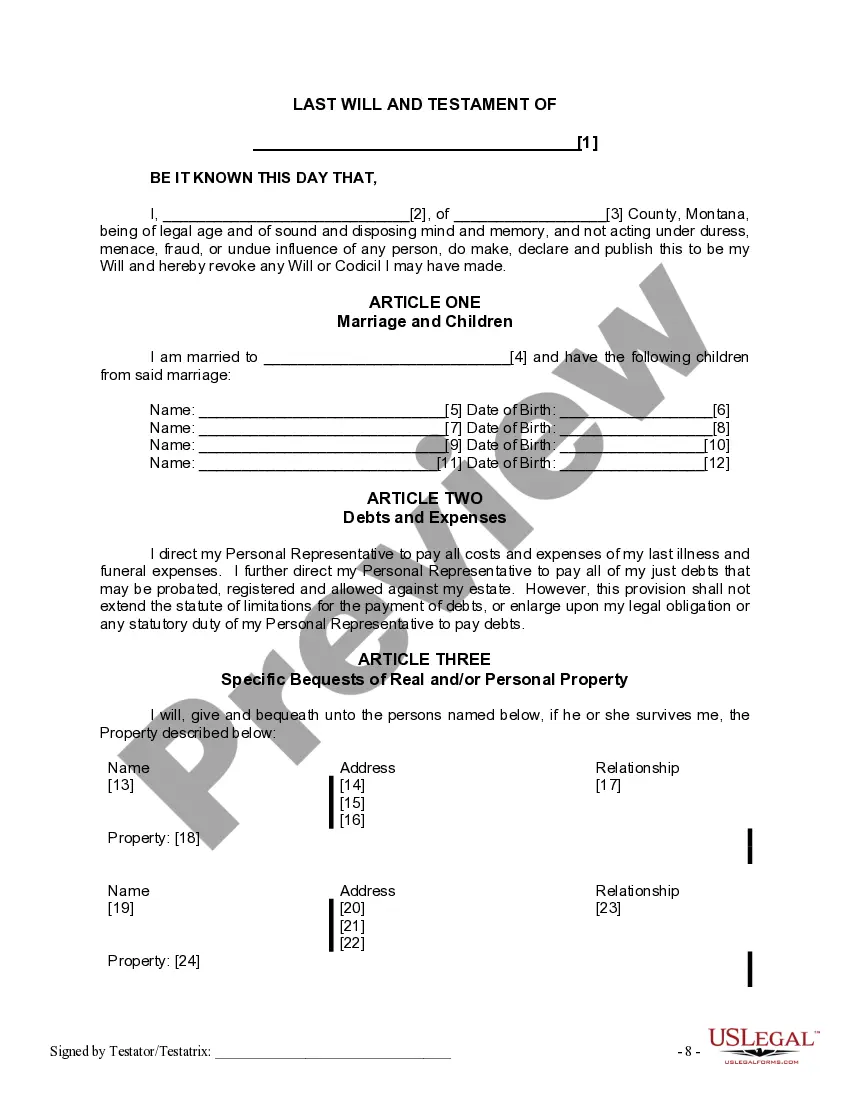
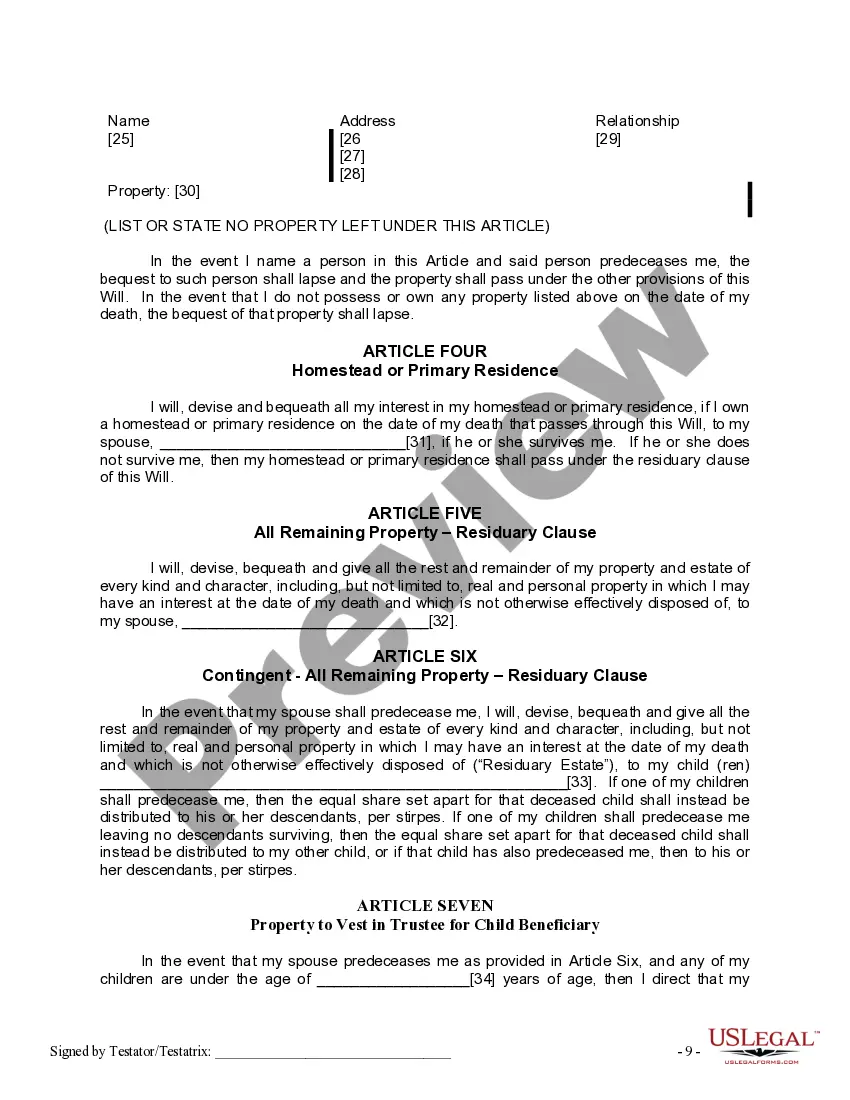
This Last Will and Testament is specifically designed for a married person with both adult and minor children. The form facilitates the distribution of your estate, allowing you to express your wishes regarding property distribution, appointment of a personal representative, and guardianship of minor children. Unlike general wills, this version includes sections tailored for unique family structures, ensuring that your loved ones are protected and provided for according to your intentions.
Key components of this form
- Personal information: Includes your name, county of residence, and names of your spouse and children.
- Specific bequests: Designate specific items or property for certain individuals.
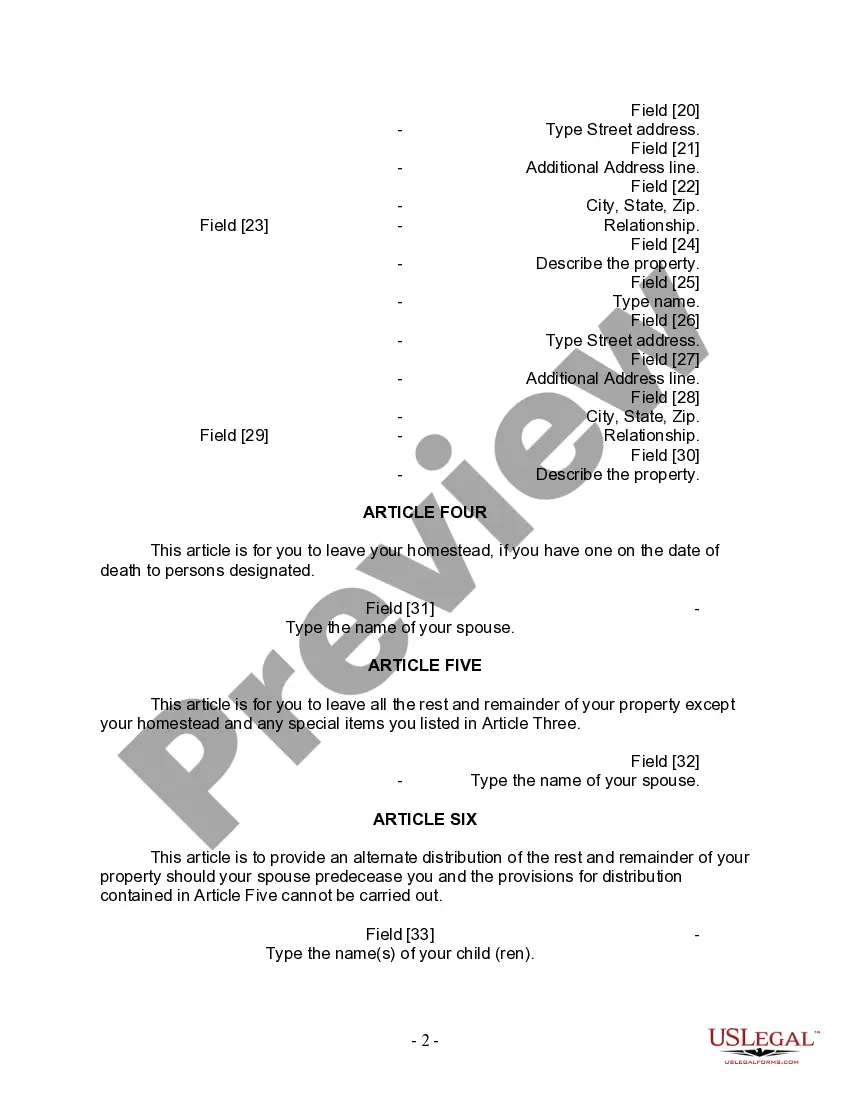
- Homestead clause: Provides instructions on how your primary residence should be handled.
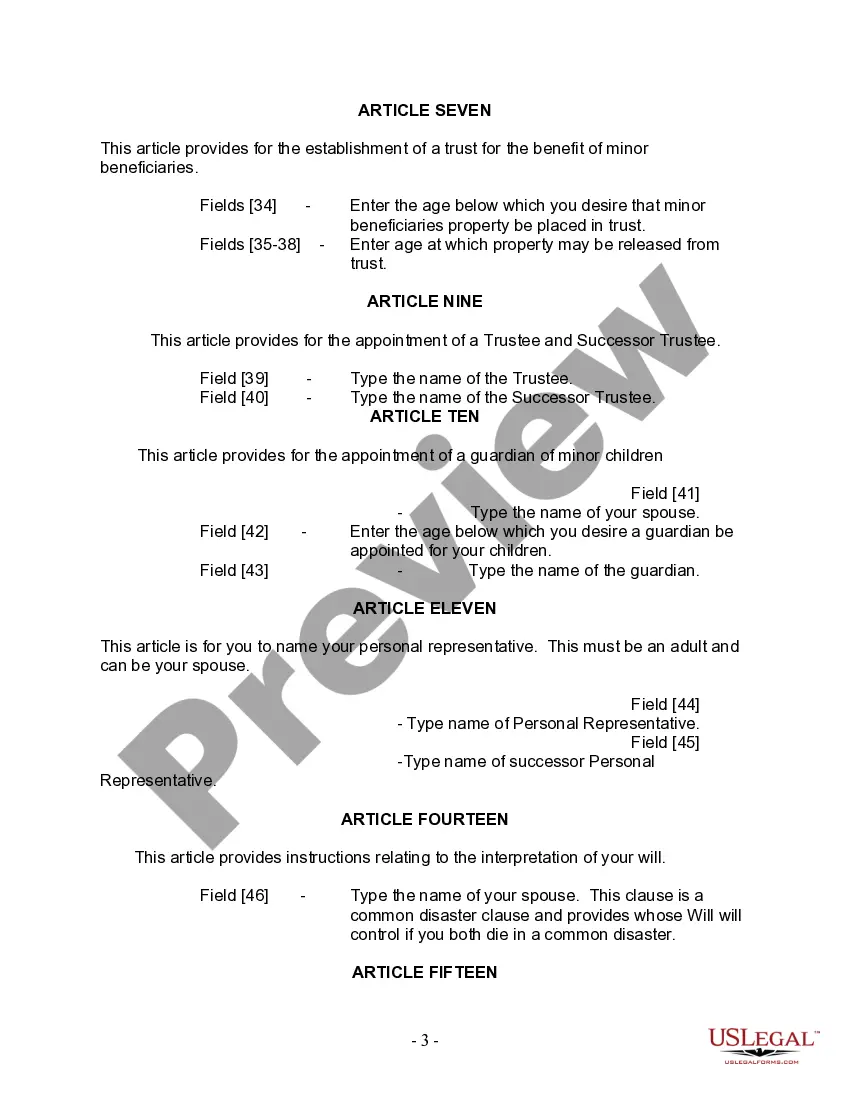
- Trust establishment: Details about setting up a trust for minor beneficiaries.
- Guardian appointment: Identifies a guardian for minor children in case both parents pass away.
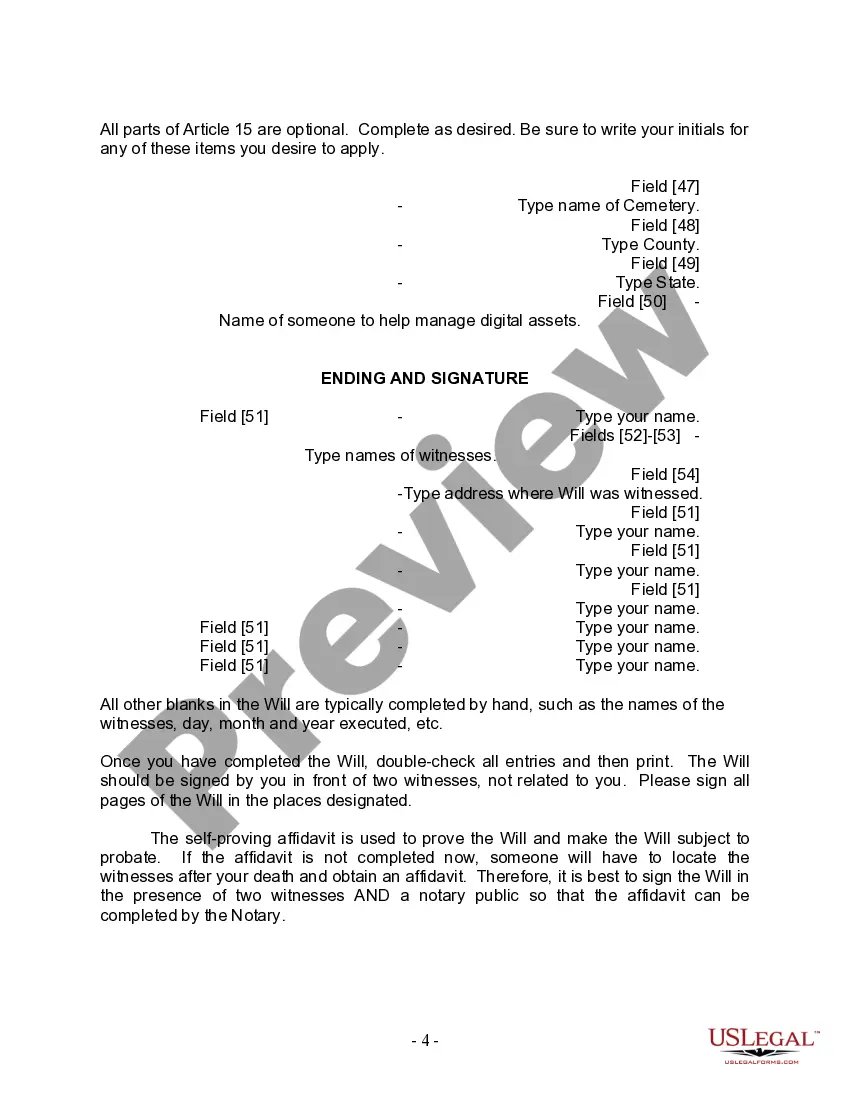
- Signature requirements: Instructions for signing in front of witnesses and, if applicable, a notary public.





When to use this document
You should use this Last Will and Testament when you want to clearly outline your wishes for your estate after your death. This form is particularly important if you have both adult and minor children, as it addresses the appointment of guardians and the establishment of trusts for your minor children. It is advisable to use this form when significant life changes occur, such as marriage or the birth of children, or whenever you wish to update or clarify your estate planning decisions.
Who this form is for
- Married individuals who have children, both adult and minor.
- Those looking to specify the distribution of property among family members.
- Parents wanting to designate guardianship for minor children.
- Individuals wishing to create a trust for the benefit of minor children.
How to complete this form
- Identify all parties involved: Enter your name, county of residence, spouseâs name, and names of children.
- Specify any specific property bequests: If you have items you want to leave to specific individuals, fill in the details for these bequests.
- Designate guardianship: Clearly name the guardian for your minor children in the appropriate section of the document.
- Complete the trust provisions: If applicable, enter the relevant details to create a trust for your minor childrenâs inheritance.
- Finalize signatures: Sign the document in front of two unrelated witnesses and, if required, a notary public.
Is notarization required?
Yes, this form must be notarized to be legally valid if it includes a Self-Proving Affidavit. US Legal Forms offers integrated online notarization for your convenience, allowing for secure video calls and ensuring compliance without the need for travel.
Get your form ready online
Our built-in tools help you complete, sign, share, and store your documents in one place.
Make edits, fill in missing information, and update formatting in US Legal Forms—just like you would in MS Word.
Download a copy, print it, send it by email, or mail it via USPS—whatever works best for your next step.
Sign and collect signatures with our SignNow integration. Send to multiple recipients, set reminders, and more. Go Premium to unlock E-Sign.
If this form requires notarization, complete it online through a secure video call—no need to meet a notary in person or wait for an appointment.
We protect your documents and personal data by following strict security and privacy standards.

Make edits, fill in missing information, and update formatting in US Legal Forms—just like you would in MS Word.

Download a copy, print it, send it by email, or mail it via USPS—whatever works best for your next step.

Sign and collect signatures with our SignNow integration. Send to multiple recipients, set reminders, and more. Go Premium to unlock E-Sign.

If this form requires notarization, complete it online through a secure video call—no need to meet a notary in person or wait for an appointment.

We protect your documents and personal data by following strict security and privacy standards.
Common mistakes
- Not signing in front of two eligible witnesses, leading to potential invalidation in probate.
- Failing to specify guardianship, leaving the custody of minor children unclear.
- Omitting the Self-Proving Affidavit if required, which can complicate the probate process.
Why complete this form online
- Convenience: Complete the form from the comfort of your home at your own pace.
- Editability: Easily make changes to the form before finalizing it.
- Reliability: Use legally vetted forms prepared by licensed attorneys, ensuring compliance with current laws.
Looking for another form?
Form popularity
FAQ
The will of a decedent must be filed with the Clerk of Court so the personal representative may proceed with the administration of the estate. Montana has both formal (court-directed) and informal probate as well as a simplified probate process for small estates.
You can legally prepare your own will, it can even be handwritten. This type of will is known as a "holographic will." In Montana, your handwritten will must be signed by you. Your signature must also be located on any material provisions, and no witnesses will need to be present for the signing of your will.
In Montana, you can make a living trust to avoid probate for virtually any asset you ownreal estate, bank accounts, vehicles, and so on. You need to create a trust document (it's similar to a will), naming someone to take over as trustee after your death (called a successor trustee).
No, in Montana, you do not need to notarize your will to make it legal. However, Montana allows you to make your will "self-proving" and you'll need to go to a notary if you want to do that. A self-proving will speeds up probate because the court can accept the will without contacting the witnesses who signed it.
Yes, a person can make his or her own will, but it must be in the testator's own handwriting. This type of will is called a holographic will. Such a will is valid if the signature and the material provisions are in the handwriting of the testator.
Contrary to popular belief, you do not need to have an attorney draft a will for you. Anyone can write this document on their own, and as long as it meets all of the legal requirements of the state, courts will recognize one you wrote yourself.
Self-written wills are typically valid, even when handwritten, as long as they're properly witnessed and notarized, or proven in court. A handwritten will that is not witnessed or notarized is considered a holographic will. Not all states accept holographic wills .