Oregon Drainage Contract for Contractor
Overview of this form
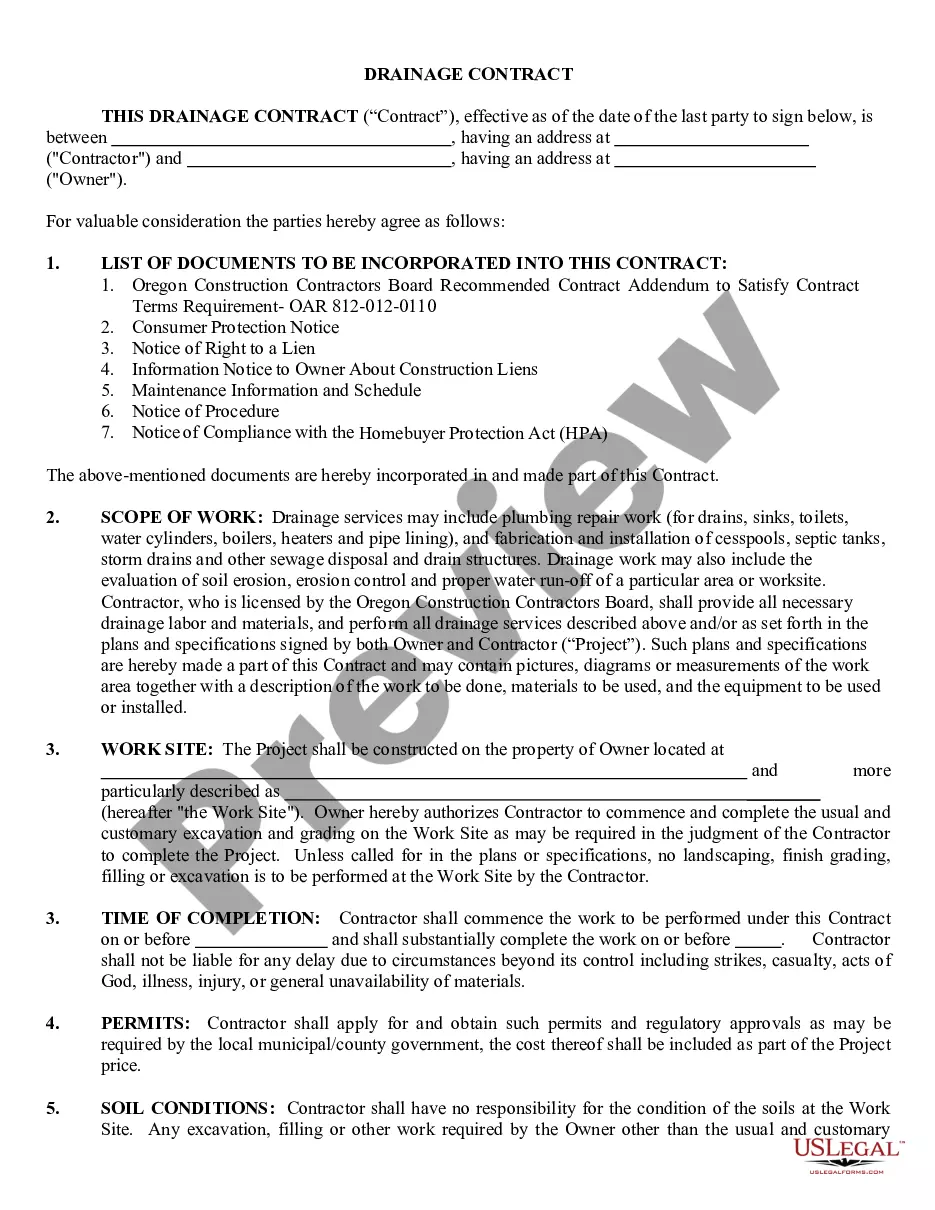
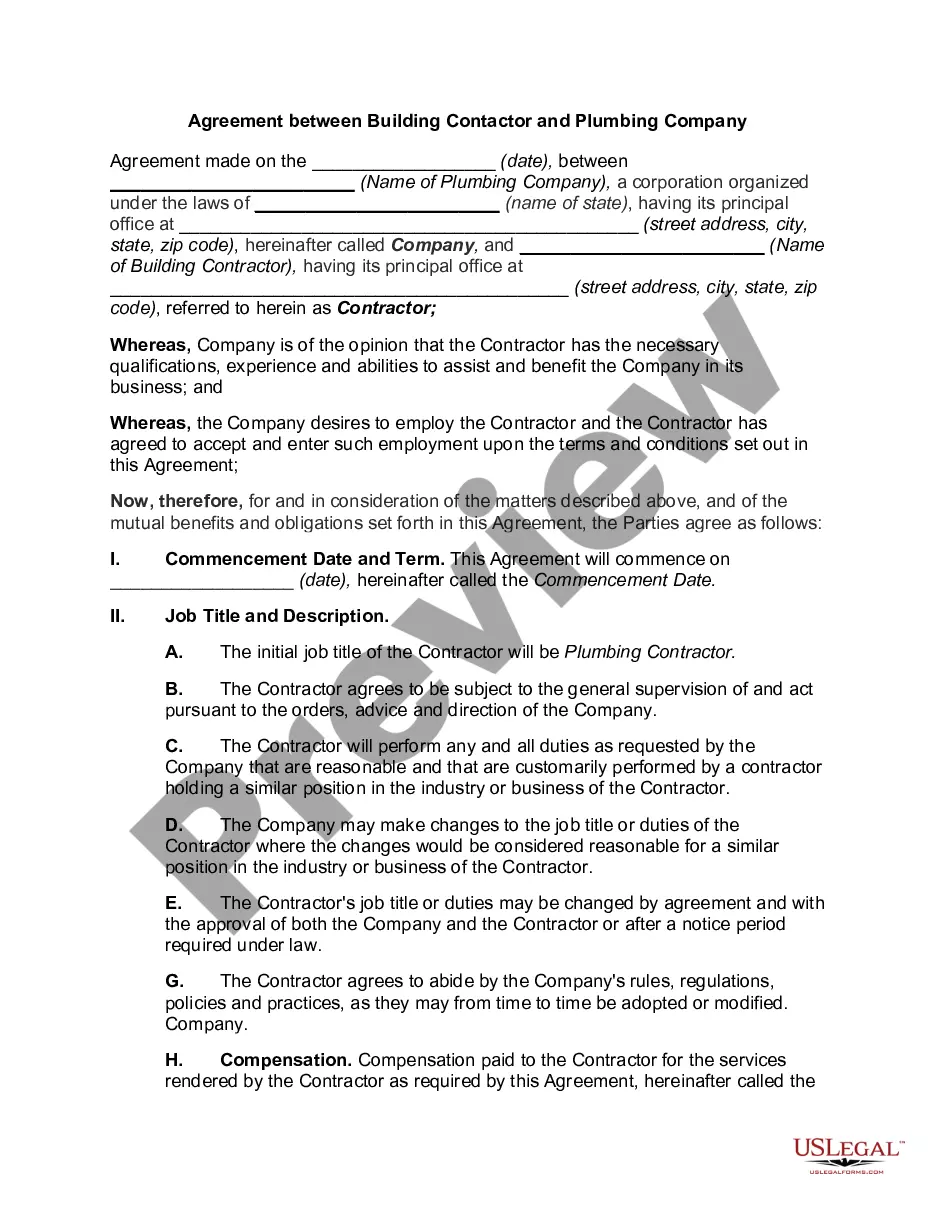
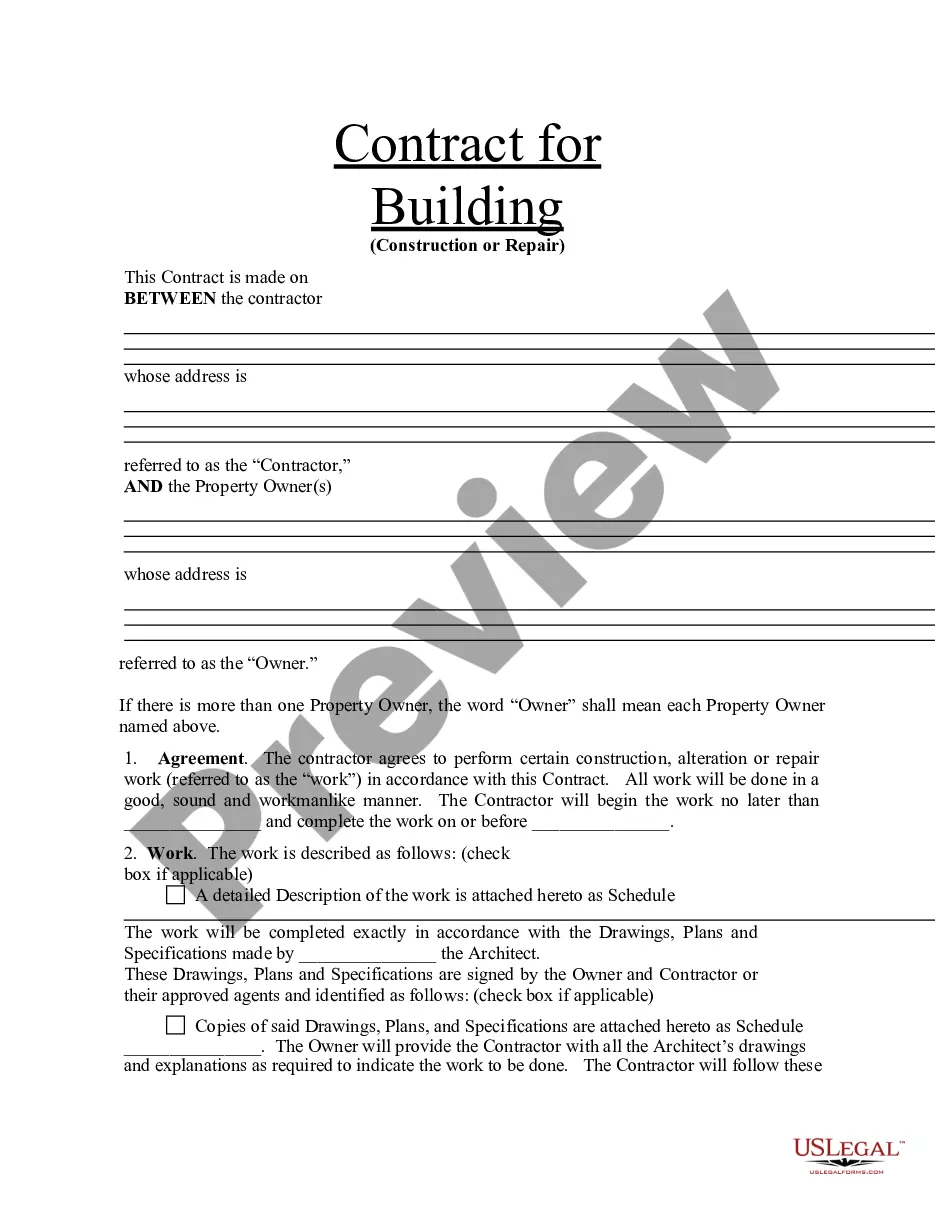
The Drainage Contract for Contractor is a legal document that formalizes the agreement between drainage contractors and property owners for drainage services. This contract can be executed with either a cost-plus or fixed fee payment arrangement and addresses key aspects such as scope of work, change orders, warranties, insurance, and more. It is specifically crafted to comply with Oregon state laws, making it a vital tool for ensuring both parties understand their obligations and rights in the drainage work process.
Key components of this form
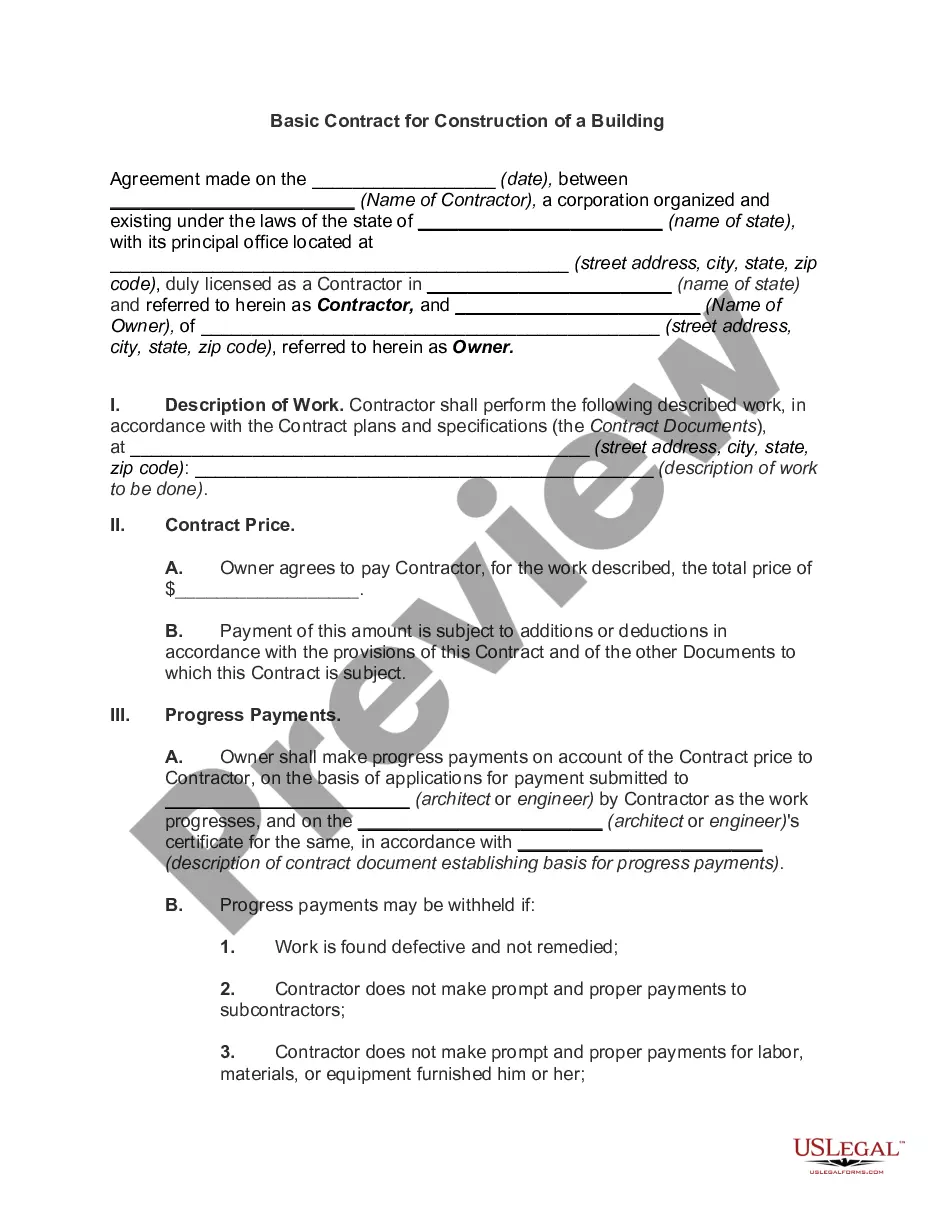
- Scope of Work: Definition of drainage services, including specifications for plumbing repair and installation.
- Permits: Requirement for the contractor to obtain necessary permits and regulatory approvals.
- Insurance: Contractor must maintain liability and workers' compensation insurance.
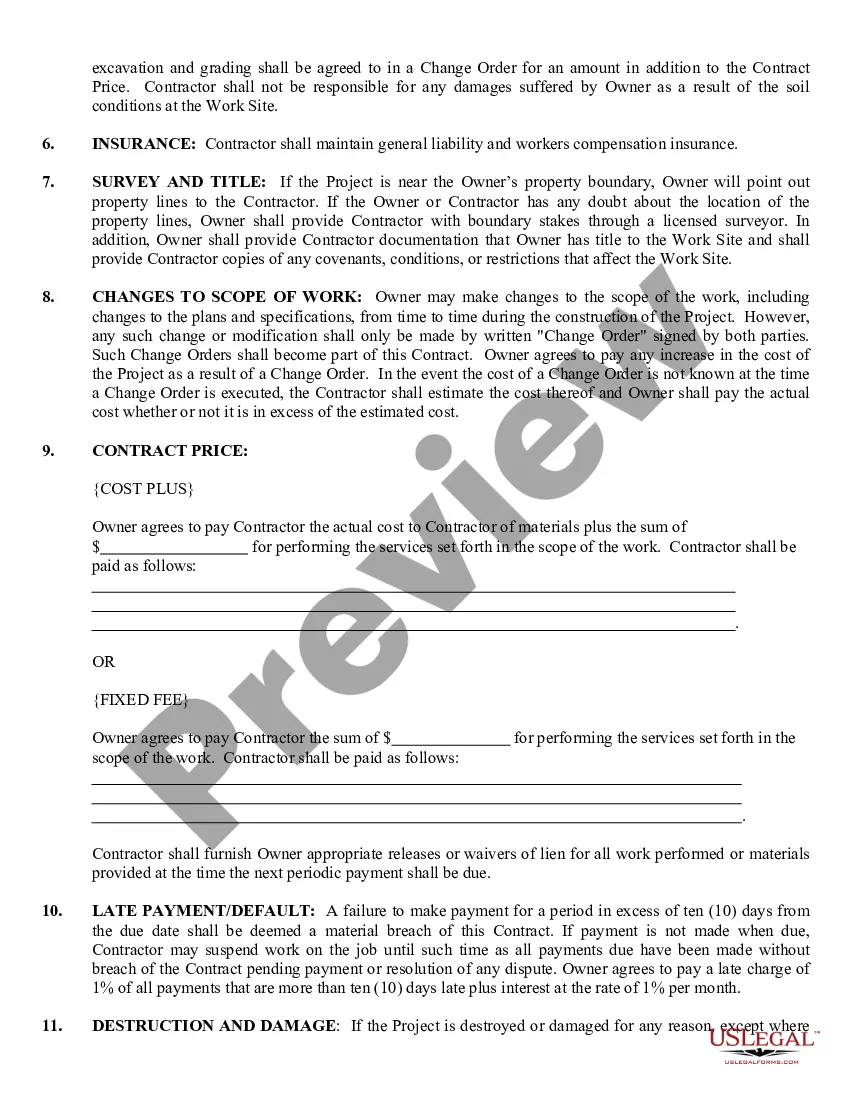
- Change Orders: Process for modifying the contract and any costs associated with changes.
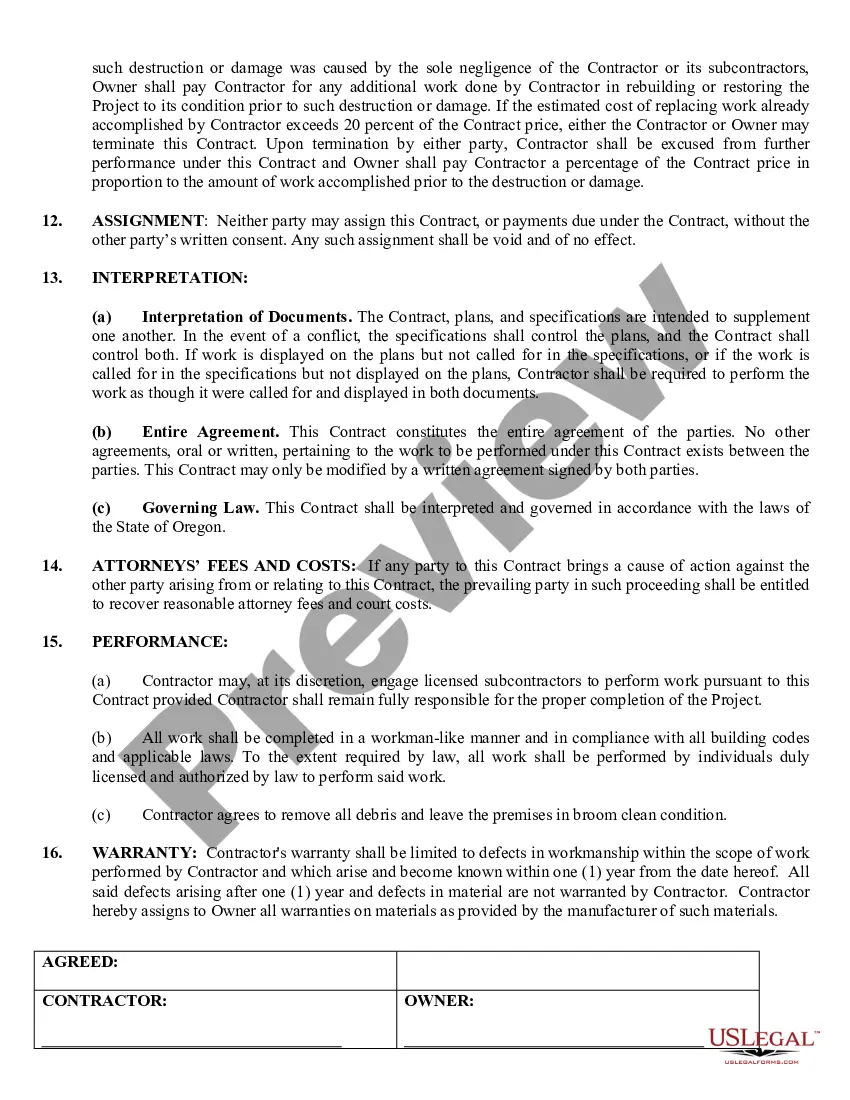
- Warranty: Limited warranty on workmanship and assignment of material warranties to the owner.
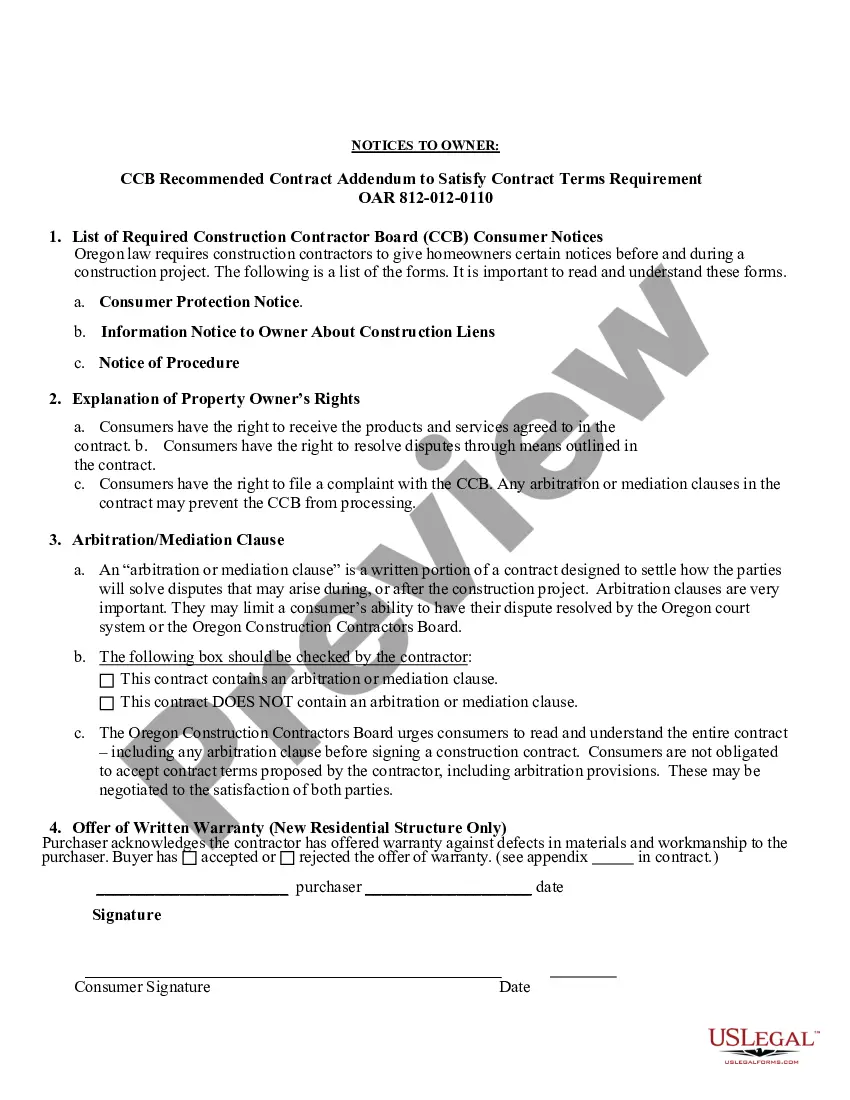
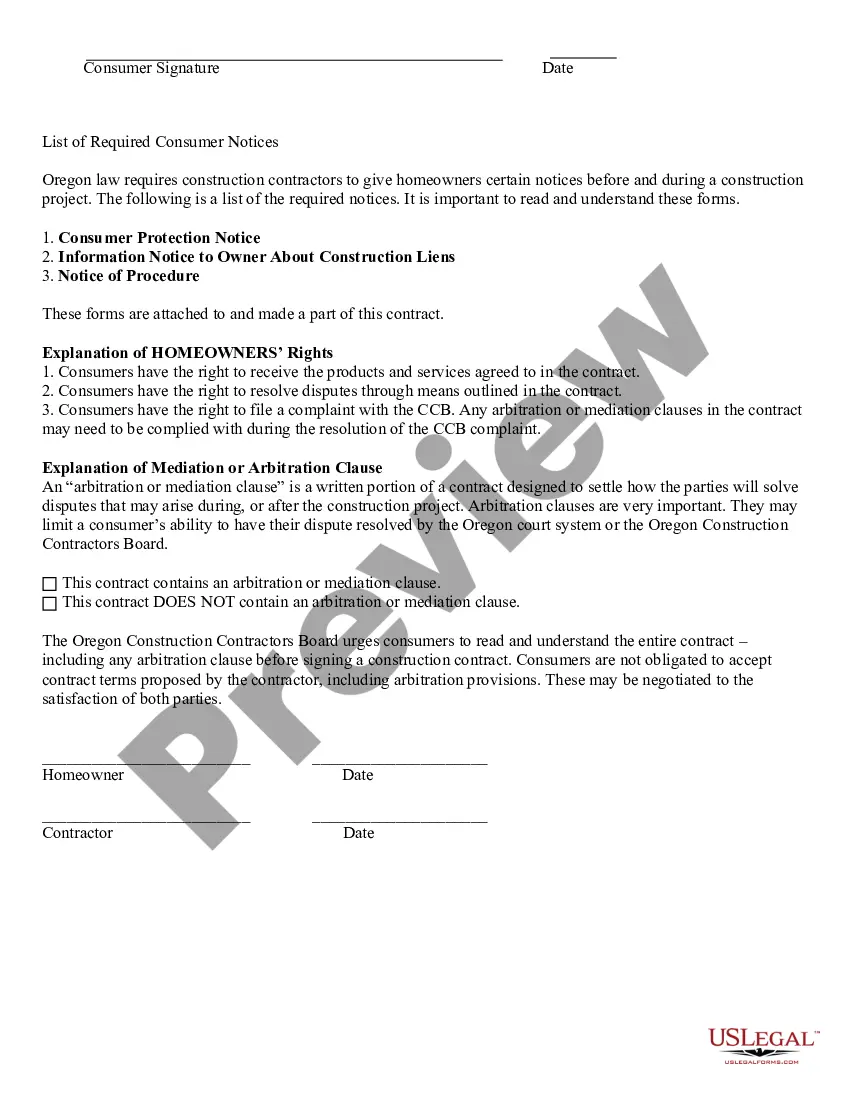
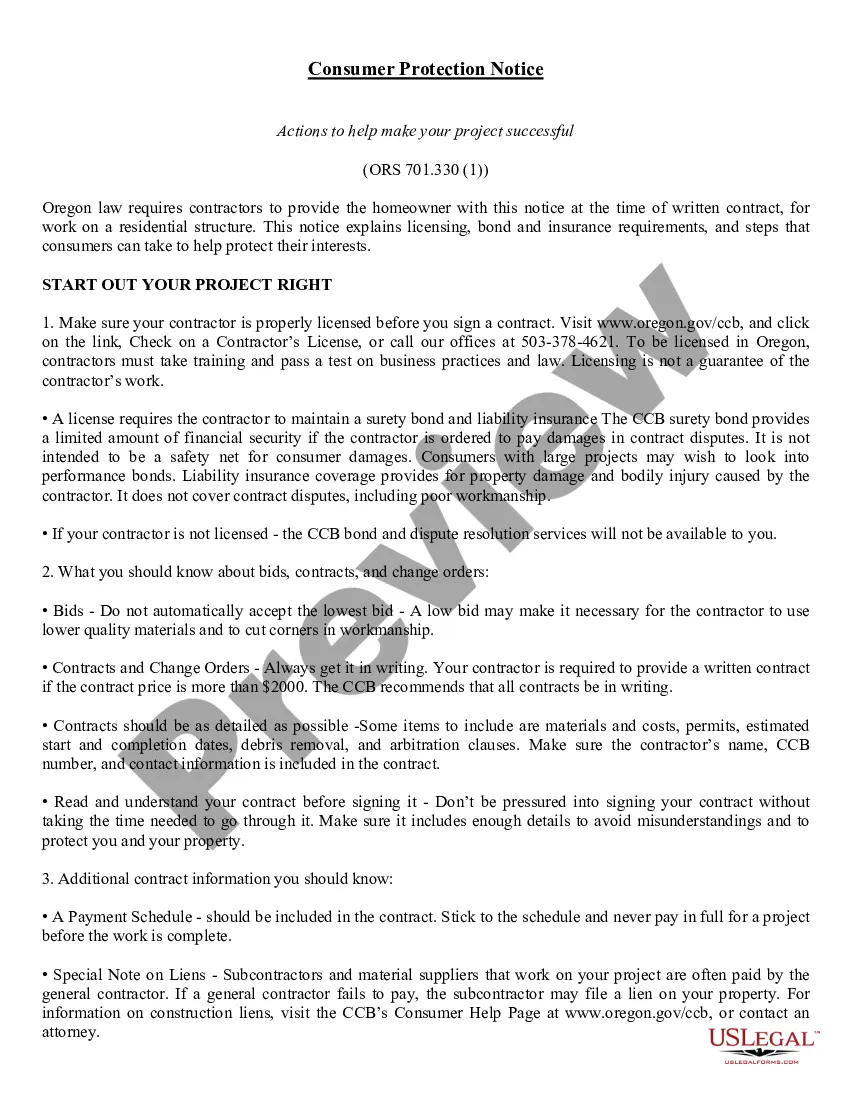
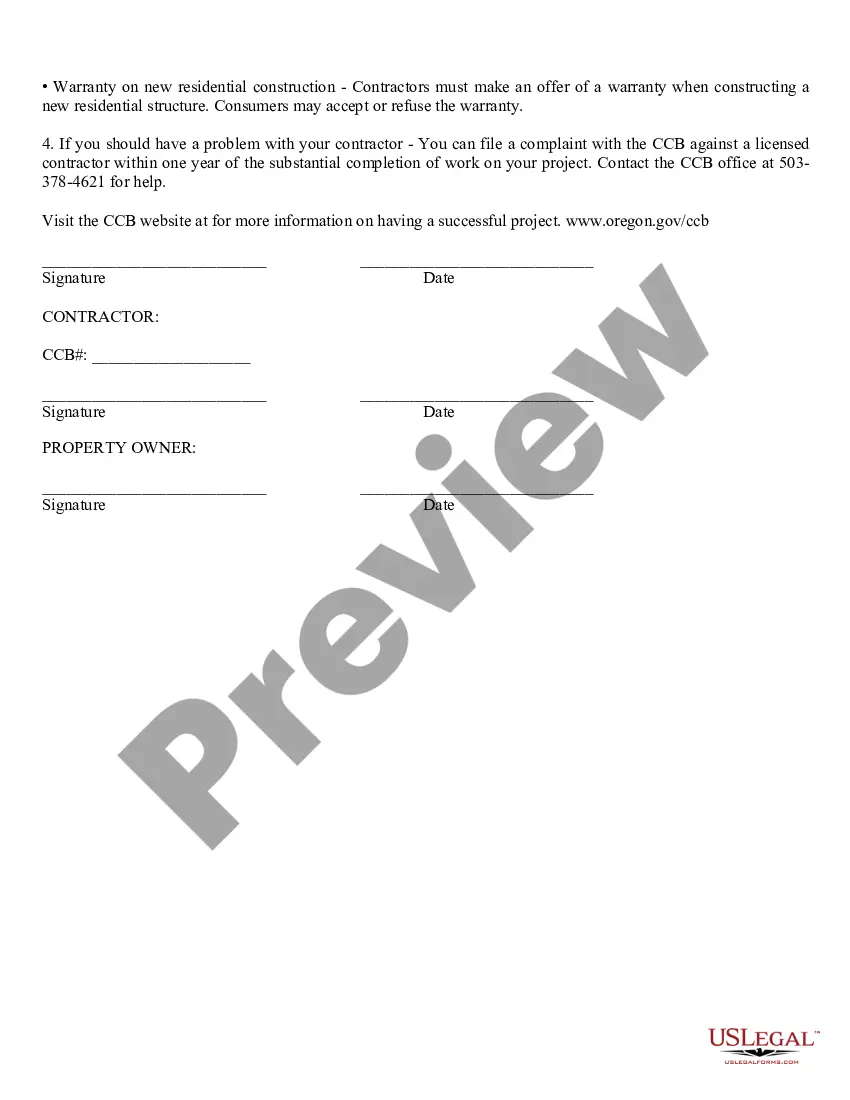
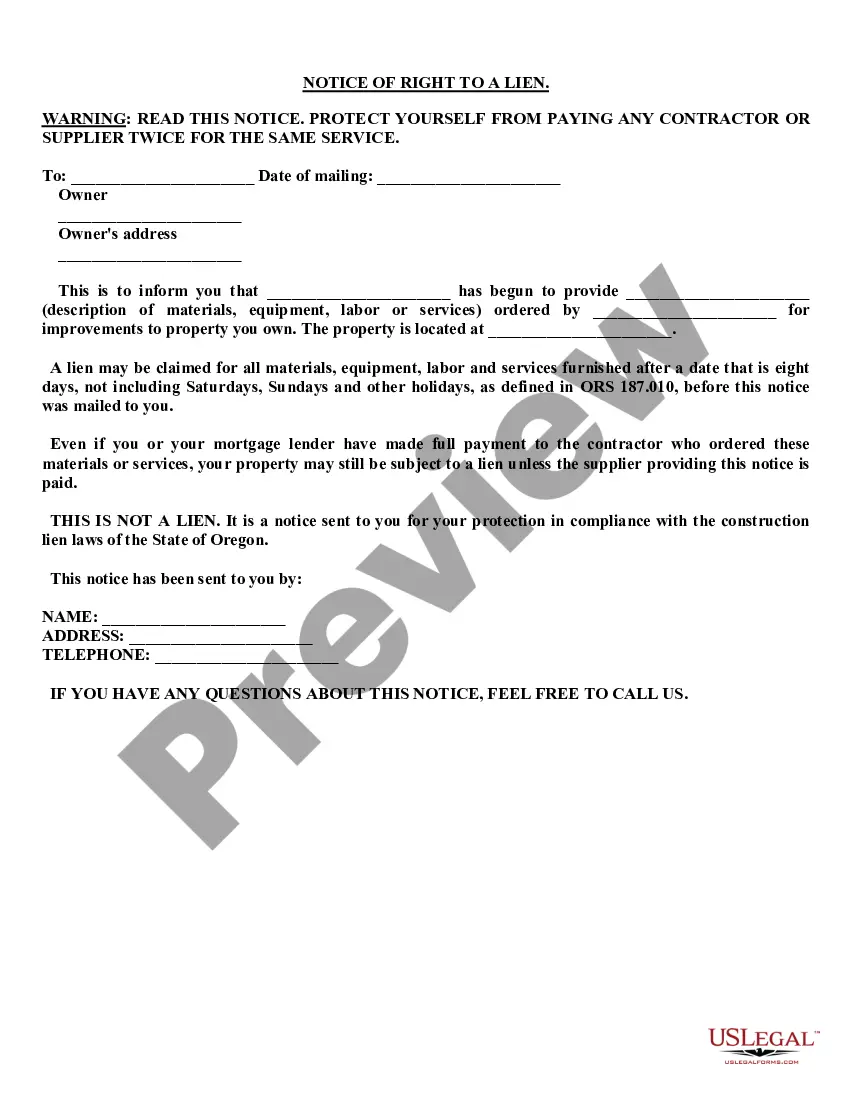
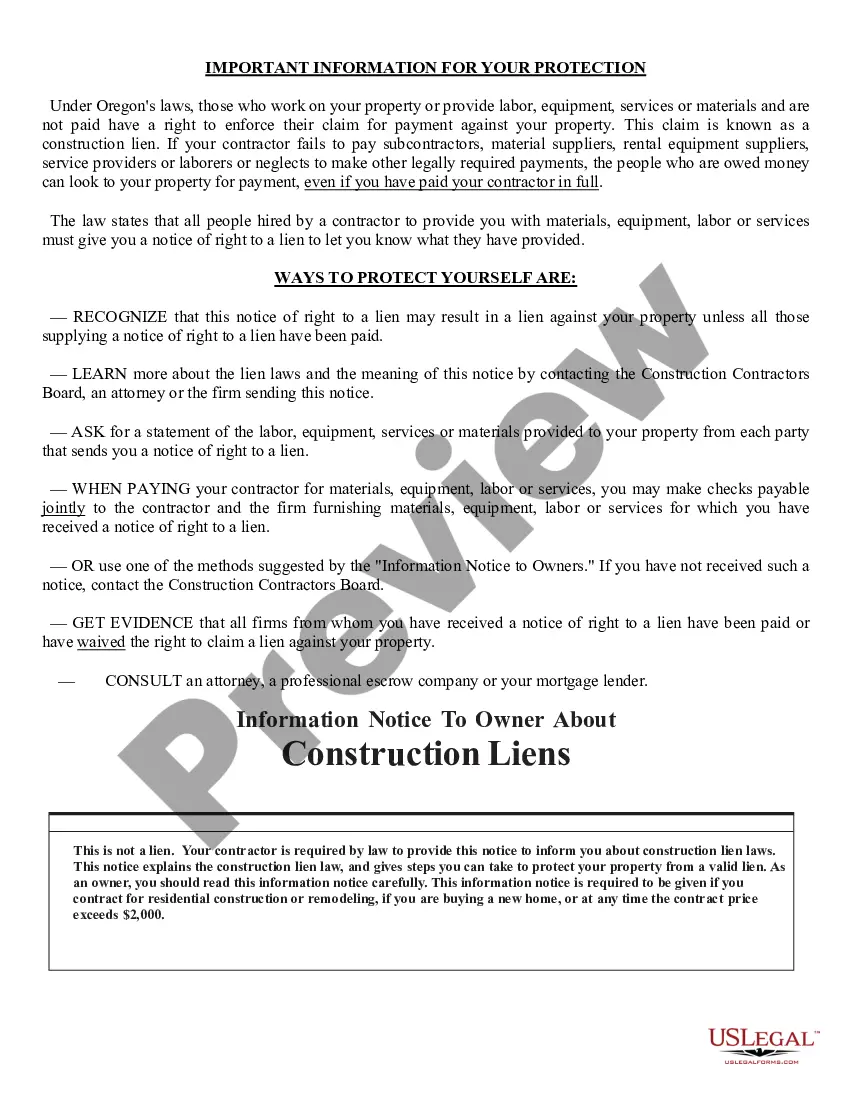
- Consumer Protection Notices: Important notices regarding homeowners' rights and lien information.

When this form is needed
This form is essential when a property owner needs to hire a drainage contractor for services such as plumbing repairs, installation of drainage systems, or remediation of soil erosion issues. It should be used when the scope of work is clearly defined, and both parties agree on pricing terms and conditions. It also serves as a safeguard for homeowners against potential construction liens and disputes.
Who can use this document
- Property owners looking to engage a drainage contractor for services on their property.
- Licensed drainage contractors who need a formal agreement to outline the terms of their work.
- Homeowners in Oregon who want to ensure compliance with state-specific construction laws and regulations.
Completing this form step by step
- Identify the parties involved: Fill in the names and contact information of the contractor and property owner.
- Define the scope of work: Clearly outline the drainage services to be performed, including any specific materials or methods.
- Determine the payment structure: Specify whether the payment will be fixed or cost plus, along with the contract price.
- Include necessary permits: Ensure that the contractor agrees to apply for and obtain any required permits.
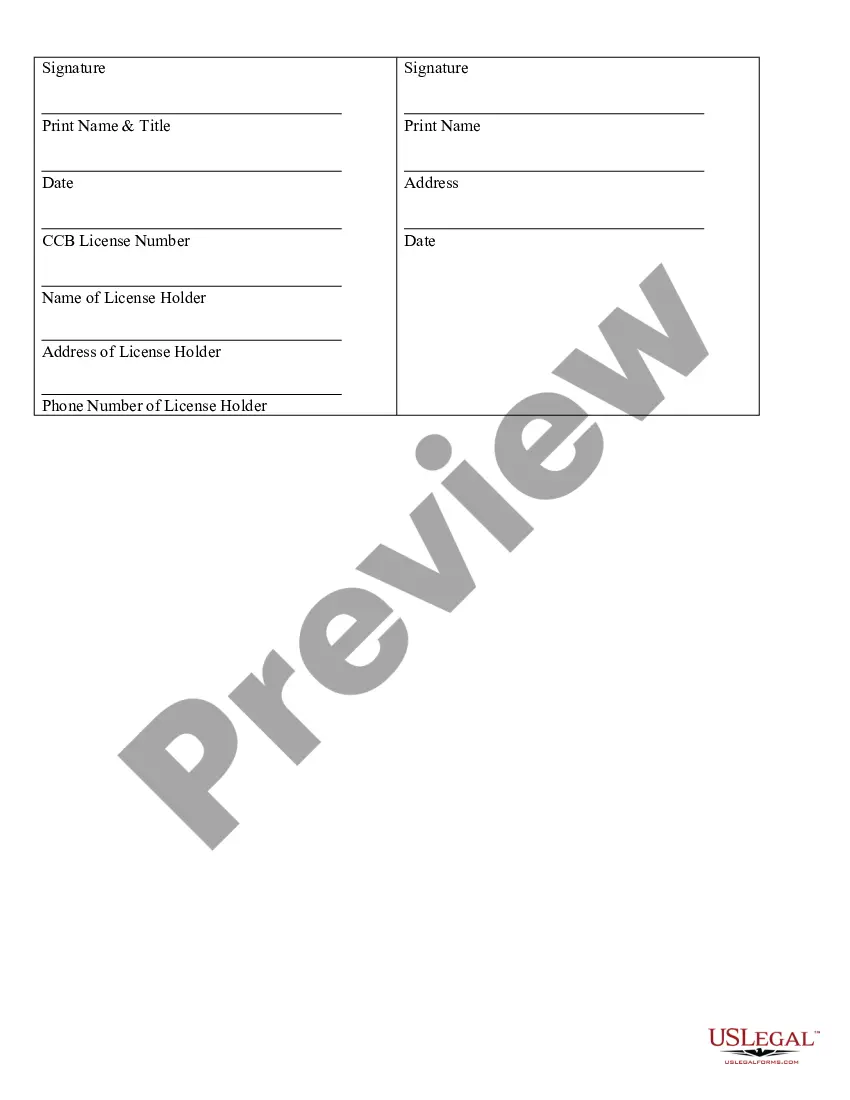
- Sign and date the document: Both parties must review the contract terms, sign, and date the form to validate the agreement.
Notarization requirements for this form
This form does not typically require notarization unless specified by local law. However, having it notarized can provide additional legal security for both parties.
Get your form ready online
Our built-in tools help you complete, sign, share, and store your documents in one place.
Make edits, fill in missing information, and update formatting in US Legal Forms—just like you would in MS Word.
Download a copy, print it, send it by email, or mail it via USPS—whatever works best for your next step.
Sign and collect signatures with our SignNow integration. Send to multiple recipients, set reminders, and more. Go Premium to unlock E-Sign.
If this form requires notarization, complete it online through a secure video call—no need to meet a notary in person or wait for an appointment.
We protect your documents and personal data by following strict security and privacy standards.

Make edits, fill in missing information, and update formatting in US Legal Forms—just like you would in MS Word.

Download a copy, print it, send it by email, or mail it via USPS—whatever works best for your next step.

Sign and collect signatures with our SignNow integration. Send to multiple recipients, set reminders, and more. Go Premium to unlock E-Sign.

If this form requires notarization, complete it online through a secure video call—no need to meet a notary in person or wait for an appointment.

We protect your documents and personal data by following strict security and privacy standards.
Avoid these common issues
- Failing to clearly define the scope of work, leading to misunderstandings about services to be provided.
- Not specifying a payment schedule or method, resulting in payment disputes.
- Neglecting to obtain necessary permits, which can delay the project or result in legal issues.
- Ignoring the significance of including consumer protection notices, which can impact property owners' rights.
Benefits of using this form online
- Convenience of accessing the document anytime and anywhere, allowing for quick adaptations as needed.
- Editability to customize according to specific project requirements without excessive paperwork.
- Reliability of having a legally compliant contract drafted by licensed attorneys to protect the interests of both parties.
Legal use & context
- This form serves as a legally binding agreement that protects both the contractor and homeowner by outlining obligations and rights.
- Failure to use this contract may result in confusion over project scope and payment, leading to potential disputes.
- Completing this contract according to Oregon law ensures compliance with local regulations regarding construction work.
What to keep in mind
- The form is essential for clarifying agreements between property owners and drainage contractors.
- Understanding the key components can help prevent disputes during the project.
- Compliance with Oregon law is crucial for both parties involved in the contract.
Looking for another form?

Form popularity
FAQ
In order to cancel the transaction, the consumer must send the notice of cancellation form, or some other written statement indicating the intent to cancel the contract, to the creditor at the address stated on the notice. This notice need only state the consumer's intention to cancel the transaction.
The general contractor may hire an electrician, a plumber, a cabinet maker-installer, a tile layer and a granite installer.
A termination for cause can only take place if one party cannot completely fulfill their contractual duties. An example of this would be a contractor terminating their contract for cause because the owner failed to pay them in the time that was determined in the contract.
Yes, absolutely. Starting work without a signed contract means that your position isn't clear, or even worse it's weak.It also means that the contract is legally enforceable and will be able to support you if you decide to take legal action.
There are many reasons for terminating a construction contract. Some of the most common are nonpayment by the owner or contractor, nonperformance by the contractor or subcontractors, timeliness of performance, lack of communication or simply an inability to get along.
If you run a small business that hires 1099 contractors, also known as independent contractors, it is vital that you have them sign an independent contractor contract. This is because there is a significant gray area between who is classified as an independent contractor and who is classified as an employee.
Both parties should sign the contract, and both should be bound by the terms and conditions spelled out in the agreement. In general that means the contractor will be obliged to provide specified materials and to perform certain services for you. In turn, you will be required to pay for those goods and that labor.
Name of contractor and contact information. Name of homeowner and contact information. Describe property in legal terms. List attachments to the contract. The cost. Failure of homeowner to obtain financing. Description of the work and the completion date. Right to stop the project.
For most types of projects you hire an independent contractor (IC) to do, the law does not require you to put anything in writing. You can meet with the IC, agree on the terms of your arrangement, and have an oral contract or agreement that is legally binding. Just because you can doesn't mean you should, however.