Montana Installments Fixed Rate Promissory Note Secured by Personal Property
What this document covers
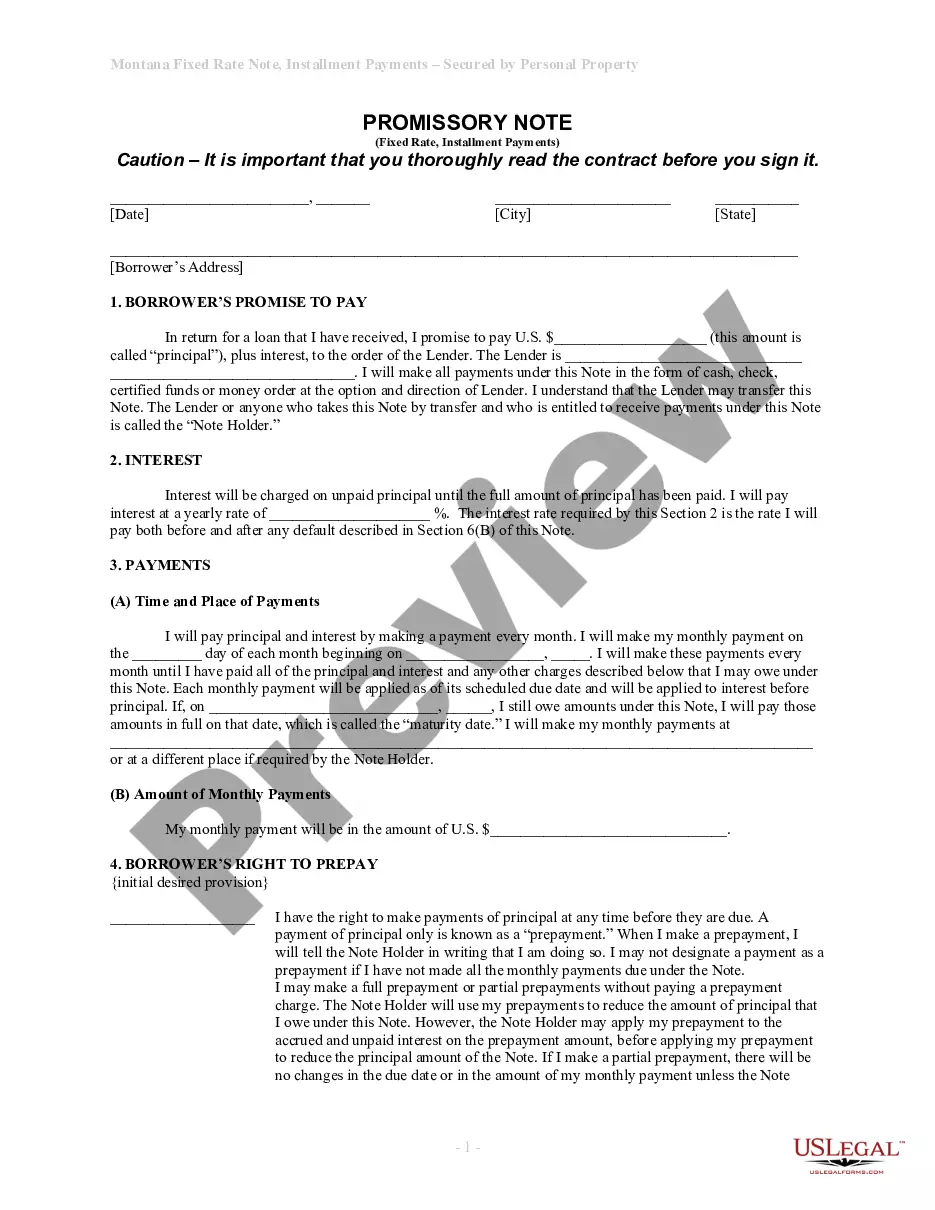
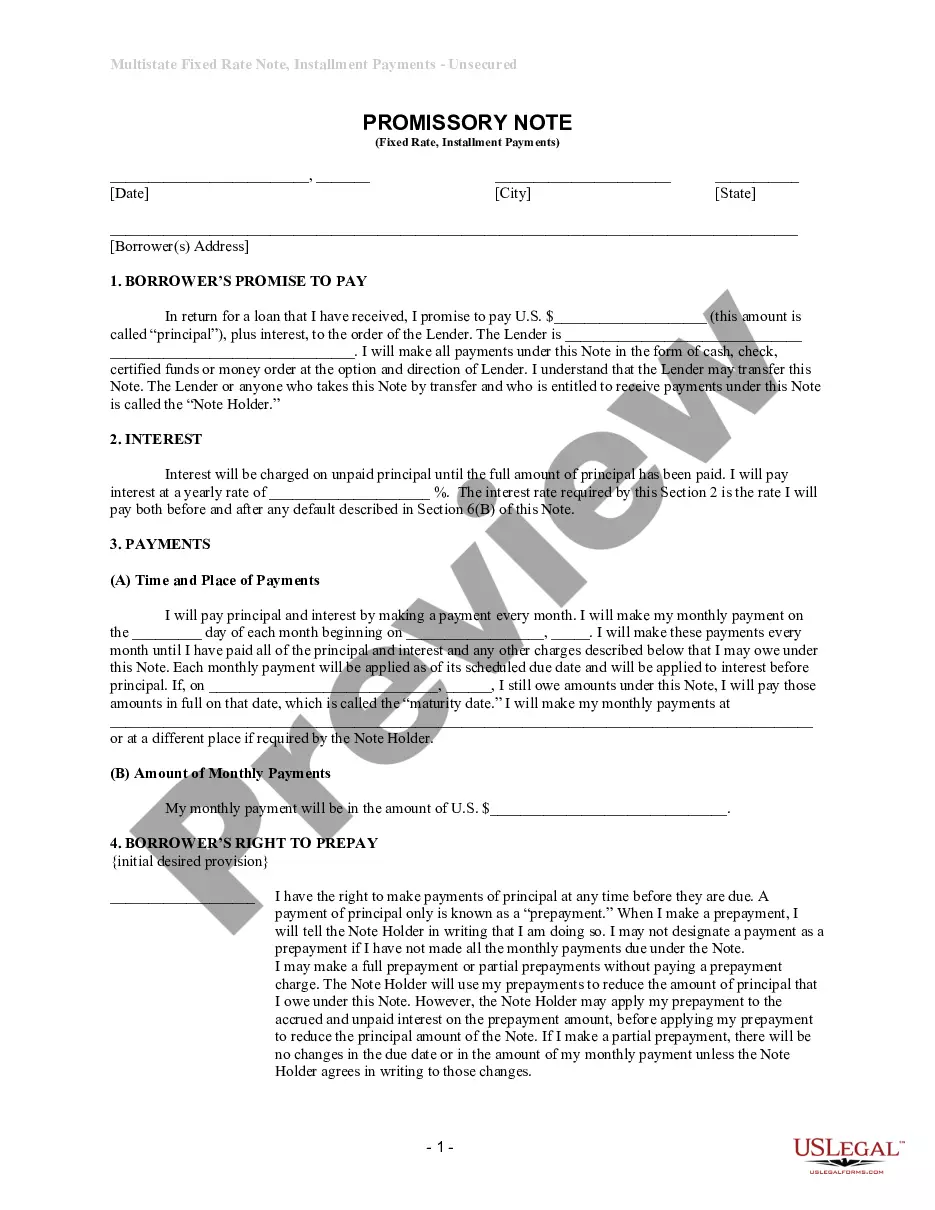
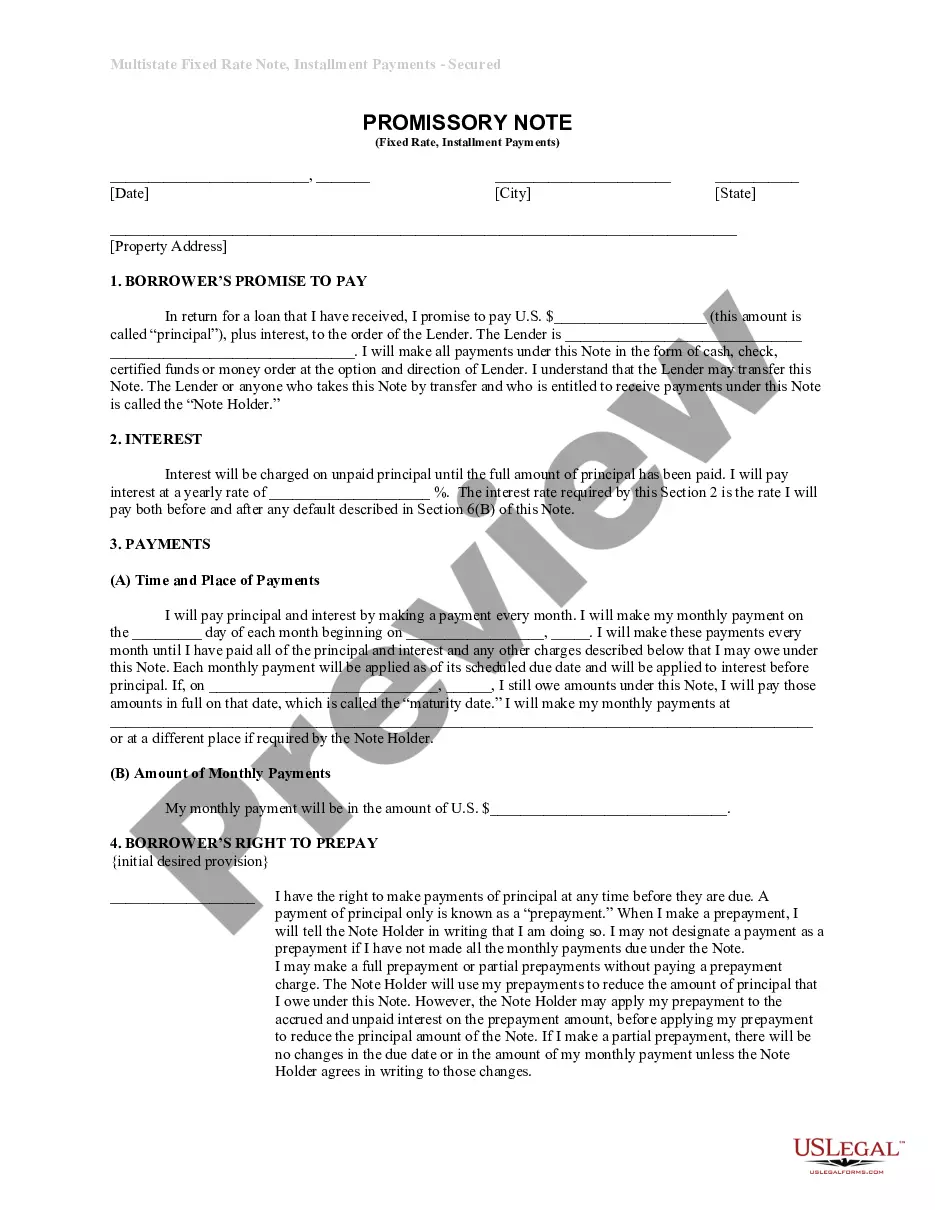
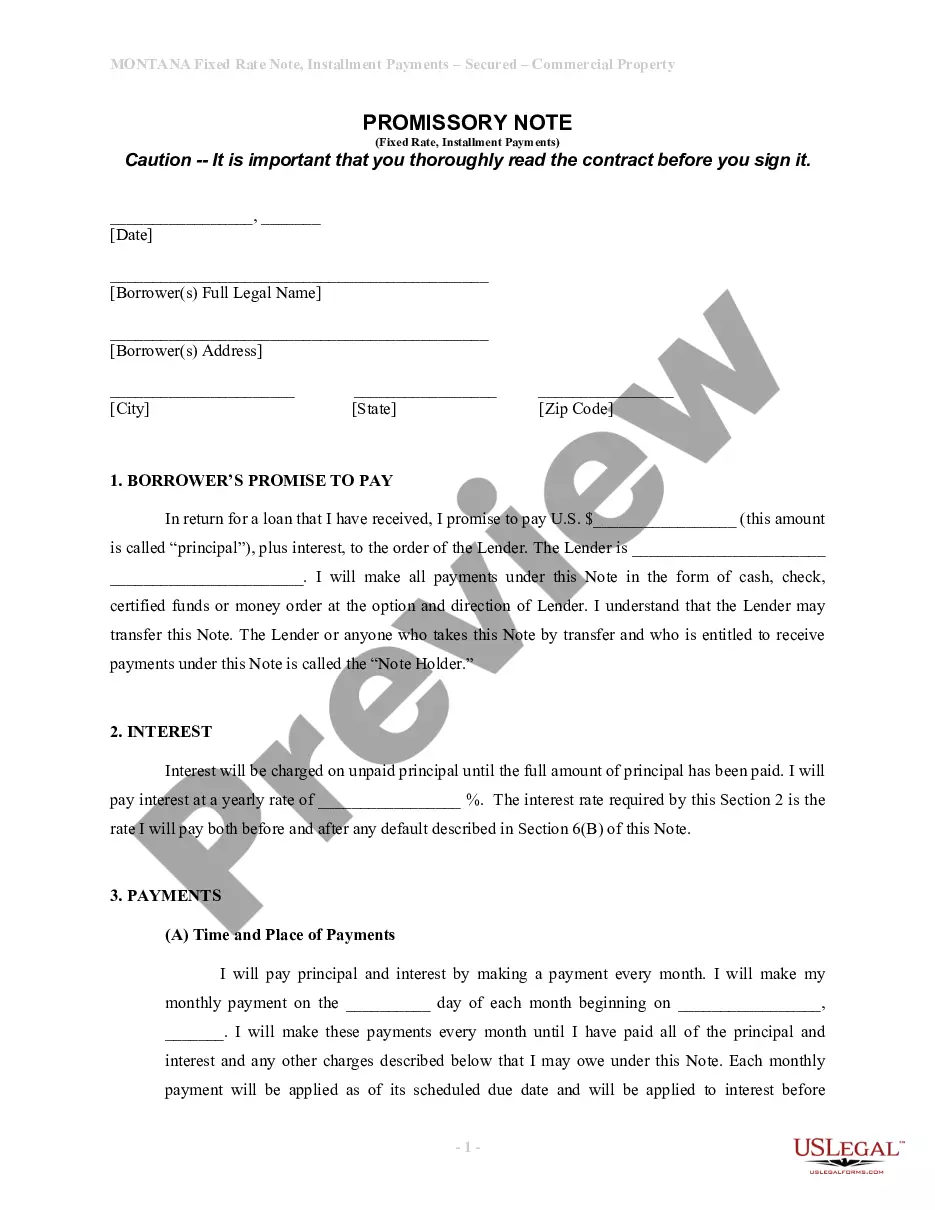
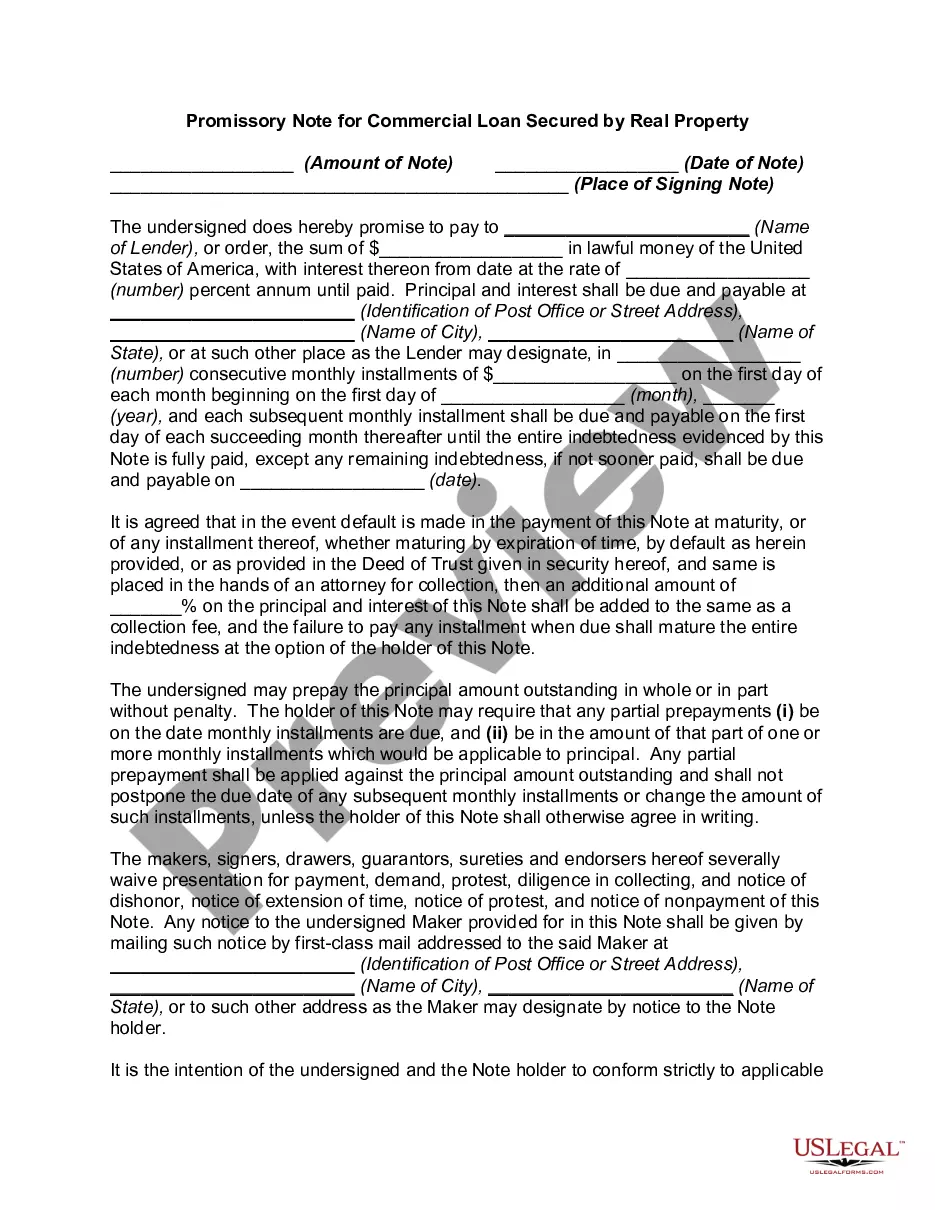
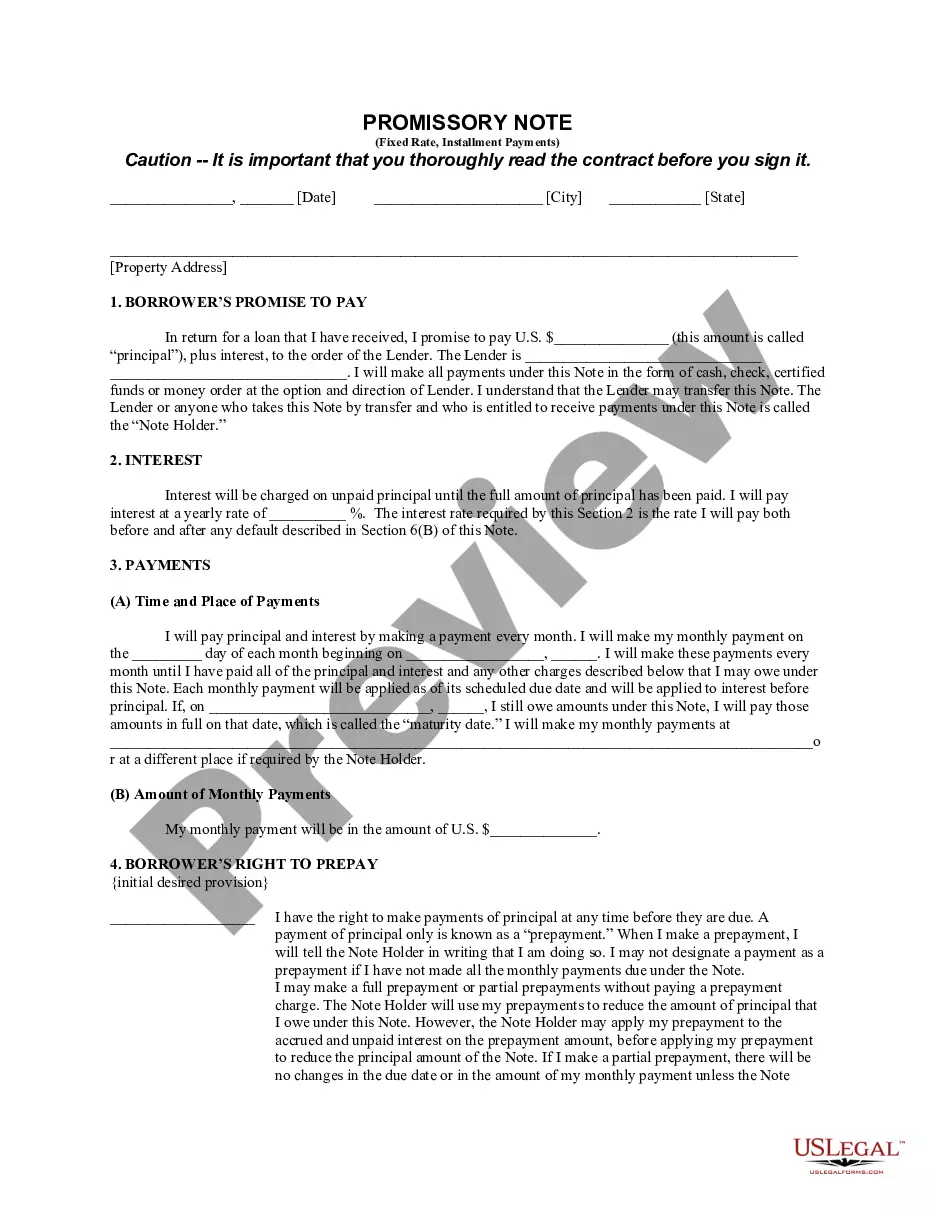
The Montana Installments Fixed Rate Promissory Note Secured by Personal Property is a legal document that serves as a written promise from a borrower to repay a loan in fixed installments. This promissory note is unique as it is secured by personal property, meaning that if the borrower fails to make payments, the lender has the right to collect the specified assets. Unlike other loans, this note establishes clear terms for repayment, including interest rates and payment schedules, providing both clarity and security for both parties involved.
Main sections of this form
- Borrower's promise to pay: This section outlines the borrower's commitment to repay the loan amount plus interest.
- Interest rates: Details regarding the annual interest payable on the loan, applicable before and after any defaults.
- Payment schedule: Specifies the date, frequency, and amount of the monthly payments due until the loan is fully repaid.
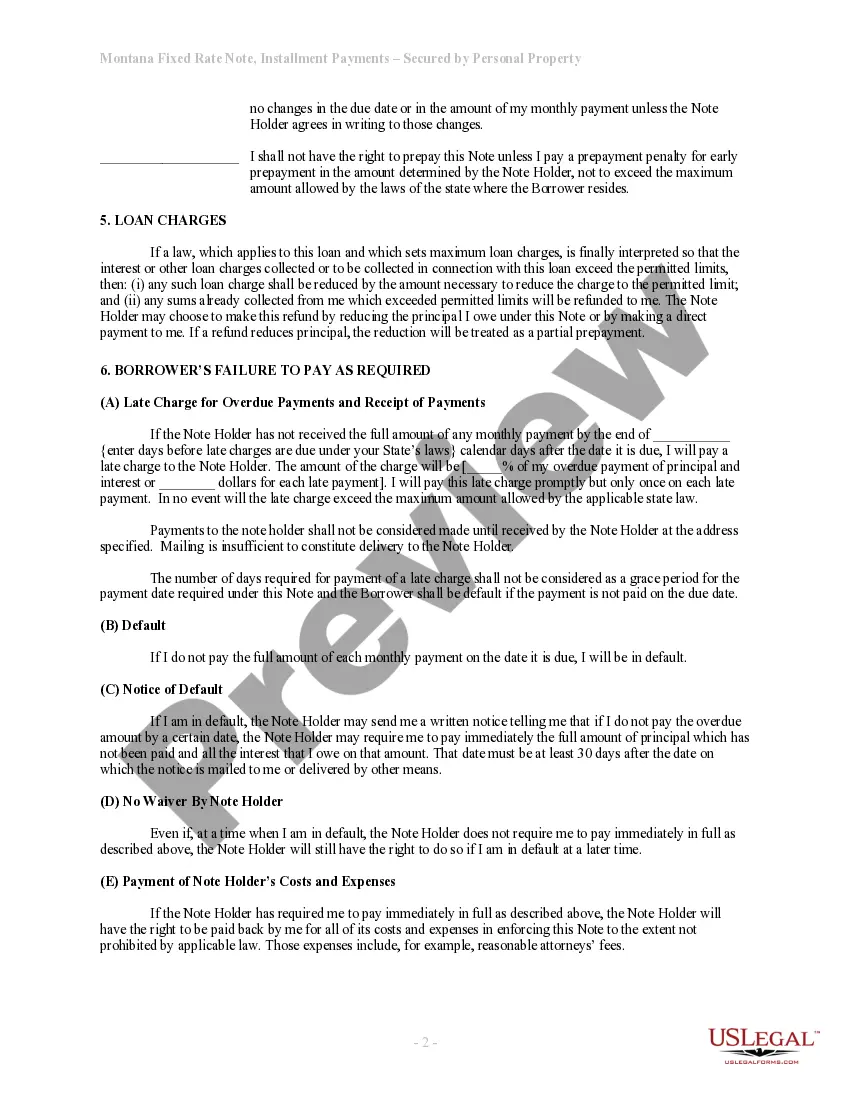
- Borrower's right to prepay: Explains the conditions under which the borrower can make extra payments on the principal without penalties.
- Default and late charges: Describes the consequences of failing to pay on time and the fees associated with late payments.
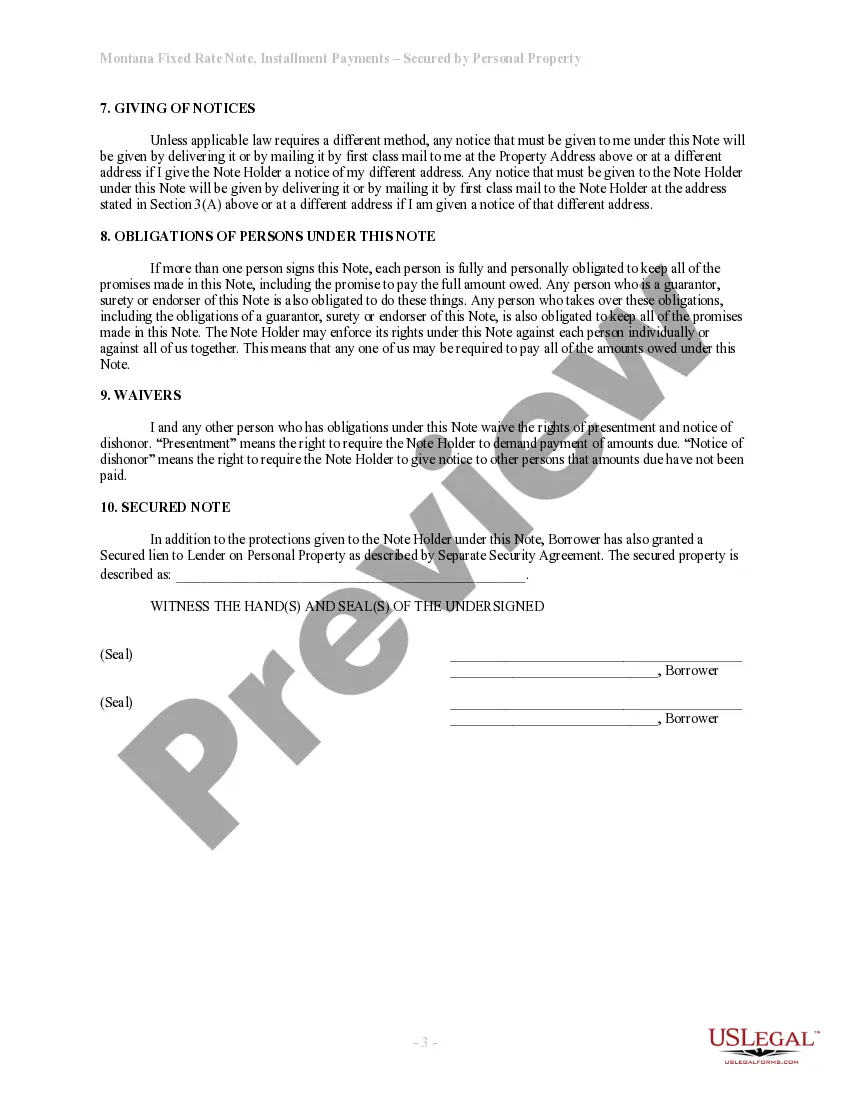
- Secured note: Indicates that the loan is secured by personal property, offering the lender additional protection.
When this form is needed
This form is essential when an individual or business borrows money and agrees to repay it in installments over time. It is particularly useful when the lender requires security in the form of personal property, such as vehicles or equipment, making it suitable for personal loans, business loans, or any situation where installment payments are more manageable for the borrower.
Who should use this form
- Individuals borrowing money for personal use who prefer to pay back in installments.
- Business owners seeking financing for operational costs or equipment purchases.
- Lenders looking for a secured promissory note to safeguard their loans against borrower defaults.
- Anyone in Montana requiring a formal documented agreement for a loan secured by personal property.
Instructions for completing this form
- Identify the parties: Clearly include the names and addresses of the borrower(s) and lender.
- Specify the loan details: Enter the total loan amount and applicable interest rate.
- Outline the payment terms: Include the monthly payment amount and schedule (starting date and duration).
- List the secured property: Describe the personal property backing the loan, as referenced in a separate security agreement.
- Sign and date the form: Ensure all parties sign and date the document to make it legally binding.
Is notarization required?
This form does not typically require notarization unless specified by local law, making it easier for both parties to complete the agreement without additional steps.
Get your form ready online
Our built-in tools help you complete, sign, share, and store your documents in one place.
Make edits, fill in missing information, and update formatting in US Legal Forms—just like you would in MS Word.
Download a copy, print it, send it by email, or mail it via USPS—whatever works best for your next step.
Sign and collect signatures with our SignNow integration. Send to multiple recipients, set reminders, and more. Go Premium to unlock E-Sign.
If this form requires notarization, complete it online through a secure video call—no need to meet a notary in person or wait for an appointment.
We protect your documents and personal data by following strict security and privacy standards.

Make edits, fill in missing information, and update formatting in US Legal Forms—just like you would in MS Word.

Download a copy, print it, send it by email, or mail it via USPS—whatever works best for your next step.

Sign and collect signatures with our SignNow integration. Send to multiple recipients, set reminders, and more. Go Premium to unlock E-Sign.

If this form requires notarization, complete it online through a secure video call—no need to meet a notary in person or wait for an appointment.

We protect your documents and personal data by following strict security and privacy standards.
Typical mistakes to avoid
- Failing to specify the secured assets, which can lead to disputes later.
- Not adhering to the required interest rates or payment terms outlined in Montana law.
- Leaving out signature(s) or date, rendering the document invalid.
- Ignoring the need for a written notification for prepayment, if applicable.
Why use this form online
- Convenience: Purchase and access the form instantly from your device.
- Editability: Customize the form directly to fit your specific needs.
- Reliability: Ensure the template is drafted by licensed attorneys, adhering to legal standards.
- The promissory note is a legally binding contract, enforceable in court if either party fails to adhere to the terms.
- Lenders can claim the collateral in case of borrower default, ensuring protection for their financial interests.
- Clear documentation helps prevent misunderstandings, thereby supporting smoother transactions.
Key takeaways
- The Montana Installments Fixed Rate Promissory Note is essential for formalizing loans with installment payments.
- This document secures the lenderâs interests through collateral, mitigating risk.
- Proper completion and understanding of terms are crucial for both the borrower and lender.
Looking for another form?
Form popularity
FAQ
Unlike a mortgage or deed of trust, the promissory note isn't recorded in the county land records. The lender holds the promissory note while the loan is outstanding. When the loan is paid off, the note is marked as "paid in full" and returned to the borrower.
To write a promissory note for a personal loan, you will need to include the names of both parties, the principal balance, the APR, and any fees that are part of the agreement. The promissory note should also clearly explain what will happen if the borrower pays late or does not pay the loan back at all.
Types of Property that can be used as collateral. Speak to them in person. Draft a Demand / Notice Letter. Write and send a Follow Up Letter. Enlisting a Professional Collection Agency. Filing a petition or complaint in court. Selling the Promissory Note. Final Tips.
Date. The promissory note should include the date it was created at the top of the page. Amount. Loan terms. Interest rate. Collateral. Lender and borrower information. Signatures.
Promissory notes are ideal for individuals who do not qualify for traditional mortgages because they allow them to purchase a home by using the seller as the source of the loan and the purchased home as the source of the collateral.
Writing the Promissory Note Terms You can use a template or create a promissory note online. But before you begin, you'll need to gather some information and make decisions about the way the loan will be structured. First, you'll need the names and addresses of both the lender (or "payee") and the borrower.
Write the date of the writing of the promissory note at the top of the page. Write the amount of the note. Describe the note terms. Write the interest rate. State if the note is secured or unsecured. Include the names of both the lender and the borrower on the note, indicating which person is which.
To secure a promissory note means that you identify some specific property and attach it to the note. Then, if the borrower defaults on the loan, you will be able to repossess the collateral as compensation for the loan.
"A promissory note is enforceable through an ordinary breach of contract claim." In other words, it's not required that the loan be secured; an unsecured loan is still enforceable as long as the promissory note is fully completed. Lender and borrower information.