Mississippi Assumption Agreement of Deed of Trust and Release of Original Mortgagors
About this form
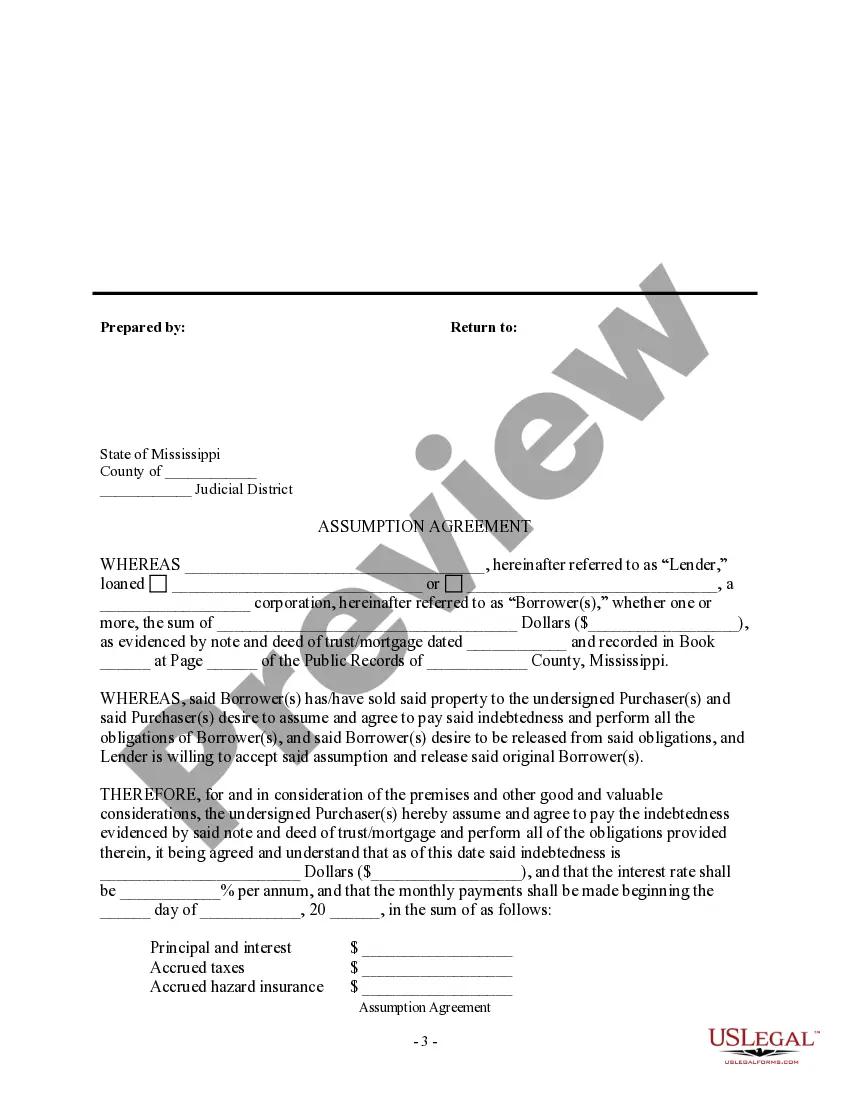
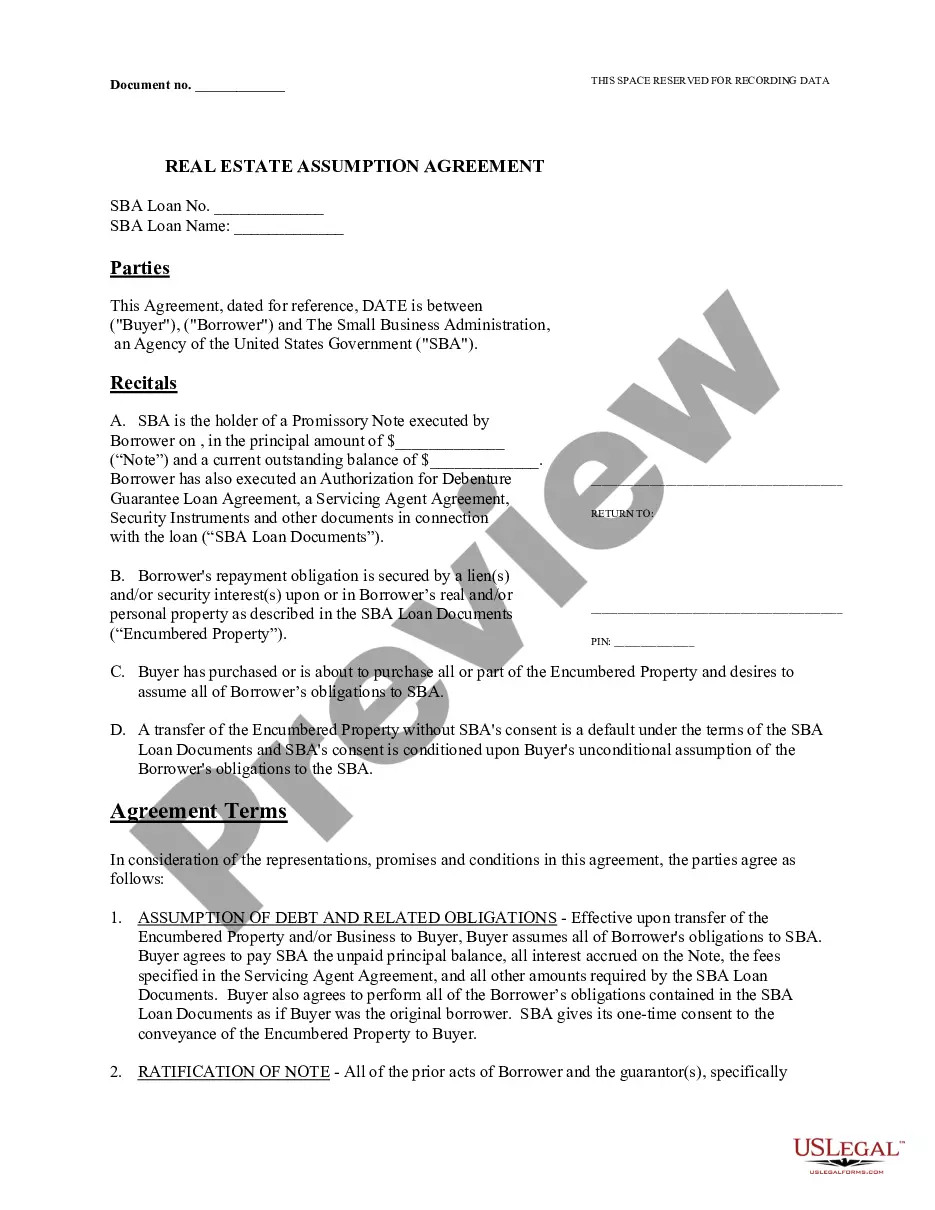
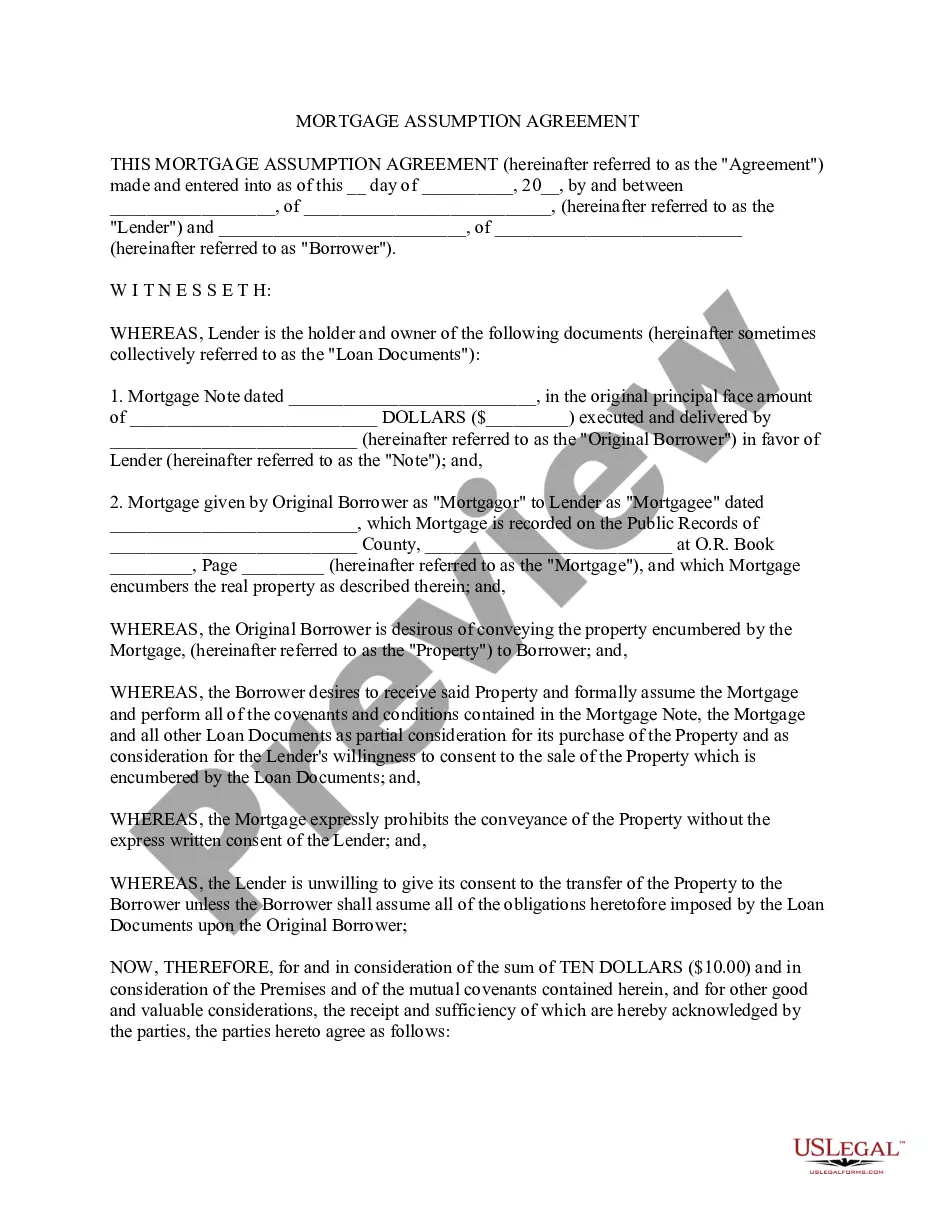
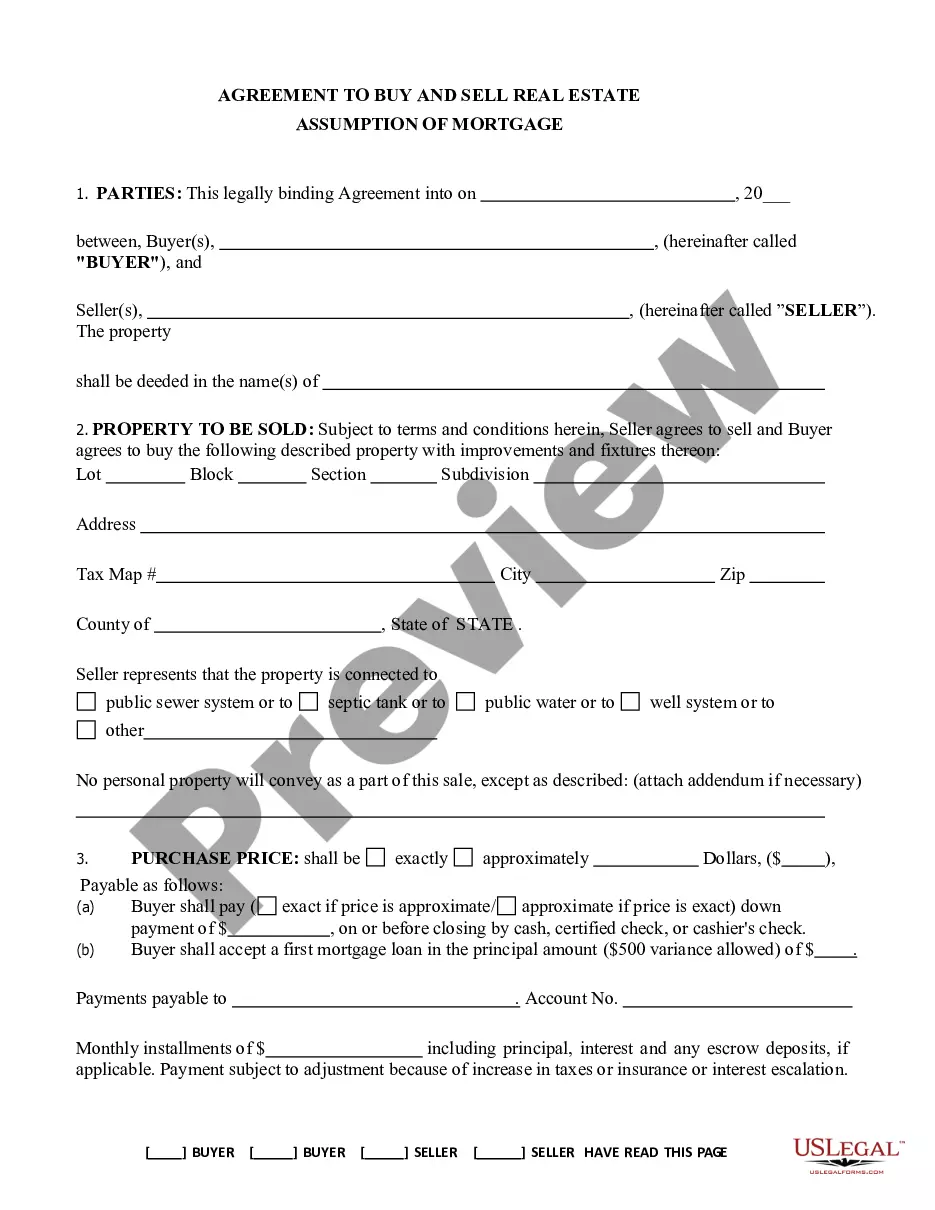
The Assumption Agreement of Deed of Trust and Release of Original Mortgagors is a legal document that allows new purchasers to assume the mortgage debt of a property. In this agreement, the new buyers take on the responsibility for the debt to the lender, while the original mortgagors are released from any future liability on the loan. This form differs from traditional mortgage agreements as it specifically addresses the transfer of obligations from the original borrower to a new buyer, ensuring clarity and legal compliance during the property transition.
Main sections of this form
- Identification of the lender and original borrower(s).
- Details of the loan amount, interest rate, and monthly payment obligations.
- Statement of the new purchaser's assumption of the mortgage debt.
- Release clause freeing the original mortgagors from further liability.
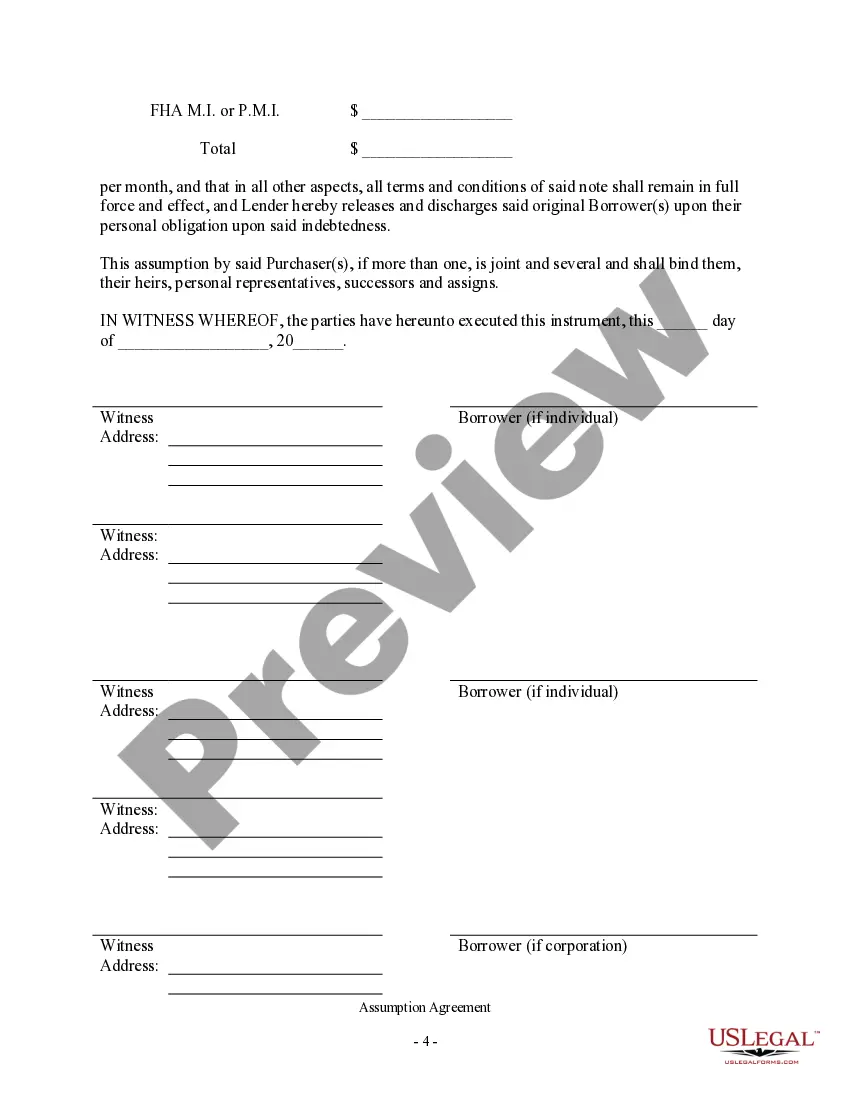
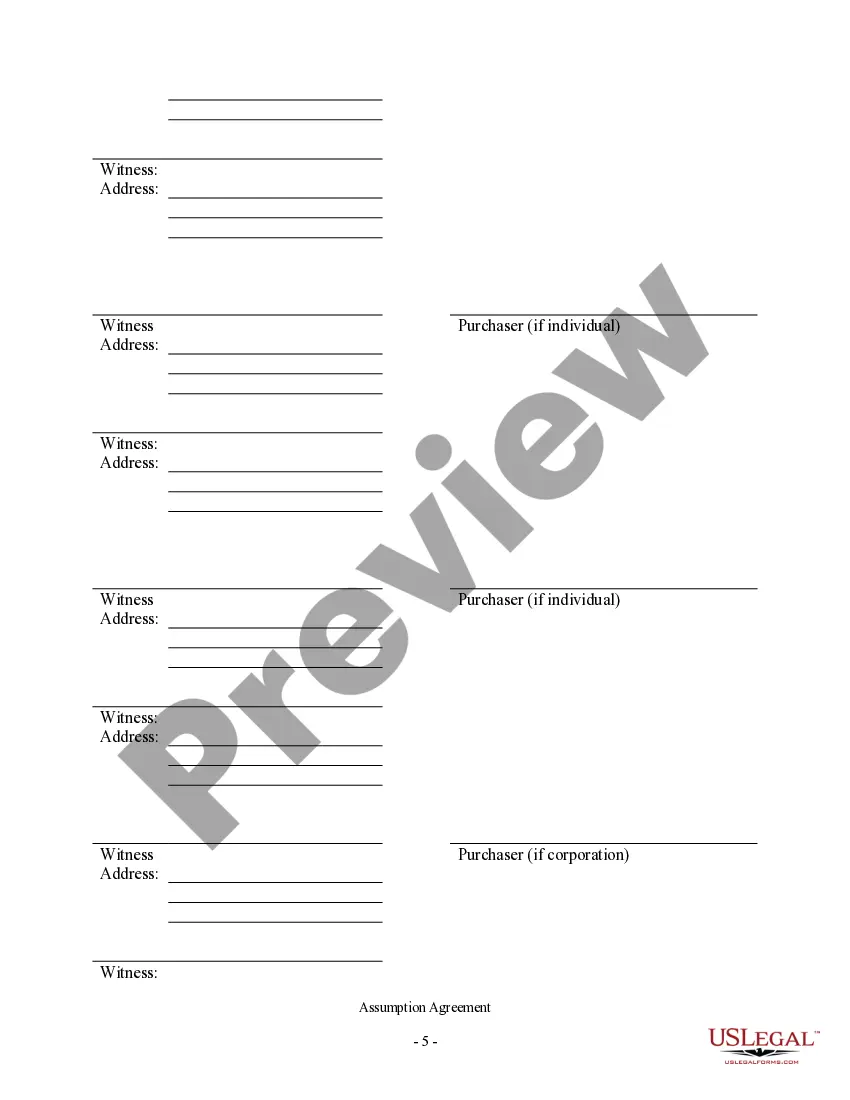
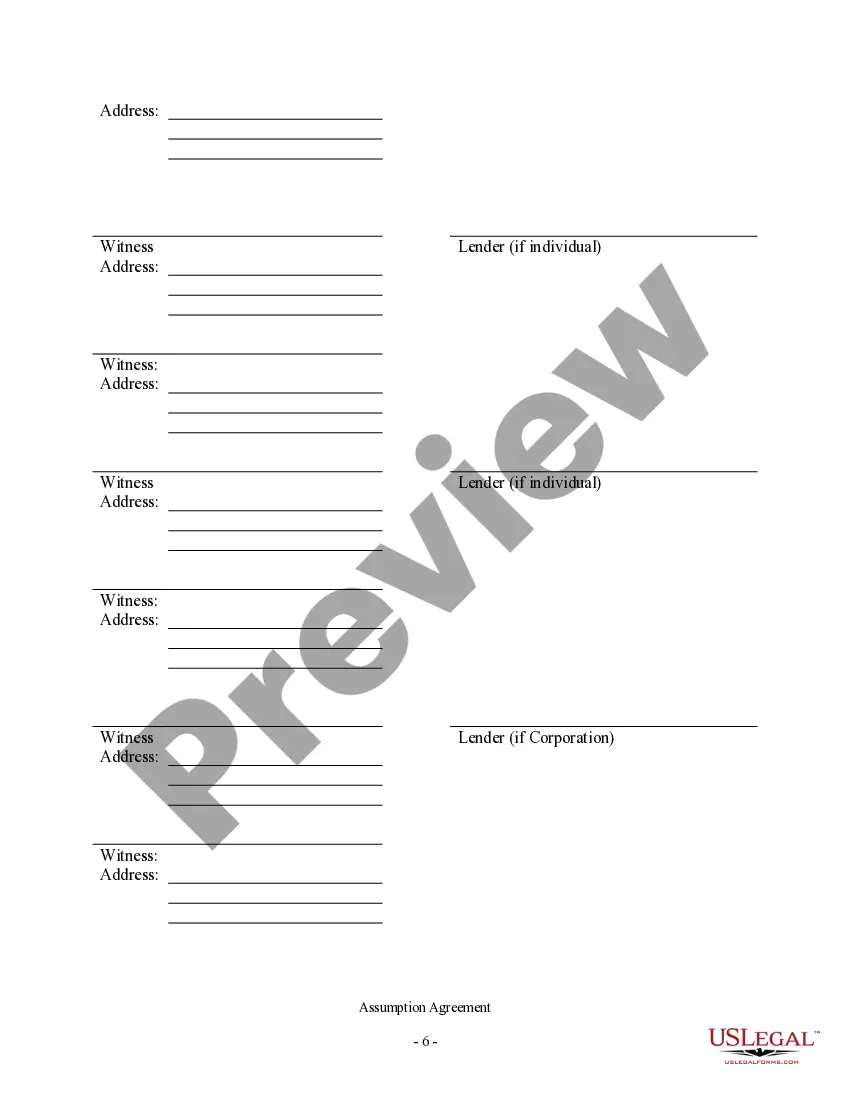
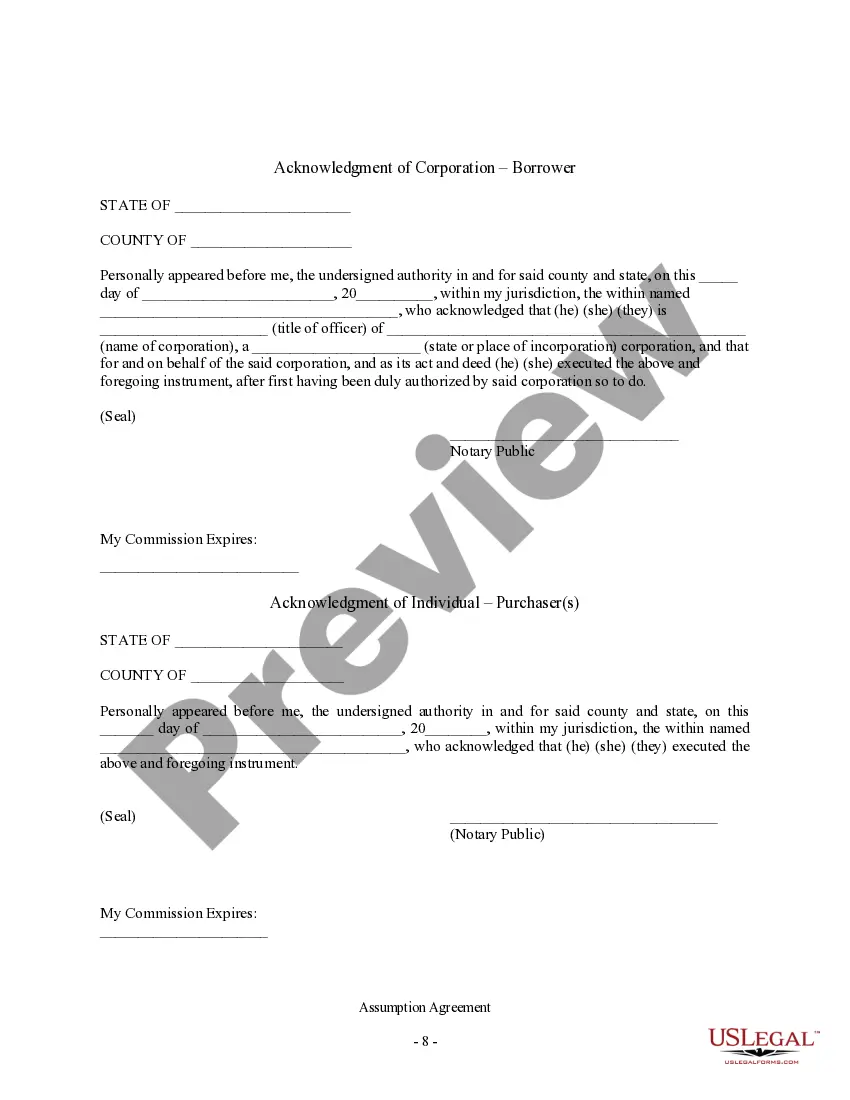
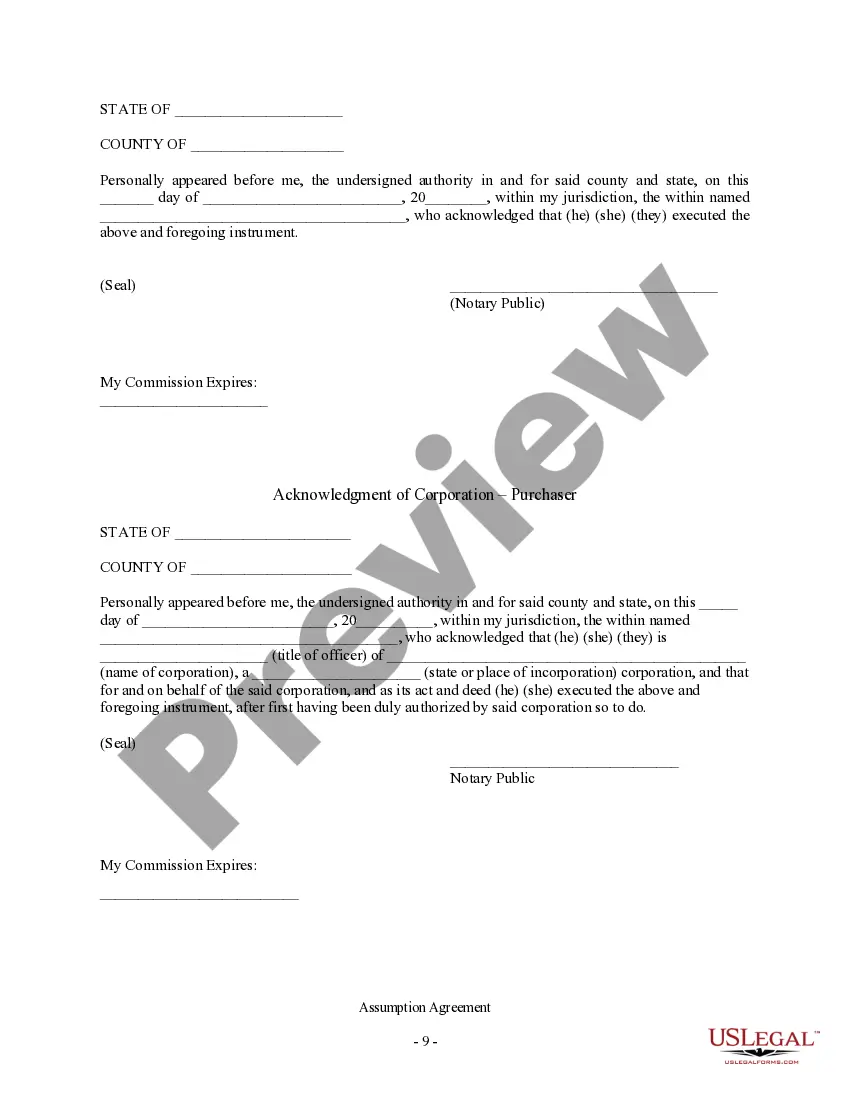
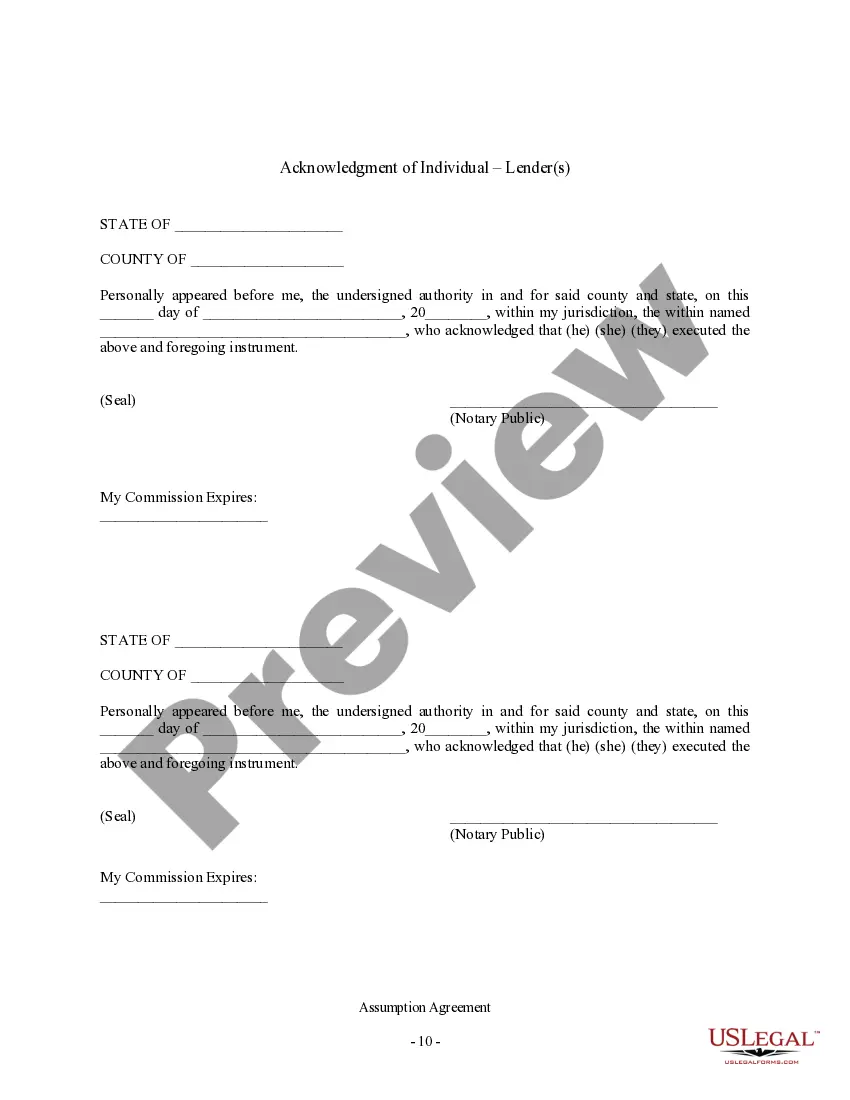
- Signature lines for all parties involved, ensuring legal acknowledgment.



Situations where this form applies
This form should be used when a property is sold, and the new purchasers wish to take over the existing mortgage. It is applicable when the lender agrees to allow the transfer of the mortgage obligations, and it helps protect both the new buyers and the original mortgagors by clearly defining the responsibilities for the debt moving forward. Additionally, it can be crucial in situations where the original borrower is looking to relinquish responsibility for the loan while ensuring the lender is compensated as agreed.
Intended users of this form
- Mortgage lenders who are facilitating the transfer of a mortgage to new buyers.
- Original mortgagors wishing to be released from a mortgage obligation after selling their property.
- New purchasers of the property who want to assume the existing mortgage loan.
Instructions for completing this form
- Identify the lender and original borrower(s) clearly at the beginning of the form.
- Specify the loan amount, interest rate, and payment details accurately.
- Include the names and details of the new purchasers assuming the mortgage.
- Ensure that all parties sign the document where indicated to validate the agreement.
- Keep a copy of the completed agreement for all parties involved.
Does this document require notarization?
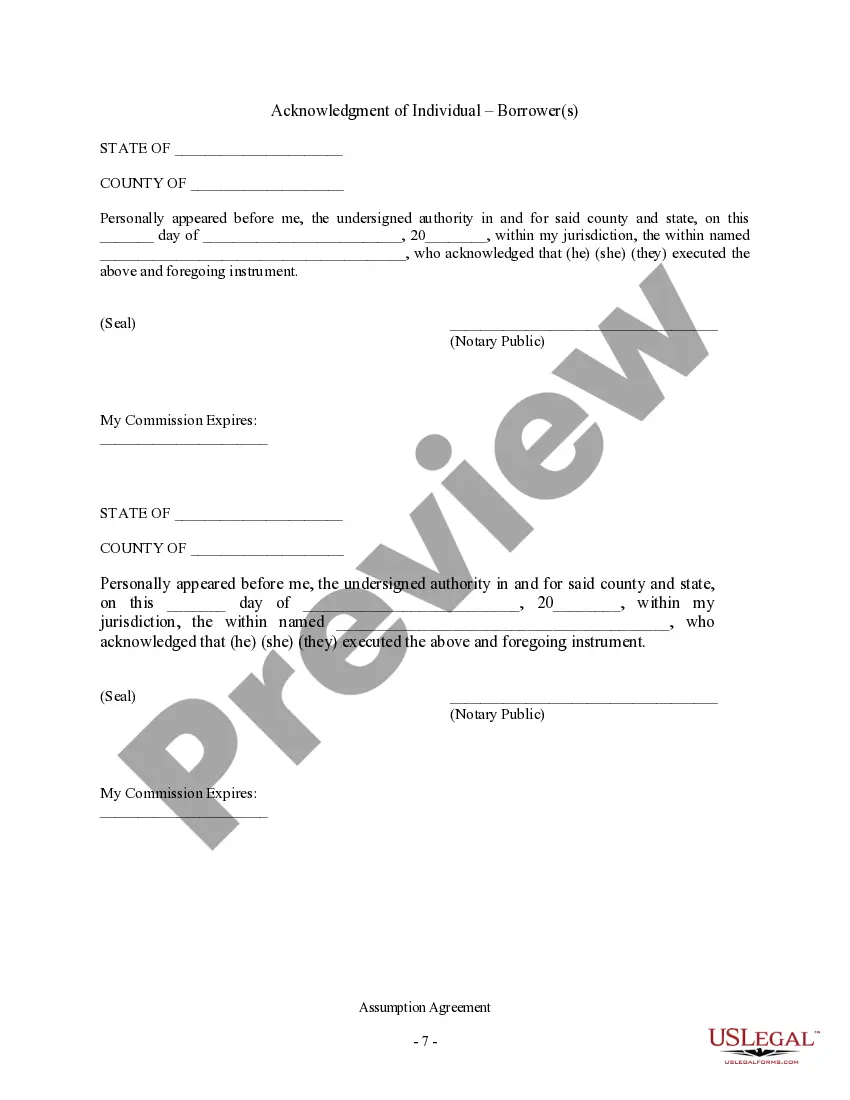
This form needs to be notarized to ensure legal validity. US Legal Forms provides secure online notarization powered by Notarize, allowing you to complete the process through a verified video call, available anytime.
Get your form ready online
Our built-in tools help you complete, sign, share, and store your documents in one place.
Make edits, fill in missing information, and update formatting in US Legal Forms—just like you would in MS Word.
Download a copy, print it, send it by email, or mail it via USPS—whatever works best for your next step.
Sign and collect signatures with our SignNow integration. Send to multiple recipients, set reminders, and more. Go Premium to unlock E-Sign.
If this form requires notarization, complete it online through a secure video call—no need to meet a notary in person or wait for an appointment.
We protect your documents and personal data by following strict security and privacy standards.

Make edits, fill in missing information, and update formatting in US Legal Forms—just like you would in MS Word.

Download a copy, print it, send it by email, or mail it via USPS—whatever works best for your next step.

Sign and collect signatures with our SignNow integration. Send to multiple recipients, set reminders, and more. Go Premium to unlock E-Sign.

If this form requires notarization, complete it online through a secure video call—no need to meet a notary in person or wait for an appointment.

We protect your documents and personal data by following strict security and privacy standards.
Typical mistakes to avoid
- Failing to include all required signatures from the lender, original mortgagors, and new purchasers.
- Not accurately specifying the loan terms, leading to confusion about obligations.
- Omitting the release clause for original mortgagors, exposing them to future liabilities.
Why complete this form online
- Convenient access to the form allows for in-home completion without the need for legal office visits.
- The fillable format streamlines the process, ensuring all necessary information is entered correctly.
- Instant download ensures you have the document ready when needed, which is crucial during real-estate transactions.
Looking for another form?
Form popularity
FAQ
The following states use Deed of Trusts: Alaska, Arizona, California, District of Columbia, Georgia, Mississippi, Missouri, Nevada, North Carolina, and Virginia.
Property cannot be conveyed to a grantee who does not exist. Thus, a deed to a grantee who is dead at the time of delivery is void. For example, a deed recorded by the grantor is presumed to have been delivered.For example, a deed is voidable if it was obtained by fraud in the inducement.
They serve different purposes and are signed by different parties. The warranty deed transfers the property's ownership from the current owner to the new buyer, while the deed of trust ensures the lender has interest in the property in the event a buyer defaults on the loan.
Whether you have a deed of trust or a mortgage, they both serve to assure that a loan is repaid, either to a lender or an individual person. A mortgage only involves two parties the borrower and the lender. A deed of trust adds an additional party, a trustee, who holds the home's title until the loan is repaid.
This may be referred to as the "power of sale" clause. This is the language that legally authorizes the trustee to sell the property outside of court if the buyer does not meet his or her obligations under the deed of trust and promissory note.
A Deed of Trust is a three party document prepared, signed and recorded to secure repayment of a loan. The Borrower (property owner) is named as Trustor, the Lender is called the Beneficiary, and a third party is called a Trustee.
Giving the wrong legal address for the property or the wrong amount of the debt can render the deed unenforceable. In some cases, the error is easy to fix, and the court will rule the deed is enforceable.
Deed: This is the document that proves ownership of a property. It transfers ownership of the property to the grantee, also known as the buyer.Mortgage: This is the document that gives the lender a security interest in the property until the Note is paid in full.
Whether you have a deed of trust or a mortgage, they both serve to assure that a loan is repaid, either to a lender or an individual person. A mortgage only involves two parties the borrower and the lender. A deed of trust adds an additional party, a trustee, who holds the home's title until the loan is repaid.