Mississippi Warranty Deed to Child Reserving a Life Estate in the Parents
About this form
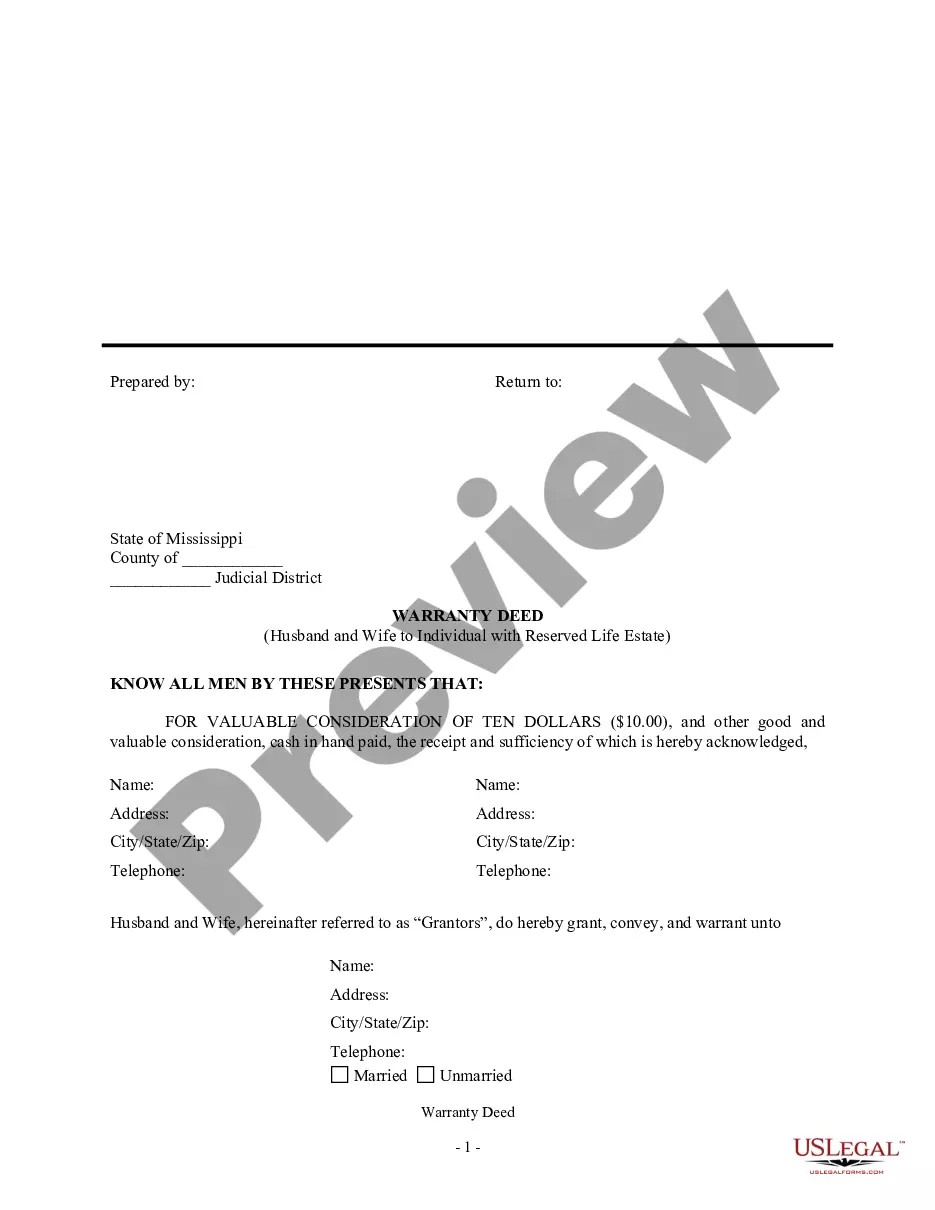
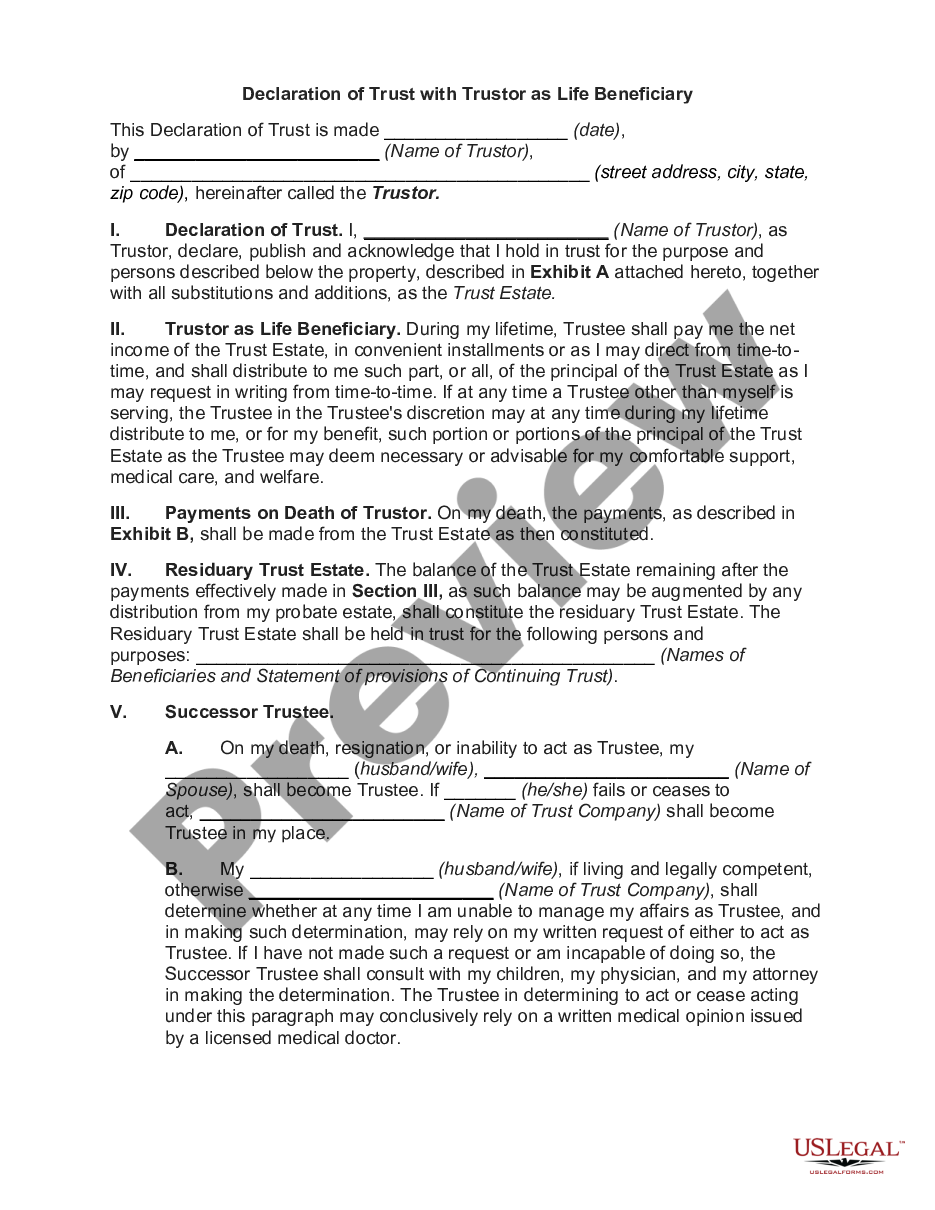
The Warranty Deed to Child Reserving a Life Estate in the Parents is a legal document that allows parents to transfer property ownership to their child while retaining the right to use the property for the duration of their lives. This form is distinctive because it ensures that, although the child becomes the legal owner, the parents maintain a life estate, allowing them to live in, use, or benefit from the property until their passing. This arrangement can help with estate planning and avoid probate complications in the future.
Key parts of this document
- Grantor(s) and Grantee(s) Information: Identification of the parents (grantors) and the child (grantee).
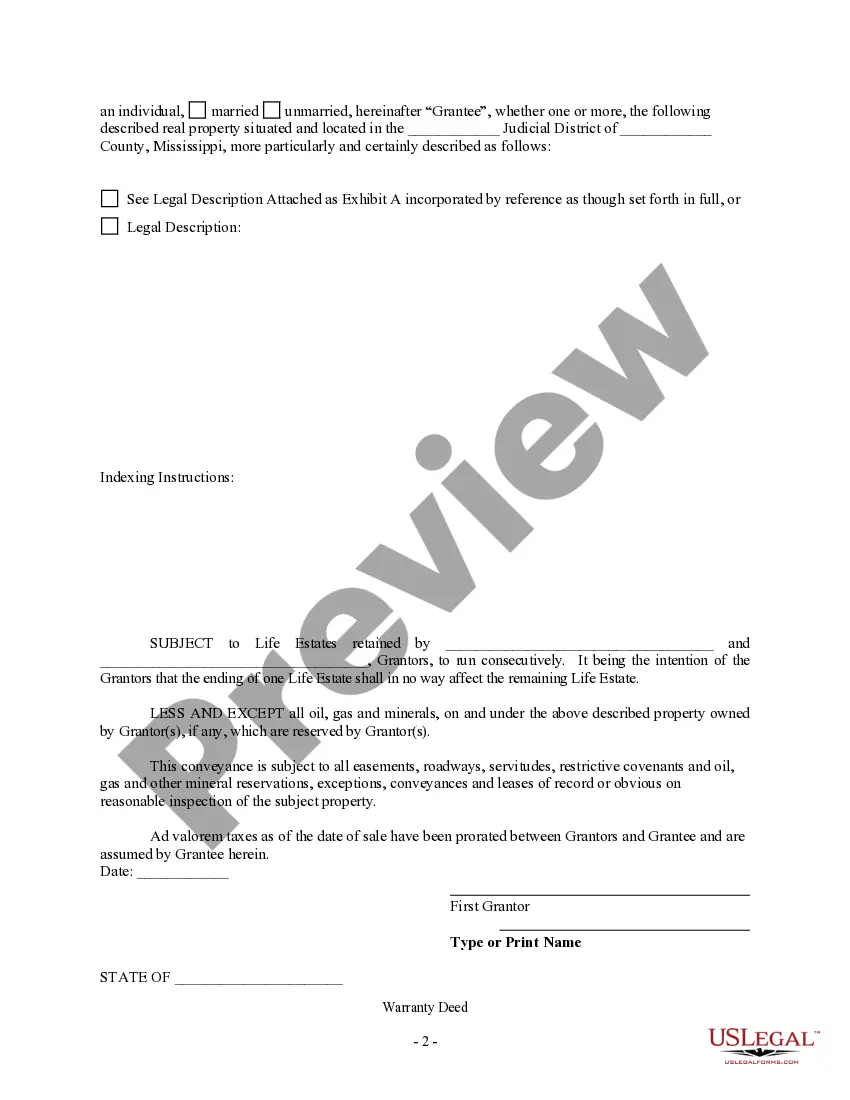
- Legal Description of Property: A detailed description of the property being transferred, typically attached as an exhibit.
- Reservation of Life Estate: A clause indicating that the grantors retain a life estate in the property.
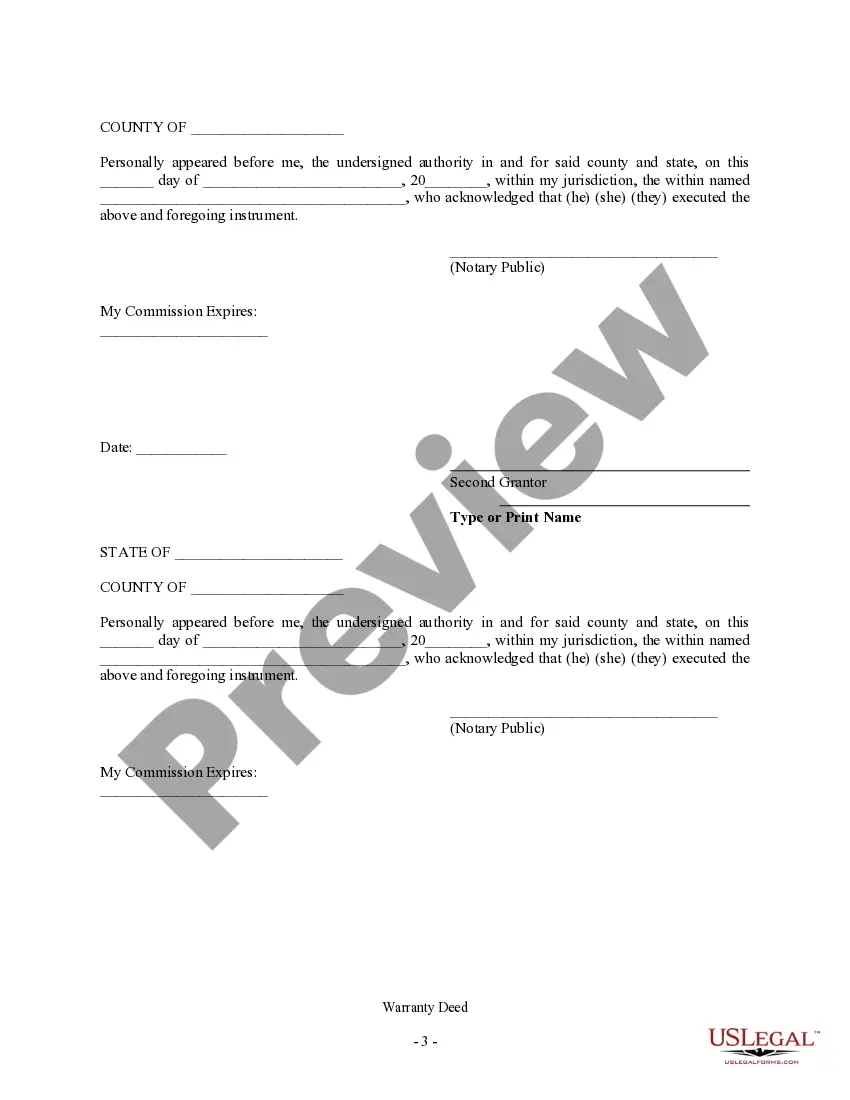
- Notary Acknowledgement: Signature sections for notarization to authenticate the transaction.
- Consideration Clause: States the nominal amount of consideration for the transfer, commonly set at ten dollars.



Situations where this form applies
This warranty deed should be used when parents wish to gift property to their child but want to retain the right to live on or use the property for the rest of their lives. It is particularly useful for estate planning, as it helps avoid potential disputes and complications regarding property ownership after the parents' passing.
Who this form is for
- Parents who want to transfer ownership of their property to their child while keeping a life estate.
- Individuals involved in an estate planning process to secure property for future generations.
- Homeowners looking to manage family property and avoid probate issues.
Instructions for completing this form
- Identify the parties involved by providing details for both the grantors (parents) and grantee (child).
- Specify the property by including a detailed legal description, referencing Exhibit A if necessary.
- State the consideration amount, typically set at ten dollars, to validate the transfer.
- Include the date of execution and provide space for signatures of the grantors.
- Have the document notarized to ensure its legality and effectiveness.
Is notarization required?
To make this form legally binding, it must be notarized. Our online notarization service, powered by Notarize, lets you verify and sign documents remotely through an encrypted video session.
Get your form ready online
Our built-in tools help you complete, sign, share, and store your documents in one place.
Make edits, fill in missing information, and update formatting in US Legal Forms—just like you would in MS Word.
Download a copy, print it, send it by email, or mail it via USPS—whatever works best for your next step.
Sign and collect signatures with our SignNow integration. Send to multiple recipients, set reminders, and more. Go Premium to unlock E-Sign.
If this form requires notarization, complete it online through a secure video call—no need to meet a notary in person or wait for an appointment.
We protect your documents and personal data by following strict security and privacy standards.

Make edits, fill in missing information, and update formatting in US Legal Forms—just like you would in MS Word.

Download a copy, print it, send it by email, or mail it via USPS—whatever works best for your next step.

Sign and collect signatures with our SignNow integration. Send to multiple recipients, set reminders, and more. Go Premium to unlock E-Sign.

If this form requires notarization, complete it online through a secure video call—no need to meet a notary in person or wait for an appointment.

We protect your documents and personal data by following strict security and privacy standards.
Mistakes to watch out for
- Failing to provide a complete and accurate legal description of the property.
- Not having the deed properly notarized, which can invalidate the document.
- Omitting signatures or dates, which can lead to disputes over the authenticity of the document.
Why complete this form online
- Convenient access to the legal form that can be downloaded immediately.
- Editability allows you to fill in specific details tailored to your situation.
- Reliability from professionally drafted forms created by licensed attorneys.
Looking for another form?

Form popularity
FAQ
The Mississippi Life Estate Deed is a document that grants ownership of a parcel of real property to two separate parties: (1) the Life Tenant, and (2) the Remainderman.
A life estate deed permits the property owner to have full use of their property until their death, at which point the ownership of the property is automatically transferred to the beneficiary.
A warranty deed guarantees that: The grantor is the rightful owner of the property and has the legal right to transfer the title.The title would withstand third-party claims to ownership of the property. The grantor will do anything to ensure the grantee's title to the property.
This life estate deed is a document that transfers ownership of real property, while reserving access and use of the property for the duration of the grantor's life. It allows the original owner (grantor) to remain on the premises with full access to and benefits from the property.
There does not have to be a deed recorded to convey a life estate, and transferring the property fee simple during life could cause tax issues.
This life estate deed is a document that transfers ownership of real property, while reserving access and use of the property for the duration of the grantor's life. It allows the original owner (grantor) to remain on the premises with full access to and benefits from the property.
A life estate deed allows you to transfer property while reserving an interest during your lifetime or during the lifetime of someone else. Once the person who holds the life estate passes away, the Grantee fully owns the property.
Reservation of the present interest allows the owner to retain ownership for a period of time measured by the life of one or more individuals, by a term of years, or by a combination of the two.