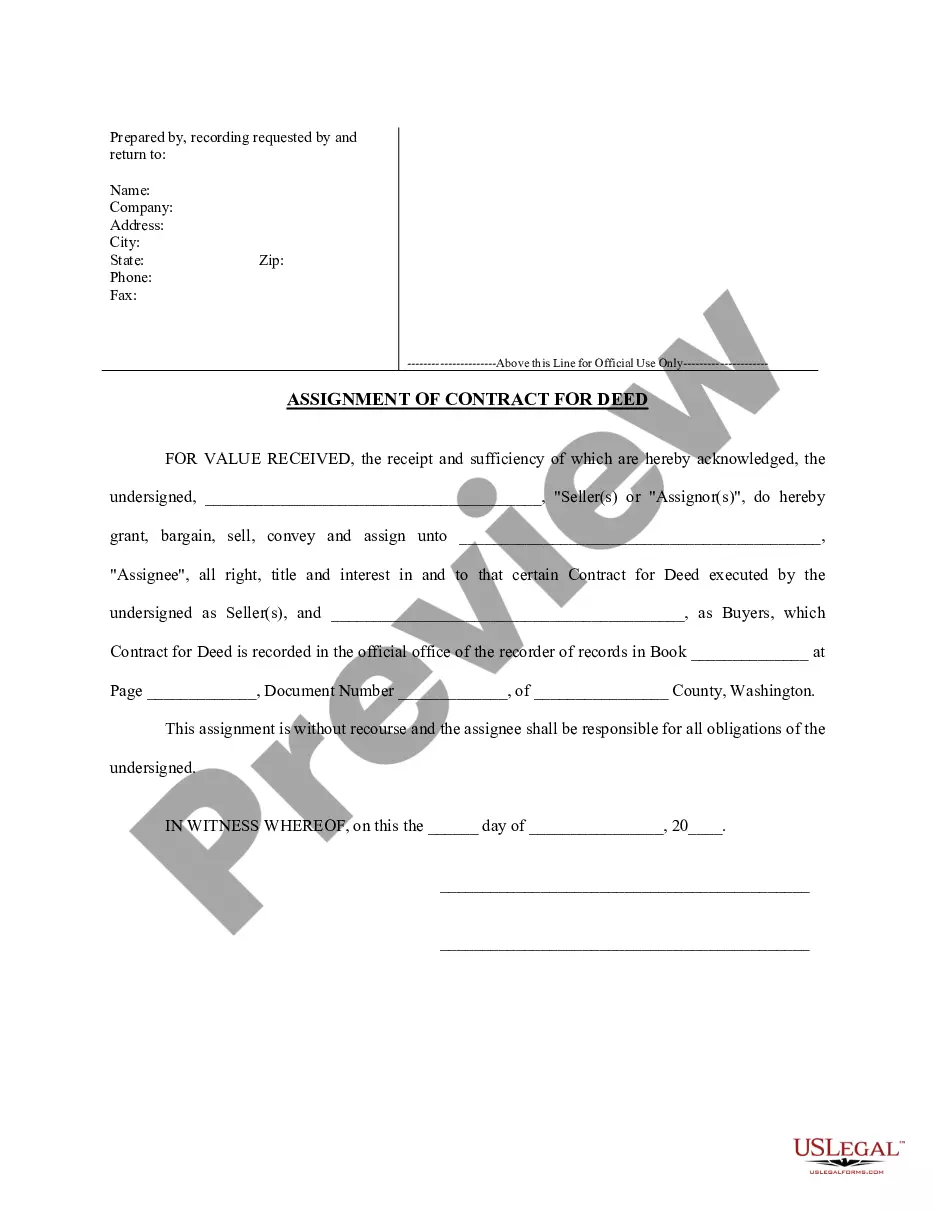
Missouri Assignment to Living Trust
Understanding this form
The Assignment to Living Trust form is a legal document used to assign all right, title, and interest in specific property to a living trust. A living trust is created during a person's lifetime and is intended for estate planning purposes, helping to manage and distribute assets after death. Unlike a will, which only goes into effect upon death, this form allows for the transfer of property into the trust while the individual is still alive. This ensures that the assets are managed according to the terms set forth in the trust agreement.
Key components of this form
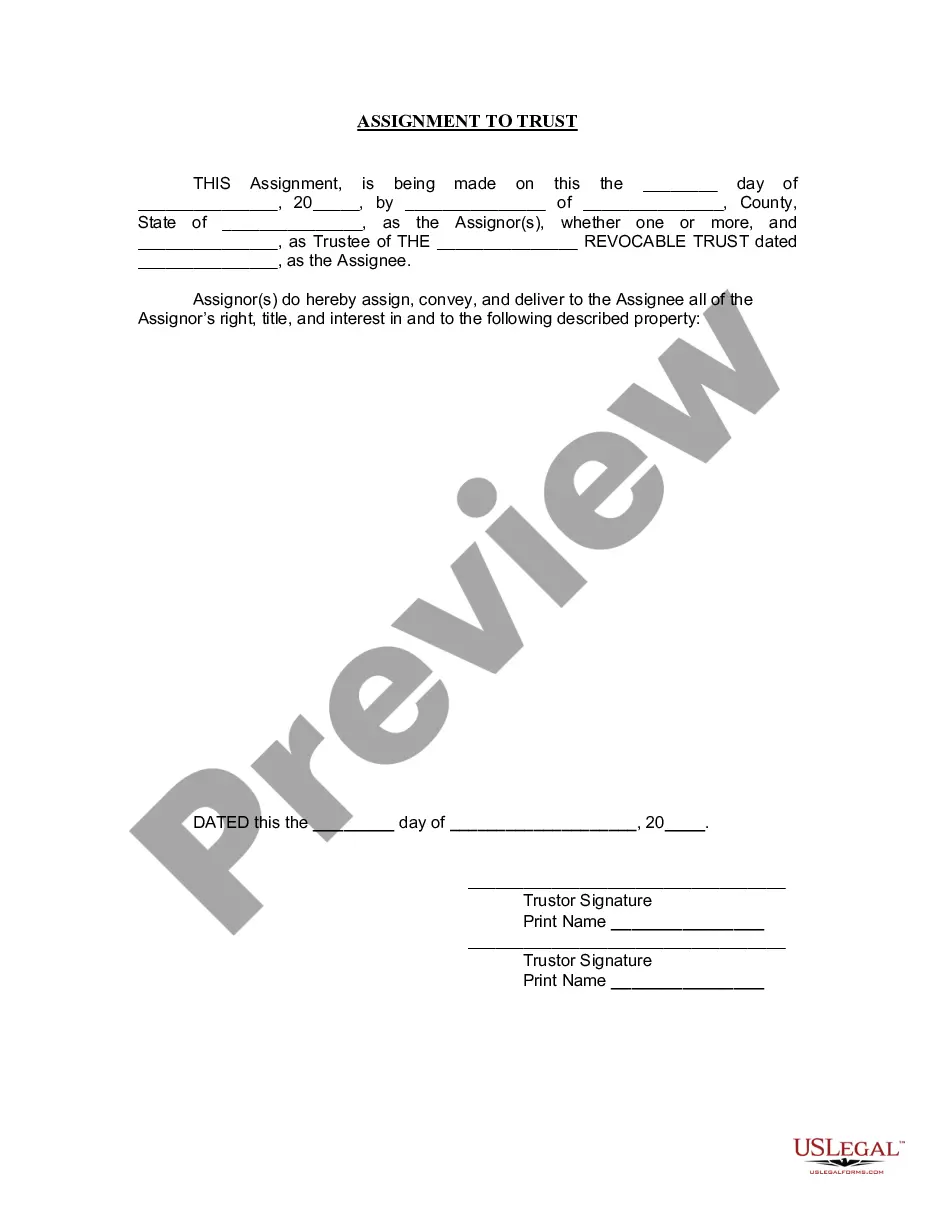
- Assignor information: The name and address of the person transferring the property.
- Trustee details: The name of the trustee who will manage the trust.
- Property description: A detailed description of the property being assigned to the trust.
- Signatures and dates: The necessary signatures of the assignor and trustee, along with the date of the assignment.
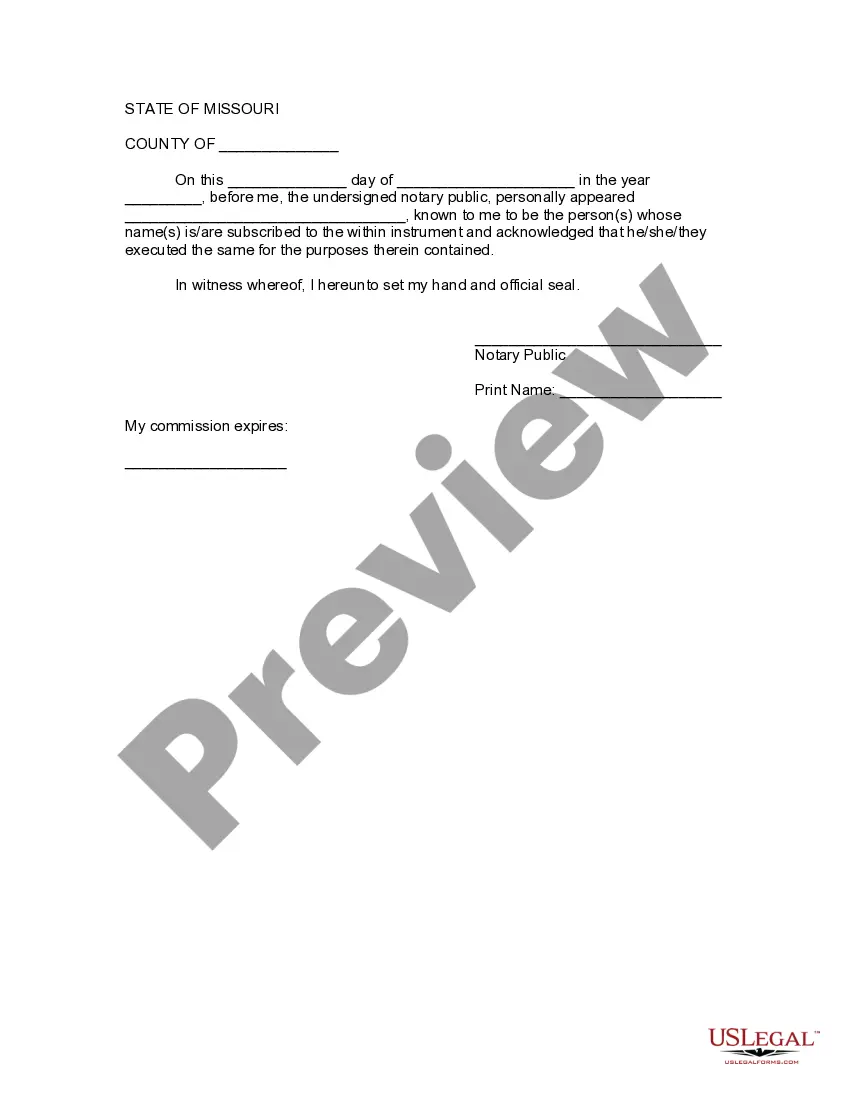
- Notary acknowledgment: A section for notarization to verify the identity of the signers.

Situations where this form applies
This form is essential when you want to transfer assets into a living trust to facilitate future estate management. Typical scenarios that warrant the use of this form include setting up a trust to avoid probate, ensuring specific asset distribution according to your wishes, or simplifying the management of your estate during your lifetime. It is particularly useful for individuals who have accumulated significant assets or properties that they wish to categorize and manage under a trust.
Who can use this document
- Individuals establishing a living trust for their estate planning.
- Trustors who wish to manage specific assets during their lifetime.
- People looking to streamline the transfer of property to beneficiaries in a living trust.
- Anyone who wants to avoid probate complications and simplify asset distribution.
How to complete this form
- Identify the parties: Enter the full names and addresses of the assignor and trustee.
- Specify the property: Clearly describe the property being assigned to the living trust.
- Enter the date: Fill in the date when the assignment is being made.
- Signatures: Have the assignor and trustee sign the document in the designated areas.
- Notarization: Take the completed form to a notary public for acknowledgment, ensuring the signatures are verified.
Notarization guidance
This form needs to be notarized to ensure legal validity. US Legal Forms provides secure online notarization powered by Notarize, allowing you to complete the process through a verified video call, available anytime.
Get your form ready online
Our built-in tools help you complete, sign, share, and store your documents in one place.
Make edits, fill in missing information, and update formatting in US Legal Forms—just like you would in MS Word.
Download a copy, print it, send it by email, or mail it via USPS—whatever works best for your next step.
Sign and collect signatures with our SignNow integration. Send to multiple recipients, set reminders, and more. Go Premium to unlock E-Sign.
If this form requires notarization, complete it online through a secure video call—no need to meet a notary in person or wait for an appointment.
We protect your documents and personal data by following strict security and privacy standards.

Make edits, fill in missing information, and update formatting in US Legal Forms—just like you would in MS Word.

Download a copy, print it, send it by email, or mail it via USPS—whatever works best for your next step.

Sign and collect signatures with our SignNow integration. Send to multiple recipients, set reminders, and more. Go Premium to unlock E-Sign.

If this form requires notarization, complete it online through a secure video call—no need to meet a notary in person or wait for an appointment.

We protect your documents and personal data by following strict security and privacy standards.
Mistakes to watch out for
- Failing to accurately describe the property, which can cause confusion about what is included in the trust.
- Not having the document notarized, which could render it ineffective in some jurisdictions.
- Neglecting to include all required signatures, leading to potential disputes regarding the trust.
- Using outdated forms that do not comply with current state laws.
Benefits of using this form online
- Convenience: Access and complete the form at any time from the comfort of your home.
- Editability: Easily make changes to the document without the hassle of reprinting.
- Reliability: Receive a professionally drafted form created by licensed attorneys, ensuring compliance with legal standards.
Main things to remember
- The Assignment to Living Trust form is essential for transferring property into a living trust.
- Proper execution, including notarization, is necessary for the document's validity.
- This form is applicable for individuals engaged in estate planning and asset management.
- Ensure to provide complete and accurate information when filling out the form.
Looking for another form?



Form popularity
FAQ
Missouri Assignment to Living Trust is a legal document used to transfer all right, title, and interest in specific property into a living trust. The transfer occurs during the person's lifetime, so assets are managed under the trust terms and can be distributed according to the trust agreement, potentially avoiding probate and simplifying estate management in Missouri.
Assets to consider for transfer with this form are those you want held in the trust, described in the Property Description component. The template focuses on transferring specific property and does not provide a universal list of assets to avoid. For asset-specific guidance on what to place or exclude in a Missouri living trust, consult a licensed attorney.
Common trustee mistakes include incomplete or incorrect trustee details and failing to complete the Notary acknowledgment. The Missouri Assignment to Living Trust requires correct trustee information and signatures, plus a notarization section to verify signers. Ensuring these components are accurate helps the document function as intended.
This form focuses on transferring specific property into the trust and requires a clear Property Description, assignor information, trustee details, signatures, dates, and a notary acknowledgment. It does not provide guidance on exclusions; for decisions about what to keep out of a Missouri living trust, seek professional advice.
Common mistakes in living trusts include failing to describe the property accurately and forgetting to sign or notarize the assignment. The Missouri Assignment to Living Trust lists the essential components—assignor information, trustee details, property description, signatures, dates, and a notary acknowledgment—to help avoid these errors.
This form is tailored to Missouri and uses a state-specific layout that includes assignor information, trustee details, property description, signatures with dates, and a notary acknowledgment as core components. These features help ensure proper execution and alignment with Missouri’s record-keeping expectations for trust property transfers.