Minnesota Last Will for a Widow or Widower with no Children
About this form
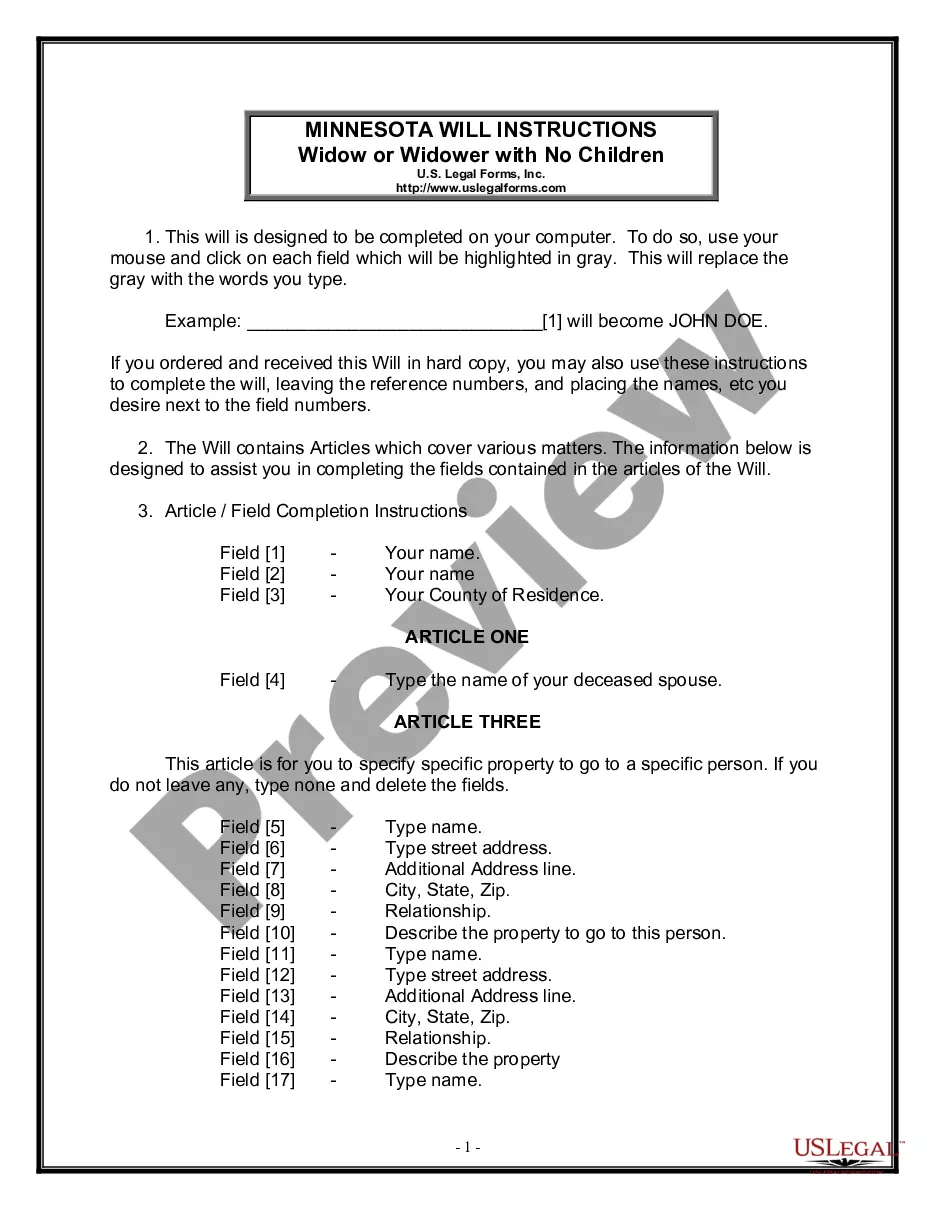
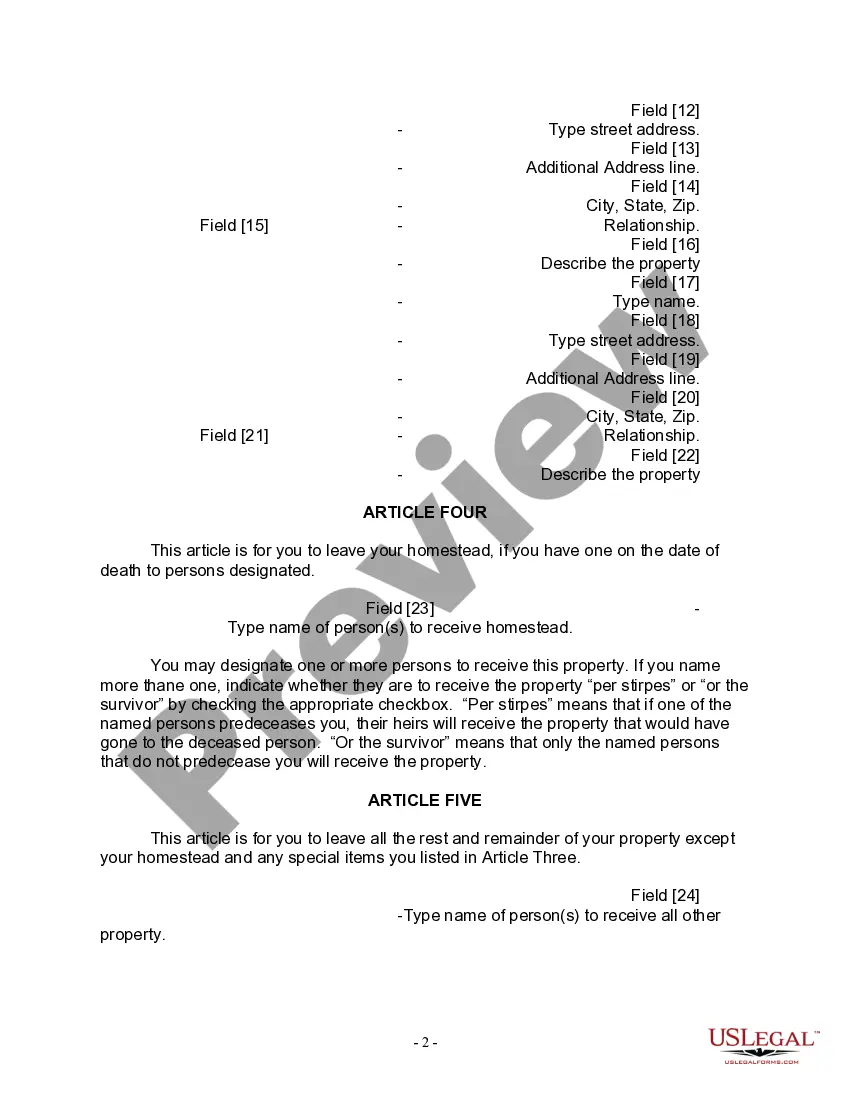
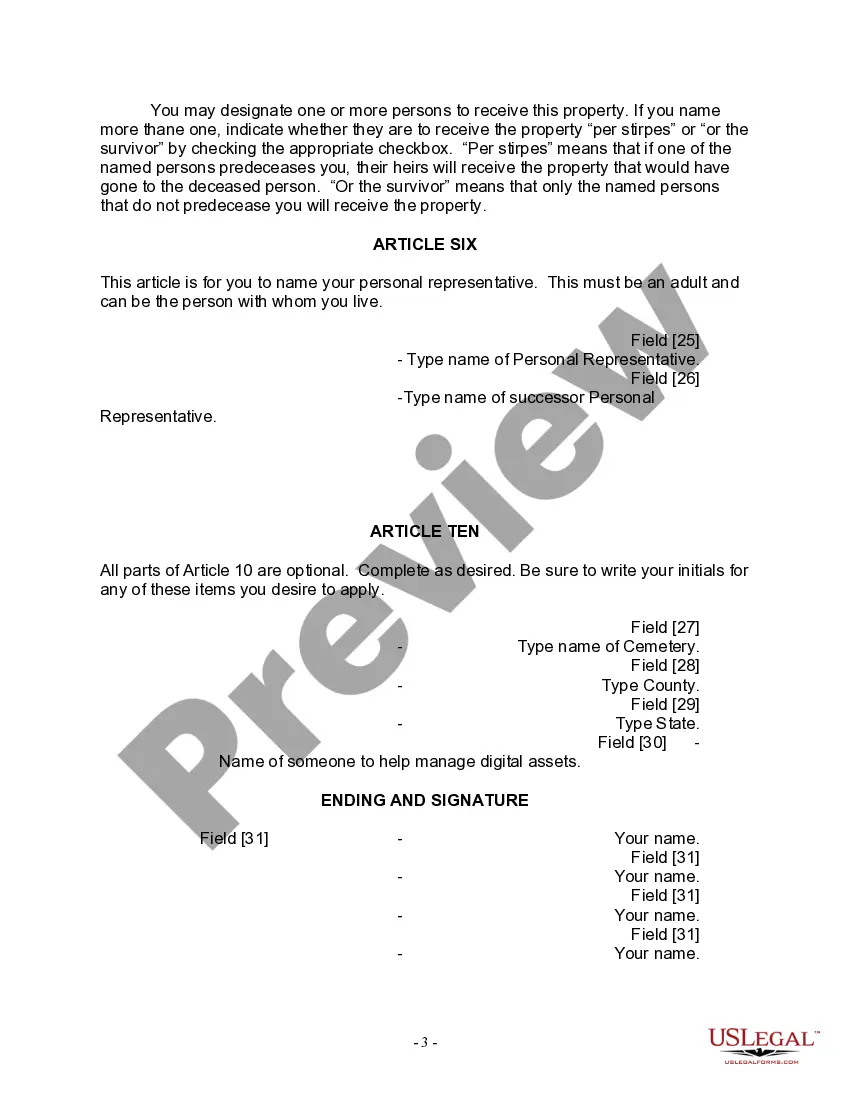
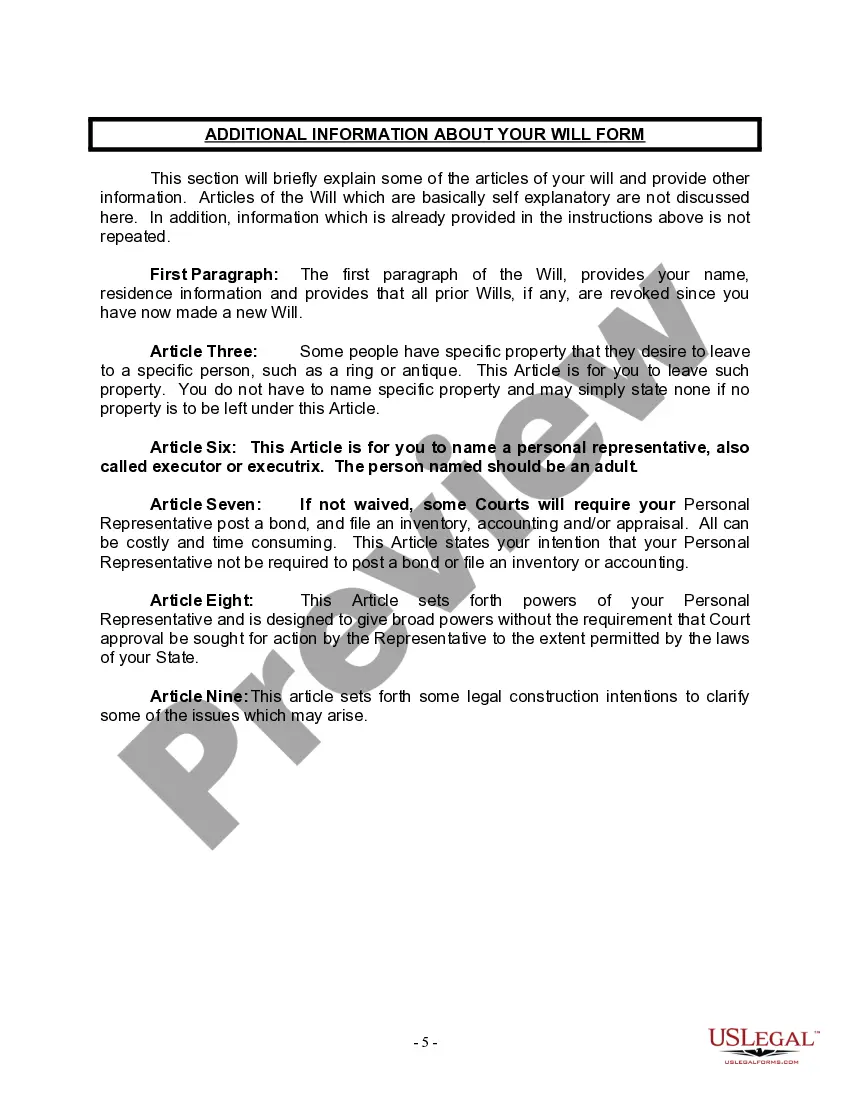
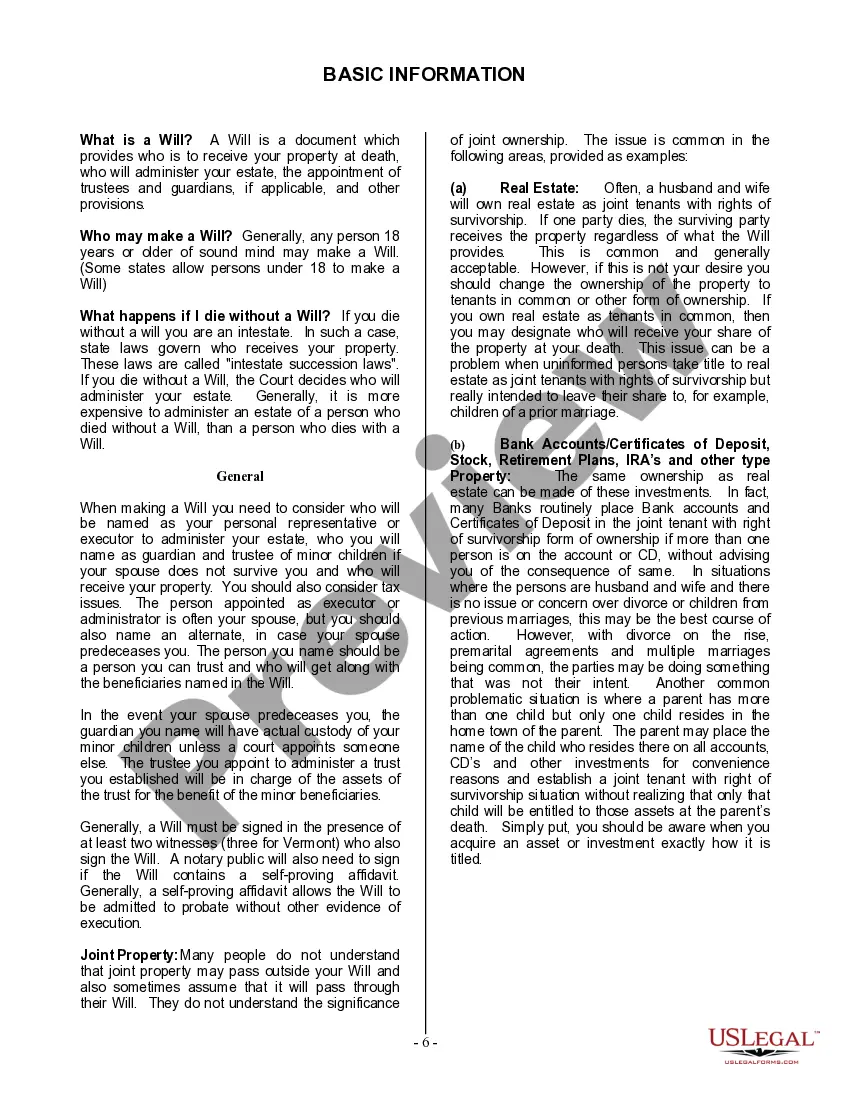
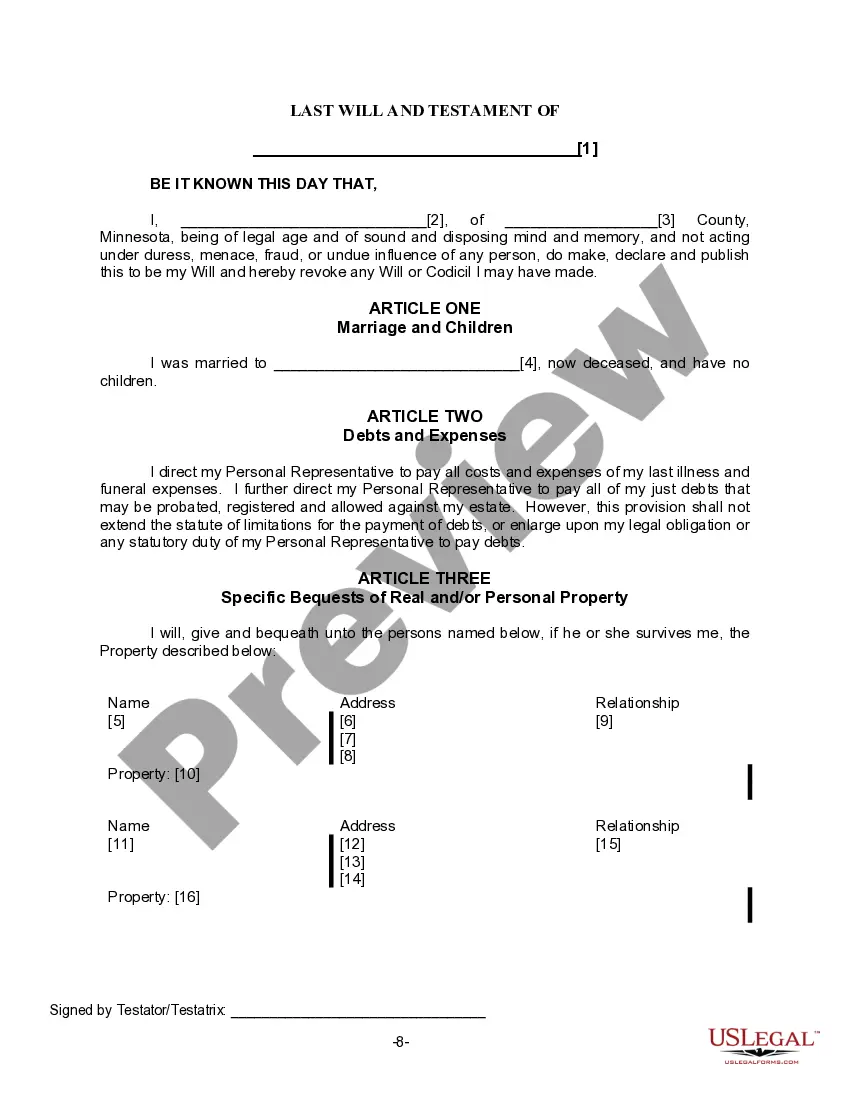
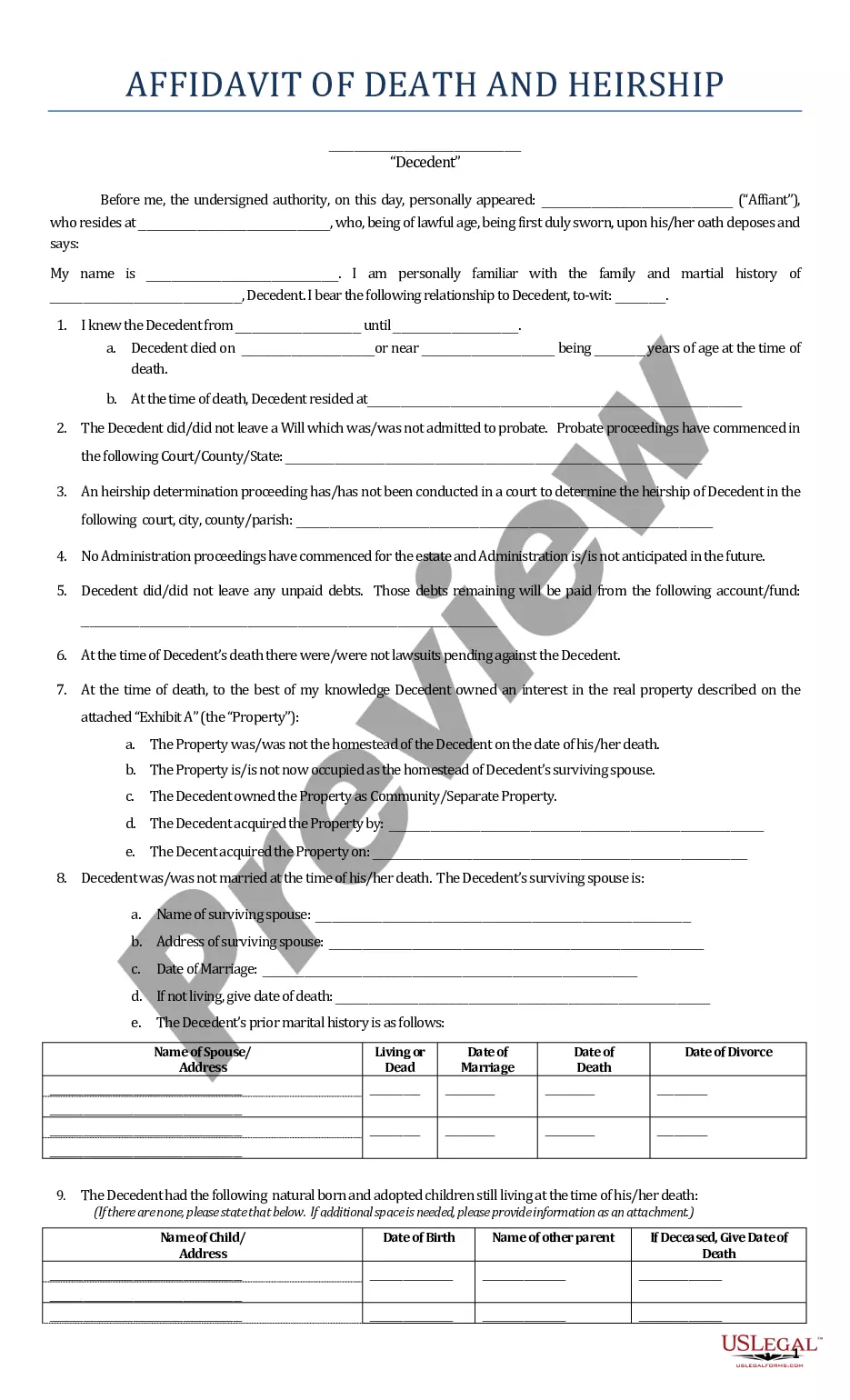
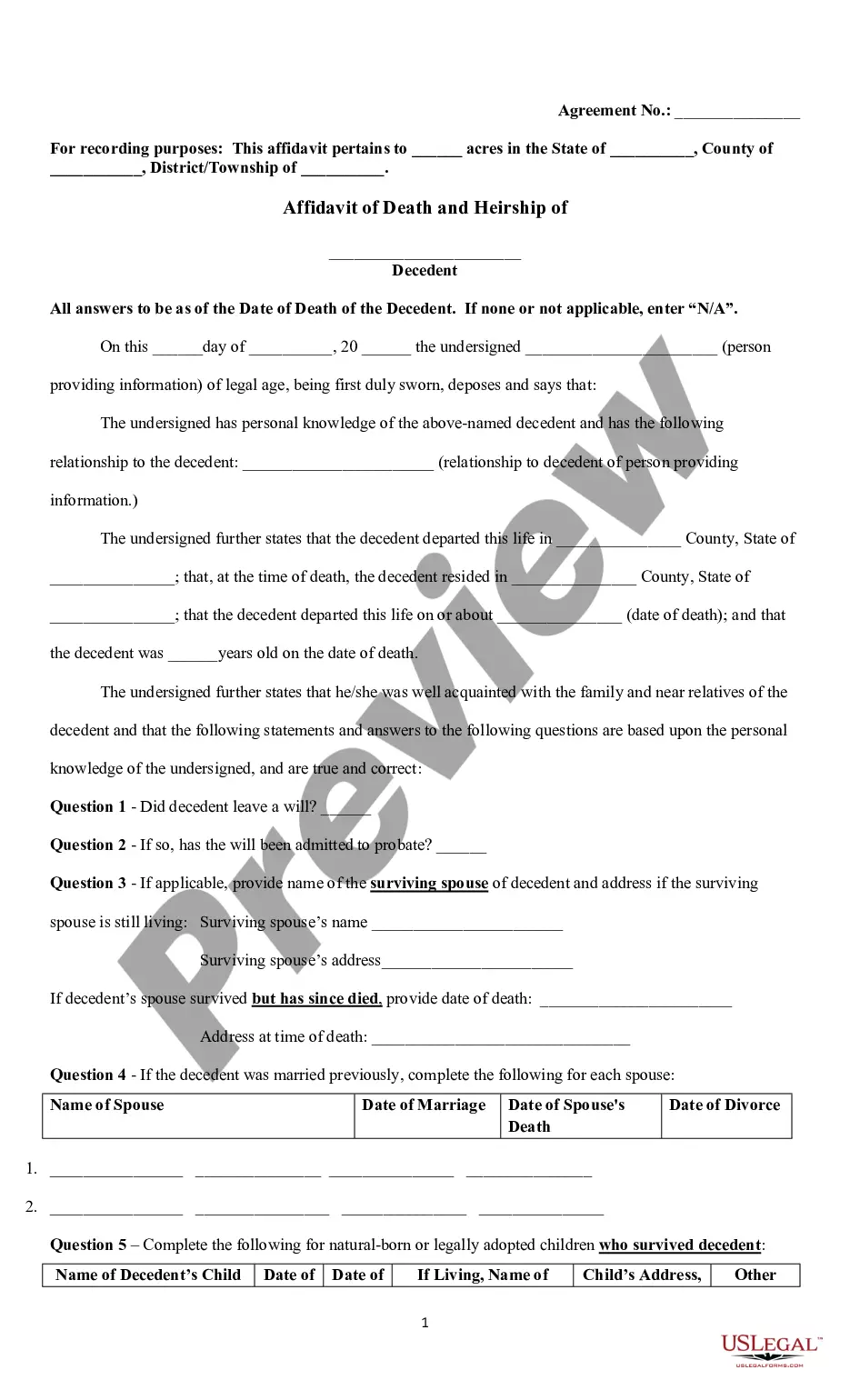
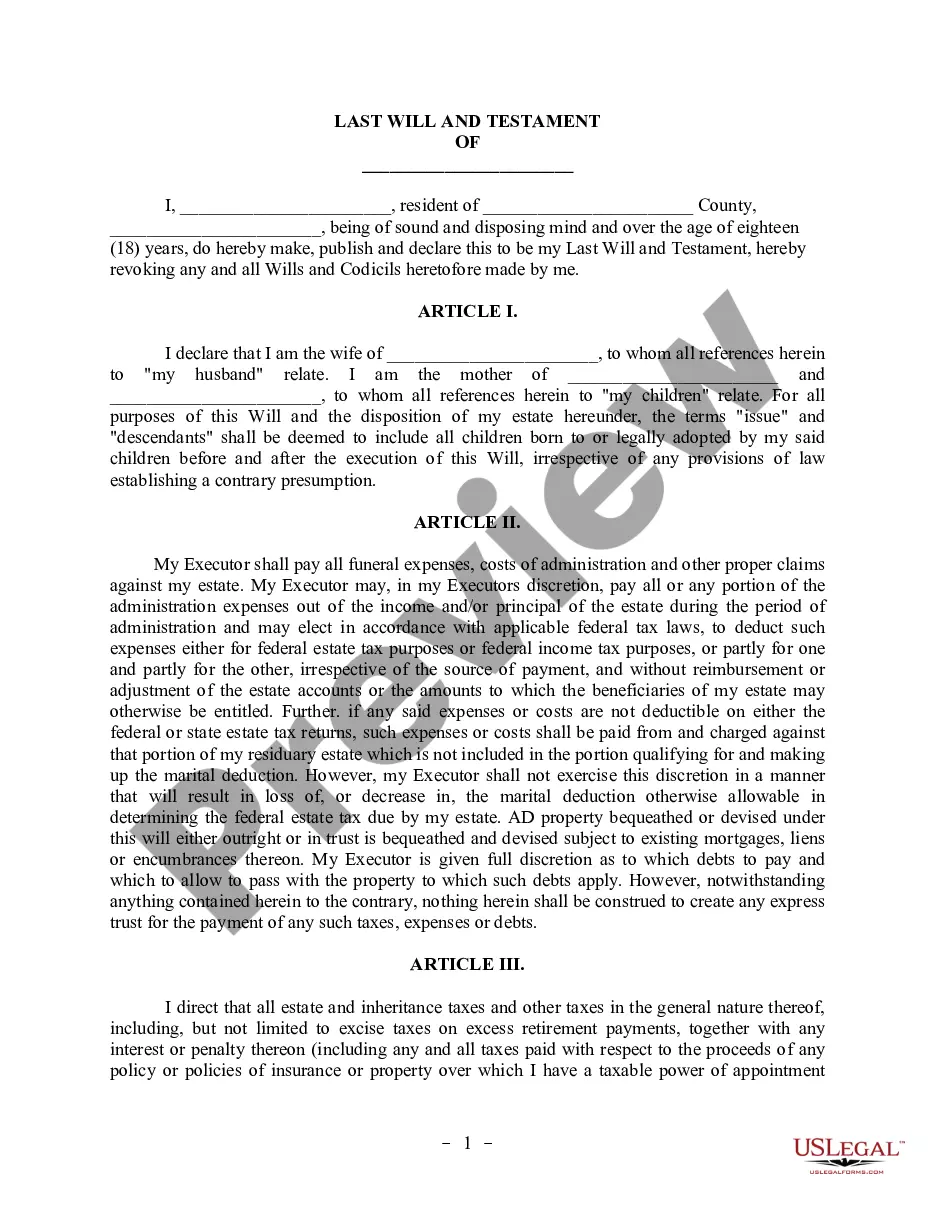
The Last Will for a Widow or Widower with No Children is a legal document that outlines how a deceasedâs assets will be distributed upon their passing. This form is specifically designed for individuals who are widowed or widowers and do not have children. It provides a clear structure for appointing a personal representative, designating beneficiaries, and specifying how property should be distributed, thus differing from other wills which may involve minor children or complex family dynamics.
Main sections of this form
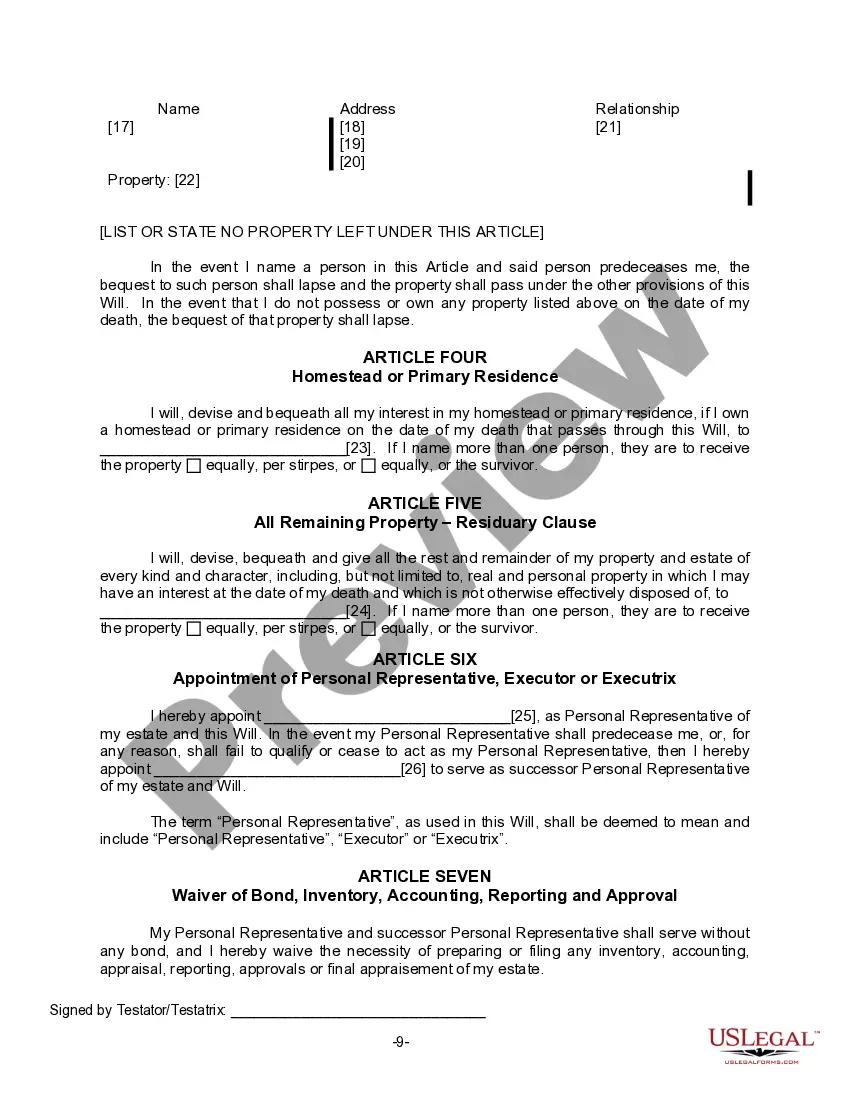
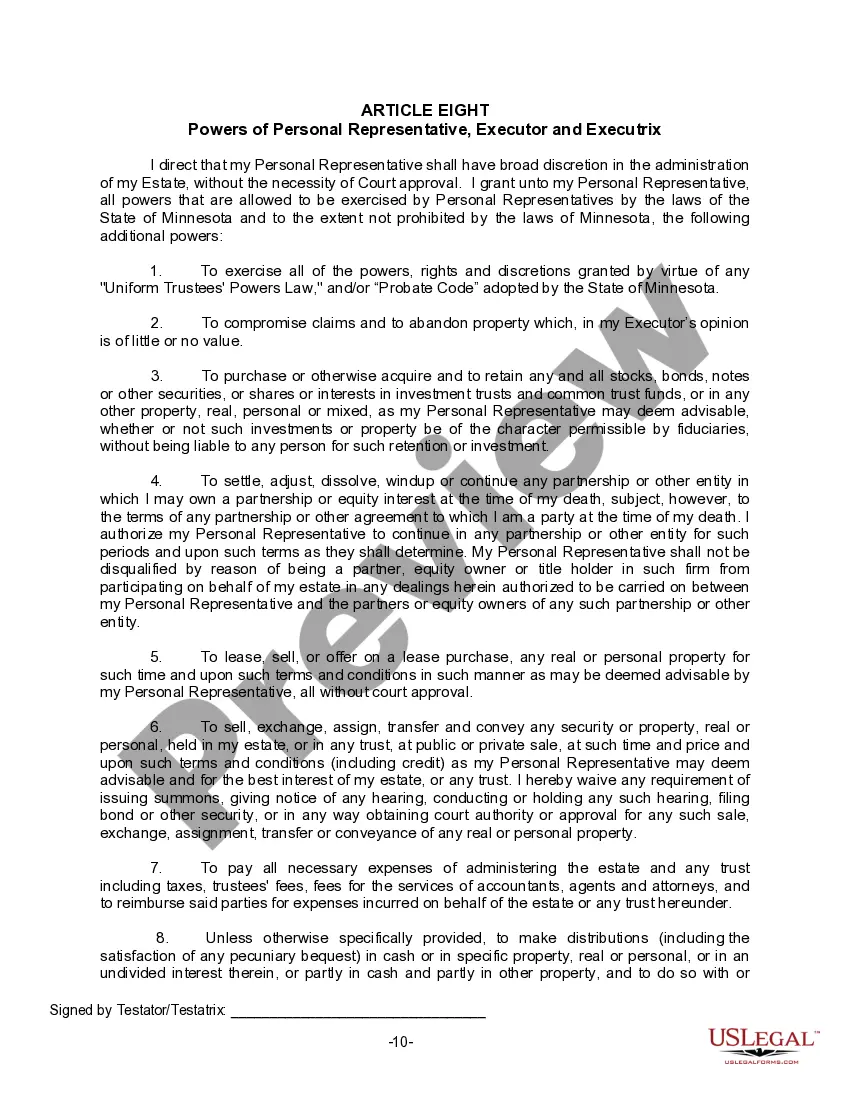
- Personal representative appointment: Name the individual responsible for administering the estate.
- Specific bequests: Detail any specific items of property or assets you wish to leave to designated individuals.
- Homestead distribution: Specify who will receive your primary residence.
- Residue clause: Indicate who will inherit any remaining assets not specifically mentioned elsewhere.
- Witness and signature requirements: Ensure the document is signed in the presence of two witnesses and includes a notary if applicable.


When to use this document
This form should be used when a widow or widower wants to create a legally binding will that reflects their wishes for asset distribution after death. It is particularly suitable for individuals without children who wish to avoid intestacy laws, ensuring that their assets are passed to individuals of their choice rather than being dictated by state law.
Who should use this form
This form is intended for:
- Widows or widowers who do not have children.
- Individuals seeking to simplify their estate planning process.
- Persons wanting to designate specific beneficiaries for their property in the absence of children.
Instructions for completing this form
- Begin by entering your full name and residential details.
- Appoint a personal representative responsible for handling your estate.
- Specify any personal property you want to bequeath to named individuals.
- Designate who will receive your homestead, if applicable.
- Complete the residue clause indicating who will inherit the remainder of your estate.
- Have the will signed in the presence of two witnesses and, if applicable, a notary public.
Notarization guidance
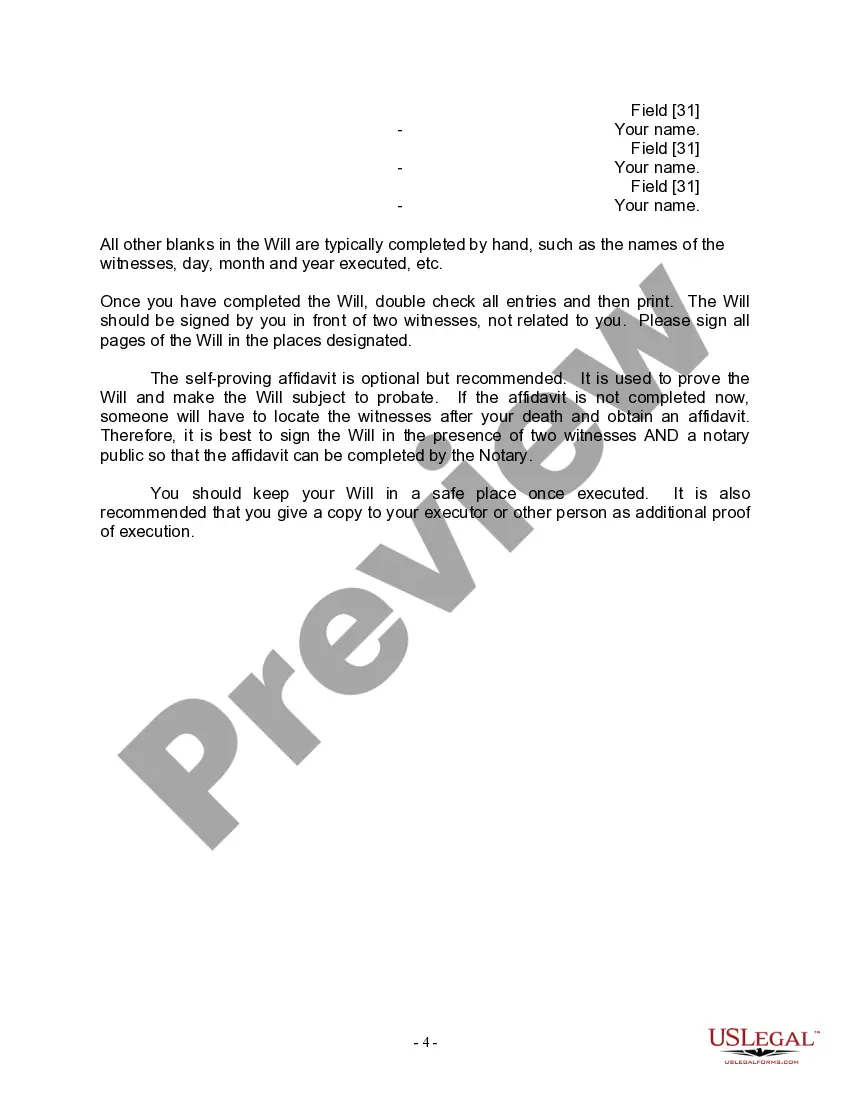
This form does not typically require notarization unless specified by local law. However, completing the self-proving affidavit with the help of a notary public is recommended to facilitate the probate process.
Get your form ready online
Our built-in tools help you complete, sign, share, and store your documents in one place.
Make edits, fill in missing information, and update formatting in US Legal Forms—just like you would in MS Word.
Download a copy, print it, send it by email, or mail it via USPS—whatever works best for your next step.
Sign and collect signatures with our SignNow integration. Send to multiple recipients, set reminders, and more. Go Premium to unlock E-Sign.
If this form requires notarization, complete it online through a secure video call—no need to meet a notary in person or wait for an appointment.
We protect your documents and personal data by following strict security and privacy standards.

Make edits, fill in missing information, and update formatting in US Legal Forms—just like you would in MS Word.

Download a copy, print it, send it by email, or mail it via USPS—whatever works best for your next step.

Sign and collect signatures with our SignNow integration. Send to multiple recipients, set reminders, and more. Go Premium to unlock E-Sign.

If this form requires notarization, complete it online through a secure video call—no need to meet a notary in person or wait for an appointment.

We protect your documents and personal data by following strict security and privacy standards.
Mistakes to watch out for
- Failing to sign the will in front of the required witnesses.
- Not specifying or clarifying who receives specific items of property.
- Omitting to name a personal representative, which can complicate probate.
- Neglecting to store the will in a safe, accessible location.
Benefits of using this form online
- Convenient access to customizable legal forms from home.
- Edit and fill out the form directly on your computer for accuracy.
- Save time and reduce costs compared to hiring a lawyer for basic will preparation.
- You receive a structured document that meets legal standards without confusion.
Looking for another form?
Form popularity
FAQ
In Minnesota, the order of inheritance typically follows a specific hierarchy outlined in state laws. When a widow or widower with no children passes away, their assets generally go to their surviving spouse, followed by parents, siblings, and other relatives. If no relatives exist, the estate may go to the state. Understanding these laws is essential when creating your Minnesota Last Will for a Widow or Widower with no Children, and resources like US Legal Forms can help clarify these regulations for you.
Yes, you can write your own will and have it notarized in Minnesota. A properly executed Minnesota Last Will for a Widow or Widower with no Children does not require a lawyer, but it must be signed by you and witnessed by two individuals. Notarization can add an extra layer of validity, making it easier to enforce your wishes. US Legal Forms provides templates that can simplify this process for you.
You do not need a lawyer to create a Minnesota Last Will for a Widow or Widower with no Children. Minnesota law allows individuals to write their own wills, provided they meet specific requirements. However, consulting a lawyer can ensure that your will accurately reflects your wishes and adheres to legal standards. Using resources like US Legal Forms can guide you through the process without the need for legal representation.
To write a simple will in Minnesota, start by clearly stating your intentions regarding your assets and any specific bequests. For a widow or widower with no children, a Minnesota Last Will for a Widow or Widower with no Children should clearly designate beneficiaries and any alternative plans. Using a reliable resource like US Legal Forms can help streamline this process, providing templates that allow you to customize your will according to your individual needs.
In Minnesota, wills do not need to be notarized to be valid. However, having your will notarized can help expedite the probate process and reduce challenges to its validity. If you are drafting a Minnesota Last Will for a Widow or Widower with no Children, it's a good idea to consider notarization as an extra precaution. US Legal Forms can assist you with the necessary steps to ensure your will is properly executed.
No, you do not need a lawyer to write a will in Minnesota, but having legal assistance can be beneficial. For a widow or widower with no children, creating a Minnesota Last Will for a Widow or Widower with no Children involves specific considerations that a lawyer can help you navigate. If you prefer to do it yourself, US Legal Forms offers templates that simplify the process while ensuring compliance with state laws.
Yes, you can write your own will in Minnesota. However, it is crucial that your will meets the state's legal requirements to be valid. If you are a widow or widower with no children, creating a Minnesota Last Will for a Widow or Widower with no Children can help ensure your assets are distributed as you wish. Consider using a platform like US Legal Forms to guide you through the process.
Making a will without a lawyer in Minnesota is entirely possible. You can use templates available online, such as those provided by uslegalforms, to guide you through the process. Ensure that your will meets state requirements, including signatures and witnesses. This approach is suitable for creating a Minnesota Last Will for a Widow or Widower with no Children, allowing you to express your wishes clearly.
Yes, you can write your own will in Minnesota and have it notarized. Make sure to follow the legal requirements, including having at least two witnesses sign it. Notarizing your will can add an extra layer of authenticity, although it is not strictly necessary. For a Minnesota Last Will for a Widow or Widower with no Children, ensure that your wishes are clearly documented.
In Minnesota, a spouse does inherit a significant portion of the estate, but not necessarily everything. If there are no children, the surviving spouse typically receives all assets. However, if there are children from a previous relationship, the distribution may vary. Understanding the implications for a Minnesota Last Will for a Widow or Widower with no Children is essential for your planning.