Minnesota Subcontractor's Notice to Owner - Corporation or LLC
Overview of this form
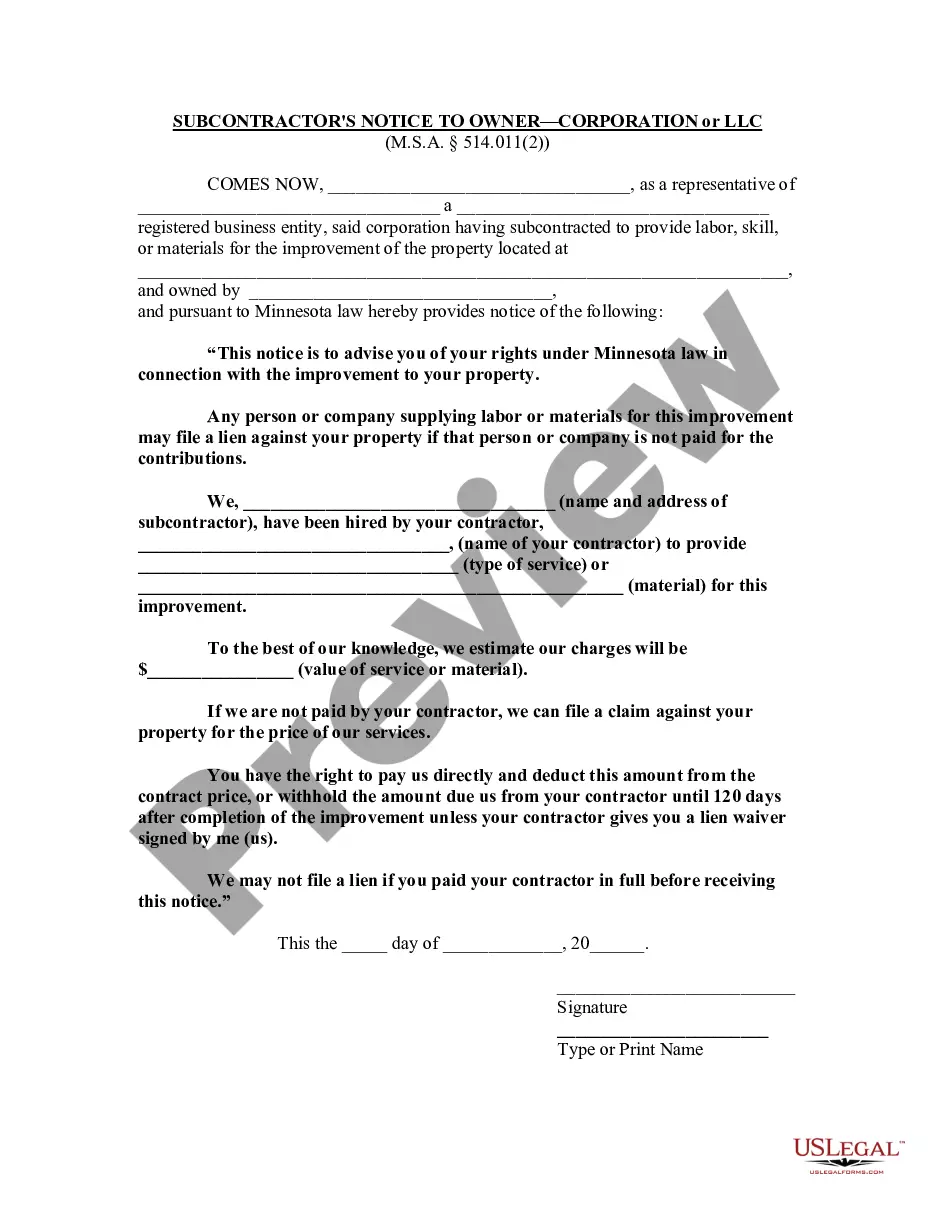
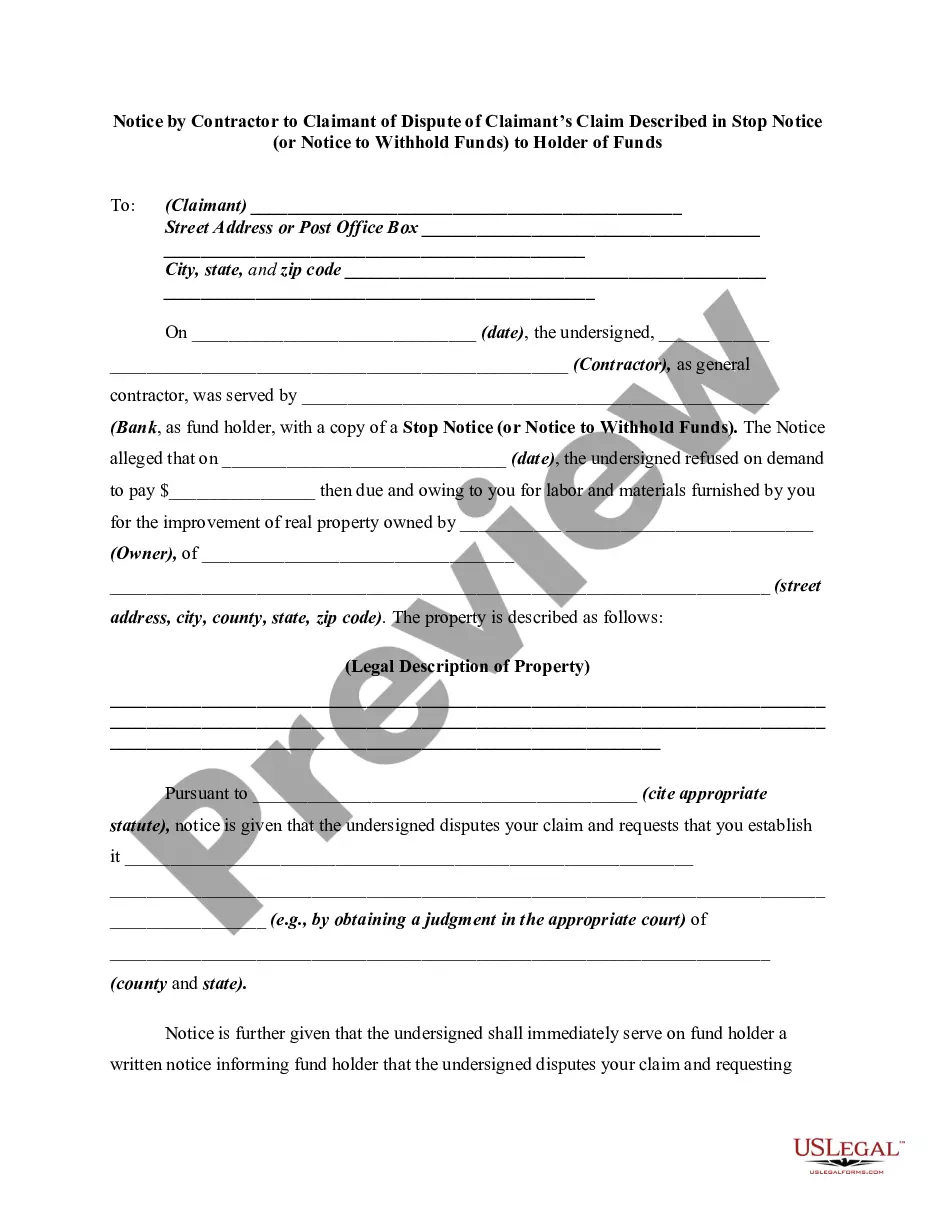
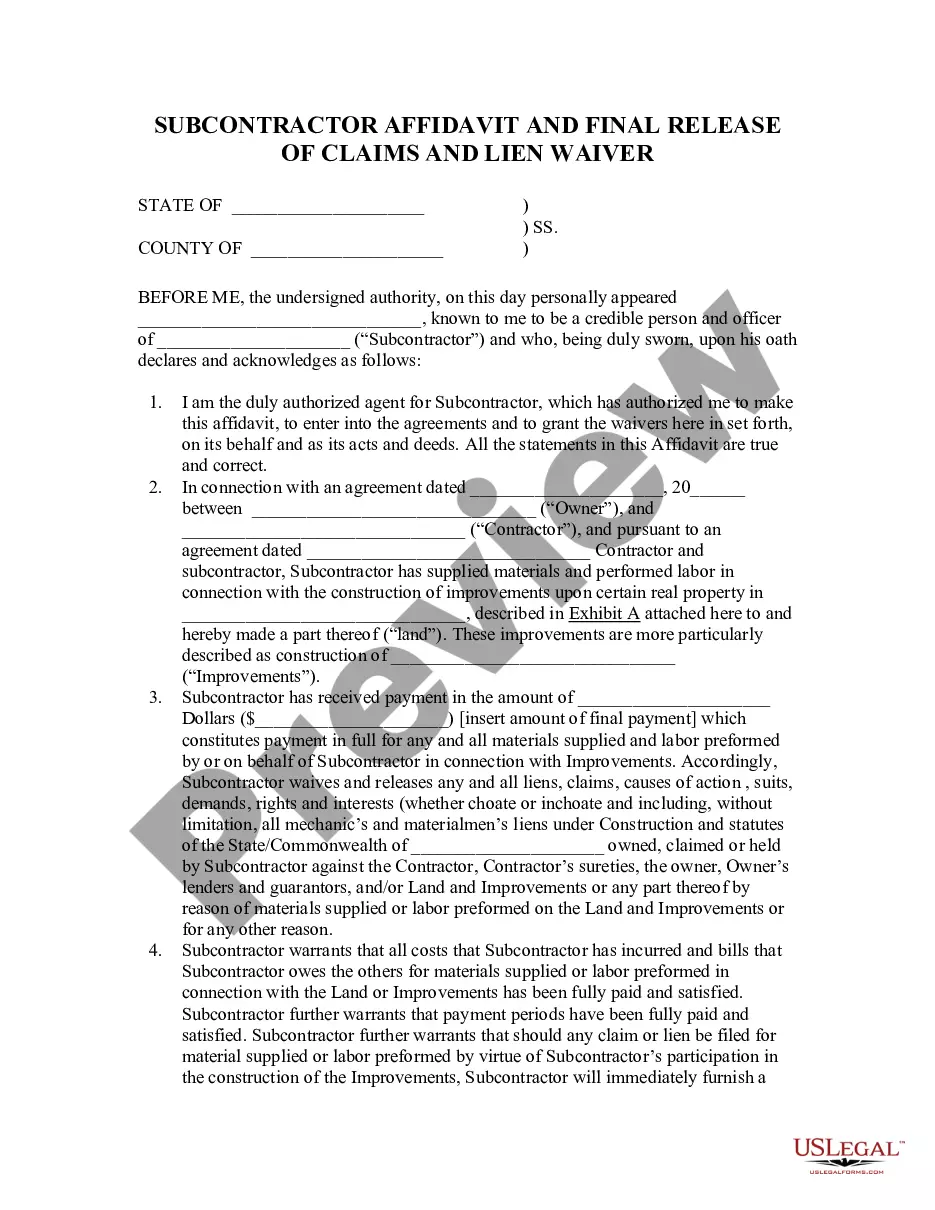
The Subcontractor's Notice to Owner - Corporation or LLC is a legal document required by Minnesota law for subcontractors who have not had a direct contract with the property owner. This form notifies the property owner about the work being performed and outlines the potential for a lien if payment is not made by the general contractor. Unlike a direct contract, this notice serves as a precautionary step, ensuring that the owner knows who is providing services and the associated costs.
Main sections of this form
- Identification of the subcontractor and the corporation or LLC involved.
- Details of the property and the owner.
- Type of labor, skill, or materials being provided.
- Estimated charges for the provided services or materials.
- Rights and options available to the property owner regarding payments and liens.
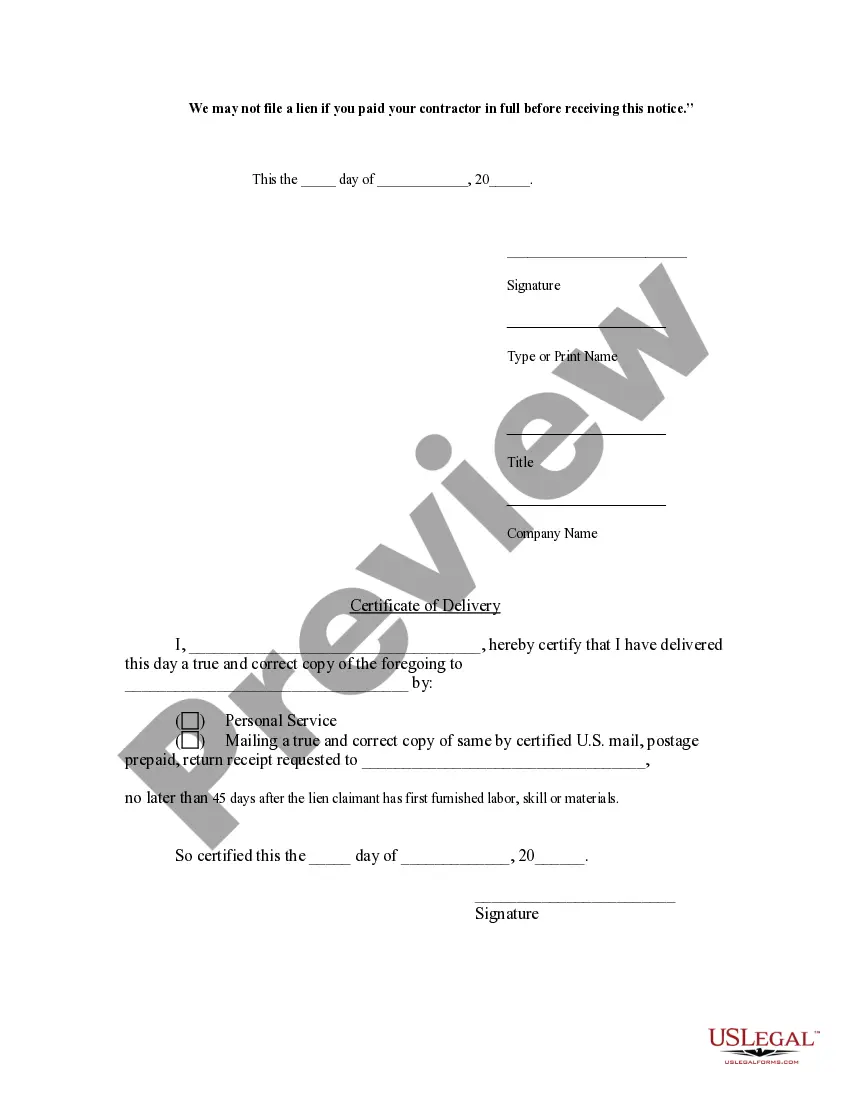
- Signature of the subcontractor and certificate of delivery.

Situations where this form applies
This form should be used when a subcontractor is providing labor or materials for property improvement without a direct agreement with the property owner. It is essential to submit this notice within forty-five days of starting work to protect your right to file a lien if the contractor fails to pay.
Who this form is for
- Subcontractors working under a general contractor in Minnesota.
- Corporations or LLCs that have not established a direct contract with property owners.
- Any party providing significant labor or materials for a property improvement project.
Instructions for completing this form
- Enter the name and address of the subcontractor and the corporation or LLC.
- Provide details about the property being improved, including its location and owner.
- Specify the type of services or materials being provided by the subcontractor.
- Fill in the estimated charges for the work or materials supplied.
- Sign and date the form, certifying its delivery to the property owner.
Is notarization required?
This form usually doesn’t need to be notarized. However, local laws or specific transactions may require it. Our online notarization service, powered by Notarize, lets you complete it remotely through a secure video session, available 24/7.
Get your form ready online
Our built-in tools help you complete, sign, share, and store your documents in one place.
Make edits, fill in missing information, and update formatting in US Legal Forms—just like you would in MS Word.
Download a copy, print it, send it by email, or mail it via USPS—whatever works best for your next step.
Sign and collect signatures with our SignNow integration. Send to multiple recipients, set reminders, and more. Go Premium to unlock E-Sign.
If this form requires notarization, complete it online through a secure video call—no need to meet a notary in person or wait for an appointment.
We protect your documents and personal data by following strict security and privacy standards.

Make edits, fill in missing information, and update formatting in US Legal Forms—just like you would in MS Word.

Download a copy, print it, send it by email, or mail it via USPS—whatever works best for your next step.

Sign and collect signatures with our SignNow integration. Send to multiple recipients, set reminders, and more. Go Premium to unlock E-Sign.

If this form requires notarization, complete it online through a secure video call—no need to meet a notary in person or wait for an appointment.

We protect your documents and personal data by following strict security and privacy standards.
Avoid these common issues
- Failing to submit the notice within the forty-five-day period.
- Not including all necessary details about the work being performed.
- Neglecting to deliver the notice to the correct property owner.
- Not signing the notice before submission.
Benefits of using this form online
- Easy to download and edit for your specific needs.
- Accessible at any time, allowing for prompt completion and submission.
- Reliable legal language, ensuring compliance with Minnesota law.
Looking for another form?
Form popularity
FAQ
If a lien is filed against your property (in the form of a lien statement), it must be filed with the county recorder and a copy delivered to you, the property owner, either personally or by certified mail, within 120 days after the last material or labor is furnished for the job.
When a contractor files a mechanics' (construction) lien on your home, the lien makes your home into what's called security for an outstanding debt, which the contractor claims is due and unpaid for services or materials.
The mechanic's lien statement must be filed with the county recorder, with a copy provided to the owner. Importantly, both the filing and the service on the owner must occur within 120 days after the lien claimant's last day of work at the property, or the last day that a material supplier provided materials.
A lien is a claim or legal right against assets that are typically used as collateral to satisfy a debt.A lien serves to guarantee an underlying obligation, such as the repayment of a loan. If the underlying obligation is not satisfied, the creditor may be able to seize the asset that is the subject of the lien.
In Minnesota, all mechanics liens must be filed within 120 days from the claimant's last day providing materials or labor. In Minnesota, mechanics liens expire 1 year from the date of the lien claimant's last furnishing of labor or materials to the project.
If a lien is filed against your property (in the form of a lien statement), it must be filed with the county recorder and a copy delivered to you, the property owner, either personally or by certified mail, within 120 days after the last material or labor is furnished for the job.
Posting a Bond Asselta says to expect to pay 110 percent of the lien amount. Submit the bond to the court. The lien will then transfer to the bond and clear the property's title. Wait for the contractor claimant to foreclose on the lien in the allotted period to dispute the lien in court.
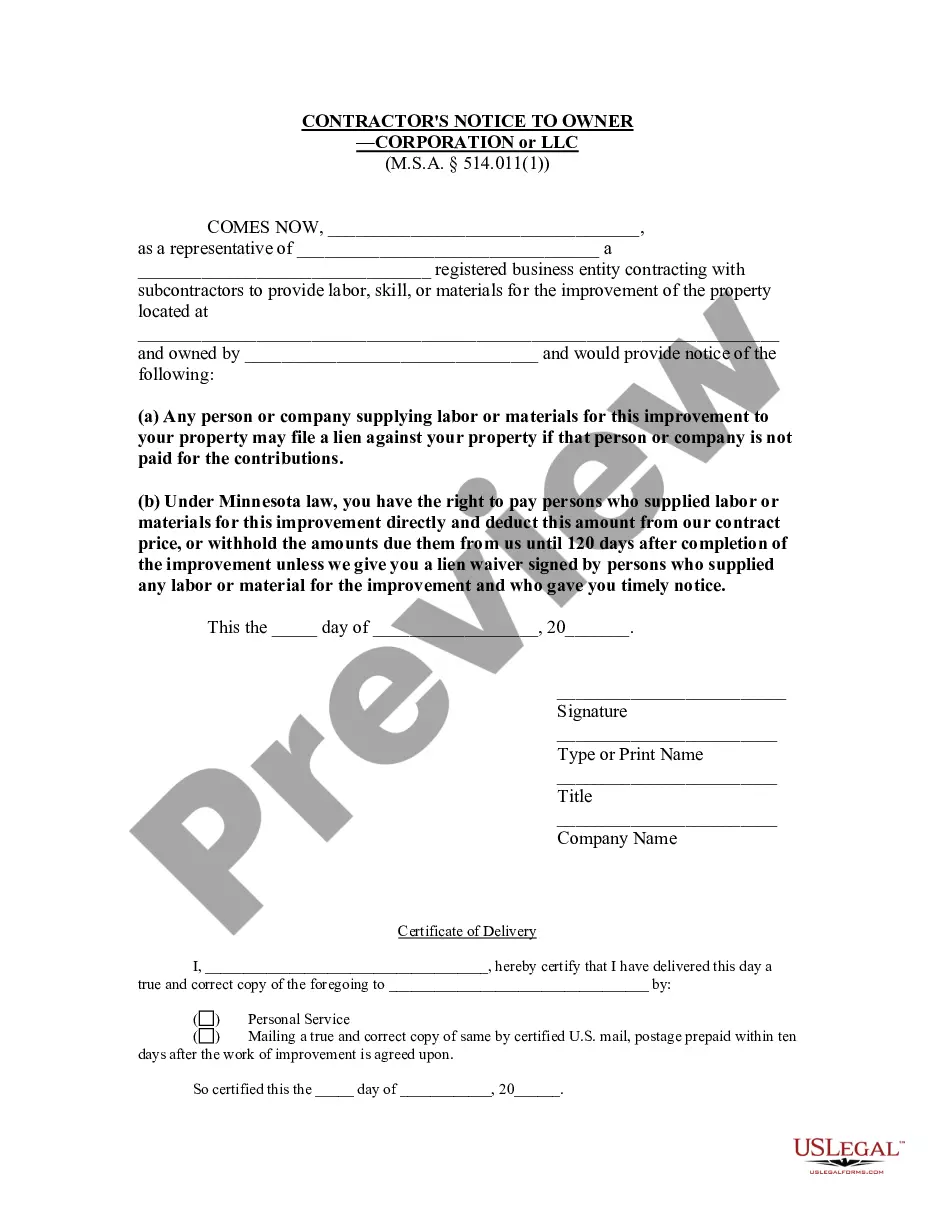
The notice must inform the homeowner of the contractor's right to lien the property, and the right to pay off any subcontractors that haven't been paid by the general contractor.