Minnesota Warranty Deed from a Trust to a Trust
Understanding this form
A Warranty Deed from a Trust to a Trust is a legal document where one trust (the Grantor) conveys property ownership to another trust (the Grantee). This form certifies the transfer and ensures that the property is free from encumbrances, except as disclosed. Unlike a quitclaim deed, a warranty deed offers guarantees about the property's title, making it a more secure option for the Grantee.
Form components explained
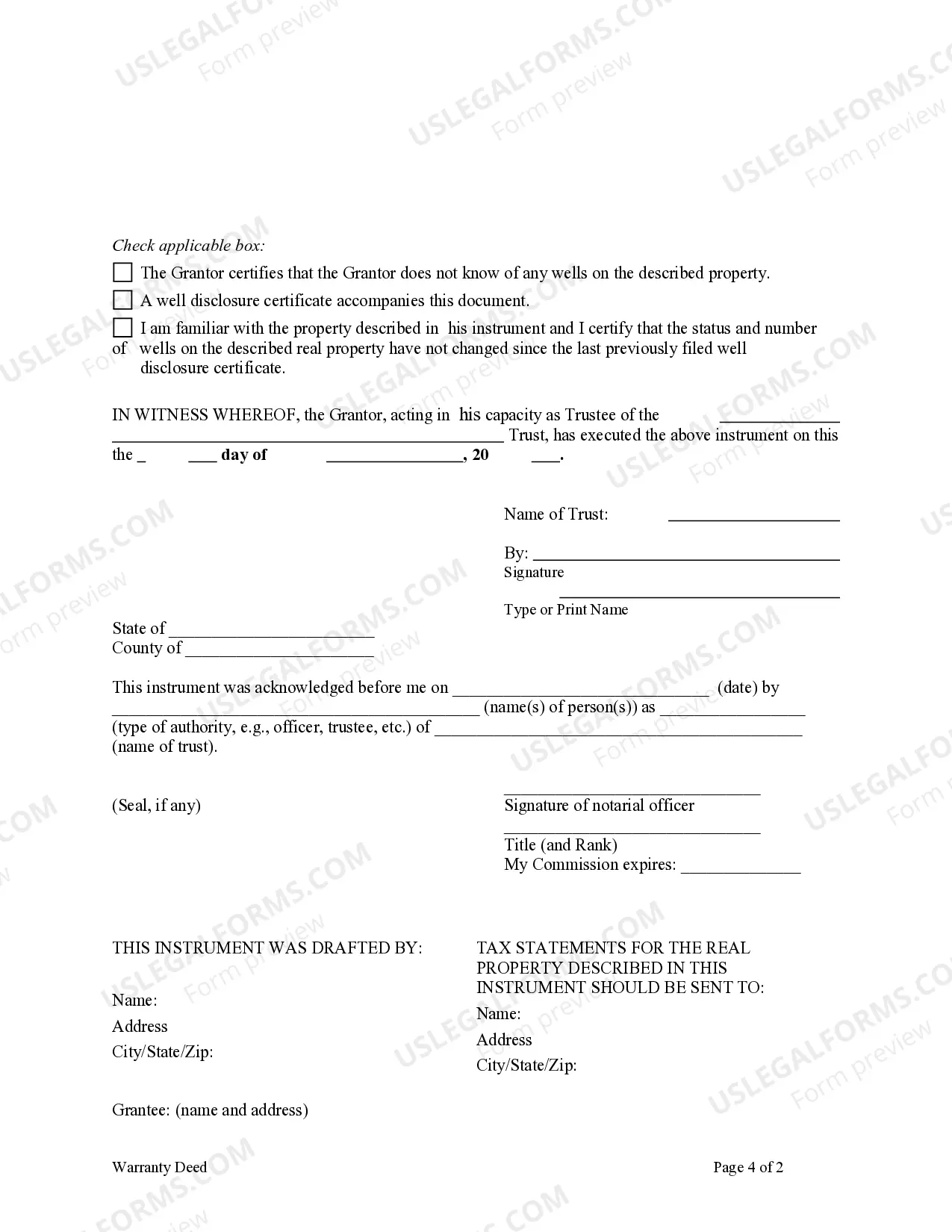
- Identification of the Grantor and Grantee trusts
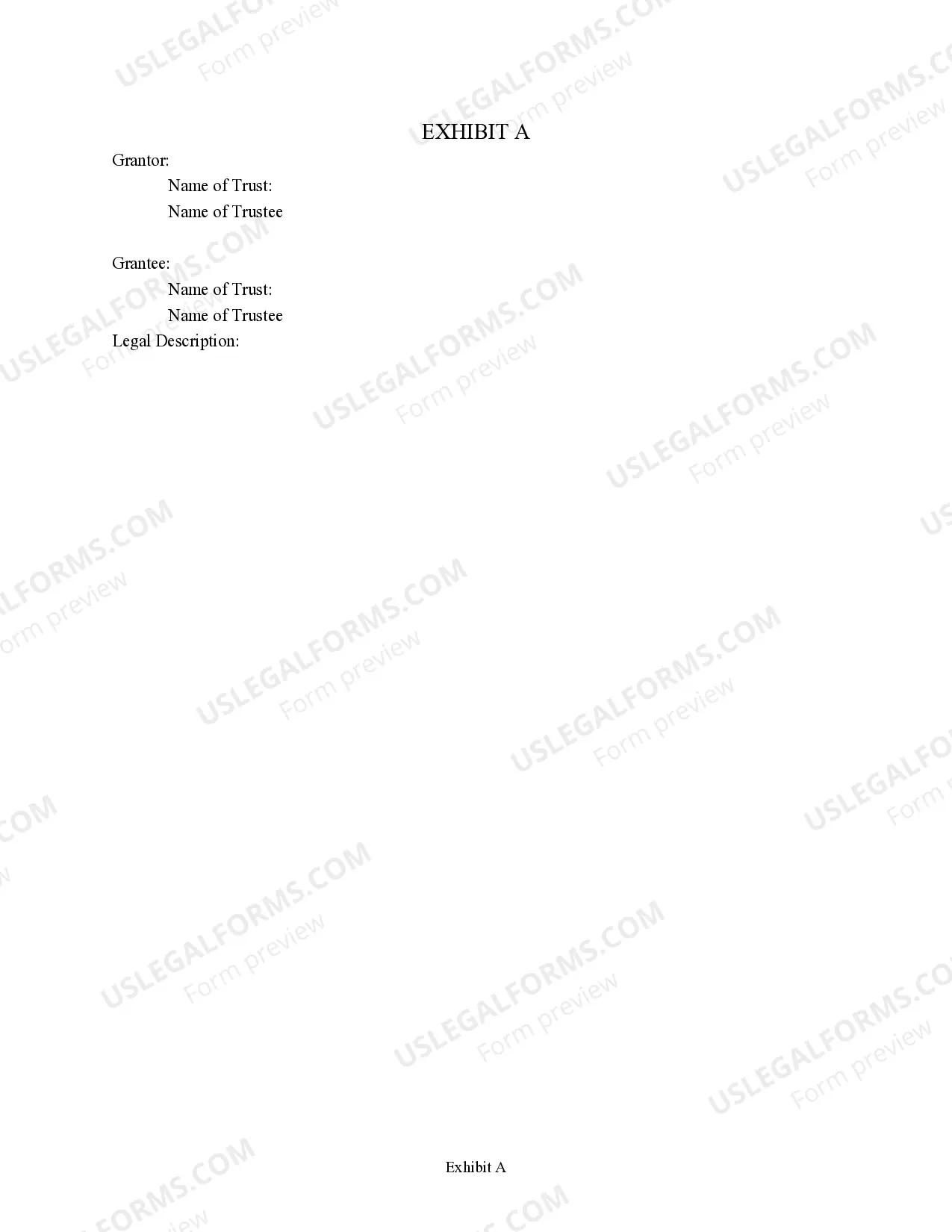
- Description of the property being transferred
- Warranties or guarantees regarding the property title
- Signature lines for authorized representatives of both trusts
- Well disclosure certification declaration







When this form is needed
This form is suitable when a trust wishes to transfer property to another trust, which may occur during estate planning, asset protection strategies, or when consolidating trust assets. It ensures legal compliance and helps maintain clear property titles during such transfers.
Who should use this form
This form is intended for:
- Trustees acting on behalf of a trust
- Individuals involved in estate planning
- Parties managing trust assets and seeking to transfer property securely
How to prepare this document
- Identify the Grantor and Grantee by entering the names of the trusts involved.
- Describe the property in detail, including address and legal description.
- Include the warranties made by the Grantor regarding the title.
- Have the authorized representatives of both trusts sign the document.
- Complete any required disclosures related to well status, if applicable.
Does this document require notarization?
To make this form legally binding, it must be notarized. Our online notarization service, powered by Notarize, lets you verify and sign documents remotely through an encrypted video session.
Get your form ready online
Our built-in tools help you complete, sign, share, and store your documents in one place.
Make edits, fill in missing information, and update formatting in US Legal Forms—just like you would in MS Word.
Download a copy, print it, send it by email, or mail it via USPS—whatever works best for your next step.
Sign and collect signatures with our SignNow integration. Send to multiple recipients, set reminders, and more. Go Premium to unlock E-Sign.
If this form requires notarization, complete it online through a secure video call—no need to meet a notary in person or wait for an appointment.
We protect your documents and personal data by following strict security and privacy standards.

Make edits, fill in missing information, and update formatting in US Legal Forms—just like you would in MS Word.

Download a copy, print it, send it by email, or mail it via USPS—whatever works best for your next step.

Sign and collect signatures with our SignNow integration. Send to multiple recipients, set reminders, and more. Go Premium to unlock E-Sign.

If this form requires notarization, complete it online through a secure video call—no need to meet a notary in person or wait for an appointment.

We protect your documents and personal data by following strict security and privacy standards.
Typical mistakes to avoid
- Failing to accurately describe the property being transferred
- Not having the authorized representatives sign the document
- Omitting the well disclosure certification if required
Why use this form online
- Convenient access to legally compliant forms anytime
- Edit and customize the form digitally for accuracy
- Easy printing options for physical signatures
Looking for another form?
Form popularity
FAQ
Transferring assets into a trust involves several steps to ensure everything is legally recognized. You need to properly execute a Minnesota Warranty Deed from a Trust to a Trust for real estate and change title documents for other assets. Consider using resources like US Legal Forms, which provide useful templates and instructions for this process. By following these steps, you can effectively manage your assets within the trust.
Yes, you can create a warranty deed without an attorney, but it is important to understand the legal implications. A Minnesota Warranty Deed from a Trust to a Trust must meet specific requirements to be valid. Using platforms like US Legal Forms can help you access the necessary templates and guidelines to ensure compliance with state laws. This way, you can confidently complete the deed on your own.
To transfer a deed, start by preparing the necessary documents, including the Minnesota Warranty Deed from a Trust to a Trust. You will need to provide details about the property and the parties involved in the transaction. After completing the deed, both the grantor and grantee must sign it in the presence of a notary. Finally, file the executed deed with the county recorder's office to make the transfer official. Using services like US Legal Forms can simplify this process and ensure that you meet all legal requirements.
A warranty deed can be deemed invalid for several reasons, such as lack of proper signatures, absence of a legal description, or failure to meet state-specific requirements. If the deed does not clearly convey ownership or if it contains errors, it may not hold up in court. Additionally, if the grantor did not have the legal authority to transfer the property, the warranty deed becomes invalid. To ensure that your Minnesota Warranty Deed from a Trust to a Trust is valid, consider using trusted legal resources like US Legal Forms.
A special warranty deed in Minnesota provides a limited guarantee from the seller regarding the title, assuring that no claims have arisen during their ownership. This type of deed is different from a general warranty deed, which offers broader protections. Understanding these nuances is vital when navigating a Minnesota Warranty Deed from a Trust to a Trust.
A trustee's deed transfers property from a trust and often includes certain warranties about the title, while a quitclaim deed transfers any interest the grantor has without any warranties. This distinction is crucial when transitioning property with a Minnesota Warranty Deed from a Trust to a Trust, as it affects the level of protection you receive.
Typically, the current property owner or their legal representative can issue a warranty deed. This includes individuals, corporations, or trustees acting on behalf of a trust. When dealing with a Minnesota Warranty Deed from a Trust to a Trust, ensure that the issuing party has the proper authority to guarantee the title.
A trustee can hold title to property, but they do so on behalf of the trust and its beneficiaries. The trustee manages the property according to the terms of the trust, rather than owning it for personal benefit. This arrangement is essential for understanding how a Minnesota Warranty Deed from a Trust to a Trust operates.
A warranty deed provides a guarantee of clear title and protection against future claims, while a trustee's deed transfers property from a trust to a buyer, often without such guarantees. When utilizing a Minnesota Warranty Deed from a Trust to a Trust, understanding these distinctions helps ensure you choose the right type for your transaction.
Yes, a trustee can give a warranty deed, provided they have the authority to do so under the trust agreement. This action allows the trustee to transfer property from the trust to another party, ensuring that the warranty deed properly reflects the trust's intentions. It is important to execute this correctly to protect all parties involved.