Minnesota Discovery Interrogatories from Plaintiff to Defendant with Production Requests
Overview of this form
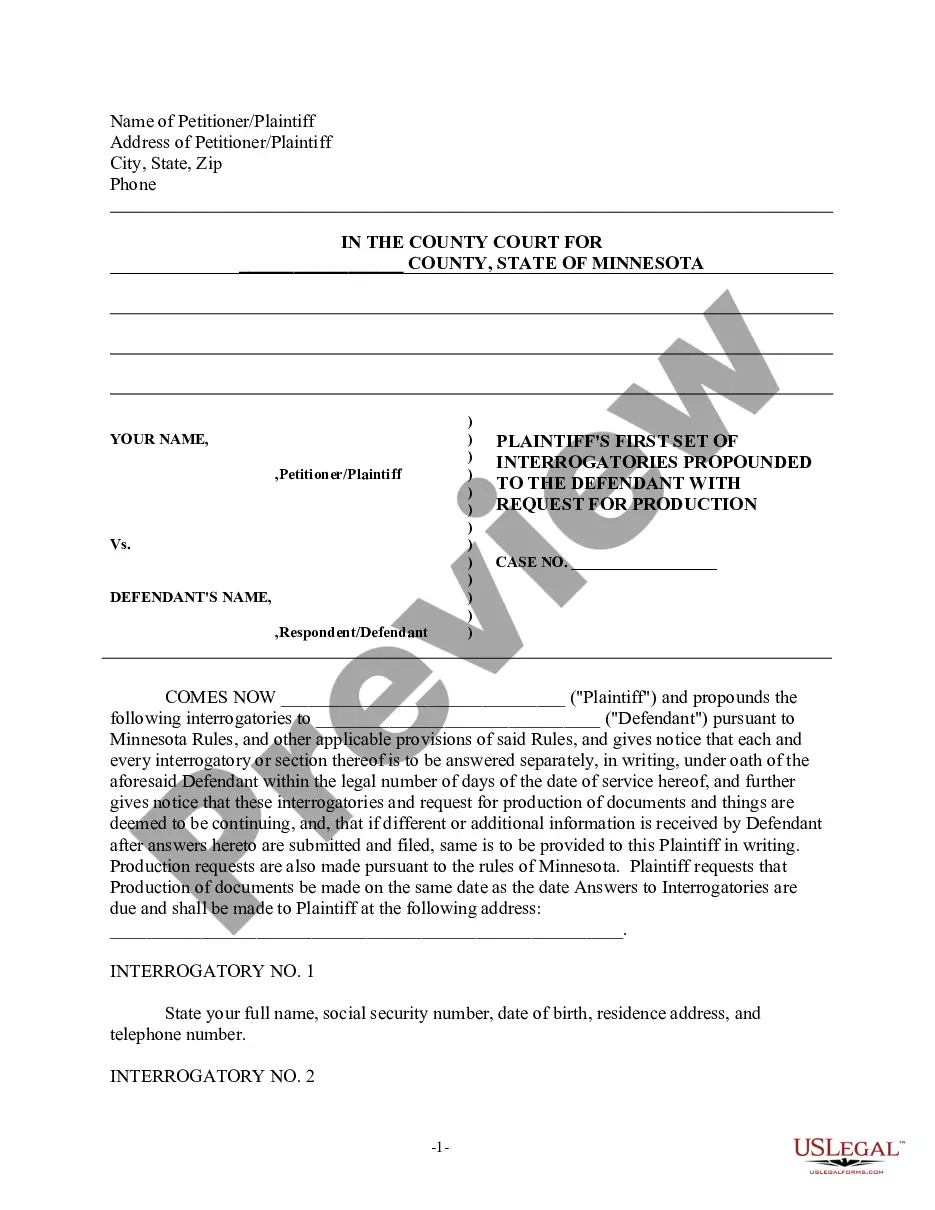
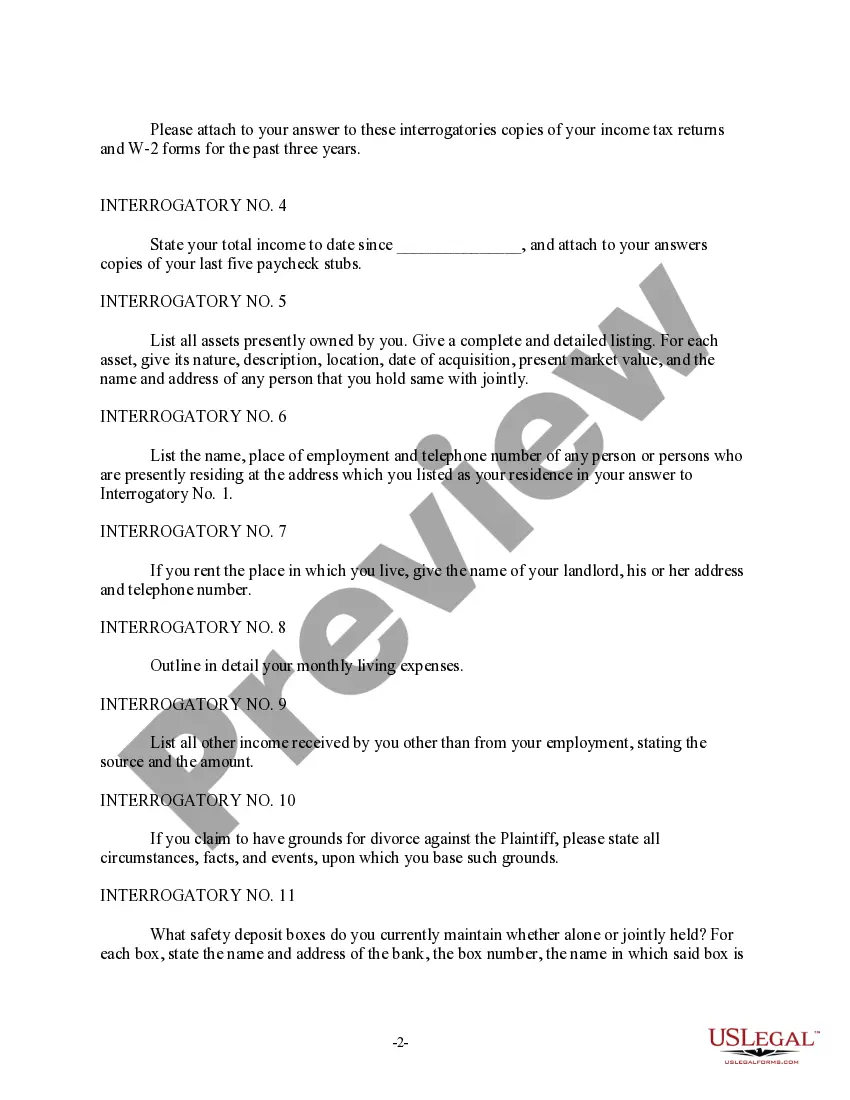
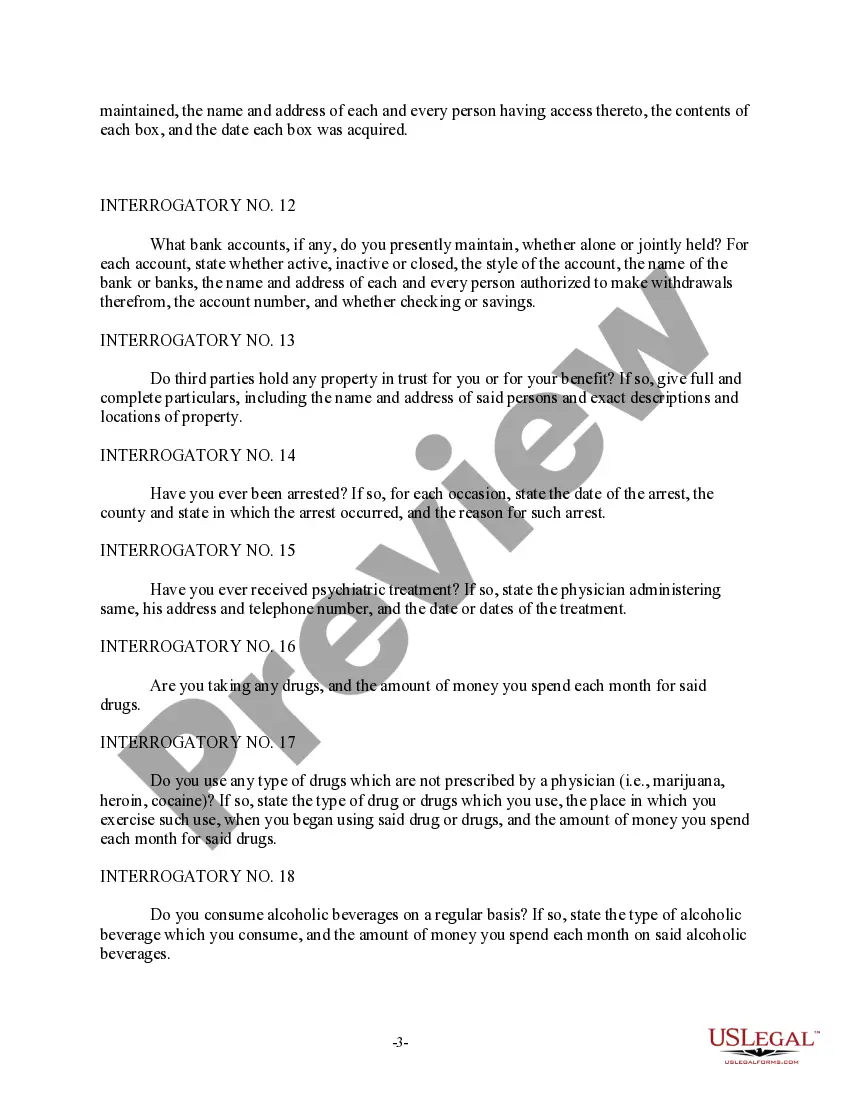
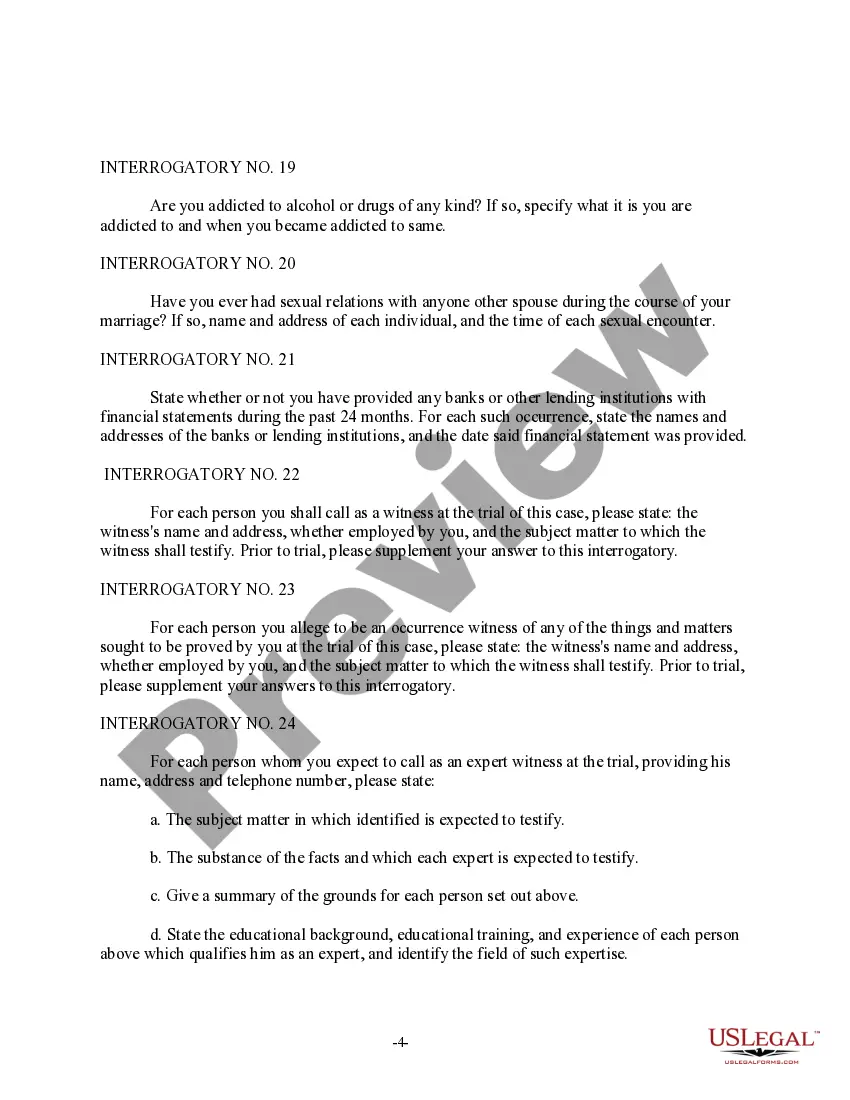
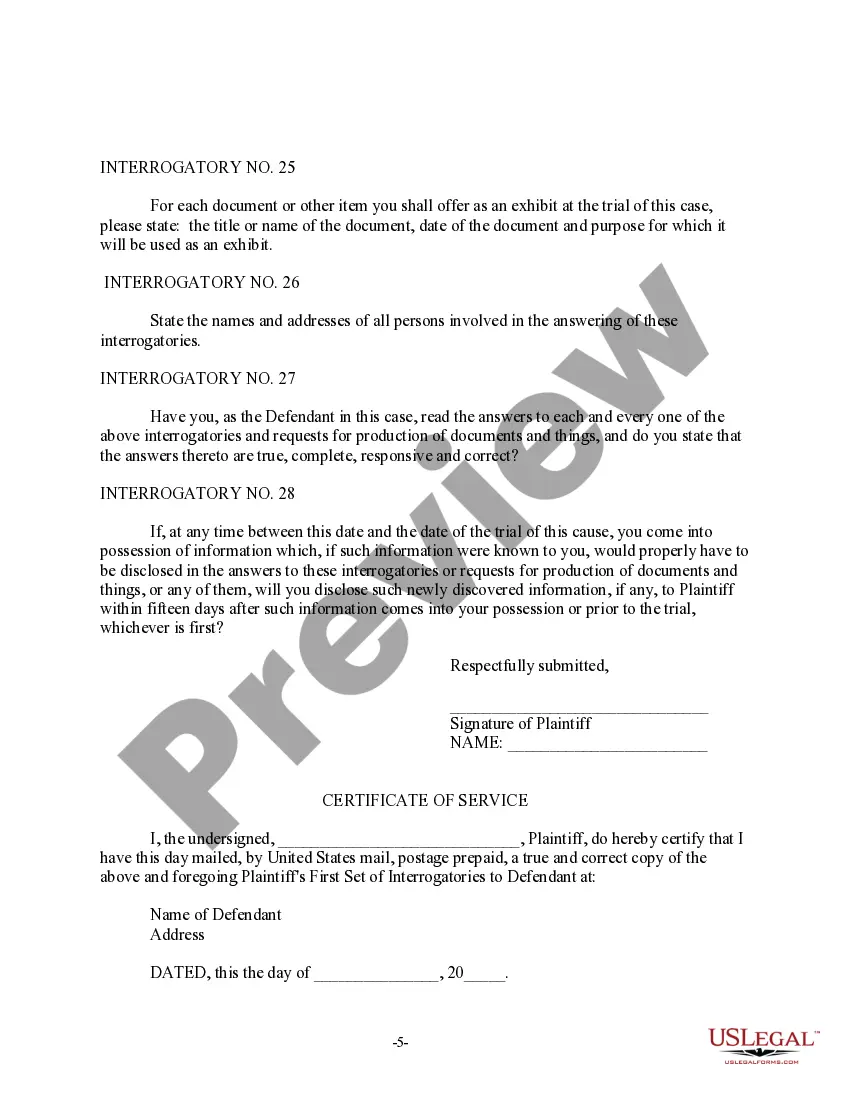
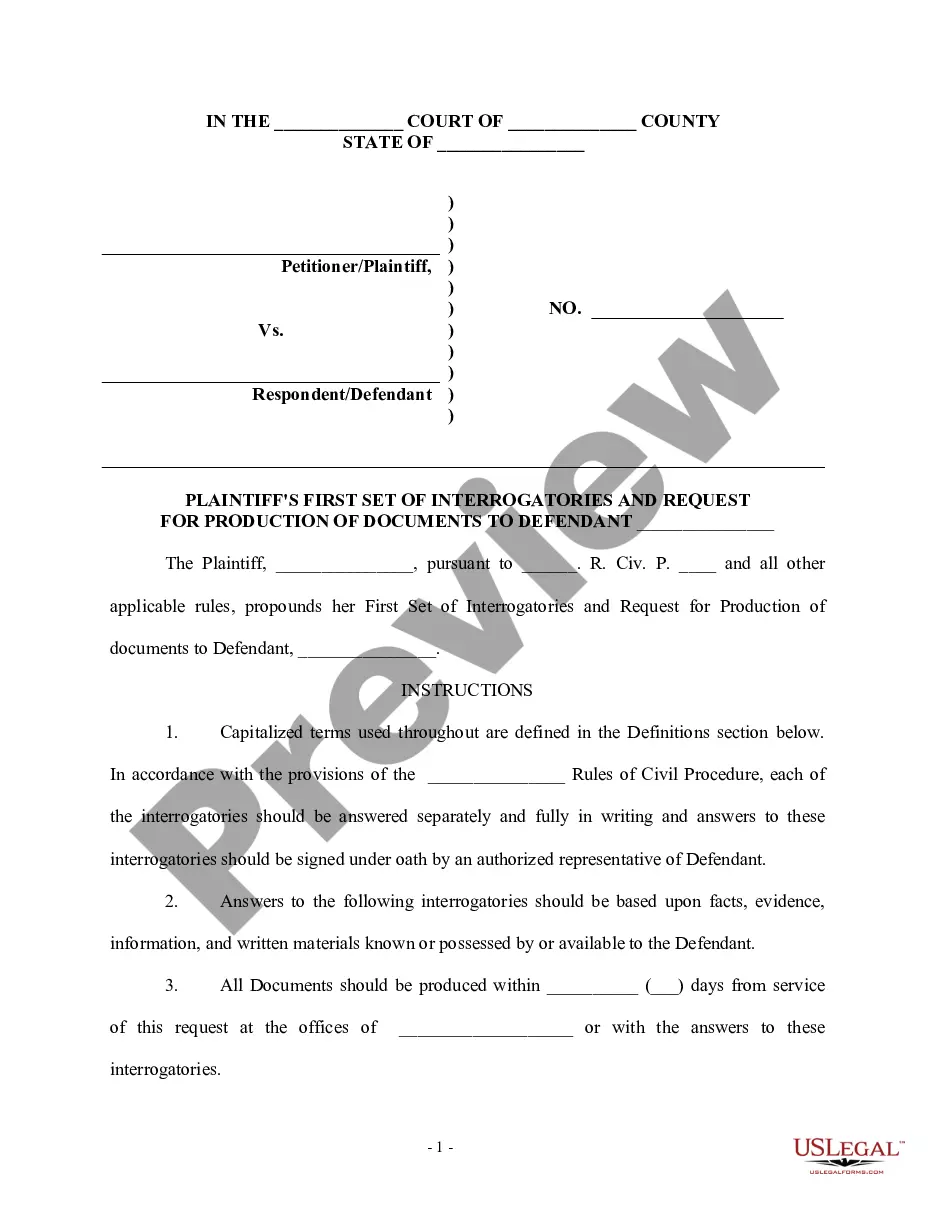
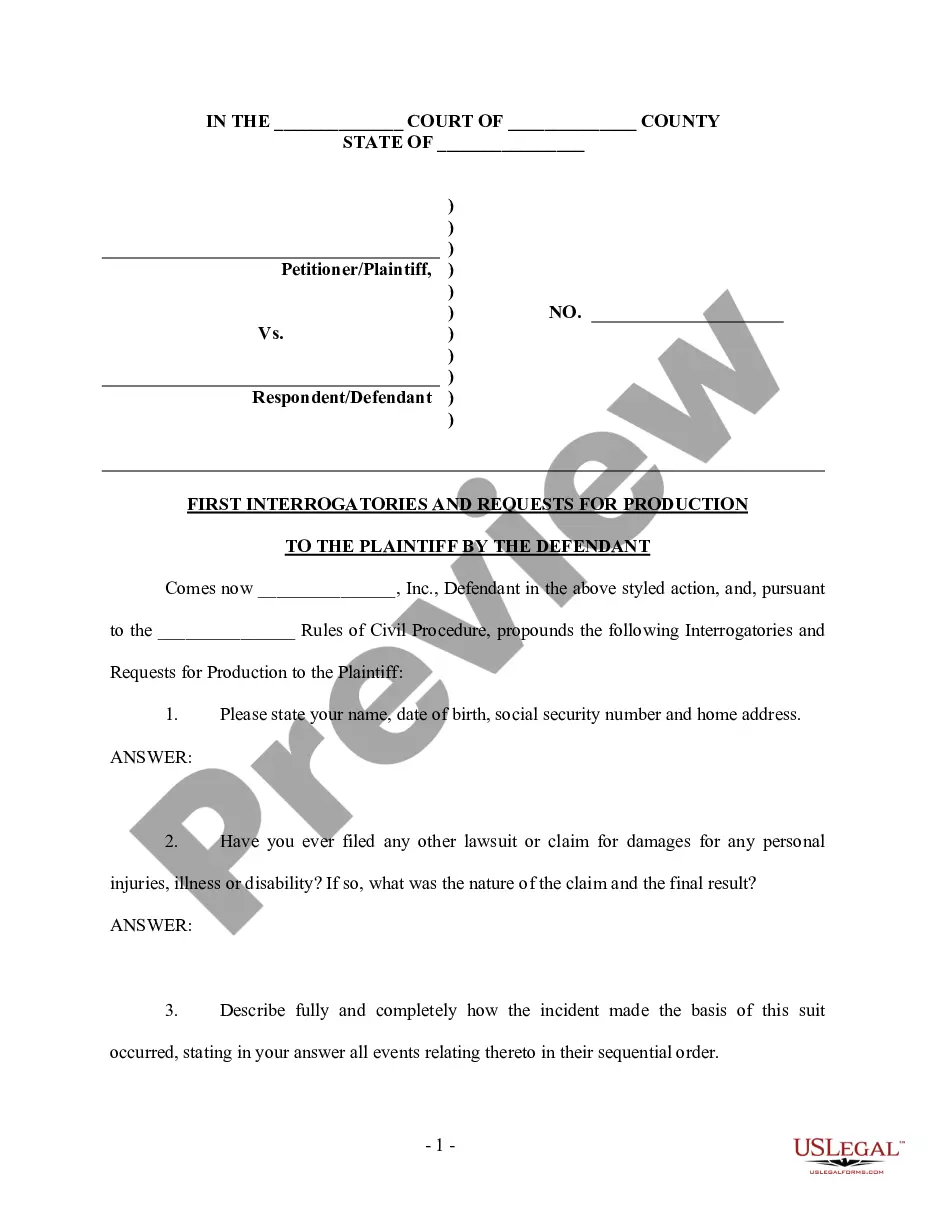
The Discovery Interrogatories from Plaintiff to Defendant with Production Requests is a legal document used in divorce proceedings. This form allows the plaintiff to formally request information from the defendant through a series of interrogatories, which are written questions answered under oath. This form also includes requests for the production of relevant documents, helping gather facts necessary for the court case. This distinct format aids in obtaining detailed disclosures from the other party, which is essential for preparing a solid case.
Key parts of this document
- Name and address details for both the plaintiff and defendant.
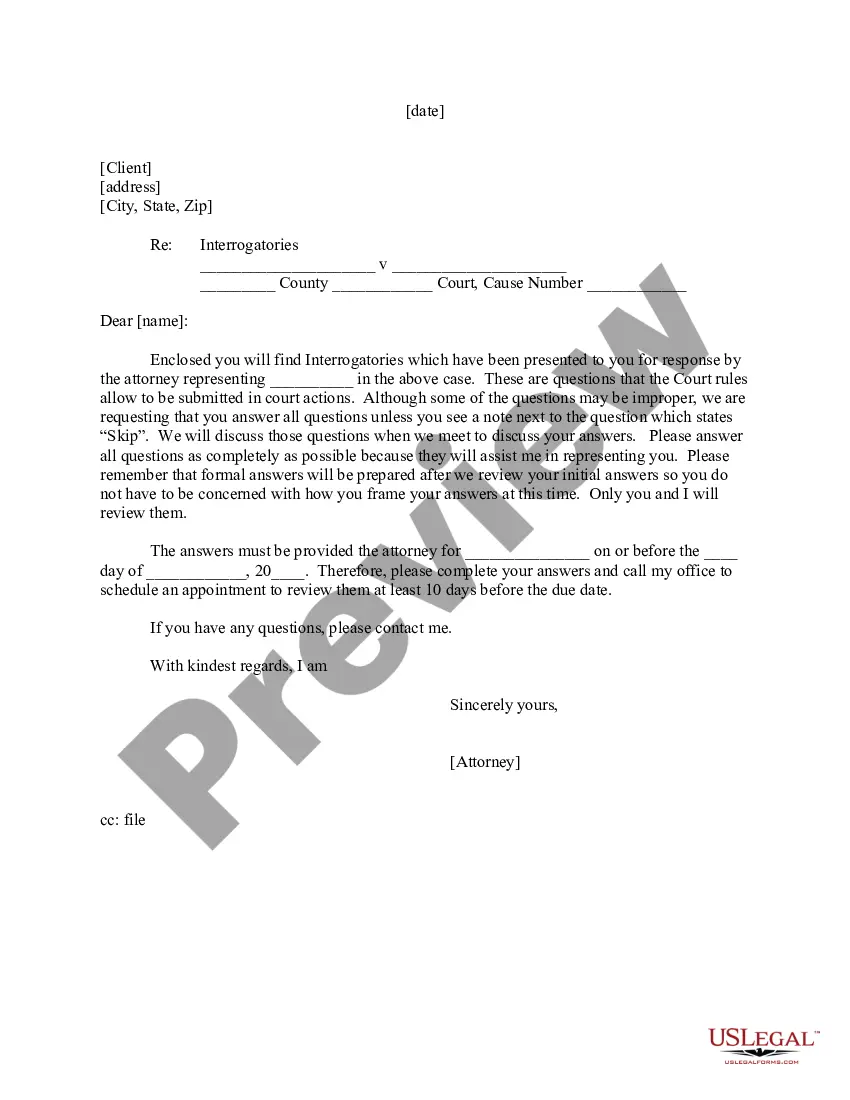
- Interrogatory questions that the defendant must answer under oath.
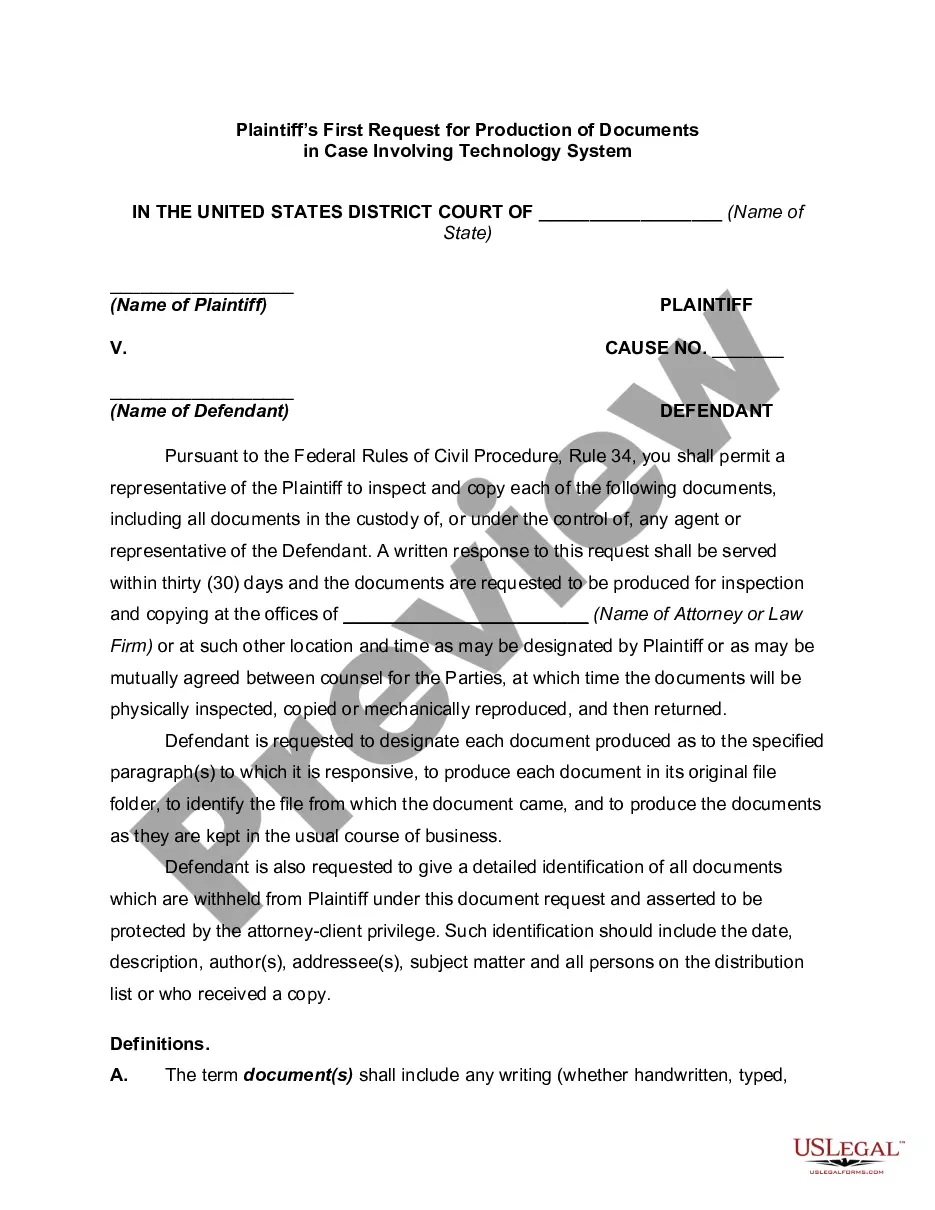
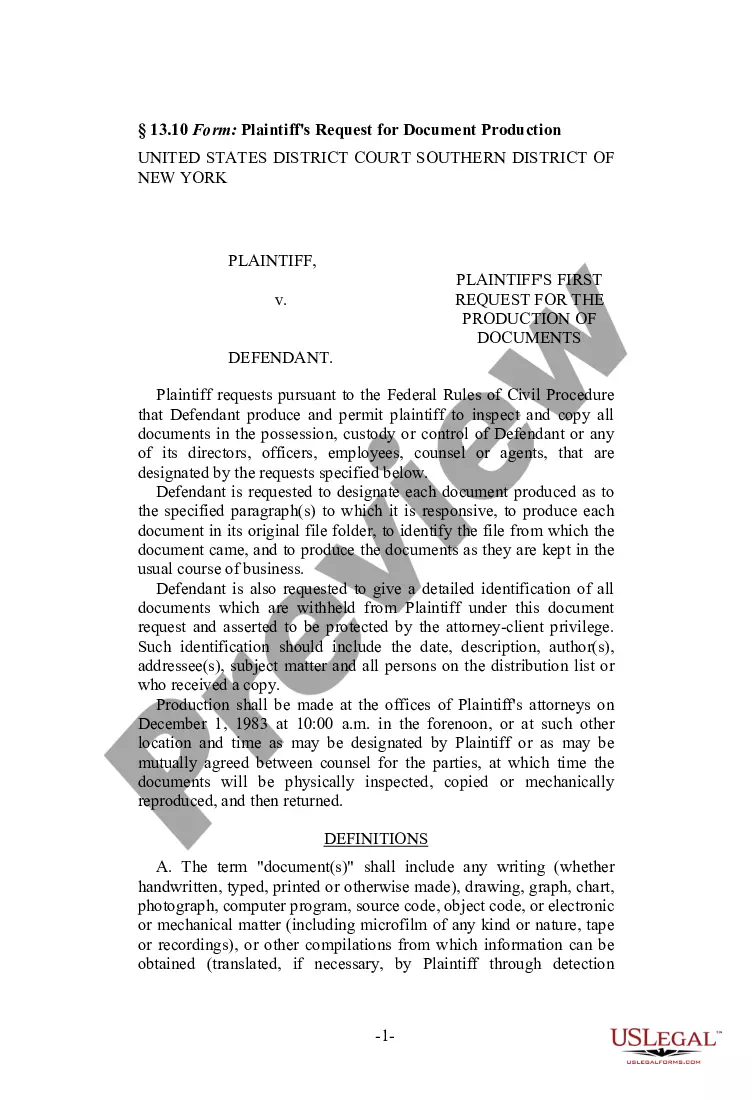
- Requests for production of documents relevant to the case.
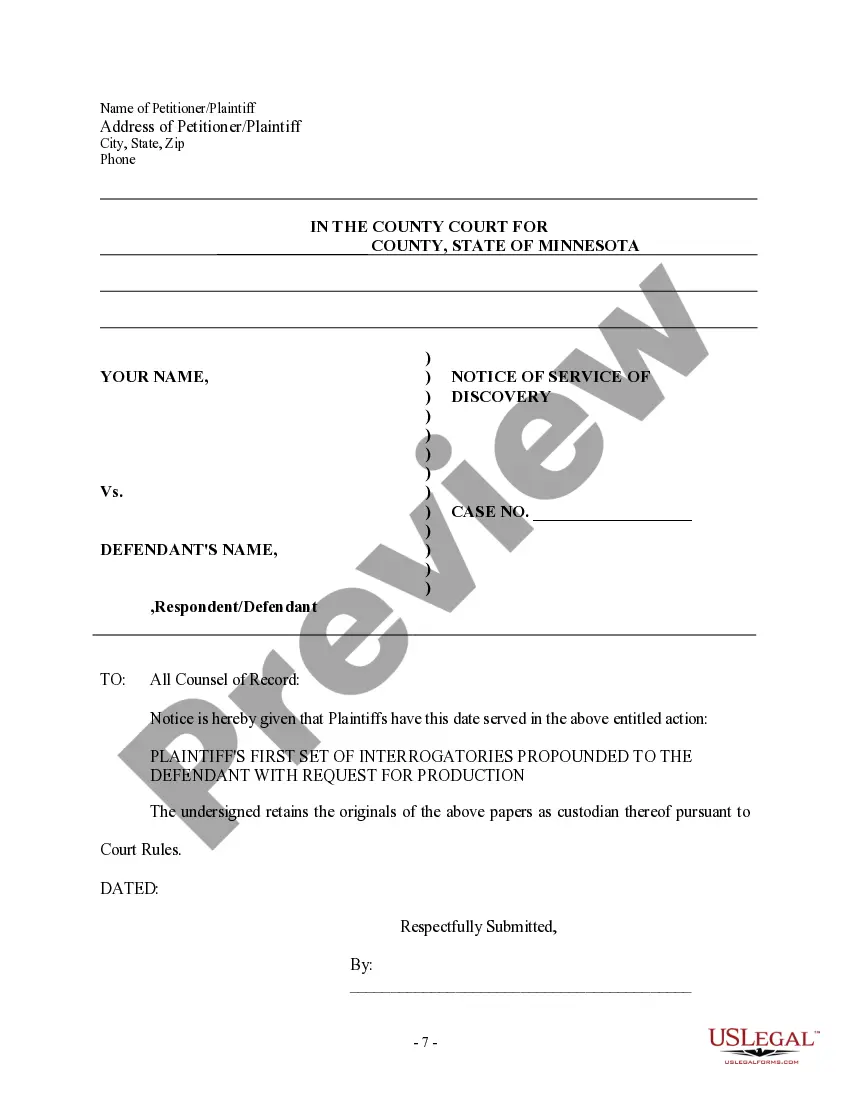
- A notice of service to inform the court and the defendant of the interrogatories served.
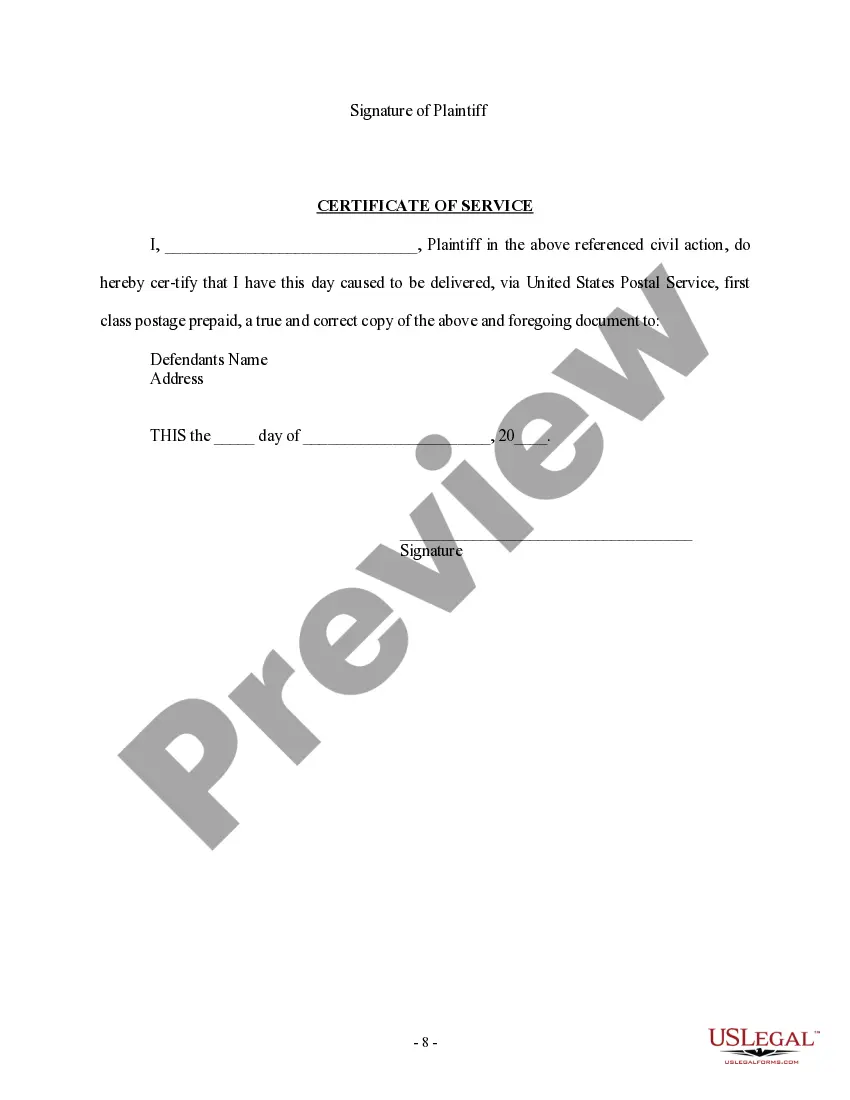
- Signature section for the plaintiff and certification of service details.
When to use this document
This form should be utilized when a plaintiff in a divorce action seeks to obtain information from the defendant that may affect the outcome of their case. It is particularly useful in situations where financial disclosure, asset division, or other personal details are critical to resolving the divorce proceedings.
Who this form is for
- Individuals initiating a divorce who require information from their spouse.
- Legal representatives acting on behalf of a plaintiff in divorce proceedings.
- Parties involved in a divorce that may benefit from full disclosure of financial or personal matters.
How to complete this form
- Identify and enter the names and contact details of both the plaintiff and defendant at the top of the document.
- Answer each interrogatory question clearly and in detail, ensuring factual accuracy.
- Gather and attach any requested documents, such as tax returns or financial statements.
- Sign and date the form, certifying that the information provided is true and complete.
- Serve the completed form to the defendant and file the notice of service with the court.
Notarization guidance
This form usually doesn’t need to be notarized. However, local laws or specific transactions may require it. Our online notarization service, powered by Notarize, lets you complete it remotely through a secure video session, available 24/7.
Get your form ready online
Our built-in tools help you complete, sign, share, and store your documents in one place.
Make edits, fill in missing information, and update formatting in US Legal Forms—just like you would in MS Word.
Download a copy, print it, send it by email, or mail it via USPS—whatever works best for your next step.
Sign and collect signatures with our SignNow integration. Send to multiple recipients, set reminders, and more. Go Premium to unlock E-Sign.
If this form requires notarization, complete it online through a secure video call—no need to meet a notary in person or wait for an appointment.
We protect your documents and personal data by following strict security and privacy standards.

Make edits, fill in missing information, and update formatting in US Legal Forms—just like you would in MS Word.

Download a copy, print it, send it by email, or mail it via USPS—whatever works best for your next step.

Sign and collect signatures with our SignNow integration. Send to multiple recipients, set reminders, and more. Go Premium to unlock E-Sign.

If this form requires notarization, complete it online through a secure video call—no need to meet a notary in person or wait for an appointment.

We protect your documents and personal data by following strict security and privacy standards.
Common mistakes
- Failing to serve the interrogatories and production requests properly.
- Providing incomplete or unclear answers to the interrogatories.
- Not attaching required documents or failing to reference them in the responses.
- Overlooking the deadlines for responses mandated by court rules.
- Neglecting to sign the document, which can render it invalid.
Why complete this form online
- Convenient access to a legally-compliant template at any time.
- Easy customization to fit specific case needs.
- Immediate download and access, eliminating delays.
- Guided completion to ensure all necessary sections are filled out correctly.
Summary of main points
- This form is essential for gathering necessary information in divorce proceedings.
- Use clear and relevant questions to avoid ambiguity and ensure proper responses.
- Follow all procedural rules to maintain the validity of the document.
- Consult a legal expert if you have specific inquiries or complex issues in your case.
Looking for another form?
Form popularity
FAQ
RFP stands for Request for Production in the context of discovery. It refers to a formal request made by one party to another, asking for specific documents and evidence pertinent to the case. Understanding RFPs is vital for navigating the discovery process successfully. Employing Minnesota Discovery Interrogatories from Plaintiff to Defendant with Production Requests can facilitate a smoother exchange of information and enhance your case.
Yes, requests for production are considered written discovery, as they involve formal requests for documents and tangible evidence related to the case. This allows parties to obtain critical information in a structured manner. Properly formulating these requests is essential for effective litigation. Utilizing Minnesota Discovery Interrogatories from Plaintiff to Defendant with Production Requests helps ensure that your written discovery is comprehensive and well-organized.
The three parts of discovery include interrogatories, requests for production, and depositions. Interrogatories involve written questions that one party sends to another, while requests for production ask for documents and other evidence. Depositions involve sworn testimonies taken outside of court. Understanding these components, particularly Minnesota Discovery Interrogatories from Plaintiff to Defendant with Production Requests, can greatly enhance your litigation strategy.
To answer interrogatories and requests for production of documents, start by thoroughly reviewing the questions and requests. Gather all relevant documents and information to provide accurate responses. It is crucial to respond in a clear, concise manner while adhering to any deadlines set by the court. Employing Minnesota Discovery Interrogatories from Plaintiff to Defendant with Production Requests can simplify this process and ensure compliance.
Yes, Request for Production and request for examination are integral components of the discovery process in litigation. They allow both parties to gather essential information relevant to the case. This process enhances transparency and helps build a solid foundation for the arguments presented in court. Utilizing Minnesota Discovery Interrogatories from Plaintiff to Defendant with Production Requests can streamline this phase effectively.
Yes, a Request for Production is a crucial part of the discovery process in legal proceedings. It allows one party to request specific documents or materials from the other party, which can include evidence necessary for your case. When working with Minnesota Discovery Interrogatories from Plaintiff to Defendant with Production Requests, utilizing tools like USLegalForms can simplify your request and ensure compliance with legal standards.
The primary difference between interrogatories and requests for production lies in their format and purpose. Interrogatories consist of written questions requiring detailed answers, while requests for production focus on obtaining documents or evidence. Both are integral to the discovery process, including Minnesota Discovery Interrogatories from Plaintiff to Defendant with Production Requests, and can significantly impact your case outcome.
In Minnesota, the rules for interrogatories specify that a party may send a set number of written questions to the opposing party, which they must answer under oath. This process is part of the broader framework of Minnesota Discovery Interrogatories from Plaintiff to Defendant with Production Requests, allowing you to gather necessary information. Familiarizing yourself with these rules can enhance your understanding and effectiveness during discovery.
Requests for production and interrogatories serve distinct purposes in the discovery process. While interrogatories involve written questions for the opposing party to answer, requests for production ask for specific documents or tangible items. Both are vital components of Minnesota Discovery Interrogatories from Plaintiff to Defendant with Production Requests, but they should be used strategically to complement each other.
The 63.03 rule of civil procedure in Minnesota governs the use of interrogatories during the discovery phase of a lawsuit. This rule allows parties to ask questions that require written responses, which can include Minnesota Discovery Interrogatories from Plaintiff to Defendant with Production Requests. Understanding this rule is crucial for gathering relevant information and preparing your case effectively.