Michigan Living Trust for Individual Who is Single, Divorced or Widow (or Widower) with Children
What is this form?
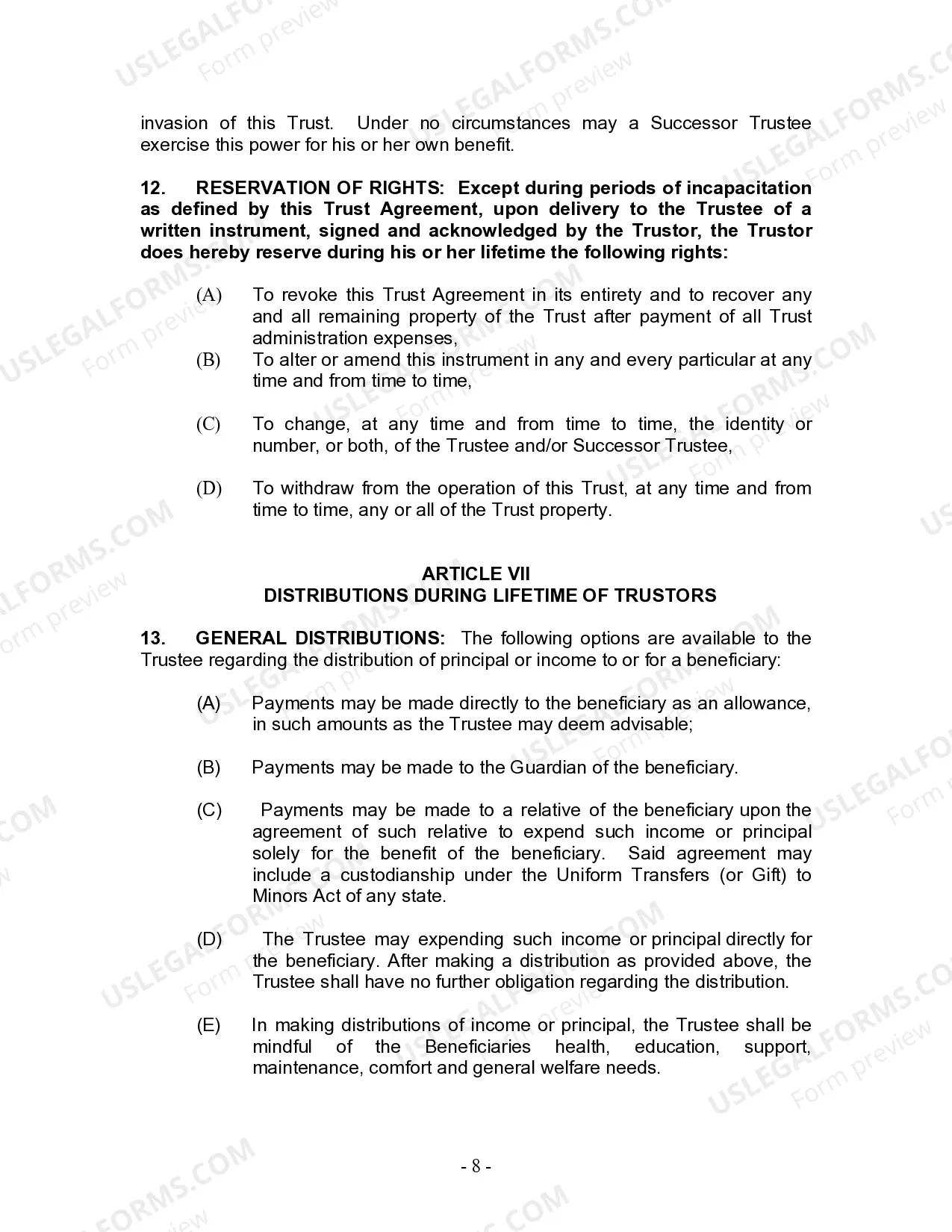
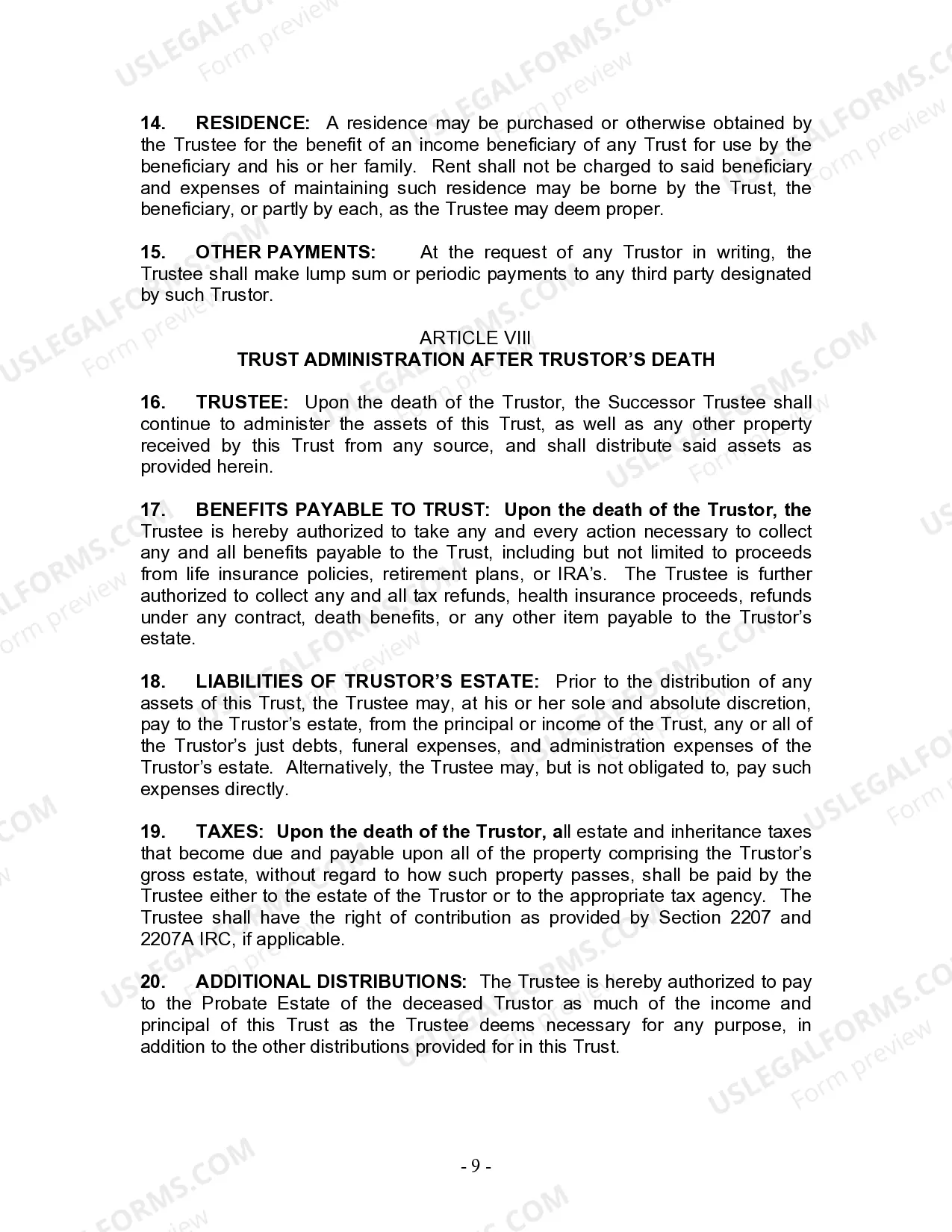
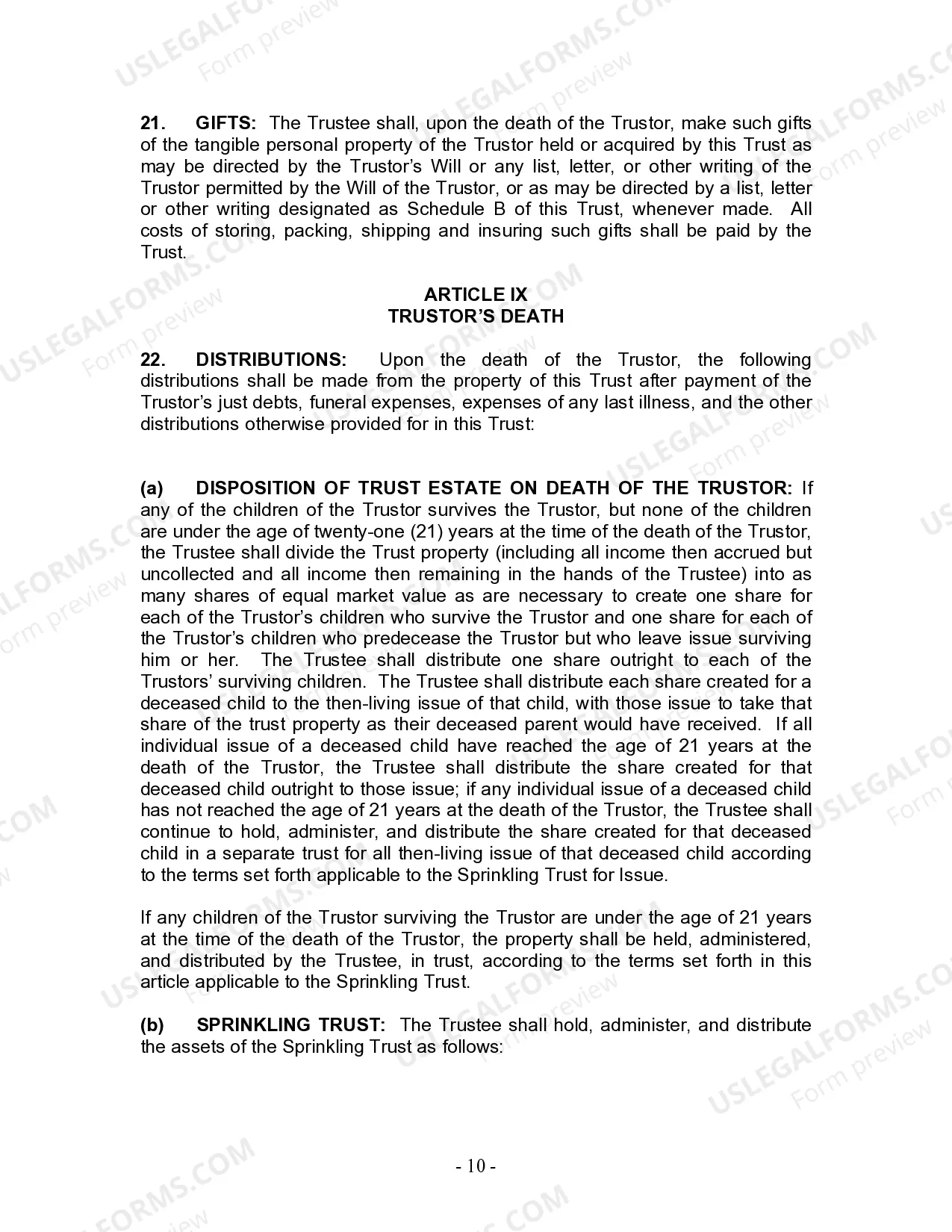
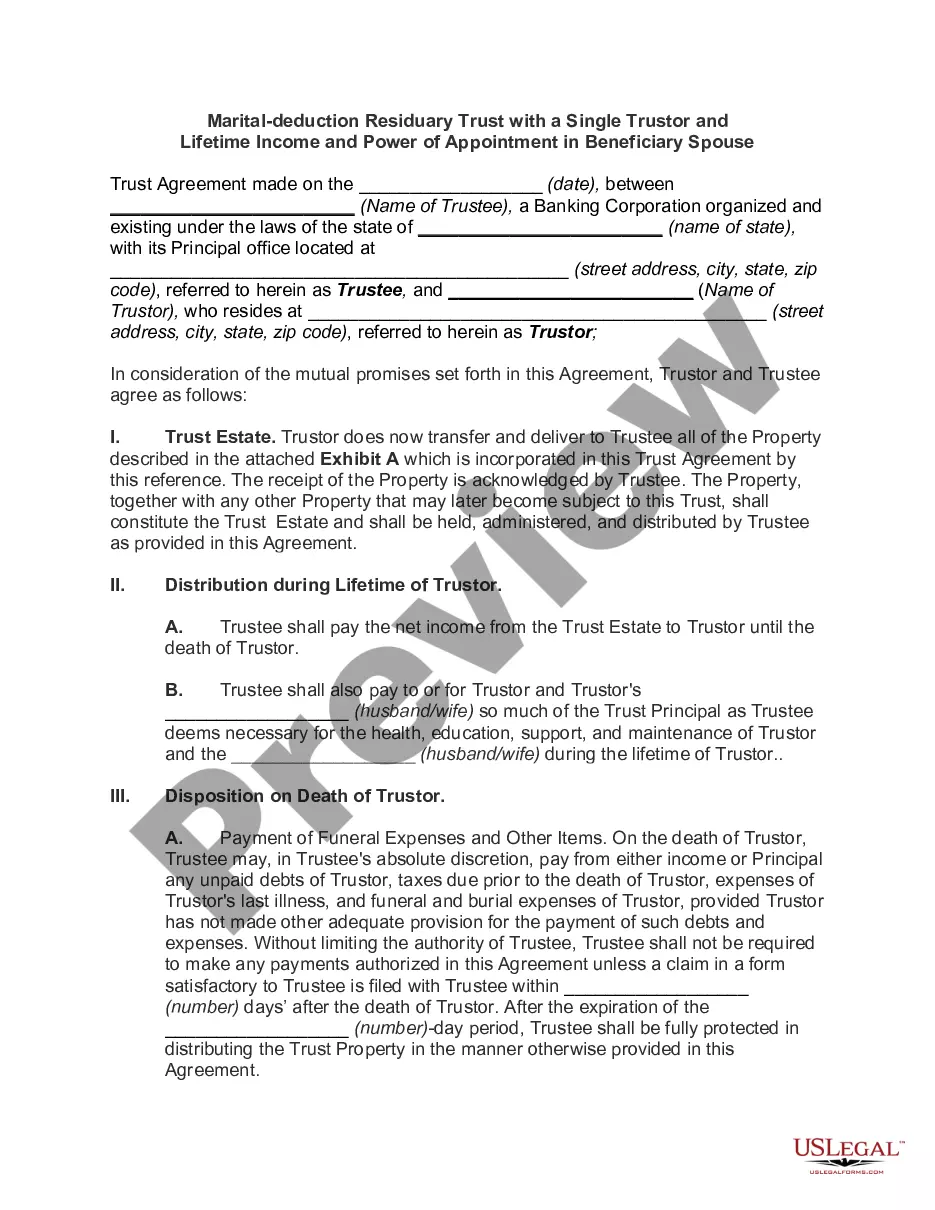
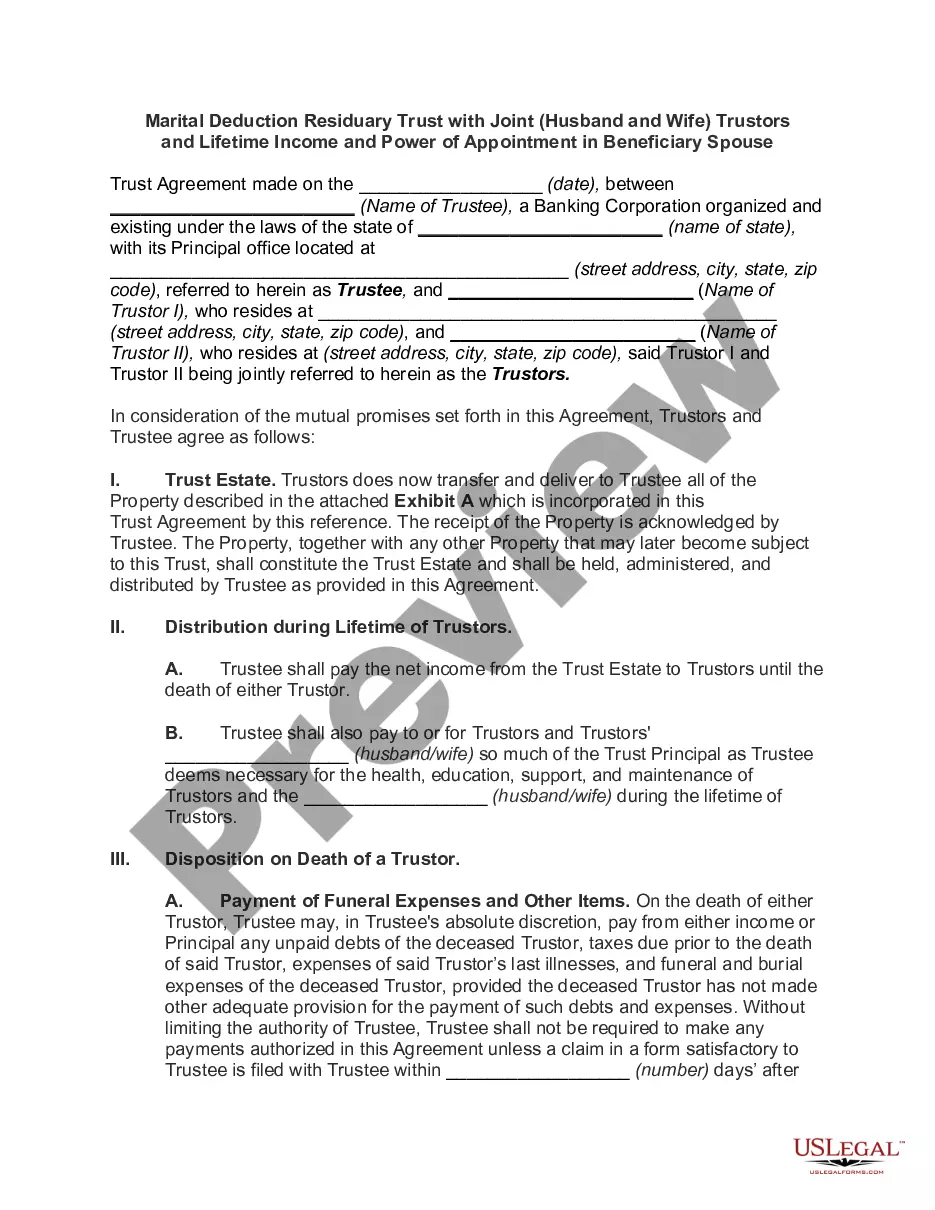
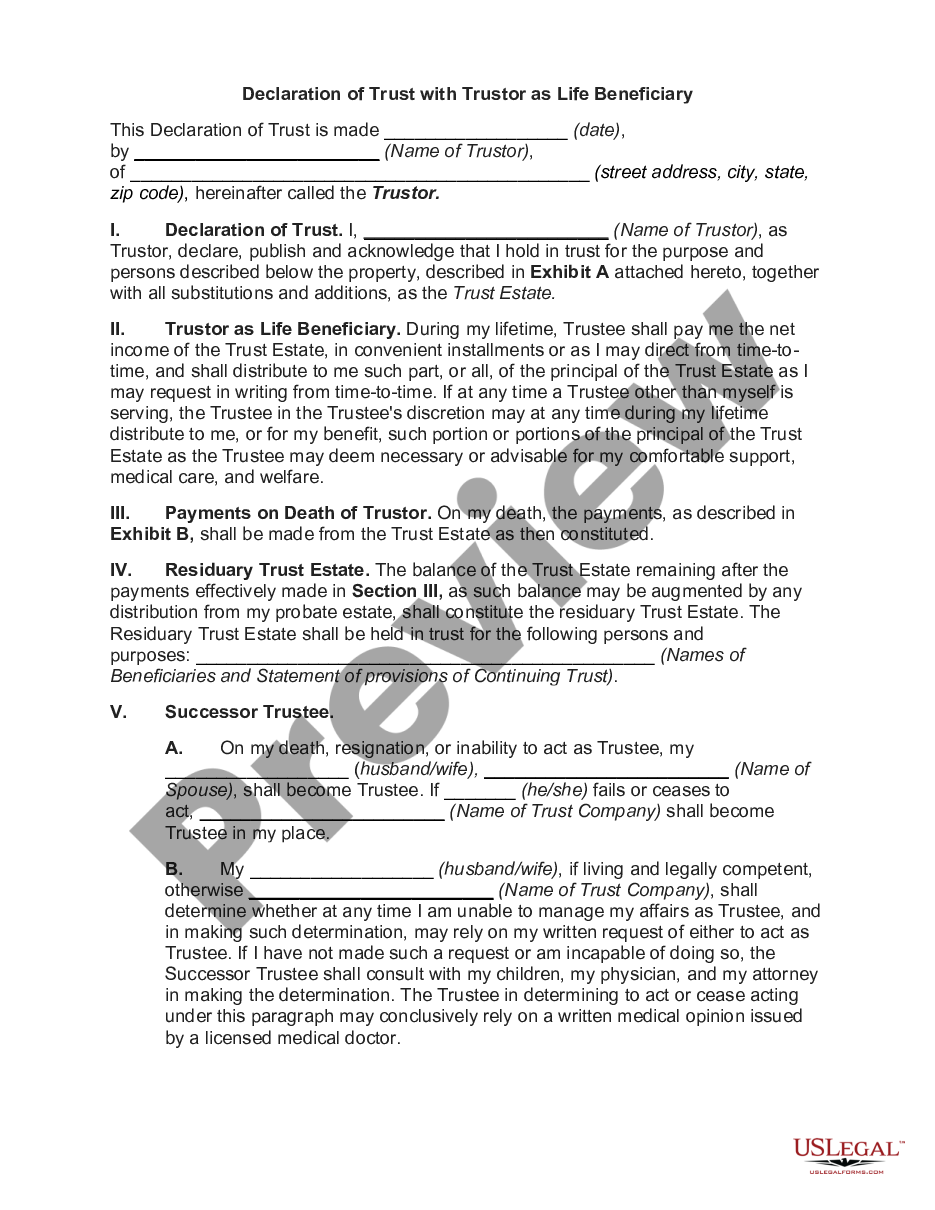
This form is a Living Trust specifically designed for individuals who are single, divorced, or widowed with children. A living trust is established during a person's lifetime to manage their assets. Unlike a will, a living trust does not go through the probate process upon your death, allowing for a smoother transition of assets to your beneficiaries. This form enables the creator, also known as the trustor, to maintain control over their assets while ensuring they are distributed according to their wishes after their passing.
Main sections of this form
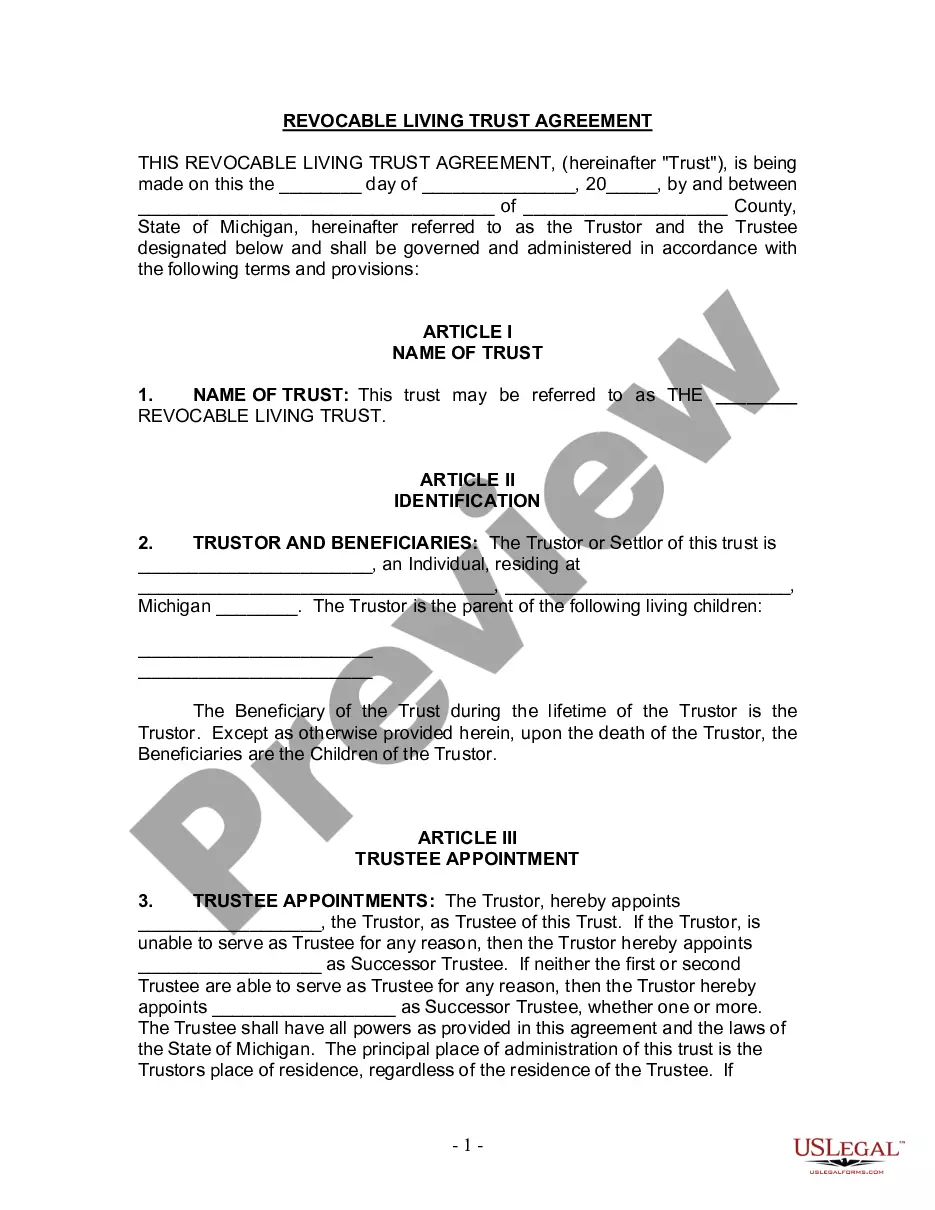
- Name of Trust: Specifies the official name of the trust.
- Trustor and Beneficiaries: Identifies the trustor and their children as beneficiaries.
- Trustee Appointment: Designates the trustor as the trustee, with provisions for successor trustees.
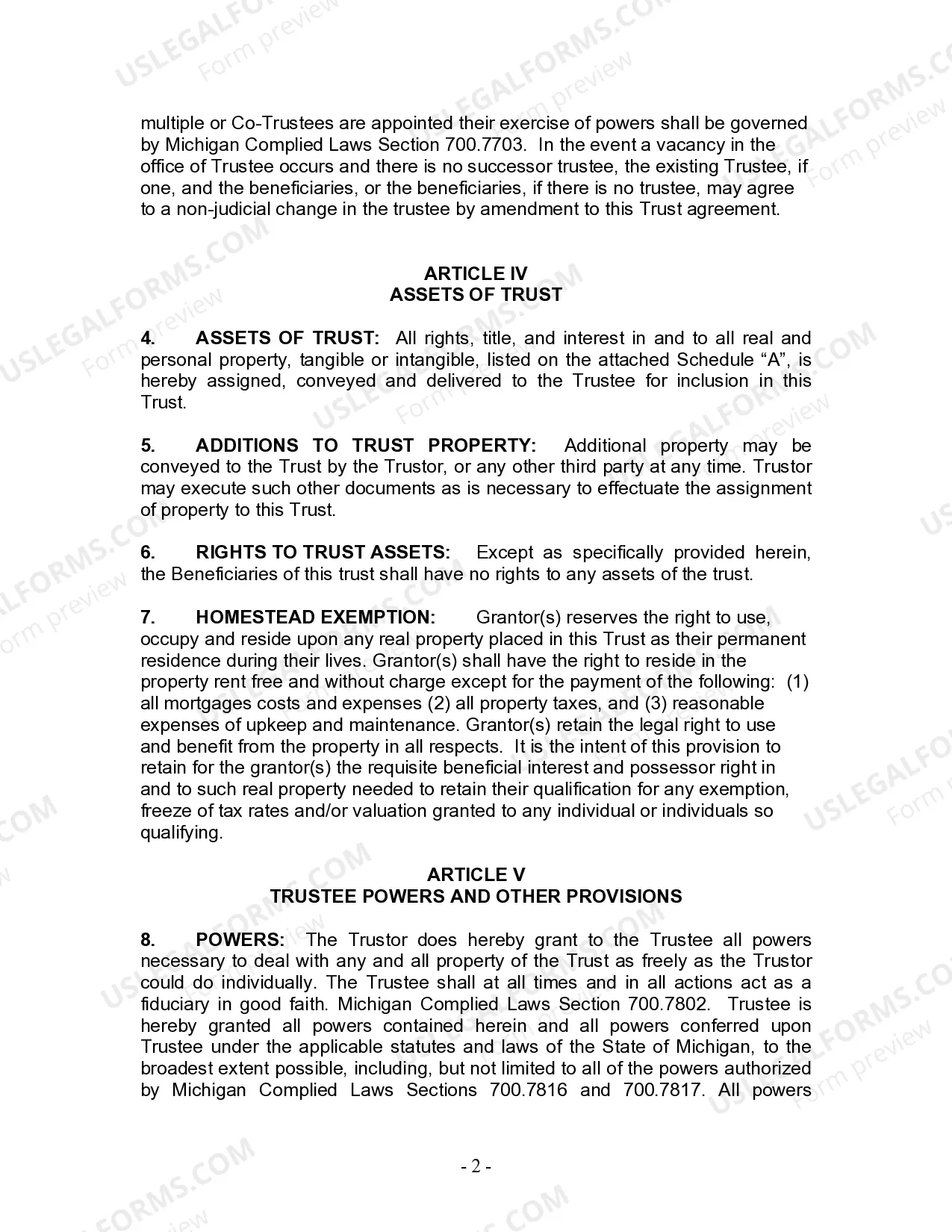
- Assets of Trust: Lists the property and assets included in the trust.
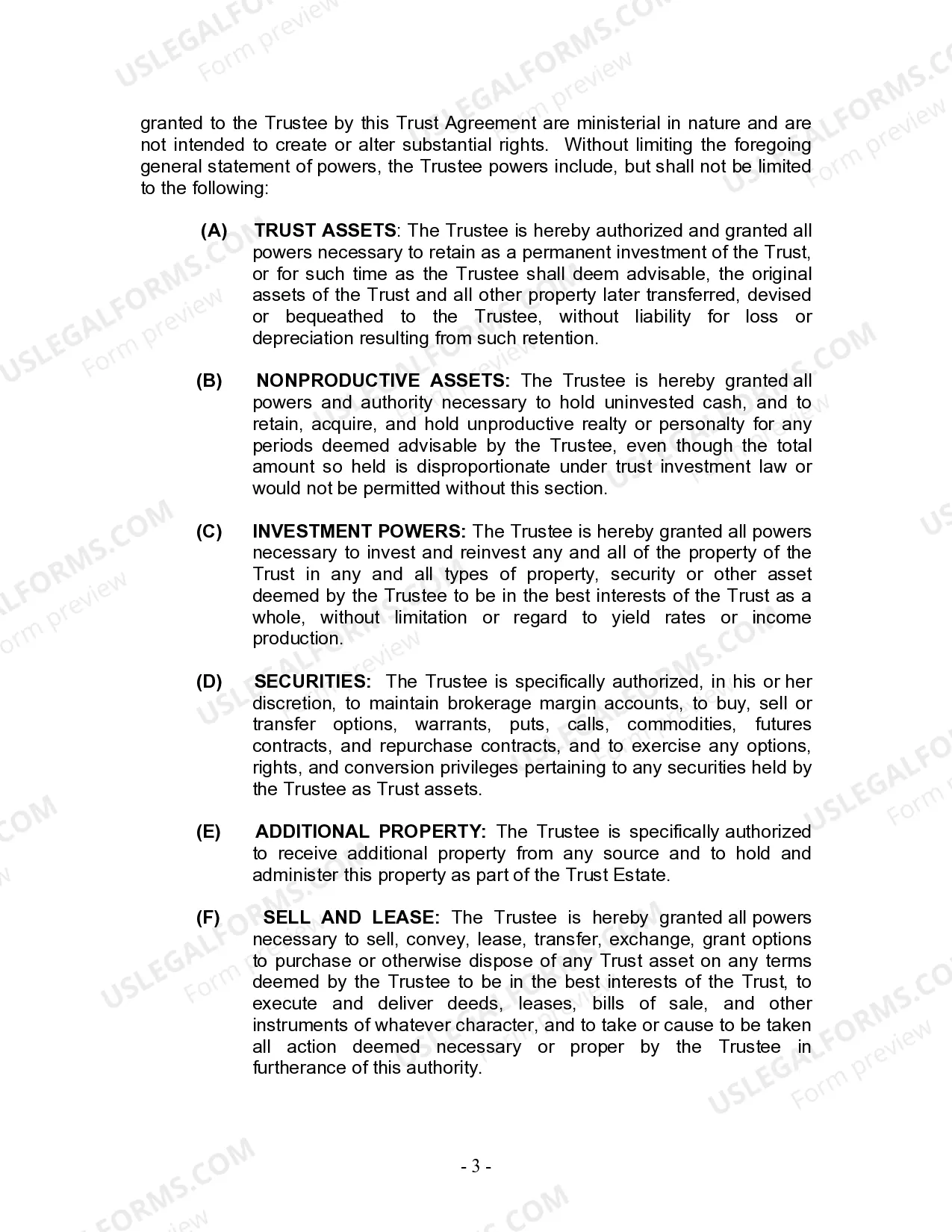
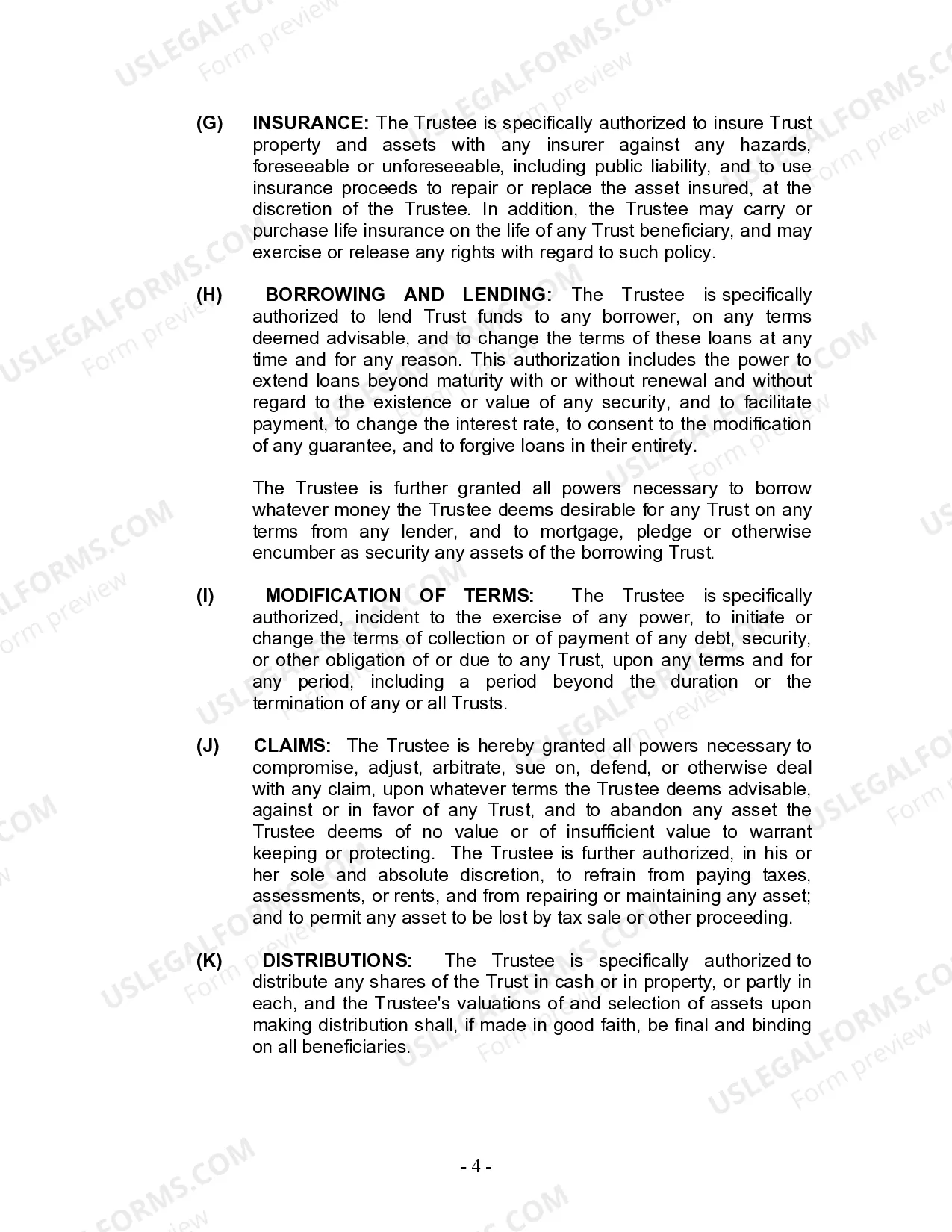
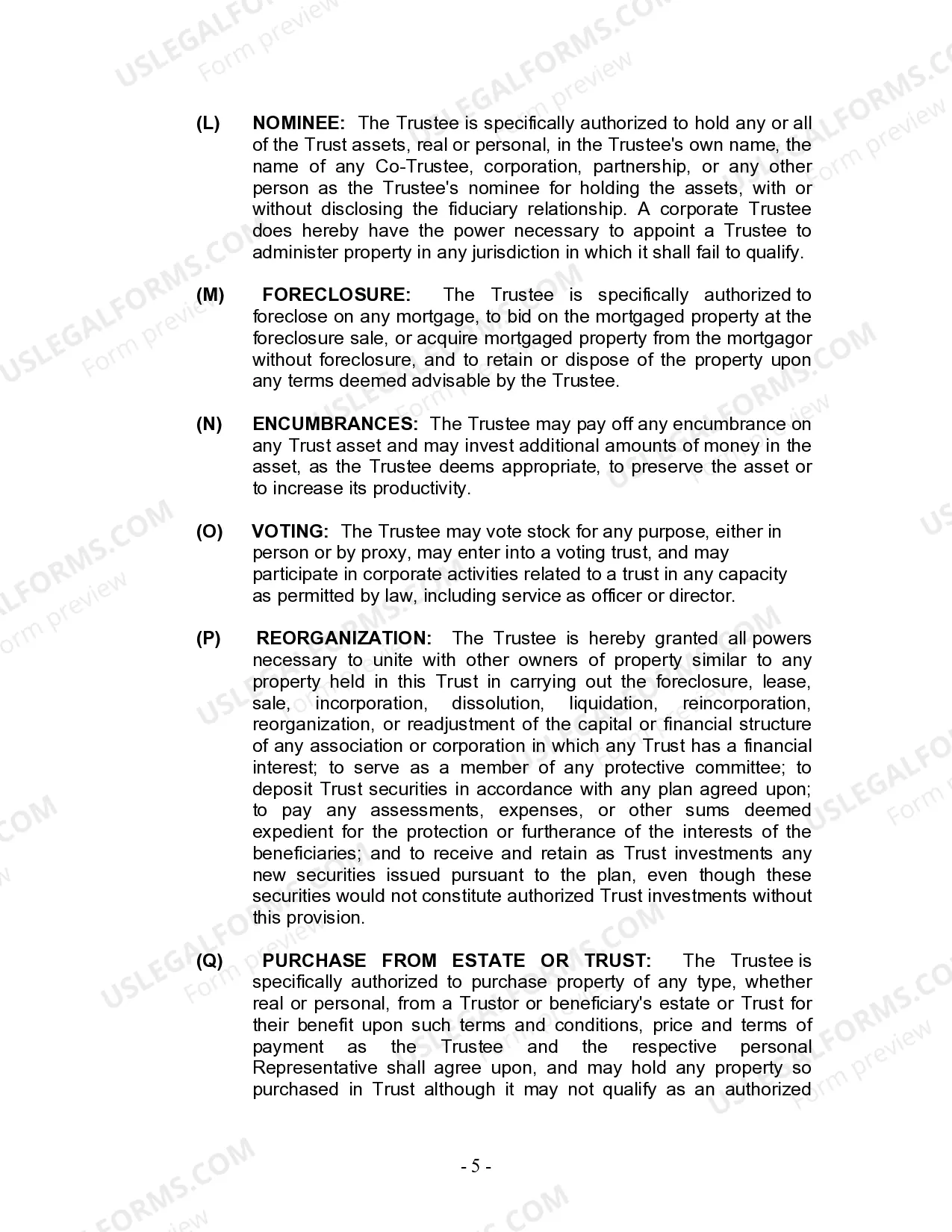
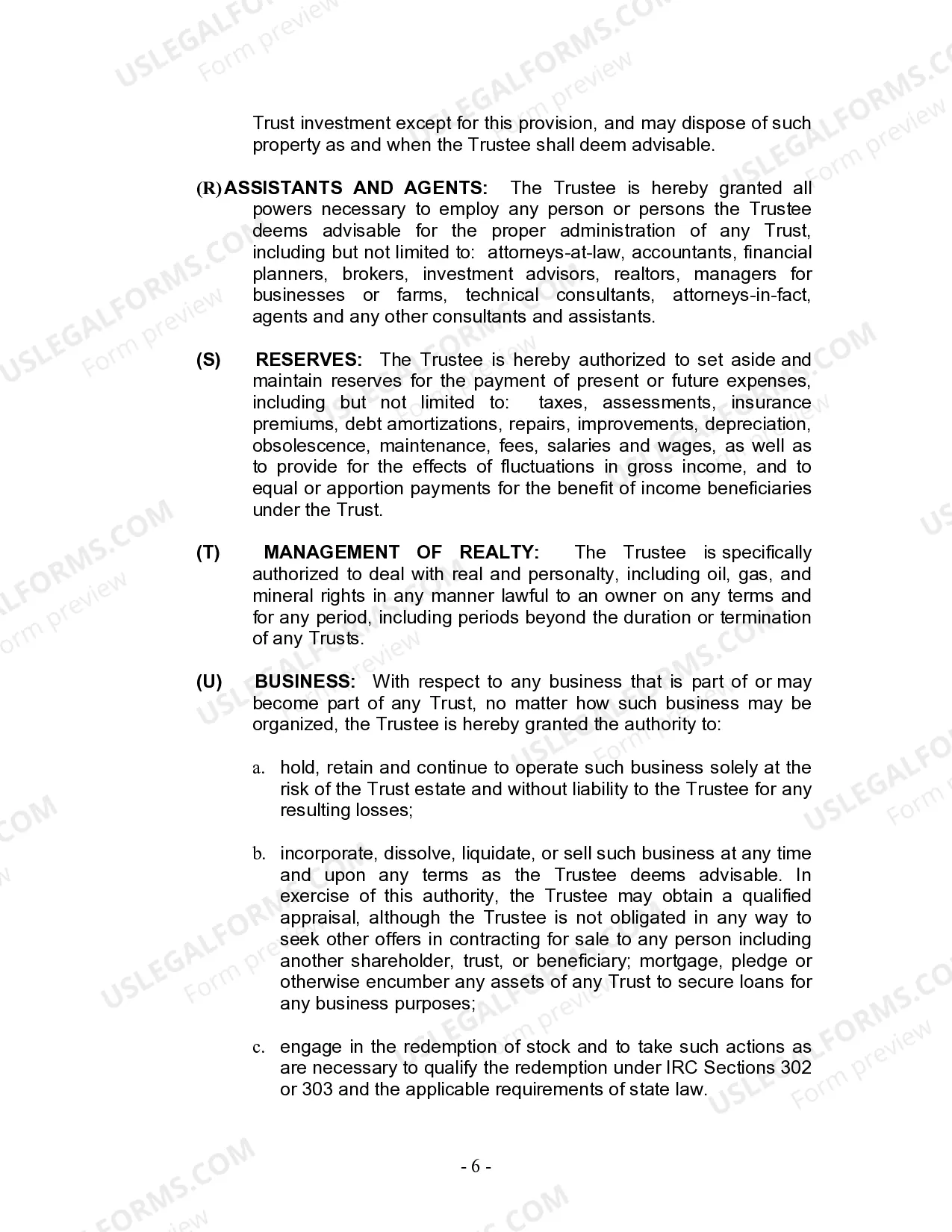
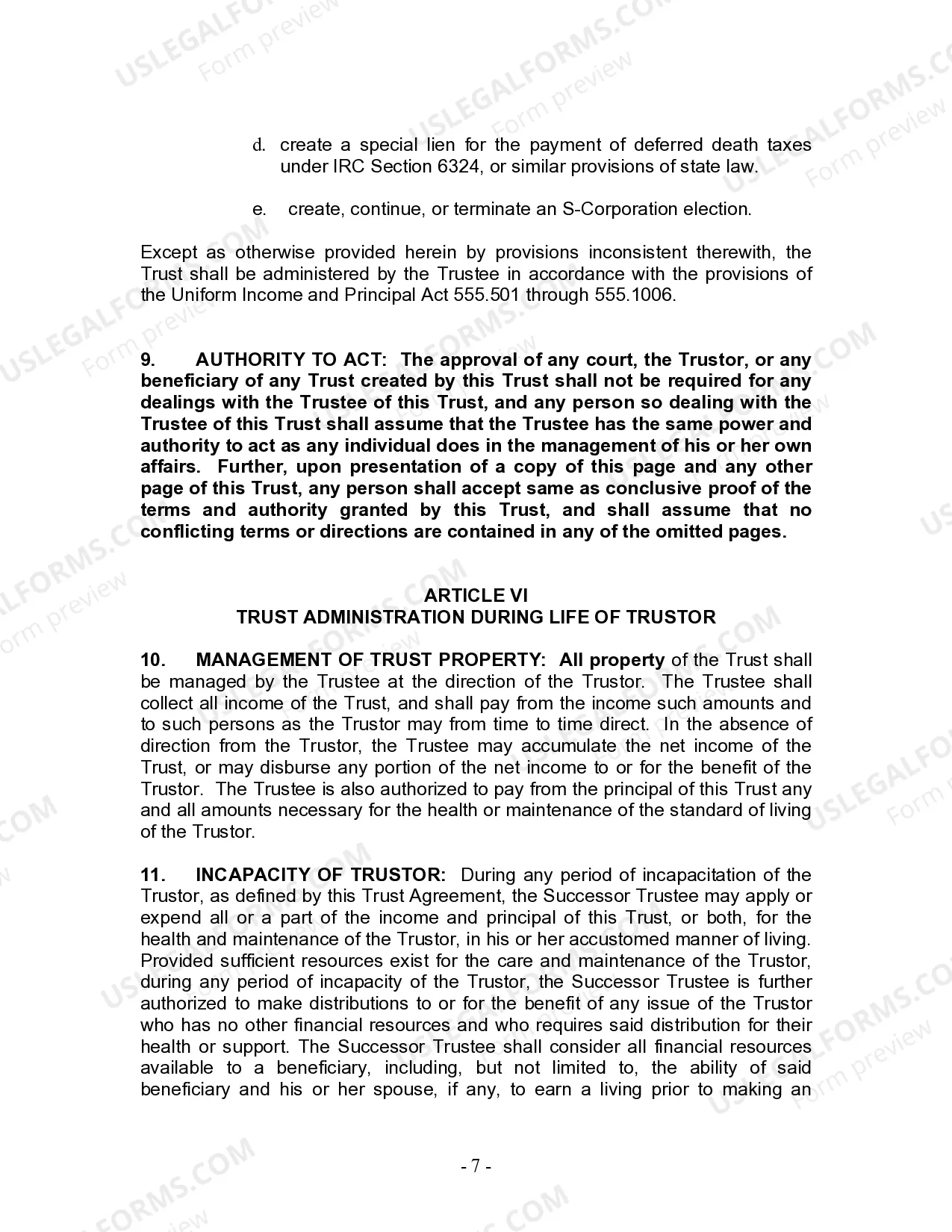
- Trustee Powers: Details the authority granted to the trustee regarding trust assets.
- Distributions upon Death: Outlines how the assets will be distributed after the trustor's death.



Common use cases
This form is useful when you want to establish a method for managing and distributing your assets while you are alive and after your death. It is especially beneficial for individuals who are single, divorced, or widowed and have children, ensuring that your assets are passed on to your children without the delays or expenses associated with probate.
Who can use this document
- Individuals who are single, divorced, or widowed.
- Parents with children who wish to ensure their assets are managed and distributed according to their wishes.
- Anyone seeking to avoid probate and streamline the transfer of assets after their death.
Instructions for completing this form
- Identify the parties involved: Fill in your name as the trustor and the names of your children as beneficiaries.
- Name the trust: Specify an official title for the trust.
- Designate a trustee: Confirm that you will act as the trustee and name successor trustees as needed.
- List the assets: Provide a detailed list of all assets you wish to include in the trust.
- Sign and date the form: Ensure that you sign the document along with any required witnesses or notaries, as applicable.
Notarization requirements for this form
Notarization is required for this form to take effect. Our online notarization service, powered by Notarize, lets you verify and sign documents remotely through an encrypted video session, available 24/7.
Get your form ready online
Our built-in tools help you complete, sign, share, and store your documents in one place.
Make edits, fill in missing information, and update formatting in US Legal Forms—just like you would in MS Word.
Download a copy, print it, send it by email, or mail it via USPS—whatever works best for your next step.
Sign and collect signatures with our SignNow integration. Send to multiple recipients, set reminders, and more. Go Premium to unlock E-Sign.
If this form requires notarization, complete it online through a secure video call—no need to meet a notary in person or wait for an appointment.
We protect your documents and personal data by following strict security and privacy standards.

Make edits, fill in missing information, and update formatting in US Legal Forms—just like you would in MS Word.

Download a copy, print it, send it by email, or mail it via USPS—whatever works best for your next step.

Sign and collect signatures with our SignNow integration. Send to multiple recipients, set reminders, and more. Go Premium to unlock E-Sign.

If this form requires notarization, complete it online through a secure video call—no need to meet a notary in person or wait for an appointment.

We protect your documents and personal data by following strict security and privacy standards.
Common mistakes
- Failing to list all assets in the trust.
- Not designating successor trustees.
- Overlooking the need for notarization in some cases.
- Not updating the trust as family circumstances change (e.g., having more children).
Why use this form online
- Convenience: Easily access and download the form at any time.
- Editability: Customize the form to fit your specific needs.
- Reliability: Get forms drafted by licensed attorneys to ensure legal compliance.
Looking for another form?
Form popularity
FAQ
If you get divorced, a Michigan Living Trust for Individuals Who are Single, Divorced, or Widowed with Children may need adjustment. Typically, divorce proceedings can impact the trust, as assets within the trust might be subject to division. It’s crucial to revise the trust to reflect your new marital status and ensure that your children remain the intended beneficiaries. Consulting a legal professional can help you navigate these changes effectively.
No, a trust does not need to be filed with the court in Michigan. This includes your Michigan Living Trust for Individual Who is Single, Divorced or Widow (or Widower) with Children. Instead, you maintain it privately, which allows for more control and privacy over your estate plans. However, once you pass away, it may need to be provided to a probate court to clarify your intentions regarding asset distribution.
While you don't need to file a living trust with the court in Michigan, you must ensure that the trust document is legally valid. Create your Michigan Living Trust for Individual Who is Single, Divorced or Widow (or Widower) with Children by following proper drafting and signing procedures. It's wise to have your trust witnessed and notarized, providing an added layer of legitimacy. Use resources like US Legal Forms for assistance with proper documentation.
The 2-year rule typically refers to how long a trust must be established before certain actions can be taken. In Michigan, if a trust is created and subsequently modified, the 2-year period often applies to asset transfers to prevent issues related to fraudulent transfers. Understanding this rule can help maintain the integrity of your Michigan Living Trust for Individual Who is Single, Divorced or Widow (or Widower) with Children. Consulting with legal experts can clarify how this rule affects your situation.
Absolutely, you can create a living trust in Michigan without your spouse. A Michigan Living Trust for Individual Who is Single, Divorced or Widow (or Widower) with Children allows you to control how your assets will be managed and distributed. This is especially beneficial if you want to establish a clear plan for your children. Choose a trustee you trust to manage the trust according to your wishes.
Yes, you can create your own Michigan Living Trust for Individual Who is Single, Divorced or Widow (or Widower) with Children. However, it's important to ensure that you follow Michigan laws properly to avoid issues later. DIY options can work well, but many people prefer professional assistance to ensure all legal bases are covered. Platforms like US Legal Forms can provide templates and guidance to help you successfully navigate this process.
If you have a trust and get divorced, the trust remains in effect unless you decide to change it. You should review and possibly modify your Michigan Living Trust for Individual Who is Single, Divorced or Widow (or Widower) with Children to reflect your current situation and intentions regarding asset distribution. Using services like US Legal Forms can help streamline the revision process.
In Michigan, divorce does not automatically revoke a trust. However, it can affect the terms of the trust, especially if your spouse is a beneficiary. To ensure your wishes are upheld, revisit your Michigan Living Trust for Individual Who is Single, Divorced or Widow (or Widower) with Children and make any necessary adjustments after a divorce.
Yes, you can establish a living trust without your spouse. If you are single, divorced, or a widow (or widower) with children, you can create a Michigan Living Trust that reflects your specific wishes regarding your assets. This is particularly useful for ensuring your children's inheritance is managed according to your desires.
Yes, you can write your own trust in Michigan. However, it's important to ensure that your document meets all legal requirements to avoid issues later. A Michigan Living Trust for Individual Who is Single, Divorced or Widow (or Widower) with Children can be complex, so consider using resources like US Legal Forms to guide you through the process.