Michigan Grant Deed from a Grantor to two Grantees
What this document covers
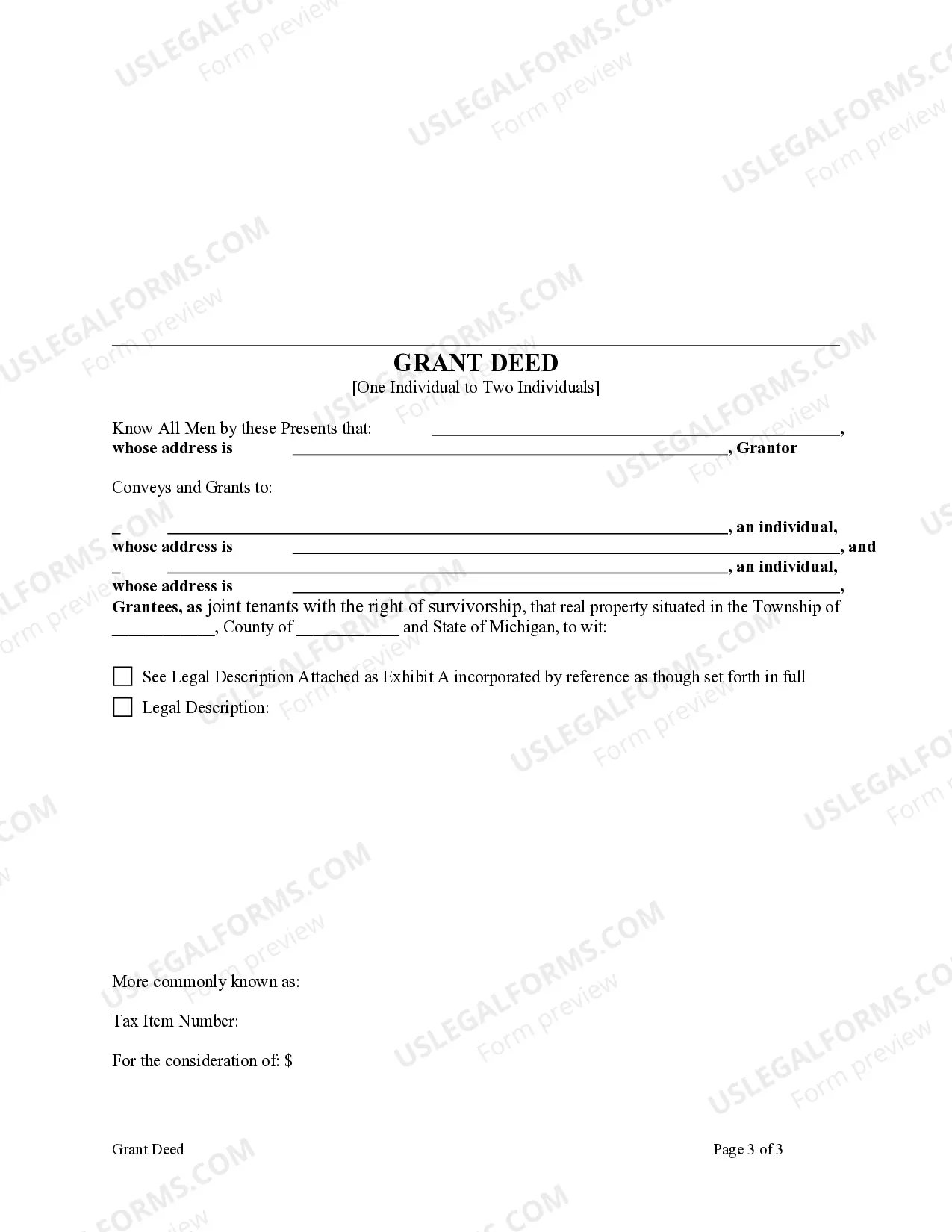
This Grant Deed form allows a Grantor to transfer property ownership to two Grantees. It specifies whether the Grantees will hold the property as joint tenants with the right of survivorship or as tenants in common. Unlike other property transfer forms, this deed includes specific state statutory compliance and warranties about the property being conveyed.
What’s included in this form
- Identification of the Grantor and the two Grantees.
- Description of the property being conveyed.
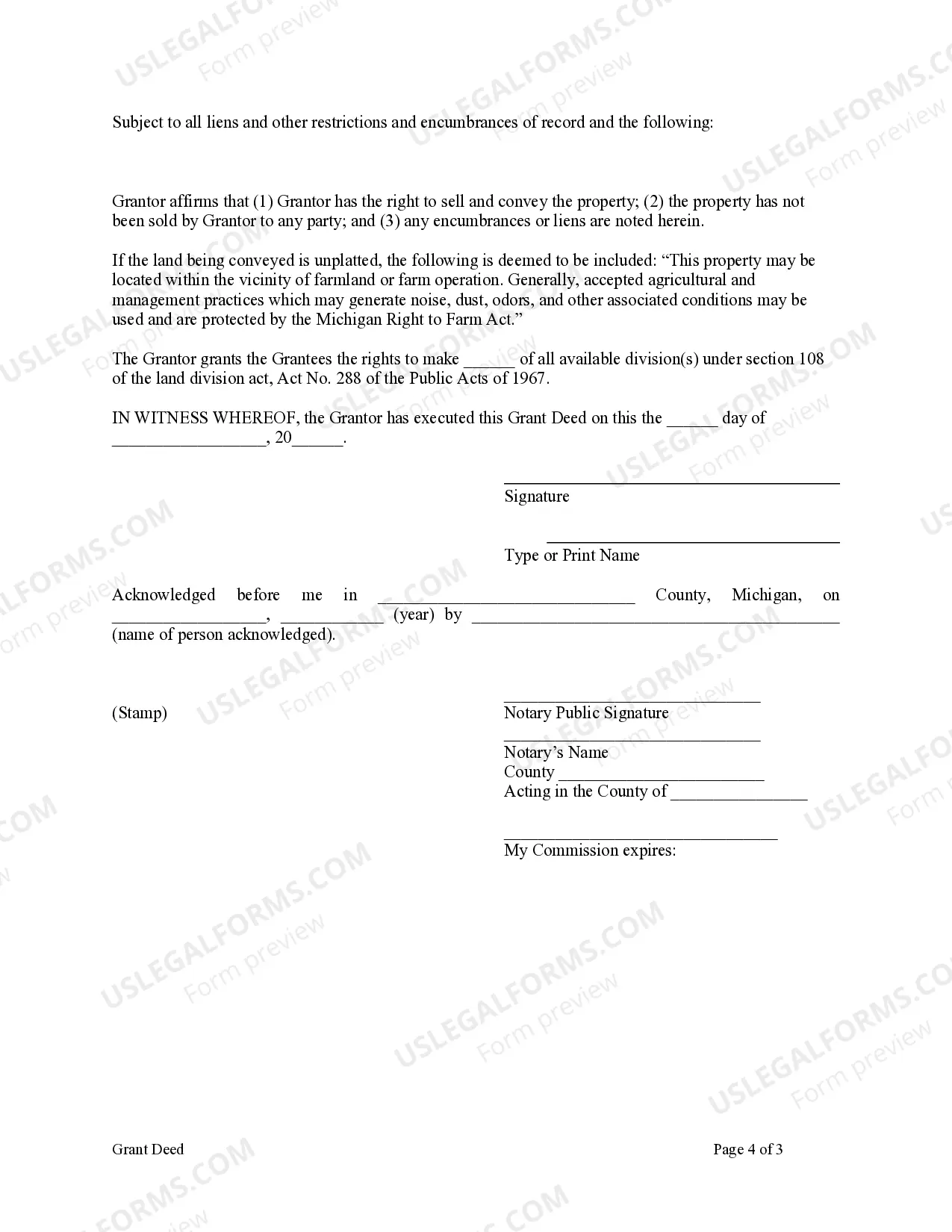
- Warranties provided by the Grantor regarding the property.
- Choices for the type of ownership (joint tenancy or tenancy in common).
- Space for signatures of the Grantor and date of execution.




Common use cases
This Grant Deed should be used when an individual (the Grantor) wishes to legally convey property to two individuals (the Grantees) in a specific ownership format. It is typically used in real estate transactions, such as when family members want to share ownership of a property or when partners decide to jointly invest in real estate.
Intended users of this form
- Individuals transferring property ownership to two other individuals.
- Real estate investors and partners in business agreements.
- Families wishing to consolidate property ownership.
How to complete this form
- Identify the parties: clearly state the names of the Grantor and the two Grantees.
- Specify the property: include a detailed description of the property being transferred.
- Choose ownership type: indicate whether the Grantees will hold the property as joint tenants or tenants in common.
- Provide warranties: ensure that the Grantor is aware of and provides the necessary warranties on the property.
- Execute the deed: have the Grantor sign and date the document once completed.
Is notarization required?
This form does not typically require notarization unless specified by local law. Always verify local legal requirements to ensure compliance.
Get your form ready online
Our built-in tools help you complete, sign, share, and store your documents in one place.
Make edits, fill in missing information, and update formatting in US Legal Forms—just like you would in MS Word.
Download a copy, print it, send it by email, or mail it via USPS—whatever works best for your next step.
Sign and collect signatures with our SignNow integration. Send to multiple recipients, set reminders, and more. Go Premium to unlock E-Sign.
If this form requires notarization, complete it online through a secure video call—no need to meet a notary in person or wait for an appointment.
We protect your documents and personal data by following strict security and privacy standards.

Make edits, fill in missing information, and update formatting in US Legal Forms—just like you would in MS Word.

Download a copy, print it, send it by email, or mail it via USPS—whatever works best for your next step.

Sign and collect signatures with our SignNow integration. Send to multiple recipients, set reminders, and more. Go Premium to unlock E-Sign.

If this form requires notarization, complete it online through a secure video call—no need to meet a notary in person or wait for an appointment.

We protect your documents and personal data by following strict security and privacy standards.
Avoid these common issues
- Not including a clear property description.
- Failing to specify the correct type of ownership.
- Leaving out necessary signatures or dates.
Benefits of using this form online
- Convenient drafting and customization from the comfort of your home.
- Edit forms easily on your computer or print for manual completion.
- Access to legal forms that meet current state law requirements.
Main things to remember
- The Grant Deed from a Grantor to two Grantees facilitates the transfer of property ownership to two individuals.
- It is important to specify the type of joint ownership chosen by the Grantees.
- Ensuring all parties provide accurate information and signatures is crucial for legal enforceability.
Looking for another form?

Form popularity
FAQ
1Check the mortgage.2Get a copy of the property title.3Fill out a property title transfer form.4Submit the title transfer form.5Pay the relevant fee.6Wait for the processing of the form.
Find the most recent deed to the property. Create the new deed. Sign and notarize the deed. File the deed in the county land records.
Affidavit must be filed by the new owner with the assessor for the city or township where the property is located within 45 days of the transfer. The information on this form is NOT CONFIDENTIAL.
In Michigan, a quit claim deed must be signed by a witness, in addition to the notary, to make it legal.After all required signatures are collected and notarized, file the document with your local register of deeds to complete the transaction.
Retrieve your original deed. Get the appropriate deed form. Draft the deed. Sign the deed before a notary. Record the deed with the county recorder. Obtain the new original deed.
Retrieve your original deed. Get the appropriate deed form. Draft the deed. Sign the deed before a notary. Record the deed with the county recorder. Obtain the new original deed.
The Tax ID No of both buyer and seller. Notarized Deed of Absolute Sale (DAS)-1 Original copy + 2 photocopies. If you are transferring a house or lot Transfer Certificate of Title (TCT)-duplicate copy.
There will be a $30 recording fee. If you prepare a quitclaim deed using the Do-It-Yourself Quitclaim Deed (after Divorce) tool, detailed instructions on what to do next will print out along with the deed.
To add your spouse to your property deed: Have your lawyer do a Michigan Quit Claim Deed for you and then record it with your County's Register of Deeds. If you croak before you get it recorded, your property goes into probate, instead of to your spouse.