Michigan Plumbing Contract for Contractor
Overview of this form
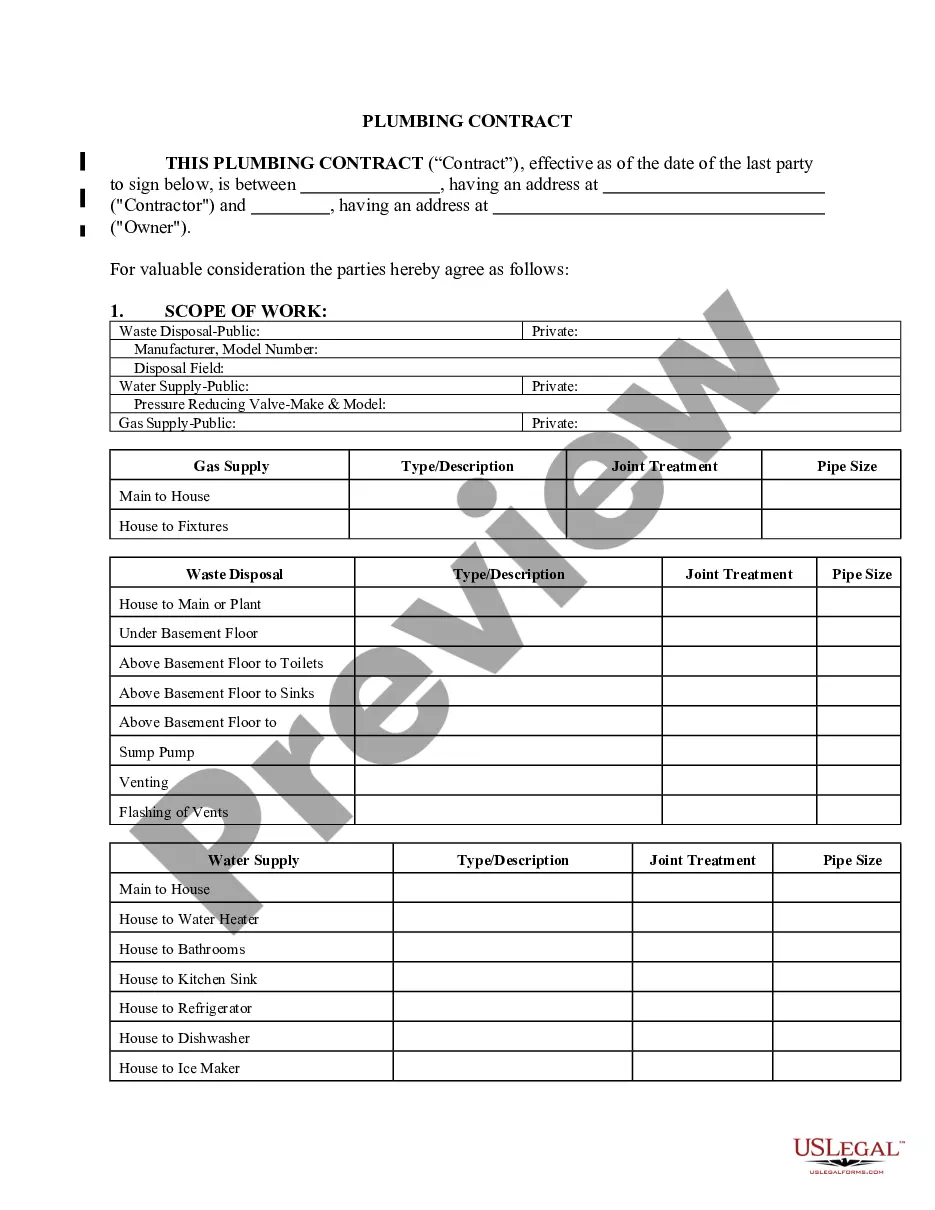
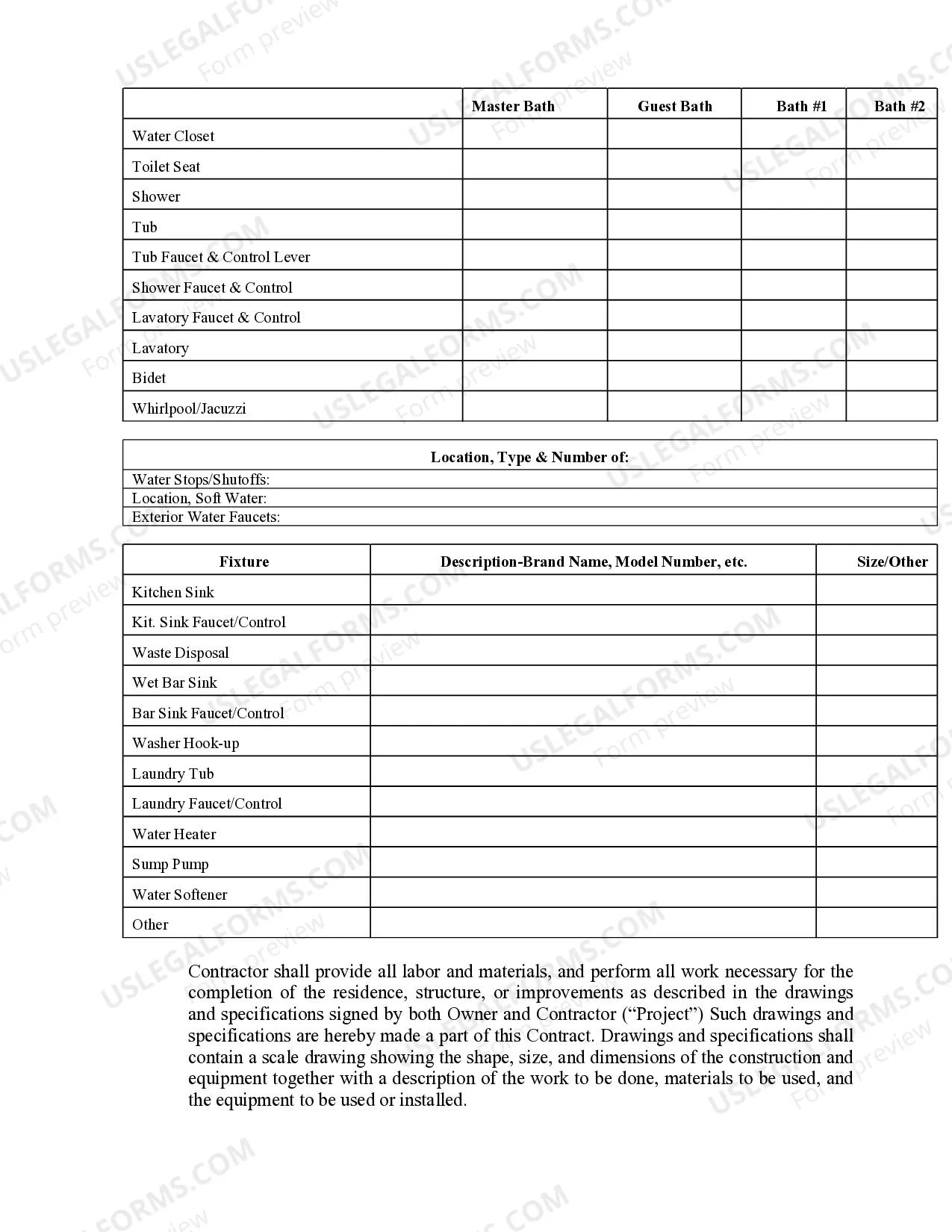
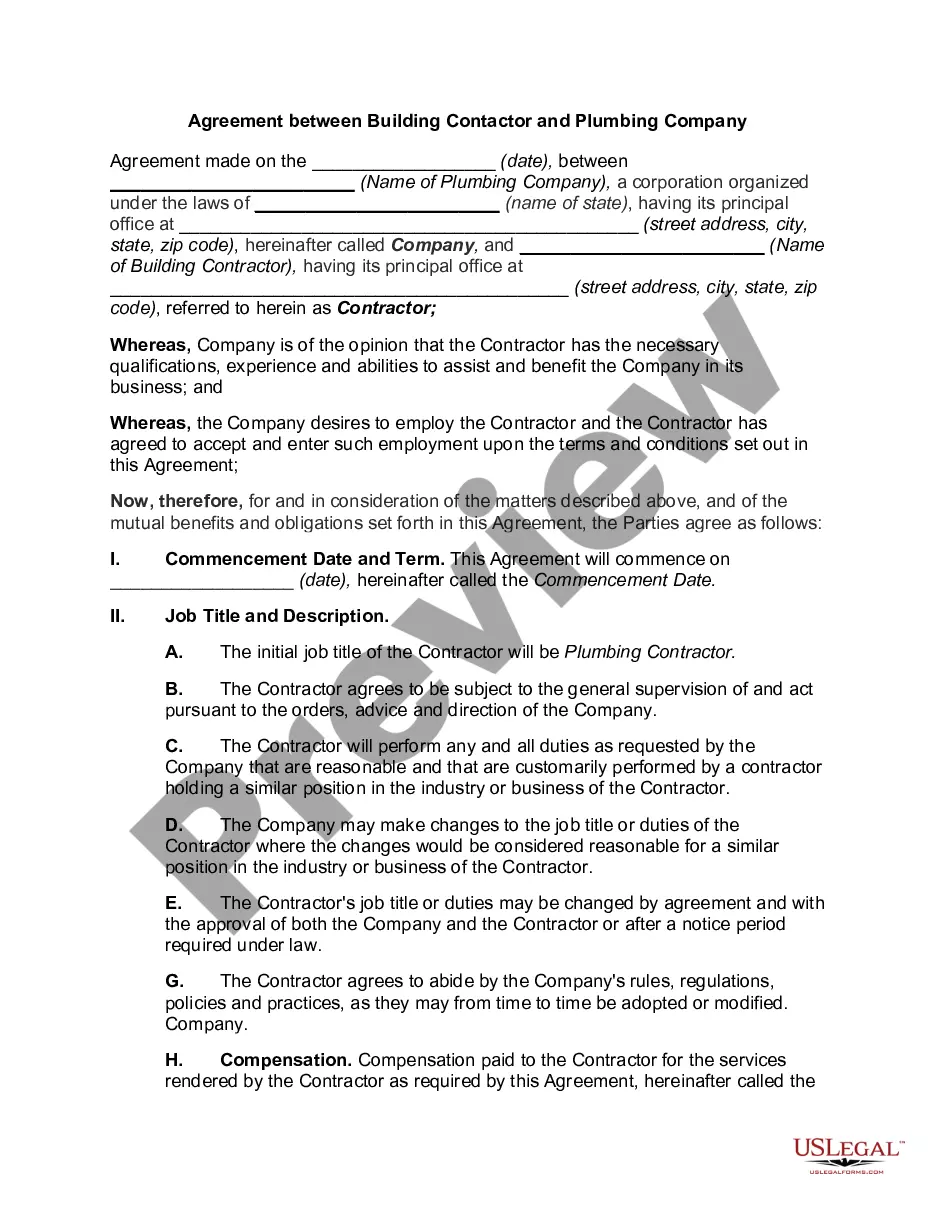
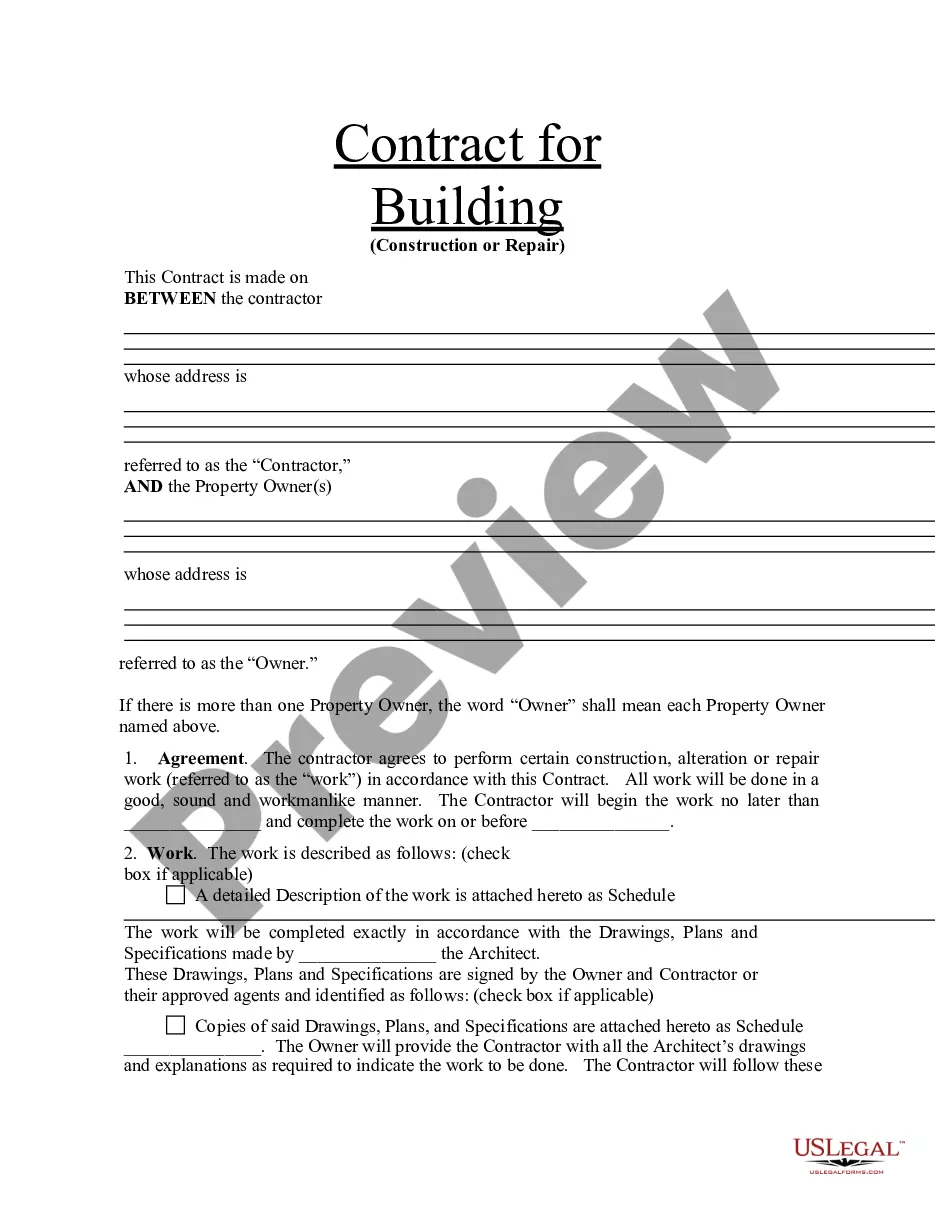
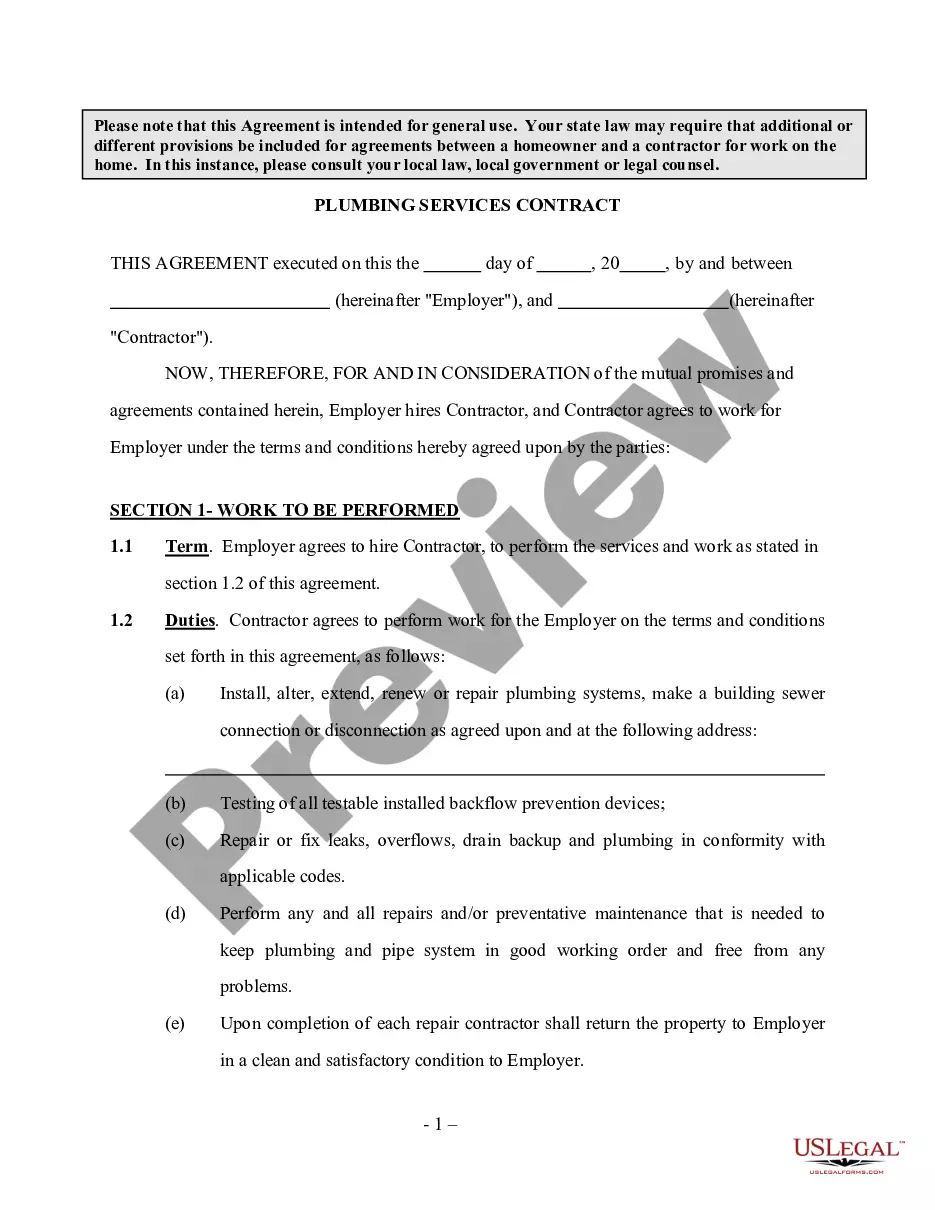
The Plumbing Contract for Contractor is a legal document that outlines the agreement between a plumbing contractor and a property owner. This form facilitates either a cost plus or fixed fee payment arrangement, specifically tailored to the plumbing industry. It addresses important elements such as change orders, warranties, insurance, and permits, making it distinct from other construction contracts. The form is designed to comply with the laws of Michigan, providing clarity and legal protection for both parties involved in the plumbing project.
Main sections of this form
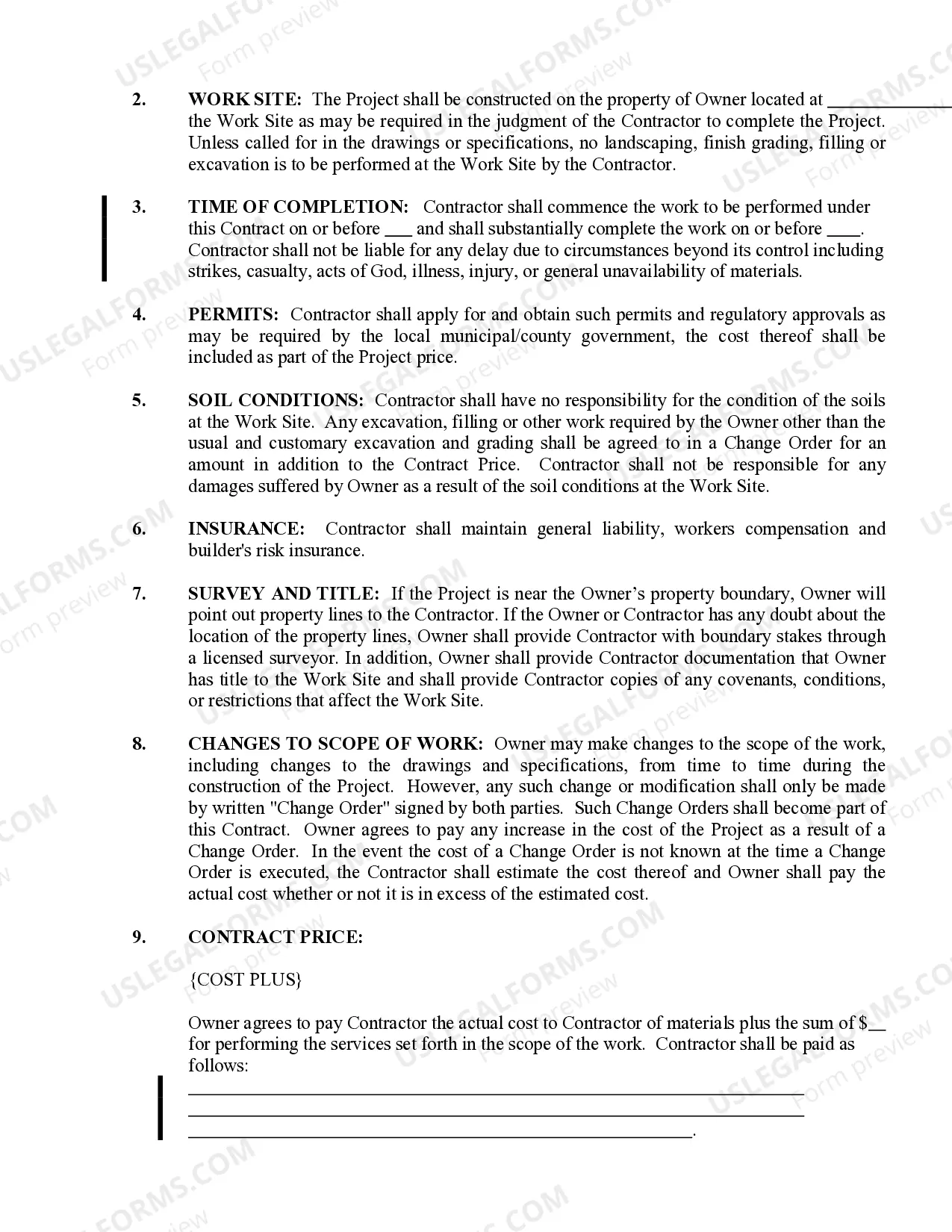
- Permits: Specifies that the contractor must obtain necessary permits as part of the project cost.
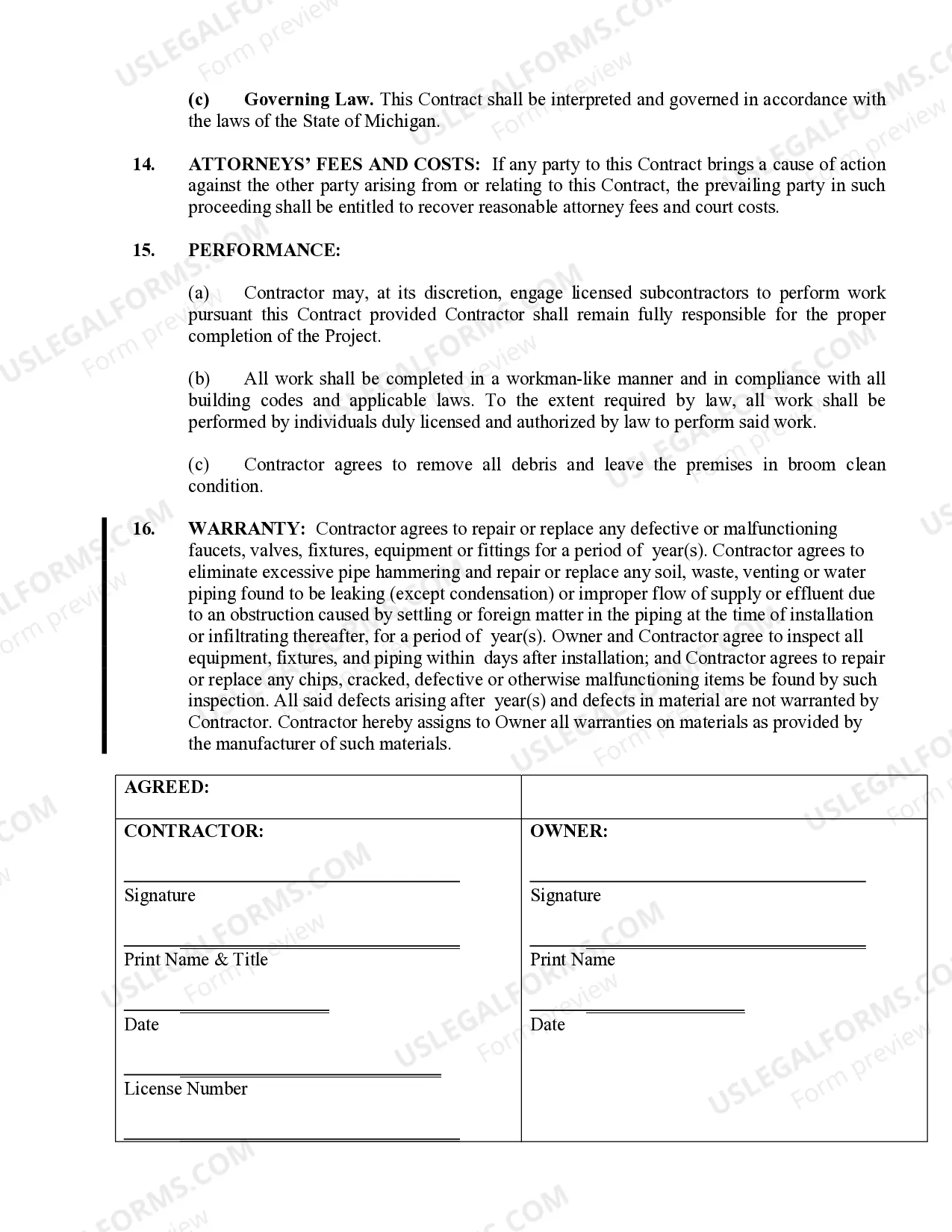
- Soil conditions: States that the contractor is not responsible for the siteâs soil conditions.
- Insurance: Requires the contractor to maintain general liability and workers compensation insurance.
- Change orders: Outlines the procedure for changing the scope of work and how costs are handled.
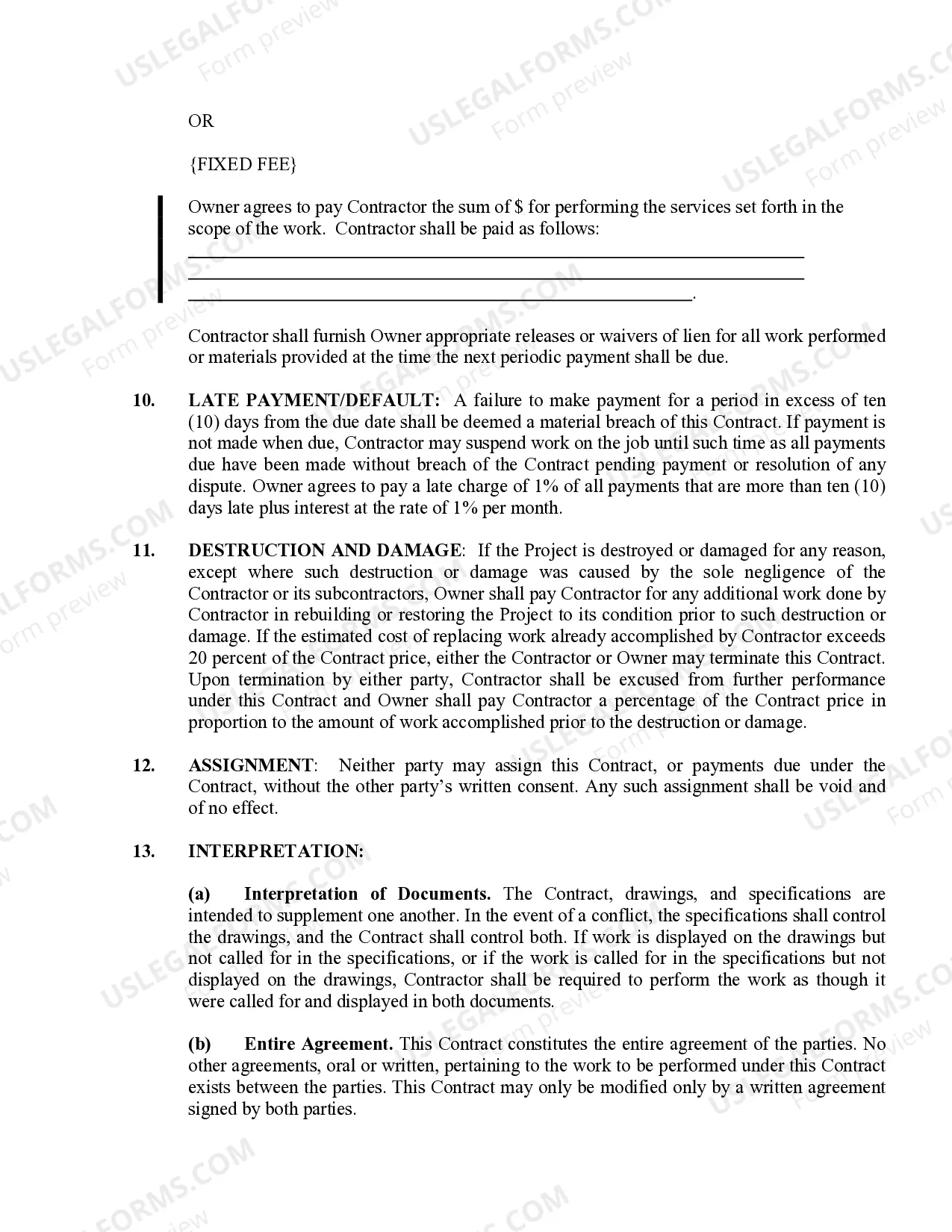
- Payment terms: Defines late payment penalties and the contractor's rights upon default.
- Termination: Details conditions under which either party may terminate the contract due to damage or destruction.


When to use this document
This form is essential when entering into a plumbing contract for residential or commercial projects. Use it when hiring a plumbing contractor to ensure that all terms regarding payment, responsibilities, and obligations are clearly defined. It is particularly useful when changes in the work scope may occur, as it provides a formal process for managing those changes effectively.
Who can use this document
- Property owners seeking plumbing services.
- Plumbing contractors who require a formal agreement with clients.
- Individuals or businesses planning renovations or new construction that involves plumbing work.
Instructions for completing this form
- Identify the parties involved: Include the names and addresses of both the contractor and property owner.
- Specify the project scope: Outline the specific plumbing work to be performed.
- Enter payment details: Indicate whether a cost plus or fixed fee arrangement is agreed upon.
- Include change order procedures: Ensure both parties understand how changes to the work will be documented and billed.
- Collect necessary signatures: Both the property owner and contractor must sign the contract to make it legally binding.
Notarization guidance
This form does not typically require notarization unless specified by local law. However, it is advisable to have it notarized to add an extra layer of authenticity and legal safeguard.
Get your form ready online
Our built-in tools help you complete, sign, share, and store your documents in one place.
Make edits, fill in missing information, and update formatting in US Legal Forms—just like you would in MS Word.
Download a copy, print it, send it by email, or mail it via USPS—whatever works best for your next step.
Sign and collect signatures with our SignNow integration. Send to multiple recipients, set reminders, and more. Go Premium to unlock E-Sign.
If this form requires notarization, complete it online through a secure video call—no need to meet a notary in person or wait for an appointment.
We protect your documents and personal data by following strict security and privacy standards.

Make edits, fill in missing information, and update formatting in US Legal Forms—just like you would in MS Word.

Download a copy, print it, send it by email, or mail it via USPS—whatever works best for your next step.

Sign and collect signatures with our SignNow integration. Send to multiple recipients, set reminders, and more. Go Premium to unlock E-Sign.

If this form requires notarization, complete it online through a secure video call—no need to meet a notary in person or wait for an appointment.

We protect your documents and personal data by following strict security and privacy standards.
Avoid these common issues
- Failing to clearly define the scope of work, leading to disputes later on.
- Not specifying payment terms, which can result in late payment issues.
- Leaving out change order procedures, creating confusion when project modifications arise.
- Neglecting to obtain necessary permits before starting the work.
- Not ensuring both parties sign the contract, resulting in enforceability issues.
Why use this form online
- Convenient access: Easily download and complete the form at any time.
- Editability: Customize the contract to fit specific project needs before printing.
- Legal reliability: Forms are created by licensed attorneys, ensuring compliance with current laws.
Legal use & context
- This contract serves as a comprehensive agreement that outlines the rights and obligations of both parties.
- It helps reduce the likelihood of disputes by clearly defining the terms of engagement.
- Enforceability is supported by Michigan state laws governing contracts and commercial transactions.
Quick recap
- The Plumbing Contract for Contractor outlines essential terms between contractors and property owners.
- It ensures compliance with Michigan state laws, protecting both parties involved in plumbing work.
- Clear documentation of the scope, payment terms, and insurance requirements minimizes disputes.
Looking for another form?


Form popularity
FAQ
Michigan General Contractor Licenses. Projects over $600 will require either a residential builders license or a maintenance and alteration contractors license. For these licenses, you must apply to the Michigan Licensing and Regulatory Affairs department. Both of these licenses will be regulated at the state level.
Michigan. A handyman in Michigan does not need a specific handyman's license to work in the state. However, there are many jobs that a handyman may do that could require a license, including carpentry, laying concrete, painting and tiling. These all require a Maintenance and Alteration Contractor License.
Michigan General Contractor Licenses. Projects over $600 will require either a residential builders license or a maintenance and alteration contractors license. For these licenses, you must apply to the Michigan Licensing and Regulatory Affairs department. Both of these licenses will be regulated at the state level.
Most contractors do offer some kind of guarantee on their work, because doing so protects their interests as well as your own. While a contractor's warranty can protect you, the homeowner, from having to live with shoddy work, it also protects the contractor from having to return to fix things over and over again.
Michigan. A handyman in Michigan does not need a specific handyman's license to work in the state. However, there are many jobs that a handyman may do that could require a license, including carpentry, laying concrete, painting and tiling. These all require a Maintenance and Alteration Contractor License.
The current limit is $600. Michigan licenses many different types of contractors that other states do not. The proposed law would allow people the ability to choose from a larger pool of contractors, while the burdens on people trying to work would be lessened.
In California, contractors are required to provide warranties on work done for home and business owners for between one and 10 years. The warranties California law provides are a minimum, and longer warranties can be agreed to between the parties.
Concrete Work: Professionals working with concrete must be licensed by the Department of Licensing and Regulatory Affairs.
Getting your Michigan contractor license is a straightforward process. (And the process is that same if you want to become a licensed residential maintenance & alterations contractor.)Send the state your course completion certificate, your Michigan builders license application, and the relevant fees.