Maine Last Will and Testament for a Widow or Widower with Adult and Minor Children
Overview of this form
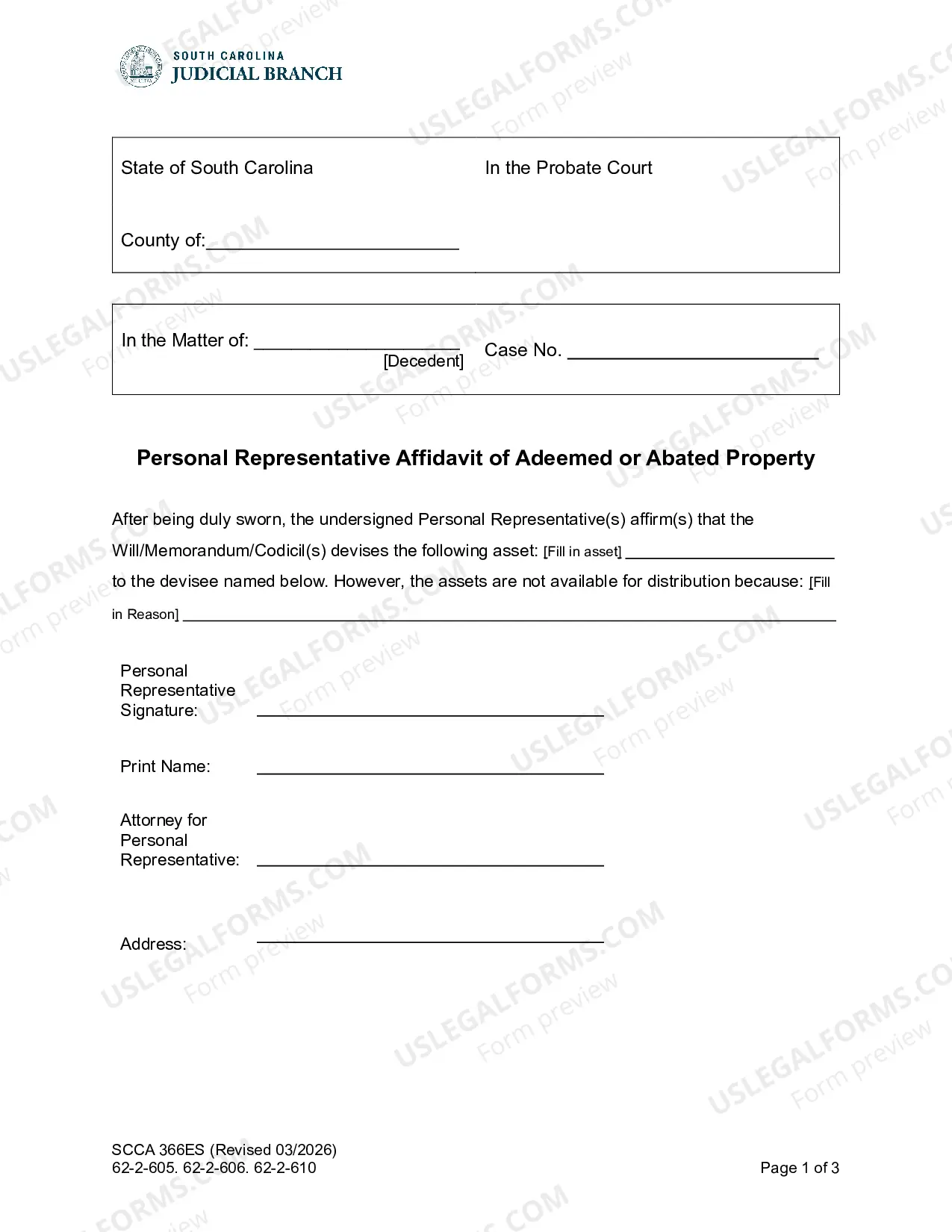
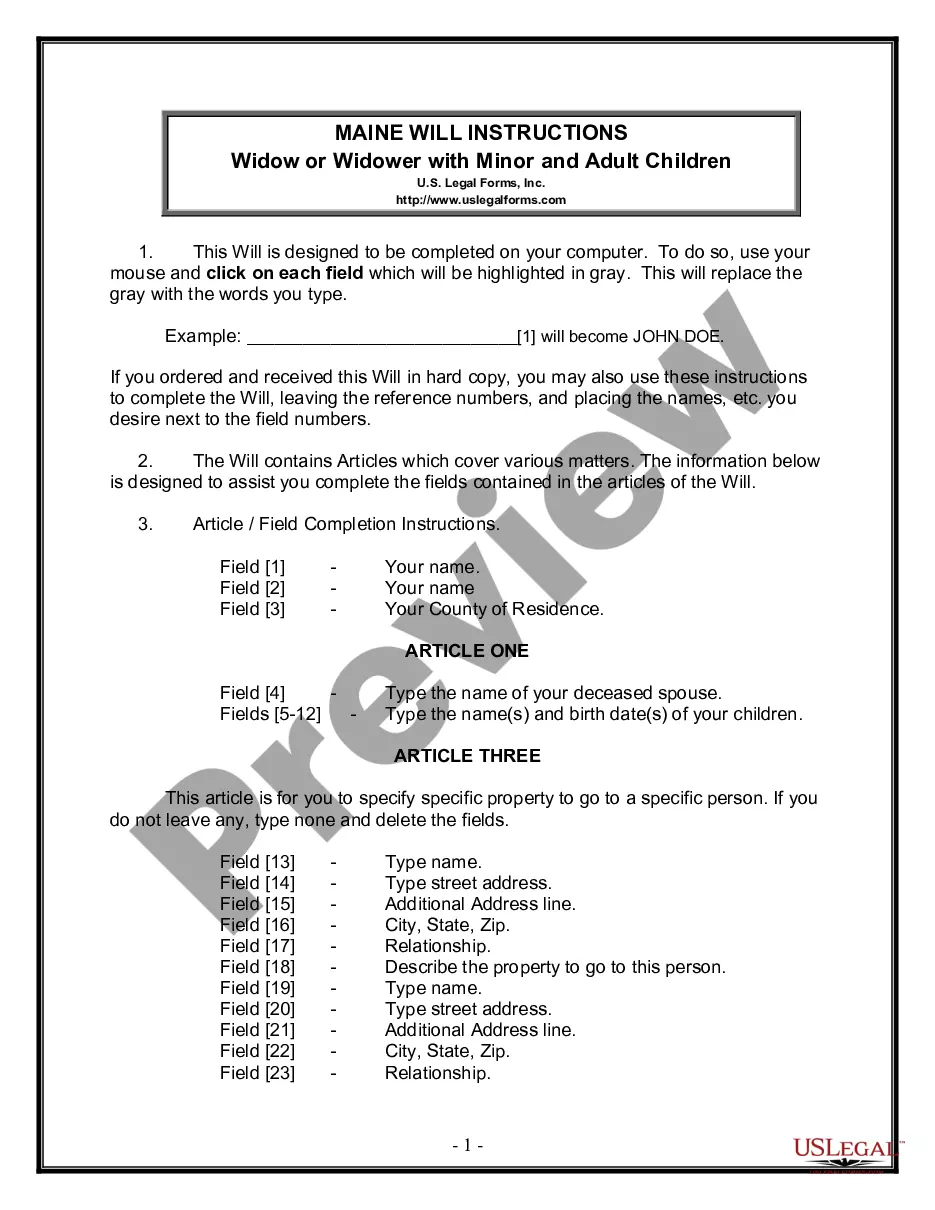
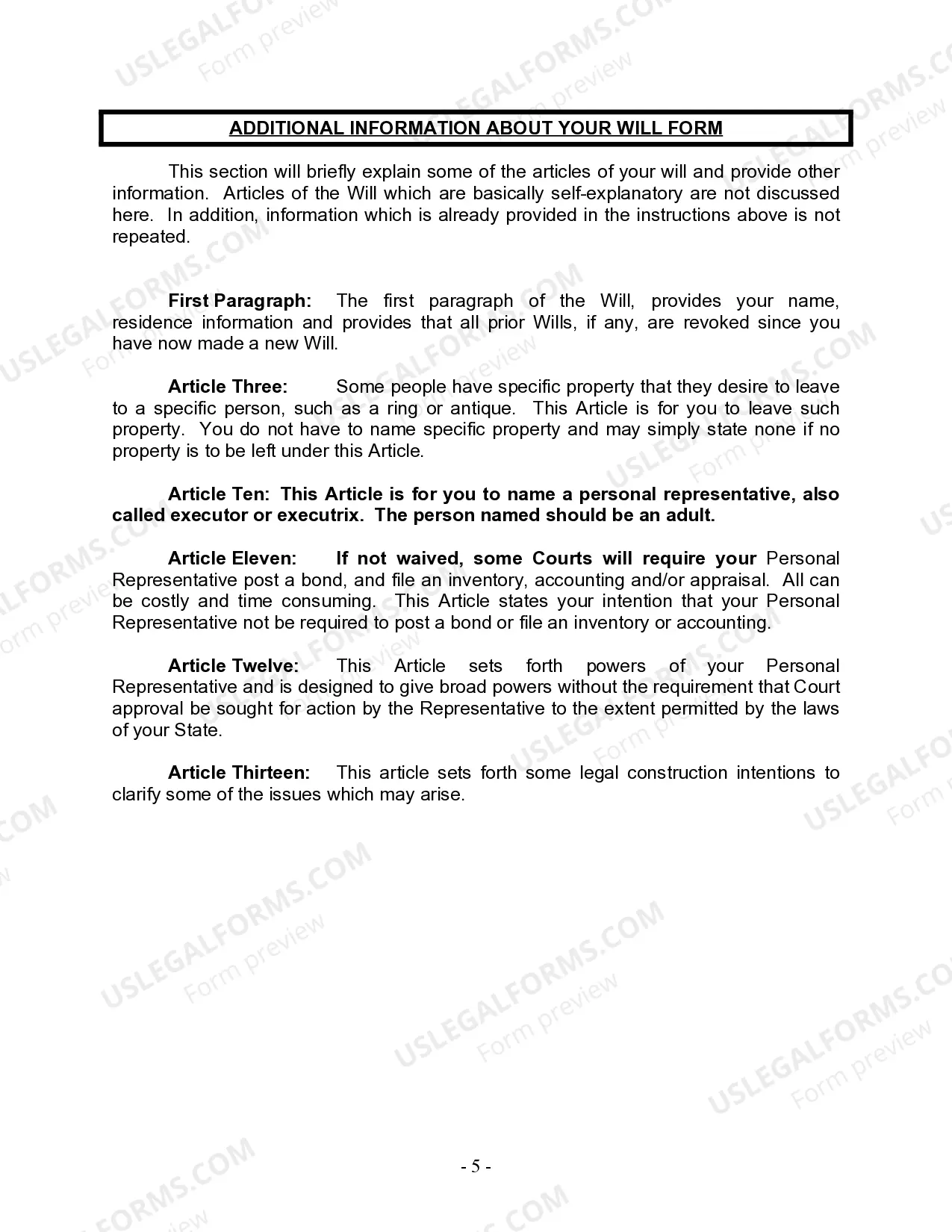
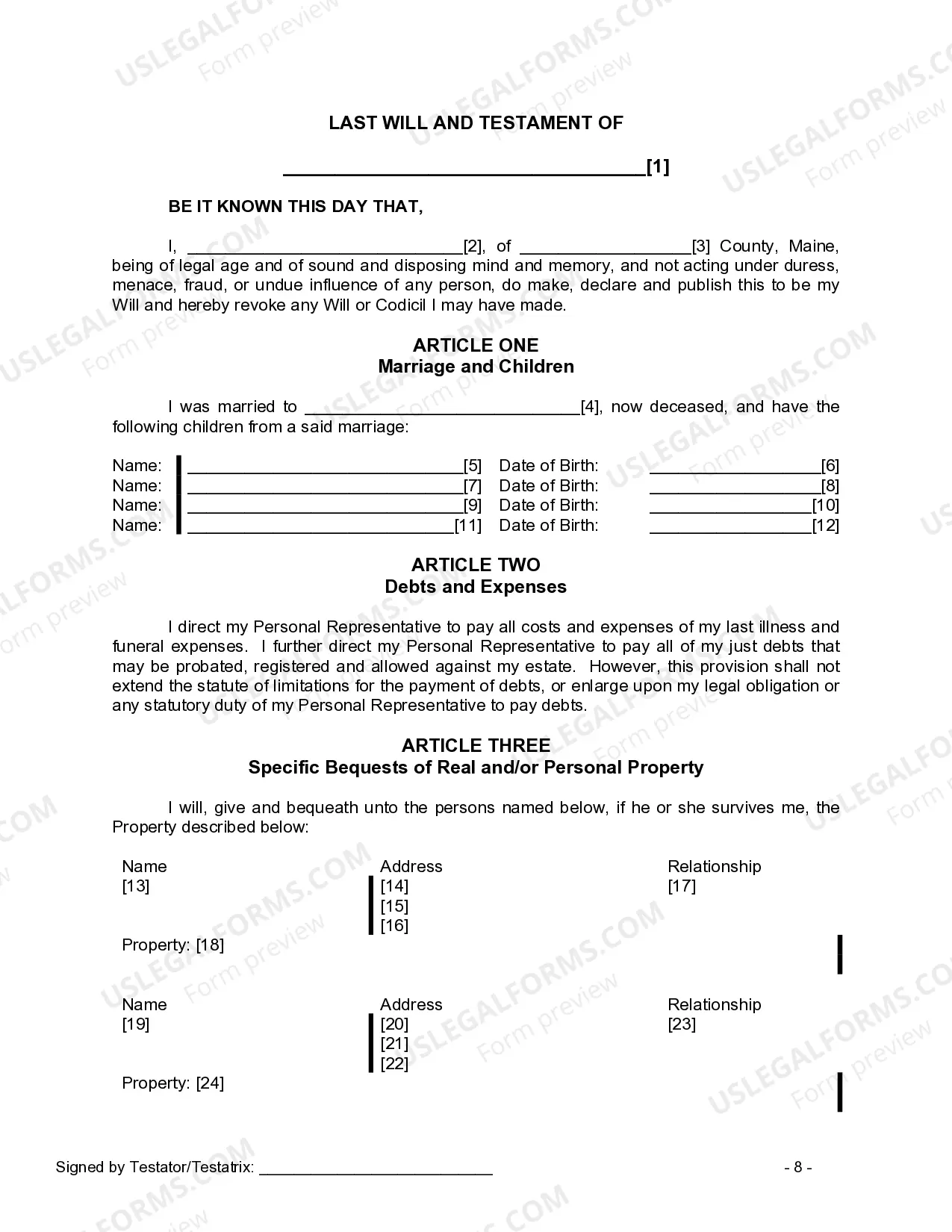
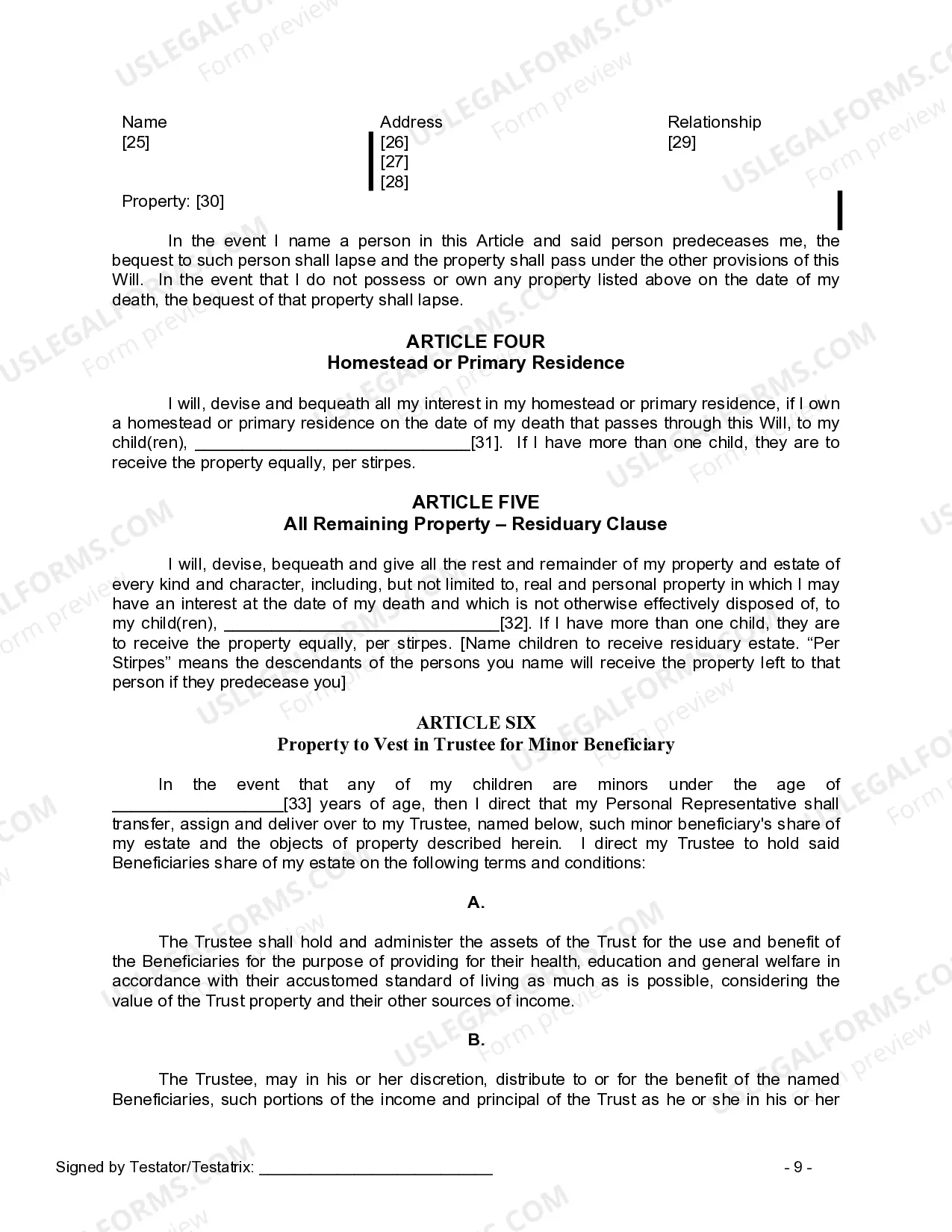
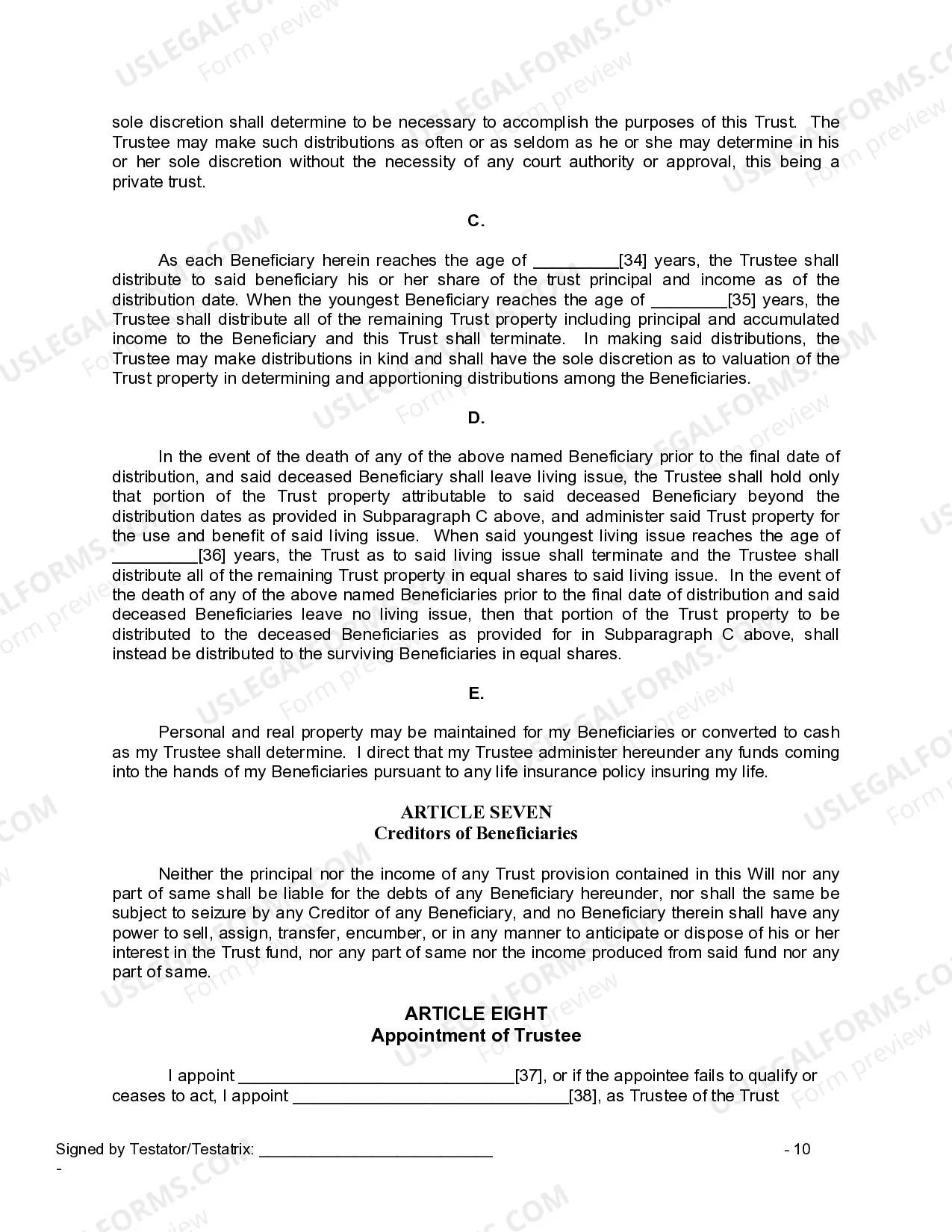
The Last Will and Testament for a Widow or Widower with Adult and Minor Children is a legal document that outlines how a widow or widower wants their assets distributed after death. This specific will caters to individuals with both minor and adult children, allowing for the appointment of an executor, distribution of property, and designation of a trustee for minor children's inheritances. This form is distinct because it considers the responsibilities of guardianship and trust management for minors, which is essential for blended families or situations involving dependents.
Main sections of this form
- Appointment of a personal representative or executor.
- Designations for property distribution among adult and minor children.
- Provisions for appointing a guardian for minor children.
- Specific bequests of property to named individuals.
- Establishment of trusts for minor beneficiaries.
- Self-proving affidavit provision for easier probate processing.



Situations where this form applies
This form is necessary when a widow or widower wishes to document their wishes regarding the distribution of their estate, ensuring that both adult and minor children are adequately provided for. It is particularly useful after the passing of a spouse, when the need to appoint guardians for minor children becomes critical, and when there are specific items or properties one wishes to pass on to named beneficiaries.
Who can use this document
- Widows or widowers with minor and adult children.
- Individuals wanting to ensure specific distributions of their estate.
- Those looking to establish guardianship for minor children.
- People who desire to create trusts for the benefit of minors.
How to prepare this document
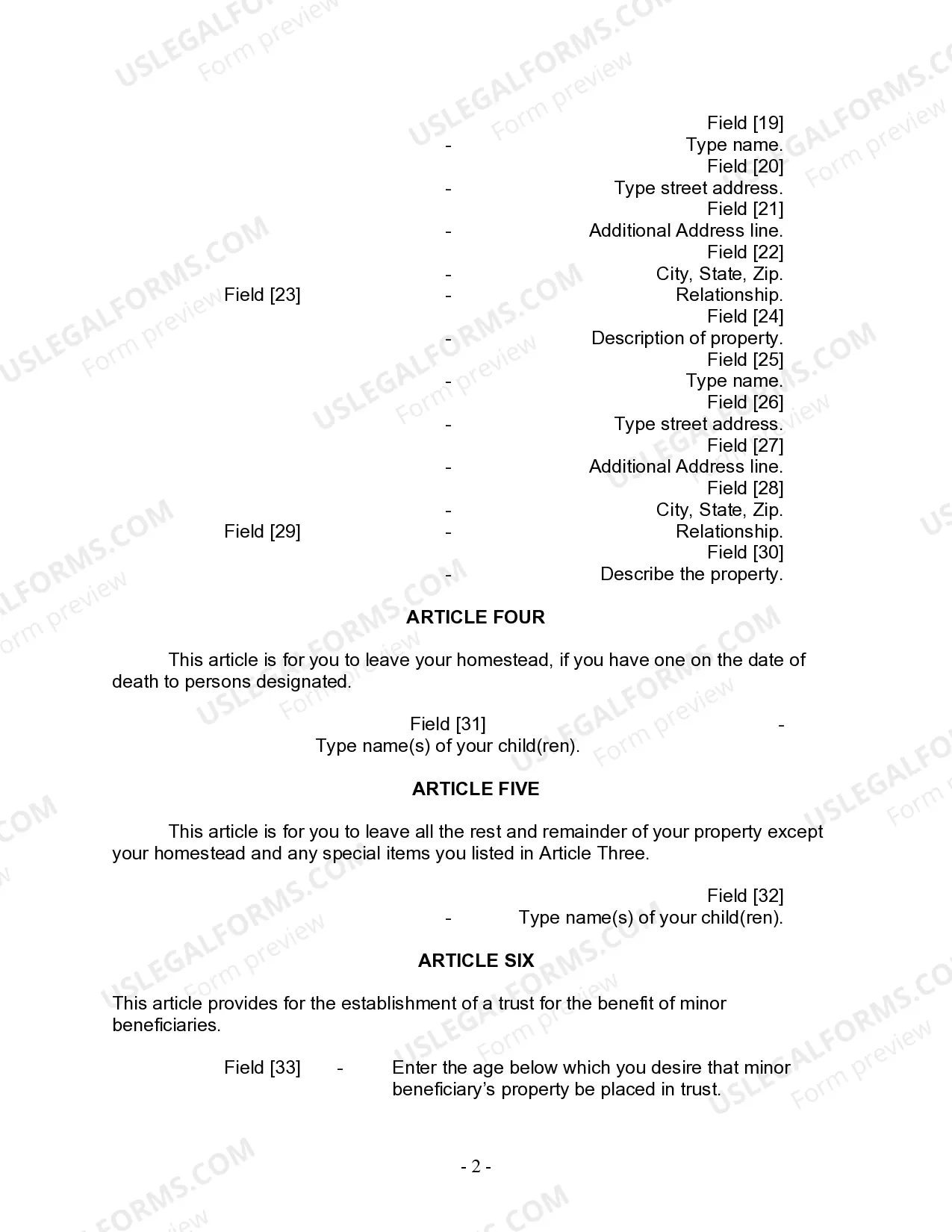
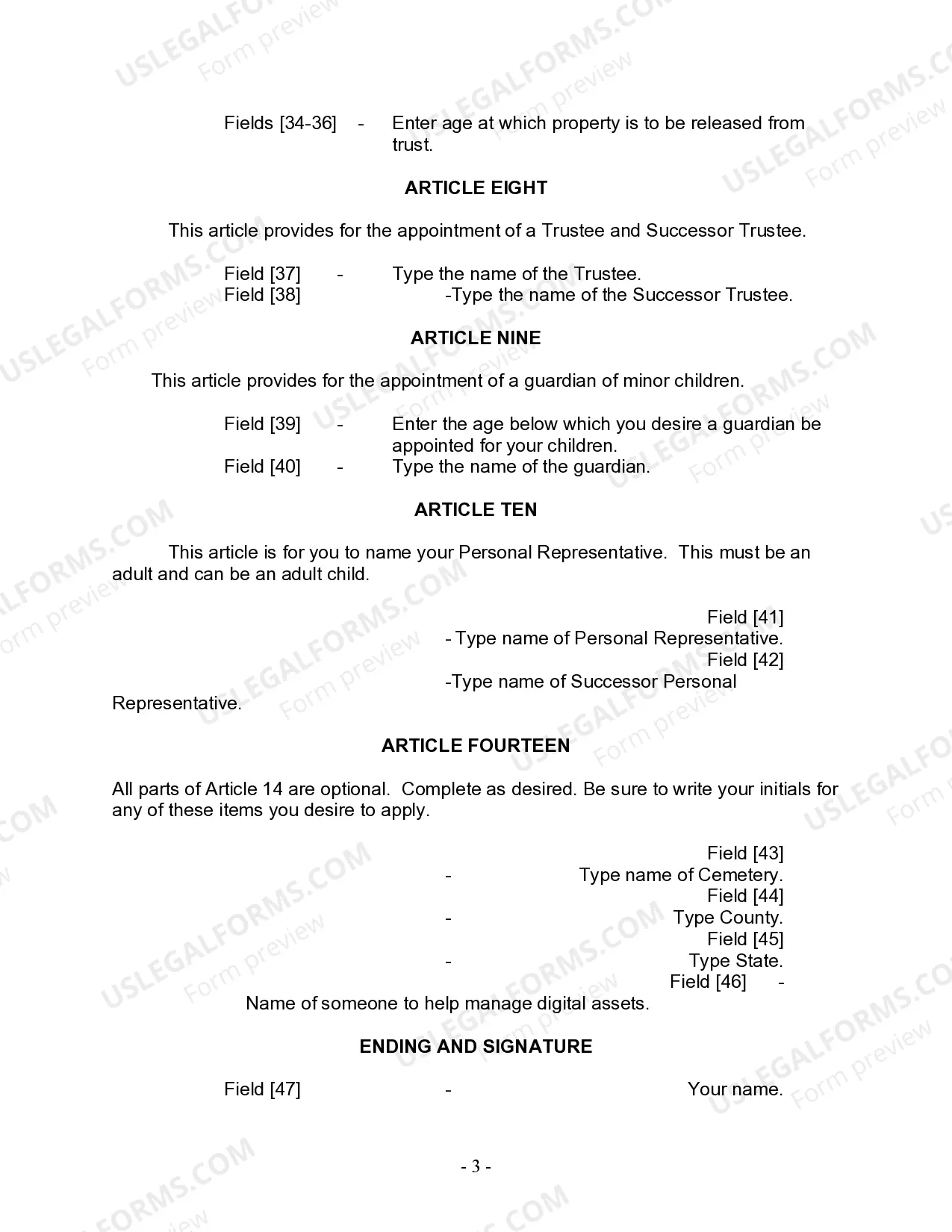
- Begin by entering your name and county of residence.
- Specify the name of your deceased spouse and the names and birth dates of your children.
- Detail specific property you want to bequeath to individuals in the appropriate sections.
- Designate a trustee for any assets left to minor children and a guardian for their care.
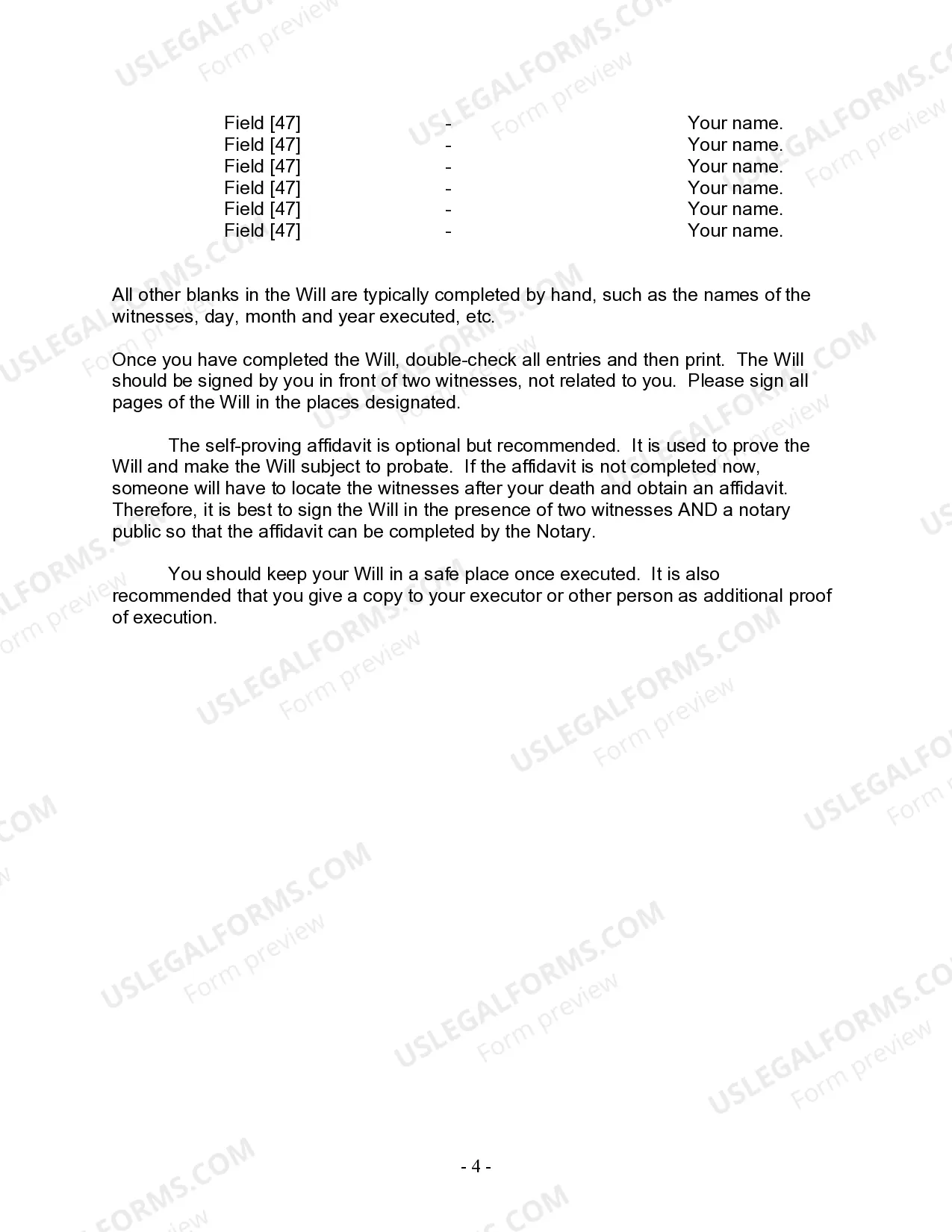
- Have the document signed in front of two witnesses and consider notarization for the self-proving affidavit.
- Store the completed will in a safe location and provide copies to your executor or trusted individuals.
Does this document require notarization?
Yes, this form must be notarized to be legally valid if you choose to use the self-proving affidavit option. This ensures that your will can be admitted to probate more easily. US Legal Forms provides integrated online notarization services, offering 24/7 availability via secure video calls that meet legal standards.
Get your form ready online
Our built-in tools help you complete, sign, share, and store your documents in one place.
Make edits, fill in missing information, and update formatting in US Legal Forms—just like you would in MS Word.
Download a copy, print it, send it by email, or mail it via USPS—whatever works best for your next step.
Sign and collect signatures with our SignNow integration. Send to multiple recipients, set reminders, and more. Go Premium to unlock E-Sign.
If this form requires notarization, complete it online through a secure video call—no need to meet a notary in person or wait for an appointment.
We protect your documents and personal data by following strict security and privacy standards.

Make edits, fill in missing information, and update formatting in US Legal Forms—just like you would in MS Word.

Download a copy, print it, send it by email, or mail it via USPS—whatever works best for your next step.

Sign and collect signatures with our SignNow integration. Send to multiple recipients, set reminders, and more. Go Premium to unlock E-Sign.

If this form requires notarization, complete it online through a secure video call—no need to meet a notary in person or wait for an appointment.

We protect your documents and personal data by following strict security and privacy standards.
Typical mistakes to avoid
- Not signing the will in front of the required witnesses.
- Failing to designate a guardian for minor children.
- Omitting important property details in the specific bequests sections.
- Not updating the will if there are changes in family circumstances.
Benefits of using this form online
- Convenience of completing the will using your computer.
- Editability allows you to make changes as needed easily.
- Reliable access to professionally drafted legal language.
- Immediate download ensures quick access to your legal documents.
Legal use & context
- This will serves as a legally binding document when properly executed in accordance with relevant state laws.
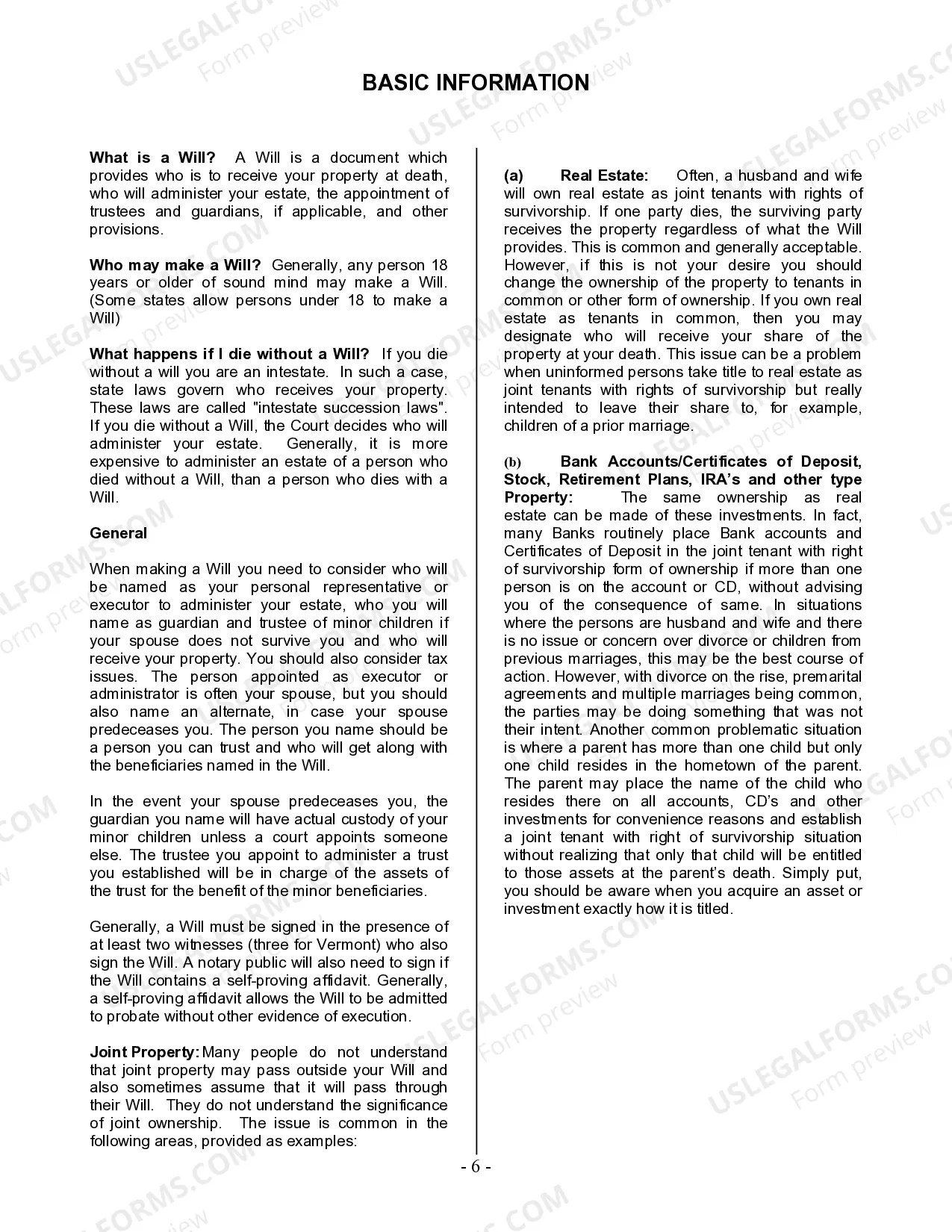
- Failing to create a will could result in intestate succession, where state laws dictate asset distribution.
- The trust provisions help protect the interests of minor children until they reach adulthood.
Main things to remember
- The form is specifically tailored for widows or widowers with minor and adult children.
- It includes appointments for personal representatives and guardians, as well as provisions for trusts.
- Legal validity is ensured through appropriate notarization and witness requirements.
Looking for another form?
Form popularity
FAQ
A. You don't have to have a lawyer to create a basic will you can prepare one yourself. It must meet your state's legal requirements and should be notarized.A do-it-yourself will that's poorly drafted can save you money but create a mess for your heirs when you're gone.
In order to make a valid handwritten will in Texas, the entire document must be in your own handwriting. No one can write any part of it except for you and no part of it can be typed. You can write in cursive or print, but the entire will must be in your handwriting only.
Contrary to popular belief, you do not need to have an attorney draft a will for you. Anyone can write this document on their own, and as long as it meets all of the legal requirements of the state, courts will recognize one you wrote yourself.
The Free Last Will and Testament Template for Word is compatible with Word 2003 or later versions.
Their legal name. A physical addresses for named beneficiaries. Provide a description of the relationship to the testator. Enter the last four digits of the SSN for all persons named beneficiaries. Enter a list/descriptions of property that the testator shall provide per beneficiary.
Include personal identifying information. Include a statement about your age and mental status. Designate an executor. Decide who will take care of your children. Choose your beneficiaries. List your funeral details. Sign and date your Last Will and Testament.
In most situations, a will template is an easy and inexpensive way to make sure your wishes are known and carried out. Most people can get everything they need by using a will template, with little cost or hassle.
The form may be downloaded in fillable Adobe PDF, Rich Text Format, and Microsoft Word templates and should be signed by the testator and at least two (2) witnesses or a notary public (See your State's Probate Code).
No, in Texas, you do not need to notarize your will to make it legal. However, Texas allows you to make your will "self-proving" and you'll need to go to a notary if you want to do that. A self-proving will speeds up probate because the court can accept the will without contacting the witnesses who signed it.