Maine Assumption Agreement of Mortgage and Release of Original Mortgagors
What this document covers
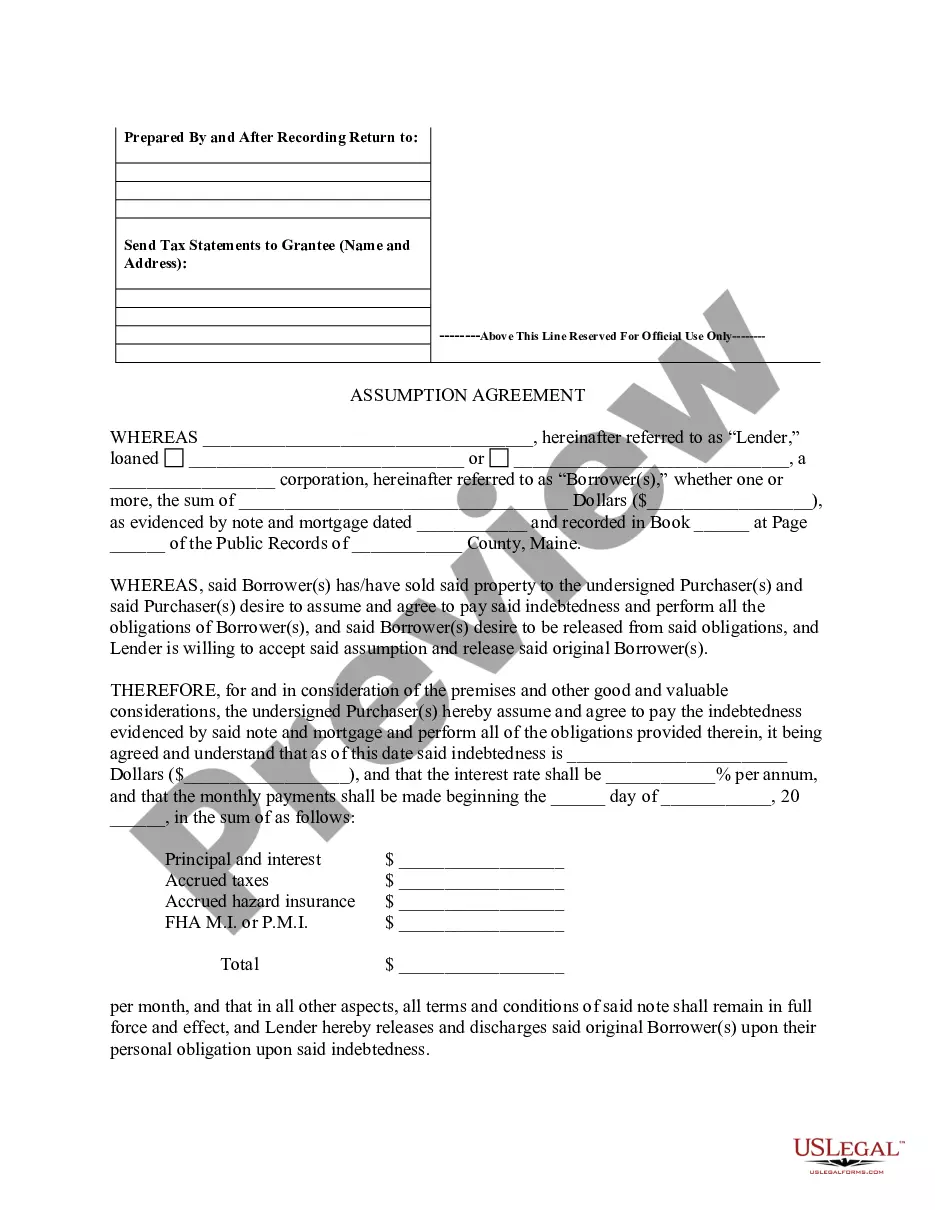
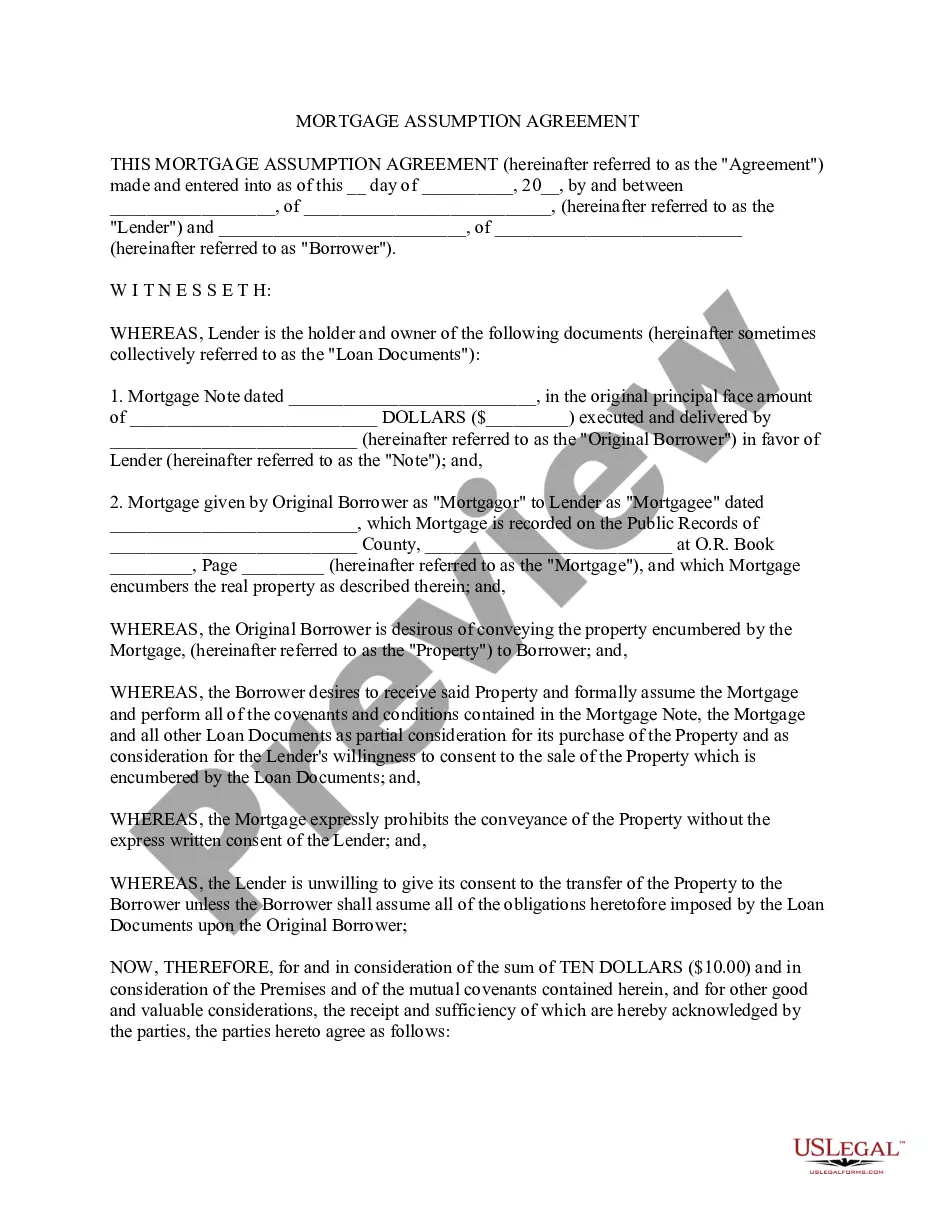
The Assumption Agreement of Mortgage and Release of Original Mortgagors is a legal document that enables new purchasers of a property to assume the existing mortgage debt from the original mortgagors. This form outlines the agreement between the new buyers and the lender, ensuring that the original borrowers are released from any future liability related to the mortgage. Unlike a traditional mortgage agreement, this document explicitly transfers the mortgage obligation to the new purchasers while releasing the original parties from their commitments.
Form components explained
- Identification of the borrower(s) and purchasers.
- Details of the existing mortgage, including the amount and interest rate.
- Provisions for the release of original mortgagors from the mortgage obligations.
- Specification of payment responsibilities, including monthly payment amounts.
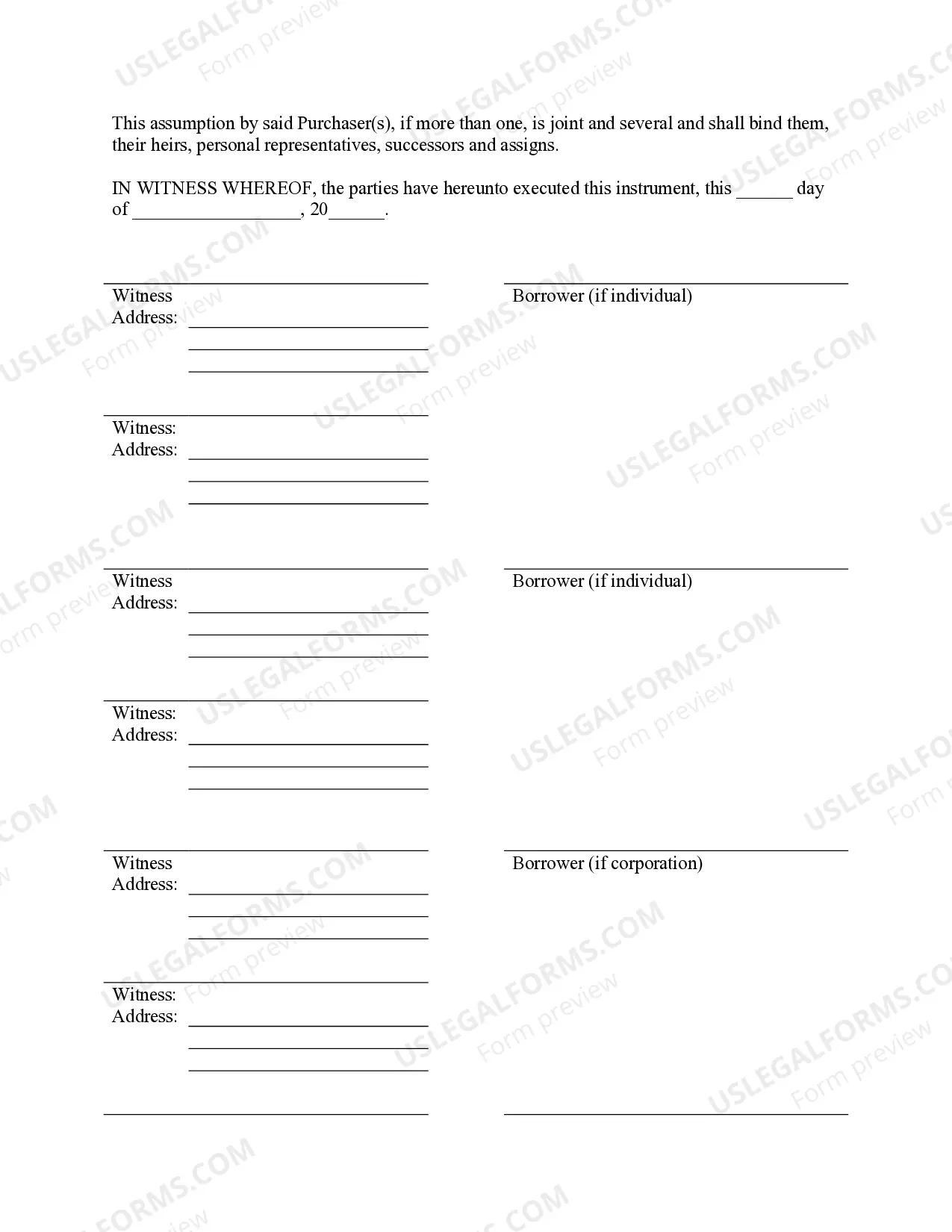
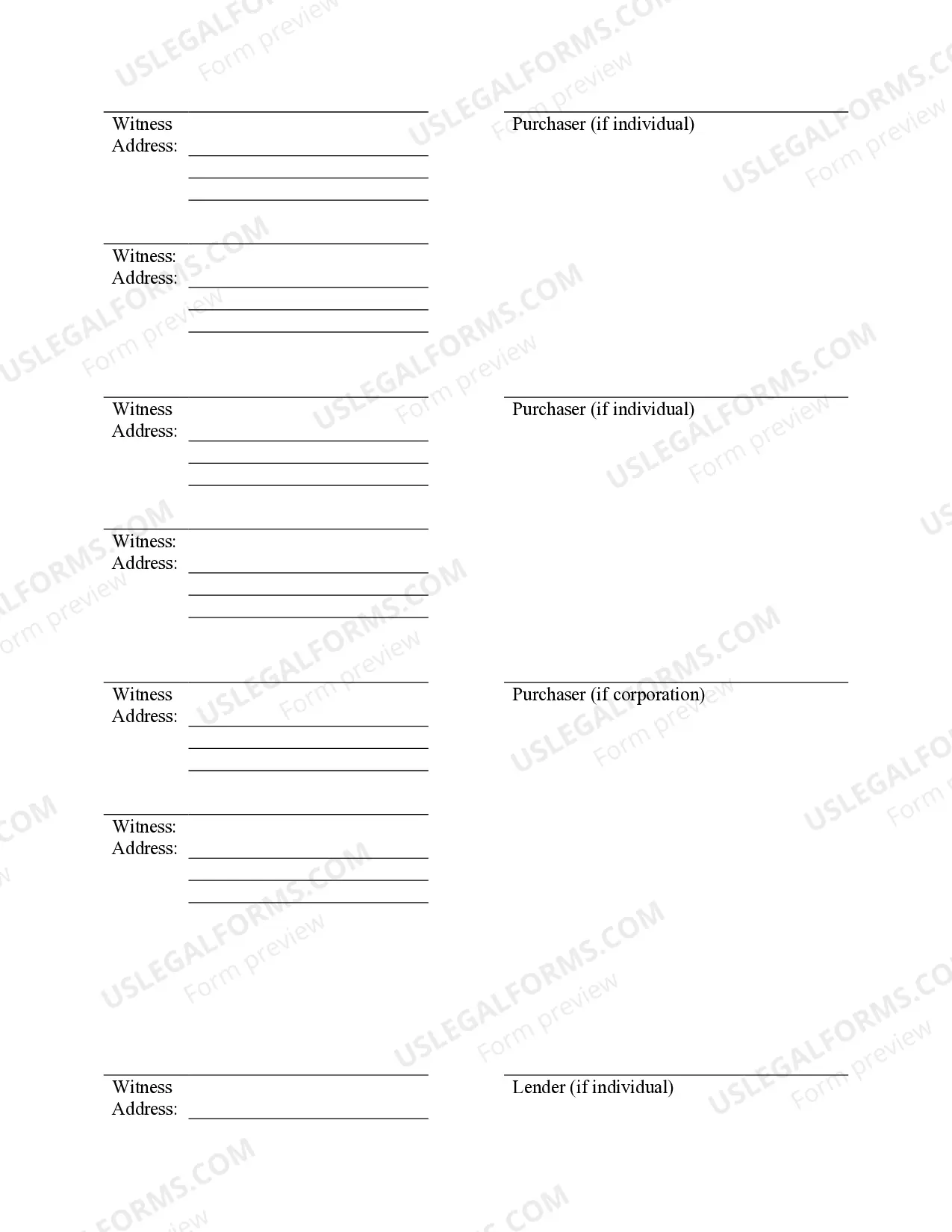
- Signatures of all involved parties, including a notary public if required.


When this form is needed
This form should be used when a buyer wants to purchase a property with an existing mortgage and intends to take over the mortgage payments. It is essential in situations where the original mortgagors wish to be relieved from their financial obligations on the loan while ensuring that the lender accepts the new buyer as the responsible party for the mortgage.
Intended users of this form
This form is generally used by:
- New purchasers wanting to assume an existing mortgage.
- Original mortgagors looking to be released from mortgage liability.
- Lenders who need to formalize the transfer of mortgage obligations.
How to complete this form
- Identify the parties involved, including the original mortgagors and the new purchasers.
- Specify the property being purchased and provide details of the existing mortgage.
- Enter the total indebtedness amount, interest rate, and payment schedule.
- Ensure all parties sign the document, and have a notary public witness the signing if required.
- Keep a copy for your records and provide copies to all involved parties.
Notarization guidance
Yes, this form must be notarized to be legally valid. The notarization confirms the identities of the signers and ensures that the agreement is binding. US Legal Forms offers an integrated online notarization service, allowing you to complete this step securely via video call, without the need to travel.
Get your form ready online
Our built-in tools help you complete, sign, share, and store your documents in one place.
Make edits, fill in missing information, and update formatting in US Legal Forms—just like you would in MS Word.
Download a copy, print it, send it by email, or mail it via USPS—whatever works best for your next step.
Sign and collect signatures with our SignNow integration. Send to multiple recipients, set reminders, and more. Go Premium to unlock E-Sign.
If this form requires notarization, complete it online through a secure video call—no need to meet a notary in person or wait for an appointment.
We protect your documents and personal data by following strict security and privacy standards.

Make edits, fill in missing information, and update formatting in US Legal Forms—just like you would in MS Word.

Download a copy, print it, send it by email, or mail it via USPS—whatever works best for your next step.

Sign and collect signatures with our SignNow integration. Send to multiple recipients, set reminders, and more. Go Premium to unlock E-Sign.

If this form requires notarization, complete it online through a secure video call—no need to meet a notary in person or wait for an appointment.

We protect your documents and personal data by following strict security and privacy standards.
Avoid these common issues
- Failing to provide accurate property details.
- Not including all parties' signatures, which can invalidate the agreement.
- Omitting necessary financial details, such as the exact mortgage balance and payment terms.
Advantages of online completion
- Easy access and immediate download of the form.
- Ability to customize the form for your specific needs.
- Convenience of completing the document at your own pace.
Looking for another form?
Form popularity
FAQ
The seller may also be required to sign the assumption agreement and the terms may release the seller from responsibility. The lender usually requires a credit history from the buyer before approving the assumption and the payment of assumption fee(s).
An assignment of mortgage gives the loan seller's rights under the mortgage, including the right to foreclose if the borrower doesn't make payments, to the new owner of the loan.
An assignment is the document that is the legal record of this transfer from one mortgagee to another. In a typical transaction, when the mortgagee sells the debt to another bank, an assignment is recorded and the promissory note is endorsed (signed over) to the new bank.
Once the note is assigned, the person to whom it is assigned, the assignee, can collect payment under the note. Assignment of the mortgage agreement occurs when the mortgagee (the bank or lender) transfers its rights under the agreement to another party.
The main documents you'll need to provide to get a home loan are: Proof of identification: passport, drivers licence, birth certificate. Income: recent payslips, PAYG statement. Expenses: a detailed list of your monthly expenses from childcare to Ubers.
The loan transaction consists of two main documents: the mortgage (or deed of trust) and a promissory note.
A Mortgage Release is where you, the homeowner, voluntarily transfer the ownership of your property to the owner of your mortgage in exchange for a release from your mortgage loan and payments.Depending on your situation, you may be required to make a financial contribution to receive a mortgage release.
When you pay off your loan and you have a mortgage, the lender will send you or the local recorder of deeds or office that handles the filing of real estate documents a release of mortgage.On the other hand, when you have a trust deed or deed of trust, the lender files a release deed.
A Mortgage Release is where you, the homeowner, voluntarily transfer the ownership of your property to the owner of your mortgage in exchange for a release from your mortgage loan and payments.Depending on your situation, you may be required to make a financial contribution to receive a mortgage release.