Maryland Last Will and Testament for a Widow or Widower with Adult Children
Overview of this form
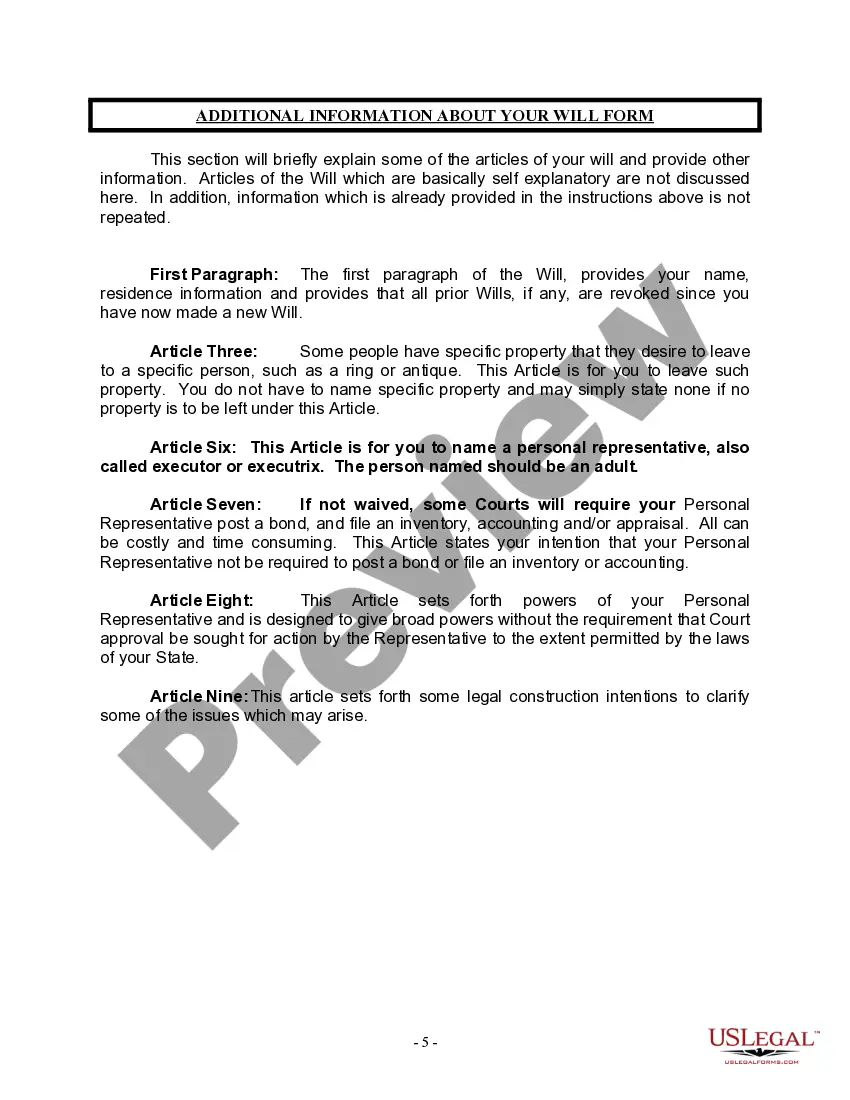
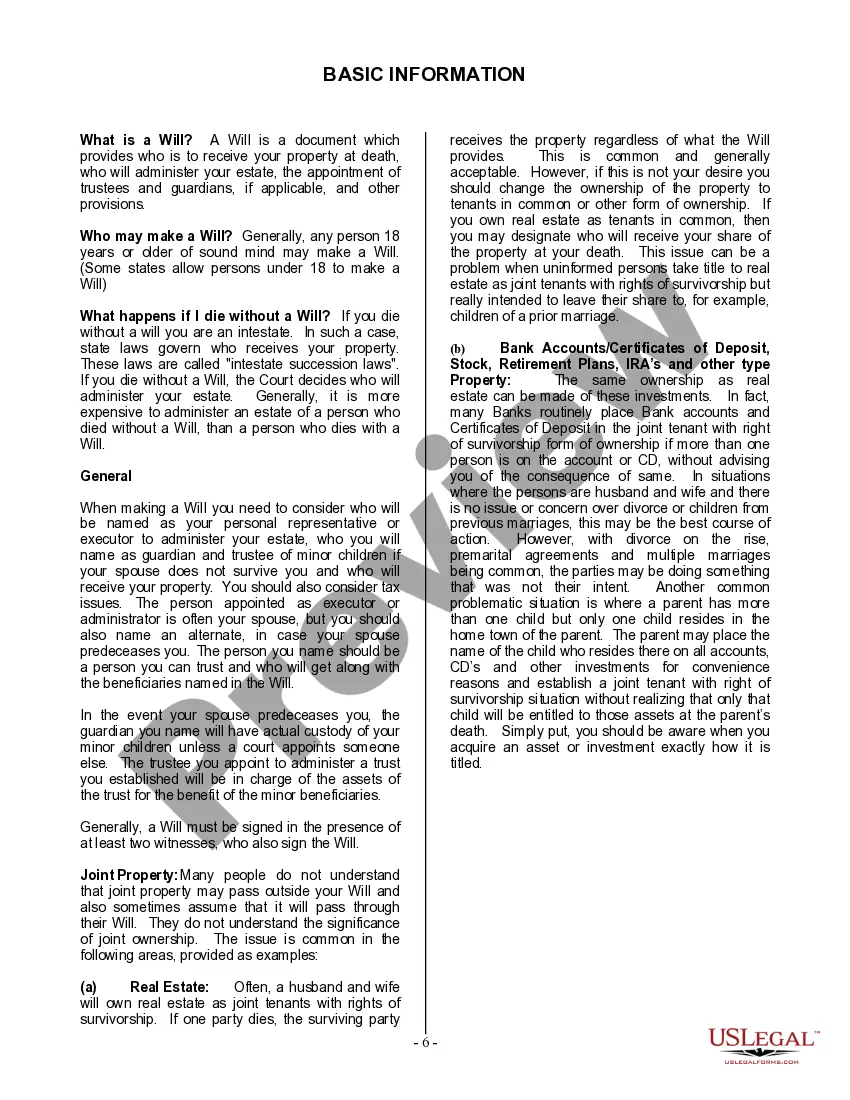
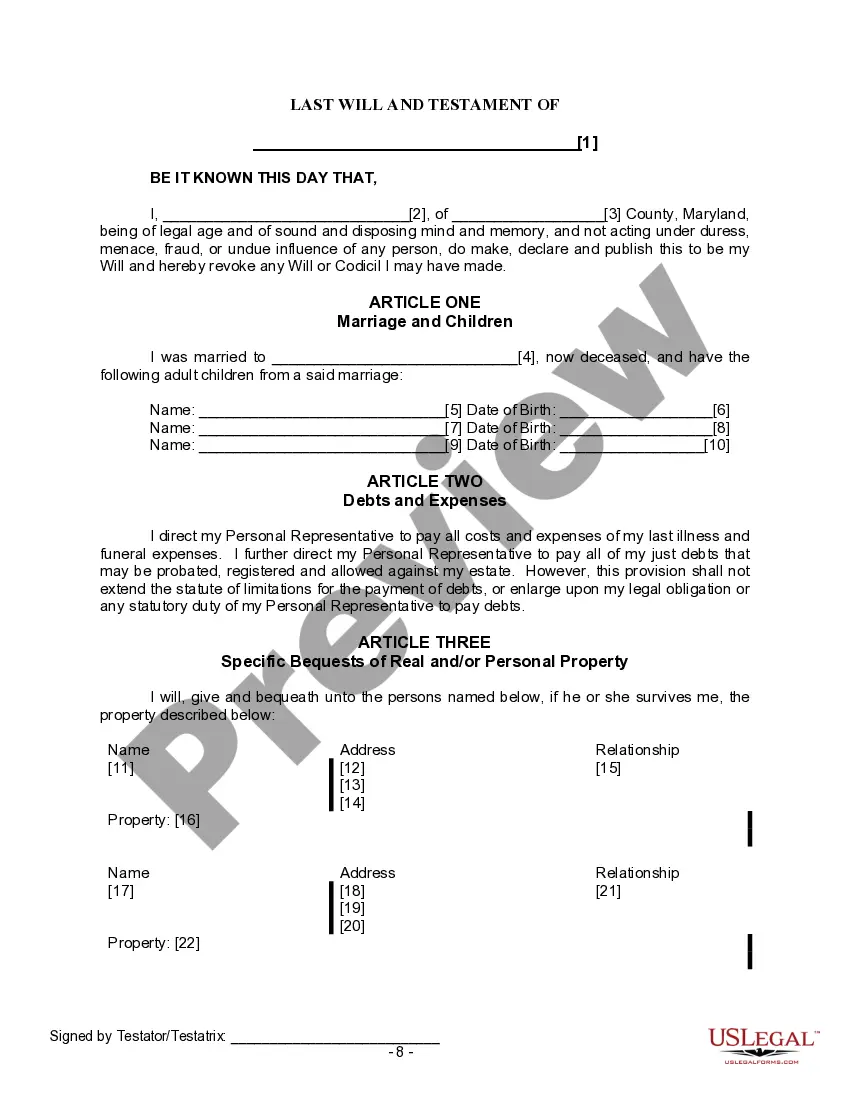
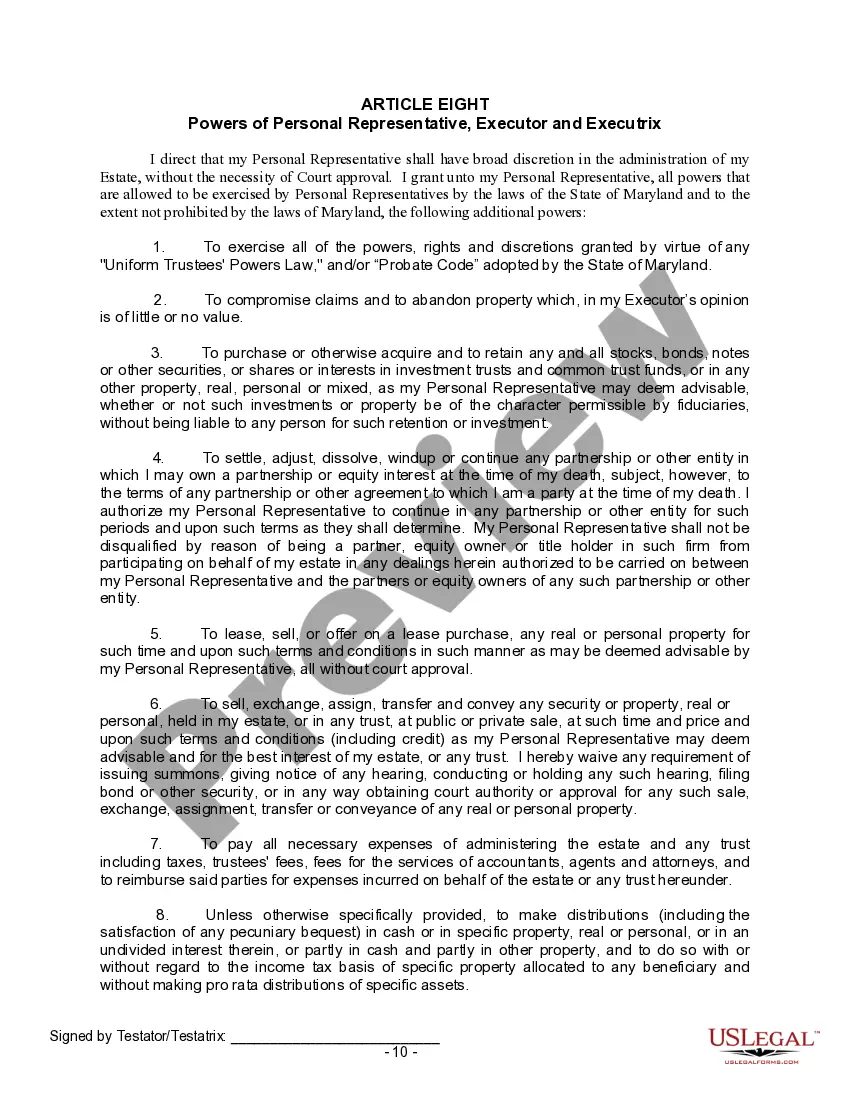
The Last Will and Testament for a Widow or Widower with Adult Children is a legal document that specifies how your assets and property will be distributed after your death. This form is particularly designed for individuals who are widowed or widower and have adult children, allowing them to appoint an executor, designate beneficiaries, and include specific provisions concerning their estate. Unlike general wills, this form addresses the unique circumstances faced by those who have lost a spouse and have children who are no longer minors.
What’s included in this form
- Identification of the testator (the person making the will) and revocation of prior wills.
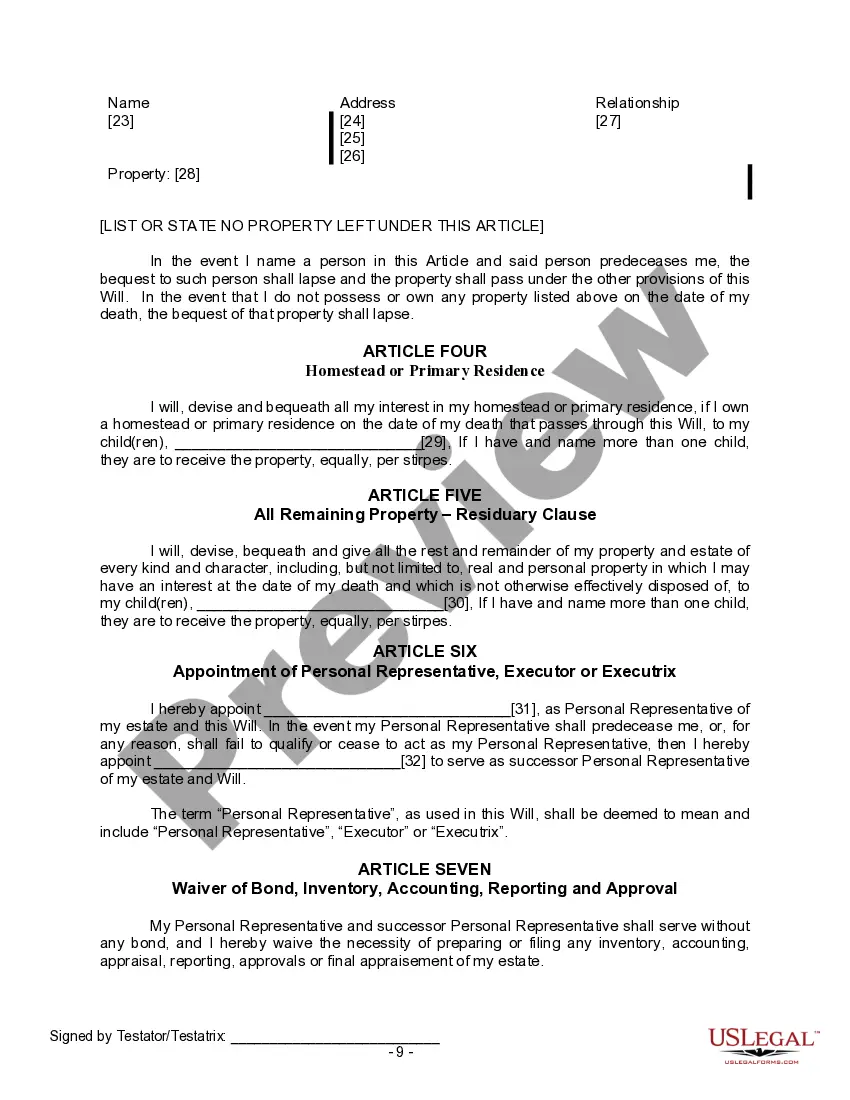
- Appointment of a personal representative (executor) to manage the estate.
- Specific bequests of property to named individuals.
- Provisions for homestead or primary residence distribution.
- Distribution of the residuary estate (property not specifically bequeathed).
- Additional clauses addressing optional requests such as funeral arrangements.






Situations where this form applies
This form is essential when a widow or widower wishes to formally organize their estate after the loss of their spouse. It is particularly useful in situations where adult children are involved, ensuring clarity in the distribution of assets. You should use this form if you have specific wishes regarding your property, want to avoid potential disputes among heirs, or need to fulfill legal requirements for your estate.
Who needs this form
- Individuals who are widowed or widowers.
- People with adult children who wish to outline their estate plan.
- Anyone looking to ensure specific wishes regarding asset distribution are legally documented.
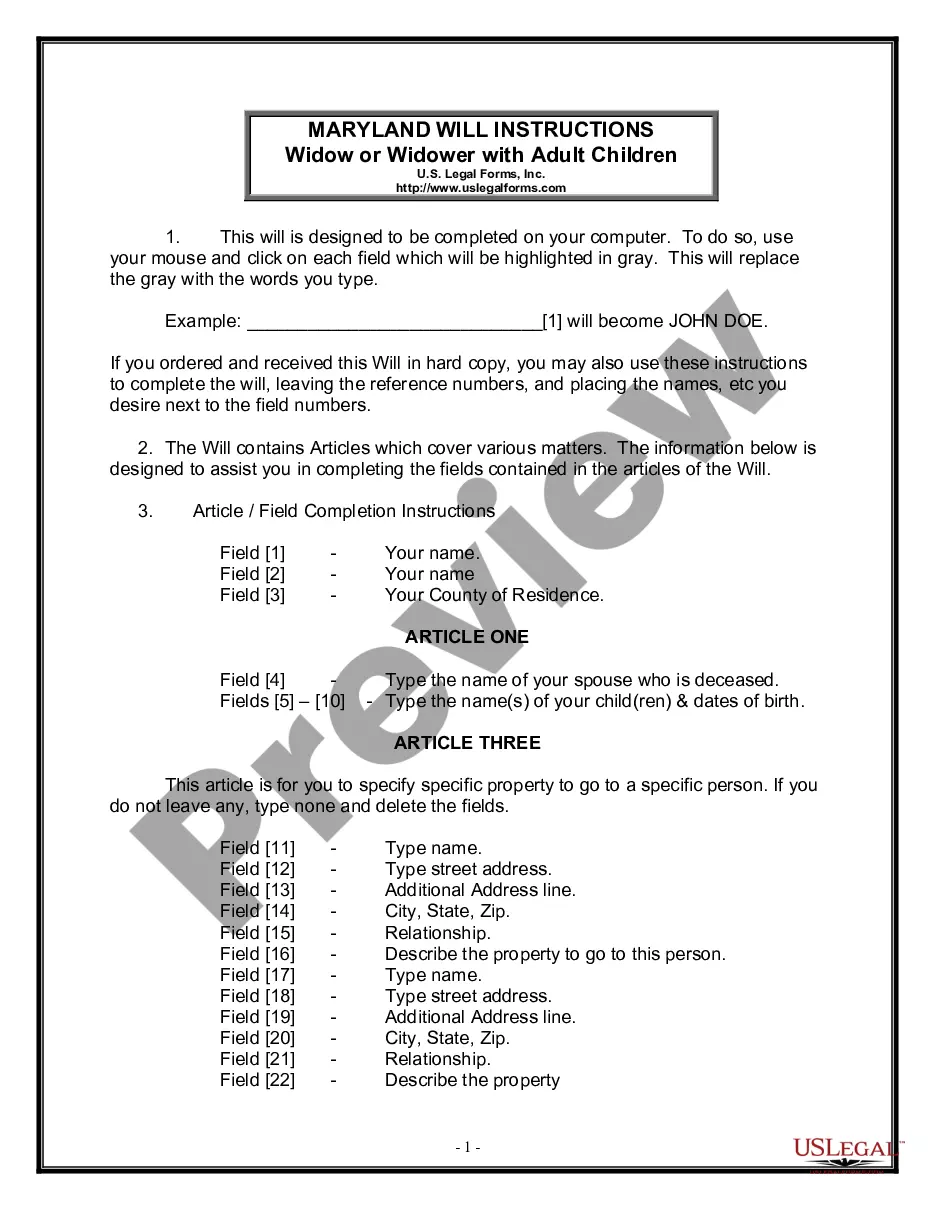
How to complete this form
- Start by filling in your full name and county of residence at the beginning of the document.
- Provide the name of your deceased spouse and the names and dates of birth for your adult children.
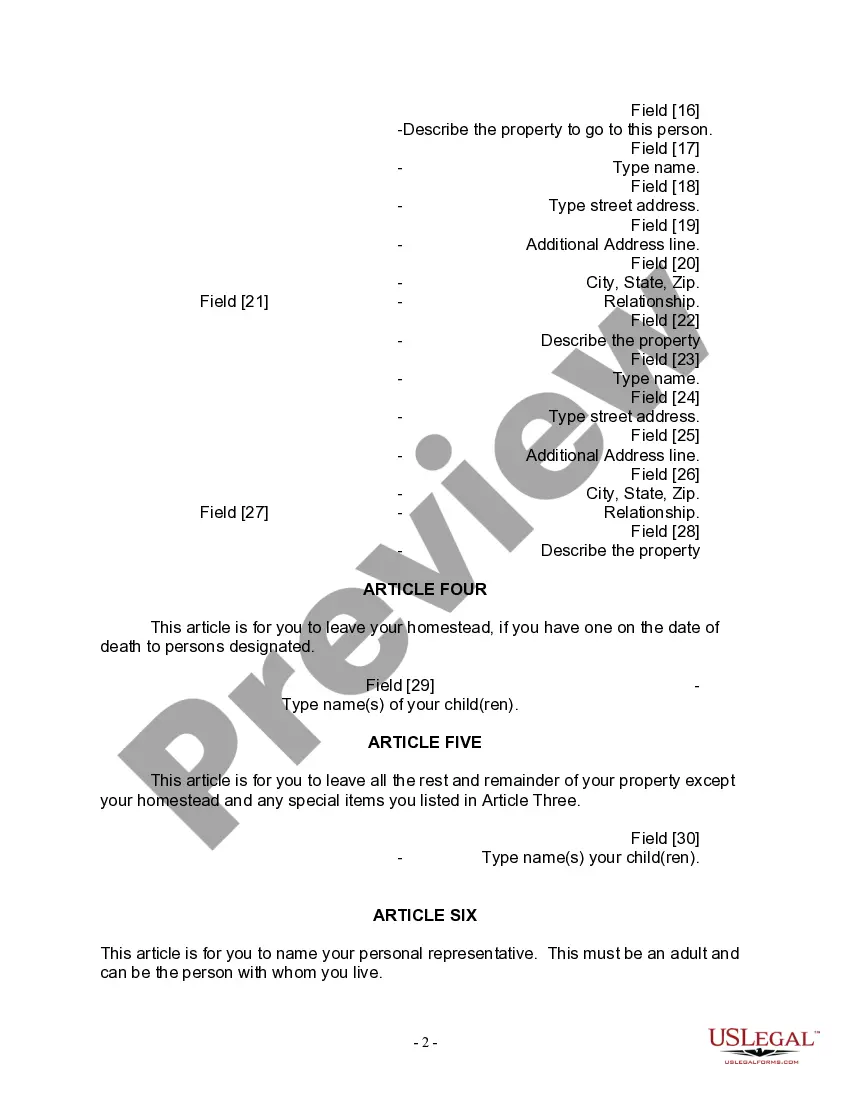
- Specify any particular items or properties you wish to bequeath to named individuals.
- Designate your personal representative and provide their contact information.
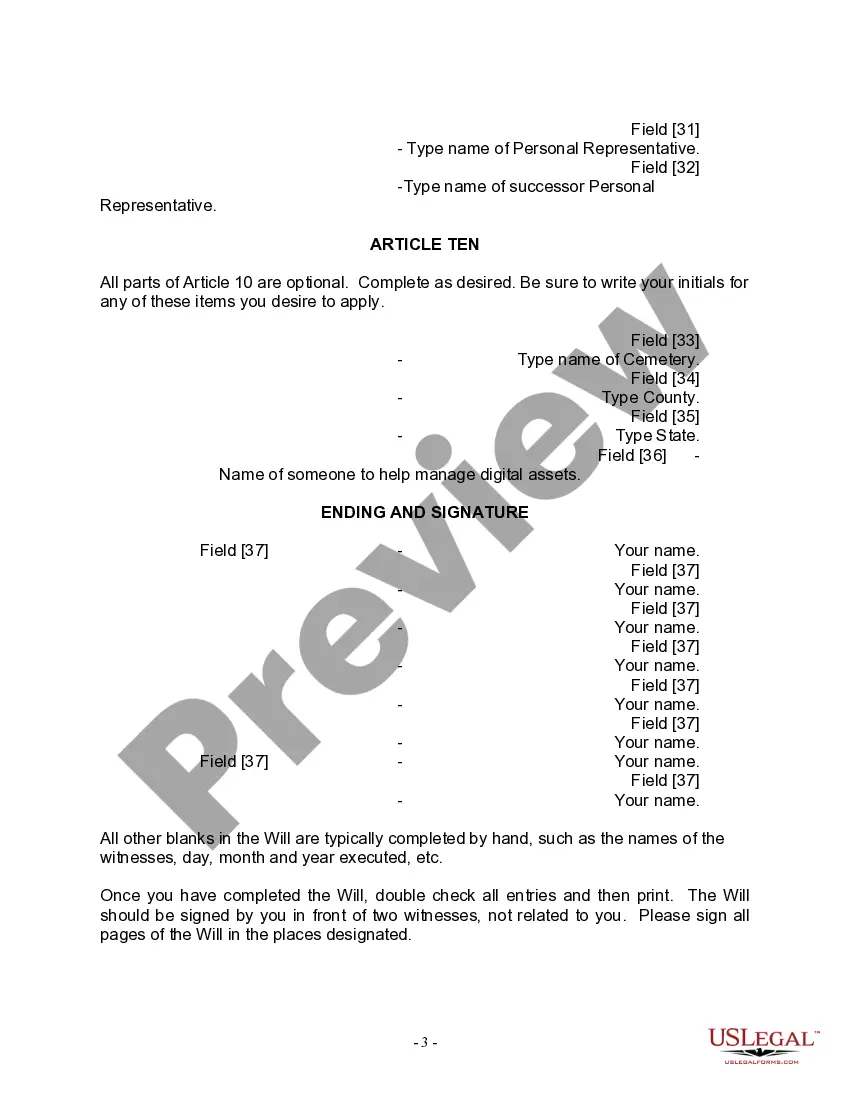
- Sign the will in front of two witnesses who are not related to you, ensuring all pages are signed.
- Store the completed will in a safe place and consider sharing copies with your executor or trusted family members.
Notarization requirements for this form
Notarization is generally not required for this form. However, certain states or situations might demand it. You can complete notarization online through US Legal Forms, powered by Notarize, using a verified video call available anytime.
Get your form ready online
Our built-in tools help you complete, sign, share, and store your documents in one place.
Make edits, fill in missing information, and update formatting in US Legal Forms—just like you would in MS Word.
Download a copy, print it, send it by email, or mail it via USPS—whatever works best for your next step.
Sign and collect signatures with our SignNow integration. Send to multiple recipients, set reminders, and more. Go Premium to unlock E-Sign.
If this form requires notarization, complete it online through a secure video call—no need to meet a notary in person or wait for an appointment.
We protect your documents and personal data by following strict security and privacy standards.

Make edits, fill in missing information, and update formatting in US Legal Forms—just like you would in MS Word.

Download a copy, print it, send it by email, or mail it via USPS—whatever works best for your next step.

Sign and collect signatures with our SignNow integration. Send to multiple recipients, set reminders, and more. Go Premium to unlock E-Sign.

If this form requires notarization, complete it online through a secure video call—no need to meet a notary in person or wait for an appointment.

We protect your documents and personal data by following strict security and privacy standards.
Common mistakes
- Failing to sign the will in the presence of the required number of witnesses.
- Not properly revoking any prior wills, leading to confusion about intentions.
- Forgetting to update the will after major life changes, such as marriage or divorce.
- Leaving out important information about debts or expenses which may affect the estate.
Benefits of using this form online
- Conveniently complete the form on your computer, ensuring clarity and legibility.
- Edit the document easily to make necessary changes before finalizing.
- Access to reliable legal templates drafted by licensed attorneys for peace of mind.
Looking for another form?
Form popularity
FAQ
Choosing an executor for your Maryland Last Will and Testament for a widow or widower with adult children requires careful consideration. While many families default to the oldest child, it's essential to assess whether they possess the necessary skills and temperament for the role. The executor must manage finances, communicate with beneficiaries, and navigate complex legal processes. It can be beneficial to select someone who understands your wishes and can carry them out effectively, regardless of age.
Brown recluses are extremely rare and occur only accidentally in Maryland, whereas wolf spiders are one of the most common, native Maryland spiders.
Cellar spiders. Family: Pholcidae. Cobweb spiders. amily: Theridiidae. Funnel weavers/Grass spiders. Family: Agelenidae. Jumping spiders. Family: Salticidae. Nursery web and Fishing spiders. Family: Pisauridae. Wolf spiders. Family: Lycosidae.
The black widow spider is the only native spider that is venomous in Maryland. These spiders are fairly common in our state and surrounding areas but are usually found outdoors.
So what is the largest spider in Maryland? The spider that reaches the longest body length in Maryland is the dark fishing spider (Dolomedes tenebrosus) at 1.5", with the Carolina hogna (Hogna carolinensis) coming in a close second at 1.4".
The only naturally occurring poisonous spider in Maryland is the black widow spider. The brown recluse spider has been seen in Maryland, but it is thought to have been brought to the state in peoples' belongings.
Black Widow. The black widow spider is the only native spider that is venomous in Maryland. Brown Recluse. Even though this spider is not native to Maryland, there are always some reports of finding brown recluses in the state. Wolf Spider. Yellow House Spider. Cobweb Spider. Jumping Spider. Crab Spider.