Maryland Letter from Landlord to Tenant that Sublease granted - Rent Paid by Subtenant, but Tenant Still Liable for Rent and Damages
Overview of this form
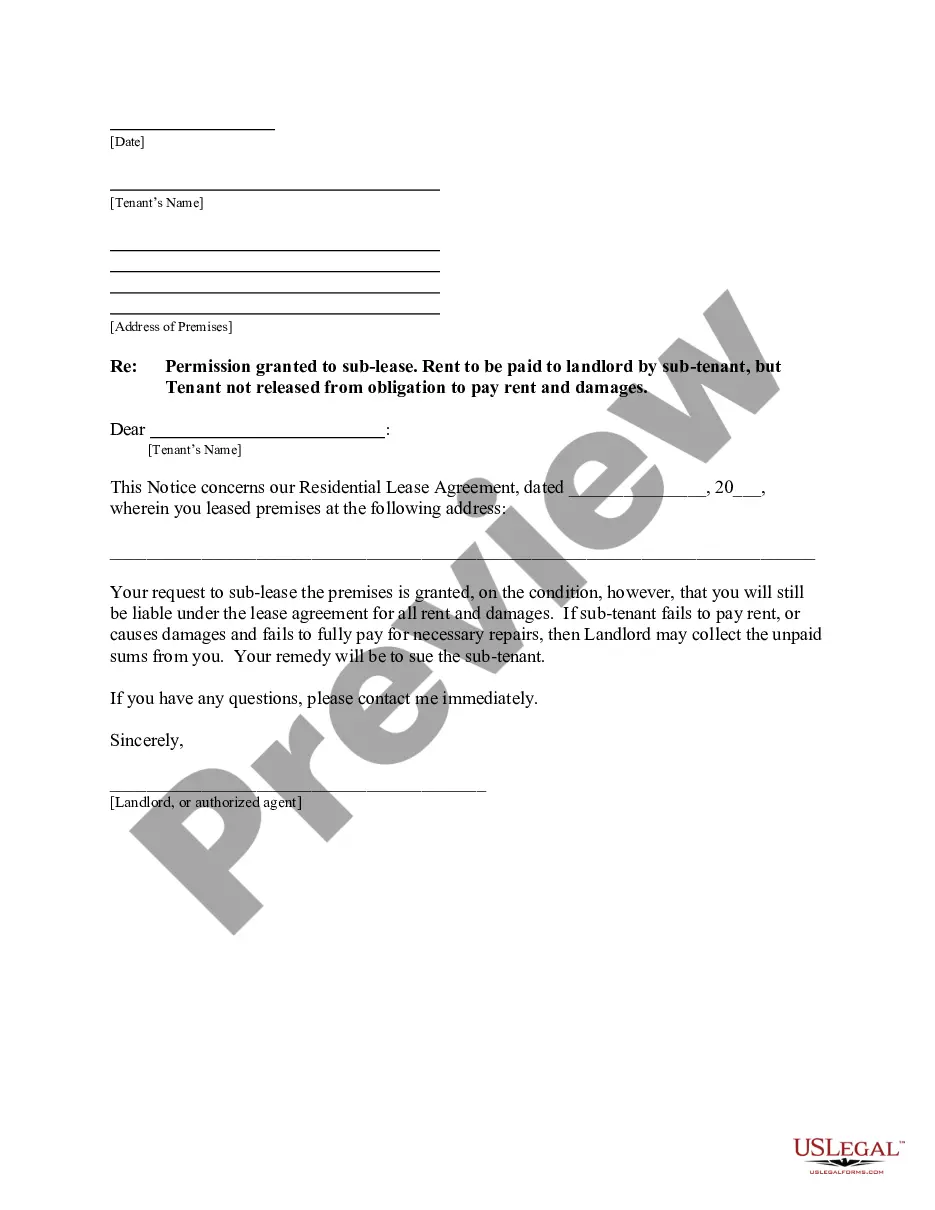
This form is a letter from the landlord to the tenant notifying them that their request to sublease the premises has been granted. It emphasizes that while the subtenant will pay rent, the original tenant remains liable for any unpaid rent and damages. This document is important as it clarifies the financial responsibilities of the tenant even after effectuating a sublease, which may not be covered in standard lease agreements.
Form components explained
- Notification of sublease approval
- Statement of tenantâs continued liability for rent and damages
- Explanation of the landlord's rights to collect unpaid sums from the tenant
- Contact information for the landlord or authorized agent
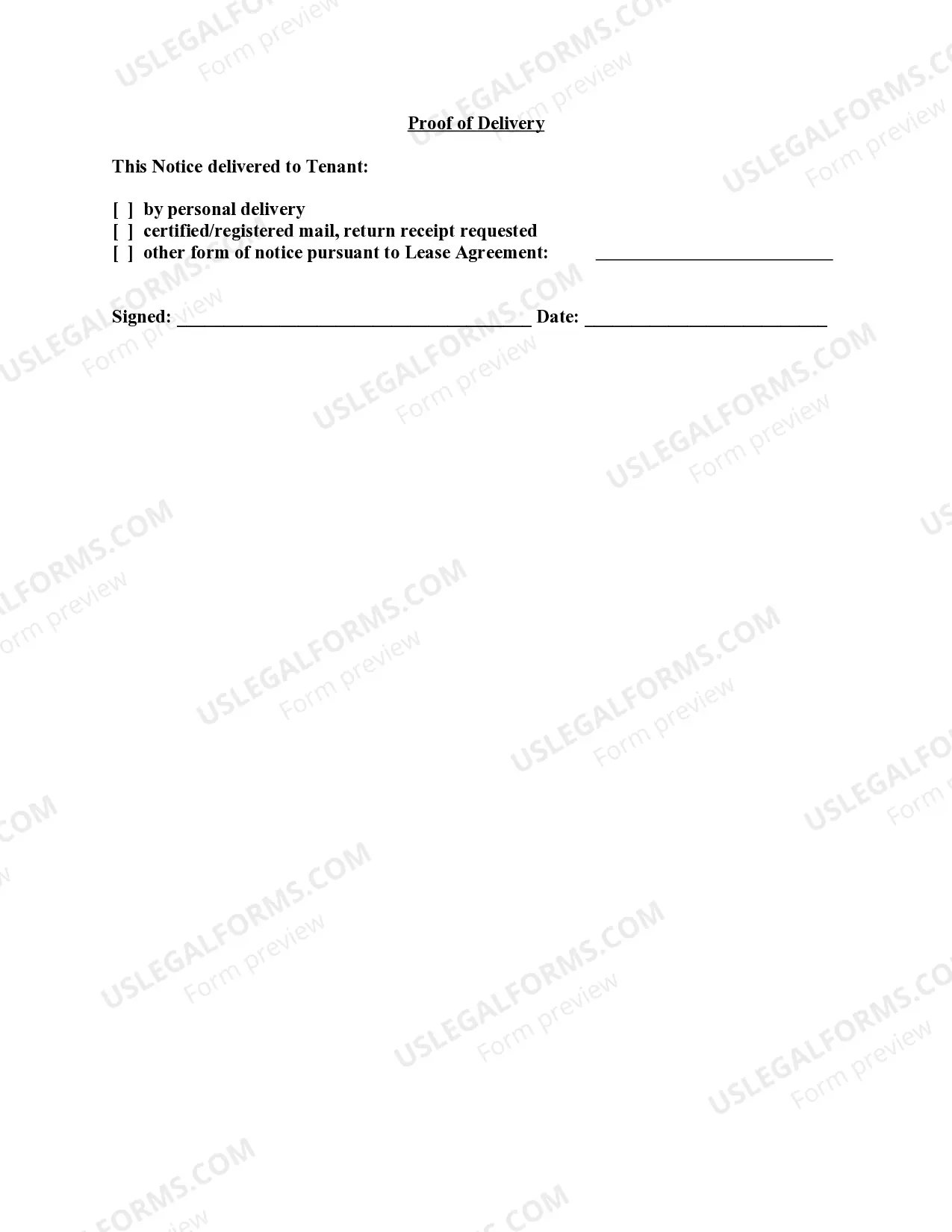
- Proof of delivery method options (personal delivery or certified mail)

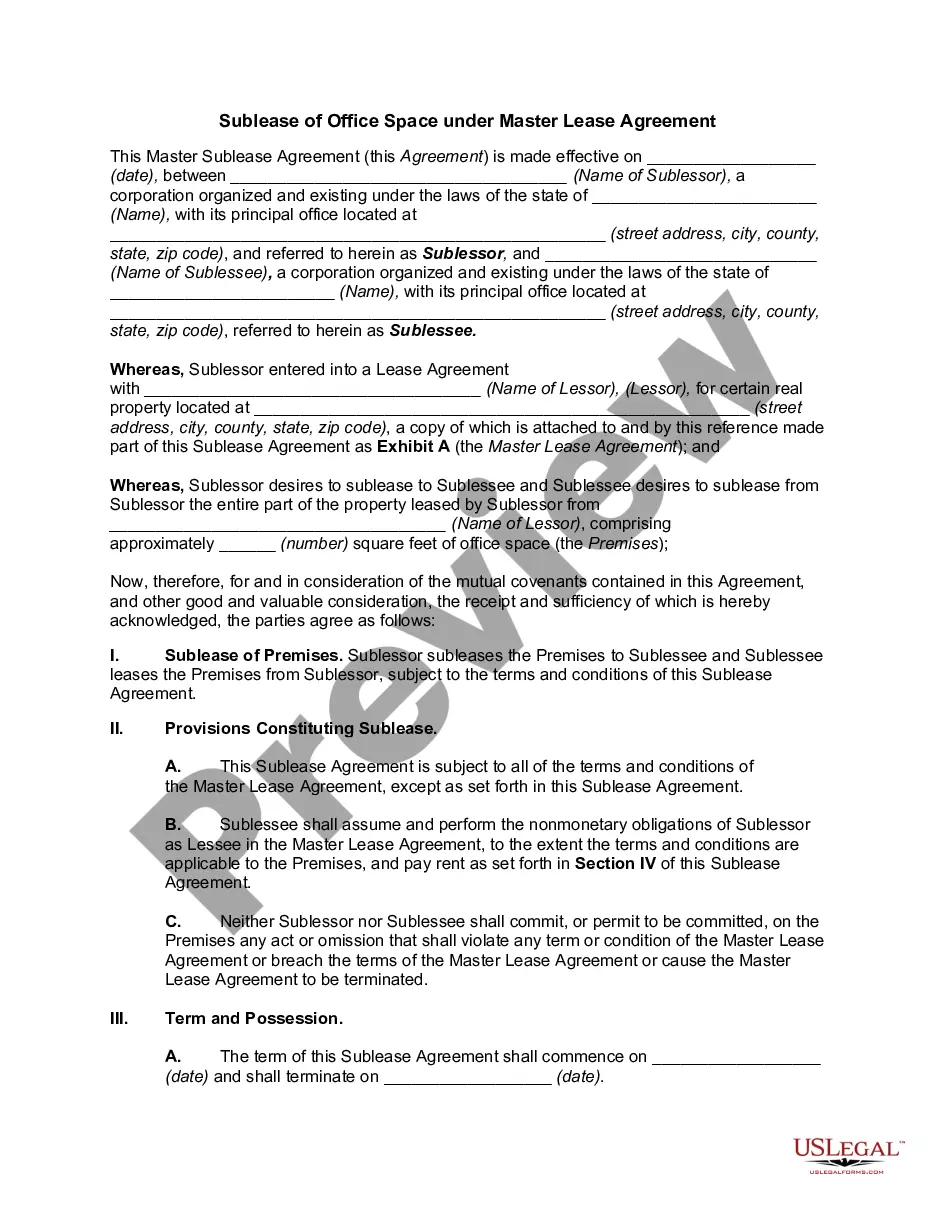
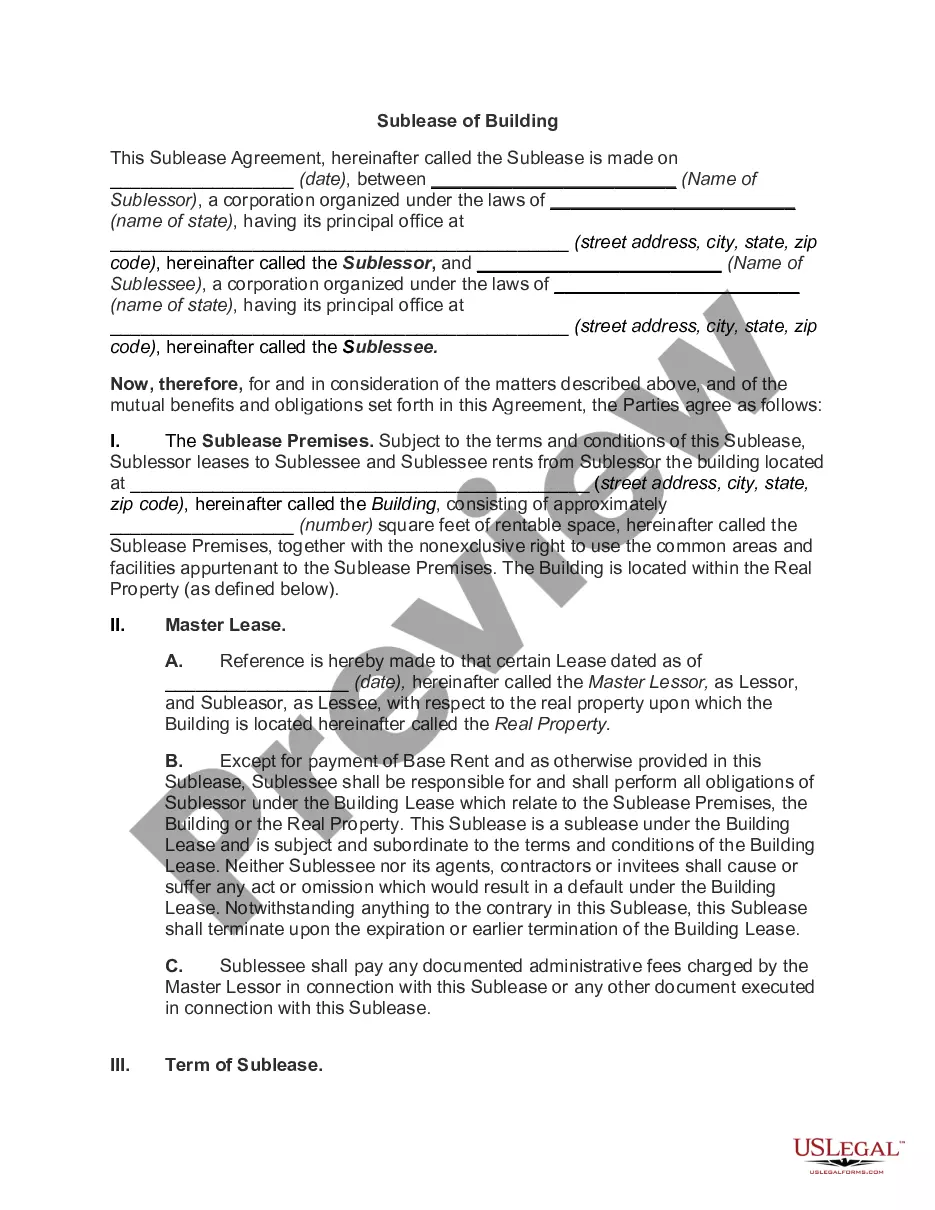
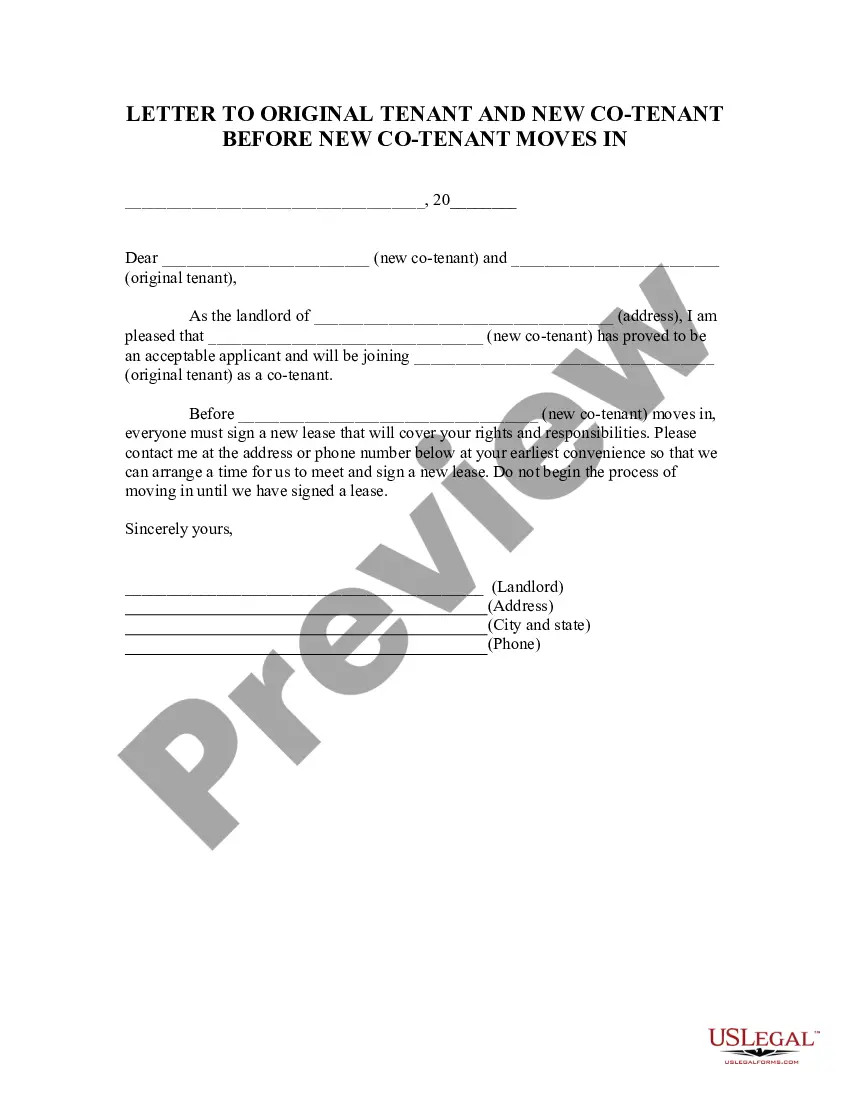
Situations where this form applies
This letter should be used when a tenant has requested permission to sublease their rental property, and the landlord has approved that request. It is essential for ensuring that all parties understand the liability implications, particularly in cases where the subtenant may not fulfill their financial obligations. Use this document as a clear communication tool to outline responsibilities under the sublease arrangement.
Intended users of this form
- Landlords granting sublease permissions to tenants
- Tenants seeking to sublease their rented premises
- Property management companies managing rental agreements
- Authorized agents acting on behalf of landlords
Completing this form step by step
- Identify the parties involved, including the landlord and tenant.
- Specify the property being subleased.
- Clearly state the approval of the sublease and the tenant's ongoing responsibilities.
- Provide contact information for the landlord or authorized agent.
- Deliver the letter using an appropriate method (personal delivery or certified mail).
Does this form need to be notarized?
This form does not typically require notarization unless specified by local law. It is important to review any state-specific regulations that may affect the notarization requirements for sublease agreements.
Get your form ready online
Our built-in tools help you complete, sign, share, and store your documents in one place.
Make edits, fill in missing information, and update formatting in US Legal Forms—just like you would in MS Word.
Download a copy, print it, send it by email, or mail it via USPS—whatever works best for your next step.
Sign and collect signatures with our SignNow integration. Send to multiple recipients, set reminders, and more. Go Premium to unlock E-Sign.
If this form requires notarization, complete it online through a secure video call—no need to meet a notary in person or wait for an appointment.
We protect your documents and personal data by following strict security and privacy standards.

Make edits, fill in missing information, and update formatting in US Legal Forms—just like you would in MS Word.

Download a copy, print it, send it by email, or mail it via USPS—whatever works best for your next step.

Sign and collect signatures with our SignNow integration. Send to multiple recipients, set reminders, and more. Go Premium to unlock E-Sign.

If this form requires notarization, complete it online through a secure video call—no need to meet a notary in person or wait for an appointment.

We protect your documents and personal data by following strict security and privacy standards.
Typical mistakes to avoid
- Failing to specify the tenantâs responsibility for damages explicitly.
- Not providing delivery confirmation for the letter.
- Overlooking the inclusion of the landlordâs contact information.
- Ignoring state-specific legal requirements regarding subleasing.
Why use this form online
- Instant access to professionally drafted legal documents.
- Easy customization to fit individual circumstances.
- Downloadable format for convenience and record-keeping.
- Reliable content that complies with current legal standards.
Main things to remember
- This letter confirms the approval of a sublease while maintaining the original tenant's responsibilities.
- Clarity in terms of liability can prevent disputes with the subtenant.
- Proper delivery of this notice is essential for legal recognition.
Looking for another form?
Form popularity
FAQ
A breach of lease in Maryland occurs when either the landlord or tenant fails to fulfill their obligations outlined in the lease agreement. Common examples include non-payment of rent, unauthorized alterations to the property, or subletting without permission. In such cases, tenants may receive a Maryland Letter from Landlord to Tenant that Sublease granted - Rent Paid by Subtenant, but Tenant Still Liable for Rent and Damages, highlighting their responsibilities. It’s crucial for both parties to understand these terms to avoid legal issues.
Unauthorized subletting occurs when a tenant rents out their apartment or house to another person without the landlord's permission. This situation can create complications, especially when dealing with lease obligations. In Maryland, the tenant remains liable for rent and damages even if the subtenant pays rent. A Maryland Letter from Landlord to Tenant that Sublease granted - Rent Paid by Subtenant, but Tenant Still Liable for Rent and Damages is essential to clarify these terms.
To prove a tenant is subletting an apartment, look for substantial evidence such as extra tenants’ belongings or disruption in the usual rental dynamics. You may consider checking for correspondence or financial transactions that involve a different party. Document your findings systematically to build a clear case. If the situation necessitates, you can initiate a formal discussion through a Maryland Letter from Landlord to Tenant that Sublease granted - Rent Paid by Subtenant, but Tenant Still Liable for Rent and Damages.
Rules surrounding subletting typically involve permission from the landlord and adherence to the lease agreement. Many leases require tenants to inform landlords of any potential subtenants. Tenants should also ensure that subtenants meet the same qualifications as original tenants. Following these guidelines can help protect both landlord and tenant interests.
In Maryland, subleasing rules vary depending on the lease agreement and local laws. Generally, tenants must obtain permission from the landlord and adhere to the terms outlined in the lease. It's advisable for tenants to communicate openly with their landlord to avoid misunderstandings. Understanding these regulations can help maintain good landlord-tenant relationships.
Proving that a tenant is subletting typically involves gathering evidence of unauthorized occupants or rental transactions. Look for indicators such as extra belongings, mail addressed to someone else, or unusual foot traffic at the property. Document any observations and maintain communication records with your tenant. If necessary, you may send a Maryland Letter from Landlord to Tenant that Sublease granted - Rent Paid by Subtenant, but Tenant Still Liable for Rent and Damages to formally address your concerns.
Landlords often dislike subleasing due to concerns over property damage and tenant reliability. They fear that a subtenant may not uphold the same standards as the original tenant, which can lead to disputes or damages. Additionally, subleases can complicate lease agreements and tenant communications. Understanding these dynamics is important for both landlords and tenants alike.
When writing a letter stating someone pays you rent, include your name, the tenant's name, and the property address. Clearly state the rental amount and payment frequency, specifying that the subtenant is responsible for those payments in your agreement. This document serves as a record for both parties, ensuring transparency regarding financial obligations. You can also utilize a Maryland Letter from Landlord to Tenant that Sublease granted - Rent Paid by Subtenant, but Tenant Still Liable for Rent and Damages as a formal template.
Yes, you can face legal issues for subletting an apartment without proper authorization. Many lease agreements contain strict clauses regarding subletting, and violating these terms can lead to eviction or legal penalties. It's important to understand your lease and local laws to avoid complications. Consulting a legal professional may help clarify the implications of subletting before proceeding.
To find out if your tenant is subletting, closely observe any unusual activity at your rental property. You may notice additional people frequenting the unit or changes in your tenant's behavior. Additionally, check for any communication patterns that suggest your tenant is renting to someone else. If you suspect subletting, you may need to issue a Maryland Letter from Landlord to Tenant that Sublease granted - Rent Paid by Subtenant, but Tenant Still Liable for Rent and Damages.