Maryland Warranty Deed from Husband and Wife to an Individual
What this document covers
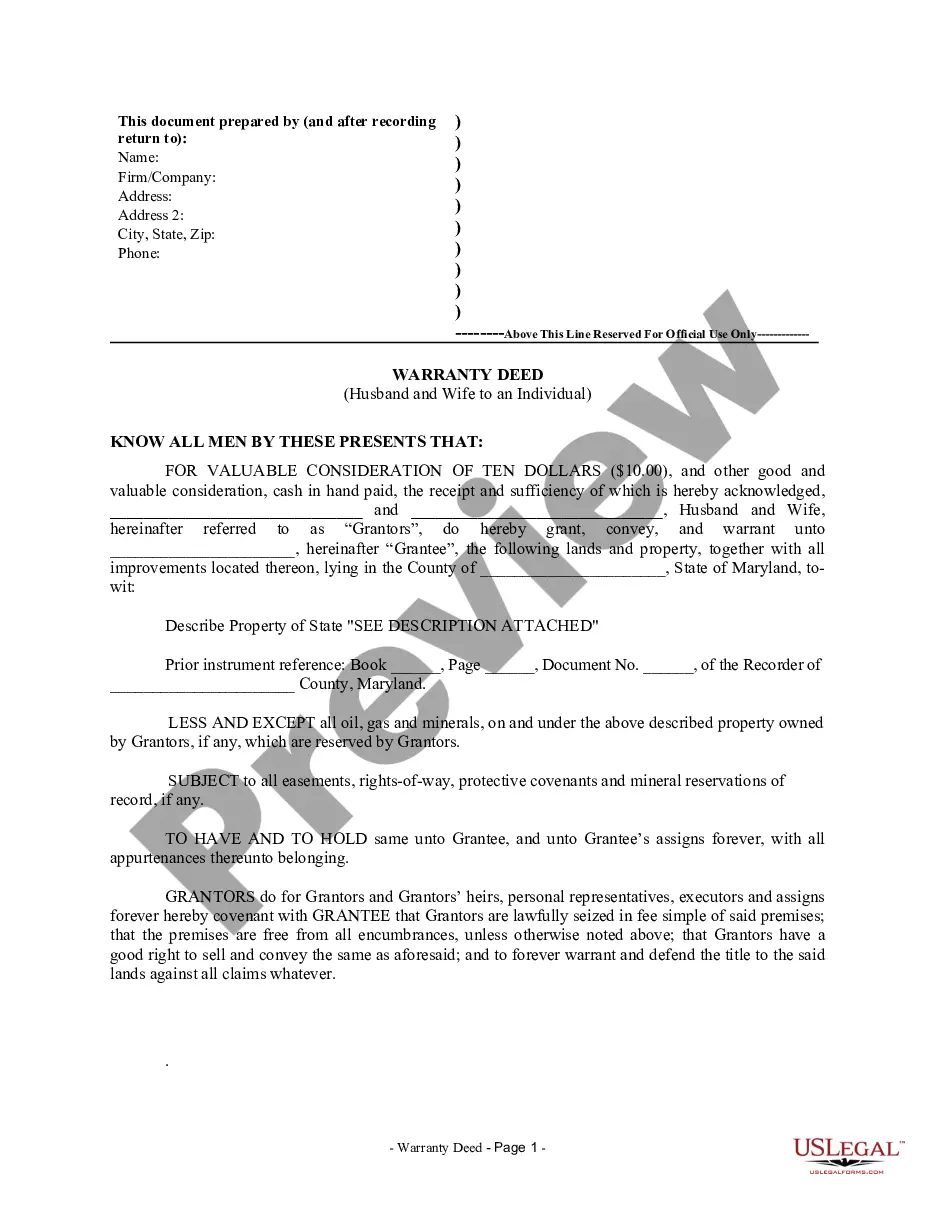
The Warranty Deed from Husband and Wife to an Individual is a legal document that allows a married couple (the grantors) to transfer ownership of property to an individual (the grantee). This deed guarantees that the grantors hold clear title to the property and have the right to transfer it, while reserving any rights to oil, gas, and minerals beneath the land. Unlike other forms of property transfer, this warranty deed provides specific protections for the grantee against potential claims or disputes regarding the property's title.
Main sections of this form
- Description of the property being transferred.
- Details regarding prior instrument references and recording information.
- Clause regarding reservation of oil, gas, and mineral rights.
- Covenant from the grantors regarding clear title and freedom from encumbrances.
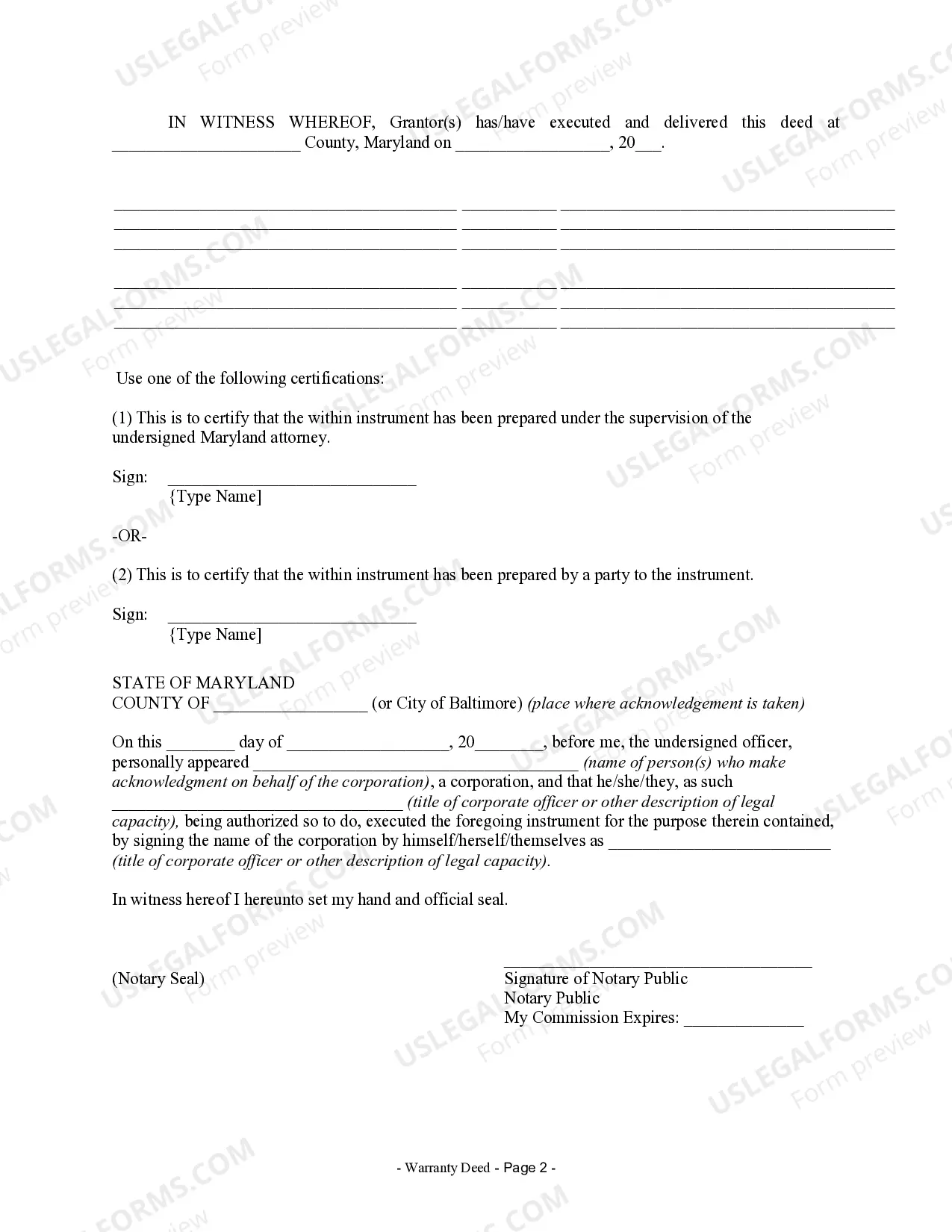
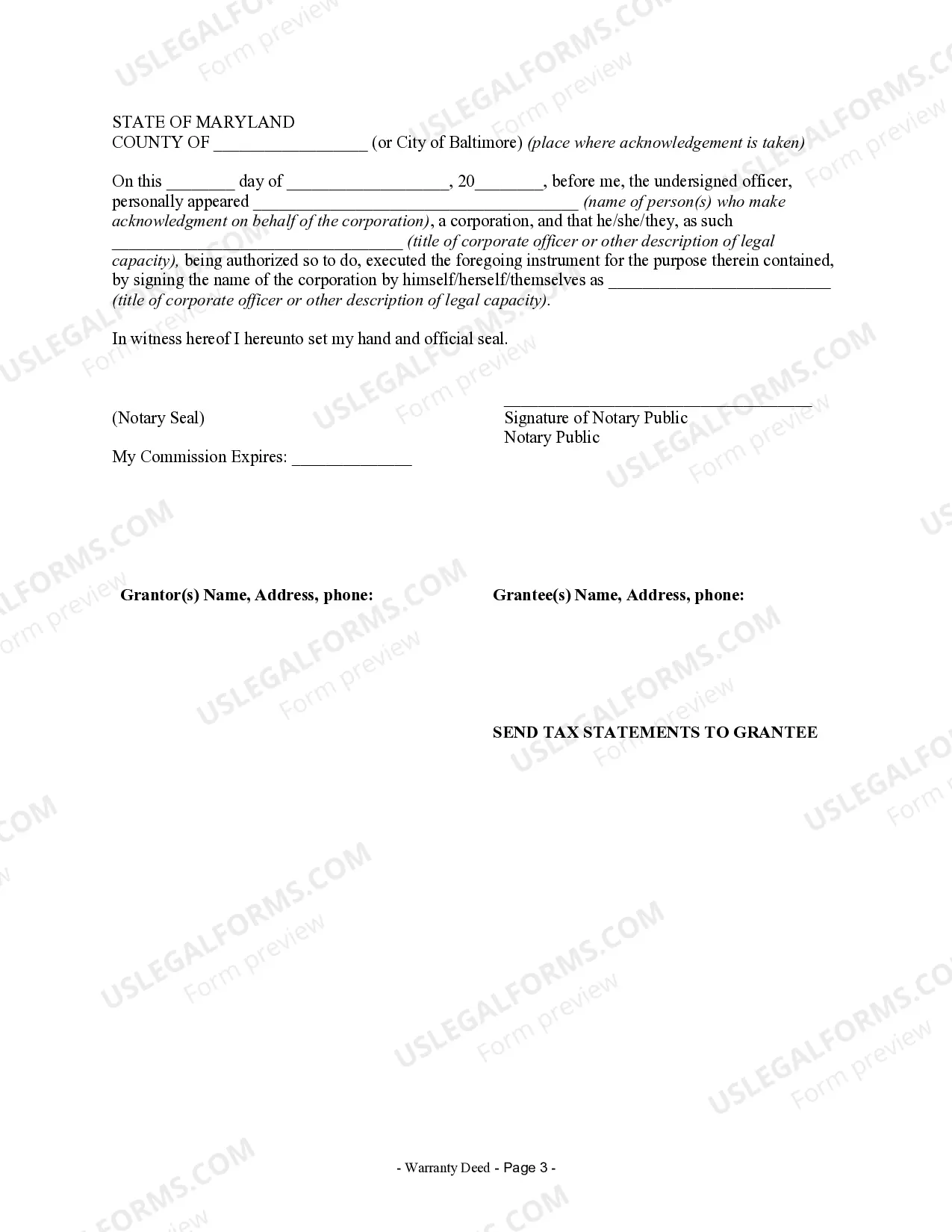
- Signatures of the grantors along with notarization section for legal validation.





Common use cases
This form is used when a married couple owns a property and wishes to transfer ownership to an individual. It is appropriate in situations such as selling a family property, gifting real estate to a relative, or transferring property after a divorce, ensuring that the new owner receives clear title and protection from future claims.
Who should use this form
- Married couples who are transferring property to an individual.
- Individuals who are receiving property from a husband and wife.
- Real estate professionals assisting clients with property transfers.
- Attorneys working with clients on real estate transactions.
How to prepare this document
- Identify the parties involved: enter the names of the husband and wife as grantors and the individual as the grantee.
- Specify the property: provide a detailed description of the property being transferred.
- Include prior instrument references: fill in the book, page, and document number related to the property.
- Specify the reservation of oil, gas, and mineral rights, if applicable.
- Sign and date the form in the presence of a notary public.
Does this document require notarization?
To make this form legally binding, it must be notarized. Our online notarization service, powered by Notarize, lets you verify and sign documents remotely through an encrypted video session.
Get your form ready online
Our built-in tools help you complete, sign, share, and store your documents in one place.
Make edits, fill in missing information, and update formatting in US Legal Forms—just like you would in MS Word.
Download a copy, print it, send it by email, or mail it via USPS—whatever works best for your next step.
Sign and collect signatures with our SignNow integration. Send to multiple recipients, set reminders, and more. Go Premium to unlock E-Sign.
If this form requires notarization, complete it online through a secure video call—no need to meet a notary in person or wait for an appointment.
We protect your documents and personal data by following strict security and privacy standards.
Make edits, fill in missing information, and update formatting in US Legal Forms—just like you would in MS Word.
Download a copy, print it, send it by email, or mail it via USPS—whatever works best for your next step.
Sign and collect signatures with our SignNow integration. Send to multiple recipients, set reminders, and more. Go Premium to unlock E-Sign.

If this form requires notarization, complete it online through a secure video call—no need to meet a notary in person or wait for an appointment.
We protect your documents and personal data by following strict security and privacy standards.
Typical mistakes to avoid
- Failing to provide a clear and complete property description.
- Not including the proper prior instrument reference information.
- Omitting signatures or not notarizing the document.
- Incorrectly stating the reservation of mineral rights.
Advantages of online completion
- Convenience of completing the document from home without the need for in-person appointments.
- Editability allows for quick adjustments to fit specific circumstances.
- Access to templates drafted by licensed attorneys ensures legal compliance.
- Instant download capability for immediate use in transactions.
What to keep in mind
- The Warranty Deed transfers property from a married couple to an individual.
- It includes crucial reservations for oil, gas, and minerals.
- Proper completion and notarization are necessary for validity.
Looking for another form?
Form popularity
FAQ
Discuss the terms of the deed with the new owners. Hire a real estate attorney to prepare the deed. Review the deed. Sign the deed in front of a notary public, with witnesses present. File the deed on public record.
A warranty deed guarantees that: The grantor is the rightful owner of the property and has the legal right to transfer the title.The title would withstand third-party claims to ownership of the property. The grantor will do anything to ensure the grantee's title to the property.
It's important to note that a warranty deed does not actually prove the grantor has ownership (a title search is the best way to prove that), but it is a promise by the grantor that they are transferring ownership and if it turns out they don't actually own the property, the grantor will be responsible for compensating
Retrieve your original deed. Get the appropriate deed form. Draft the deed. Sign the deed before a notary. Record the deed with the county recorder. Obtain the new original deed.
No, California does not require that the Grantee sign a warranty deed. However, some states and counties require that the deed be signed by the Grantee in addition to the Grantor.
A consenting individual may be removed from a deed by filing a quitclaim deed. Under Maryland law each county has a separate procedure and requirements for filing a quitclaim deed.
Typically, the only cost is between $25 and $55 to record the new deed and obtain a certificate from the city/county to show that all taxes are current. The deed should be notarized and must be prepared by one of the parties or under the supervision of a Maryland attorney.
To change the names on a real estate deed, you will need to file a new deed with the Division of Land Records in the Circuit Court for the county where the property is located. The clerk will record the new deed.