Massachusetts Warranty Deed from Individual to a Trust
Understanding this form
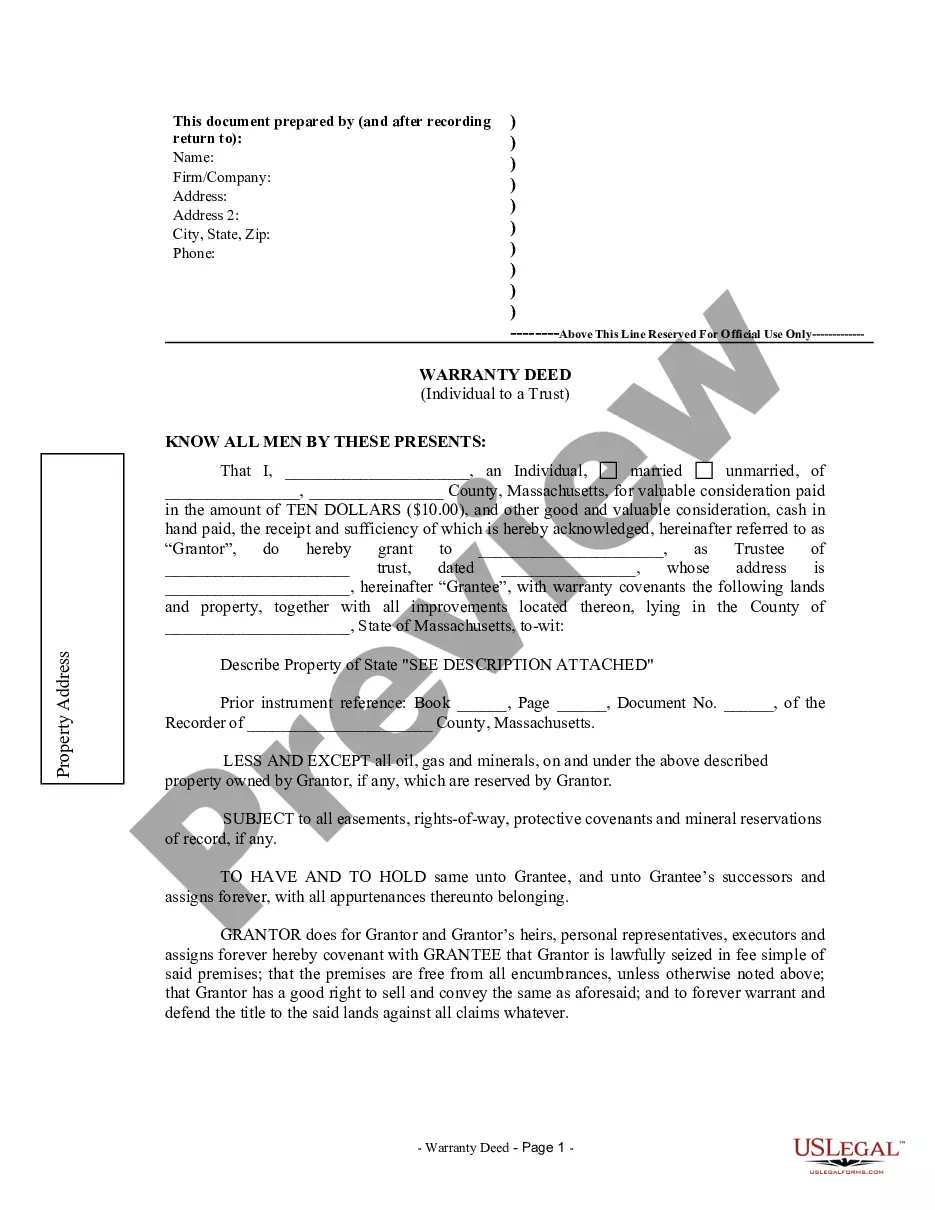
A Warranty Deed from Individual to a Trust is a legal document that transfers ownership of real property from an individual (the grantor) to a trust (the grantee). This form ensures that the grantor guarantees clear title and the right to convey the property while reserving certain mineral rights. It is distinct from other property transfer forms, as it specifically involves a trust as the recipient of the property.
Key parts of this document
- Description of the property being conveyed
- Reference to prior instrument, including book and page numbers
- Clear statement of mineral rights reserved by the grantor
- Warrant of title and absence of encumbrances
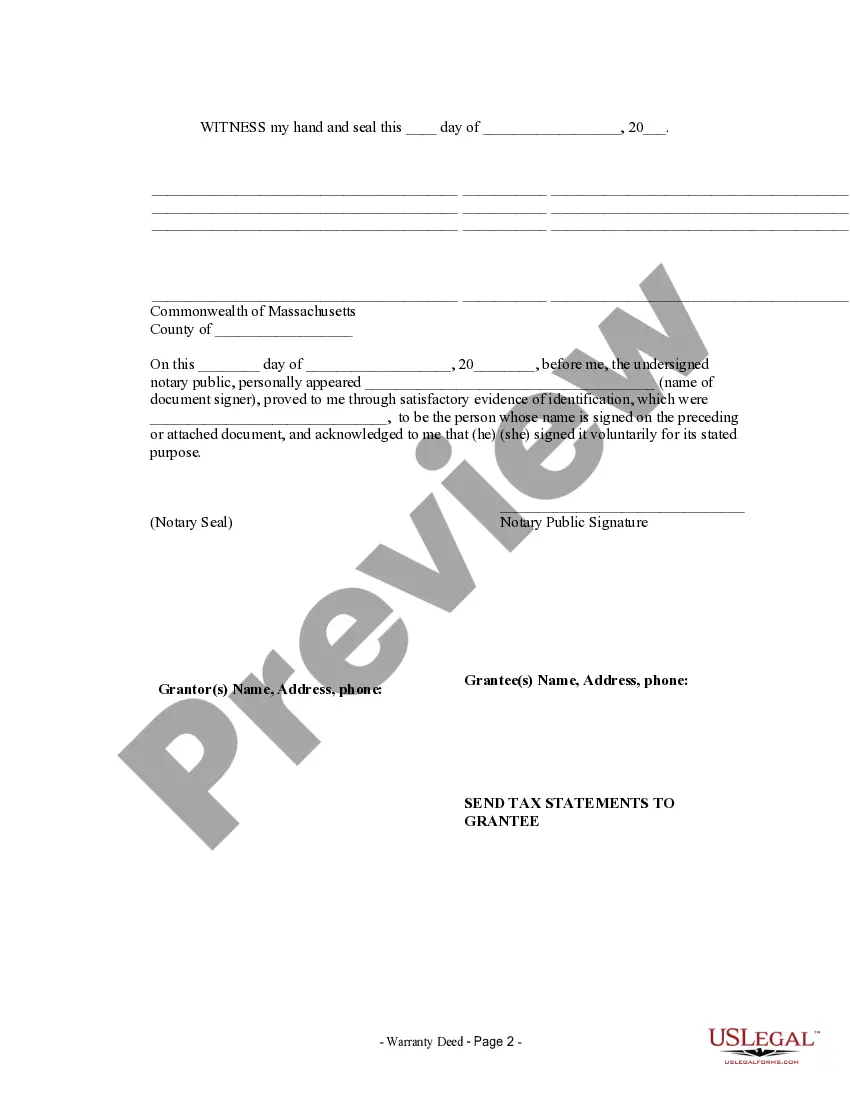
- Signature and notarization section for formal validation



Situations where this form applies
This form is useful when an individual wants to transfer property ownership to a trust. Common scenarios include estate planning, asset protection, and management of property by a trustee for beneficiaries. It helps clarify property rights while ensuring that the grantor retains certain mineral rights if applicable.
Intended users of this form
This form is intended for:
- Individuals who wish to transfer property into a trust
- Trustees and beneficiaries involved in property transactions
- Estate planners and legal representatives managing property transfers
Completing this form step by step
- Identify the parties involved: the grantor (individual) and the trustee (representing the trust).
- Clearly specify the property being transferred, including any prior instrument reference.
- Indicate any mineral rights being reserved by the grantor.
- Sign the form in the presence of a notary public.
- Ensure all fields are completed and validated for compliance with state laws.
Notarization requirements for this form
Yes, this form must be notarized to be legally valid. It is essential to ensure that the signatures are verified by a notary public to prevent future disputes regarding the transfer. US Legal Forms offers integrated online notarization services that are available 24/7 through secure video calls.
Get your form ready online
Our built-in tools help you complete, sign, share, and store your documents in one place.
Make edits, fill in missing information, and update formatting in US Legal Forms—just like you would in MS Word.
Download a copy, print it, send it by email, or mail it via USPS—whatever works best for your next step.
Sign and collect signatures with our SignNow integration. Send to multiple recipients, set reminders, and more. Go Premium to unlock E-Sign.
If this form requires notarization, complete it online through a secure video call—no need to meet a notary in person or wait for an appointment.
We protect your documents and personal data by following strict security and privacy standards.

Make edits, fill in missing information, and update formatting in US Legal Forms—just like you would in MS Word.

Download a copy, print it, send it by email, or mail it via USPS—whatever works best for your next step.

Sign and collect signatures with our SignNow integration. Send to multiple recipients, set reminders, and more. Go Premium to unlock E-Sign.

If this form requires notarization, complete it online through a secure video call—no need to meet a notary in person or wait for an appointment.

We protect your documents and personal data by following strict security and privacy standards.
Mistakes to watch out for
- Failing to include detailed property descriptions.
- Overlooking the reservation of mineral rights.
- Not obtaining required notarization before recording.
- Leaving fields such as prior instrument references blank.
- Not having the signature from all relevant parties.
Benefits of using this form online
- Convenience of immediate download and printing.
- Editable to fit specific property details and grantor information.
- Reliability, as the form is drafted by licensed attorneys to meet legal standards.
Summary of main points
- A Warranty Deed from Individual to a Trust effectively transfers property while preserving certain rights.
- The form must be completed correctly and notarized for legal effectiveness.
- It is essential for anyone involved in estate planning or property management to understand and use this form appropriately.
Looking for another form?
Form popularity
FAQ
No. And unless the deed identifies the trust as an owner, then father is the owner of an interest. It is a common mistake to set up a trust and then fail to deed property into the trust. However, you cannot force him to make the changes you are...
The act of transferring a property that is owned by an individual into a trust, will see the trust liable to pay stamp duty on acquisition of the asset. Additionally, the individual who is transferring ownership to the trust, will be liable to pay capital gains tax on the disposal of the asset.
A warranty deed protects property owners from future claims that someone else actually owns a portion (or all) of their property, while trustee deeds protect lenders when borrowers default on their mortgage loans.
Trustee's deeds convey real estate out of a trust.This type of conveyance is named for the person using the form the trustee who stands in for the beneficiary of the trust and holds title to the property.
The mortgage company usually prepares this deed as part of the loan package and delivers it to the title company for you to sign at closing. The title company is commonly the trustee to the deed and holds legal title to the property until the loan gets fully repaid.
Locate your current deed. Use the proper deed. Check with your title insurance company and lender. Prepare a new deed. Sign in the presence of a notary. Record the deed in the county clerk's office. Locate the deed that's in trust. Use the proper deed.
Typically, the lender will provide you with a copy of the deed of trust after the closing. The original warranty deeds are often mailed to the grantee after they are recorded. These are your original copies and should be kept in a safe place, such as a fireproof lockbox or a safe deposit box at a financial institution.
Determine the Current Title and Vesting to Your Property. Prepare a Deed. Be Aware of Your Lender and Title Insurance. Prepare a Preliminary Change of Ownership Report. Execute Your Deed. Record Your Deed. Wait for the Deed to be Returned. Keep the Property in the Trust.
A trustee deed offers no such warranties about the title.