Kentucky Essential Legal Life Documents for Military Personnel
What this form package covers
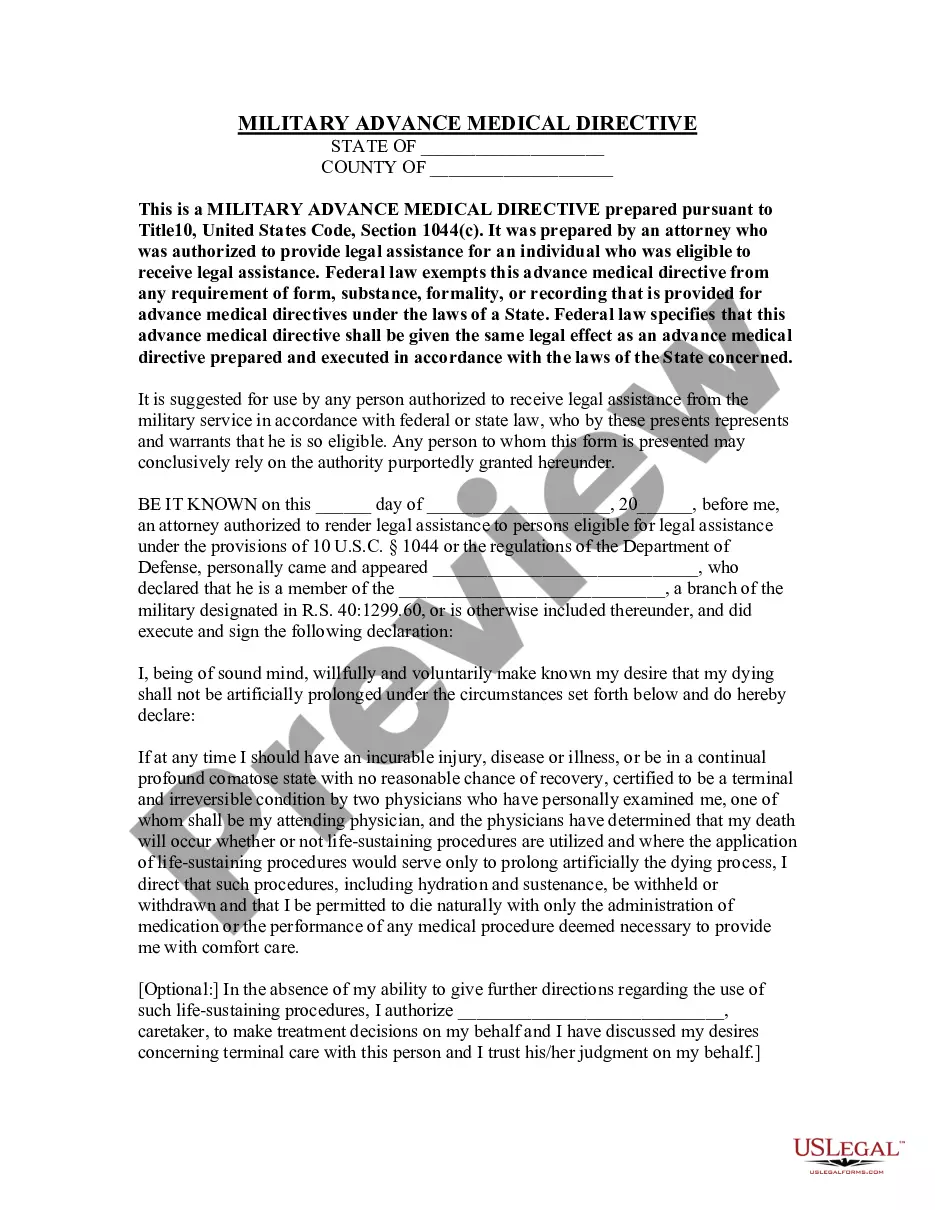
The Kentucky Essential Legal Life Documents for Military Personnel form package includes crucial legal forms designed specifically for military service members preparing for active duty. This package aims to address significant legal matters that may arise, ensuring service members and their families are adequately prepared.
This comprehensive package uniquely combines essential documents tailored for military personnel, setting it apart from general legal form packages.
Forms you’ll find in this package
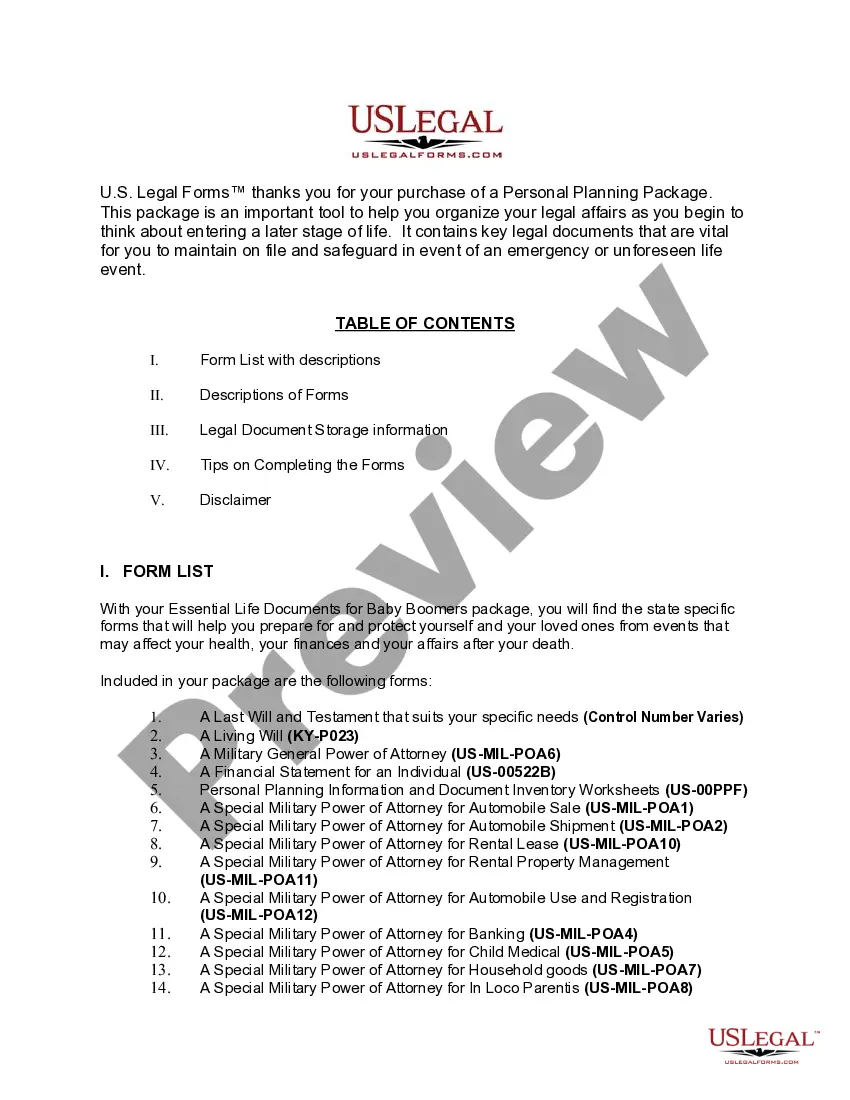
- Statutory Health Care Directive / Living Will
- Financial Statement Form - Individual
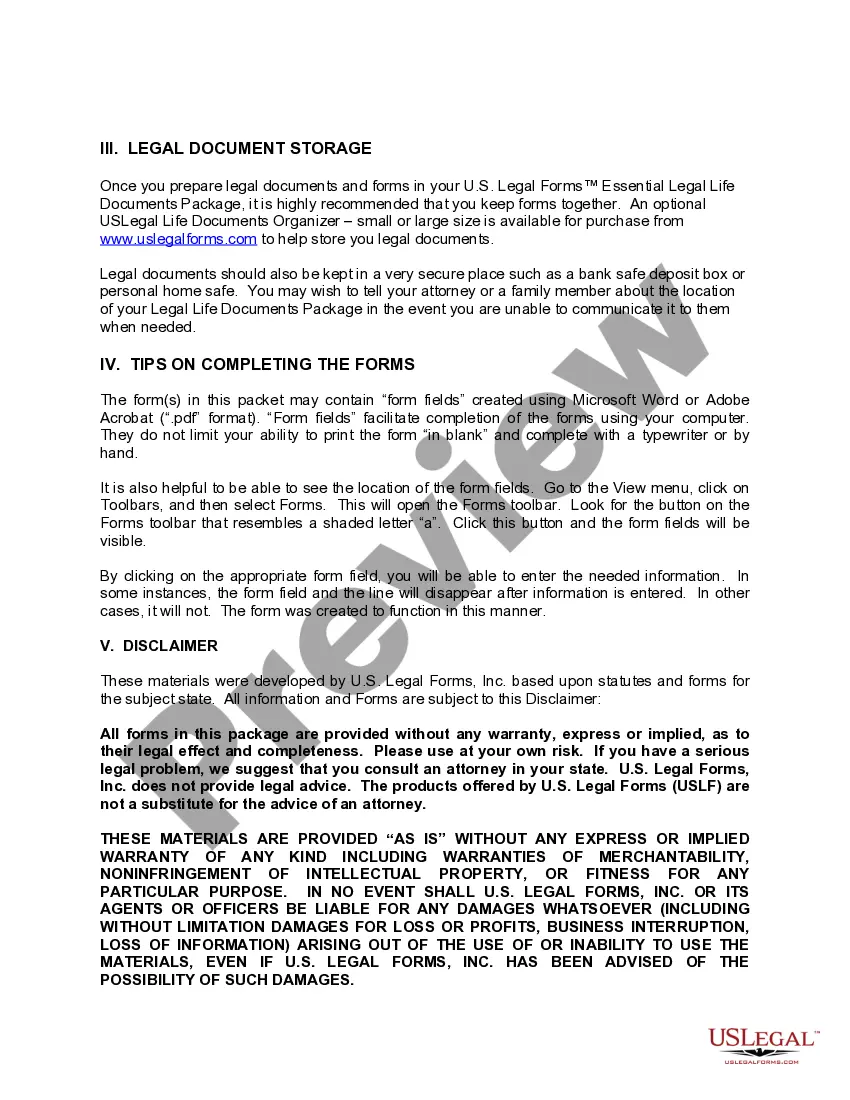
- Personal Planning Information and Document Inventory Worksheets - A Legal Life Document
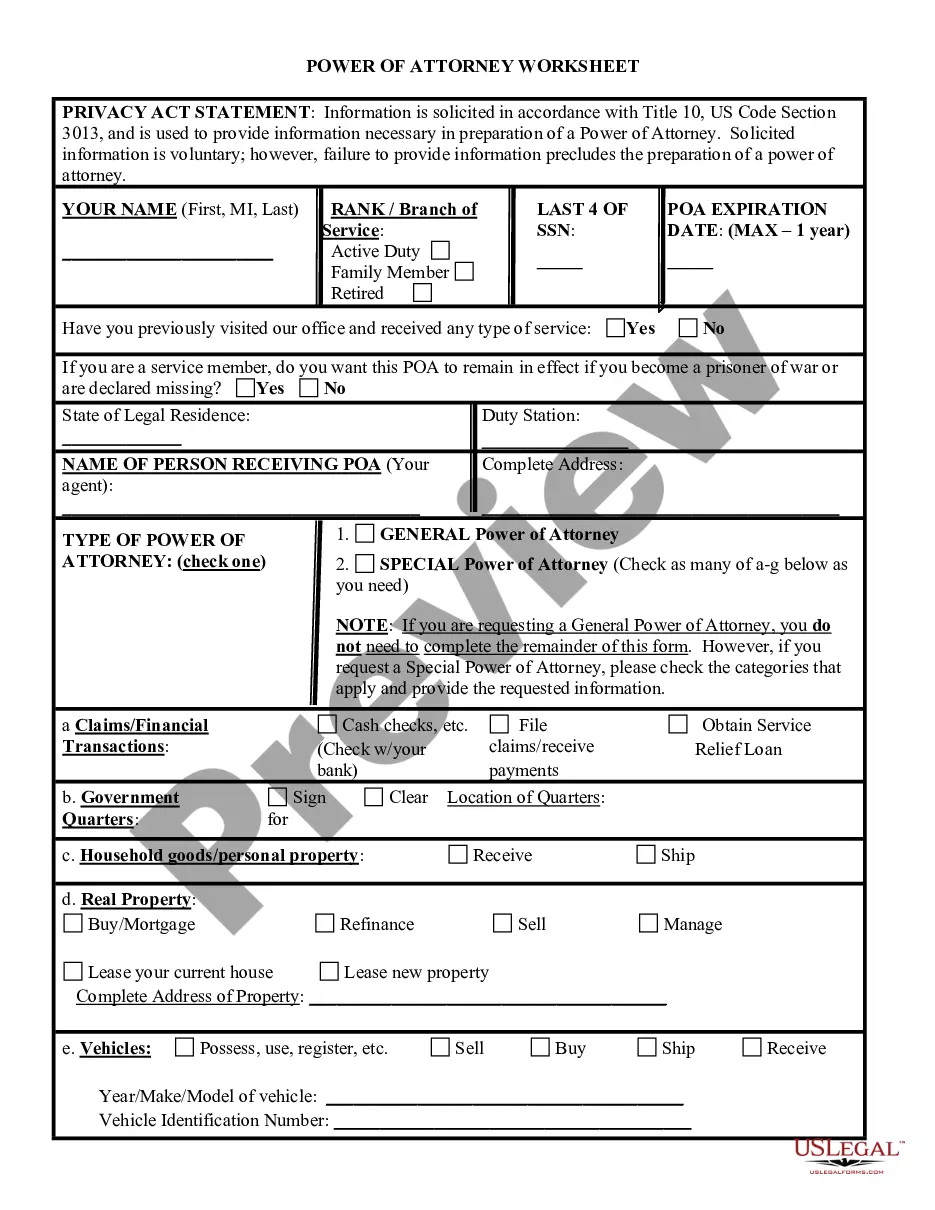
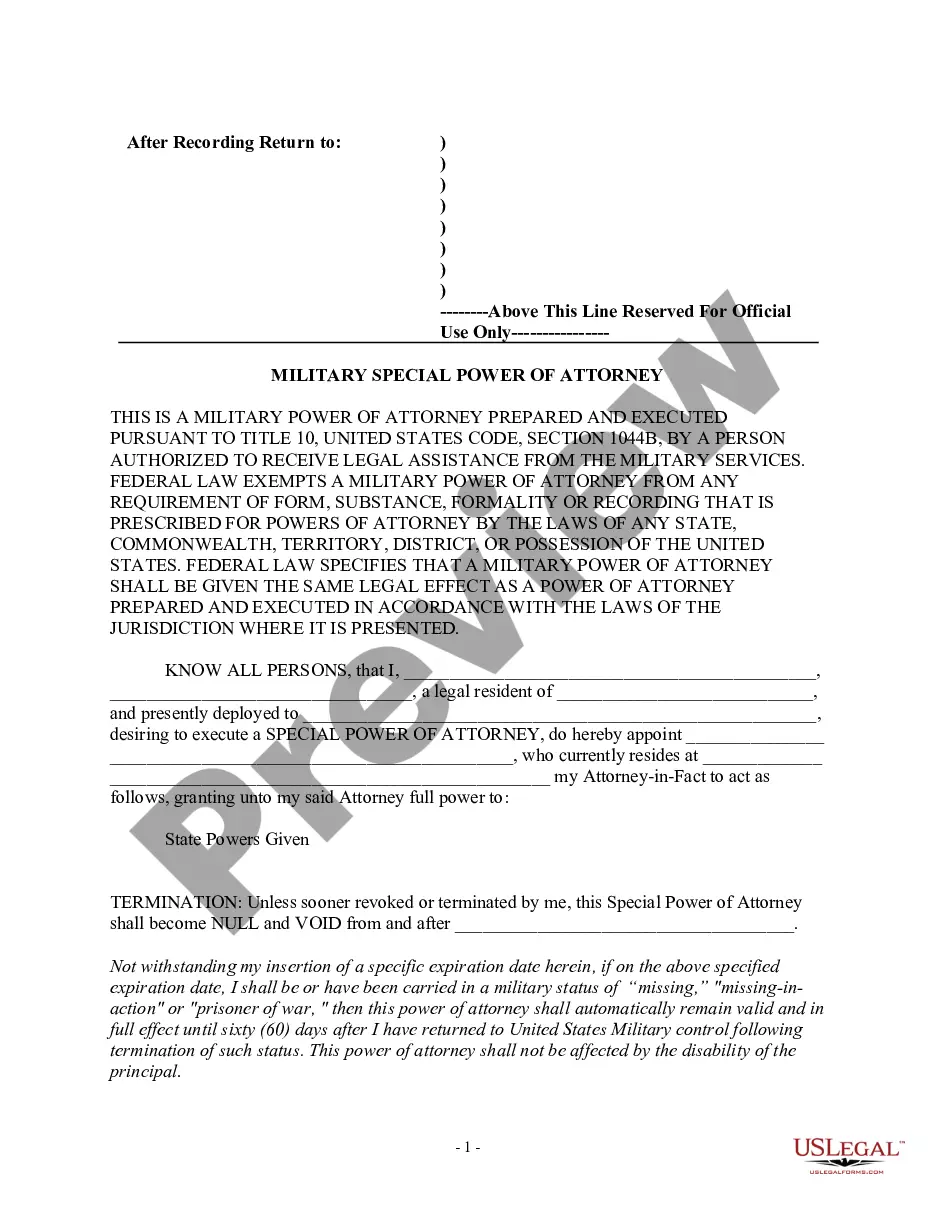
- Special Military Power of Attorney for Automobile Sale
- Special Military Power of Attorney for Rental Lease
- Special Military Power of Attorney for Rental Property Management
- Special Military Power of Attorney for Automobile Use and Registration
- Special Military Power of Attorney for Automobile Shipment
- Special Military Power of Attorney for Banking
- Special Military Power of Attorney for Child or Children Medical
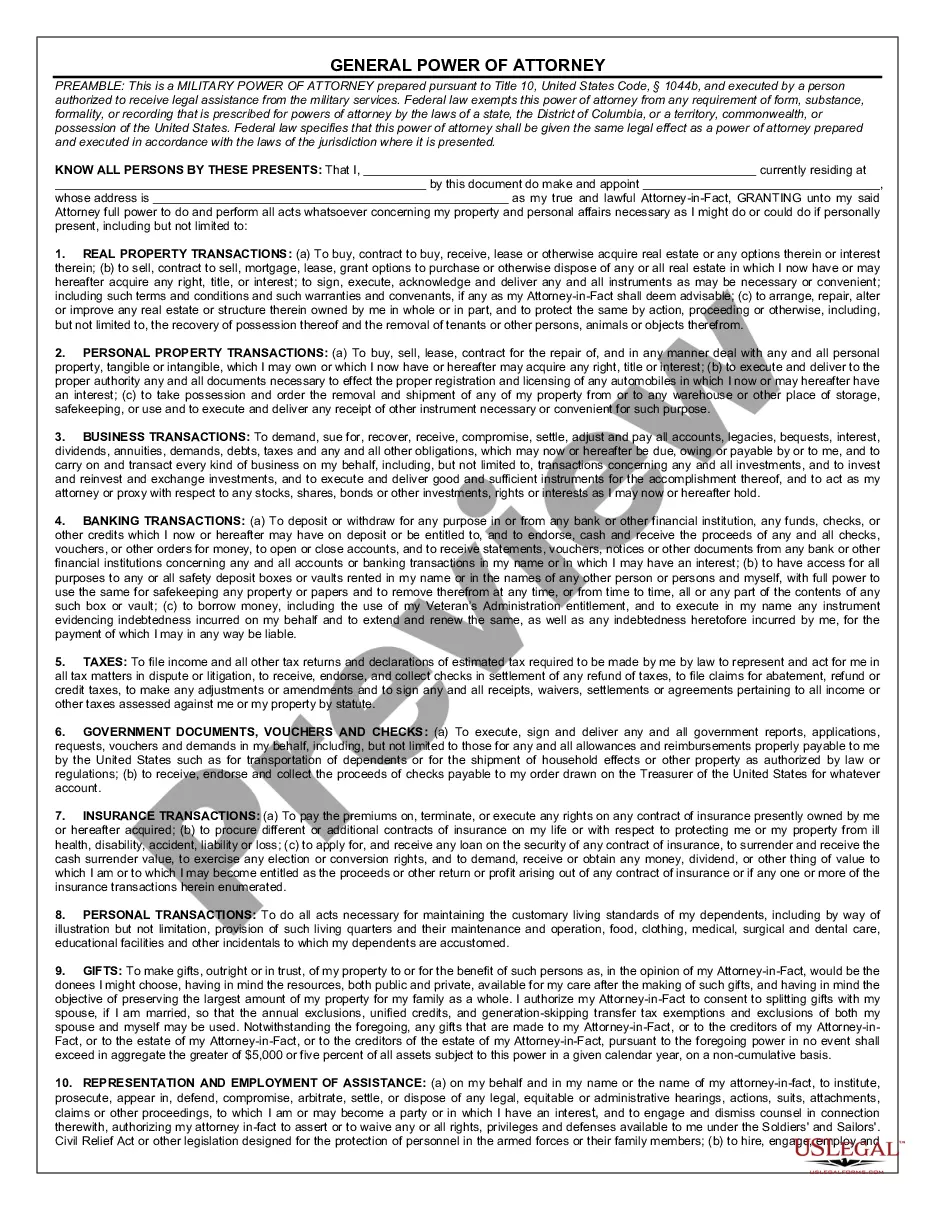
- General Military Power of Attorney
- Special Military Power of Attorney for Household Goods
- Special Military Power of Attorney for In Loco Parentis
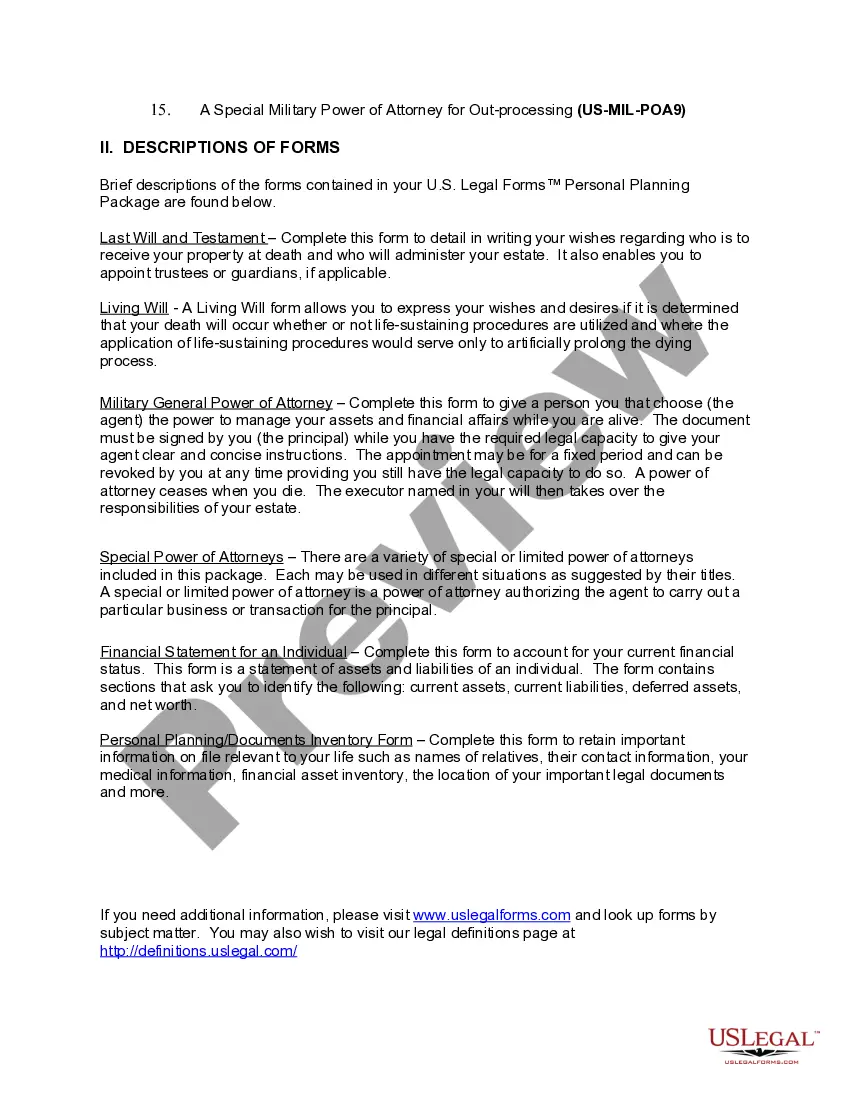
- Special Military Power of Attorney for Outprocessing

When to use this form package
This form package is particularly beneficial in various situations, including:
- Before deployment when you need to establish a will or living will.
- When you want to grant someone power of attorney to manage your financial and legal affairs.
- When you require documentation for the sale or shipment of your automobile.
- If you need to organize your personal documents and planning information in one place.
- Before significant life events that may impact your health or finances while on active duty.
Intended users of this form package
- Active duty military personnel in Kentucky.
- Military personnel preparing for deployment or relocation.
- Family members of military service members looking to organize essential legal documents.
- Veterans needing to establish or update their legal affairs.
How to complete these forms
- Review the included forms to understand each document's purpose.
- Gather necessary information such as your financial details and wishes for medical care.
- Complete the forms by entering your specific information and preferences.
- Sign the documents as required, ensuring proper witnesses if necessary.
- Store the completed forms in a safe place, such as a locked drawer or safe deposit box.
Do forms in this package need to be notarized?
Some forms in this package require notarization to be legally valid. US Legal Forms provides secure online notarization powered by Notarize, allowing you to complete the process through a verified video call, available 24/7.
Get your form ready online
Our built-in tools help you complete, sign, share, and store your documents in one place.
Make edits, fill in missing information, and update formatting in US Legal Forms—just like you would in MS Word.
Download a copy, print it, send it by email, or mail it via USPS—whatever works best for your next step.
Sign and collect signatures with our SignNow integration. Send to multiple recipients, set reminders, and more. Go Premium to unlock E-Sign.
If this form requires notarization, complete it online through a secure video call—no need to meet a notary in person or wait for an appointment.
We protect your documents and personal data by following strict security and privacy standards.

Make edits, fill in missing information, and update formatting in US Legal Forms—just like you would in MS Word.

Download a copy, print it, send it by email, or mail it via USPS—whatever works best for your next step.

Sign and collect signatures with our SignNow integration. Send to multiple recipients, set reminders, and more. Go Premium to unlock E-Sign.

If this form requires notarization, complete it online through a secure video call—no need to meet a notary in person or wait for an appointment.

We protect your documents and personal data by following strict security and privacy standards.
Common mistakes
- Failing to sign documents or not obtaining necessary witness signatures.
- Not updating documents after significant life changes, such as marriage or having children.
- Overlooking the need for specific powers of attorney in unique situations.
- Breezing through the forms without fully understanding each section.
Why complete this package online
- Convenience: Access and complete your legal forms from anywhere at any time.
- Editability: Easily fill out forms digitally, reducing the chances of errors.
- Reliability: The forms are drafted by licensed attorneys to ensure legal compliance.
Main things to remember
- This package is essential for military personnel in Kentucky, covering critical legal documents.
- Utilize these forms to address important legal matters before deployment.
- Ensure proper completion and storage of documents for future accessibility.
Looking for another form?
Form popularity
FAQ
The first step is to locate the deceased person's original will. The second step is to file a petition, using form AOC-805, which asks the District Court judge to admit the will to probate and to appoint an execu- tor to administer and settle the decedent's estate.
Plan your document. Use a readable typeface, like Times New Roman. Divide your document into sections, and the sections into smaller segments if necessary. Don't use any slang, and omit needless words. Use the active voice, avoid the passive voice. Simply wordy phrases.
Consider hiring an attorney. Identify the proper court. Prepare your complaint. File the lawsuit. Serve the defendant. Service methods for individuals that reside in Kentucky. Service methods for companies that operate in Kentucky. Service methods for out-of-state individuals and companies.
Court document means a document issued by the court or filed or generated by the parties relative to proceedings, and includes affidavits, applications, bundles, claim forms, exhibits, judgments, orders, pleadings, summonses, and. Sample 1. ff0b New List. Court document means any instrument, document, Sample 1.
Affidavit. An Affidavit is a sworn written statement made before an official or anyone who may legally administer an oath. Amending Agreement. Amortization Schedule. Articles of Incorporation. Assignment. Assignment of Partnership Interest. Assignment of Trade Name.
Indexes. Indexes to court records are usually incomplete. Dockets. When a judicial body agrees to hear a case, it is placed on the court docket until trial. Court Minutes. All actions of the court are briefly recorded by the clerk in the minutes. Orders. Judgments. Case Files. Witnesses Lists. Jury Records.
The Court makes available many different forms of information about cases. The most common way to find information about a case is to review the case's docket -- a list of all of the filings and rulings in that case, arranged in chronological order.
Kentucky law provides for many different manners in which to avoid probate. For example, probate is altogether unnecessary for small estates.In this way, the owner who dies first passes his or her interest in the property to the survivor, and the interest in property does not have to go through the probate process.
Step 1: Choose an agent. Your agent, or health care surrogate, is responsible for making decisions about your health care if you can't communicate your wishes. Step 2: Specify what healthcare decisions your agent can make. Step 3: Sign the form.