Kentucky Letter from Tenant to Landlord containing Request for permission to sublease
About this form
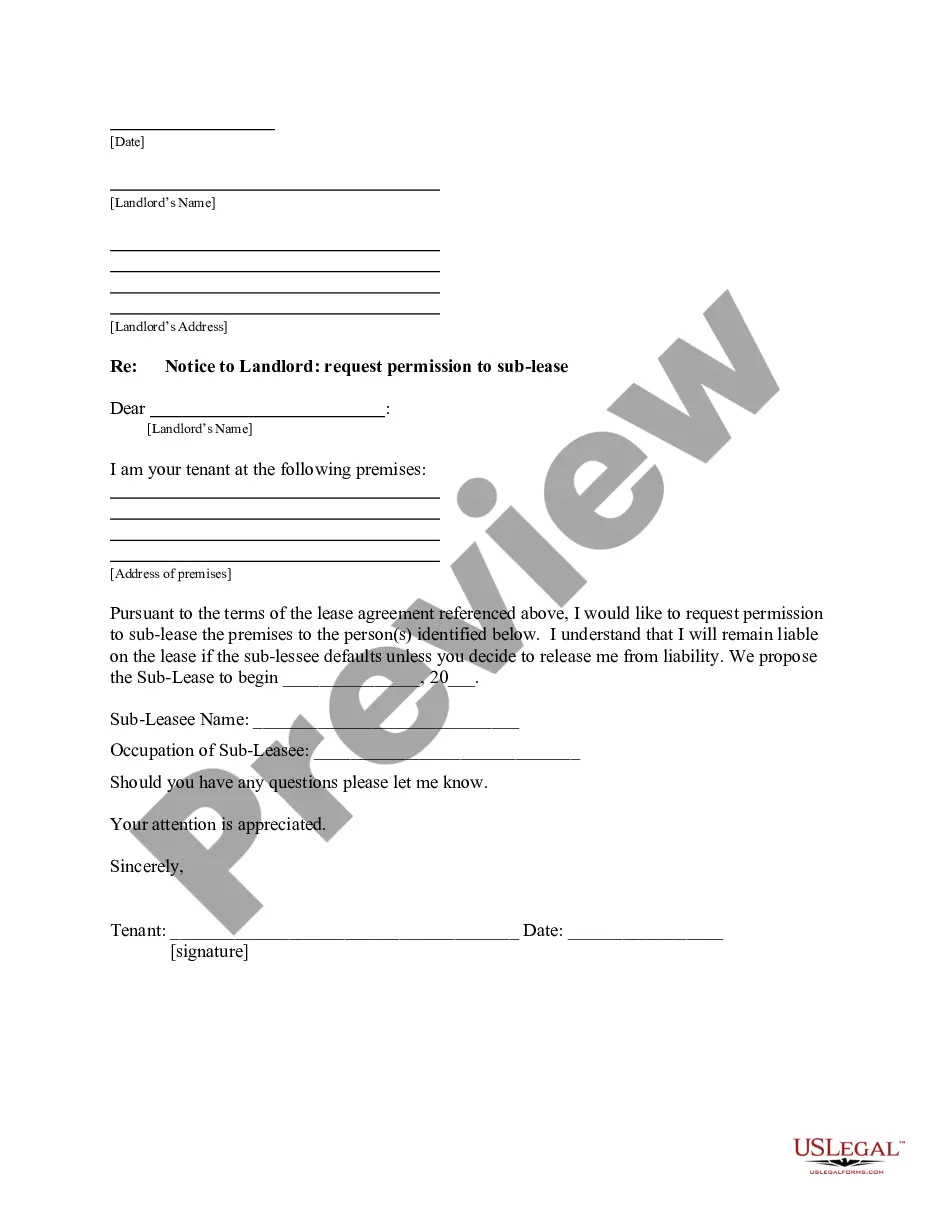
This Letter from Tenant to Landlord containing Request for Permission to Sublease is a formal document used by a tenant to request the landlord's consent to sublease their rental property. The tenant may wish to sublet the property to another individual, known as a subtenant, while still retaining their responsibilities under the original lease. This form clearly outlines the request, ensuring all parties understand their rights and obligations during the subleasing process.
Key parts of this document
- Sub-Leasee Name: Space to enter the name of the potential subtenant.
- Occupation of Sub-Leasee: Section to specify the job or occupation of the subtenant.
- Tenant's acknowledgment: Indicates that the tenant remains liable for the lease obligations unless released by the landlord.
- Date: Space for the tenant to document the date when the request is made.
- Signature: Area for the tenant to sign, confirming the request.
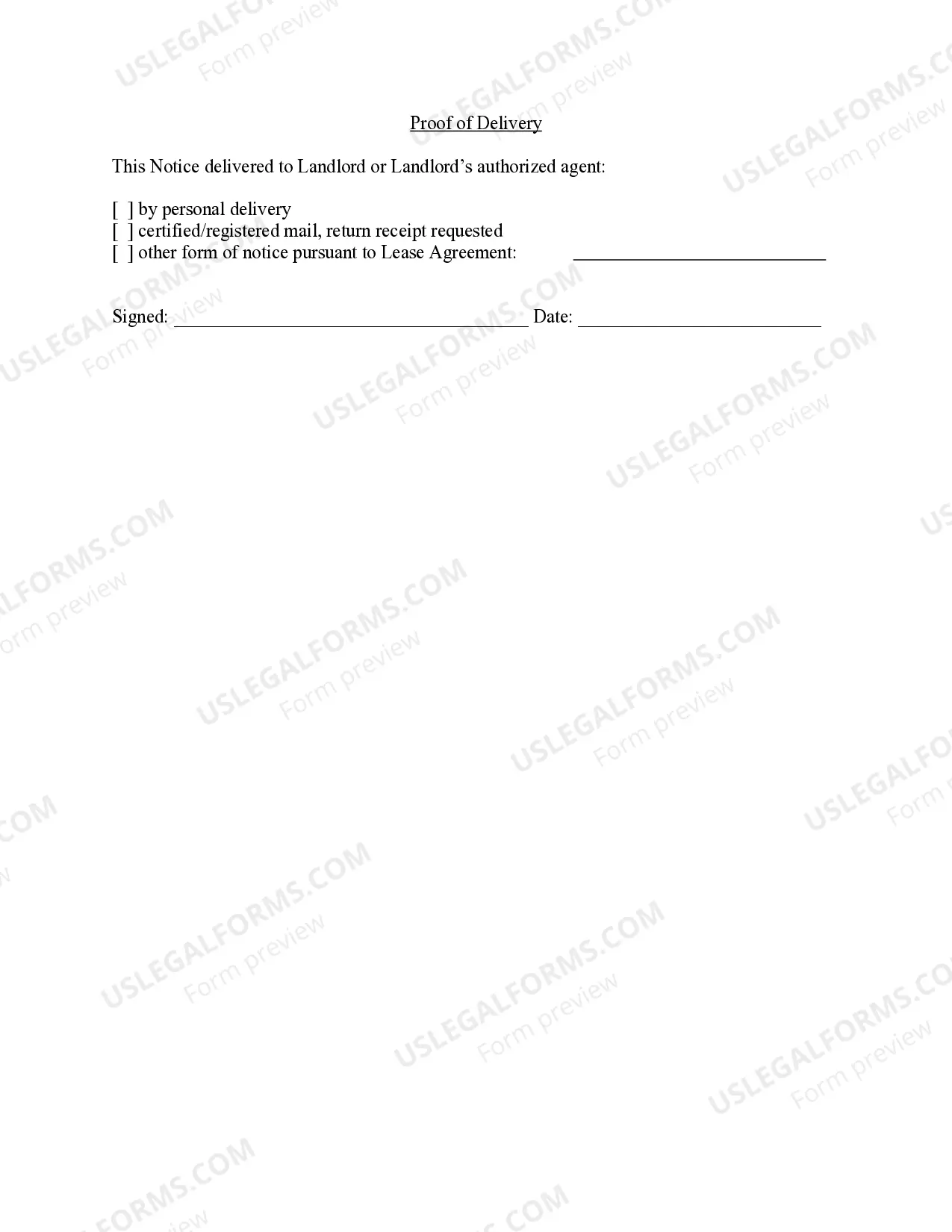
- Proof of Delivery: Confirmation method to ensure the landlord receives the notice.
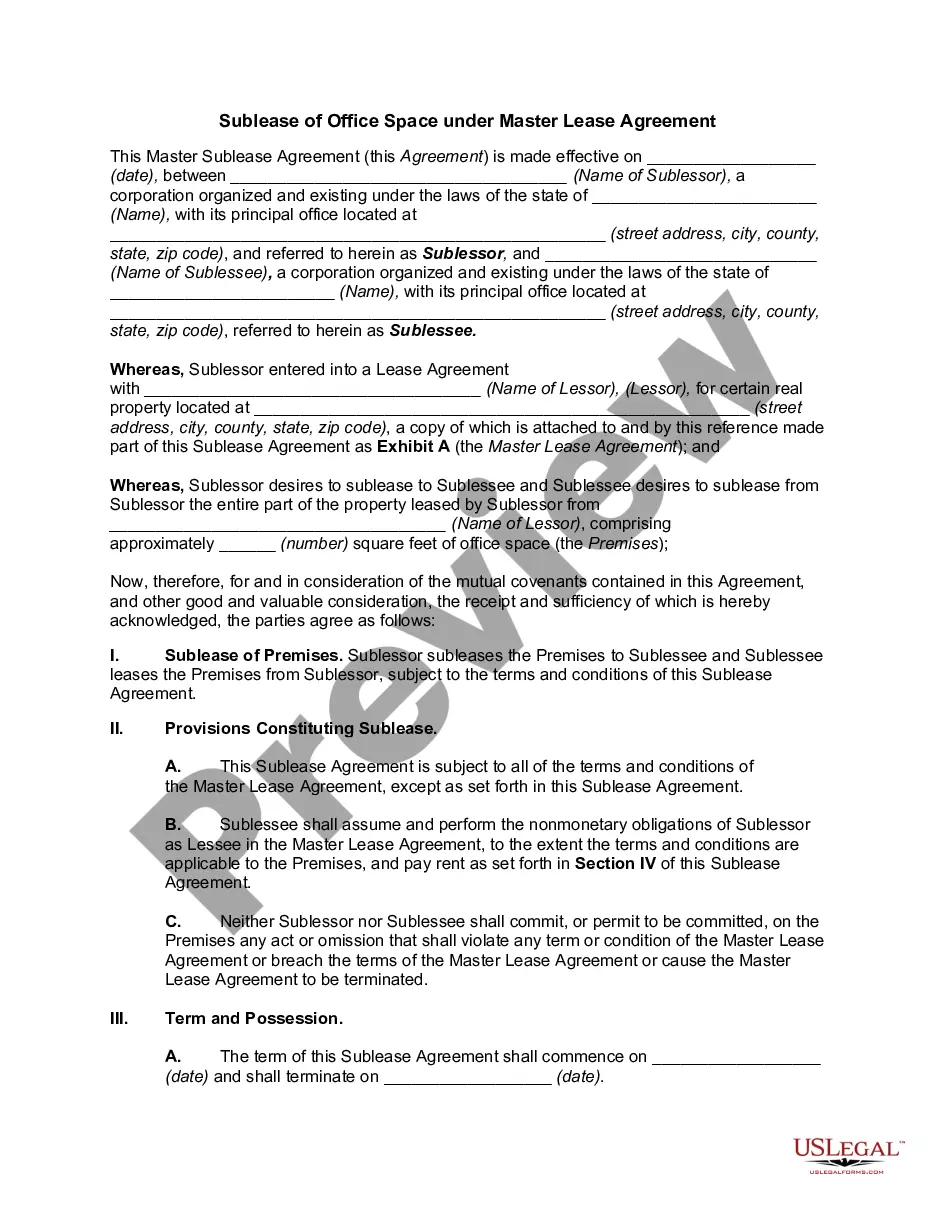
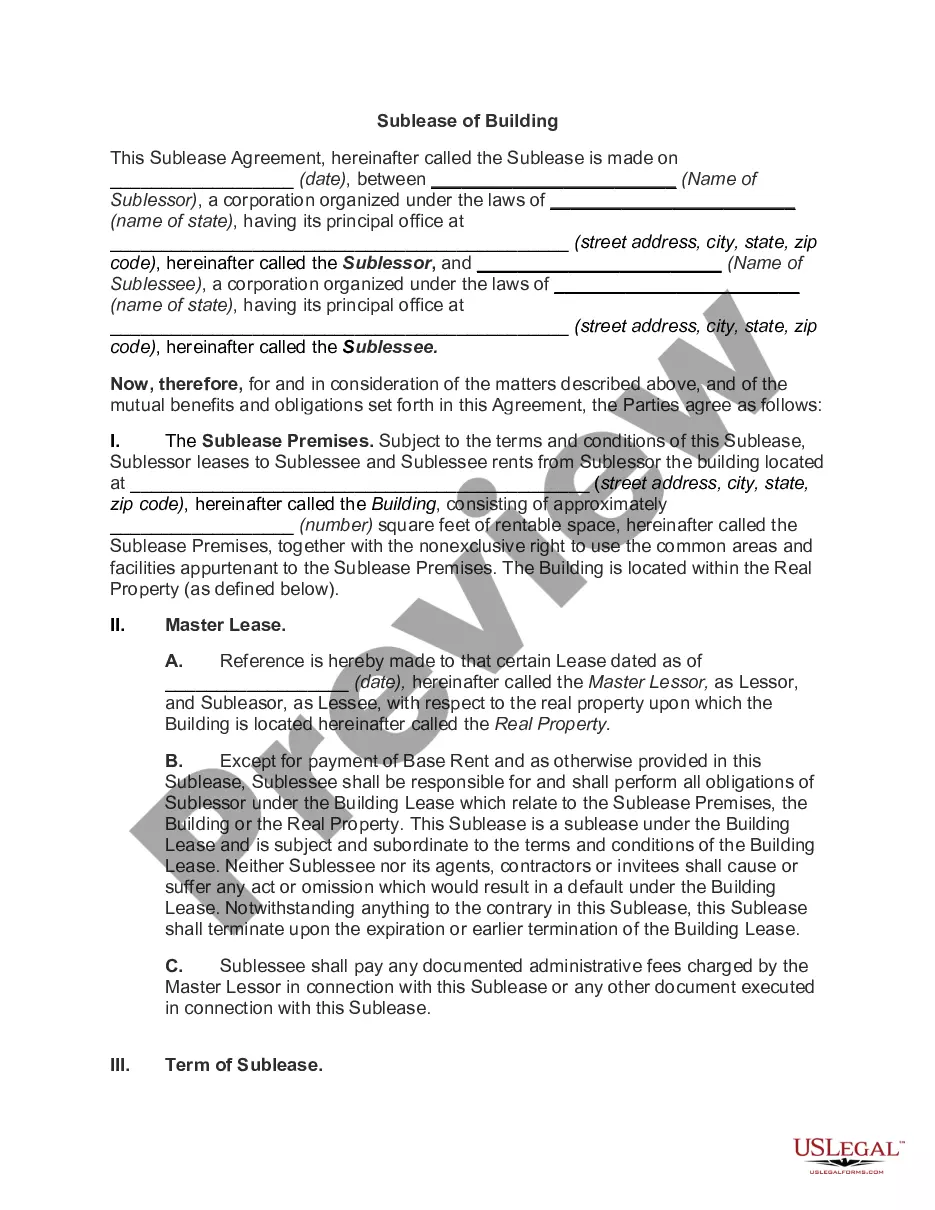
Common use cases
This form should be used when a tenant wishes to sublease their rental unit to another individual and needs formal permission from the landlord. It is commonly required in situations where the tenant may need to relocate temporarily, sublet a portion of their space, or accommodate other personal circumstances while maintaining compliance with their lease agreement.
Who can use this document
- Tenants who are currently leasing a property and wish to sublet it.
- Individuals seeking formal approval from their landlord before bringing a subtenant into their rental unit.
- Tenants looking to ensure they remain compliant with their lease terms while managing their occupation.
Completing this form step by step
- Identify the parties: Fill in your name as the tenant and the name of the prospective subtenant.
- Specify the property: Clearly state details about the rental property being subleased.
- Enter the necessary information: Include the occupation of the subtenant to provide relevant context.
- Document the date: Write the date on which the request is made to the landlord.
- Sign the form: Provide your signature to validate the request.
- Deliver the notice: Ensure the landlord receives the letter via the chosen method of delivery listed in the form.
Does this document require notarization?
This form does not typically require notarization to be legally valid. However, some jurisdictions or document types may still require it. US Legal Forms provides secure online notarization powered by Notarize, available 24/7 for added convenience.
Get your form ready online
Our built-in tools help you complete, sign, share, and store your documents in one place.
Make edits, fill in missing information, and update formatting in US Legal Forms—just like you would in MS Word.
Download a copy, print it, send it by email, or mail it via USPS—whatever works best for your next step.
Sign and collect signatures with our SignNow integration. Send to multiple recipients, set reminders, and more. Go Premium to unlock E-Sign.
If this form requires notarization, complete it online through a secure video call—no need to meet a notary in person or wait for an appointment.
We protect your documents and personal data by following strict security and privacy standards.

Make edits, fill in missing information, and update formatting in US Legal Forms—just like you would in MS Word.

Download a copy, print it, send it by email, or mail it via USPS—whatever works best for your next step.

Sign and collect signatures with our SignNow integration. Send to multiple recipients, set reminders, and more. Go Premium to unlock E-Sign.

If this form requires notarization, complete it online through a secure video call—no need to meet a notary in person or wait for an appointment.

We protect your documents and personal data by following strict security and privacy standards.
Avoid these common issues
- Failing to get written permission from the landlord before subleasing.
- Not providing complete information about the subtenant.
- Forgetting to sign and date the letter.
Why complete this form online
- Convenient access: Downloadable from anywhere at any time.
- Editability: Customize the form easily to fit specific needs.
- Reliability: Created by licensed attorneys to ensure legal compliance.
Looking for another form?
Form popularity
FAQ
Include the date, the tenant's full name and address at the top of the letter. Identify yourself as the landlord of the property and that you grant permission for the requested action. Add any additional conditions or provisions that must take place.
Name the parties. A simple rental agreement form needs to name the parties signing the lease and where they live. Describe the premises. Define the term of the lease. Set how much rent is owed. Assign a security deposit amount. Finalize the lease.
Subleasing occurs when the tenant transfers a part of their legal tenancy to a third-party as a new tenant.That means that if a new subtenant does not pay rent for three months, the original tenant that subleased the property is liable to the landlord for the overdue rent amount and any late fees.
Writing Your Sublease. State the name of the parties and the date of the contract. Identify the full names of each party and what their role is in the contract. The original leaseholder of the property is the Tenant and the person subletting the property is the Subtenant.
On your sublease agreement, include a list of various areas of the property (including the subtenant's room, hardwood floors, walls, exterior, etc.) and note its condition. And since you and your subtenant will need to abide by the original lease that you signed, it's important to include this with your sublease.
Record a liability calculated as the present value of the remaining minimum lease payments due under the original (head) lease, reduced by the present value of any estimated sublease income, Write off the deferred rent from the original lease, and. Record a loss on the income statement for the difference.
To show landlords that you care about the same things they care about, find ways to show them that you can truly afford the rent, that you can take care of their place and keep it in good shape, and that you aren't the kind of person to cause problems with other tenants or neighbours.
The landlord cannot refuse the assignment or sublet unless there is a good reason, such as the proposed tenant's inability to pay the rent or problematic behavior of this tenant. This is the case no matter what your lease or the building rules say.
Get your logistics together. Don't give your landlord much extra work (if any at all). Let your landlord know you're going to thoroughly screen applicants. Communicate with your landlord about how things are going with the subtenant.