Kentucky Quitclaim Deed from Husband and Wife to an Individual
Overview of this form
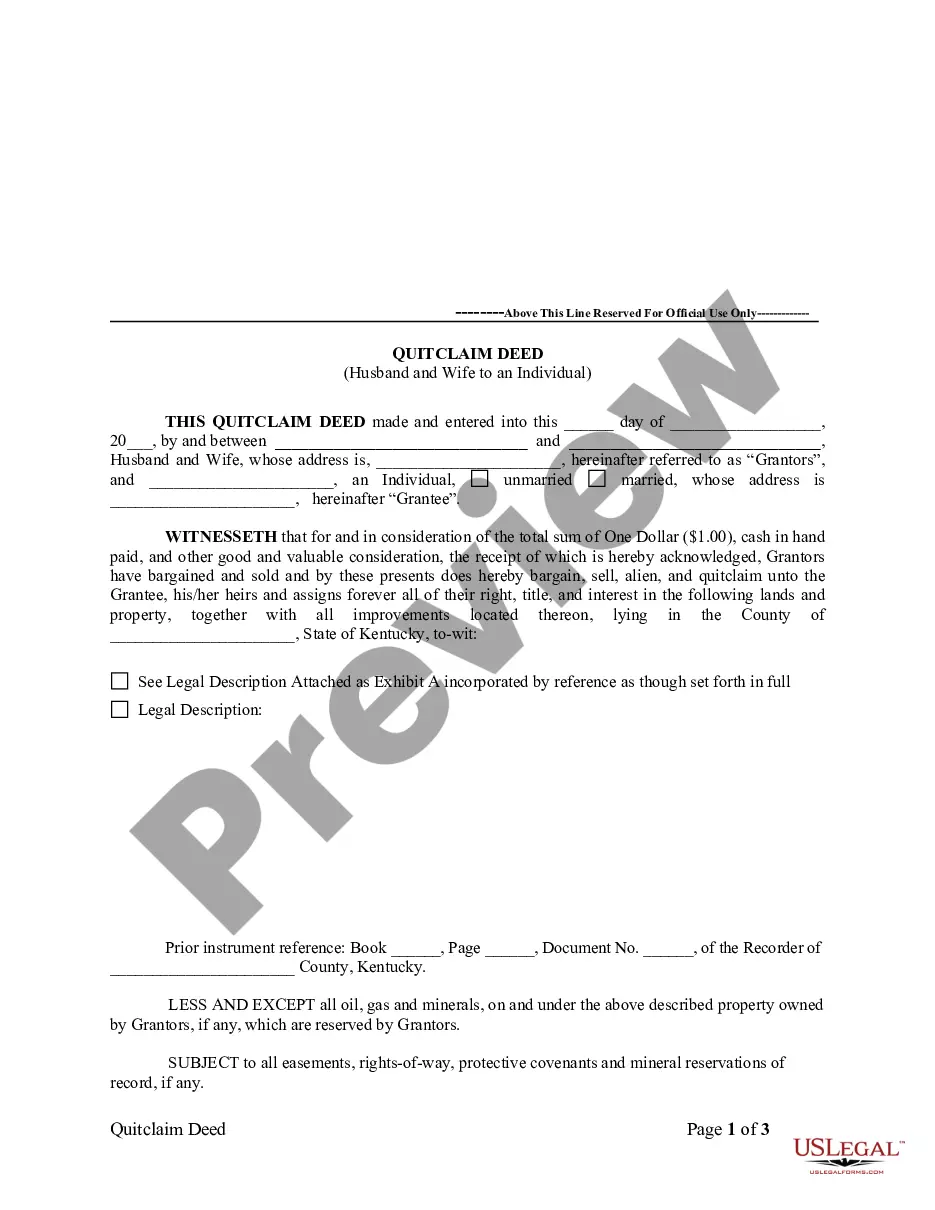
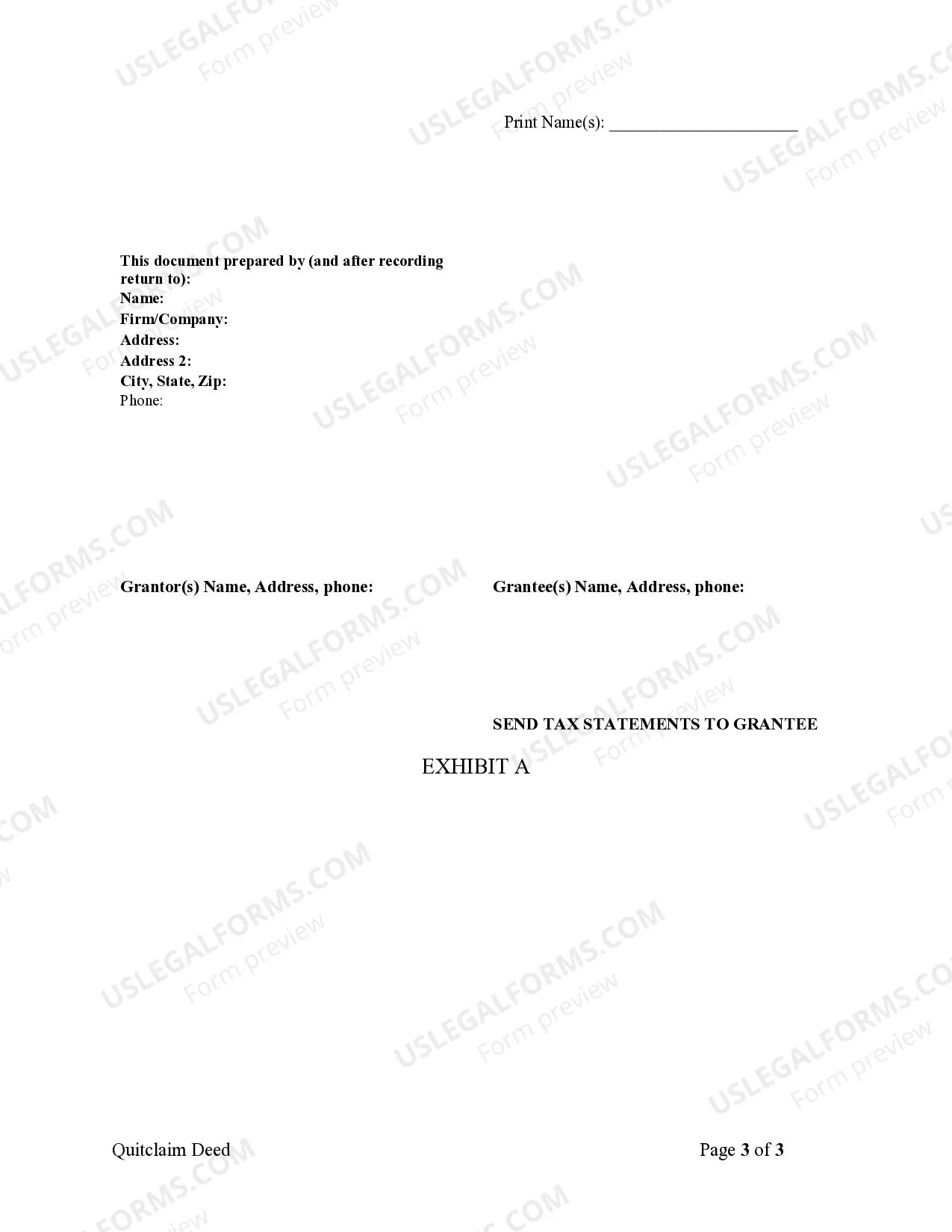
The Quitclaim Deed from Husband and Wife to an Individual is a legal document used to transfer ownership of real property from a married couple (the grantors) to an individual (the grantee). This type of deed allows the grantors to convey their interest in the property without guaranteeing or warranting that the title is clear. Unlike warranty deeds, which provide guarantees about the title, a quitclaim deed only releases any claim the grantors may have on the property.
Key components of this form
- Identification of grantors: Names and addresses of the husband and wife conveying the property.
- Identification of the grantee: Name and marital status of the individual receiving the property.
- Description of the property: Legal description of the property being transferred, including its location.
- Consideration: A statement acknowledging the payment (typically a nominal amount like one dollar).
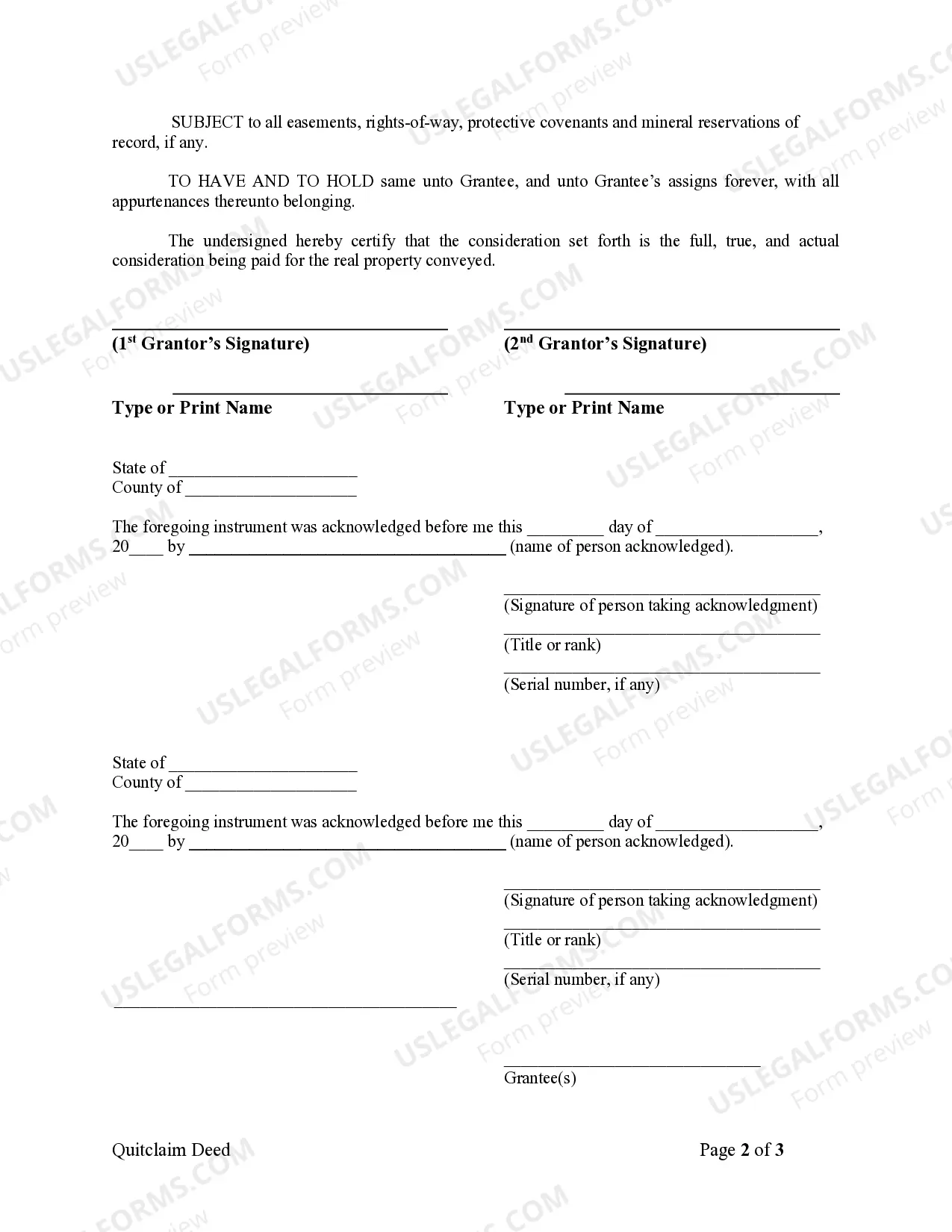
- Notary acknowledgment: A section for notarization to validate the signing of the deed.






Situations where this form applies
This form is typically used when a married couple wishes to transfer real estate to an individual without providing title warranties. It may be used in various situations, such as transferring property to a child, friend, or business associate, settling an estate, or simplifying property ownership after a divorce or separation. It is important to note that this deed does not address any claims or interests that may affect the property's title.
Who should use this form
This form is suitable for:
- Married couples who jointly own property and wish to transfer their interest to an individual.
- Individuals receiving property as a gift or inheritance from a married couple.
- Couples seeking to simplify their property ownership structure, such as after a divorce.
How to prepare this document
- Identify the parties: Write the names and addresses of the husband and wife (grantors) and the individual (grantee).
- Specify the property: Include a detailed legal description of the property being transferred, often attached as an exhibit.
- Enter the date: Fill in the date when the quitclaim deed is executed.
- Provide consideration: State the total consideration for the transfer, usually included as one dollar.
- Obtain notarization: Have the document signed in the presence of a notary public to validate the transaction.
Notarization requirements for this form
Yes, this form must be notarized to be legally valid. Notarization serves to verify the identity of the signers and their awareness of the document being executed. US Legal Forms provides integrated online notarization, allowing you to complete this process conveniently from home or any location via secure video call, ensuring your deed meets legal requirements without the need for travel.
Get your form ready online
Our built-in tools help you complete, sign, share, and store your documents in one place.
Make edits, fill in missing information, and update formatting in US Legal Forms—just like you would in MS Word.
Download a copy, print it, send it by email, or mail it via USPS—whatever works best for your next step.
Sign and collect signatures with our SignNow integration. Send to multiple recipients, set reminders, and more. Go Premium to unlock E-Sign.
If this form requires notarization, complete it online through a secure video call—no need to meet a notary in person or wait for an appointment.
We protect your documents and personal data by following strict security and privacy standards.

Make edits, fill in missing information, and update formatting in US Legal Forms—just like you would in MS Word.

Download a copy, print it, send it by email, or mail it via USPS—whatever works best for your next step.

Sign and collect signatures with our SignNow integration. Send to multiple recipients, set reminders, and more. Go Premium to unlock E-Sign.

If this form requires notarization, complete it online through a secure video call—no need to meet a notary in person or wait for an appointment.

We protect your documents and personal data by following strict security and privacy standards.
Mistakes to watch out for
- Failing to include the legal description of the property can lead to confusion about what is being transferred.
- Not obtaining notarization may result in the deed being rejected during recording.
- Incorrectly identifying the grantee's marital status can create complications or ambiguity in the deed.
- Leaving out signatures of both grantors or the notary can invalidate the document.
Why use this form online
- Convenient download and immediate access to the form.
- Editability allows users to fill in their specific information easily.
- Reliability in content that adheres to legal standards.
Key takeaways
- This quitclaim deed allows a husband and wife to transfer property ownership to an individual.
- It does not guarantee the title is free from claims or defects.
- The deed must be notarized and properly recorded to be effective.
- Understanding the limitations of a quitclaim deed is important when transferring property.
Looking for another form?
Form popularity
FAQ
Either (1) a sworn, notarized certificate signed by the grantor or his agent and the grantee or his agent, that the consideration reflected in the deed is the full consideration paid for the property, or (2) a sworn, notarized certificate signed by the grantor or his agent and the grantee or his agent, stating that the
Retrieve your original deed. Get the appropriate deed form. Draft the deed. Sign the deed before a notary. Record the deed with the county recorder. Obtain the new original deed.
Step 1: Find your KY quitclaim form. Step 2: Gather the information you need. Step 3: Enter the information about the parties. Step 4: File the deed in the County Clerk's office of the county where the property is located, along with the consideration certificate.
They are commonly used to add/remove someone to/from real estate title or deed (divorce, name changes, family and trust transfers). The quitclaim deed is a legal document (deed) used to transfer interest in real estate from one person or entity (grantor) to another (grantee).
But you might be wondering if an owner can transfer a deed to another person without a real estate lawyer. The answer is yes. Parties to a transaction are always free to prepare their own deeds.A quitclaim deed, for example, is far simpler than a warranty deed.
Technically, any seller (attorney or non-attorney) can prepare their own deed; however, it must contain all the correct language, for the specific situation, in order for it to do what you want it to do2026and in order for it to be acceptable for recording by the county clerk's office in the county in which the property
Basically it is exactly the same document. Title Deed is just a more common name that is used. The legal documentation submitted when transferring a property is called a Deed of Transfer.Next time you order a Title Deed and receive a Deed of Transfer, don't be alarmed, they are the same document.