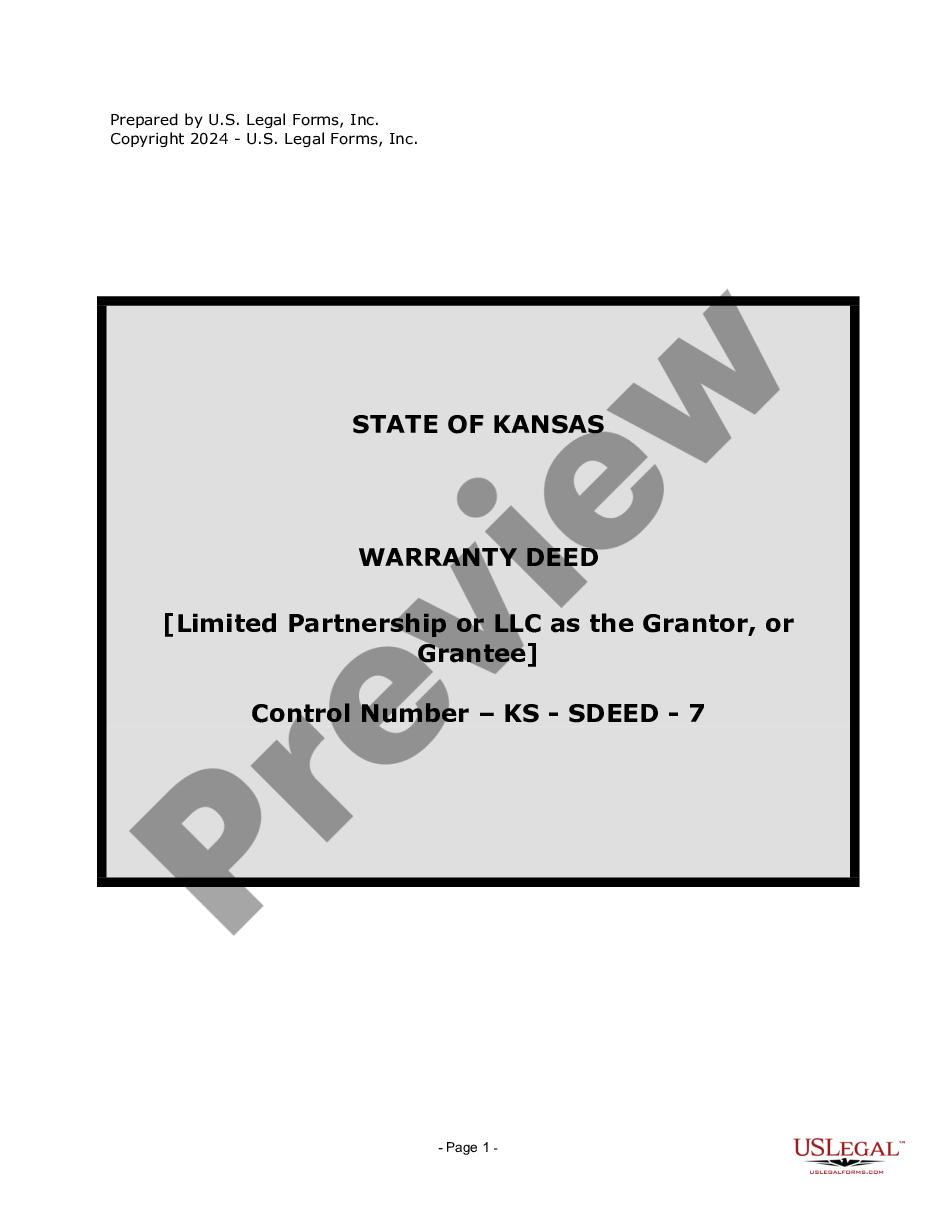
Kansas Warranty Deed from Limited Partnership or LLC is the Grantor, or Grantee
Overview of this form
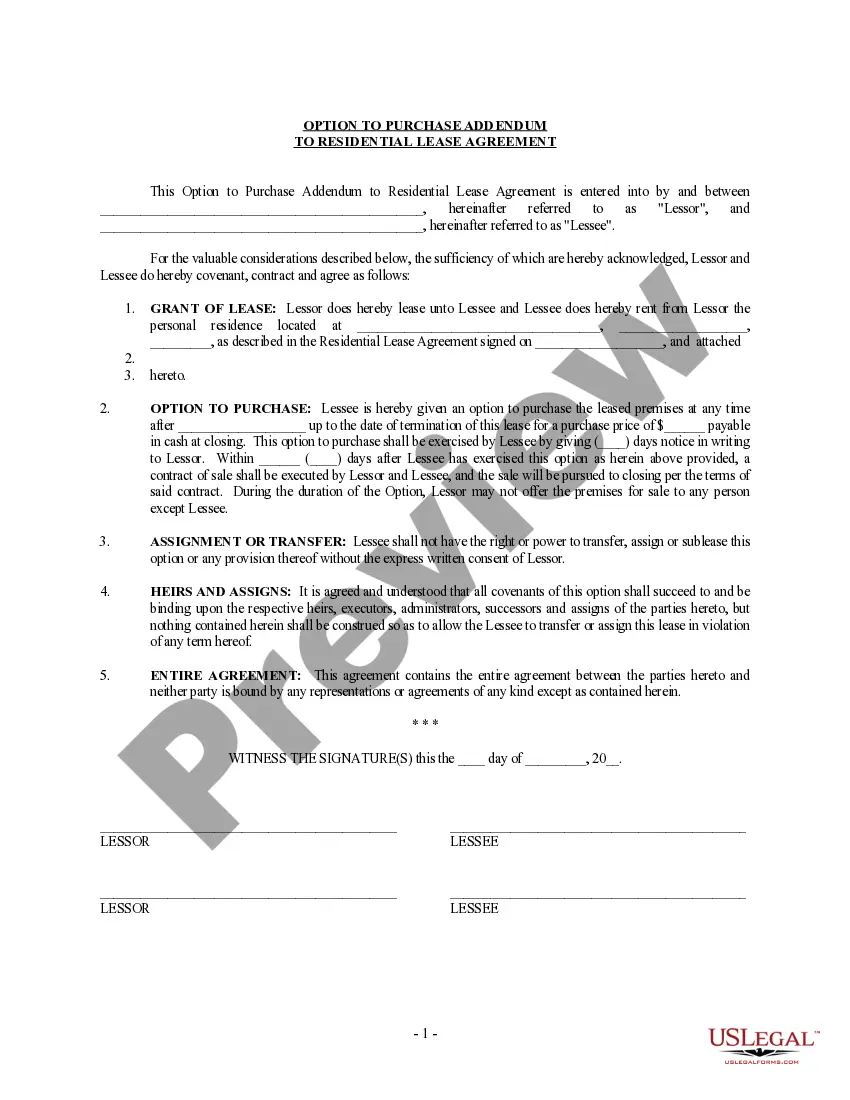
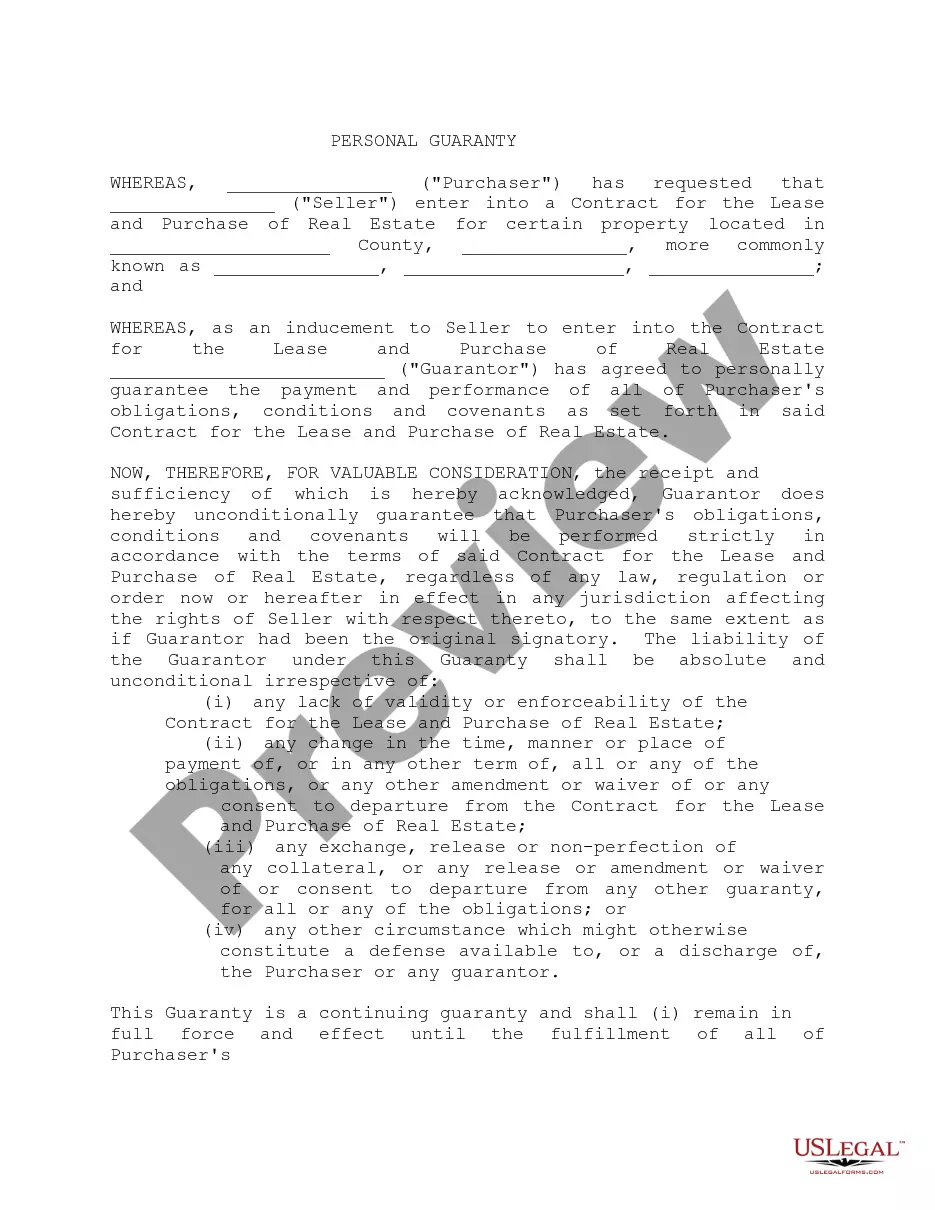
This Warranty Deed allows a limited partnership or limited liability company (LLC) to transfer property ownership. It serves as a legal document that guarantees the grantor holds a clear title to the property, making it free from encumbrances, unless otherwise stated. Unlike other types of deeds, this form specifically addresses the unique circumstances that arise when a business entity is involved in the transfer of property. It provides assurance to the grantee regarding the title's validity.
Main sections of this form
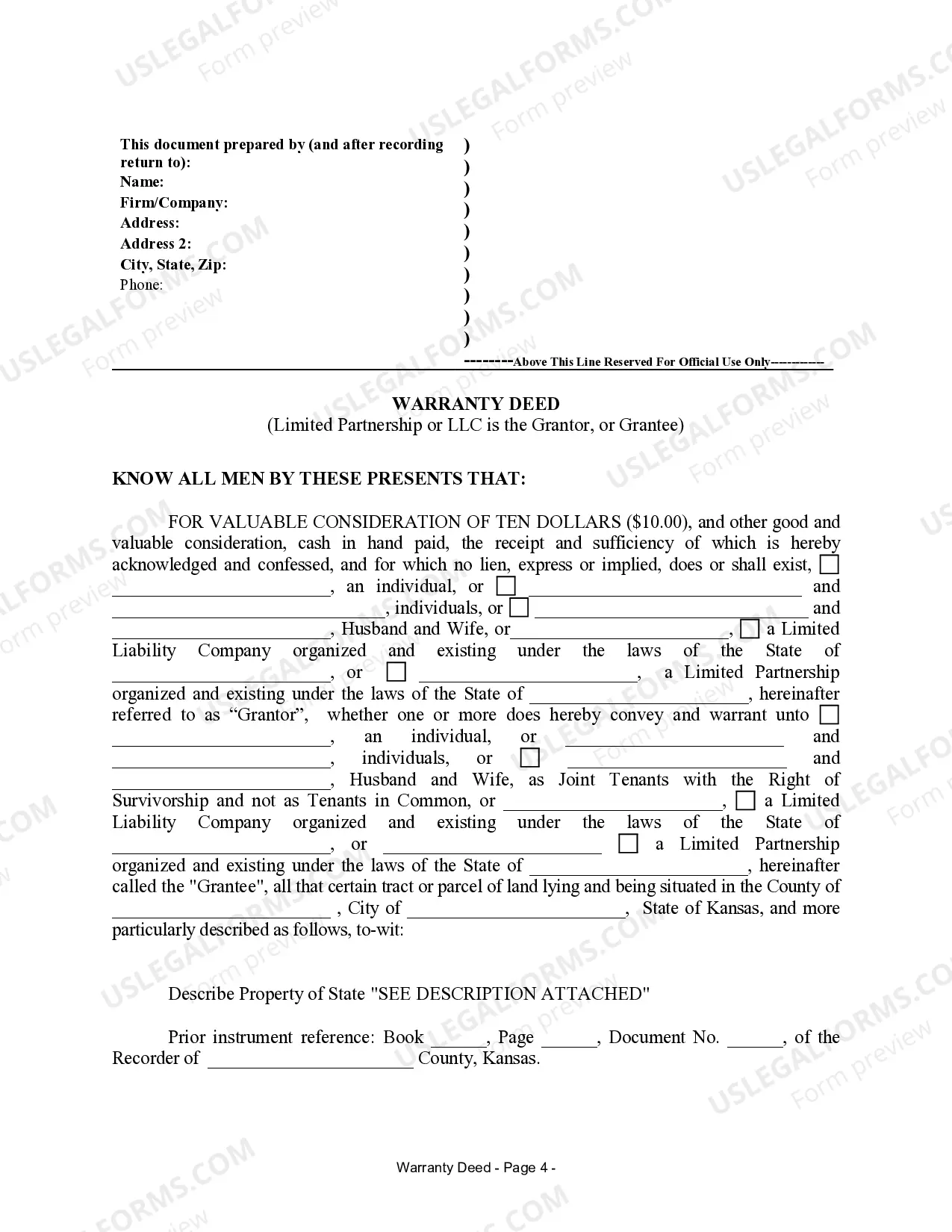
- Identification of the grantor and grantee as a limited partnership or LLC.
- Property description and legal description of the parcel being conveyed.
- Disclosure of any prior instruments related to the property.
- Clauses addressing covenants, warranties, and encumbrances on the title.
- Provisions regarding the proration of taxes between parties.
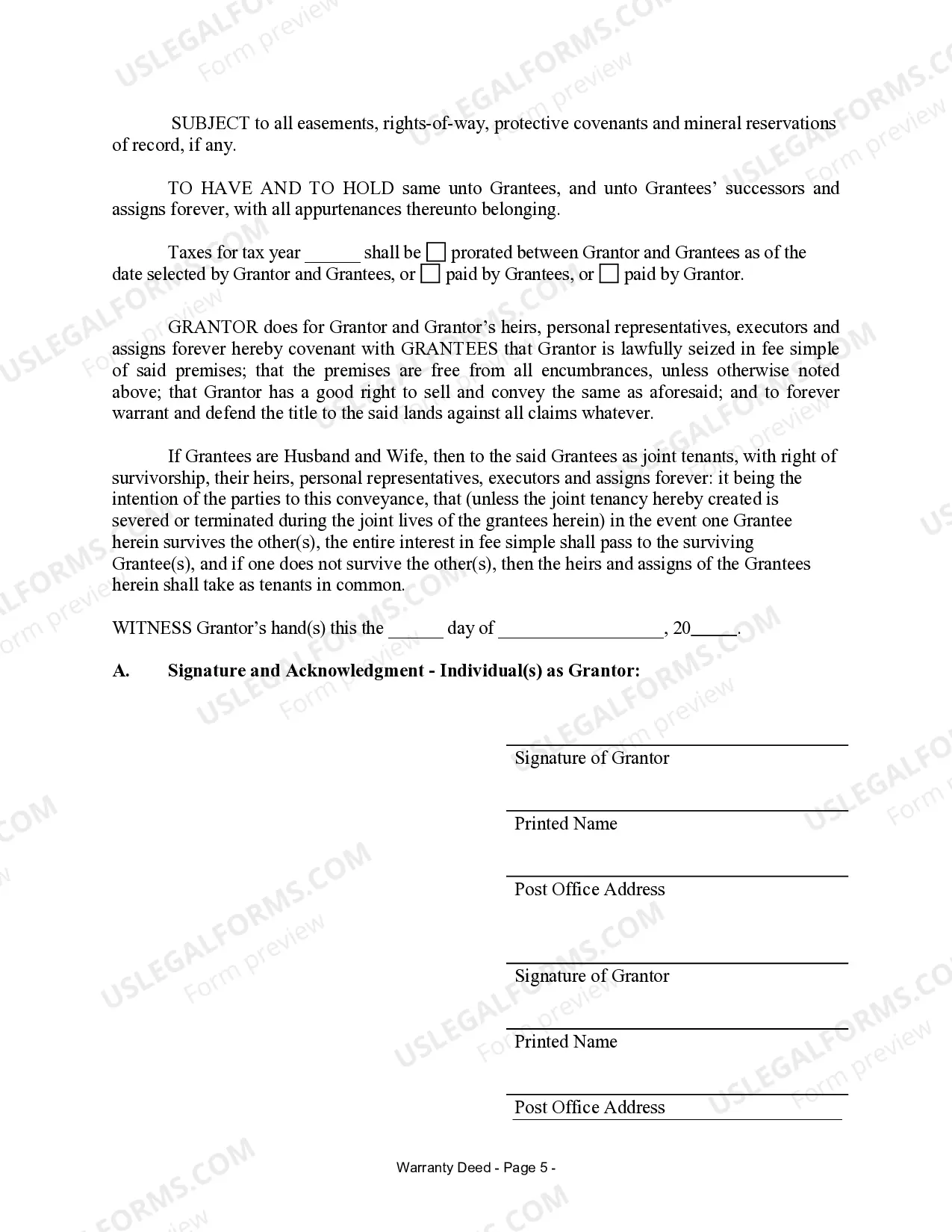
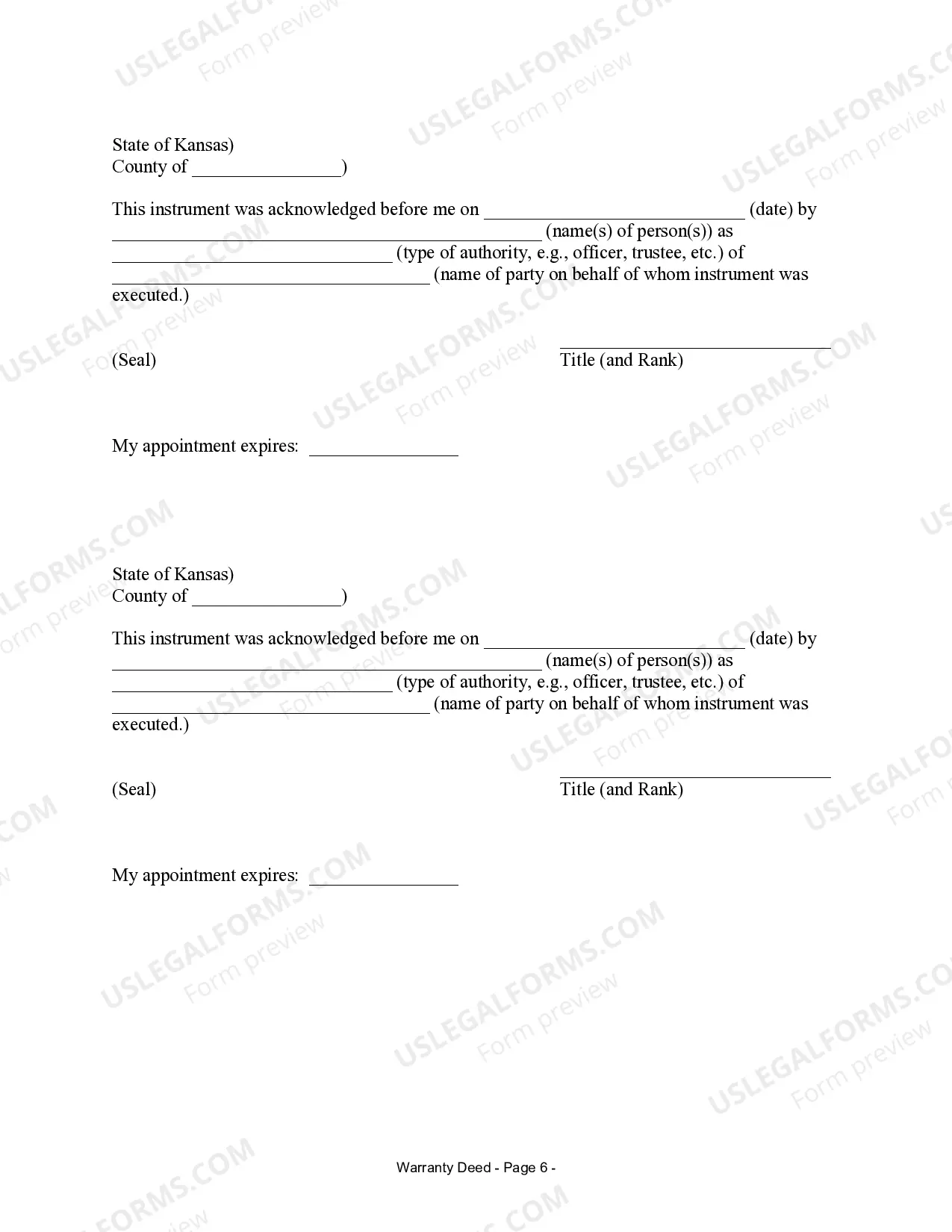
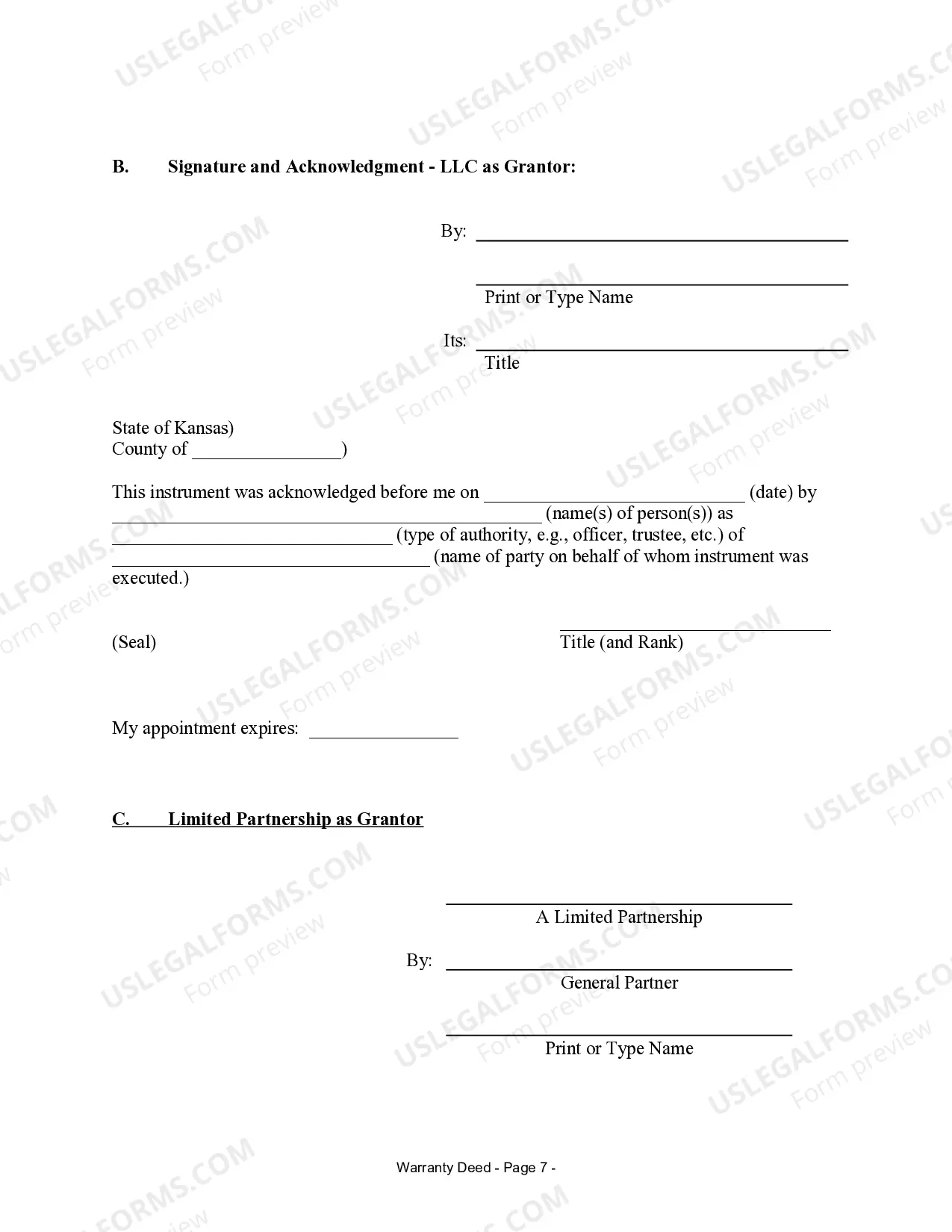
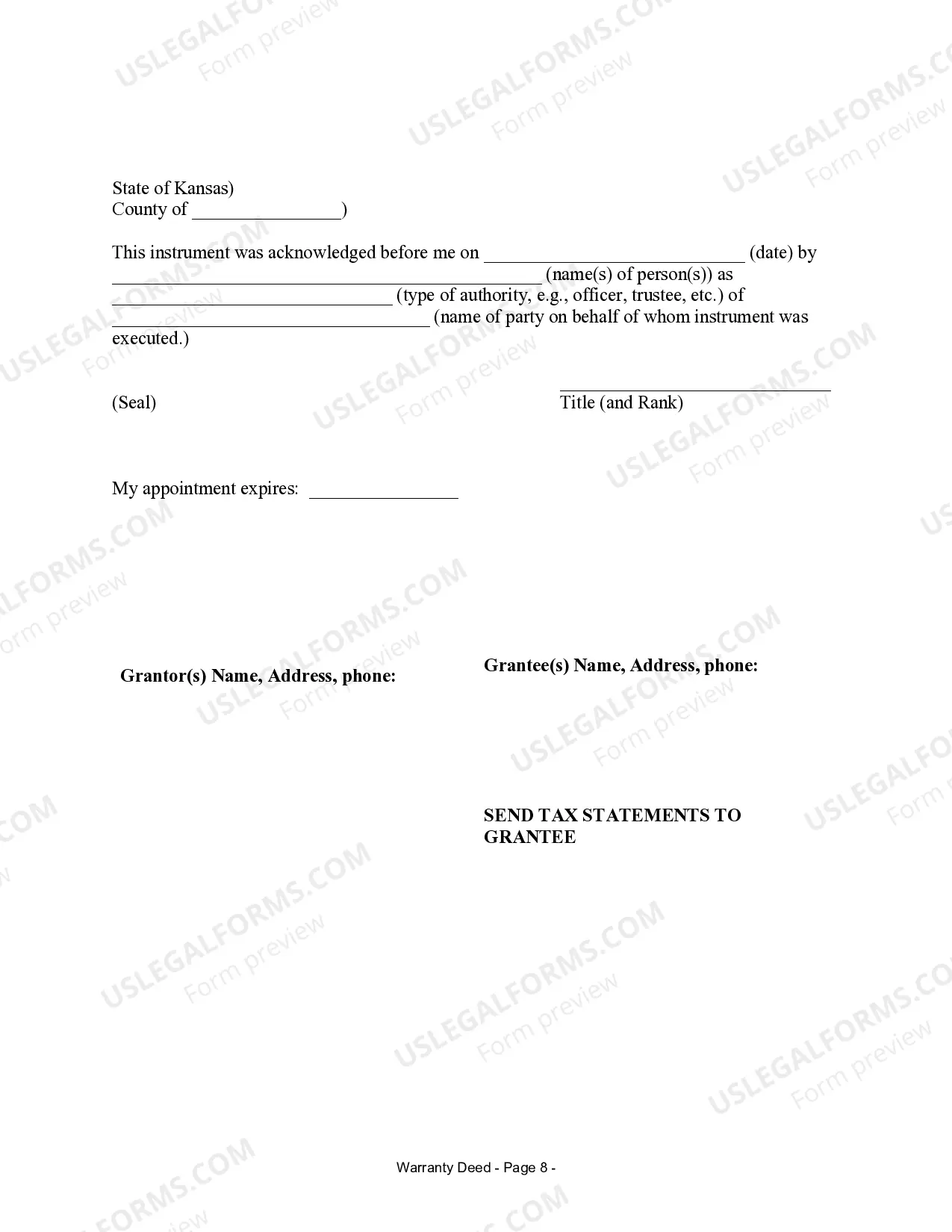
- Signature and notarization section for the grantor.





Common use cases
This Warranty Deed should be used when a limited partnership or LLC is either transferring property to another entity or individual, or receiving property from another grantor. It is a critical document in real estate transactions where the property title needs to be legally transferred while ensuring that the new owner receives full assurance of the ownership rights.
Who needs this form
This form is intended for:
- Limited partnerships and LLCs involved in real estate transactions.
- Individuals or entities seeking to receive property from a limited partnership or LLC.
- Attorneys seeking to facilitate property transfers for their clients in Kansas.
How to prepare this document
- Identify the grantor (limited partnership or LLC) and grantee.
- Provide a detailed description of the property being conveyed.
- Fill in the prior instrument reference number, including book, page, and document number.
- Specify the tax proration agreement between the grantor and grantee.
- Have the grantor sign and date the document in the designated area.
- Arrange for notarization of the deed to validate the transaction.
Does this form need to be notarized?
This document requires notarization to meet legal standards. US Legal Forms provides secure online notarization powered by Notarize, allowing you to complete the process through a verified video call, available 24/7.
Get your form ready online
Our built-in tools help you complete, sign, share, and store your documents in one place.
Make edits, fill in missing information, and update formatting in US Legal Forms—just like you would in MS Word.
Download a copy, print it, send it by email, or mail it via USPS—whatever works best for your next step.
Sign and collect signatures with our SignNow integration. Send to multiple recipients, set reminders, and more. Go Premium to unlock E-Sign.
If this form requires notarization, complete it online through a secure video call—no need to meet a notary in person or wait for an appointment.
We protect your documents and personal data by following strict security and privacy standards.

Make edits, fill in missing information, and update formatting in US Legal Forms—just like you would in MS Word.

Download a copy, print it, send it by email, or mail it via USPS—whatever works best for your next step.

Sign and collect signatures with our SignNow integration. Send to multiple recipients, set reminders, and more. Go Premium to unlock E-Sign.

If this form requires notarization, complete it online through a secure video call—no need to meet a notary in person or wait for an appointment.

We protect your documents and personal data by following strict security and privacy standards.
Common mistakes to avoid
- Failing to provide an accurate property description, leading to potential disputes.
- Not having the document notarized, which could render the deed invalid.
- Leaving out important information regarding prior property instruments.
- Not checking for existing encumbrances that must be addressed in the deed.
Benefits of completing this form online
- Convenient access to legally vetted documents that save time.
- Editability allows users to customize the form to fit their specific needs.
- Reliability and compliance with state-specific regulations ensure legal validity.
- Easy download and printing options for immediate use.
Looking for another form?

Form popularity
FAQ
A grantee is the recipient of something, such as a college grant or real estate property. A grantor is a person or entity that transfers to another person or entity the interest or ownership rights to an asset. Legal documents, such as deeds, detail the transfer of assets between grantors and grantees.
Grantor's signature: The grantor must sign the deed for it to be valid. Usually, if more than one person owns a property, all the owners must sign. In some states a husband or wife who own property by themselves may have to have the spouse also sign the deed even though the spouse does not have title to the property.
No, California does not require that the Grantee sign a warranty deed. However, some states and counties require that the deed be signed by the Grantee in addition to the Grantor.
It's important to note that a warranty deed does not actually prove the grantor has ownership (a title search is the best way to prove that), but it is a promise by the grantor that they are transferring ownership and if it turns out they don't actually own the property, the grantor will be responsible for compensating
To make the form legally binding, you must sign it in front of a notary public. You must then file your signed and notarized deed with the county office that's in charge of recording property documents. Once the grantee signs the warranty deed, he/she legally has ownership and claim to the property.
No, in most states, the Grantee is not required to sign the Quitclaim Deed. However, some counties do require that the Quitclaim Deed be signed by the Grantee in addition to the Grantor.
Typically, the lender will provide you with a copy of the deed of trust after the closing. The original warranty deeds are often mailed to the grantee after they are recorded. These are your original copies and should be kept in a safe place, such as a fireproof lockbox or a safe deposit box at a financial institution.
The grantor is the owner, and the grantee is the buyer who is acquiring an equitable interest but not bare legal interest in a property. It's essential that a deed clearly states the grantee, grantor, and a description of the property involved in the transaction.
The Grantor is any person conveying or encumbering, whom any Lis Pendens, Judgments, Writ of Attachment, or Claims of Separate or Community Property shall be placed on record. The Grantor is the seller (on deeds), or borrower (on mortgages). The Grantor is usually the one who signed the document.