Kansas Notice of Default on Residential Lease
What this document covers
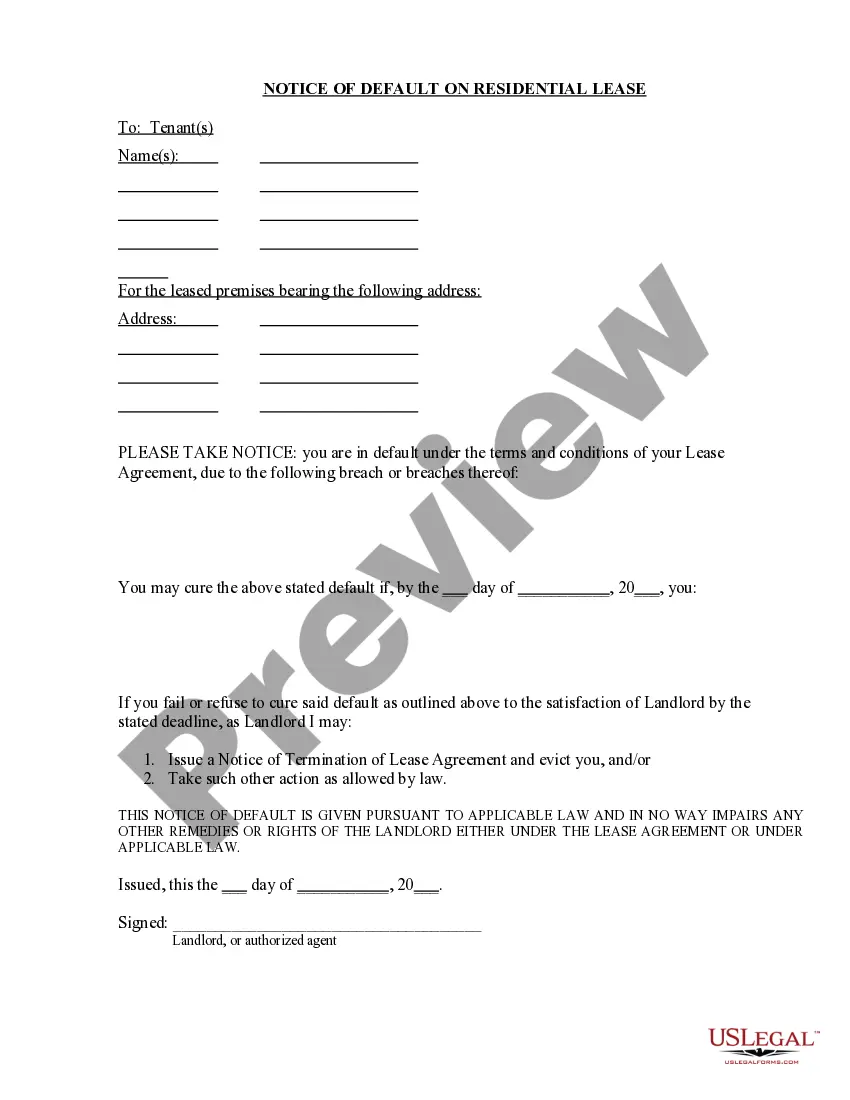
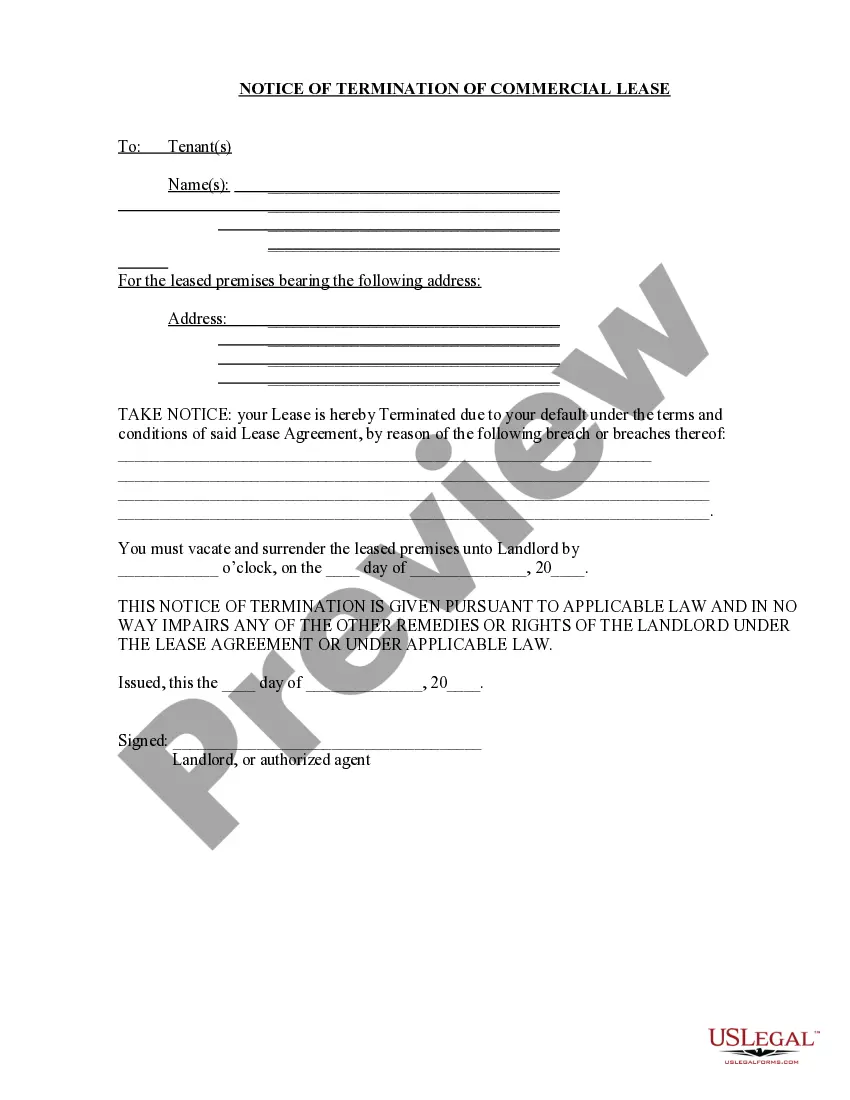
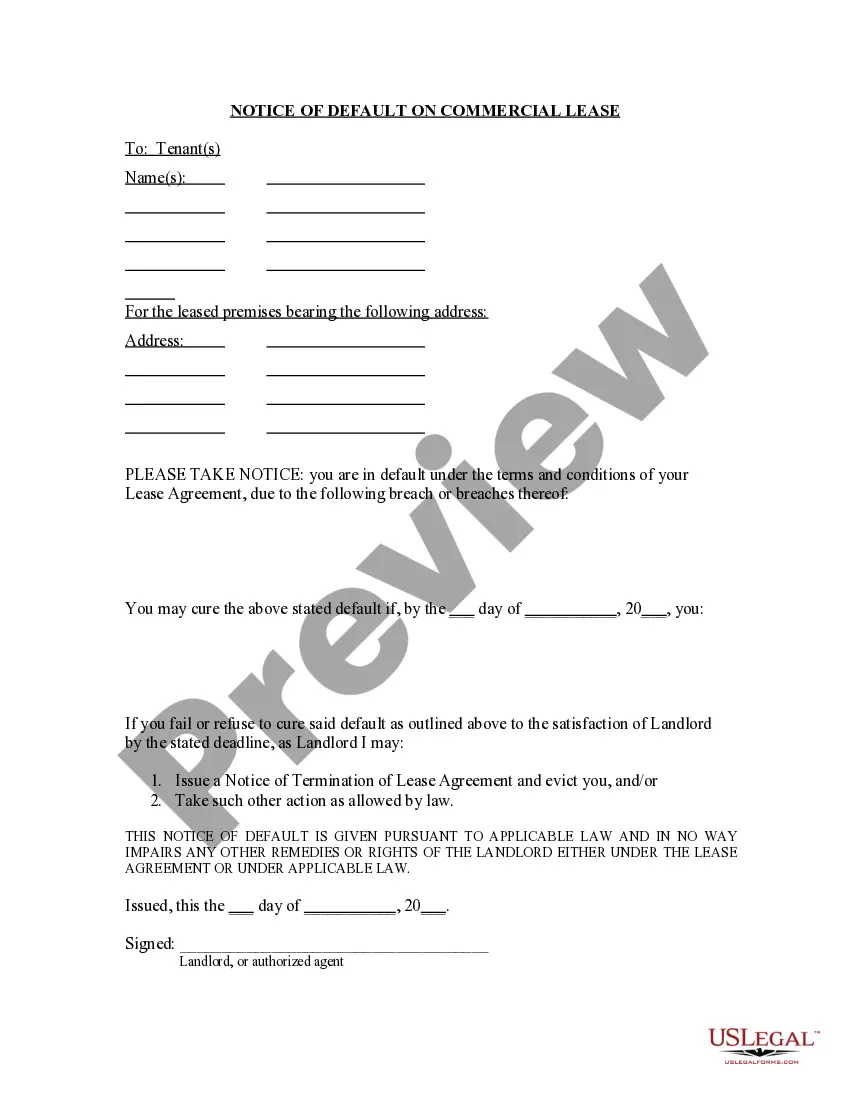
The Notice of Default on Residential Lease is a formal document used by landlords to inform tenants of a failure to comply with the terms of their lease agreement, specifically regarding rent payment. This notice outlines the specific reasons for the default and sets a deadline for the tenant to remedy the situation. By issuing this notice, landlords can protect their legal rights while providing tenants the opportunity to cure the default before further legal action, like eviction, is taken. This form differs from other landlord-tenant notices by explicitly detailing the reasons for default and the required actions to avoid lease termination.
Form components explained
- Identification of landlord and tenant parties.
- Specific reasons for the default.
- Established deadline for the tenant to remedy the situation.
- Signature of the landlord or authorized agent.
- Date of issuance of the notice.


Situations where this form applies
This notice should be used when a tenant fails to pay rent on time or violates other specific terms of the lease. It is an important preliminary step landlords must take before initiating eviction proceedings or applying security deposits to cover unpaid rent. Utilizing this notice allows landlords to formally alert tenants and provides them an opportunity to resolve any issues before further legal actions are considered.
Who needs this form
- Landlords looking to ensure compliance with lease agreements.
- Property managers who oversee rental properties and handle tenant relations.
- Real estate agents representing landlords in rental agreements.
- Tenants who have received a default notice and wish to understand their rights.
How to prepare this document
- Identify the parties involved by entering the landlord and tenant information.
- Specify the reasons for the default clearly within the appropriate section.
- Set a deadline for the tenant to cure the default.
- Sign the notice as the landlord or authorized agent.
- Enter the date of issuance for the notice.
Is notarization required?
This form does not typically require notarization unless specified by local law. If you have questions about specific requirements in your area, please consult local regulations.
Get your form ready online
Our built-in tools help you complete, sign, share, and store your documents in one place.
Make edits, fill in missing information, and update formatting in US Legal Forms—just like you would in MS Word.
Download a copy, print it, send it by email, or mail it via USPS—whatever works best for your next step.
Sign and collect signatures with our SignNow integration. Send to multiple recipients, set reminders, and more. Go Premium to unlock E-Sign.
If this form requires notarization, complete it online through a secure video call—no need to meet a notary in person or wait for an appointment.
We protect your documents and personal data by following strict security and privacy standards.

Make edits, fill in missing information, and update formatting in US Legal Forms—just like you would in MS Word.

Download a copy, print it, send it by email, or mail it via USPS—whatever works best for your next step.

Sign and collect signatures with our SignNow integration. Send to multiple recipients, set reminders, and more. Go Premium to unlock E-Sign.

If this form requires notarization, complete it online through a secure video call—no need to meet a notary in person or wait for an appointment.

We protect your documents and personal data by following strict security and privacy standards.
Common mistakes
- Failing to specify the exact reasons for the default.
- Not including a clear deadline for the tenant to respond.
- Omitting the signature of the landlord or authorized agent.
- Using vague language that may not meet legal standards.
Benefits of completing this form online
- Convenience of immediate download and use.
- Editability to customize for specific situations.
- Reliability, as the template is drafted by licensed attorneys.
Legal use & context
- Proper issuance of a Notice of Default is a key step in the eviction process.
- This form helps establish a legal basis for any future actions regarding lease termination.
- Understanding the timeframe for a tenant's response can prevent potential legal complications.
Main things to remember
- The Notice of Default is crucial for landlords in enforcing lease terms.
- Clear communication of the default and consequences is essential.
- Understanding state-specific requirements can prevent legal issues.
Looking for another form?
Form popularity
FAQ
At-will tenancy is subject to the will of both the tenant and the landlord (hence the name). In other words, the tenant can choose to leave and stop paying rent at any time, and the landlord can choose to stop accepting rent and ask the tenant to leave at any time.
If the leasing company repossesses your car, you'll owe a sum of money.If this happens you'll lose the car and also owe a sum of money to the leasing company. You'll be on the hook for the past-due amounts and also might have to pay the remaining lease balance, as well as certain costs and other amounts.
A default is a failure to comply with a provision in the lease. Curing or remedying the default means correcting the failure or omission. A common example is a failure to pay the rent on time.Typically a lease will give the parties adequate notice and time to fix the problem before more drastic action is taken.
Tenant default occurs when a Tenant breaches one of the tenant's covenants in its lease. Tenant default can arise in a number of different ways but will typically be for one of the following: Non-payment of rent or other sums reserved under the lease.
In landlord-tenant law, default refers to the failure of a tenant to timely pay rent due.In general, the landlord is required to give the tenant notice of the default before bringing eviction proceedings or applying security deposit proceeds to the payment in default.
Your lease agreement will state what constitutes a default of the lease as well as if there is any grace period in making lease payments. Not making a contractually required monthly payment will normally be a breach of the lease and the lessor can then repossess the vehicle from you.
If you pay all outstanding charges before moving, including any back rent and fees, breaking a lease won't hurt your credit score. However, breaking a lease can damage your credit if it results in unpaid debt.
Unless your lease says otherwise simply breaking it is not an option. This is known as "unilateral breach" and typical penalties can include: Paying the rent - One way or another, if you walk away from your lease and no one else rents the apartment then you will owe the landlord this money.