Kansas Revocation of Premarital or Prenuptial Agreement
Overview of this form
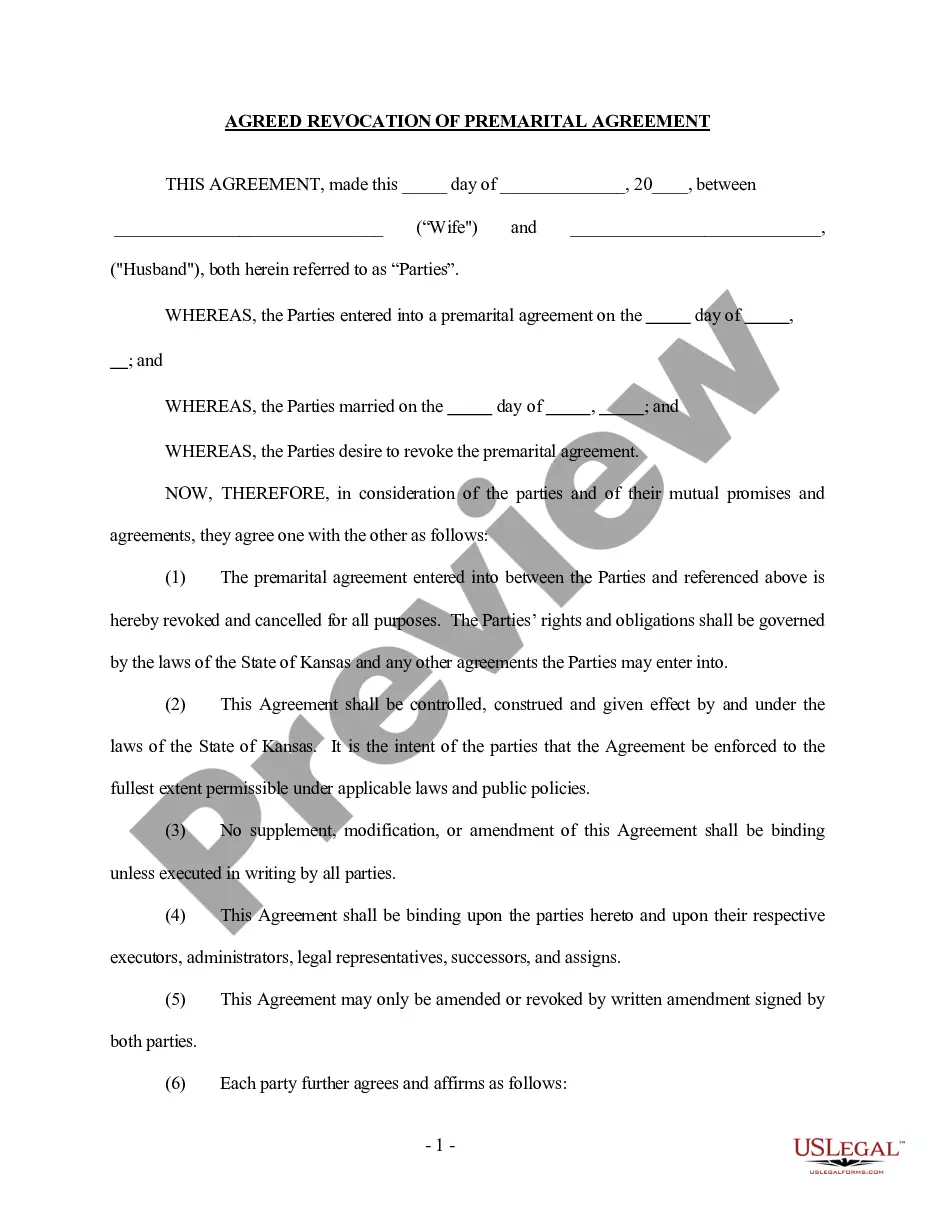
The Revocation of Premarital or Prenuptial Agreement is a legal document that allows a husband and wife to formally cancel their existing premarital agreement. This form ensures that the previous agreement is no longer binding and clarifies the parties' rights moving forward, governed by the laws of the state of Kansas. It differs from similar forms by specifically revoking past agreements rather than stating new terms or conditions.
Key components of this form
- Date of agreement execution
- Identification of both parties (husband and wife)
- Statement of revocation of the existing premarital agreement
- Governing law clause specifying the state of Kansas
- Binding effect on executors and successors
- Provision for amendment or modification of the agreement
Common use cases
This form should be used in scenarios where a couple wishes to revoke a previously signed prenuptial agreement, ensuring that it is no longer effective. This may arise after significant changes in circumstances, such as a shift in financial situations or a decision to unify assets fully. Couples should consider this form to eliminate confusion and to clarify their current legal standings.
Who should use this form
- Married couples who have a premarital or prenuptial agreement they wish to revoke
- Individuals seeking to clarify their marital financial arrangements
- Legal representatives or advisors assisting clients with marital agreements
How to prepare this document
- Enter the date of execution at the beginning of the form.
- Clearly identify both parties involved, including full names.
- Confirm the revocation of the existing premarital agreement by including a statement of revocation.
- Indicate that the agreement will be governed by the laws of the state of Kansas.
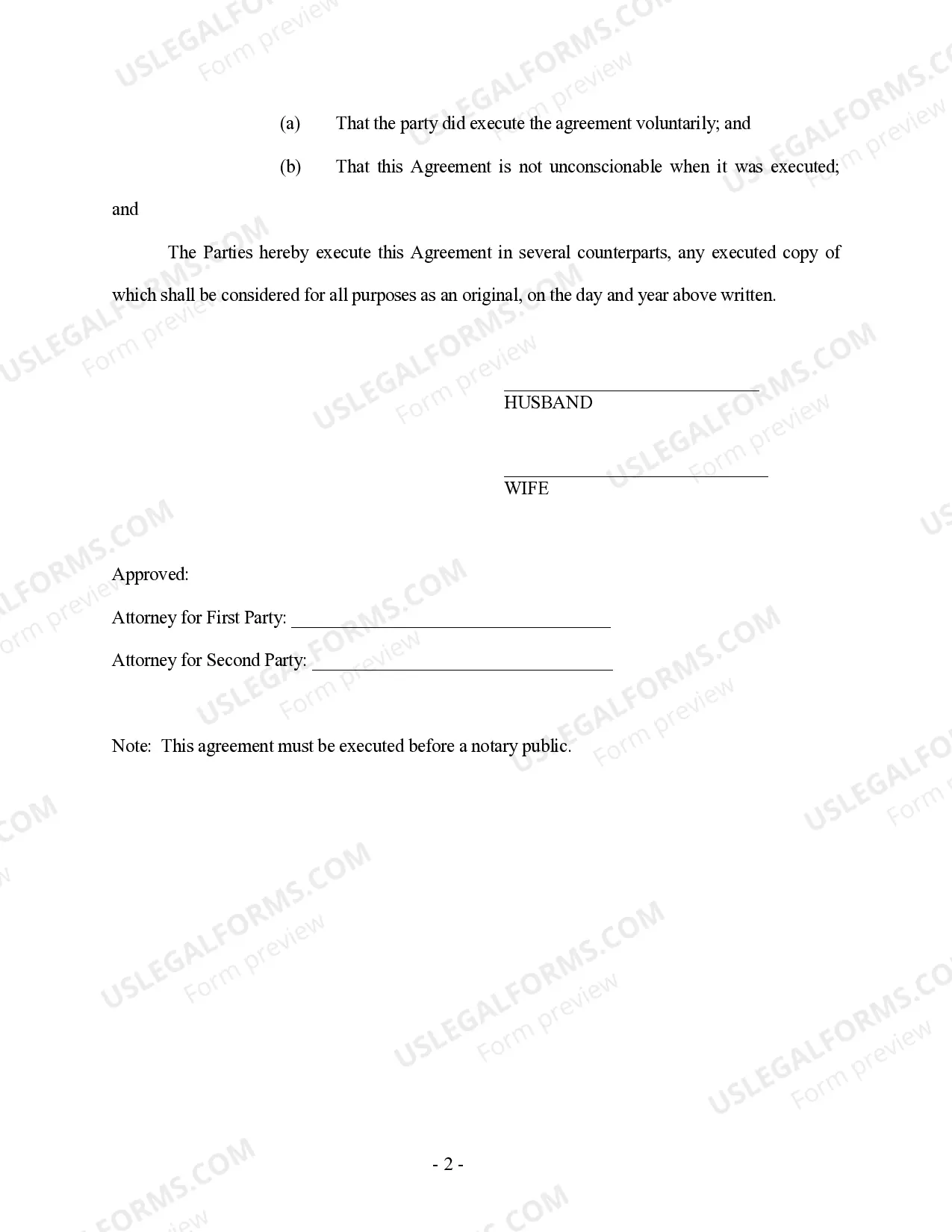
- Both parties should sign and date the agreement to finalize it.
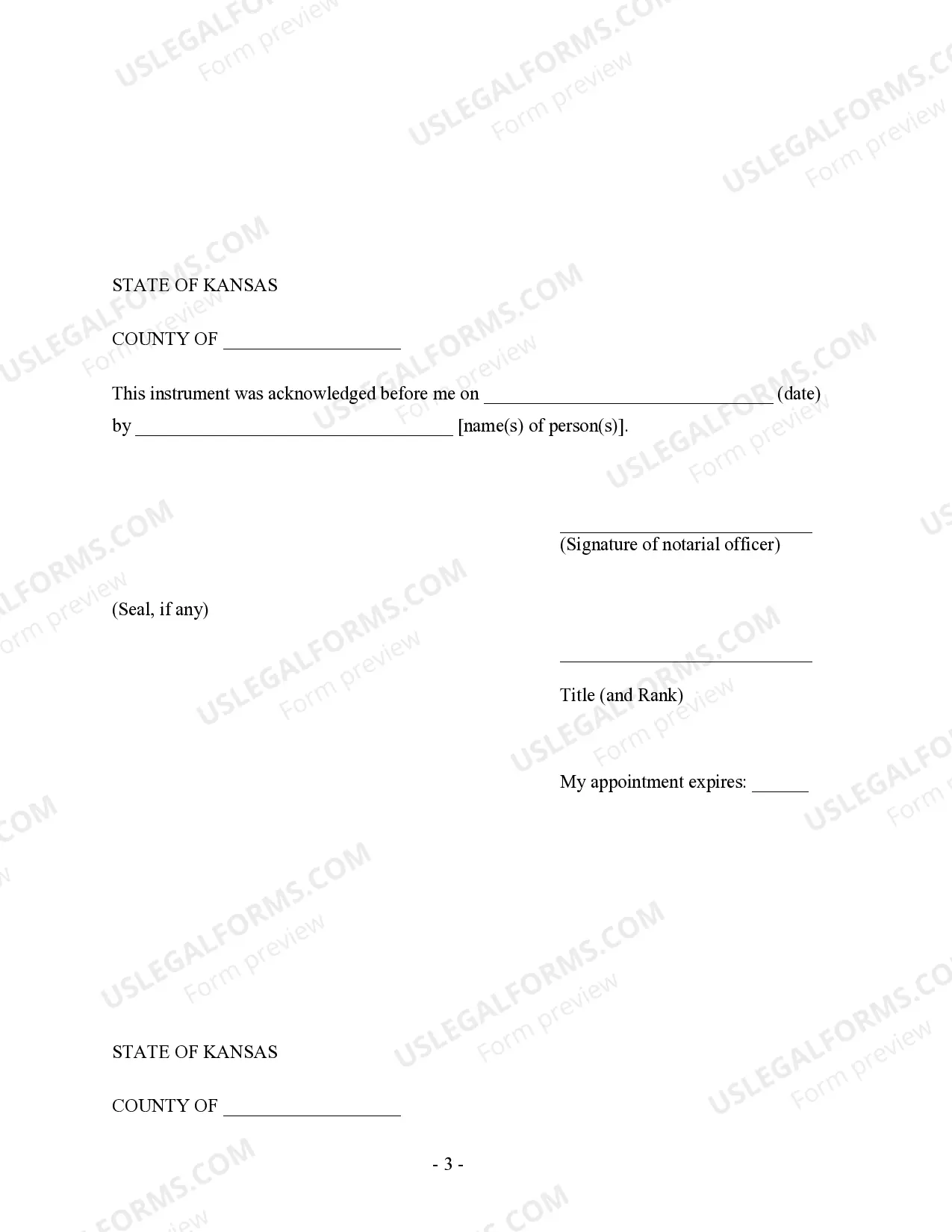
Notarization requirements for this form
This form does not typically require notarization to be legally valid. However, some jurisdictions or document types may still require it. US Legal Forms provides secure online notarization powered by Notarize, available 24/7 for added convenience.
Get your form ready online
Our built-in tools help you complete, sign, share, and store your documents in one place.
Make edits, fill in missing information, and update formatting in US Legal Forms—just like you would in MS Word.
Download a copy, print it, send it by email, or mail it via USPS—whatever works best for your next step.
Sign and collect signatures with our SignNow integration. Send to multiple recipients, set reminders, and more. Go Premium to unlock E-Sign.
If this form requires notarization, complete it online through a secure video call—no need to meet a notary in person or wait for an appointment.
We protect your documents and personal data by following strict security and privacy standards.

Make edits, fill in missing information, and update formatting in US Legal Forms—just like you would in MS Word.

Download a copy, print it, send it by email, or mail it via USPS—whatever works best for your next step.

Sign and collect signatures with our SignNow integration. Send to multiple recipients, set reminders, and more. Go Premium to unlock E-Sign.

If this form requires notarization, complete it online through a secure video call—no need to meet a notary in person or wait for an appointment.

We protect your documents and personal data by following strict security and privacy standards.
Avoid these common issues
- Failing to date the document correctly.
- Omitting signatures from one or both parties.
- Not specifying the exact premarital agreement being revoked.
- Using unclear or ambiguous language in the revocation clause.
Benefits of completing this form online
- Immediate access to a professionally drafted legal document, saving you time.
- The ability to edit and customize the form to suit your specific needs.
- Secure storage and easy downloading for future reference.
- Guidance available to assist you through the completion process.
Legal use & context
- The revocation of the premarital agreement is legally binding once executed by both parties.
- It clarifies that the existing agreement is no longer effective, preventing future disputes.
- Legal advice is encouraged to understand the full implications of revoking the agreement.
Main things to remember
- The Revocation of Premarital or Prenuptial Agreement allows couples to cancel previous agreements effectively.
- Complete the form with accurate information and signatures from both parties.
- Consult local laws if unsure about notarization or other legal implications.
Looking for another form?






Form popularity
FAQ
The three most common grounds for nullifying a prenup are unconscionability, failure to disclose, or duress and coercion. Unconscionability may be present if the agreement is patently unfair to one party.
A prenup can also be overturned if one or both parties change their mind after initially signing the agreement. They may decide at that time to sign a new agreement suspending the prenup.
The agreement was signed under fraud or duress; The agreement is unconscionable; The circumstances of the parties have changed, making the agreement unenforceable at this time.
Turning to the execution of the agreement itself, a spouse can challenge the validity of a prenuptial agreement if he/she can prove the agreement was not entered into voluntary or with sufficient disclosure. Evidence of coercion, fraud, duress, or the incapacity of a spouse can all serve to invalidate the contract.
The three most common grounds for nullifying a prenup are unconscionability, failure to disclose, or duress and coercion.Duress and coercion can also invalidate a prenup. If the prenup was signed the day before your wedding, it may appear that the parties didn't have much time to fully review the agreement.
A prenuptial agreement can be changed or canceled, provided this what both parties want.Remember, a single partner in the marriage can't change or cancel the prenuptial agreement by themselvesthey must have the agreement and signature of the other party.
A prenup can also be overturned if one or both parties change their mind after initially signing the agreement. They may decide at that time to sign a new agreement suspending the prenup.
No, you cannot get a prenup if you are already married.You can still sign a postnuptial agreement (or postnup), which achieves the same goals as a prenup in most cases. Prenups are a common step before marriage. Texas community property rules are the reason why prenups are common in Texas.
These documents need to be revised, refreshed, updated and reaffirmed through a post-nuptial agreement on a regular basis. This is advised every five years, but at the very least, couples should re-affirm their agreements every 10 years. Failing to do so could cause a prenup to appear stale and outdated to the court.