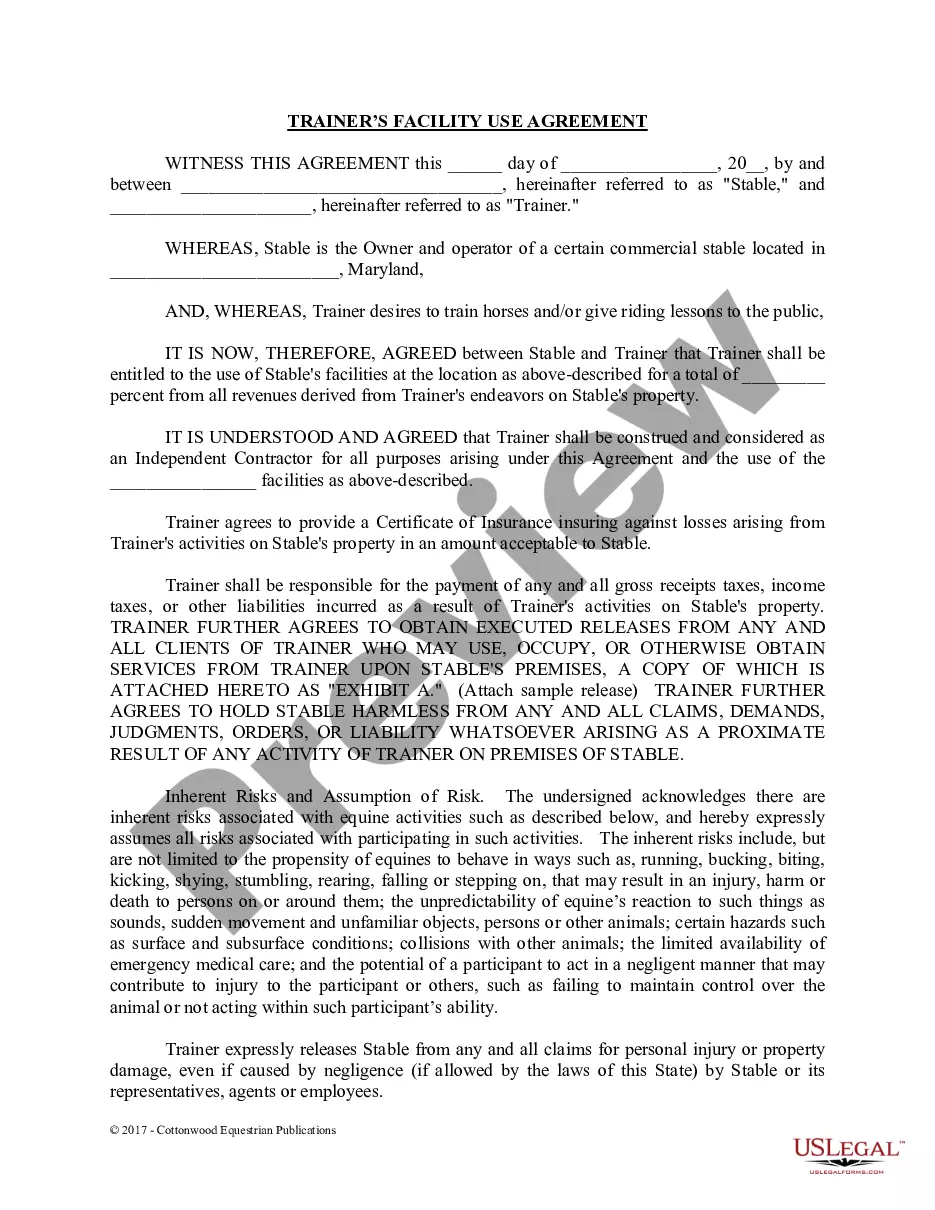
Kansas Renovation Contract for Contractor
What this document covers
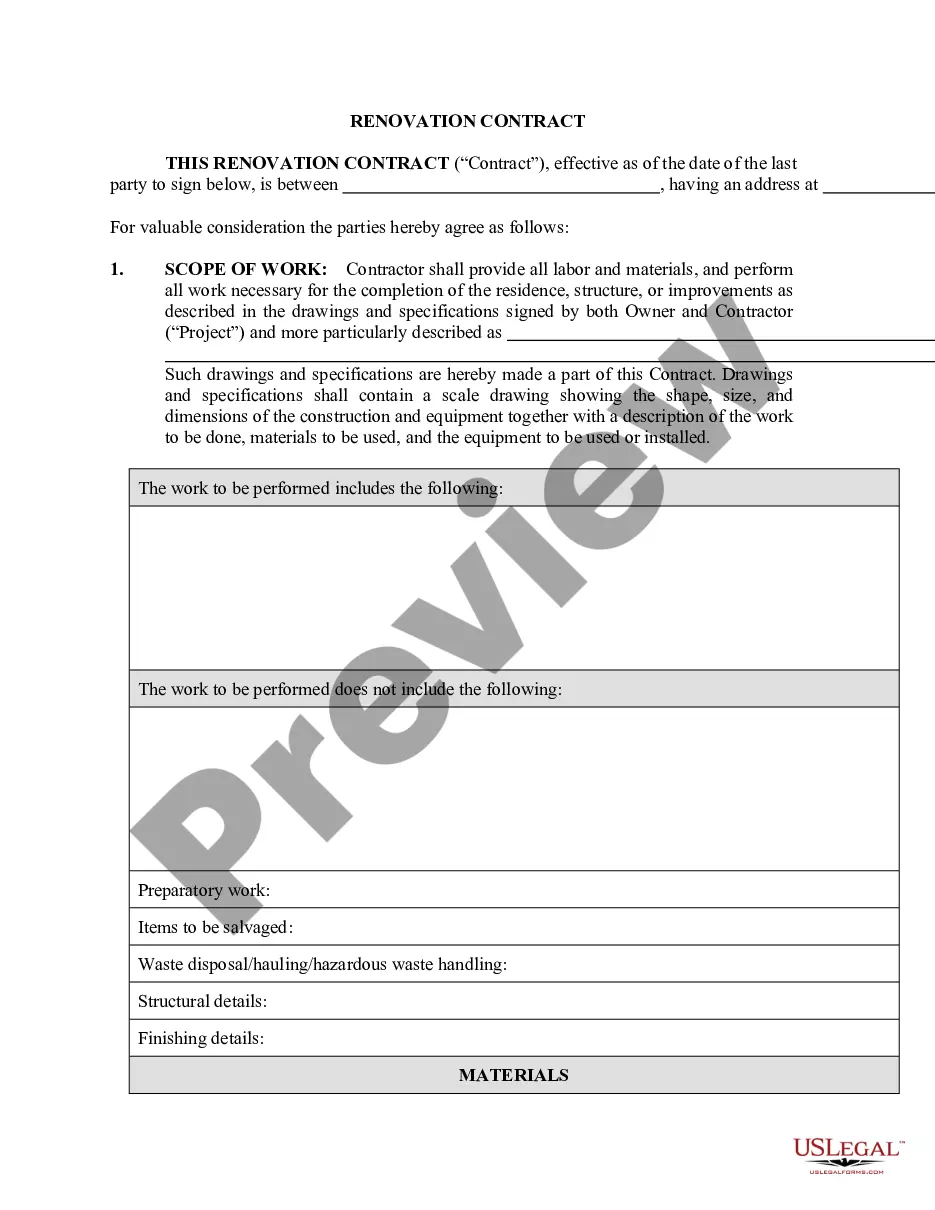
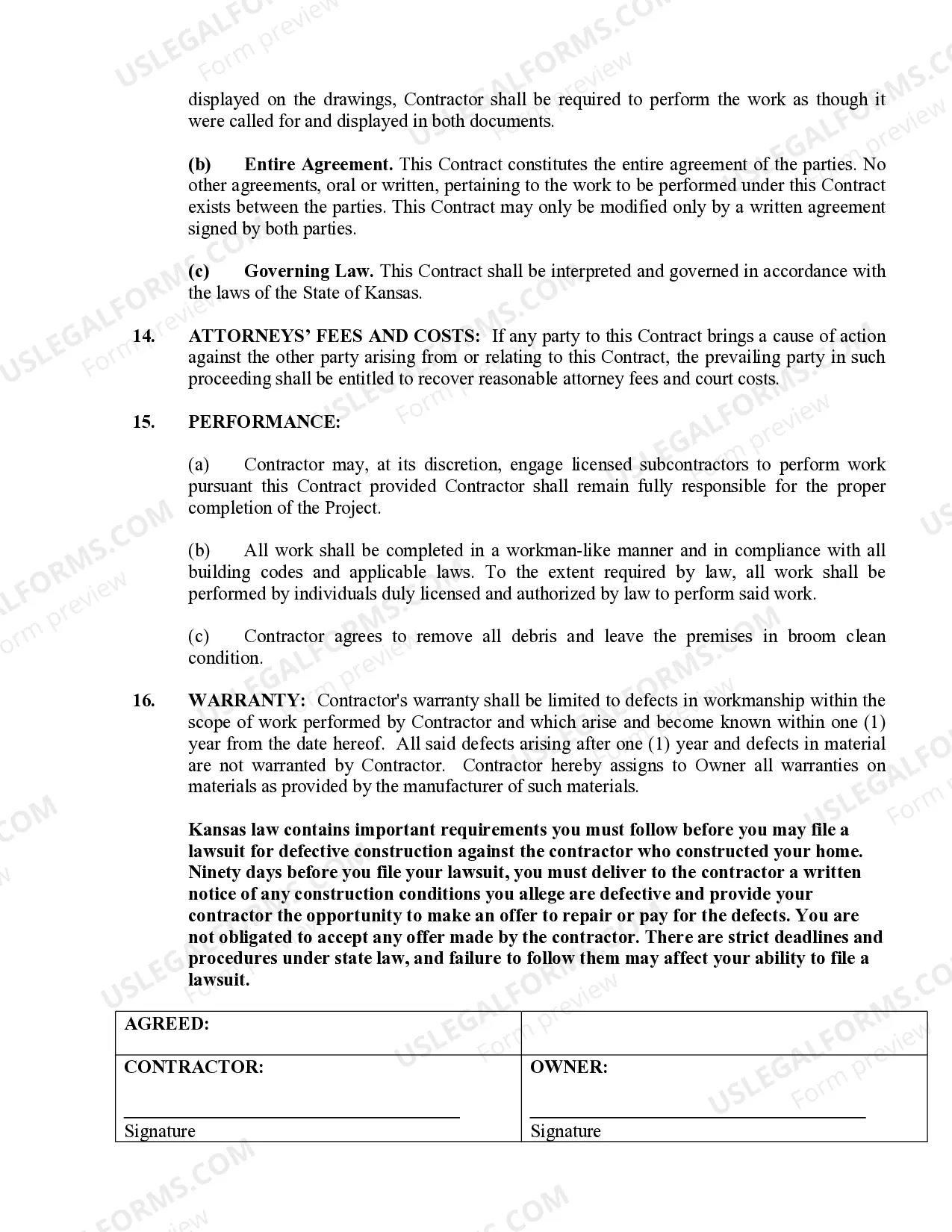
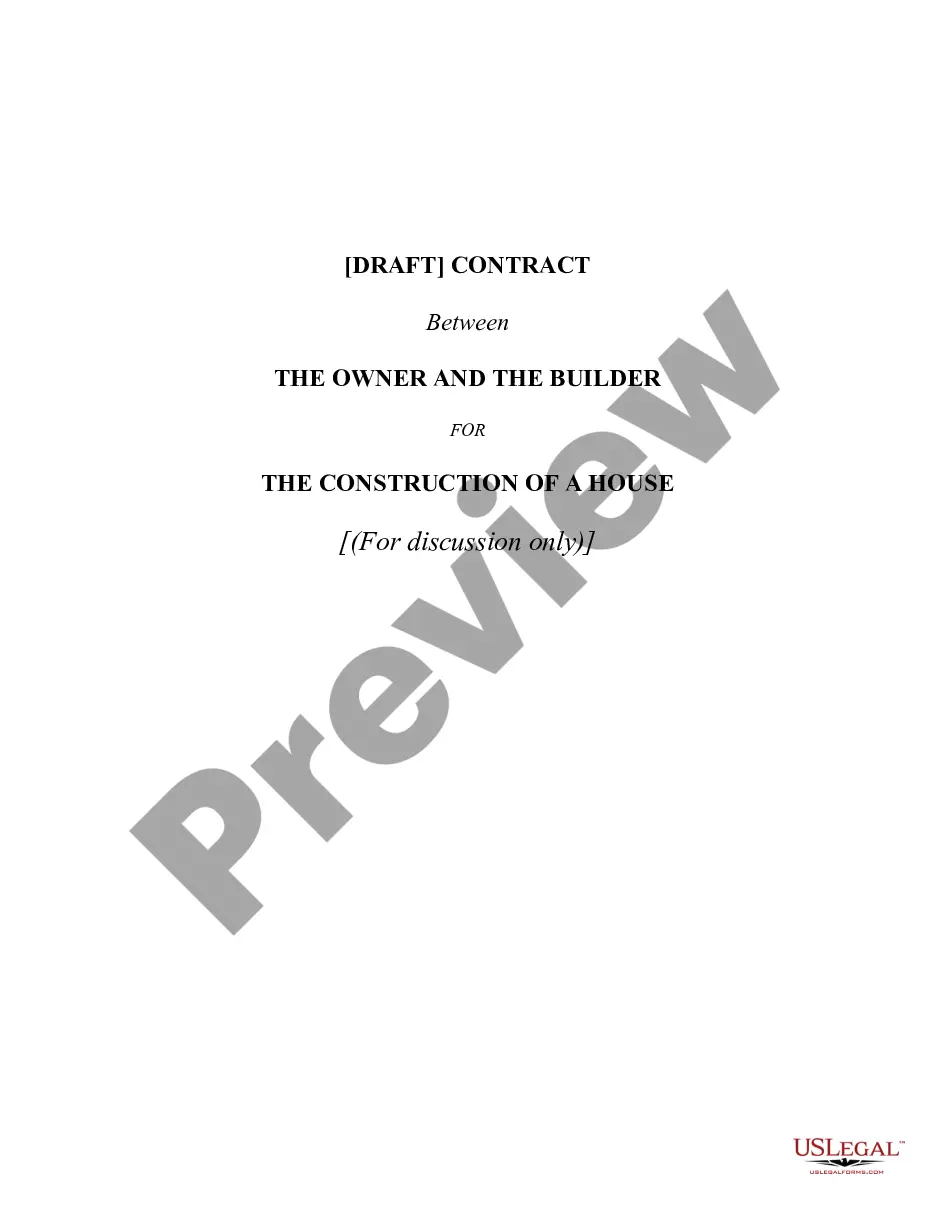
The Renovation Contract for Contractor is a legal document that sets the terms between renovation contractors and property owners, whether the payment is based on a cost plus model or a fixed fee arrangement. This contract addresses critical aspects of the construction project, including change orders, work site details, warranty, and insurance, ensuring compliance with the laws of Kansas.
Main sections of this form
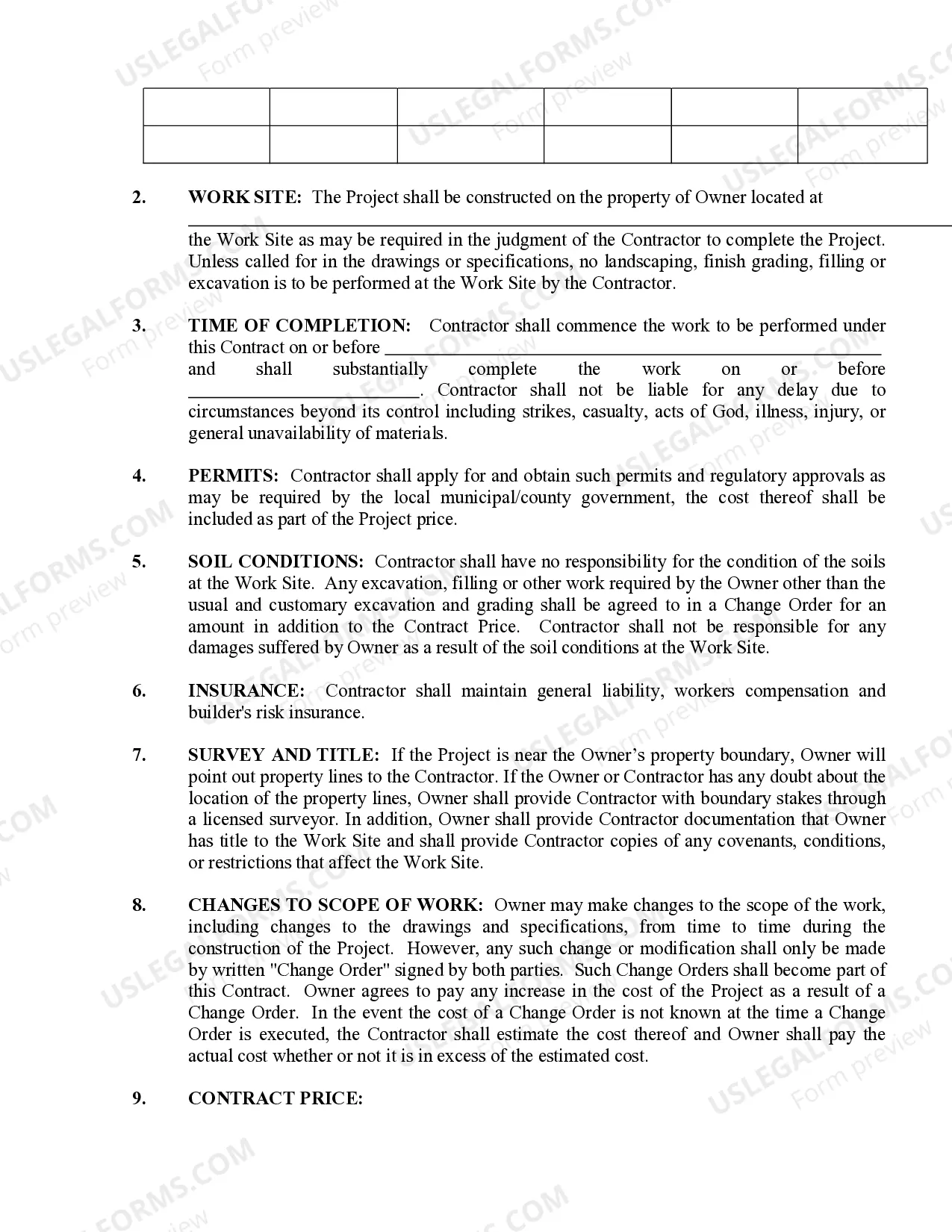
- Permits: Contractor applies for necessary permits, included in the project price.
- Soil conditions: The contractor is not responsible for soil conditions at the work site.
- Insurance: Contractor must maintain general liability, workers compensation, and builders risk insurance.
- Survey and title: Owner must provide property lines and proof of title if the project is near boundaries.
- Changes to scope of work: Any changes must be documented in a signed Change Order.



When to use this document
This form is essential when a property owner wishes to engage a contractor for renovation work. It is particularly useful in situations where the project involves significant changes, where clear communication about responsibilities and permissions is necessary, or when navigating legal compliance in Kansas.
Who this form is for
- Property owners looking to hire a contractor for renovation projects.
- Contractors who need to establish clear terms with property owners.
- Individuals entering into a cost plus or fixed fee arrangement for construction work.
Instructions for completing this form
- Identify the parties involved: Clearly state the contractor's and property owner's names.
- Specify the project details: Describe the scope of work, including any specific renovations.
- Detail payment terms: Select whether the contract will be based on a fixed fee or cost plus arrangement.
- Review the insurance requirements: Ensure the contractor's insurance coverage is documented.
- Obtain necessary signatures: Make sure both parties sign the contract to validate it.
Does this form need to be notarized?
In most cases, this form does not require notarization. However, some jurisdictions or signing circumstances might. US Legal Forms offers online notarization powered by Notarize, accessible 24/7 for a quick, remote process.
Get your form ready online
Our built-in tools help you complete, sign, share, and store your documents in one place.
Make edits, fill in missing information, and update formatting in US Legal Forms—just like you would in MS Word.
Download a copy, print it, send it by email, or mail it via USPS—whatever works best for your next step.
Sign and collect signatures with our SignNow integration. Send to multiple recipients, set reminders, and more. Go Premium to unlock E-Sign.
If this form requires notarization, complete it online through a secure video call—no need to meet a notary in person or wait for an appointment.
We protect your documents and personal data by following strict security and privacy standards.

Make edits, fill in missing information, and update formatting in US Legal Forms—just like you would in MS Word.

Download a copy, print it, send it by email, or mail it via USPS—whatever works best for your next step.

Sign and collect signatures with our SignNow integration. Send to multiple recipients, set reminders, and more. Go Premium to unlock E-Sign.

If this form requires notarization, complete it online through a secure video call—no need to meet a notary in person or wait for an appointment.

We protect your documents and personal data by following strict security and privacy standards.
Avoid these common issues
- Failing to include specific project details, leading to misunderstandings.
- Not specifying payment arrangements clearly.
- Overlooking necessary permits or regulatory approvals.
- Not obtaining all required signatures on the agreement.
Benefits of completing this form online
- Immediate access to a professionally drafted contract tailored to Kansas laws.
- Easy editing and customization to fit specific project needs.
- Downloadable format allows for quick printing and signing.
- Reliable resources, guided by legal standards, ensure peace of mind.
Looking for another form?

Form popularity
FAQ
Terms. This is the first section of any agreement or contract and states the names and locations of the parties involved. Responsibilities & Deliverables. Payment-Related Details. Confidentiality Clause. Contract Termination. Choice of Law.
Name of contractor and contact information. Name of homeowner and contact information. Describe property in legal terms. List attachments to the contract. The cost. Failure of homeowner to obtain financing. Description of the work and the completion date. Right to stop the project.
Name of contractor and contact information. Name of homeowner and contact information. Describe property in legal terms. List attachments to the contract. The cost. Failure of homeowner to obtain financing. Description of the work and the completion date. Right to stop the project.
Identifying/Contact Information. Title and Description of the Project. Projected Timeline and Completion Date. Cost Estimate and Payment Schedule. Stop Work Clause and Stop Payment Clause. Act of God Clause. Change Order Agreement. Warranty.
Check Contract Basics. The basic job of a contractor agreement is to spell out the scope of the project's work. Set a Payment Schedule. Schedule Start and End Dates. Specify Change Orders. Research Your Arbitration Options. Turn Down the Contractor's Warranty.
The IRS requires contractors to fill out a Form W-9, request for Taxpayer Identification Number and Certification, which you should keep on file for at least four years after the hiring. This form is used to request the correct name and Taxpayer Identification Number, or TIN, of the worker or their entity.
Get it in writing. Keep it simple. Deal with the right person. Identify each party correctly. Spell out all of the details. Specify payment obligations. Agree on circumstances that terminate the contract. Agree on a way to resolve disputes.
For most types of projects you hire an independent contractor (IC) to do, the law does not require you to put anything in writing. You can meet with the IC, agree on the terms of your arrangement, and have an oral contract or agreement that is legally binding. Just because you can doesn't mean you should, however.