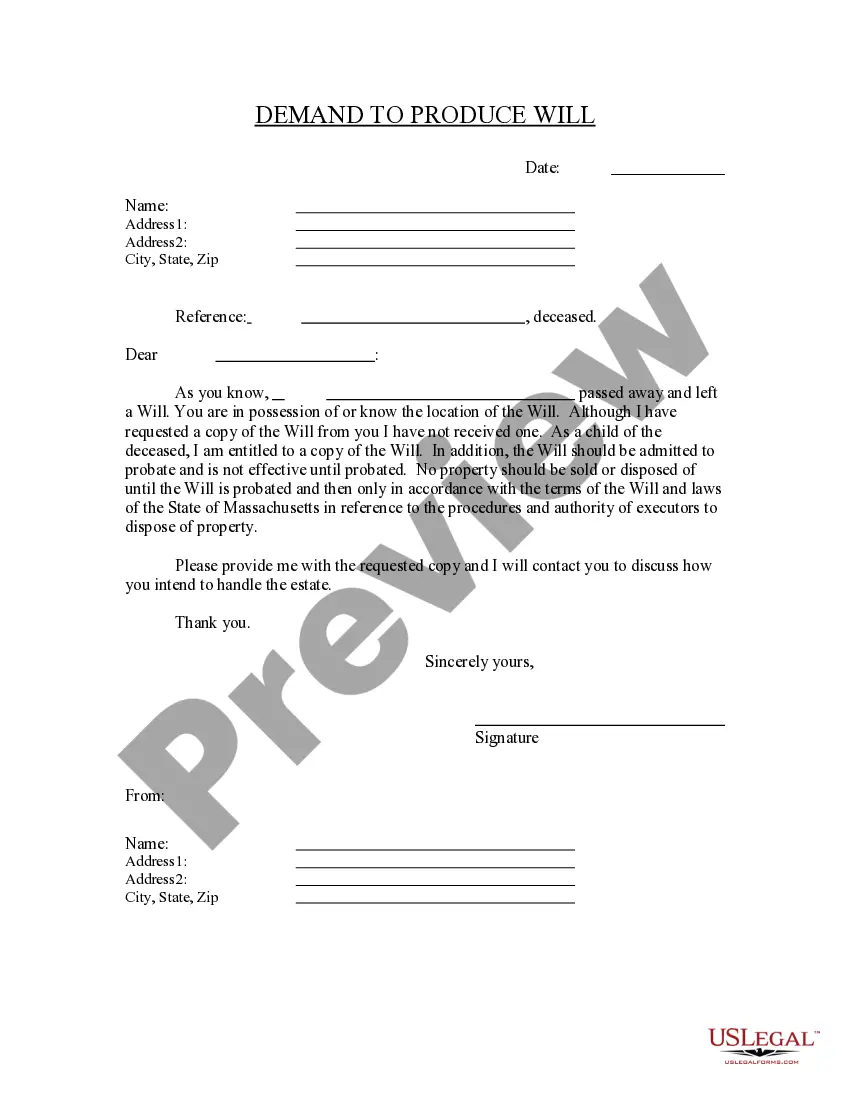
Indiana Last Will and Testament for Married person with Minor Children from Prior Marriage
About this form
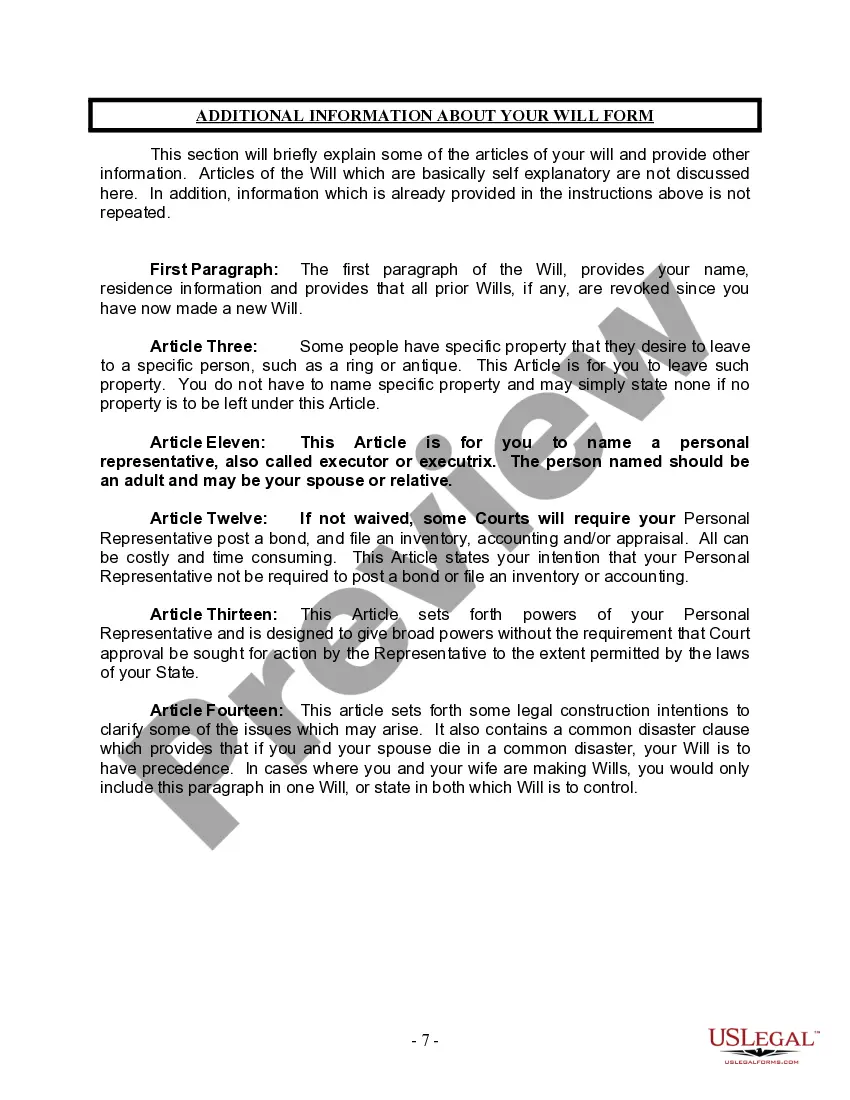
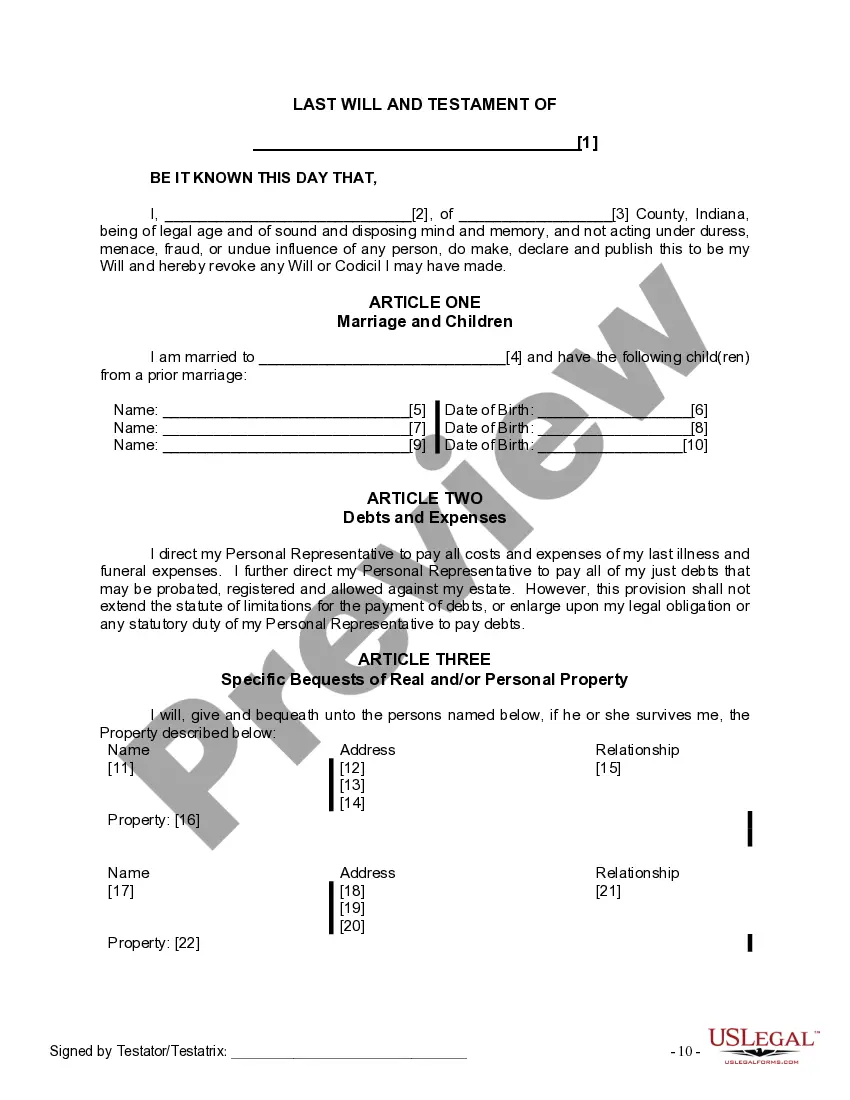
The Last Will and Testament for a married person with minor children from a prior marriage is a legal document that outlines how your assets will be distributed after your death. This form allows you to specify the beneficiaries of your estate, appoint a personal representative, and make provisions for your minor children, including appointing a trustee to manage their inheritance until they come of age. Unlike a standard will, this version specifically addresses the unique considerations of managing assets for children from a previous marriage, ensuring their needs are met while also accounting for your current spouse.
What’s included in this form
- Appointment of a personal representative to administer your estate.
- Designation of beneficiaries, including your spouse and children from a prior marriage.
- Specific provisions for distributing your homestead or primary residence.
- Establishment of a trust for minor children to manage their inheritance until they reach an agreed age.
- Appointment of a guardian for minor children in the event of your death.
- Option to waive bond for the personal representative to simplify estate administration.






Situations where this form applies
You should use this form if you are a married individual with minor children from a previous marriage and want to establish a clear plan for your estate. It is important to have this will in place to protect your childrenâs inheritance, ensure they are cared for after your death, and define how your assets will be managed and distributed. This form is particularly useful if you wish to avoid potential conflicts between your current spouse and children from a prior relationship.
Who should use this form
This form is intended for:
- Married individuals with minor children from a prior marriage.
- Those who want to clearly outline their wishes regarding asset distribution.
- Individuals seeking to appoint a trustee for managing assets intended for minor beneficiaries.
- People wanting to name a guardian for their minor children in the event of their passing.
How to complete this form
Steps to Complete This Form:
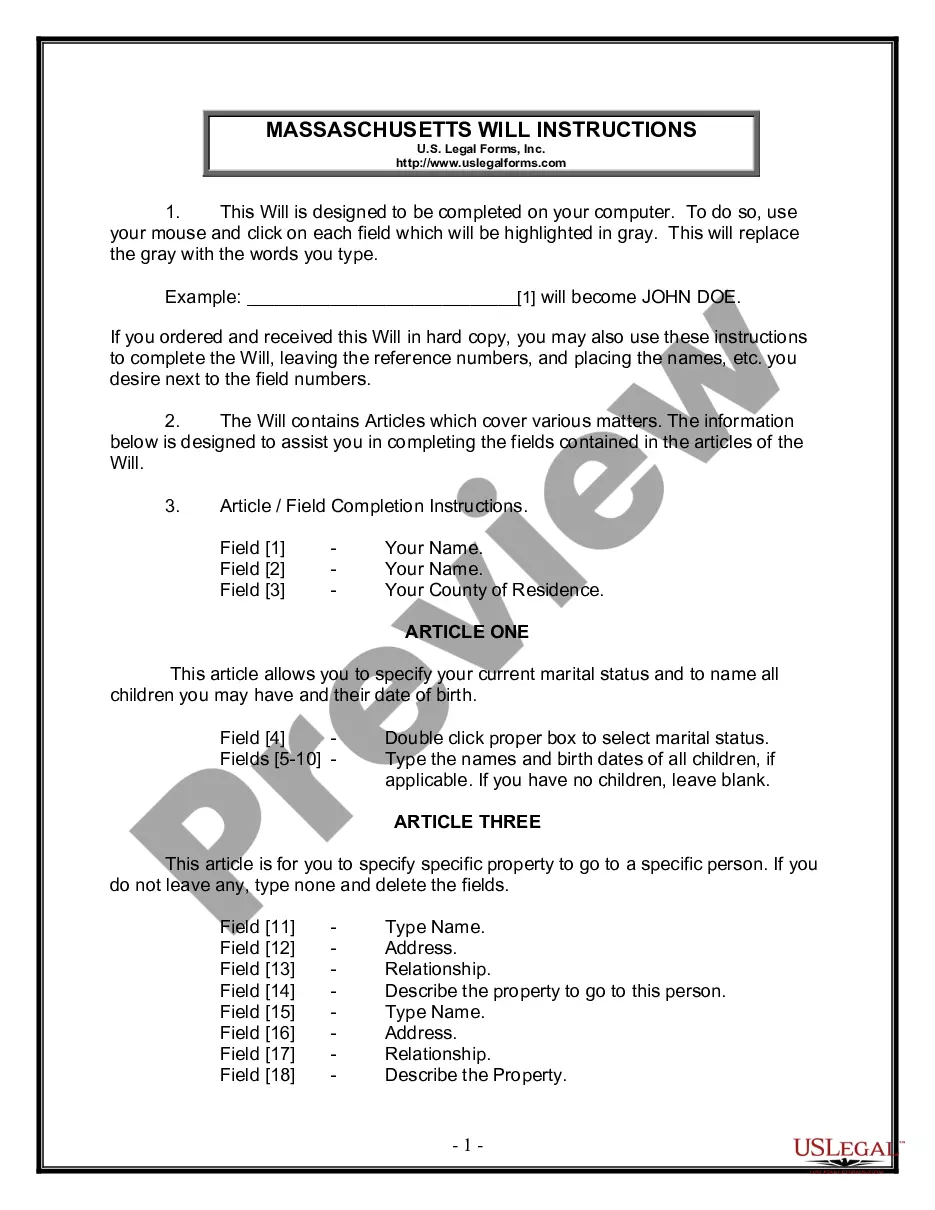
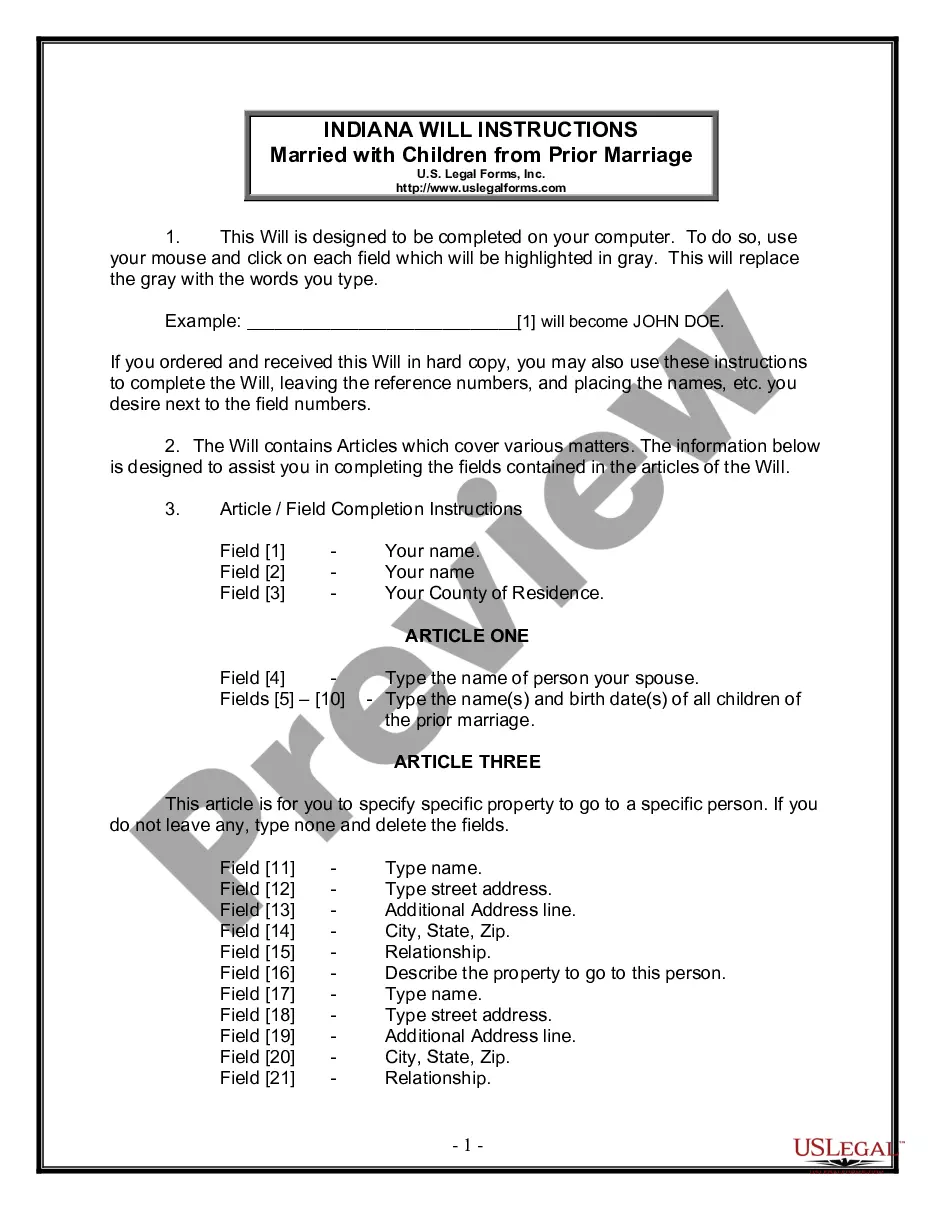
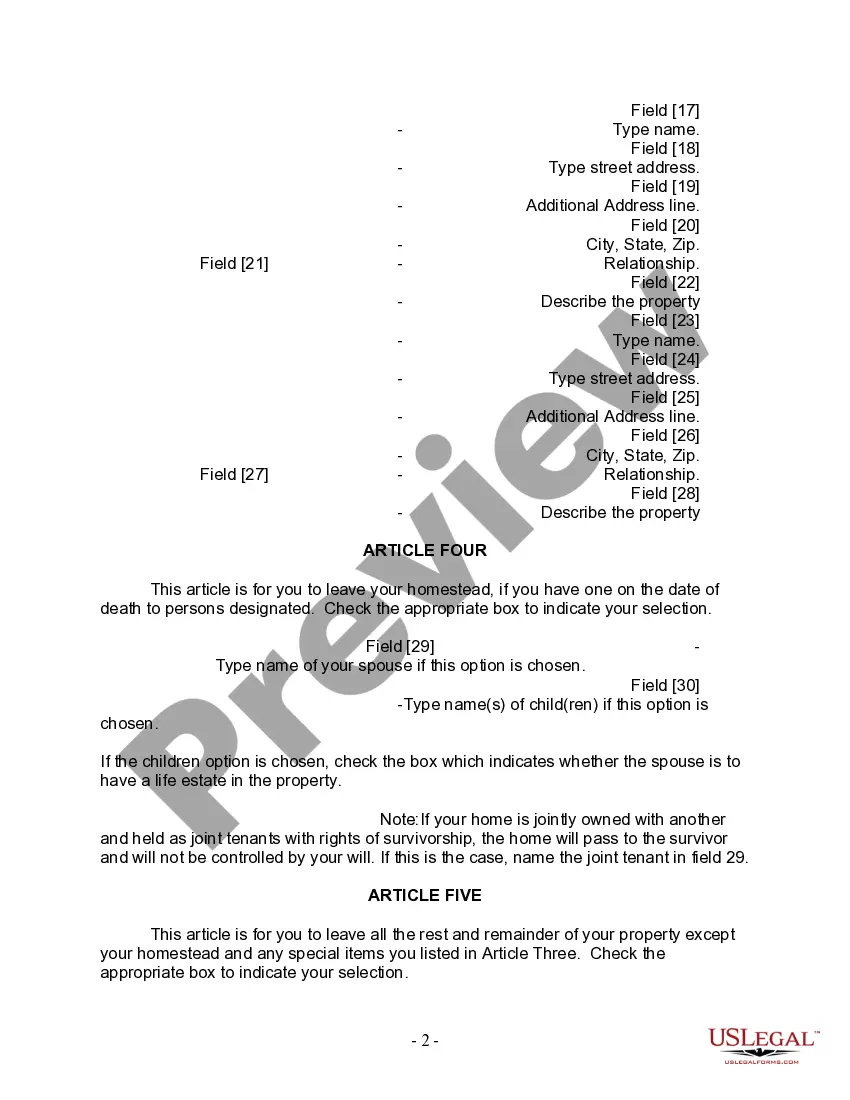
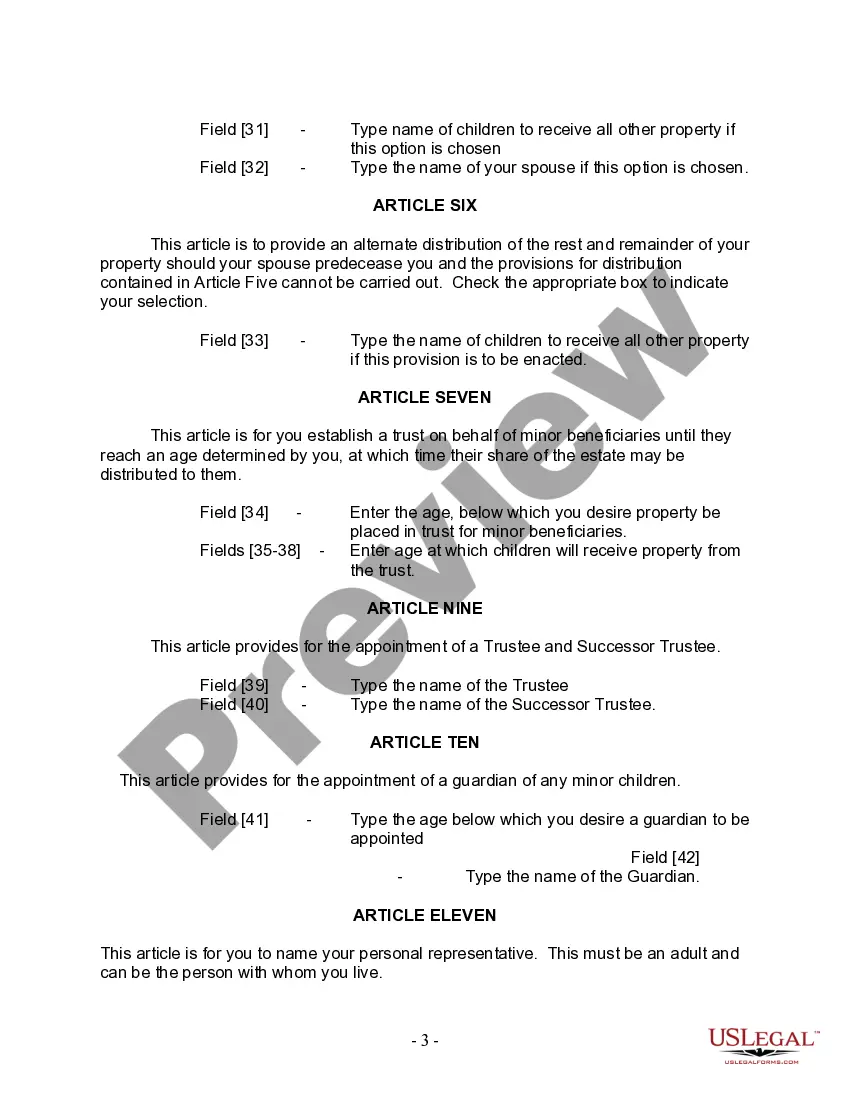
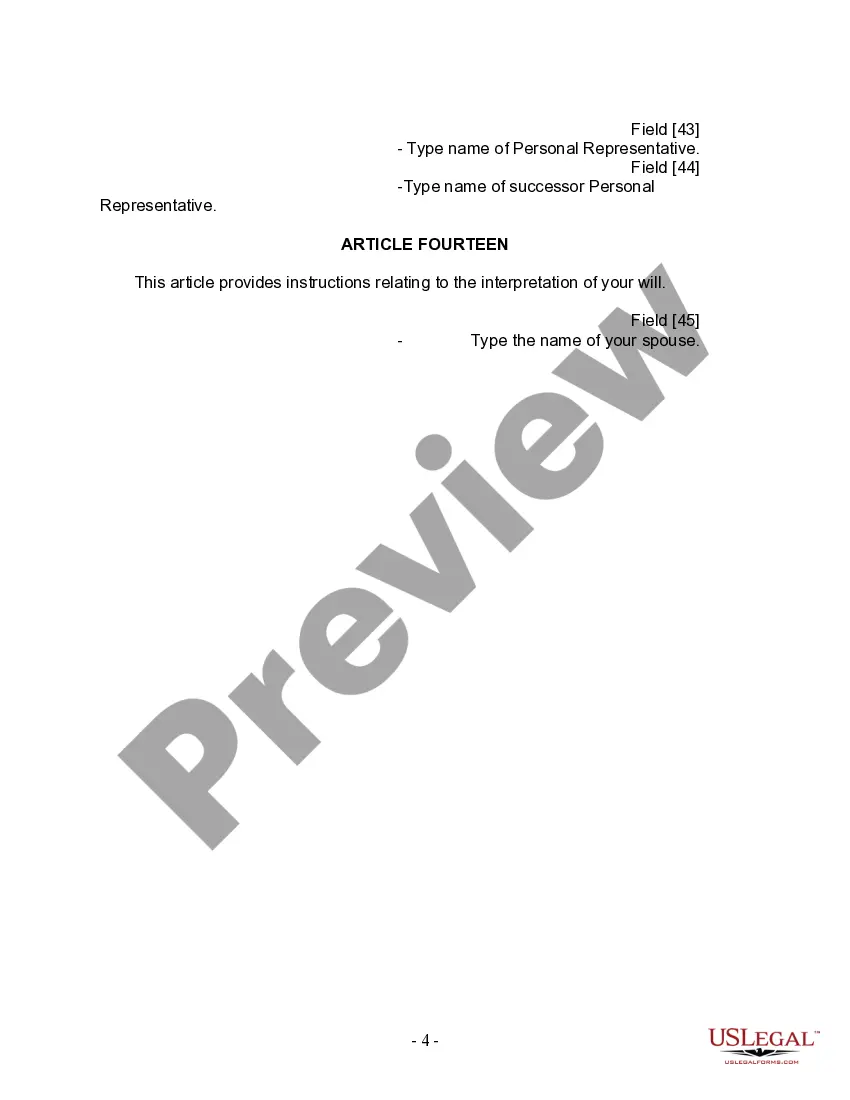
- Enter your full name and county of residence at the appropriate fields.
- List your spouse's name and the names and dates of birth of your children from a previous marriage.
- Designate specific property and the corresponding beneficiaries if applicable.
- Complete the sections regarding trustees for your minor children and appoint a guardian if necessary.
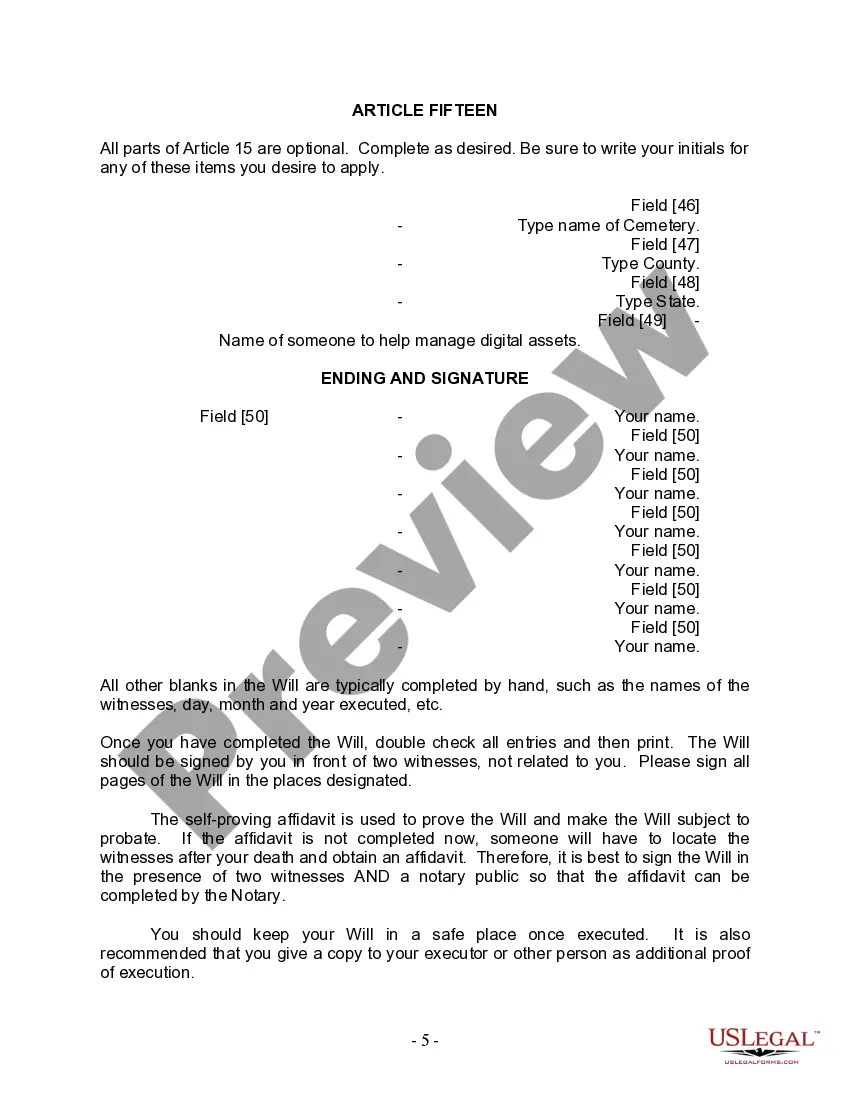
- Sign the will in the presence of two witnesses and, if required, a notary public.
Notarization guidance
Yes, this form must be notarized to be legally valid. It is important to have the will signed in front of a notary public, as this helps to verify the authenticity of the document and supports the self-proving affidavit, which simplifies the probate process.
Get your form ready online
Our built-in tools help you complete, sign, share, and store your documents in one place.
Make edits, fill in missing information, and update formatting in US Legal Forms—just like you would in MS Word.
Download a copy, print it, send it by email, or mail it via USPS—whatever works best for your next step.
Sign and collect signatures with our SignNow integration. Send to multiple recipients, set reminders, and more. Go Premium to unlock E-Sign.
If this form requires notarization, complete it online through a secure video call—no need to meet a notary in person or wait for an appointment.
We protect your documents and personal data by following strict security and privacy standards.

Make edits, fill in missing information, and update formatting in US Legal Forms—just like you would in MS Word.

Download a copy, print it, send it by email, or mail it via USPS—whatever works best for your next step.

Sign and collect signatures with our SignNow integration. Send to multiple recipients, set reminders, and more. Go Premium to unlock E-Sign.

If this form requires notarization, complete it online through a secure video call—no need to meet a notary in person or wait for an appointment.

We protect your documents and personal data by following strict security and privacy standards.
Avoid these common issues
- Failing to have the will signed in the presence of two witnesses.
- Not including children from a prior marriage in the beneficiary designations.
- Omitting the appointment of a trustee for minor children.
- Not specifying the age at which minor children will inherit their assets.
Benefits of completing this form online
- Conveniently create and modify your will using our user-friendly online form.
- Instant access to legal documents prepared by licensed attorneys, ensuring compliance with legal standards.
- Secure download options for digital and hard copies of your will.
- Peace of mind knowing your estate planning is handled efficiently and accurately.
What to keep in mind
- This will is essential for married individuals with children from prior marriages to ensure proper asset distribution.
- Ensure to have it signed in front of two witnesses and a notary for legal validity.
- Take advantage of the included provisions for guardianship and trust establishment for children's inheritance.
- Using this form helps prevent disputes among heirs and clarifies your wishes.
Looking for another form?
Form popularity
FAQ
Dealing with being left out of a will can be emotionally challenging. It's essential to process your feelings and clarify the reasons behind the exclusion, especially in cases that involve an Indiana Last Will and Testament for Married persons with Minor Children from Prior Marriage. Consider having open conversations with the estate's executor or seeking legal advice if needed. Understanding your rights can empower you to make informed decisions moving forward.
Effect of marriage on your will When you marry, any existing will is automatically revoked (cancelled) and becomes no longer valid. If you do not make a new one, then when you die the law of intestacy decides how your assets are divided. Usually, your entire estate would go to your wife, husband or civil partner.
Joint wills are usually created by married couples. They often state that: After one spouse has died, all the couple's property will be left to the surviving spouse; and. After the surviving spouse dies, the remaining property will be left to the couple's children.
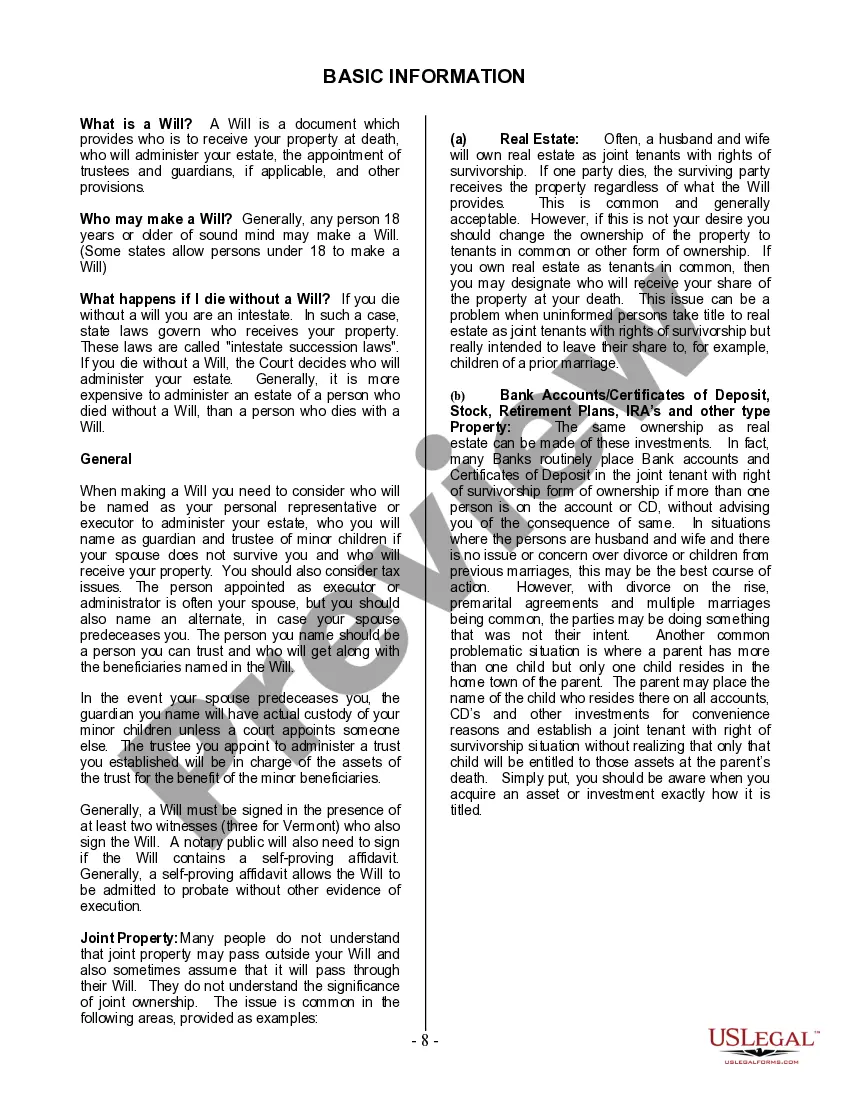
Many married couples own most of their assets jointly with the right of survivorship. When one spouse dies, the surviving spouse automatically receives complete ownership of the property.Since one never knows which spouse will survive the other, it is important that both have a Will.
A joint will is one that two people, typically a married couple, sign together. Instead of each spouse having a separate will, they have one document that they've both agreed to.Then the entire estate goes to their children when the second spouse passes away.