Indiana Fiduciary Deed for use by Executors, Trustees, Trustors, Administrators and other Fiduciaries
Overview of this form
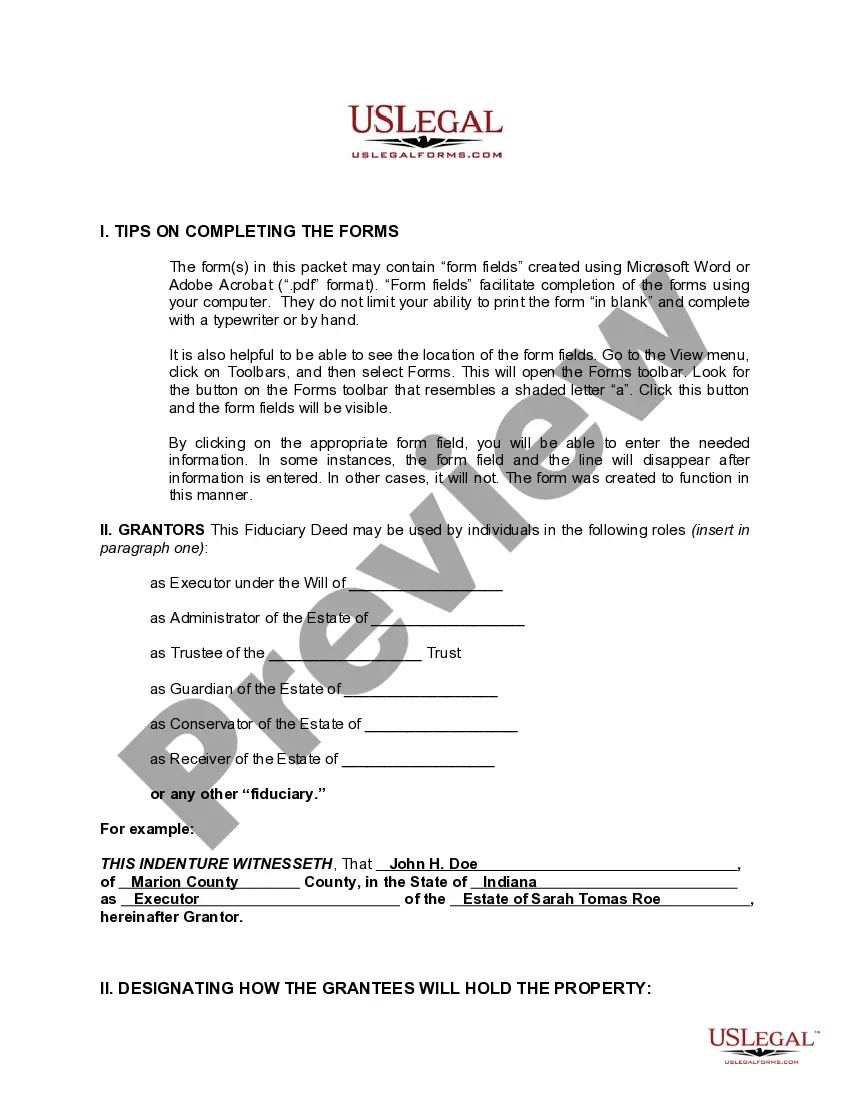
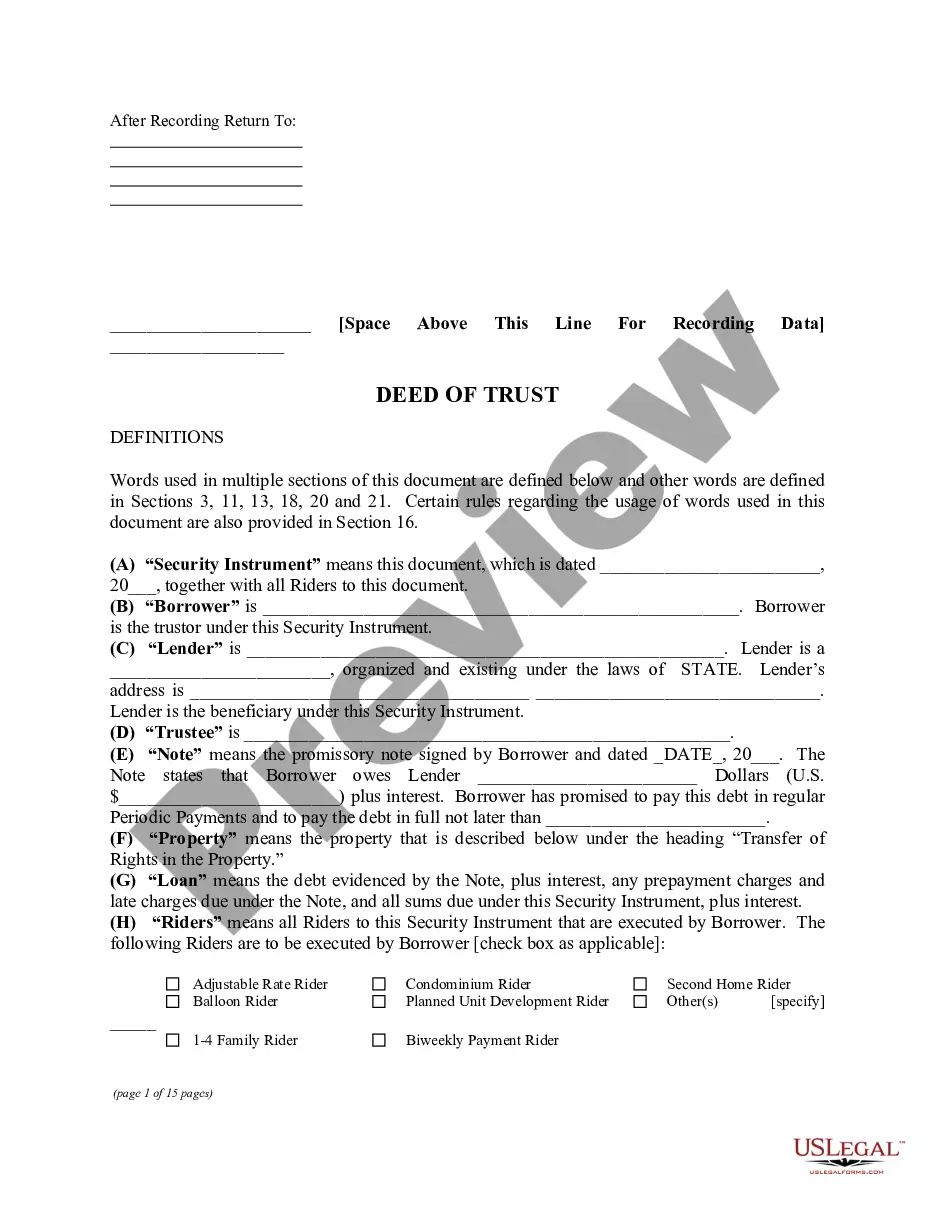
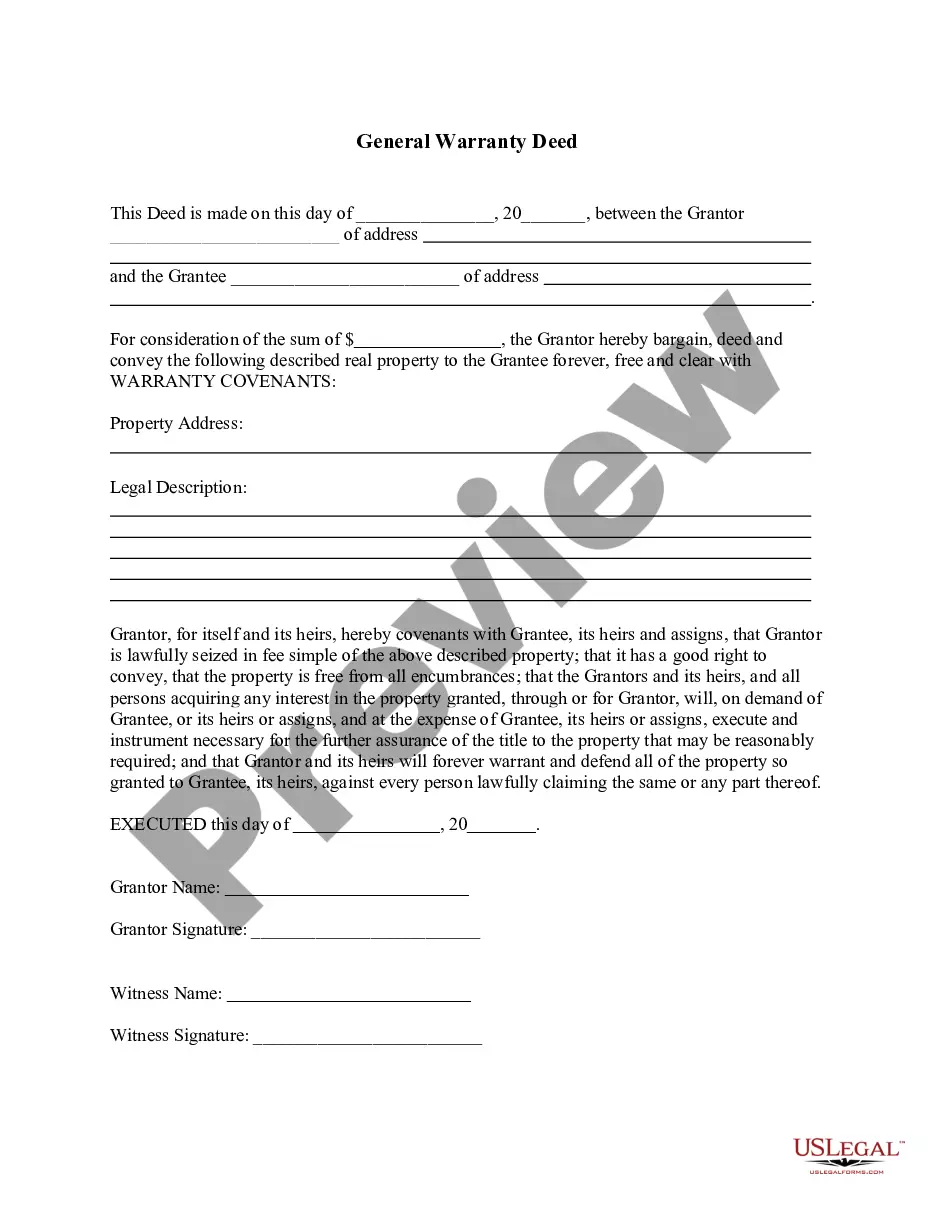
The Fiduciary Deed is a specific legal document used by individuals acting as executors, trustees, or other fiduciaries to transfer real estate property on behalf of an estate or trust. This form differs from a traditional deed in that it clarifies the authority of the grantor to convey property as part of their fiduciary duties. It ensures that the property is legally transferred while delineating the responsibilities of the fiduciary, making it an essential tool for effective estate management.
Form components explained
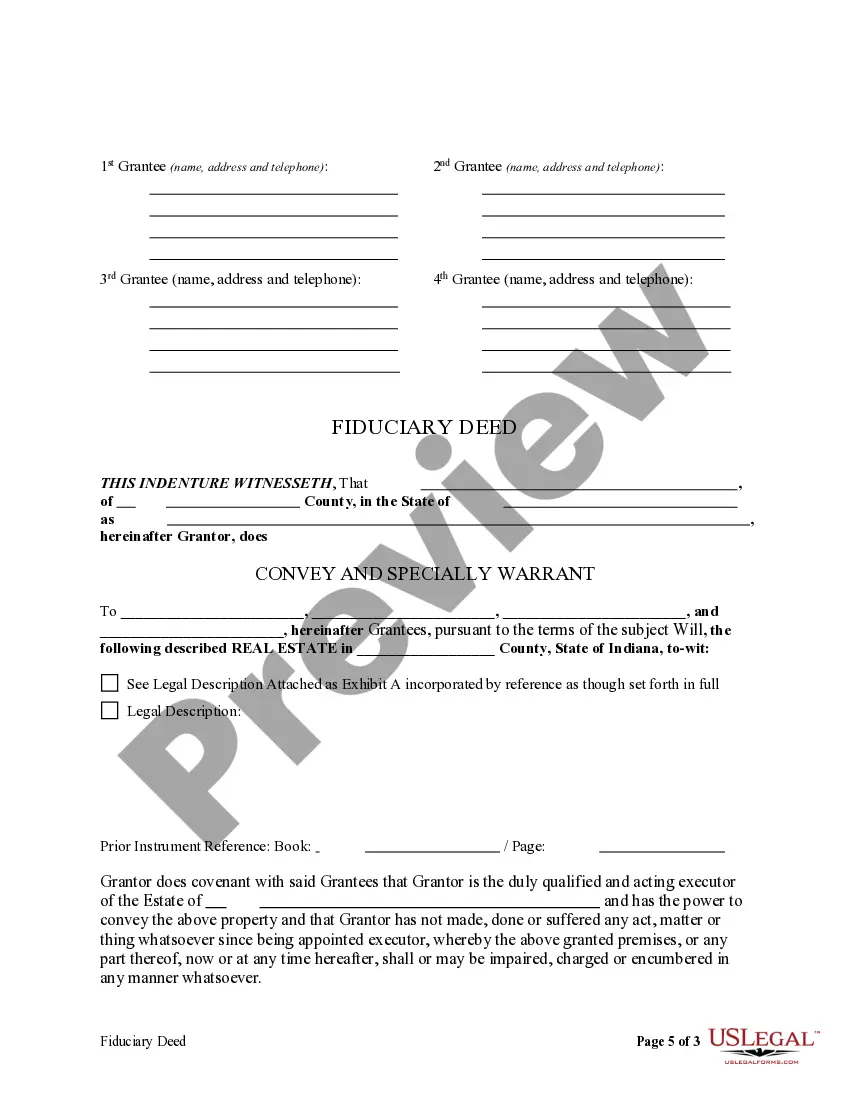
- Identifies the grantor in a fiduciary role, such as executor or trustee.
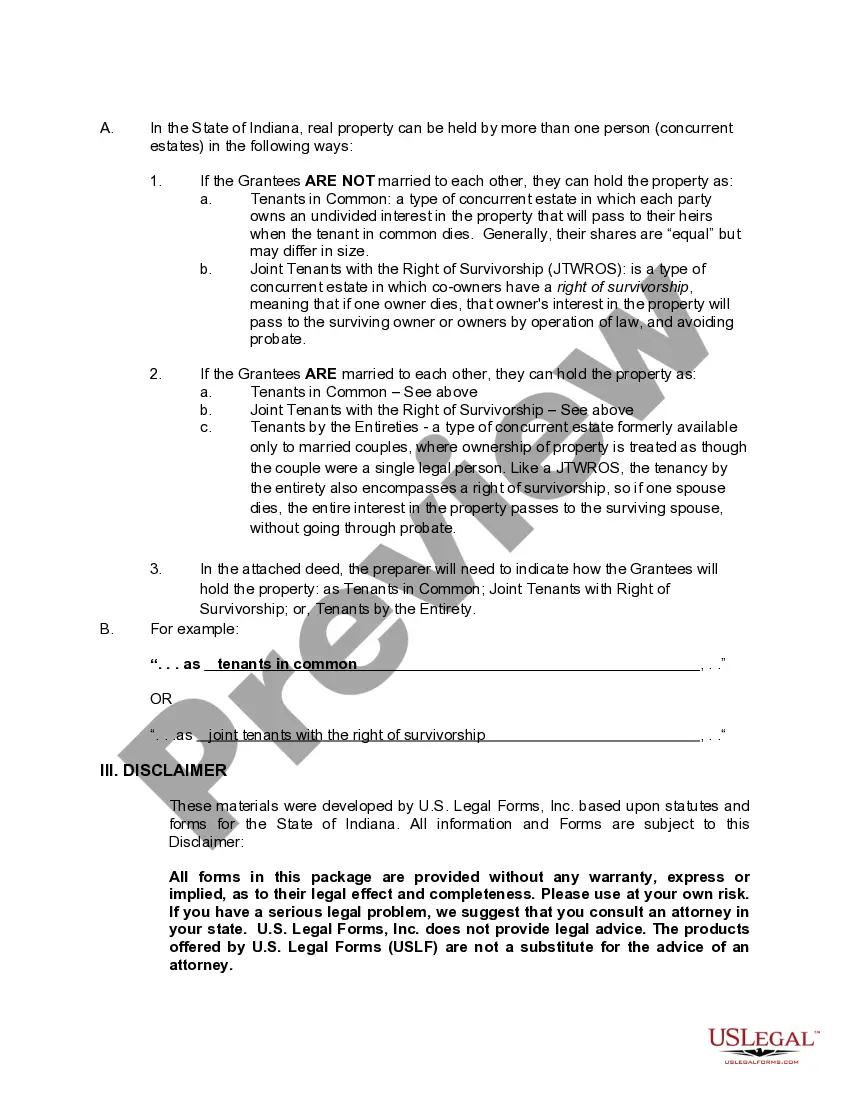
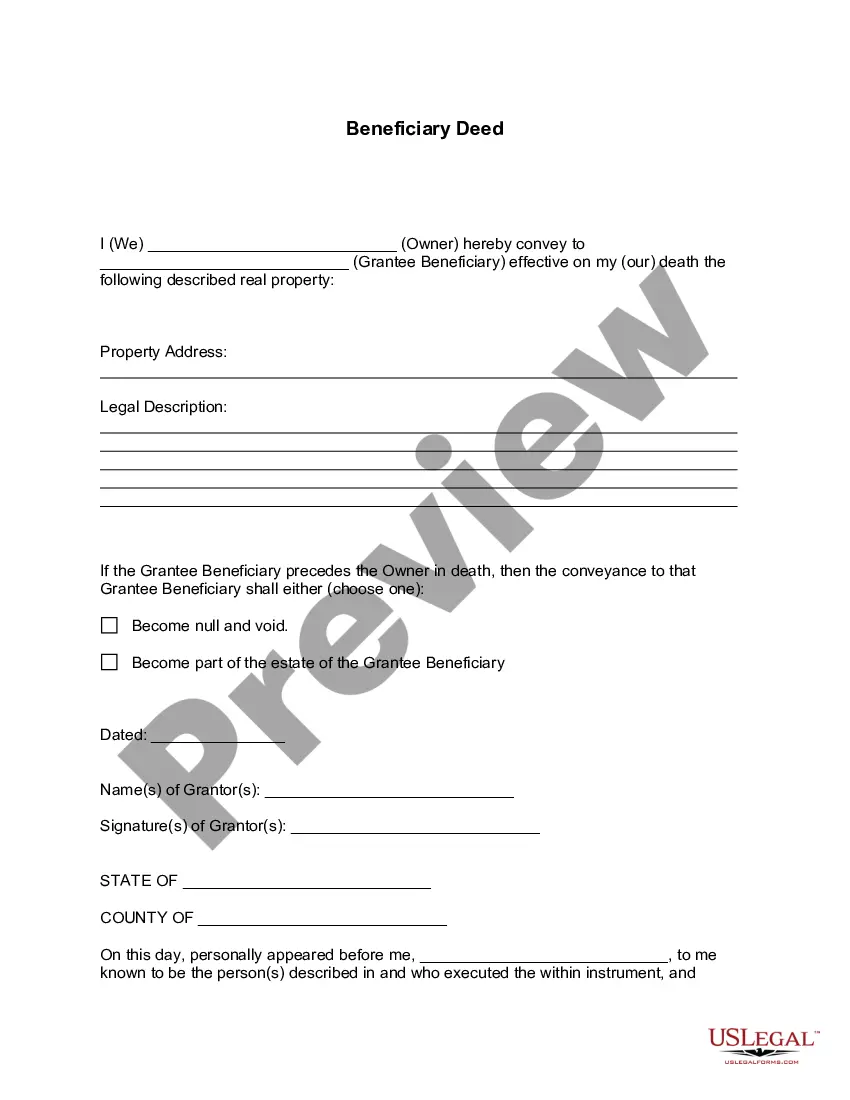
- Specifies how grantees will hold the property (e.g., tenants in common, joint tenants).
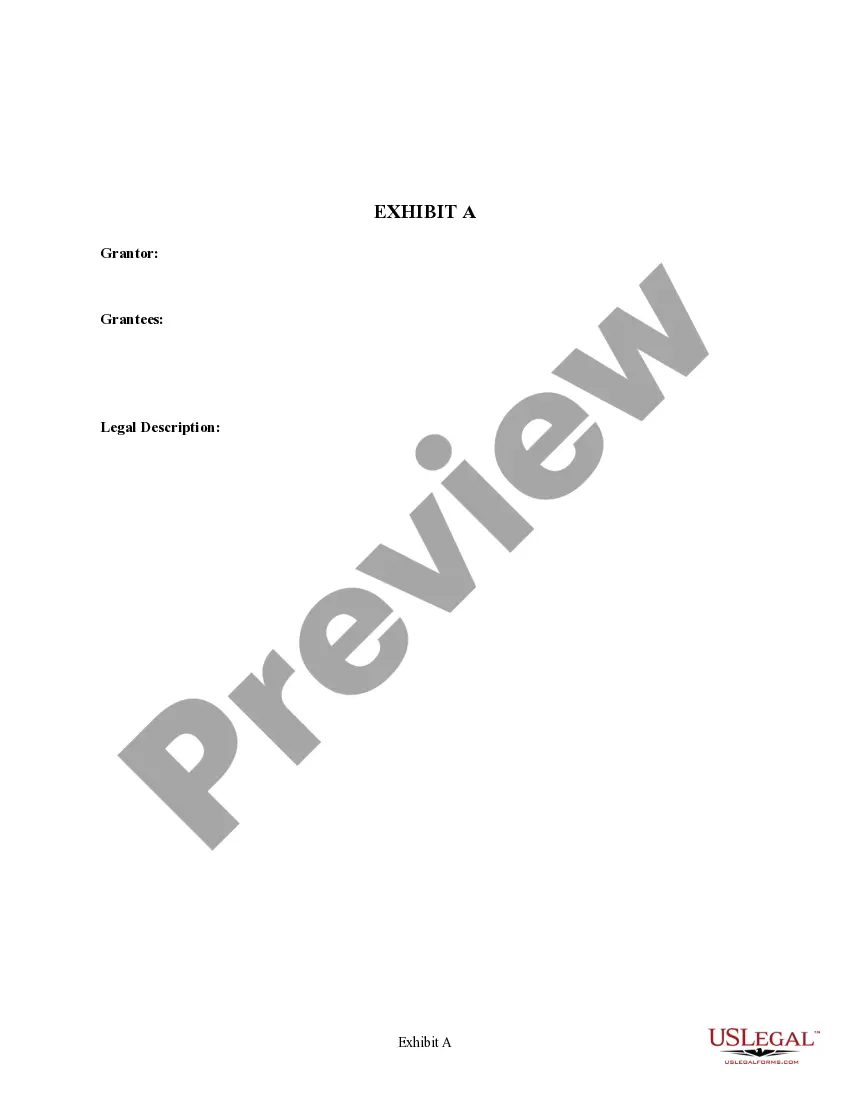
- Includes a legal description of the property being transferred.
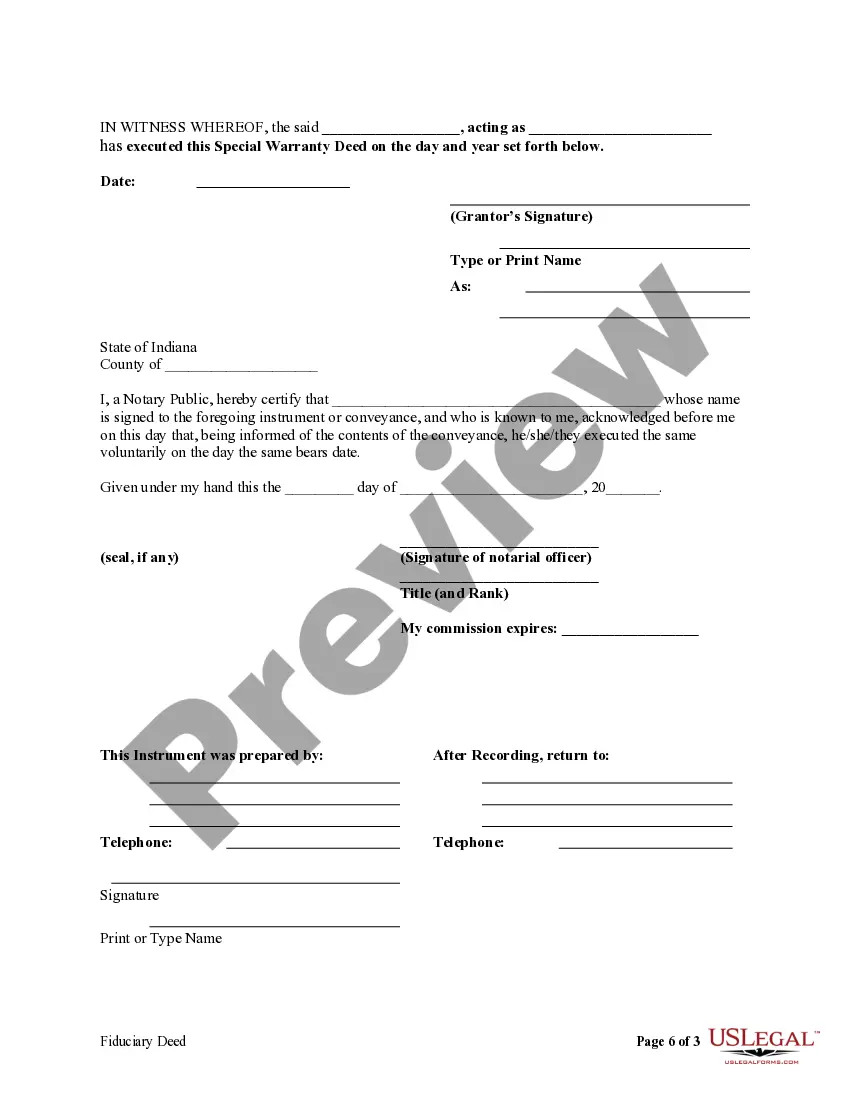
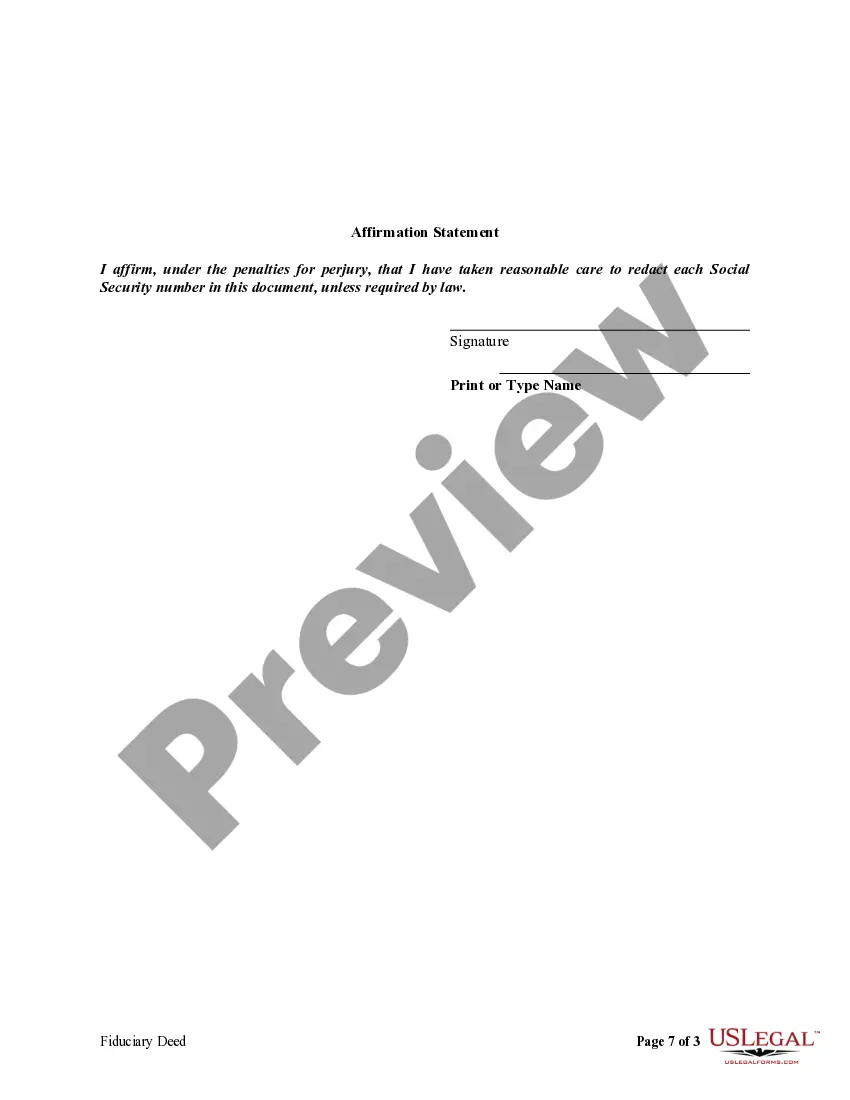
- Provides signature lines for the grantor and witnesses, if applicable.



When to use this form
This Fiduciary Deed should be used when a fiduciary needs to transfer interest in real estate as part of administering an estate or trust. Common scenarios include the sale of property belonging to a deceased person's estate or transferring property into a trust managed by a trustee. This deed ensures the transfer complies with legal requirements and clarifies the roles of the parties involved.
Who should use this form
- Executors of a will tasked with managing and distributing an estate.
- Trustees responsible for managing a trust and its assets.
- Guardians or conservators managing the estate of a minor or incapacitated person.
- Administrators of an estate when no will is present.
- Any other fiduciaries involved in property transfer duties.
Steps to complete this form
- Identify and enter the names of all grantors involved in the property transfer.
- Specify the property in detail, including a legal description.
- Determine how the grantees will hold the property (e.g., tenants in common or joint tenants) and fill in the appropriate section.
- Complete the signature fields for the grantor, ensuring all necessary parties sign.
- Consider obtaining witnesses for the signature to enhance the legal validity of the deed.
Does this form need to be notarized?
This form does not typically require notarization unless specified by local law. It is advisable to check local regulations or consult an attorney for guidance on any specific requirements in Indiana.
Get your form ready online
Our built-in tools help you complete, sign, share, and store your documents in one place.
Make edits, fill in missing information, and update formatting in US Legal Forms—just like you would in MS Word.
Download a copy, print it, send it by email, or mail it via USPS—whatever works best for your next step.
Sign and collect signatures with our SignNow integration. Send to multiple recipients, set reminders, and more. Go Premium to unlock E-Sign.
If this form requires notarization, complete it online through a secure video call—no need to meet a notary in person or wait for an appointment.
We protect your documents and personal data by following strict security and privacy standards.

Make edits, fill in missing information, and update formatting in US Legal Forms—just like you would in MS Word.

Download a copy, print it, send it by email, or mail it via USPS—whatever works best for your next step.

Sign and collect signatures with our SignNow integration. Send to multiple recipients, set reminders, and more. Go Premium to unlock E-Sign.

If this form requires notarization, complete it online through a secure video call—no need to meet a notary in person or wait for an appointment.

We protect your documents and personal data by following strict security and privacy standards.
Common mistakes
- Failing to provide a complete legal description of the property.
- Not specifying how the grantees will hold the property.
- Ignoring signature and witness requirements where applicable.
- Using the form without understanding the fiduciary's authority.
Benefits of completing this form online
- Easy to fill out using a computer with clear form fields.
- Convenient access to legal documents, available for download at any time.
- Edit and customize the document as needed before printing.
- Legal forms drafted by licensed attorneys to ensure accuracy and compliance.
Looking for another form?






Form popularity
FAQ
Used by fiduciaries to transfer real estate on behalf of an estate or trust, this deed confirms the grantor’s authority to convey under fiduciary duties. It records how the grantee will hold title (for example, tenants in common or joint tenancy) and includes the property’s legal description plus signature lines for the grantor and witnesses if applicable. It’s used in estate or trust administration.
The form can be obtained by downloading the Indiana Fiduciary Deed for Use by Executors, Trustees, Trustors, Administrators and Other Fiduciaries; complete the grantor’s fiduciary details, the property’s legal description, and the intended holding (for example, tenants in common or joint tenancy). Include signature lines for the grantor and witnesses if applicable, and follow local recording requirements.
Yes. Trustees are fiduciaries who manage a trust’s assets and may use this fiduciary deed to transfer real estate when acting in that capacity, documenting the grantor’s fiduciary status and the authority to convey on behalf of the trust.
Yes. An executor of an estate or administrator acts as a fiduciary and may use this fiduciary deed to convey real estate on behalf of the estate, with the form’s provisions identifying the grantor’s fiduciary role and the manner of transfer.
The form requires identifying the grantor in a fiduciary role, the property’s legal description, and how the grantees will hold title (for example, tenants in common or joint tenancy), plus signature lines for the grantor and witnesses if applicable.
This fiduciary deed is designed for fiduciaries such as executors, trustees, or administrators and explicitly documents the grantor’s fiduciary authority to convey property on behalf of an estate or trust, including how the property will be held by the grantee. A standard warranty deed transfers property between private parties without that explicit fiduciary authority language.